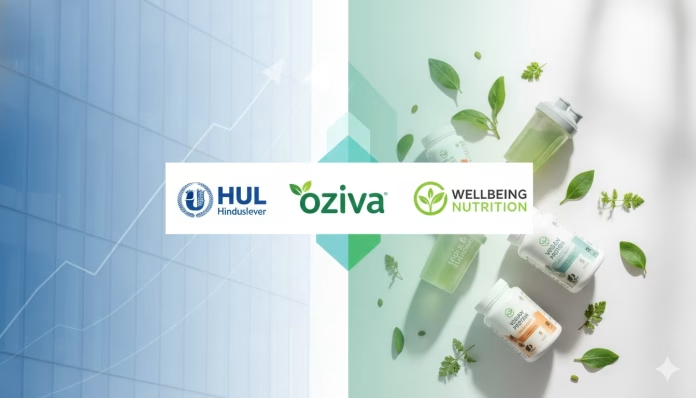
Hindustan Unilever Limited (HUL) has acquired the remaining 49% stake in Zywie Ventures, the parent company of plant-based nutrition brand OZiva, for ₹824 crore, taking full ownership of the business.
At the same time, the FMCG major has exited its 19.8% minority stake in Wellbeing Nutrition maker Nutritionalab Private Limited, selling it to USV Private Limited for ₹307 crore.
Completing the OZiva buyout
HUL had first acquired a 51% stake in OZiva in December 2022 for ₹264 crore, with a pre-agreed roadmap to purchase the remaining stake after three years. The latest transaction completes that plan, giving HUL full control of the fast-growing health and wellness brand.
Since the initial acquisition, OZiva has scaled rapidly, reaching approximately ₹480 crore in revenue in 2025, delivering a 130% CAGR over the past two years, according to the company. HUL said growth was driven by portfolio expansion and synergies unlocked through its distribution and ecosystem capabilities.
Priya Nair, CEO and Managing Director of HUL, said the move reflects the company’s strategy of making “fewer, bigger bets” in high-growth categories. “By taking full ownership of OZiva, we are doubling down on this exciting space to unlock the next phase of growth,” she said, adding that HUL intends to leverage its strengths in science, distribution and market development to scale purpose-led brands.
Exit from Wellbeing Nutrition
HUL also divested its minority stake in Wellbeing Nutrition, which it had acquired in 2022 for around ₹70 crore. The exit aligns with the company’s sharper portfolio focus within the health and wellness segment.
The deal underscores HUL’s intent to consolidate its presence in high-growth consumer categories while rationalising smaller investments.
Health and wellness push
HUL formally entered the health and wellness category in 2023, positioning it as a long-term growth engine. The full acquisition of OZiva signals increased confidence in the segment, which has seen rising consumer demand for plant-based, clean-label and performance-driven nutrition products.
Broader business update
Separately, HUL reported that total sales rose 4% to ₹15,614 crore in the December quarter, while net profit declined 15% to ₹2,590 crore. The company said demand trends showed early signs of recovery, supported by policy measures.
HUL also announced organisational changes under its ‘Unified India’ strategy. Business unit heads will now report directly to the CEO to improve agility and speed, with each unit having a dedicated chief marketing officer. Additionally, Unilever will establish a unified India R&D organisation aimed at accelerating innovation and execution.
With full ownership of OZiva and a streamlined portfolio approach, HUL is positioning itself for deeper play in India’s expanding health and wellness market.