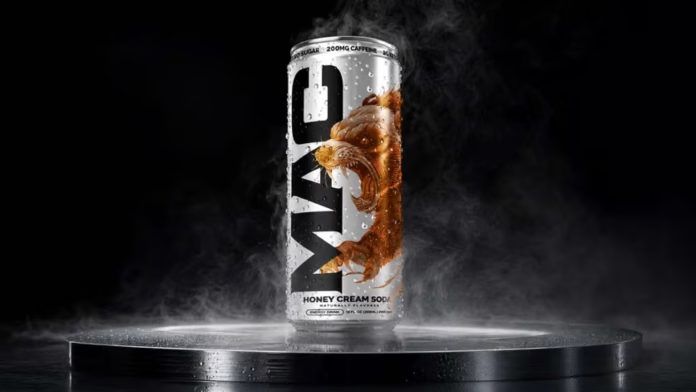
Conor McGregor has officially stepped into the high-stakes energy drink market with the launch of MAC Energy, unveiling the product at The Beverage Forum on April 28, 2026. The move marks a strategic pivot from his success in spirits—most notably Proper No. Twelve—into the fast-growing functional wellness space, where performance, cognition, and clean-label formulations are redefining the category.
MAC Energy is positioned as a “performance-first” drink, built around a combination of nootropics and metabolic enhancers rather than sugar-driven stimulation. Each can features 2g of GoBHB® ketones to provide an alternative energy source for endurance, 250mg of Cognizin® Citicoline to support focus and mental clarity, and 200mg of PurCaf® natural caffeine derived from green coffee beans. The formulation is entirely sugar-free and low in calories, aligning with the shift toward “clean energy” beverages among fitness-focused consumers.
The brand is set for its official retail debut on July 12, 2026, launching with six flavors that balance nostalgic appeal and modern taste profiles, including Forbidden Green Apple, Proper Punch, Orange Creamsicle, Honey Cream Soda, Macberry Lemonade, and Blackbeary Lychee. This wide flavor range signals an intent to compete not just on function but also on experience—an increasingly critical factor in the saturated energy drink aisle.
Strategically, MAC Energy reflects the evolution of the “athlete-operator” model. Rather than relying solely on celebrity branding, McGregor is leaning into ingredient-led differentiation—using clinically recognized compounds like Cognizin to justify premium positioning. This mirrors the playbook seen in brands like Prime Hydration and Neutonic, where functional benefits and creator influence combine to drive rapid adoption.
By entering the category with a science-forward formula and a strong personal brand, McGregor is betting that the next wave of energy drinks won’t be about “more caffeine,” but about smarter, cleaner, and more targeted performance.
House of Party has officially made its national retail debut, launching across endcaps at Target stores in April 2026. The move marks a major inflection point for the digital-native brand, which built its following online by simplifying high-aesthetic event setups into easy, DIY-friendly kits. Now, with prime placement in Target’s refreshed party aisles, the brand is translating social media virality into physical retail scale.
At the core of the launch is House of Party’s “Party in a Box” concept—pre-curated kits designed to eliminate the complexity of sourcing decorations individually. The lineup includes Hero Balloon Decor Kits and Table Hero Paper Party Kits that can be assembled in under 30 minutes, even by first-time hosts. Themes like “Rowdy Rodeo,” “Cottage Bloom,” “Cool in the Pool,” and “Americana” tap directly into seasonal and Pinterest-driven trends, while price points between $14.99 and $24.99 position the product as an affordable upgrade over traditional party supplies without requiring professional planners.
Behind the brand is Petra Brands, a Miami-based incubator known for scaling viral consumer concepts into retail-ready businesses through its PetraSpark framework. With a portfolio generating an estimated $250M–$500M in revenue—including brands like Roofus and Everymood—Petra is effectively building a repeatable pipeline from “scroll-stopping content” to “shelf dominance.” House of Party is its clearest expression yet of that strategy.
Strategically, Target’s decision to place these kits on endcaps is just as important as the product itself. Endcaps capture high-intent, impulse-driven shoppers—exactly the “last-minute host” demographic that House of Party is built for. Instead of spending hours planning, consumers can now grab a complete, aesthetically cohesive setup in minutes, turning hosting from a stressful task into an accessible, confidence-driven experience.
This launch reflects a broader retail shift: the rise of the “Pinterest-to-shelf” pipeline, where digitally validated trends are rapidly converted into physical products. House of Party isn’t just selling decorations—it’s selling a shortcut to social currency. And in a market where experiences matter as much as products, that’s a powerful moat.
If you want, I can break down how this “Party in a Box” model could work in India—there’s actually a big gap in Tier-1 cities for this exact concept.
The global beverage giants are rewriting the rules of consumer engagement in 2026—shifting from occasional indulgence to “everyday premium” rituals. Across campaigns from Starbucks, Pure Leaf, and FIJI Water, the message is clear: premium isn’t a luxury anymore—it’s a daily habit.
Starbucks is leading the charge with its “anti-dupe” strategy, enlisting Kristen Kish to promote its new Sweet Cream Enhancers. Launched to mark a decade of the Vanilla Sweet Cream Cold Brew, the refrigerated 24 oz cartons (Vanilla, Brown Sugar, and White Chocolate Macadamia) are now rolling out across major retailers. The campaign directly counters the rise of homemade “dupe” recipes, positioning Starbucks’ signature texture as difficult to replicate. A planned Instacart giveaway at the end of May is designed to convert curious users into long-term buyers—turning imitation into loyalty.
Meanwhile, Pure Leaf is carving out a new niche with its “Mental Focus” sparkling iced tea, stepping away from the overstimulating energy drink category. Backed by Olympic gymnast Jordan Chiles and digital wellness brand Brick, the product combines 69mg of natural caffeine with L-theanine for calm concentration. With zero sugar and fruit-forward flavors like Peach and Raspberry, the brand is targeting a softer, more sustainable form of productivity—less “hustle,” more “clarity.”
On the lifestyle front, FIJI Water is executing one of its most ambitious brand refreshes yet with the “Earth’s Finest Water™” campaign. Moving beyond red-carpet luxury, the brand is embedding itself into everyday cultural moments—from transit hub takeovers in New York and Miami to experiential activations in Las Vegas featuring John Summit. Shot by Linus Sandgren on Super 16 mm film, the campaign leans into raw, authentic storytelling to resonate with younger audiences who value aesthetic identity as much as product quality.
What ties these moves together is a fundamental shift in consumer psychology. Today’s buyer doesn’t want “premium” saved for weekends or special occasions—they want it embedded into their daily workflow, wellness routine, and identity. Whether it’s Starbucks defending taste authenticity, Pure Leaf redefining functional calm, or FIJI reframing water as a lifestyle accessory, the industry is converging on a single idea: premium is no longer aspirational—it’s habitual.
If you want, I can break down which of these strategies would work best in India right now—especially for D2C beverage brands trying to scale.
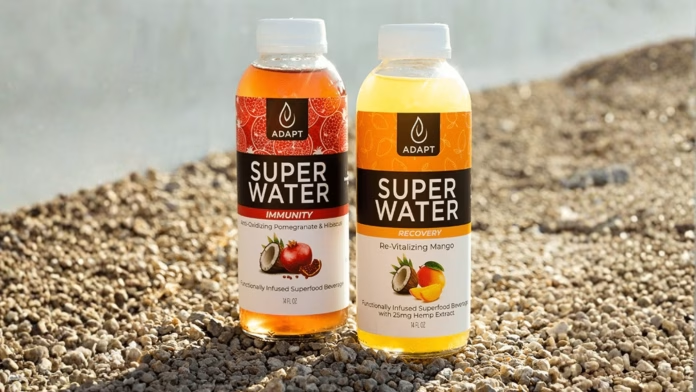
Adapt SuperWater has executed a full-scale strategic pivot, moving away from CBD-infused beverages to reposition itself as a clean-label, performance-focused hydration brand. Founded by Richard Richie Harrington, the Santa Monica-based company is responding to ongoing regulatory uncertainty around CBD that has historically limited its access to mainstream retail and professional sports environments.
The revamped product ecosystem centers on powdered formats, led by hydration and recovery sticks built with organic coconut water and a high electrolyte load—featuring potassium, sea salt, and L-Theanine for both physical and cognitive performance. These sticks eliminate added sugars, maltodextrin, and stevia, instead using monk fruit to maintain a strict clean-label positioning. Alongside hydration, the brand has introduced a melatonin-free sleep powder formulated with GABA, magnesium, and tart cherry, targeting recovery without the grogginess often associated with hormone-based sleep aids.
This shift is as much operational as it is strategic. By moving from bottled beverages to lightweight powder sticks, Adapt significantly improves logistics efficiency, reduces shipping costs, and lowers its environmental footprint—while enabling scalable formats like 30-serving bundles. More importantly, the pivot unlocks access to regulated channels such as professional locker rooms and large-scale retail, supported by its NSF Certified for Sport® credential, a critical trust signal in athlete-focused products.
Backed by athlete investors including Joe Montana, Adapt is doubling down on its “locker room-first” strategy—designing products that align with elite performance standards rather than niche wellness trends. By shedding its CBD identity, the brand is now competing directly with established hydration players like Liquid I.V. and LMNT, but with a differentiated edge rooted in clean-label formulation and athlete credibility.
The pivot reflects a broader industry shift: in 2026, functional beverages are moving away from regulatory gray zones and toward scalable, science-backed performance nutrition. For Adapt, this “reset” isn’t just a product change—it’s a repositioning for mass adoption.
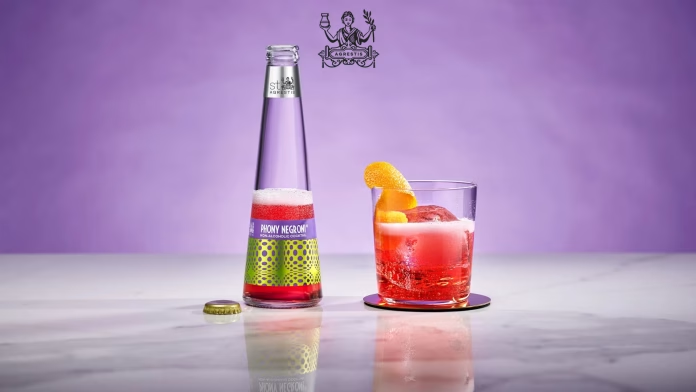
The Wine Group (TWG) has acquired Brooklyn-based St. Agrestis, the cult-favorite brand behind the viral “Phony Negroni,” marking its first major move beyond traditional wine. The deal, announced on April 30, 2026, signals a decisive push into the fast-growing non-alcoholic (NA) beverage category as consumer demand for “sober-curious” options continues to rise.
Founded by Nicholas Caton and Louis Caton, St. Agrestis built its reputation by replicating the complexity of classic cocktails without alcohol. Its flagship Phony Negroni—crafted with over 30 botanicals—has become a standout in the zero-proof segment, alongside variants like the Phony Mezcal Negroni and Amaro Falso. The acquisition also includes the brand’s alcoholic aperitivo portfolio, giving TWG a dual-position across both traditional and non-alcoholic categories.
For TWG, which owns mass-market labels such as Cupcake Vineyards and Franzia, the strategic play is scale. By leveraging its extensive distribution network across retailers like Kroger and Costco, the company aims to transition St. Agrestis from niche, boutique shelves into mainstream grocery aisles nationwide. At the same time, it plans to expand into on-premise channels—placing Phony Negronis in restaurants, bars, and hotel mini-bars where premium NA options remain limited.
The acquisition also aligns with a broader “dual-consumption” trend, where consumers increasingly alternate between alcoholic and non-alcoholic beverages within the same occasion. By owning both sides of that equation, TWG is positioning itself to capture a larger share of total beverage spend.
At the heart of St. Agrestis’ appeal is its “complexity moat.” Unlike many NA brands that rely on sweetness, the company uses traditional amaro-inspired techniques to deliver bitterness, depth, and food-pairing versatility—qualities that resonate with mature, cocktail-savvy consumers. As TWG scales the brand nationally, its biggest challenge will be preserving this artisanal identity while meeting the demands of mass distribution.
The deal underscores a clear industry shift: non-alcoholic is no longer a niche—it’s becoming a core pillar of the global beverage landscape.
Meesho is preparing to challenge a ₹14.29 crore GST demand after a Mumbai appellate authority upheld tax claims tied to its social commerce model. The dispute, covering transactions between October 2018 and March 2020, puts the spotlight on how India’s tax framework interprets reseller-driven e-commerce.
At the center of the case is whether Meesho should be treated as a tax-collecting intermediary under Central Goods and Services Tax Act provisions—specifically Section 52, which mandates Tax Collected at Source (TCS) for e-commerce operators. Tax authorities argue that even when transactions are completed outside the platform, Meesho remains liable as the facilitator. The company, however, maintains that TCS applies only when the platform controls the full transaction cycle, including payments—something not always true in its reseller-led ecosystem.
The appellate ruling delivered a mixed outcome. While the core tax demand and interest were upheld—and penalties under Section 74 (linked to alleged suppression of facts) sustained—a separate penalty under Section 122 was dismissed, offering partial relief. Meesho is now expected to escalate the matter to the GST Appellate Tribunal (GSTAT), where the case could set a precedent for the broader digital commerce sector.
This dispute comes amid a challenging regulatory phase for Meesho, which is also dealing with a ₹1,499 crore income tax demand for FY23–24 (currently under legal review). Despite these headwinds, the company continues to scale, reporting ₹3,518 crore in Q3 FY26 revenue, although losses widened due to aggressive investments in logistics and customer acquisition.
The outcome of this case could have far-reaching implications. A ruling against Meesho may force social commerce platforms to track and tax even off-platform transactions—potentially increasing compliance costs and reshaping the reseller economy. For now, Meesho remains confident in its legal stance, positioning the case as a critical moment in defining how India regulates the fast-evolving intersection of technology, commerce, and taxation.
Golden Child has officially emerged from stealth with a massive $37 million in combined Seed and Series A funding, signaling a bold new play in the premium pet nutrition space. The round, led by Redpoint Ventures with participation from Atomic and A*, positions the Miami-based startup as one of the most well-capitalized early entrants in the rapidly evolving “human-grade” pet food category.
Founded by Quentin Lacornerie and Jack Abraham—both alumni of Hims & Hers—the brand is applying a “wellness-as-a-lifestyle” framework to pet care. Their core thesis is simple: if humans are upgrading their diets, pets should too.
Golden Child’s product ecosystem is built around fresh-frozen “Mains” and shelf-stable “Drizzles.” The Mains offer complete, nutrient-dense meals such as chicken with vegetables or beef with zucchini, designed to mirror high-quality human food while meeting canine nutritional standards. Meanwhile, Drizzles act as convenient toppers to enhance taste and nutrition for existing diets—targeting picky eaters and hybrid feeders. Pricing starts at around $3 per day, positioning the brand as premium yet accessible within the fast-growing subscription pet food segment.
The company has also invested heavily in credibility and formulation. Its team blends veterinary nutritionists with culinary leadership, including chef Erin Acevedo, ensuring meals meet both AAFCO standards and real-world palatability. Additionally, Hilary Coles brings D2C health-brand expertise, reinforcing Golden Child’s ambition to build a trusted, habit-forming consumer brand.
A key differentiator lies in its algorithm-driven personalization engine. Borrowing from telehealth playbooks, the platform uses a detailed “Pet Quiz” to tailor meal plans based on breed, activity level, and health conditions. This subscription-first model not only improves customer retention but also solves a long-standing friction point in pet food—bulk buying and inconsistent feeding routines.
Golden Child’s launch reflects a broader shift in the $150 billion global pet market, where consumers are increasingly treating pets as family and demanding higher-quality, transparent nutrition. By combining human-grade sourcing, personalization, and lifestyle branding, the company is positioning itself not just as a pet food brand—but as a modern wellness platform for pets.
Замечали ли вы, как часто люди страдают от одиночества или повседневной рутины? В мрачный день обратиться к чему-то необычному и интересному может быть именно тем, что вам нужно. Интимный досуг — это не только возможность расслабиться, но и шанс разнообразить свою жизнь новыми эмоциями, впечатлениями и даже опытом. Данная статья предлагает вам безопасный и комфортный способ провести вечер с девушкой, углубляясь в нюансы выбора, подготовки и общения. Содержимое этого текста поможет вам понять, как сделать ваш вечер запоминающимся и беспроблемным.
Выбор правильной компании: как найти подходящую девушку
Правильный выбор — это залог успешного вечера. Существует множество платформ и агентств, которые предлагают свои услуги. Важным аспектом является репутация, отзывчивость и профессионализм предлагаемых девушек. Начните с исследований:
Чтение отзывов. Соответствующие отзывы могут дать понимание о достоинствах и недостатках. Легко найти платформы, где потенциальные клиенты делятся своим опытом.
Подбор по интересам. Обратите внимание на профили девушек. Многие из них указывают свои увлечения, хобби и предпочтения. Это поможет вам выбрать не только по внешнему виду, но и по совместимости.
Личное общение. После выбора достаточно краткого общения для знакомства. Не бойтесь задавать вопросы, чтобы понять, подходит ли вам эта девушка.
Важно помнить, что хороший вечер начинается с создания комфортной атмосферы и доверия. Уважение к девушке и ее границам должно быть в приоритете.
Создание комфортной атмосферы: что учесть при подготовке вечера
Одним из ключевых факторов приятного вечера является комфортная обстановка. Что включает в себя создание этой атмосферы? Давайте разберем шаги:
Место встречи
Независимо от того, предполагаете ли вы встречу в кафе, ресторане или у себя дома, важно выбрать подходящее место. Учитывайте следующие моменты:
Уют. Оптимально, если это будет тихое и спокойное заведение, где вы сможете спокойно общаться.
Удобство. Место должно быть легкодоступным и безопасным как для вас, так и для девушки.
Репутация. Избирайте заведения с хорошей репутацией, чтобы не возникло неприятных ситуаций.
Создание настроения
Обратите внимание на фон. Музыка, освещение и запахи могут существенно изменить восприятие. Если вы решили провести вечер дома, подумайте о декоре:
Музыка. Выберите легкую, ненавязчивую музыку, которая создаст расслабляющую атмосферу.
Освещение. Настройте мягкое освещение, которое создаст интимность.
Запахи. Используйте ароматические свечи или благовония для создания уюта.
Правила общения: как установить контакт
Когда вы встретитесь, важно, чтобы общение пошло «на ура». Хороший вопрос — это первая ступень к глубокому разговору. Вот несколько советов, как это организовать:
Задавайте вопросы
Проявляйте интерес к девушке. Общение — это двусторонний процесс. Некоторые хорошие вопросы:
Что ты больше всего ценишь в жизни?
Какой самый вдохновляющий опыт у тебя был?
Что тебя увлекает в свободное время?
Это может привести к более глубокому разговору и созданию связи.
Слушайте и учитывайте
Важно не только говорить, но и слушать. Учитывайте ответные реакции на ваши слова. Это позволит вам создать неформальную обстановку и покажет, что вы заинтересованы в продолжении общения.
Интимное время: как чувствовать себя комфортно и безопасно
Ни один вечер не будет полным без интимной составляющей. Важно помнить, что каждая девушка индивидуальна, и нужно учитывать ее желания и границы:
Обсуждение ожиданий
Перед тем как принять решение о более близком взаимодействии, стоит обсудить ожидания. Это важный шаг, который поможет избежать неловких моментов в будущем. Будьте открытыми в отношении своих желаний, но не менее важно внимательно следить за реакцией собеседницы.
Безопасность на первом месте
Будьте всегда внимательны к безопасности. Если у вас возникают сомнения о безопасном сексе, ведите честный разговор на эту тему. Использование средств защиты — это не только вопрос безопасности, но и знак уважения к своему партнеру.
После встречи: как правильно завершить вечер
Завершение astrahan-ko.club/body_id_3 вечера играет не меньшую роль, чем его начало. Ваши действия после завершения вечера могут оставить lasting impression.
Обратная связь
Если вам понравилась встреча, дайте это понять. Личное сообщение с похвалой или предложением встретиться вновь может сделать вечер завершающим моментом, который оба запомнят. Это создаст ощущение доверия и открытости.
Заботливость
Подумайте о том, чтобы довести девушку до дома или помочь вызвать такси. Это может показаться малозначительным, но такие жесты заботы позволяют подчеркнуть ваше уважение и внимание к её потребностям.
Дополнительные советы по интимному досугу: что важно знать
В завершении рассмотрим несколько дополнительных советов, которые помогут вам извлечь максимум из вашей встречи:
Безопасность прежде всего. Всегда помните о том, что уважение и безопасное поведение должны оставаться вашим главным приоритетом.
Открытость и честность. Четкое выражение своих мыслей и желаемого поможет наладить доверительные отношения.
Не забывайте о мелочах. Иногда именно маленькие жесты могут сделать вечер поистине незабываемым.
Каждый вечер может стать чем-то особенным, если правильно подойти к его организации и быть открытым к новым идеям. Используйте приведенные в статье советы, и вы сможете создать волшебную атмосферу, которая останется в памяти на долгое время.
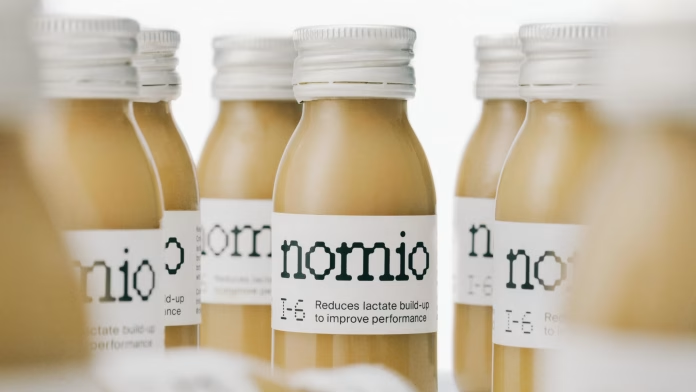
Nomio has secured $4 million in fresh funding, led by Collaborative Fund, as it scales from a niche performance product used by elite athletes into a broader commercial offering. The Stockholm-based startup is pioneering a new category within sports nutrition by commercializing Isothiocyanates (ITCs)—a bioactive compound derived from broccoli sprouts—positioning itself at the intersection of biotechnology and high-performance wellness.
Unlike traditional performance shots that rely on caffeine or nitrates, Nomio’s formulation is built around cellular resilience and recovery. Its core innovation lies in stabilizing ITCs, which have been shown to help the body manage lactic acid buildup during intense exercise, reduce oxidative stress by activating the Nrf2 pathway, and accelerate recovery metrics such as muscle soreness and heart rate variability. This “science-first” approach allows Nomio to differentiate itself as a technical performance tool rather than a generic wellness drink.
The brand’s early traction has been driven by organic adoption among elite athletes, including Cole Hocker and Andreas Almgren, as well as professional cycling teams where marginal gains in recovery can significantly impact performance. This grassroots credibility has helped Nomio build a strong foundation without heavy marketing spend, reinforcing its positioning as a performance-driven, athlete-validated product.
Nomio’s rise also aligns with the broader boom in hyper-functional wellness shots, a category expected to reach $1.5 billion globally by 2027. As competitors focus on energy, immunity, or productivity, Nomio is carving out a distinct niche in endurance and recovery optimization, targeting serious athletes rather than mass-market consumers—at least in its current phase.
From a strategic standpoint, the company’s biggest advantage lies in its proprietary stabilization process for ITCs, which creates a meaningful barrier to entry in a crowded supplement market. By owning the underlying science and extraction technology, Nomio is effectively building an IP-driven moat, similar to how performance brands differentiate through proprietary materials or formulations.
With this funding, Nomio is expected to expand beyond the Nordic region into key markets like the US and UK, moving from an “insider secret” to a mainstream performance product. If successful, it could redefine how athletes—and eventually everyday consumers—approach recovery, shifting the focus from stimulants to cellular-level optimization.
India’s branding and retail landscape in April 2026 is undergoing a clear transformation, with culture, content, and commerce converging at an unprecedented pace. A defining highlight of this shift is Triptii Dimri becoming the first Indian ambassador for Victoria’s Secret, signaling not just a milestone for representation but also the growing strategic importance of India in global fashion narratives.
Brands are increasingly moving beyond traditional celebrity endorsements toward content-led partnerships. For example, Ananya Panday’s role as the “Voice of Limca” reflects a social-first strategy designed to engage Gen Z through continuous storytelling rather than one-off campaigns. Similarly, Tiger Shroff’s association with Slovic highlights how brands are using influencers to make aspirational lifestyles—like home fitness—more accessible and relatable.
At the same time, fandom-driven marketing is emerging as a powerful growth lever. KITKAT India’s collaboration with One Piece demonstrates how brands are tapping into highly engaged communities through collectible packaging and digital storytelling. This approach transforms consumers into active participants, amplifying reach organically through social sharing.
On the retail front, India’s luxury map is expanding beyond traditional metros. The launch of Off-White’s flagship store at Phoenix Mall of Asia underscores Bengaluru’s emergence as a key destination for premium and streetwear consumption, driven by a young, globally exposed consumer base.
Meanwhile, the marketing ecosystem itself is evolving. The acquisition of Agenseed by One Hand Clap reflects a shift toward full-stack capabilities, where agencies combine creative storytelling with influencer distribution to deliver measurable outcomes. In parallel, sports collaborations like Birla Estates’s partnership with Gujarat Titans are becoming more immersive, focusing on fan experiences rather than passive sponsorship visibility.
Together, these developments highlight a broader shift in India’s marketing playbook—from mass advertising to culture-first, community-driven, and omnichannel engagement strategies. Brands are no longer just selling products; they are building ecosystems that blend storytelling, experience, and accessibility to stay relevant in an increasingly competitive market.
We use cookies to ensure that we give you the best experience on our website. If you continue to use this site we will assume that you are happy with it.