Thursday, December 18, 2025
Home Blog Page 16

Coca-Cola Confirms Permanent Return of Diet Cherry Coke in 2026 Amid Strong Consumer Demand

0

Coca-Cola is preparing to pull one of its most requested flavors out of retirement, confirming that Diet Cherry Coke will return to stores nationwide in early 2026 as a permanent product. The company’s decision brings an end to a five-year absence for the diet cola variant, which was taken off shelves in the United States at the close of 2020 despite a long and loyal following.

The flavor, first introduced in 1986, had built a strong identity within the Diet Coke family. Its withdrawal had sparked disappointment among fans, and the company’s latest move appears aimed at tapping into a base of consumers who have consistently asked for its revival. With the broader soda market experiencing both heightened competition and shifting consumption patterns, Coca-Cola is leaning on a familiar product rather than creating an entirely new line.

The company’s leadership has spoken openly about the challenges shaping its current operating environment. CEO James Quincey noted during the third-quarter earnings call that while overall demand remains steady, several consumer segments are feeling the strain of inflation and economic uncertainty. Weather fluctuations and volatile global trade conditions have created additional pressure. Despite these hurdles, he said the company managed to record volume growth, with September finishing stronger than earlier summer months.

Marketing analysts believe Coca-Cola’s decision aligns with a growing trend of brands revisiting discontinued products that carry built-in nostalgia and minimal consumer education costs. Purvi Shah, associate professor of marketing at Worcester Polytechnic Institute, told The Street that relaunching a proven flavor is often less risky than introducing a completely new beverage in a tight macroeconomic climate.

Coca-Cola will now face the task of ensuring adequate production and retail placement ahead of the 2026 rollout. If early consumer sentiment is any indication, Diet Cherry Coke’s return could turn into one of the company’s most successful restorations of a legacy product.

Advertisement

Go Colors, Prajakta Koli Launch MostlySane Collection to Redefine Modern Bottomwear

0

Go Colors has entered the year-end fashion season with a high-visibility campaign fronted by creator and actor Prajakta Koli, better known to millions online as MostlySane. The collaboration has resulted in a new capsule collection that positions the Chennai-headquartered apparel brand more firmly in the youth segment at a time when street-inspired silhouettes and relaxed fits continue to dominate women’s fashion in India.

The MostlySane Collection features five bottomwear styles that reflect current demand among younger shoppers. The lineup includes denim skirts, denim cargos, cargo pants, parachute pants and cargo sweatpants, each designed with utility elements and soft, easy-movement fabrics. For Go Colors, which built its early success around leggings and everyday essentials, the new range signals a broader push into trend-driven fashion that still remains accessible in terms of price and wearability.

Industry trackers note that women’s bottomwear has been expanding steadily, particularly among consumers between 16 and 30, who are spending more on mix-and-match separates and outfit-friendly basics. With more than 600 stores across India and a growing online presence, Go Colors has been attempting to capture this demand by widening its portfolio beyond core categories.

Speaking about the collaboration, founder and chief executive Gautam Saraogi said the partnership with Koli reflects the brand’s effort to stay closely aligned with what young women choose to wear today. He added that shoppers are increasingly looking for clothes that feel expressive yet uncomplicated, and the new collection was developed to mirror that shift.

By spotlighting Koli, who commands one of India’s most engaged digital communities, Go Colors is betting on cultural relevance and broad reach to strengthen its position in the competitive women’s apparel market. The launch marks another step in the company’s long-term attempt to evolve from a staplewear label into a full-spectrum fashion brand for modern Indian women.

Advertisement

Rolex Comes to Infinity Timeless as Infinity Group Targets the Rapid Rise of India’s Premium Watch Buyers

0
Image of rolex
Rolex Comes to Infinity Timeless as Infinity Group Targets the Rapid Rise of India’s Premium Watch Buyers

Infinity Group has stepped into the luxury retail arena with the launch of its new venture, Infinity Timeless, marking its entry into high end watches and jewellery. The company has also secured one of the most sought after partnerships in the industry by becoming an authorized dealer for Rolex, a milestone that instantly places the brand in a premium league.

The new showroom reflects the understated elegance associated with Rolex. Warm lighting, polished surfaces and a meticulous layout create a space designed to highlight craftsmanship rather than overwhelm it. Display cases are positioned with intention, giving each timepiece a sense of importance. The design language signals Infinity Group’s clear commitment to international luxury standards.

The leadership team formally opened the store at a ribbon cutting ceremony, underscoring the significance of the expansion. For Infinity Group, this move represents more than just a diversification of offerings. It marks a step into a segment where trust, reputation and long term relationships matter as much as product selection.

India’s appetite for luxury watches has grown sharply in recent years, driven by rising incomes and a new wave of collectors who view watches as both style statements and investment pieces. Rolex remains one of the strongest names in that space, and availability through authorized channels continues to be limited. Infinity Timeless enters the market at a moment when demand far outpaces supply, which could work in its favour.

The venture also signals Infinity Group’s larger ambition. By aligning with Rolex, the company places itself on a path that could open doors to additional luxury partnerships. For now, the focus is on establishing Infinity Timeless as a trusted destination for customers who want authenticity, expertise and a refined buying experience.

Advertisement

ETİ Gıda Buys TRUBAR as Clean Nutrition Bar Market Surges in North America

0

Vancouver-based clean nutrition bar company TRUBAR has been acquired by Turkish food conglomerate ETİ Gıda for CAD 201 million, marking one of the largest deals in the North American protein snack sector this year. Founded in 2019 by Erica Groussman, TRUBAR has quickly scaled its operations, now retailing in over 15,000 outlets across the United States and carving a niche in the growing health-conscious snacking market.

The company reported revenue exceeding $50 million in 2024 and projects that it will reach $100 million by 2026, reflecting strong consumer demand for protein-rich, clean-label snacks. TRUBAR’s product line, featuring bars that combine nutrition with clean ingredients, has resonated with urban consumers prioritizing convenience without compromising on health, a trend that has fueled significant growth in the category.

The acquisition by ETİ Gıda signals the Turkish food group’s intent to expand its footprint in the North American functional snacking space. ETİ Gıda, known for its diverse confectionery and packaged foods portfolio, is expected to leverage TRUBAR’s established distribution network and brand equity to scale sales across the U.S., while introducing new innovations aligned with global clean-label trends.

TRUBAR’s deal comes amid a wave of consolidation in the protein and nutrition bar segment. Earlier this year, Ferrero Group acquired Power Crunch, and 1440 Foods picked up FitCrunch, while BUILT Bar reportedly engaged bankers to explore strategic options. Analysts suggest the protein bar market, buoyed by rising health awareness and increasing consumer preference for functional snacks, will continue to attract interest from global food and beverage players in 2026.

For Groussman and her team, the ETİ Gıda acquisition represents both a validation of the brand’s rapid growth and a pathway to accelerate innovation and scale. With the North American market for protein and functional bars projected to expand further, TRUBAR’s integration into a global portfolio positions the brand to capture increasing demand for clean, nutritious, and convenient snack options.

Advertisement

Sportswear Giant Puma India Taps Ramprasad Sridharan to Lead Market Growth

0

Puma has announced the appointment of Ramprasad Sridharan as managing director of Puma India, effective December 2025, marking a key leadership transition for the sportswear and lifestyle brand in one of its most strategic markets. Sridharan will report to Matthias Bäumer, chief commercial officer at Puma, and is expected to drive the brand’s growth trajectory across India’s expanding footwear and apparel sectors.

Sridharan brings over 25 years of experience spanning brand building, retail strategy, and commercial leadership across the Asia-Pacific region. Most recently, he served as CEO and managing director of United Colors of Benetton India, where he oversaw a transformation agenda that included operational restructuring, retail expansion, and brand revitalization. His earlier leadership roles include senior positions at Clarks and Reebok India, where he focused on expanding market share and driving consumer engagement.

Bäumer highlighted Sridharan’s appointment as a strategic move to strengthen Puma’s retail footprint and accelerate its brand initiatives in India. “Ram is a highly experienced leader with a proven track record in the fashion and footwear industry,” he said. “His deep understanding of retail operations and consumer dynamics will be instrumental as Puma continues to expand in one of its key markets globally.”

Sridharan succeeds Karthik Balagopalan, who has stepped down to pursue other professional opportunities. Balagopalan’s two-decade-long tenure at Puma included leadership across multiple functions, contributing to the company’s positioning as a major player in India’s sports and lifestyle segment.

The appointment comes at a time when the Indian market is witnessing strong demand for sportswear and athleisure, with increasing penetration of organized retail, e-commerce, and experiential brand engagement. Industry analysts suggest that leadership stability and experienced retail management will be critical for global brands like Puma to capture growth in urban and emerging markets.

Under Sridharan, Puma India is expected to leverage his commercial acumen to expand retail operations, deepen digital initiatives, and strengthen the brand’s engagement with India’s evolving consumer base.

Advertisement

Dior Picks Thai Sensations Lingling Kwong and Orm Kornnaphat as New Ambassadors as Thailand’s Luxury Market

0

Dior has added fresh star power to its global roster by appointing Thai actors Lingling Kwong and Orm Kornnaphat as its newest brand ambassadors. The announcement, made in an exclusive report by Joelle Diderich for WWD on November 24, signals the luxury house’s growing attention toward Thailand’s booming pop culture ecosystem.

Both actresses have earned devoted fan followings through their hit girls’ love dramas The Secret of Us and Only You. Their pairing, often referred to by fans as LingOrm, has become one of the most recognisable duos in Thailand’s entertainment landscape. With this move, Dior taps directly into that cultural momentum, strengthening its visibility among younger audiences across Asia.

The decision also reflects a broader strategy at the fashion house. Luxury brands have been increasing their investment in Southeast Asia, where fashion, beauty and entertainment trends often spread at remarkable speed. Thailand, in particular, has become a magnet for global labels in search of strong digital influence and high engagement rates.

For Dior, Lingling and Orm bring both style and substance. Their on screen presence, paired with a loyal regional fanbase, positions them as powerful cultural connectors. While Dior has historically leaned on major global names, the brand’s recent focus on Thailand suggests a deeper, long term plan to cultivate local relevance in one of Asia’s most active consumer markets.

The duo’s first campaign activities with the house are expected to draw considerable attention, especially as Thai celebrities continue to gain strong traction across fashion weeks and luxury beauty launches. With Lingling and Orm stepping into the global spotlight under the Dior banner, the brand appears set to strengthen its footprint in a market that shows no signs of slowing.

Advertisement

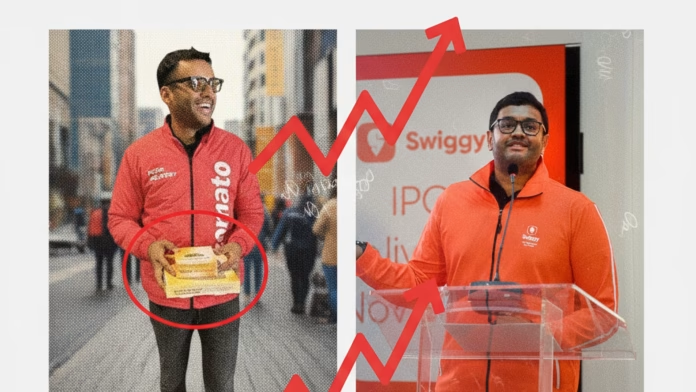
Tadka Rani Owner Claims Zomato Marked Restaurant “Unavailable” to Increase Commissions

0
Image of zomato
Tadka Rani Owner Claims Zomato Marked Restaurant “Unavailable” to Increase Commissions

Delhi restaurant owner Gagandeep Singh Sapra has publicly accused Zomato of manipulating rider allocations, claiming his outlet, Tadka Rani in Greater Kailash 1, is repeatedly marked as “unavailable” on the platform during peak hours despite being fully operational. Sapra shared a screen recording on X showing his restaurant listed as unavailable while several nearby eateries continued to receive delivery partners, raising questions about platform fairness and transparency.

The issue, according to Sapra, has persisted for more than 30 days despite multiple escalations to Zomato’s support teams. “Here’s video proof of how rider allocation is being manipulated,” he wrote, noting that neighboring restaurants within a 50-meter radius were receiving orders without disruption.

The complaint quickly went viral, sparking industry debate about the power and control large food delivery platforms hold over partner restaurants. Responding publicly, Zomato’s food delivery CEO Aditya Mangla acknowledged the concern and said the company would investigate. “Thank you for sharing this. I’m getting this checked,” Mangla wrote in response to Sapra’s post.

Sapra expressed cautious appreciation for the CEO’s engagement but reiterated frustration with the lack of resolution. “I have written to all your team members and have several meetings. Yesterday was the 31st day, and no one seems to see a resolve,” he commented.

In subsequent posts, Sapra alleged that the platform’s actions could be motivated by commission strategies. “It’s all a game to increase their commission, from the current 52% on sales to potentially as high as 99% of each transaction. The greed is not ending,” he wrote, adding that internal mismanagement may have contributed to what he described as a “rigged system.”

While Zomato has not provided a detailed public explanation beyond the CEO’s statement, the incident highlights growing concerns among restaurant partners about operational transparency, algorithmic control, and the financial pressures imposed by platform-driven commission models in India’s highly competitive food delivery ecosystem.

The case continues to unfold as both the restaurant owner and the platform navigate public scrutiny and attempts at resolution.

Advertisement

MW Eat Acquired by Fairfax, Set for Global Expansion of Iconic UK Indian Restaurant Brands

0

London-based Indian restaurant group MW Eat has entered a new phase of international growth following its acquisition by affiliates of Canada’s Fairfax Financial Holdings Limited. The deal is aimed at supporting MW Eat’s global expansion while strengthening the financial and operational backing for its portfolio of iconic Indian dining brands.

MW Eat operates marquee names including Chutney Mary, Amaya, Masala Zone, and Veeraswamy, one of London’s oldest Indian restaurants located on Regent Street. Founded in 1990, the group has built a reputation for fine-dining Indian cuisine and for blending heritage with contemporary dining experiences. Fairfax’s acquisition will provide “significant investments” to accelerate international growth, explore new restaurant formats, and reinforce brand values, the company said.

Camellia Panjabi, MW Eat’s Group Director, highlighted the strategic alignment between Fairfax’s global outlook and MW Eat’s heritage. “This acquisition marks a transformative chapter for MW Eat,” she said, noting that the leadership team—including her sister Namita and brother-in-law Ranjit—will support Fairfax in taking the group’s brands global. Panjabi emphasized that staff and operational continuity remain central to the expansion strategy.

Fairfax Financial, chaired by Prem Watsa, brings experience in hospitality through its Recipe Restaurant Group subsidiary in Canada and has prior Indian investments including Bangalore International Airport, Thomas Cook India, and Sterling Holiday Resorts. Watsa said, “We are delighted to welcome MW Eat into the Fairfax family. The leadership team has done a terrific job building iconic restaurant brands, and we look forward to supporting their long-term potential.”

The acquisition also intersects with Veeraswamy’s ongoing lease situation. The Regent Street location, leased from the Crown Estate, requires refurbishment to meet modern standards. Despite the lease expiry in June, legal protections allow the restaurant to continue operations until a court hearing next year, ensuring the legacy of nearly 100 years of culinary history remains intact.

With Fairfax’s backing, MW Eat aims to transform from a leading UK Indian restaurant group into a global player, leveraging brand strength, operational expertise, and strategic capital to tap new international markets.

Advertisement

Advantedge Scores 30X Returns as Early Bet on Rapido Pays Off Big

0

Rapido’s growth story has handed one of its earliest backers a windfall. Delhi-based venture investor Advantedge has recorded a striking 30 times return on the capital it originally put into the mobility platform, after completing a significant partial exit. The firm first invested in Rapido during its seed round in 2016, writing a cheque of roughly 2.5 to 3 million dollars. Its recent sale, valued at about 28 million dollars, comes as Rapido moves toward closing a 550 million dollar fundraising round led by Prosus and WestBridge Capital.

Even after the sale, Advantedge continues to hold a substantial position in the company. Its remaining stake is valued between 60 and 65 million dollars, giving the fund one of the strongest performances in its portfolio. Founder Kunal Khattar said the overall outcome from Rapido, including the unrealised gains, has pushed the total multiple on invested capital from this single bet to 30 times.

Rapido’s success significantly lifted the performance of Advantedge’s first fund, which was launched in 2015 with a corpus of 10 to 11 million dollars. The fund has now delivered about 30 million dollars back to its limited partners, translating to a distribution-to-paid-in ratio of three times and total returns of 11.5 times on invested capital across all portfolio moves. The first fund is on track to be closed within the next year, with only a few positions left to exit.

Beyond Rapido, Advantedge notched earlier exits through its stakes in Wigzo, which was bought by Shiprocket in 2022 for 25 million dollars, and iimjobs.com, acquired by Info Edge in 2019 for 12 million dollars. Rapido, however, remains its standout performer, delivering an internal rate of return of 67 percent and a 111 times multiple on the earliest tranche of capital.

The firm, backed by the family offices of Motherson and the Hero group, has already deployed its 30 million dollar second fund and is now raising a third, targeting a 60 million dollar corpus. With the new fund, Advantedge plans to double down on early-stage mobility and infrastructure bets, writing cheques in the half-million to 1.5 million dollar range while continuing to support winners from its existing portfolio.

Advertisement

GO DESi Doubles Down on Made Daily Sweets as Vinay Kothari Mobilises a 70 Hour Workweek Team for Citywide Expansion

0

Vinay Kothari, Founder of GO DESi and a well known voice in the Indian packaged food space, has announced the company’s formal entry into the fresh sweets category. In a detailed LinkedIn post, Kothari shared how the move has already turned into one of the brand’s strongest growth experiments.

GO DESi currently manufactures every sweet it sells and operates more than sixty kiosks across key arterial routes leading into Bengaluru. According to Kothari, the team relied on startup style calculations and a fair amount of bold optimism to take a bet on fully fresh Indian sweets.

The company’s first sweets and snacks kiosk opened at Forum Falcon City on Kanakapura Road. Kothari said the aim is to romanticise and elevate the traditional Indian sweet experience. He added that classics like Mysore Paak deserve to be placed alongside global favourites like the French macaron.

All sweets are prepared fresh each day using in-house recipes. The menu features staple classics such as Kalakand and Mysore Paak, along with new age offerings including Blueberry Barfi, Motichoor Cheesecake, Gulkand filled Laddoo, and chocolate stuffed Besan Laddoo. The sweets range is supported by GO DESi favourites like POPz along with new launches in Bhelpuri and fruit bars.

Kothari credited a large internal team for bringing the project to life. The team led by Manpreet Singh Raghavendra Kumar worked seventy hour weeks to set up operations. Gowda Sharat Manjunath established the daily supply chain system. Rahul Sheelavantara and the design team ensured the kiosk and packaging retained GO DESi’s signature identity. Product specialists including Romi Ningombam and Priya Rani Omana refined recipes through multiple rounds of testing.

Kothari invited customers to visit the kiosk and share feedback as GO DESi scales this new vertical.

Advertisement