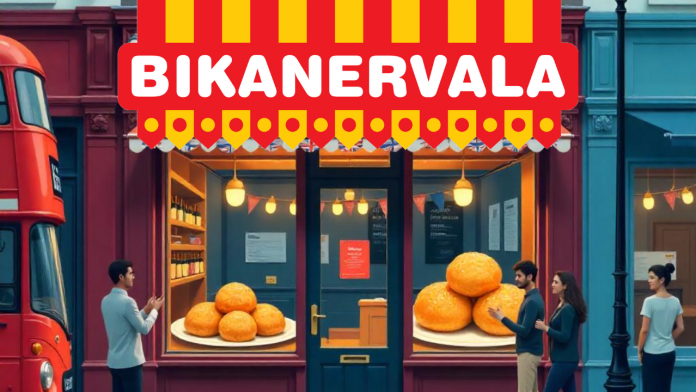
Bikanervala Opens First UK Outlet in Hounslow, London—Brings Gol-Gappas, Gulab Jamuns, and Chole Bhature to 101-105 High Street
London just got a little more desi. Bikanervala, the iconic Indian chain known for its sweets, chaats, and comfort food, has officially landed in the UK. The brand has opened its first-ever London outlet in the heart of Hounslow, at 101-105 High Street, TW3 1QT.
Now, locals can dig into gol-gappas, chole bhature, raj kachori, and rich gulab jamuns without hopping on a flight to Delhi. The announcement was made via the brand’s official handles on Instagram and X (formerly Twitter), creating a buzz among Indian expats and foodies alike.
A household name back home, Bikanervala has built its legacy serving everything from crispy bhujiyas and pav bhaji to classic mithais like rasgullas and soan papdi. With this new address in London, it’s bringing that same blend of tradition and indulgence to UK diners.
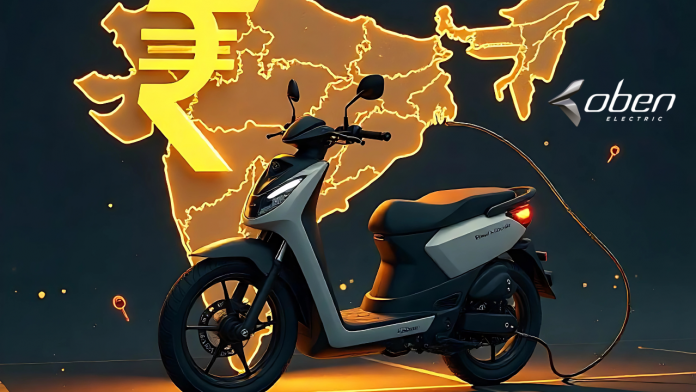
Oben Electric Secures Rs 200 Cr in Total Funding, Plans 150 Showrooms and Mass-Market EV Launch
Bengaluru-based electric motorcycle company Oben Electric has added another Rs 50 crore to its war chest, bringing its total Series A round to Rs 100 crore. This latest cash injection also nudges its total funding to date to a solid Rs 200 crore.
The newest round—coming just a few months after a similar raise in January 2025—drew support from returning investors, along with new names like Helios Holdings, the Sharda Family Office, and the Kay Family. The company says it will use the funds to ramp up its physical presence, step up manufacturing, and introduce more budget-friendly offerings aimed squarely at the Indian middle class.
“This investment arrives at a pivotal time for us,” said Madhumita Agrawal, founder and CEO. “We’re growing across the country and working hard to make electric motorcycles something everyday riders can afford and rely on.”
Oben isn’t wasting time. Since its first Series A raise, the company has launched 37 outlets in 26 cities across 13 states, including Punjab, Gujarat, Telangana, and Odisha. With the new funds, that number is set to balloon to over 150 showrooms in 50 cities by FY26. Plans are also in motion to beef up its after-sales support and expand production at its facility in Bengaluru.
Enter the O100: A Sub-Rs 1 Lakh EV for the Masses
A major part of Oben’s future strategy is its upcoming O100 platform, an electric motorcycle line designed to hit a price point under Rs 1 lakh—a sweet spot for Indian buyers who want value without sacrificing performance or longevity.
Oben also stands out for building most of its tech in-house—from batteries and motors to control systems—a move that helps keep both quality and costs in check. The company says this vertical integration will be a key lever as it fights for dominance in India’s increasingly competitive EV market.
With its sights now set on scaling and accessibility, Oben is making it clear: the electric two-wheeler revolution isn’t just for the premium crowd anymore.
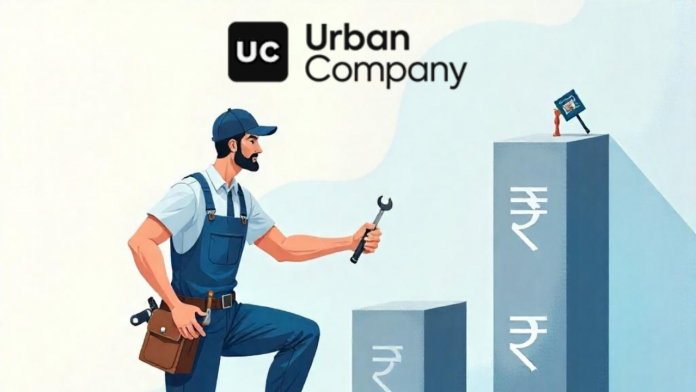
Urban Company Turns Profitable in FY25 with Rs 240 Cr Net Profit, Revenue Surges 38% to Rs 1,144 Cr
After years of burning cash to scale, Urban Company has finally broken into the black. The Gurugram-based home services marketplace closed FY25 with a net profit of Rs 240 crore, a sharp rebound from its Rs 92.7 crore loss in FY24. This profitability milestone came on the back of a 38.2% rise in operating revenue, which touched Rs 1,144 crore for the year ending March 2025.
A big boost to the bottom line came from a Rs 211 crore deferred tax credit. But even after stripping that out, the company still reported a healthy pre-tax profit of Rs 28 crore, reflecting stronger cost discipline and operational gains.
From Pedicures to Purifiers: Business Mix That Paid Off
Urban Company clocked 6.8 million service transactions during the year, covering everything from facials and massages to pest control and appliance repair. Operating across India and international markets including Singapore, the UAE, and Saudi Arabia, the platform saw its total transaction value rise to Rs 3,115 crore.
Platform services remained the company’s bread and butter, bringing in Rs 742 crore—about 65% of its operational revenue and up 32.5% year-on-year. Its customer membership model earned Rs 98 crore, showing modest growth of 7.7%.
However, the surprise performer this year was Urban Company’s in-house product line, Native. The company’s branded water purifiers generated Rs 116 crore in revenue—nearly 4x the previous year’s Rs 29 crore. Add another Rs 188 crore from products sold to service professionals, and the commerce vertical is showing real momentum.
India Leads the Charge, But Global Is Gaining Ground
The bulk of the revenue still comes from the domestic market, which contributed Rs 997 crore to the topline. International operations, though smaller, added Rs 147 crore. An additional Rs 117 crore came from non-core earnings—interest and mutual fund returns—pushing total income for FY25 to Rs 1,261 crore, a healthy jump from Rs 928 crore in FY24.
Urban Company’s sharp turnaround makes it one of the few consumer internet businesses in India to post a profit at scale, setting a precedent in a space where losses are often seen as the price of growth.
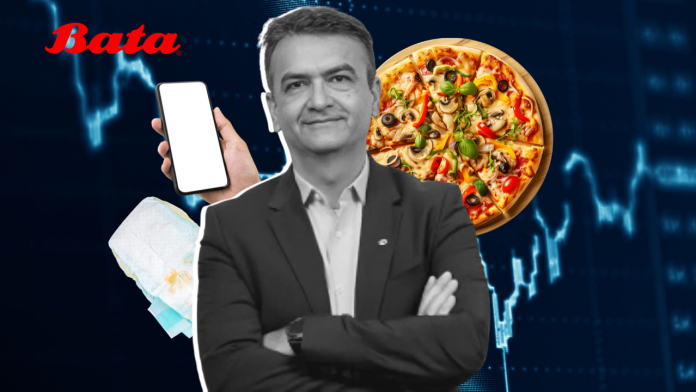
Sandeep Kataria Steps Down as Bata’s Global CEO After a Game-Changing Run Across Diapers, Data Packs, and Deep-Dish Pizza
Sandeep Kataria, the man behind Bata’s transformation from a household name in India to a stronger global player, is stepping down from the corner office. As the first Indian to hold the top job at Bata Corporation worldwide, his departure marks the end of a significant chapter for the Swiss-headquartered footwear giant.
But he’s not dashing off just yet — Kataria will stay on for another six months, helping ease the leadership transition and keeping the wheels turning smoothly while the company searches for its next captain.
From Baby Products to Brogues: A Career Full of Pivots
Kataria didn’t take the straight path to the shoe business. His résumé reads like a crash course in consumer behavior across wildly different sectors:
Unilever: Nearly two decades spent navigating the world of baby diapers, toothpaste, and shampoos — with stints across sales, brand-building, and international roles.
Yum! Brands: He traded consumer goods for crispy chicken, heading marketing for KFC and Pizza Hut in India.
Vodafone India: Then came telecom, where he steered brand and strategy, selling not buckets or beauty products, but data plans and network promises.
From FMCG aisles to fast-food counters to mobile towers, Kataria’s career has been anything but boring — and it culminated in leading one of the most iconic footwear names on the planet.
Razorpay Picks Up Majority Stake in POP with $30 Million Investment, Enters Consumer UPI and Rewards War
Fintech major Razorpay has made a bold move into the UPI consumer payments space by investing $30 million in Bengaluru-based startup POP, a platform known for blending digital payments with a rewards-first approach. The deal gives Razorpay a controlling stake in POP, although the latter will continue to run as an independent company.
POP, which kicked off its UPI-based services in June 2024, has seen rapid traction over the past year. It now handles over 6 lakh daily UPI transactions and has notched up more than 1 million unique monthly users, according to internal figures. Alongside its payments play, POP has also issued 40,000+ RuPay credit cards in partnership with Yes Bank, and claims to have fulfilled 2 lakh e-commerce orders via its app.
The platform’s hook is its rewards engine — POPcoins, a universal loyalty currency that users earn with every transaction or purchase. These POPcoins can be redeemed across a wide merchant network, allowing users to get actual value in return for their everyday spending.
Razorpay’s backing will give POP the fuel it needs to grow its merchant ecosystem and beef up its loyalty tools. It’s also a strategic fit for Razorpay, which is looking to deepen its offerings for merchants by bundling payments, loyalty, and customer engagement into one platform.
This isn’t Razorpay’s first move into rewards — it acquired PoshVine in 2022 to layer loyalty into its core payment stack. But with POP, Razorpay now has a direct entry point into the consumer UPI landscape, positioning it to compete with players like PhonePe, Paytm, and the recently rebranded PostPe by BharatPe.
POP previously raised $2.4 million in seed funding in June 2023 from India Quotient and several angel investors. With Razorpay’s capital and ecosystem muscle, it now aims to scale faster, sharpen its product offerings, and become
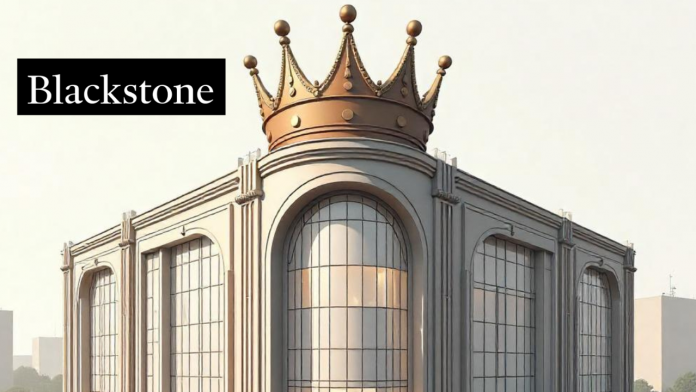
Blackstone Expands Indian Portfolio with ₹3,250 Crore Purchase of South City Mall, Kolkata’s Retail Crown Jewel
Global investment giant Blackstone has struck a major deal by purchasing South City Mall, one of Kolkata’s most prominent shopping destinations, for a reported ₹3,250 crore. The transaction, which marks one of the largest retail real estate acquisitions in recent times, was closed with support from real estate advisory firm ANAROCK.
South City Mall, known for its prime location and high footfall, spans over a million square feet and is home to more than 150 brands, both Indian and international. With annual sales crossing ₹1,800 crore, it has consistently ranked among the top-performing malls in eastern India. Its infrastructure includes multi-level parking for over 1,250 vehicles — a critical advantage in the crowded cityscape of Kolkata.
Commenting on the acquisition, Asheesh Mohta, Blackstone India’s Head of Real Estate Acquisitions, said the group sees long-term value in South City Mall’s strong brand equity and market position. “This is not just a retail space; it’s a cultural and commercial landmark. We plan to build on the South City Group’s efforts and push the asset to its next stage of growth, drawing on our experience and scale in India’s retail sector,” he noted.
With this addition, Blackstone further cements its position as one of the biggest owners of retail assets in India — a market it continues to aggressively expand in. The move also reflects growing investor confidence in India’s consumer-led commercial real estate landscape.
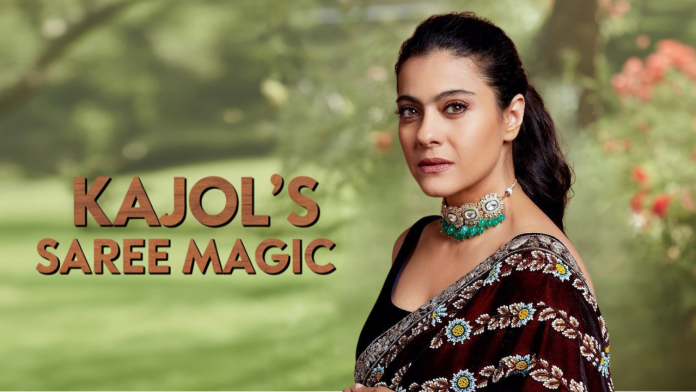
Kajol’s Monochrome Saree Looks Are the Quiet Revolution We Didn’t Know We Needed
When Kajol Devgn stepped out in a white chiffon saree recently, the internet sighed—and then hit repost. The actress, who’s always known for being low-key elegant, has sparked a whole trend around monochromatic minimalism, and trust us, it’s powerful.
Her recent looks have centered around pristine whites, soft ivories, and muted beiges—draped in classic silhouettes with subtle gold or thread work borders. But it’s not about “less is more” in a lazy way. Kajol’s take on minimalism feels intentional. Every drape is crisp, every accessory is curated, and the vibe is pure grown-woman elegance.
There’s no over-styling here—no crazy hairstyles or statement bags. Just vintage-inspired drapes, statement rings, kohl-lined eyes, and a confidence that reminds you: you don’t need a thousand embellishments to own a room.
What’s incredible is how Kajol is taking this moment to highlight craftsmanship. Many of her sarees are made by artisans from Bengal and Varanasi, bringing regional craft to a global celebrity spotlight. In an age where everything screams for attention, Kajol is whispering—and still managing to captivate.
And now, monochrome saree boards on Pinterest are filling up, brands are pushing out limited-edition ivory collections, and the white-saree-as-power-move is having a full-blown renaissance.
Final Take: Kajol’s looks prove that elegance doesn’t always have to shout. Sometimes, it just has to show up with poise. In her quiet way, she’s giving Indian women permission to embrace simplicity—and reminding the fashion industry that subtle can still steal the show.
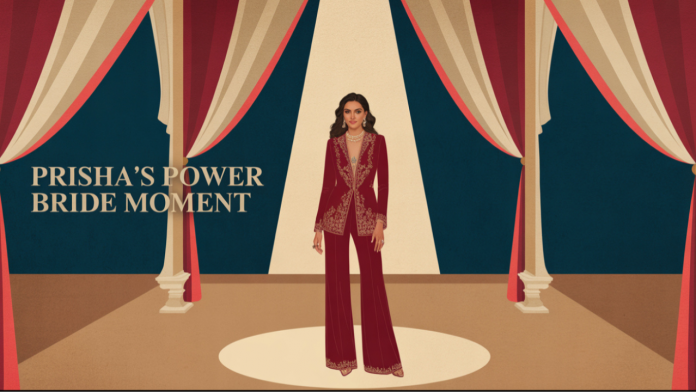
Prisha Dhatwalia’s Bridal Fashion in Meri Bhavya Life Is Bold, Beautiful—and Long Overdue
Indian television just gave plus-size fashion a major win. On Meri Bhavya Life, actress Prisha Dhatwalia is starring in a storyline that has her preparing for a wedding—and doing it in unapologetically stunning bridal couture, created for her curves, not despite them.
Every episode feels like a rejection of outdated bridal rules. Gone are the tight bustiers and restrictive lehengas. Instead, Prisha’s looks are designed for her body type—flowy kalidars with detailed mirror work, shararas that highlight movement, and dupattas that drape with elegance, not constraint. And it’s not just a costume. It’s emotionally aligned styling—empowering and personal.
She’s also speaking up about it off-screen. In a recent interview, Prisha said, “The outfit should fit you—you shouldn’t have to fit into it.” That statement, though simple, hit hard. Social media has exploded with support. Brides-to-be are tagging designers, stylists are resharing, and bridalwear labels are (finally) listening.
What’s even more powerful is how viewers are connecting to her confidence. Her walk, her smile, the way she owns every frame—it’s rewriting the narrative that beauty is about fitting in. Instead, it’s about fitting out, unapologetically.
Final Take: Prisha’s character may be fictional, but her fashion impact is very real. Her bridal looks aren’t just pretty—they’re political. And hopefully, they mark the start of a more inclusive era in Indian bridal couture where every bride gets to feel seen, styled, and celebrated.
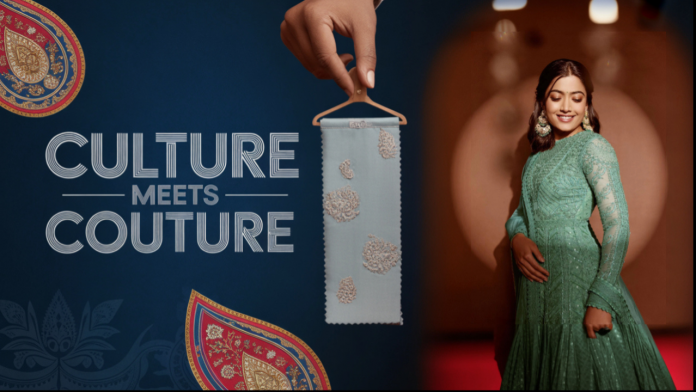
Rashmika Mandanna Is Turning Every Promotional Appearance into a Cultural Fashion Parade – Here’s Why It Works
If there’s one actress who’s using her promotional wardrobe as a cultural canvas right now, it’s Rashmika Mandanna. While promoting her latest film Kuberaa, Rashmika has been serving major looks that are deeply rooted in Indian tradition—think timeless sarees, regal anarkalis, and structured kurta sets with a hint of modern drama.
But it’s more than styling—it’s strategy. Rashmika is blending the glamour of red-carpet-ready fashion with India’s rich textile heritage. From intricately embroidered raw silk sarees to jewel-toned chikankari sets, each look carries an intentional nod to regional craft. And she’s not doing it alone—behind every outfit is a team of young Indian designers and stylists eager to reintroduce handloom, Banarasi, and Zardozi to Gen Z through someone as widely loved as Rashmika.
What makes her looks really click is the accessibility. They feel wearable, yet aspirational. Social media is buzzing with breakdowns of her outfits, and designers are being tagged left, right, and center. This is not fast fashion—it’s fashion that connects.
She’s reminding us that Indian wear isn’t limited to Diwali or weddings. It can be part of daily glam, public appearances, and even street style. Her ‘Srivalli’ essence—graceful, earthy, yet powerful—is showing up in every drape, tuck, and jhumka.
Final Take: Rashmika isn’t just promoting Kuberaa—she’s promoting culture, designers, and India’s deep design vocabulary. This is celebrity styling done right. With every lehenga twirl, she’s putting the spotlight back on local design houses and heritage crafts—proving that tradition and trend can absolutely walk the red carpet together.
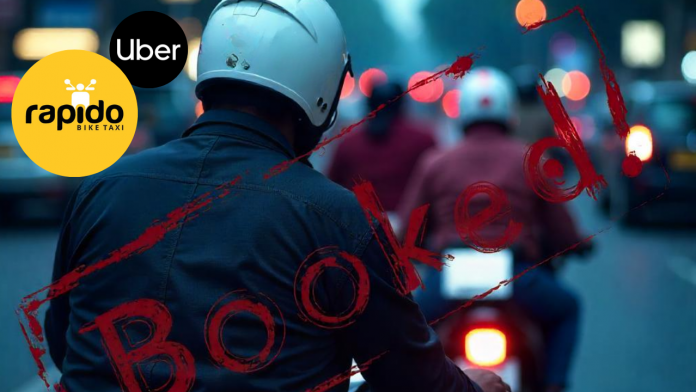
Rapido, Uber Booked for Illegal Bike Taxi Ops in Mumbai After RTO Sting; Face Action Under BNS and Motor Vehicles Act
Mumbai’s transport crackdown just escalated. On Tuesday, city police registered FIRs against app-based bike taxi operators Rapido and Uber, accusing them of running passenger transport services without the required government approvals.
The complaints came after officials from the Regional Transport Office (RTO) posed as customers, booking test rides through both platforms. Their findings triggered formal police complaints at the Azad Maidan police station, alleging that both companies are operating in clear violation of existing transport rules.
According to officials, the Maharashtra Transport Commissioner had earlier directed enforcement teams to take strict action against aggregators offering unauthorized services. “The instructions were clear — these companies can’t continue to transport passengers unless they’re properly licensed,” said a senior RTO official familiar with the matter.
Back in April, Rapido had already received a notice from the RTO warning them about similar violations. But despite the warning, operations appear to have continued, prompting officials to finally escalate the issue to the police.
The complaint outlines that neither Uber nor Rapido has obtained the necessary approvals from the state government or the RTO, yet they continue to run app-based bike taxi services openly. As a result, both companies now face charges under Section 318(3) of the Bharatiya Nyaya Sanhita (BNS) and multiple provisions of the Motor Vehicles Act.
Police confirmed that an investigation is underway.
So far, there has been no official response from either company. Meanwhile, the case adds fuel to an ongoing debate over the legal status of bike taxis in India — a regulatory limbo that’s raising concern for both commuters and policymakers.
We use cookies to ensure that we give you the best experience on our website. If you continue to use this site we will assume that you are happy with it.