On Monday, Celcius Logistics, a provider of cold chain solutions, announced that it had raised INR 100 crore in a funding round led by IvyCap Ventures. The startup had previously secured INR 35 crore from its existing investors, which included Mumbai Angels, Supply Chain Labs, Endurance Capital, VCats, Huddle, Eaglewings Ventures (EVAN), among others.
With the newly raised funds, Celcius Logistics plans to invest in technological innovations to address the fragmented nature of the cold supply chain and minimize wastage in perishable goods. The company intends to work towards building a more sustainable future through these initiatives.
Celcius Founder and CEO Swarup Bose said, “Having raised more funds, we aim to further expand our operations and build a seamless, and truly unbroken cold supply chain, ensuring food security for all. We are also working towards introducing smart tech innovations to address challenges in the pharma sector.”
Operating in over 350 cities across India, Celcius Logistics has a fleet of over 4,500 reefer vehicles, 107 cold storage facilities, seven distribution centers, and a team of 125 dedicated employees. The company also has over 100 hyperlocal riders who aid in their operations.
Celcius Logistics boasts an impressive clientele that includes Zomato, Zepto, Maersk, Prabhat Dairy, Baskin Robbins, Vadilal, Domino’s, Keventers, and Godrej Agrovet. The company claims to have achieved over 20-fold growth last year.
Tej Kapoor, Managing Partner of IvyCap Ventures, will join the board of Celcius Logistics as per the latest announcement by the cold chain solutions provider.
Despite the measures announced by Lieutenant Governor LG Saxena to improve ease of doing business and boost nightlife in the city, nightclubs in five- and four-star hotels located in Delhi are reportedly still facing hurdles, according to recent reports.
Despite the introduction of a unified portal intended to serve as a single platform for all permits, nightclub owners claim that the option for a 24-hour license is still unavailable. Operators are dissatisfied with the old timings, which mandate that they close their establishments by 1am and stop taking orders beyond 12:30am. As the business typically experiences a surge in activity around 11pm, the early closing is causing a loss of revenue, according to the operators.
Sidhant Sharma, CEO of White Club at Hotel Samrat, recently shared that despite collaborating with an international brand and incurring substantial expenses on rentals and salaries, the club has been experiencing significant losses due to early closures. Although the establishment possesses an excise license to serve alcohol around the clock, a lack of an eating house license from Delhi Police is compelling them to shut down early, as per Sharma.
According to Sharma, the police have not received any notification or order authorizing clubs to remain open late into the night.
Ankit Khilwani of Soho at Hotel Ashok concurred, adding that they were keeping their clubs shut as there was no point in incurring daily losses. “We don’t want to do anything illegal and, as a result, we are staying shut. We hope the website allows us to apply for a 24-hour police licence soon, or an order is passed urgently to every police station across the city that outlets in four- and five-star hotels are 24-hour eating houses. We urge officials to follow LG’s business-friendly policies for us to resume operations and benefit,” Khilwani said.
Delhi Police declined to provide any comments on the issue.
In a move to reinforce its position as a dominant player in the Asian food industry, Speciality Restaurants Ltd has announced plans to achieve a revenue of INR 1,000 crore by utilizing technology and revamping its brand, according to a company official’s statement on Monday.
Despite facing headwinds from the Covid pandemic, the multi-brand restaurant chain was able to recover and achieve a standalone net profit of INR 27.67 crore from a turnover of Rs 195 crore during the first half of FY’23, as per recent reports.
“We aim at reaching Rs 1,000 crore revenue in the next five years. Our stated goal is to double our current revenue in four years and triple it in six years, starting from the current level of Rs 400 crore,” Speciality Restaurants CMD Anjan Chatterjee told PTI.
The Kolkata-headquartered company’s key focus will be on “leveraging its key brands and upgrading technology, including the use of AI, to enhance customer experience and drive revenue growth by maintaining EBIDTA of over 25 percent”, he said.
According to Chatterjee, the company’s strategy to achieve its goal involves refreshing its flagship brand, Mainland China, with a new appearance and menu options as the initial step.
“The aim is to increase same-store sales growth (SSSG) and convert Mainland China Mall outlets into Asia Kitchen with the brand refresh,” he said.
The company also plans to ramp up delivery through cloud kitchens and ‘kitchen within kitchen’ set-up, as well as leverage its brand equity to migrate into FMCG ready-to-eat formats, he said.
In addition, Speciality Restaurants intends to introduce a Quick Service Restaurant (QSR) brand and establish two to three outlets in each metropolitan city and one to two in Tier II cities.
Speciality Restaurants has also announced plans to expand its wet-led venture, Episode One, which caters to both GenX and GenY demographics, by opening 2-3 outlets in each metropolitan city and 1-2 in Tier II cities.
The company’s international presence will also be expanded with the launch of Asia Kitchen by Mainland China in key cities globally, he said. The brand has already performed “very well” with two outlets in Dubai and one restaurant in London, Chatterjee said.
Speciality Restaurants was “working with technology partners to increase product shelf life, and expanding its airport and corporate gifting offerings”, he added.
A franchise system is a business model where an established company (franchisor) grants the right to use its brand, products, and services to another individual or entity (franchisee) in exchange for a fee and ongoing royalties.
In the food industry, franchises are a popular way for businesses to expand their reach and increase revenue. A food franchise typically involves a franchisor providing a franchisee with a proven business model, brand name, recipes, training, and ongoing support. The franchisee, in turn, pays an initial franchise fee and ongoing royalties in exchange for the right to use the franchisor’s name and operating system.
In India, food franchises are distributed through a variety of channels. Some franchisors may establish their network of franchisees, while others may use franchise brokers or consultancies to help them identify and recruit potential franchisees.
Here are the top 5 franchises in India that you can buy for under 10 lakh rupees in India:
Chai Sutta Bar(CSB) – Chai Sutta Bar Private Limited (CSB) is an Indore-based chai and beverage serving company founded in 2016 by Anubhav Dubey and Anand Nayak. CSB was started with the idea of serving the highest-consuming beverage after water in India which is chai (Tea). CSB is serving different types of chai along with many food varieties that are available for everyone and enjoy the vibes and taste. With over 450+ outlets in India, CSB is a great franchise to invest in. The initial investment required to start a Chai Sutta Bar franchise is around 7 to 8 lakh rupees.
Rollacosta – Rollacosta is a popular food franchise that offers delicious rolls, wraps, and sandwiches at affordable prices. With over 50 outlets in India, Rollacosta is a great franchise to invest in. The initial investment required to start a Rollacosta franchise is around 5-6 lakh rupees.
Monginis – A popular bakery and confectionery franchise, Monginis offers franchises for an initial investment of around 5-8 lakh. With over 700 stores across India, the brand has a strong presence and reputation. The company provides training and support to franchisees, making it a great option for those without prior experience in the food industry.
Keventers – Keventers is a famous milkshake brand that has been around since 1925. With over 200 outlets in India, Keventers is a great franchise to invest in if you’re looking to offer delicious milkshakes to customers. The initial investment required to start a Keventers franchise is around 8-10 lakh rupees.
Giani’s – Giani’s is a popular ice cream chain in India that offers a wide variety of ice creams, shakes, and sundaes. With over 200 outlets in India, Giani’s is a great franchise to invest in if you’re looking to offer cold treats to customers. The initial investment required to start a Giani franchise is around 6-8 lakh rupees.
The markets have been terrible in recent times, globally !! The fear of slow down in emerging markets and recessions in developed markets is being discussed across boardrooms. The fact that organizations will let go of many employees is making this a very difficult phase, especially after Covid, where a very large part of the population had to dig into their savings to survive is making this phase even more difficult.
India over a period of time has become a country with an improved talent base. The world of business has recognized this shift and incentivised Indian human resources at par with global talent in their primary markets, or home countries. Given these trends, it has also exposed such talent to the vagaries of the market. In the events like the ones we see, where top banks in the US have collapsed, repercussions resonate across the markets, it’s only a matter of time where this caution in the world of business hits the growth possibilities of the Indian workforce.
In a fragile market condition, every professional is facing pressure like never before. This pressure is not necessarily of performance, but of survival. Many have lost their jobs or are on the verge of being asked to leave. Large tech companies are incentivising employees to leave with upto year of salary and benefits.
Losing a job can be a challenging experience, but it can also present an opportunity to explore new career paths and pursue your passions. If you’ve been let go from your job and are considering starting a food business, there are several ideas that you can explore that require minimal investment and can be started with under one lakh. Given the condition, food is a business that can help and save many.
Here are five food businesses that you can start on a budget:
Food truck or cart:
One of the most popular food business ideas is to start a food truck or cart. These mobile businesses are a great way to reach a wide audience and offer a variety of food options in different locations. With a food truck or cart, you can offer everything from burgers and sandwiches to tacos and kebabs.
To start a food truck or cart, you’ll need to purchase or rent a vehicle and outfit it with the necessary equipment, such as a grill, deep fryer, and refrigerator. You’ll also need to obtain any necessary licences and permits to operate in your area.
While this could sound cumbersome, it’s easy and can be quickly put to action. The initial investment for a food truck or cart can vary, but it’s possible to start one for under one lakh. Look for used vehicles or equipment to save money, and focus on offering a unique and high-quality menu to set yourself apart from competitors.
Home-based bakery:
If you have a passion for baking, starting a home-based bakery can be a great way to turn your hobby into a business. With a home-based bakery, you can create a variety of baked goods, from cakes and cookies to bread and pastries.
To start a home-based bakery, you’ll need to obtain any necessary licences and permits to operate in your area. You’ll also need to invest in baking equipment and supplies, such as an oven, mixer, and baking pans.
The initial investment for a home-based bakery can vary, but it’s possible to start one for under one lakh. Look for used equipment to save money, and focus on offering unique and high-quality baked goods to attract customers.
Online food delivery service:
With the rise of online food delivery services, starting your own online food delivery service can be a lucrative business idea. With an online food delivery service, you can offer a variety of food options from local restaurants and food vendors, and deliver them to customers’ homes or offices.
To start an online food delivery service, you’ll need to create a website or app where customers can place orders and pay online. You’ll also need to establish partnerships with local restaurants and food vendors to offer a variety of menu options.The initial investment for an online food delivery service can vary, but it’s possible to start one for under one lakh. Look for low-cost website or app development options, and focus on establishing partnerships with high-quality restaurants and food vendors to attract customers.
Catering business:
If you have a talent for cooking and enjoy entertaining, starting a catering business can be a great way to turn your skills into a business. With a catering business, you can offer a variety of food options for events such as weddings, corporate events, and private parties.
To start a catering business, you’ll need to invest in cooking equipment and supplies, such as serving dishes and utensils. You’ll also need to obtain any necessary licences and permits to operate in your area.The initial investment for a catering business can vary, but it’s possible to start one for under one lakh. Focus on offering high-quality and unique menu options to attract customers, and consider partnering with event planners and venues to expand your reach.
Specialty food product:
If you have a unique and delicious recipe for a specialty food product, starting a business to sell that product can be a great way to turn your passion into a business. Specialty food products can include anything from jams and sauces to spice blends and snacks.
To start a specialty food product business, you’ll need to perfect your recipe and obtain any necessary licences and permits to produce and sell food products in your area. You’ll also need to invest in packaging and labelling materials, and establish partnerships with local retailers or online marketplaces to sell your product.
The initial investment for a specialty food product business can vary depending on the product, but it’s possible to start one for under one lakh. Focus on creating a high-quality and unique product that stands out from competitors, and use social media and other marketing channels to reach potential customers.
Tips for success:
Starting a food business on a budget can be challenging, but with the right approach, it can also be highly rewarding. Here are some tips to help you succeed:
Focus on quality: Regardless of which food business idea you choose, it’s important to focus on offering high-quality and delicious food options to attract and retain customers.
Be creative: To stand out from competitors, be creative with your menu offerings, branding, and marketing strategies. Look for unique flavor combinations or presentation styles that will capture customers’ attention.
Build relationships: Building relationships with customers, suppliers, and partners is key to building a successful food business. Take the time to get to know your customers and their preferences, and work closely with suppliers and partners to ensure a steady supply of high-quality ingredients and equipment.
Embrace technology: Technology can be a powerful tool for reaching and engaging customers. Consider using social media, email marketing, and other online platforms to promote your business and build relationships with customers.
Stay flexible: The food industry can be unpredictable, so it’s important to stay flexible and adapt to changing market conditions or customer preferences. Be open to trying new menu items or expanding into new markets as opportunities arise.
Rise & Shine: Build a business that helps you make you independent.
Starting a food business on a budget is an exciting and challenging endeavour. Whether you choose to start a food truck or cart, home-based bakery, online food delivery service, catering business, or specialty food product business, it’s important to focus on quality, creativity, relationship-building, technology, and flexibility to build a successful and sustainable business.
With hard work and dedication, you can turn your passion for food into a thriving business that brings joy and satisfaction to you and your customers.
In case you need any assistance on starting a food business, please feel free to reach us at +919958129551. We will connect you with experts that will help you solve your queries.
A good business deck is a must for any founder looking to make a good business case amid their stakeholders. It helps you streamline your thoughts by starting with a clear message, using visuals to tell your story, focusing on the problem you’re solving, keeping it short and sweet, and ending with a strong call to action, which helps in creating a compelling and engaging business case that captures investors’ attention and generates interest in your business.
That said, creating a good business deck in just 5 minutes is a misnomer. It’s a marketing gimmick for social media campaigns, rather than actually possible. Creating a successful and engaging business deck requires a significant amount of time and effort, as it’s an essential tool for communicating your ideas and gaining investor interest. A good business deck is holistic, and provides a 360 degree view of all the aspects that a business requires and will possibly achieve during its operations. A good plan also captures the risks that a business runs and deviations from the key milestones as some of the important variables and their effect on the business.
However, there are a few tips and tricks that can help you streamline the process of creating a business deck and make it more effective.
In this article, we’ll explore some of these techniques to help you create a compelling and effective business deck in a relatively short amount of time.
Start with a clear and concise message:
The first step in creating an effective business deck is to determine your core message. What is the main idea that you want to communicate to your audience? This message should be clear, concise, and easy to understand.
To help clarify your message, consider creating a one-sentence summary of your business or idea. This summary should capture the essence of your idea in a single sentence, and it should be easy for anyone to understand.
For example, if you were pitching a new social media platform, your one-sentence summary might be: “We’re building a social media platform that connects people based on shared interests, rather than just social connections.”
By starting with a clear and concise message, you’ll be able to focus your business deck on the most important points and avoid getting bogged down in unnecessary details.
Use visuals to tell your story:
Visuals are an essential tool for creating an engaging and effective business deck. Rather than relying solely on text to convey your message, use images, graphs, and charts to help tell your story.
Visuals can help break up the text and make your deck more visually appealing. Additionally, they can help to illustrate complex ideas and data in a way that’s easy for your audience to understand.
When creating your visuals, be sure to keep them simple and easy to read. Avoid using too much text or cluttering your slides with too many images or graphics. Instead, focus on using visuals that support your core message and help to convey your key ideas.
Focus on the problem you’re solving:
Investors are always looking for businesses that solve real-world problems. When creating your business deck, be sure to focus on the problem you’re solving and how your solution is different from existing solutions in the market.
To effectively communicate the problem you’re solving, consider using customer quotes or testimonials to illustrate the pain points your customers are experiencing. Additionally, use data and statistics to support your claims and show that there is a real need for your solution.
By focusing on the problem you’re solving, you’ll be able to demonstrate the value of your solution and show investors why your business is a worthwhile investment.
Keep it short and sweet:
When creating your business deck, it’s important to keep it short and to the point. While you may be tempted to include every detail and piece of information about your business, it’s important to remember that investors have limited attention spans.
To keep your deck short and sweet, consider using a template or pre-made design to help you organize your content. Additionally, try to limit the number of slides in your deck to 10-12, and aim to keep each slide simple and easy to understand.
When presenting your deck, be sure to practice your pitch so that you can deliver your message clearly and concisely. By keeping your deck short and to the point, you’ll be able to capture investors’ attention and keep them engaged throughout your presentation.
End with a strong call to action:
Finally, it’s important to end your business deck with a strong call to action. This call to action should clearly communicate what you want investors to do next, whether that’s scheduling a follow-up meeting or investing in your business.
To create a strong call to action, consider using a slide at the end of your deck that summarizes your key points and invites investors to take action. This slide should include your contact information and any relevant next steps, such as scheduling a meeting or providing more information.
Additionally, be sure to follow up with investors after your presentation to keep the conversation going. Send a thank you email and provide any additional information or data that investors may have requested. By staying in touch with investors, you’ll be able to build relationships and keep them engaged in your business.
Remember to practice your pitch and follow up with investors after your presentation to keep the conversation going and build relationships that can help your business succeed
Aditya Roy Kapoor is a well-known Bollywood actor who is known for his incredible physique, particularly his abs. Aditya Roy Kapoor’s diet is a crucial part of his fitness routine that helps him maintain his toned and sculpted physique. If you want to achieve the same kind of abs as Aditya, then follow our guide.
In this article, we will take a closer look at Aditya Roy Kapoor’s diet plan and what foods he consumes to achieve his perfect abs.
High protein diet:
Protein is essential for building and repairing muscle tissue, which is why Aditya’s diet is high in protein. Aditya includes a lot of lean protein sources such as chicken, fish, eggs, and tofu in his diet. Aditya consumes 4-5 small meals a day, each consisting of 30-40 grams of protein.
Low carbohydrate diet:
Aditya Roy Kapoor follows a low-carbohydrate diet, which means he restricts his carbohydrate intake. Aditya consumes complex carbohydrates that are high in fiber, such as brown rice, quinoa, and sweet potatoes. He avoids processed and refined carbohydrates like white bread, pasta, and sugary drinks, which can lead to weight gain and bloating.
Healthy fats:
Aditya consumes healthy fats such as nuts, seeds, avocado, and olive oil. Healthy fats are essential for hormone regulation, brain function, and cell growth. Aditya avoids unhealthy fats like fried food and fast food, which can lead to weight gain and heart disease.
Lots of greens:
Aditya’s diet is rich in green vegetables such as spinach, kale, broccoli, and asparagus. Green vegetables are a rich source of vitamins, minerals, and antioxidants, which are essential for overall health and well-being.
Plenty of water:
Aditya drinks plenty of water throughout the day to stay hydrated and maintain his energy levels. Drinking water helps flush out toxins from the body and improves digestion.
Supplements:
Aditya also includes supplements in his diet to complement his workout routine. He takes protein supplements to meet his daily protein requirements, omega-3 supplements for heart health, and multivitamins to ensure he is getting all the essential nutrients.
Here is Aditya Roy Kapoor’s exact diet chart that you can follow:
Breakfast: Aditya Roy Kapoor starts his day with a healthy breakfast that usually includes egg whites, oatmeal, and fruits. Egg whites are an excellent source of protein, while oatmeal provides complex carbohydrates that keep him full for longer periods.
Lunch: Aditya’s lunch consists of brown rice or quinoa, lean protein sources such as chicken or fish, and lots of green vegetables. Brown rice and quinoa are high in fiber and low in fat, making them a healthy carbohydrate choice. Lean protein sources provide him with the necessary amino acids required for muscle growth and repair.
Snacks: Aditya Roy Kapoor snacks on nuts, fruits, and protein bars throughout the day. Nuts and fruits provide him with healthy fats and carbohydrates, while protein bars are an easy and convenient way to consume protein when he is on the go.
Dinner: Aditya’s dinner consists of grilled or baked fish, sweet potatoes, and green vegetables. Fish is an excellent source of omega-3 fatty acids that are essential for heart health, while sweet potatoes provide complex carbohydrates that keep him full for longer periods.
Cheat Days: Aditya Roy Kapoor allows himself cheat days where he indulges in his favorite foods. However, he ensures that he maintains portion control and does not overindulge.
In addition to his diet plan, Aditya also follows a strict workout routine that includes weight training, cardio, and core exercises. He also practices yoga to improve his flexibility and overall well-being.
Aditya Roy Kapoor’s diet plan is a crucial aspect of his fitness routine that helps him maintain his toned and sculpted abs. If you want to achieve the same kind of abs as Aditya, you must follow a strict and disciplined diet plan that is high in protein, low in carbohydrates, and low in fat. Incorporating healthy fats, green vegetables, and supplements can also help you achieve your fitness goals. Remember, a healthy diet plan, combined with regular exercise, is the key to achieving a fit and healthy body.
Sandwiches are a favorite snack for kids as they are easy to prepare, filling and delicious. Mango, on the other hand, is a fruit that is enjoyed by many due to its sweet and juicy taste. Combining mango with a sandwich is a great way to make a healthy and tasty snack for kids.
What is a Mango Sandwich?
Mango sandwich is a type of sandwich that uses ripe mangoes as the main ingredient. The sandwich is made up of two slices of bread filled with cream cheese and thinly sliced mango. Some recipes also include other ingredients like honey, cinnamon, or mint leaves. The bread used for the sandwich can be white or whole wheat, and it can be toasted or left as it is.
How is this recipe unique for kids?
Kids can be picky eaters, and getting them to eat fruits and vegetables can be a struggle. Mango sandwiches are a unique way to introduce mangoes to kids, and it’s a fun and delicious snack that they will love. Here are some reasons why mango sandwich is unique for kids:
It’s a fun way to eat fruits: Kids love fun and colorful foods, and mango sandwiches ticks all the boxes. The bright yellow mango slices add color and excitement to the sandwich, making it more appealing to kids.
It’s a healthy snack: Mangoes are packed with vitamins and minerals that are essential for kids’ growth and development. They are a good source of vitamin C, which boosts the immune system, and vitamin A, which supports eye health. Mangoes also contain fiber, which aids digestion and keeps kids feeling full for longer.
It’s easy to make: Mango sandwich is a simple recipe that even kids can help prepare. Older kids can slice the mangoes, while younger kids can help spread the cream cheese on the bread.
It’s a versatile recipe: Mango sandwiches can be customized to suit your child’s taste preferences. You can add honey for extra sweetness, cinnamon for a warm flavor, or mint leaves for a refreshing taste.
Here is how to make this healthy snack for your kids:
Ingredients:
1 ripe mango, peeled and sliced
4 slices of bread
4 lettuce leaves
4 slices of cheddar cheese
4 tablespoons of mayonnaise
Salt and pepper to taste
Instructions:
Start by toasting the bread slices until they are golden brown.
Wash and dry the lettuce leaves and set them aside.
Spread the mayonnaise on each slice of bread.
On two slices of bread, place a lettuce leaf followed by a slice of cheddar cheese.
Add a layer of sliced mango on top of the cheese.
Sprinkle salt and pepper on the mango slices.
Place the other slice of bread on top of the mango slices, with the mayonnaise side facing down.
Cut the sandwich into halves or quarters, depending on the preference of the kids.
Serve the mango sandwich while it is still warm.
Variations:
You can substitute cheddar cheese with any other cheese of your choice.
You can also add sliced cucumbers, tomatoes or any other vegetable of your choice to the sandwich.
You can use any type of bread for this recipe, including whole wheat, multigrain or white bread.
Making a mango sandwich is a simple and healthy snack idea that is perfect for kids. Mango is a nutritious fruit that offers several benefits for kids, including promoting good eyesight, boosting the immune system and aiding in digestion. By combining mango with a sandwich, you can create a tasty snack that kids will love. So why not give this recipe a try and see how your kids enjoy it!
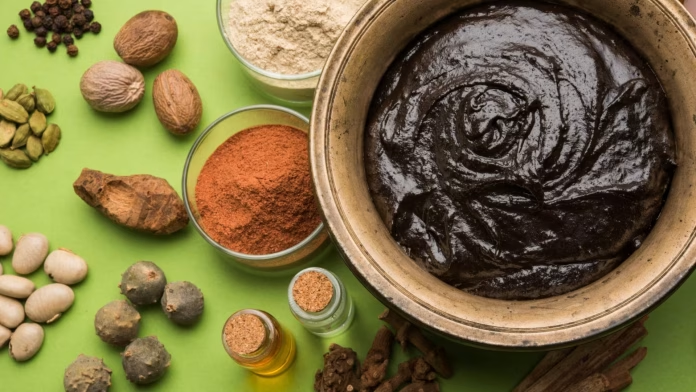
Chyawanprash is a traditional Ayurvedic herbal jam that has been used for centuries in India for its numerous health benefits. This superfood is made with a blend of herbs, spices, and other natural ingredients, making it a nutrient-dense food. In this article, we will discuss what chyawanprash is and its health benefits.
What is Chyawanprash?
Chyawanprash is a traditional Ayurvedic herbal jam that is made with a blend of herbs, spices, fruits, and other natural ingredients. It is a popular health supplement in India and is consumed daily for its numerous health benefits. The main ingredient in chyawanprash is amla, also known as Indian gooseberry, which is rich in antioxidants and vitamin C. Chyawanprash is also made with other natural ingredients like ghee, honey, sesame oil, and other herbs and spices.
Health Benefits of Chyawanprash:
Chyawanprash is rich in antioxidants and vitamin C, which can help to boost immunity and protect against infections and diseases. It also contains other herbs and spices like ashwagandha and turmeric, which have immune-boosting properties. Chyawanprash also contains natural digestive aids like ginger, cardamom, and cinnamon, which can help to improve digestion and prevent digestive issues like bloating and constipation.
Apart from that it is rich in antioxidants, which can help to prevent skin damage and premature aging. It also contains natural ingredients like amla and honey, which can help to promote healthy skin and contains natural ingredients like brahmi and ashwagandha, which have been shown to improve memory and cognitive function.
Consuming chyawanprash daily can help to improve brain function and prevent cognitive decline. Chyawanprash can aid in weight loss by improving digestion, increasing metabolism, and reducing appetite. Its high fiber content can also promote satiety and prevent overeating.
Why diabetics should consume Chyawanprash:
Diabetes is a chronic condition that affects millions of people worldwide, and managing it requires a combination of medication, diet, and lifestyle changes. While there are many supplements on the market, chyawanprash and Zandu Kesari Jivan are two Ayurvedic supplements that have been shown to have numerous health benefits, particularly for diabetics.
Regulates blood sugar levels:
Chyawanprash contains natural ingredients like amla, which can help regulate blood sugar levels. Amla is a rich source of vitamin C and antioxidants, which have been shown to improve insulin sensitivity and reduce blood sugar levels.
Reduces inflammation:
Diabetics are more prone to inflammation, which can lead to other health issues like cardiovascular disease. Chyawanprash contains natural anti-inflammatory ingredients like turmeric, which can help to reduce inflammation and prevent complications associated with diabetes.
Promotes digestion:
Digestive issues are common in diabetics, but chyawanprash contains natural digestive aids like ginger, cardamom, and cinnamon, which can help to improve digestion and prevent digestive issues.
Boosts immunity:
Diabetics are more susceptible to infections and illnesses, but chyawanprash is rich in antioxidants and vitamin C, which can help to boost immunity and protect against infections.
How Zandu Kesari Jivan Can Help Diabetics:v
Zandu Kesari Jivan contains natural ingredients like ashwagandha and giloy, which have been shown to regulate blood sugar levels and improve insulin sensitivity.
Stress and anxiety can affect blood sugar levels, but Zandu Kesari Jivan contains natural stress-relieving ingredients like saffron and cardamom, which can help to reduce stress and anxiety.
Fatigue is also a common symptom of diabetes, but Zandu Kesari Jivan contains natural energy-boosting ingredients like almonds and pistachios, which can help to improve energy levels and combat fatigue.
By incorporating Zandu Kesari Jivan into their daily diet, diabetics can enjoy numerous health benefits. These supplements can help regulate blood sugar levels, reduce inflammation, promote digestion, boost immunity, reduce stress and anxiety, and improve energy levels. Together, they can help diabetics manage their condition naturally and improve their overall health and wellbeing.
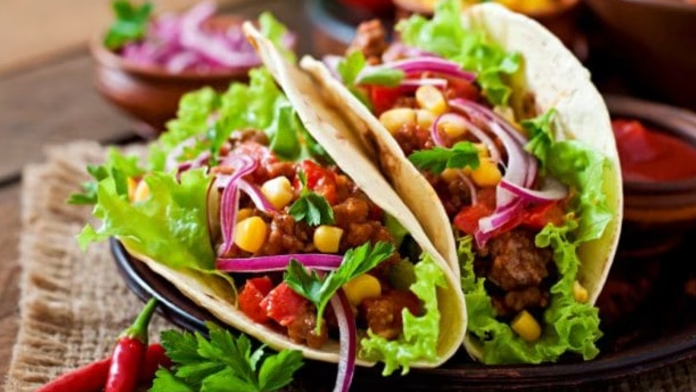
Tacos are a beloved food around the world, and for good reason. They’re quick, easy, and endlessly customizable. But if you’re looking for a healthy and plant-based version of the classic taco, you might feel limited by the lack of meat substitutes that can provide the texture and flavor of ground beef. Enter the Plant-Based Keema Tacos – a delicious and healthy twist on a classic dish that uses textured vegetable protein (TVP) to mimic the texture and flavor of the meat.
Here, we will guide you through the steps to create this tasty and nutritious dish in your kitchen. We’ll talk about the benefits of a plant-based diet and why using TVP is a great meat substitute. And of course, we’ll share the recipe so you can try it for yourself!
Why use Textured Vegetable Protein (TVP) in place of meat?
Textured vegetable protein, or TVP, is a highly versatile and nutritious meat substitute made from soybeans. TVP is an excellent source of protein and fiber, and it’s low in fat and calories. TVP is also very affordable and easy to find in grocery stores or online.
TVP has a texture that is similar to ground meat, which makes it an excellent substitute for recipes that call for meat. TVP can be rehydrated in hot water, which allows it to absorb the flavors of spices and seasonings. This makes it a great option for dishes like tacos, chili, and spaghetti sauce.
Plant-based Keema Tacos recipe:
Now that you know the benefits of a plant-based diet and why TVP is a great meat substitute, let’s dive into the recipe for Plant-Based Keema Tacos!
Ingredients:
For the TVP Keema:
1 cup TVP
1 onion, diced
2 cloves garlic, minced
1/2 cup tomato sauce
1/2 cup water
1 tbsp oil
1 tbsp chili powder
1 tbsp ground cumin
1/2 tsp salt
For the Tacos:
8-10 taco shells
1 avocado, diced
1 tomato, diced
1/2 cup shredded lettuce
1/2 cup vegan cheese (optional)
Instructions:
Begin by rehydrating the TVP. Place the TVP in a bowl and pour enough hot water over it to cover it. Let it sit for about 10 minutes, then drain any excess water.
In a large skillet, heat the oil over medium-high heat. Add the diced onion and minced garlic, and cook until the onion is translucent.
Add the rehydrated TVP, tomato sauce, water, chili powder, cumin, and salt to the skillet. Stir everything together until well combined, then let it cook for 5-7 minutes, stirring occasionally.
While the TVP keema is cooking, prepare the taco shells according to package instructions.
Once the TVP keema is done cooking, assemble the tacos by filling each shell with a generous scoop of the keema mixture. Top with diced avocado, tomato, shredded lettuce, and vegan cheese if desired.
Serve immediately and enjoy your delicious and nutritious Plant-Based Keema Tacos!
Tacos are a classic and beloved food, but with the rise of plant-based diets, it can be challenging to find a healthy and meat-free version. Using TVP as a meat substitute is an excellent solution, as it mimics the texture and flavor of ground beef while being affordable and nutritious.
Plant-Based Keema Tacos are a delicious and healthy twist on the classic dish, and we hope this recipe inspires you to try more plant-based meals in your kitchen. Remember, choosing a plant-based diet can have numerous benefits for your health, the environment, and animal welfare.
We use cookies to ensure that we give you the best experience on our website. If you continue to use this site we will assume that you are happy with it.