Multi-category quick service restaurant (QSR) chain, Wow! Momo, has recently made its grand entrance into Bhopal, Madhya Pradesh. Sagar Daryani, the Co-Founder and CEO of Wow! Momo Foods Pvt. Ltd., took to social media to share this exciting news with the world. The city of Bhopal can now revel in the delight of not one, but two new outlets: Wow! Momo and Wow China. With this expansion, Wow! Momo continues to showcase its diverse culinary offerings, providing the people of Bhopal with a delightful fusion of flavors from both brands.
“Wow! Momo and #WowChina enters into #Bhopal and opens @ DB Mall, food court. This is our 30th city with over 600 outlets in India across the 3 verticals of #WowMomo, #WowChina & #WowChicken. #ThankYou for all your #love & #support,” Daryani wrote on LinkedIn while sharing photos of the new stores.
Daryani was also a marquee speaker at the Images Group’s PRC 2023 held in Mumbai.
According to Murali Krishnan, the Co-Founder and Chief Marketing Officer at Wow! Momo Foods Pvt. Ltd., the newly opened Wow! Momo and Wow! China stores in DB City Mall, Bhopal, have a total area of 500 sq. ft each.
“Bhopal is filled with great foodies. The crowd is ready to experiment, look at newer innovation and great brand loyalty in such a city. To win the heart of India, there’s no better city than actually the heart city of India,” said Krishnan.
Giving an idea about the brand’s expansion plan in the city, Krishnan said, “Bhopal is a very critical market and like we are expanding in Indore—we have launched eight outlets in less than six months; our Bhopal expansion will also be rapid.”
Announcing the launch of its first Wow! Eats store in Chennai, the brand revealed in a March 2023 release that Wow! Momo, which was established in August 2008, has expanded to encompass over 600 outlets across 30 cities. The quick-service restaurant (QSR) chain anticipates a significant increase in revenue, with a projected topline of over INR 450 crore for the current financial year, nearly double the INR 220 crore recorded in the previous fiscal year.
According to the release, the brand has further outlined its expansion plans by announcing its intention to open more than 250 Wow! Momo outlets during the financial year 2024.
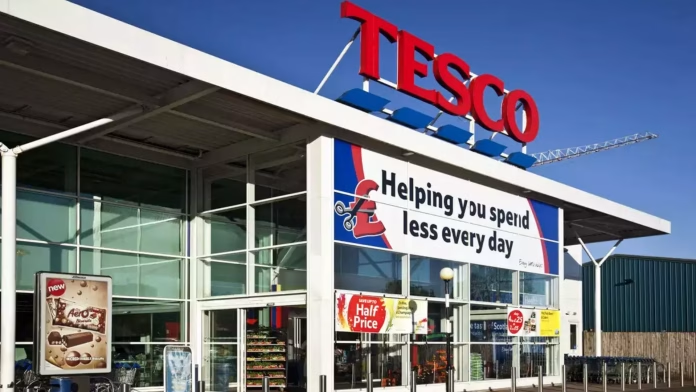
In a recent development, Tesco, the largest supermarket chain in Britain, has taken decisive action to lower the prices of over 500 essential items on Friday. This strategic move serves as a significant indicator that the prevailing wave of grocery inflation is expected to subside throughout the course of this year.
As stubbornly high inflation continues to overshadow pay growth, it has evolved into a prominent political concern within Britain. On Tuesday, supermarket chains found themselves compelled to defend against accusations of profiteering amid the ongoing cost-of-living crisis.
Tesco announced a significant reduction in prices for specific varieties of its own-brand pasta, tinned tuna, milk, grapes, cheese, and other products. The supermarket chain implemented an average price cut of 13%, emphasizing its collaboration with suppliers to ensure that reductions are passed on to customers whenever possible.
In recent weeks, all major grocery chains in Britain, including Sainsbury’s, the second-largest player in the market, have unveiled price reductions on essential items. These measures are being closely monitored by the Bank of England, lawmakers, and consumers alike, as they hold high hopes for relief from the escalating prices.
Tesco reported that they have implemented a second price reduction of 5 pence on fusilli pasta in recent weeks. This means that customers will now pay 20 pence less for a 500 gram pack compared to the price in May. Additionally, a four-pint bottle of milk has also seen a second price reduction, now 10 pence cheaper, within the span of two months.
On Friday, Aldi, the fourth-largest grocer in Britain and a German discount supermarket chain, announced a price reduction of 10 pence on four pints of milk. This brings the price down to £1.45, marking the lowest price offered in Aldi stores since September.
Based on the latest available data, food and drink inflation in the UK stood at 18.3% in May, as reported by official sources. Industry data indicates that this rate moderated slightly to 14.6% in June.
In earlier statements made in June, Tesco acknowledged that although certain commodity prices were experiencing a decrease, the persistently high energy and labor costs continue to contribute to inflationary pressures.
According to a high-ranking government official, tomato prices are anticipated to decrease in the coming 15 days due to increased supplies from producing centers. The official also stated that within a month, the prices are expected to stabilize and return to their normal levels. This comes as retail prices of tomatoes soared to over INR 100 per kilogram in major cities, causing concerns.
During a media briefing, Consumer Affairs Secretary Rohit Kumar Singh announced that the retail prices of tomatoes in the national capital will witness an immediate decline. This reduction is attributed to the improved supplies coming from Solan and Sirmaur districts in Himachal Pradesh.
“The phenomena of price rise in tomato happens every year at this time. Every agriculture commodity in every country goes through a seasonality in the price cycle. In June, prices reached a high level,” he said.
Additionally, the official emphasized that tomatoes are highly perishable and susceptible to weather vulnerability. This vulnerability has become more prevalent in recent times due to factors such as climate change and other related issues. Consequently, these factors have disrupted the tomato supplies.
The secretary further said, “You cannot store tomato for a long time and transport it for a long distance. There is an inherent vulnerability in the commodity. Transportation is also a big issue.”
June-August and October-November are also lean production seasons and prices in this period normally see a sharp increase, he said.
All India average retail price of tomato on June 29 was ruling at INR 49 per kg as against INR 51.50 per kg in the year-ago same day, he said, and added, “I am not justifying the rate. This also proves seasonality.”
Addressing the complexity of the issue, the secretary acknowledged that the situation poses challenges. However, the government is actively working on resolving the problem and implementing measures to ensure a consistent supply of tomatoes throughout the year. In pursuit of this objective, a Grand Tomato Challenge was launched on Friday, aiming to find innovative solutions and strategies.
It is like a hackathon where ideas are being invited from students to industry stakeholders on primary processing, storage and valorisation of tomato, he said.
Based on data maintained by the Department of Consumer Affairs, the average retail price of tomatoes across India stood at INR 56.58 per kilogram as of June 30. The most frequently occurring price, known as the modal price, was recorded at INR 100 per kilogram, while the highest price observed was INR 123 per kilogram.
In Delhi, the retail price of tomatoes is INR 80 per kilogram, while in Mumbai, it is INR 48 per kilogram. In Kolkata, the retail price stands at INR 105 per kilogram, and in Chennai, it is INR 88 per kilogram.
In other significant cities, the prices of tomatoes were recorded as follows: INR 54 per kilogram in Bengaluru, INR 100 per kilogram in both Bhopal and Lucknow, INR 80 per kilogram in Shimla, INR 98 per kilogram in Bhubaneshwar, and INR 99 per kilogram in Raipur.
Per capita usage of toothpaste remains low in India and driving this represents an opportunity for category growth (Representative Image)
According to the most recent annual report, Colgate-Palmolive (India) Ltd is actively exploring avenues to enhance premium offerings in the health, therapeutic toothpaste, and oral beauty sectors, specifically targeting metropolitan and urban areas.
Colgate-Palmolive (India) Ltd (CPIL) also sees a “significant room” to deepen the penetration of oral care adjuncts like floss and mouthwash.
“Outside of oral care, the company sees opportunity in skin care, hair care, bath & shower products that have the largest market size within the beauty & personal care segment,” it said.
CPIL stated that the rapid growth in these categories can be attributed to increasing incomes, growing aspirations, and the widespread accessibility facilitated by e-commerce.
“There is also an opportunity for premium and innovative products in metros and urban cities in the space of family health, therapeutic toothpaste and oral beauty,” it said.
Additionally, CPIL is dedicated to establishing a robust personal care collection by capitalizing on the strong brand recognition of Palmolive. Moreover, CPIL is actively exploring suitable prospects within the extensive global portfolio of Colgate-Palmolive.
“The equity of Palmolive is under-served at the moment and there is clearly an opportunity to build a robust personal care business, as the brand has a 60-65 per cent awareness level, which is difficult to build in a fragmented market,” it said.
At present, Palmolive’s range of products encompasses high-quality body wash and hand wash options.
As per CPIL, the prevalence of oral health issues is on the rise globally, including in India, owing to rapid lifestyle changes, evolving living standards, and a surge in diets rich in sugar.
While there has been an increase in awareness regarding oral hygiene following the pandemic, there is still progress to be made in this regard.
“Per capita usage of toothpaste remains low in India and driving this represents an opportunity for category growth,” said the annual report.
Furthermore, it has been noted that only approximately 20 percent of urban consumers adhere to the recommended practice of brushing twice a day, while a staggering 55 percent of rural households do not brush on a daily basis.
“The industry is also expanding as a result of increased premiumisation, customer demand for more tailored solutions, and a growing number of active practising dentists,” it said.
CPIL stated that India welcomes approximately 25,000 qualified dentists annually.
CPIL, with its products available in over 1.7 million stores, achieved net sales of INR 5,188 crore in the fiscal year 2023.
With an astonishing record of 7.2 million biryani orders placed in the last six months alone, Hyderabad has undeniably emerged as the undisputed biryani capital of the country.
According to data released by Swiggy, Hyderabad has reaffirmed its undying love for the iconic dish, contributing to an astounding total of 15 million biryani orders in the past 12 months. These numbers offer a fascinating glimpse into the city’s culinary culture, where the reign of dum biryani remains unrivaled, captivating the hearts and palates of its inhabitants.
Based on Swiggy’s data for the initial half of 2023, biryani orders have witnessed a remarkable growth of 8.39 percent when compared to the corresponding period in the previous year.
Among the various types of biryani, dum biryani has emerged as the most sought-after, with an impressive count of over 900,000 orders. Biryani rice follows closely behind with 790,000 orders, while the mini biryani also garnered significant popularity with over 520,000 orders. These figures highlight the diverse preferences of biryani enthusiasts, showcasing the enduring appeal and demand for this beloved dish in its various forms.
Hyderabad’s culinary scene is a paradise for biryani enthusiasts, boasting an impressive array of over 15,000 restaurants that feature biryani on their menus. The city’s gastronomic landscape caters to the diverse tastes and preferences of biryani lovers. Notably, areas such as Kukatpally, Madhapur, Ameerpet, Banjara Hills, Kothapet, and Dilsukhnagar have emerged as hotspots with the highest concentration of restaurants serving delectable biryani.
Digging deeper into the realms of biryani consumption, specific regions within Hyderabad experienced a significant surge in order volumes. Among these regions, Kukatpally stood tall as the ultimate biryani paradise, with its undeniable appeal and popularity. It was closely followed by the likes of Madhapur, Banjara Hills, Gachibowli, and Kondapur, where biryani lovers could find equally enticing and delectable options to satisfy their cravings.
The findings from Swiggy’s comprehensive analysis were based on orders placed between January 2023 and June 15th, 2023.
In the increasingly competitive realm of food delivery, Swiggy, a foodtech startup, has introduced an innovative feature called WhatToEat. This new addition empowers users to explore a wide range of food options tailored to their specific moods and cravings.
Available directly on Swiggy’s food ordering page, WhatToEat offers users a convenient way to explore diverse food categories. Once a category is selected, the app generates a curated list of ten restaurant options that specialize in serving dishes from the chosen category. The company emphasizes that the list is organically populated, meaning that the restaurants included do not pay for their placement.
“With WhatToEat, Swiggy wants users to bid farewell to the time-consuming process of scrolling through endless restaurant options, checking numerous menus, and juggling multiple carts… The goal is to offer users a streamlined and efficient experience in discovering and choosing their meals,” said Rohit Kapoor, CEO of Swiggy’s food marketplace vertical, in a LinkedIn post.
The move is likely part of Swiggy’s broader strategy to offer an enhanced and personalized food ordering experience to its users. This initiative aims to focus on driving revenue growth while also increasing customer stickiness and loyalty.
Surprisingly, the new announcement comes mere hours after Zomato introduced the multi-cart feature on its app. Notably, Swiggy, a rival company, has also recently unveiled their own analytics platform called ‘Zomato Food Trends,’ claiming to empower restaurant partners with data-driven decision-making capabilities.
As the food delivery industry approaches saturation and a slowdown, both Swiggy and its competitor Zomato are striving to secure incremental market share, leading to a series of recent launches.
The Indian foodtech industry, dominated by two major players, Zomato and Swiggy, has witnessed intense competition as they strive to establish their dominance. Despite operating at a loss, the recent funding challenges have compelled these industry giants to reevaluate their approach and prioritize profitability.
As a result, both Zomato and Swiggy have undertaken a range of initiatives to drive revenue and spur growth. Last month, Swiggy’s Co-Founder and CEO, Sriharsha Majety, disclosed that the company had achieved profitability in its food delivery business, without offering any further insights.
Shortly thereafter, Zomato unveiled its financial results, highlighting that its various business verticals, with the exception of the quick commerce platform Blinkit, had achieved positive adjusted EBITDA in Q4 FY23, primarily driven by the food delivery segment.
As the rivalry intensifies between Swiggy and Zomato, both companies persist in investing in inventive features and strategies to claim a larger share of the burgeoning Indian food delivery market. According to Statista, this market is estimated to reach a substantial size of $33.36 billion in 2023, providing a compelling incentive for both Swiggy and Zomato to vie for dominance.
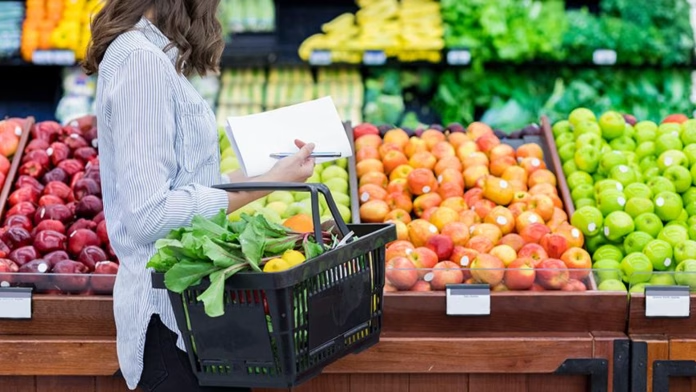
In today’s fast-paced world, managing our finances and time efficiently has become more important than ever. One area where we often overspend is our grocery bills. However, by adopting smart shopping strategies and making a few lifestyle changes, it’s possible to significantly reduce your grocery expenses while saving valuable time. This article will provide you with practical tips and tricks to slash your grocery bill in half, without sacrificing the quality of your meals. Let’s dive in!
Plan Your Meals and Create a Shopping List: One of the most effective ways to save both time and money at the grocery store is to plan your meals in advance and create a comprehensive shopping list. By taking the time to plan your meals for the week, you can ensure that you only purchase the items you need, avoiding impulse buys and reducing food waste. Make a list of all the ingredients required for your planned meals and stick to it while shopping. This not only saves time by avoiding aimless wandering in the aisles but also prevents you from buying unnecessary items that can quickly add up in cost.
Embrace Meal Prepping and Batch Cooking: Meal prepping and batch cooking can be game-changers when it comes to saving time and money on groceries. Dedicate a specific day of the week to prepare meals in advance. This involves cooking large quantities of food that can be divided into portions and stored for future consumption. Not only does this save time during busy weekdays when you don’t have to cook from scratch, but it also helps prevent food waste and encourages portion control. Additionally, buying ingredients in bulk for batch cooking often results in lower prices per unit, further reducing your grocery expenses.
Shop with a Budget and Stick to It: Setting a budget for your grocery shopping is crucial in cutting costs. Determine a realistic amount that you can afford to spend on groceries each week and make it a priority to stick to it. To help you stay within your budget, consider using cash instead of credit or debit cards. Having a tangible amount of money in hand can make you more conscious of your spending and less likely to overspend. Take advantage of store flyers, discounts, and coupons to maximize your savings without compromising the quality of your purchases.
Explore Alternative Shopping Options: Traditional grocery stores are not the only places where you can find affordable and high-quality food. Explore alternative shopping options such as local farmers’ markets, discount stores, or online grocery delivery services. Farmers’ markets often offer fresh produce at competitive prices, and you have the opportunity to support local farmers. Discount stores and online services may have lower prices on certain items compared to traditional supermarkets. By diversifying your shopping locations, you can compare prices and find the best deals, ultimately saving both time and money.
Buy in Bulk for Staple Items: For non-perishable staple items that you frequently use, consider buying in bulk. Items like rice, pasta, beans, canned goods, and cleaning supplies can often be purchased in larger quantities at a lower price per unit. Buying in bulk reduces the need for frequent trips to the store and saves money in the long run. Just be mindful of storage space and expiration dates to ensure that you can use the items before they go bad.
Take Advantage of Loyalty Programs and Rewards: Many grocery stores offer loyalty programs or rewards programs that can help you save money on future purchases. Sign up for these programs and take advantage of any discounts, coupons, or special promotions they offer. Some programs also provide personalized recommendations based on your shopping habits, allowing you to discover new products and discounts tailored to your preferences. Utilizing these programs can lead to significant savings over time.
Embrace Seasonal and Local Produce: Seasonal and locally grown produce tends to be more affordable and often of better quality compared to out-of-season or imported fruits and vegetables. Plan your meals around the availability of seasonal produce and explore local farmers’ markets for fresh, cost-effective options. Seasonal produce is not only more budget-friendly but also packed with flavor and nutrients. By embracing seasonal and local produce, you can support local farmers, reduce your carbon footprint, and save money.
Learn to Cook and Bake from Scratch: Convenience foods and pre-packaged meals may seem like time-savers, but they often come with a higher price tag and lower nutritional value. Learning to cook and bake from scratch allows you to have greater control over the ingredients and portion sizes, resulting in healthier and more affordable meals. Invest in basic cooking skills and experiment with homemade versions of your favorite dishes. You’ll not only save money but also develop a deeper appreciation for the culinary arts.
Minimize Food Waste: Food waste not only impacts the environment but also drains your wallet. Take steps to minimize food waste by properly storing perishable items, using leftovers creatively, and planning meals that utilize ingredients you already have on hand. Get creative with meal ideas that repurpose leftover ingredients or transform them into new dishes. By reducing food waste, you’ll save money and contribute to a more sustainable lifestyle.
Practice Smart Shopping Habits: Lastly, adopting smart shopping habits can significantly contribute to both time and money savings. Consider shopping during off-peak hours when stores are less crowded, allowing you to navigate the aisles more quickly and efficiently. Opt for generic or store-brand products, as they are often cheaper than name-brand alternatives while still offering comparable quality. Compare prices, read labels, and be mindful of portion sizes to make informed purchasing decisions. By practicing these habits, you’ll become a savvy shopper and achieve substantial savings over time.
Final Thoughts:
Slashing your grocery bill in half while saving precious time requires a combination of planning, smart shopping strategies, and conscious spending habits. By implementing the tips outlined in this article, you can take control of your grocery expenses and make the most of your time at the store. Remember, small changes can add up to significant savings over time, allowing you to allocate your resources more effectively and enjoy the benefits of a more efficient and cost-conscious approach to grocery shopping. So, start implementing these techniques today and experience the positive impact on your budget and overall lifestyle.
Planning a movie night with your significant other can be a wonderful way to spend quality time together and create cherished memories. It provides an opportunity to snuggle up, enjoy a great film, and indulge in delectable snacks. But why settle for ordinary snacks when you can elevate the experience and ignite romance with the perfect movie night treats? In this guide, we will explore a wide array of tantalizing snacks that are not only delicious but also ideal for setting the mood for love and affection. From sweet delights to savory bites, we have curated a list of the ultimate movie night snacks that will help you create an unforgettable evening with your bae.
Movie nights offer a unique chance to escape from the pressures of daily life and immerse yourselves in a captivating cinematic experience. By adding carefully selected snacks to the equation, you can transform an ordinary movie night into a romantic and intimate affair. The right combination of flavors, textures, and aromas can awaken the senses and create an atmosphere of love and connection.
Whether you’re embarking on a new relationship, celebrating an anniversary, or simply looking to reignite the spark in your long-term partnership, these movie night snacks are designed to enhance the romantic ambiance. From the very first bite, these delectable treats will tantalize your taste buds, spark conversations, and create lasting memories. So, get ready to transform your living room into a cozy theater, dim the lights, and prepare to embark on a culinary journey that will heighten the romance and make your movie night an unforgettable experience for both you and your bae.
Classic Romance Movie Snacks:
Popcorn: The Timeless Favorite:
No movie night is complete without popcorn. Prepare a bowl of fresh, buttery popcorn and elevate it with unique flavors such as caramel, truffle, or parmesan cheese. Popcorn is not only delicious but also a great snack for sharing, allowing you and your bae to enjoy the movie together while indulging in a timeless classic.
Chocolate-Covered Strawberries: A Sweet Indulgence:
Add a touch of decadence to your movie night by serving chocolate-covered strawberries. The combination of luscious, ripe strawberries and rich, melted chocolate creates a perfect blend of sweetness and tanginess. These delightful treats will not only satisfy your sweet tooth but also add a touch of romance to your evening.
Cheese and Crackers: A Sophisticated Pairing:
For a more sophisticated option, consider a cheese and crackers platter. Select a variety of cheeses with different textures and flavors, such as brie, gouda, and cheddar. Pair them with an assortment of crispy crackers, breadsticks, and some fresh fruits. The combination of savory and tangy flavors will tantalize your taste buds and add a touch of elegance to your movie night.
Creative and Delicious Homemade Treats:
Gourmet Nachos: A Flavorful Twist:
Upgrade your movie night with gourmet nachos that go beyond the ordinary. Layer crispy tortilla chips with melted cheese, jalapenos, black olives, diced tomatoes, and your favorite toppings. Bake them until the cheese is gooey and serve with guacamole, sour cream, and salsa. These loaded nachos will bring a burst of flavors and spice to your romantic evening.
Mini Sliders: Bite-Sized Delights:
Create mini sliders that are perfect for snacking during the movie. Choose a variety of fillings such as grilled chicken, beef patties, or vegetarian options. Top them with cheese, lettuce, and your favorite condiments. The bite-sized nature of these sliders makes them convenient and easy to enjoy while keeping your focus on the movie and your bae.
Stuffed Mushrooms: An Elegant Choice:
Indulge in some elegant and flavorful stuffed mushrooms as a sophisticated movie night snack. Prepare mushroom caps filled with a savory mixture of cream cheese, garlic, herbs, and breadcrumbs. Bake them until golden brown and serve them hot. The combination of earthy mushrooms and creamy filling will add a touch of refinement to your romantic evening.
Drinks to Complement the Romance:
Wine: A Classic Choice:
Enhance the romantic ambiance of your movie night with a bottle of wine. Select a red, white, or rosé wine that both you and your partner enjoy. The subtle flavors and aromas of the wine will complement the snacks and deepen the sense of togetherness as you savor each sip.
Sparkling Cocktails: Bubbly Bliss:
If you want to add a touch of celebration to your movie night, consider serving sparkling cocktails. Mix sparkling wine or champagne with fruit juices or create your own unique concoctions. The effervescence of the cocktails will add a sense of joy and sparkle to your romantic evening.
Mocktails: Refreshing and Alcohol-Free:
For those who prefer non-alcoholic options, refreshing mocktails are an excellent choice. Blend fresh fruits, juices, and soda to create delicious and refreshing mocktail combinations. Garnish them with colorful fruit skewers or mint leaves to make them visually appealing. These mocktails will keep you hydrated and energized throughout the movie.
Final Thoughts:
A movie night with your bae can be transformed into a truly romantic experience with the right snacks and drinks. Whether you opt for classic movie snacks or get creative with homemade treats, the key is to select snacks that are delicious, easy to eat, and complement the romantic ambiance. The ultimate movie night snacks mentioned in this article will surely ignite romance and make your cinematic experience with your bae an unforgettable one.
Ah, summer—the season of sunshine, relaxation, and ice-cold refreshments. As the temperature rises, it’s time to stock up your cooler with the ultimate summer companion: fruity beers. These delightful brews bring together the best of both worlds, combining the refreshing qualities of beer with the vibrant flavors of your favorite fruits. From zesty citrus infusions to luscious berry blends, fruity beers are here to transform your summer sipping experience. Join us as we dive into the world of fruity beers and uncover why they are an absolute must-have in your cooler this season!
A Burst of Refreshment:
When the sun beats down, nothing quenches your thirst quite like a crisp and refreshing beer. But why settle for ordinary when you can have extraordinary? Fruity beers take refreshment to a whole new level with their invigorating and juicy flavor profiles. Each sip delivers a burst of fruity goodness, offering a delightful combination of tartness, sweetness, and a hint of tanginess. Say goodbye to the predictable and embrace the excitement of summer with every sip.
Tropical Escapes:
Transport yourself to a tropical paradise with every sip of a fruity beer. These brews often feature exotic fruit additions, such as pineapple, mango, or passionfruit, that instantly whisk you away to sandy beaches and swaying palm trees. Immerse yourself in the flavors of far-off lands and let the vibrant tropical notes tickle your taste buds. With a fruity beer in hand, summer bliss is just a sip away.
Versatility in Pairings:
Fruity beers are incredibly versatile when it comes to pairing them with food. Their balanced and flavorful profiles make them an excellent companion for a variety of dishes. Whether you’re firing up the grill for a barbecue feast or indulging in a light summer salad, fruity beers can complement the flavors with their refreshing and fruity notes. From spicy dishes to tangy cheeses and sweet desserts, these brews have the flexibility to elevate your dining experience.
Embrace the Festive Vibes:
Summer is synonymous with outdoor gatherings, backyard parties, and festive celebrations. Fruity beers add a vibrant and joyful touch to any occasion, infusing a sense of fun and excitement into the festivities. From picnics in the park to beach bonfires and backyard barbecues, these beers are the life of the party. Raise your glass, clink with friends, and toast to summer bliss with a fruity beer in hand.
The Perfect Balance:
One of the remarkable qualities of fruity beers is their ability to strike the perfect balance between beer’s traditional bitterness and the sweetness of fruits. Breweries masterfully craft these beers to ensure that neither element overpowers the other, resulting in a harmonious blend of flavors. The fruit additions enhance the beer’s character without compromising its refreshing nature, making it a well-rounded choice for all beer enthusiasts.
As you soak up the sun and embrace the carefree vibes of summer, make sure your cooler is stocked with fruity beers. These refreshing brews offer a burst of flavor, tropical escapism, and endless opportunities for pairing and celebration. Sip your way to summer bliss with every colorful and vibrant can or bottle. Whether you’re lounging by the pool, enjoying a beach day, or gathering with friends for a backyard barbecue, fruity beers are the must-have companion for your summer adventures. So, dive into the world of fruity beers, let their refreshing and fruity essence transport you to paradise, and savor the magic of summer, one delicious sip at a time. Cheers to a summer filled with fruity beer delights!
Mumbai, the city of dreams, is not only famous for its bustling streets, iconic landmarks, and vibrant culture but also for its mouthwatering street food. Among the plethora of delectable street snacks, Panipuri holds a special place in the hearts of Mumbaikars.
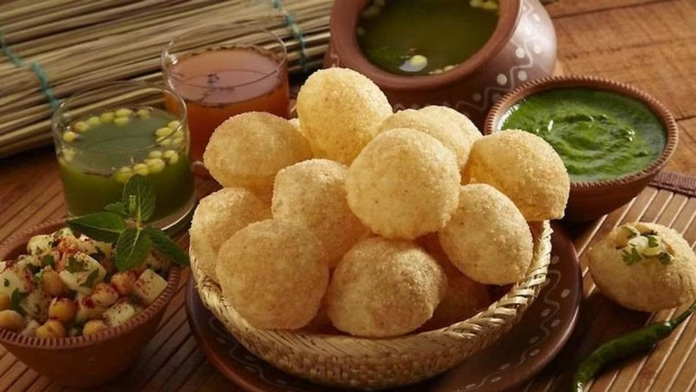
Panipuri, also known as Golgappa or Puchka in different parts of India, is a popular street food that has won the hearts of millions across the country. The snack consists of small, hollow puris filled with a mixture of mashed potatoes, chickpeas, onions, and spices. The real magic happens when these puris are dipped into a tangy and spicy mint-flavored water known as ‘pani.’ The burst of flavors in your mouth as you take a bite is a truly unforgettable experience.
Whether you’re a local Mumbaikar or a visitor to the city, exploring the best places for Panipuri is a culinary adventure you don’t want to miss. So, without further ado, let’s dive into the list of Mumbai’s hottest Panipuri destinations.
Exploring the 10 Best Places for Panipuri in Mumbai
Elco Pani Puri – Bandra West
Elco Pani Puri, located in the posh Bandra West, is a popular restaurant that offers a refreshing treat after a day of shopping at Hill Road. Open till 11:30 PM, this casual dining eatery has attracted celebrities and locals alike with its attractive ambiance and a wide range of delicious snacks. While Elco is known for its ragda patties, grilled sandwiches, and pav bhaji, the star of the show is their ice-cold Pani puri, made in the authentic Sindhi style. Don’t miss the opportunity to indulge in this delightful snack while visiting Elco market.
Address: 2/A, 46, Elco Market, Hill Rd, Bandra West, Mumbai
Price for two: INR 200
Timing: 8:30 am – 11:30 pm
Famous for: Ice-cold Pani puri
Bhagat Tarachand – Bhuleshwar
Bhagat Tarachand is a legendary vegetarian restaurant located near Zaveri Bazaar, known for its incredible flavors and value for money. If you’re a vegetarian food lover, this is the place to be. While their menu offers a variety of Sindhi-style cuisine, don’t miss their delicious Pani puri, veg thalis, and the mouthwatering Rabri for a perfect ending to your meal.
Jhama Sweets, a renowned sweet shop that has been serving customers in Chembur for nearly 60 years, is a local favorite. Apart from their delectable sweets, Jhama Sweets offers a mouthwatering array of street food delicacies. Make sure to try their samosa chaat and, of course, their delicious Pani puri, which is known for its exceptional taste. Indulge in their rasgullas, malai kulfi, and freshly made jalebis to satisfy your sweet tooth.
Famous for: Pani puri, samosa chaat, Indian sweets
Punjab Sweet House – Bandra West
Punjab Sweet House in Bandra West is renowned for producing the finest Pani puris in Mumbai. This eatery offers not only delicious street snacks but also provides excellent service and a pleasant ambiance. Apart from their delectable Pani puri, make sure to try their tasty samosas, chats, vada pav, rasgullas, and gulab jamuns.
Address: Shop no 3 and 7, Dheeraj Arcade, Pali Naka, Bandra West
Price for two:INR 150
Timing: 11 am to 11.30 pm
Famous for: Samosa, Pani puri
Shree Ram Sweets – Kandivali West
When hunger strikes in Kandivali, head straight to Shree Ram Sweets for their amazing Pani puri. This affordable eatery is known for its lip-smacking chaat items, including finger-licking ragda patties and misal pav. Don’t miss the opportunity to savor their delicious Indian snacks.
Address: Opposite Croma, Mahavir Nagar, Kandivali West
Price for two:INR 100
Timing: 10 am to 10 pm
Famous for: Pani puri, chaat
Monsoon, The Chaat Corner – Andheri West
Monsoon, The Chaat Corner, located in Andheri West’s Lokhandwala Complex, is a popular spot for Pani puri lovers. Their spicy Pani puri water is what sets them apart and keeps customers coming back for more. To ensure you get a chance to try their Pani puri, it’s advisable to visit on a weekday or earlier in the day to beat the crowd.
Address: 16 Benzar, Lokhandwala Complex, Andheri West
Price for two:INR 80
Timing: 11 am to 10.30 pm, all days
Famous for: Pani puri
Guru Kripa – Sion West
Guru Kripa, despite being known as one of the finest restaurants in Sion, has a hidden gem dedicated solely to chaat. This delightful eatery offers a variety of Pani puris with different types of flavored water. Don’t miss their popular samosa pav and falooda, which are favorites among their loyal customers.
Address: 40, Road Number 24, near SIES College, Sion West
Price for two:INR 200
Timing: 9 am to 11 pm
Famous for: Pani puri, samosa pav, falooda
Natraj Pani Puri – Navi Mumbai
Natraj Pani Puri stall in Navi Mumbai has earned a reputation for serving crispy Pani puris and delicious hot Ragda. The quality of their food is excellent, and the stall maintains cleanliness and hygiene.
Address: 32, B Rd Churchgate, Navi Mumbai, Maharashtra
Price for two:INR 100
Timing: 10 am to 11 pm
Famous for: Pani puri, Ragdapatties
Chandru’s Pure Ghee Sweets – Andheri West
Located near DN Nagar station, Chandru’s Pure Ghee Sweets is a peaceful eatery that offers delightful Pani puris and ragda patties. Don’t miss their pure ghee burfi, especially the sev burfi, which is exceptionally good. This eatery is popular among locals, and they also offer exceptional Sindhi sweets, including the rare Praagri.
Address: 6, Shiv Shopping Centre, Opposite Pratap Society, 7 Bungalows, Andheri West (Call 26340278)
Price for two:INR 80
Timing: 10 am to 10 pm
Famous for: Pani puri, ragdapatties, Praagri
Soam – Babulnath
Soam at Sadguru Sadan is a must-visit for delicious Pani puri. Their spicy, herbaceous, and tangy Pani puris will leave you craving for more. To secure a seat, it’s recommended to visit early before the place gets crowded. The traditional ambiance with wooden tables, brass plates, and leaves adds to the overall experience.
Famous for: Pani puri, dal dhakri, sugarcane juice
Final Thoughts:
If you’re a fan of the delightful street food known as Panipuri, Mumbai is the place to be. The city offers a wide range of options, each with its own unique flavors and preparations. From the famous Elco Pani Puri in Bandra West to the iconic Soam at Babulnath, Mumbai’s Pani Puri destinations promise an unforgettable culinary experience.
Whether you prefer the ice-cold Pani puri at Elco Market, the genuine Sindhi cuisine at Bhagat Tarachand, or the renowned Pani puris at Punjab Sweet House, there’s something for everyone in Mumbai. Other notable mentions include Jhama Sweets in Chembur, Shree Ram Sweets in Kandivali West, and Guru Kripa in Sion West.
So the next time you find yourself craving Panipuri, make your way to one of Mumbai’s hottest destinations for the perfect fix. Indulge in the burst of flavors, the tangy Pani, and the crispy puris, and immerse yourself in the culinary delights that this vibrant city has to offer. Mumbai’s love affair with Panipuri is sure to leave you craving for more!
We use cookies to ensure that we give you the best experience on our website. If you continue to use this site we will assume that you are happy with it.