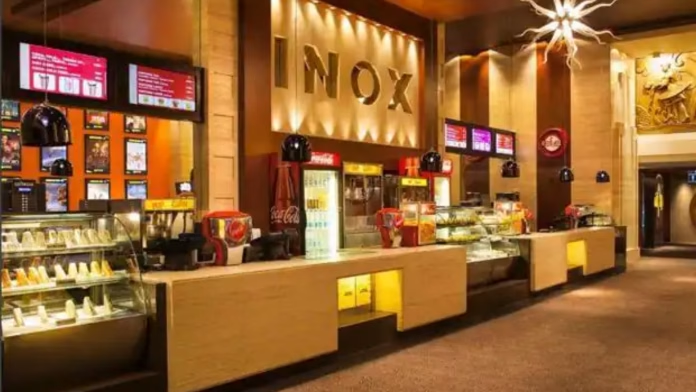
On Wednesday, PVR Inox unveiled its latest pricing offers for food and beverages, targeting both weekdays and weekends. The company confidently stated that these new offers would significantly reduce customers’ expenditures on F&B by up to 40 percent.
This decision comes at a moment when there has been extensive discussion regarding the high-priced food choices available at cinemas, with numerous individuals expressing their dissatisfaction on social media platforms. The prominent multiplex chain has been attentive to the voices of consumers and has taken this action to tackle several concerns raised by movie enthusiasts.
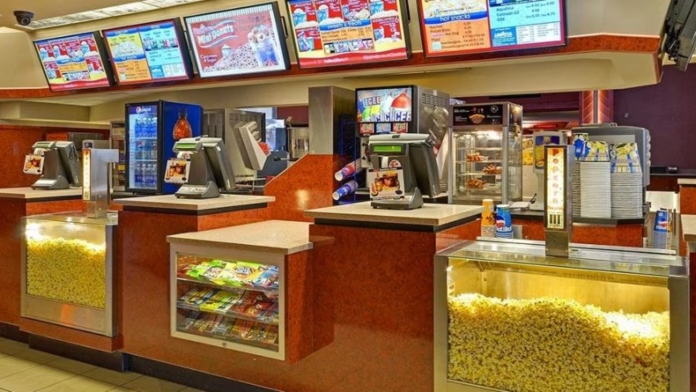
According to the multiplex chain, customers will now have the opportunity to buy a variety of food items, including hotdogs, burgers, popcorn, sandwiches, and beverages, with enticing combo deals starting at a mere INR 99. These affordable options will be available from Mondays to Thursdays, specifically between 9 AM and 6 PM. Additionally, on weekends, moviegoers will have access to Bottomless Popcorn, allowing for unlimited tub refills, as well as attractively priced Family Meal Combos, reducing food and beverage expenses by up to 40 percent.
“Resonating with patrons is the key to successfully running a cinema chain. All our efforts are directed towards catering to audiences as we wish to provide them with an unparalleled cinematic experience when they visit our premises. We have been actively listening to consumers’ thoughts on our F&B pricing strategy and have therefore curated cost-effective F&B deals that will appeal to moviegoers and also address their concerns.” said Sanjeev Kumar Bijli, Executive Director, PVR INOX Ltd in a statement.
He further added, “Our merger, which placed us amongst the top cinema chains in the world, now offers us a larger canvas, allowing us to cater to a wider segment of the audiences and curate the best offerings for them. We are certain that our reformed packages will appeal to the smaller group sizes visiting cinemas on weekdays, and the larger groups, including families, who prefer watching films on weekends, ensuring their needs are met.”
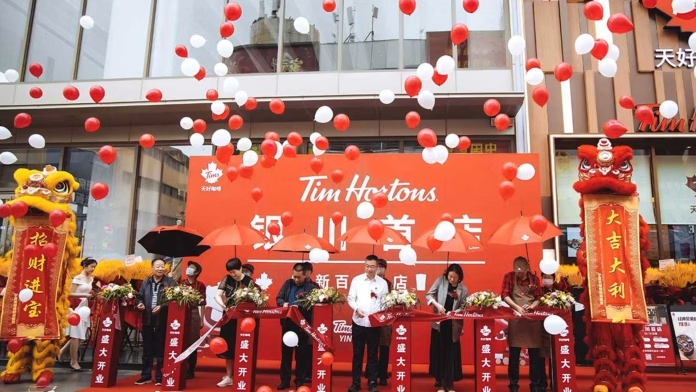
TH International Limited, the sole operator of Tim Hortons coffee shops and Popeyes restaurants in China, recently achieved a significant milestone by inaugurating its 700th coffee shop. This expansion also includes venturing into China’s Northwest region, aligning with the company’s overarching strategy for expansion and growth.
Tims’ ongoing geographical expansion across China is led by its 700th store, which marks a significant milestone as the first one to open in the northwest city of Yinchuan.
“Our development team did an amazing job with our 700th store in Yinchuan. We designed this location to capture the unique culture and contrasts of this special part of China, and we hope both local guests and tourists feel that when they visit us. We look forward to opening more stores in the region as we continue to expand,” shared Yongchen Lu, CEO of Tims China.
As part of Tims China’s disciplined growth strategy, the Yinchuan store is among the many franchised stores being opened in June and July. This expansion plan aims to extend Tims’ geographic reach to surpass 1,000 locations by the end of 2023. By utilizing franchising, Tims can establish stores in desirable locations, collaborate with excellent local partners, and achieve greater capital efficiency.
To fuel its growth, Tims intends to open additional stores in other cities with untapped potential in the coming months. This strategy is reinforced by the impressive monthly same-store sales growth of over 16% recorded from February to May of the current year.
Multiplex operators expressed their appreciation for the GST Council’s recent announcement to reduce tax rates on food and beverages sold in cinema halls. They believe that this decision will greatly contribute to the recovery of the theatre industry following the impact of the Covid-19 pandemic and also help in avoiding potential legal disputes. The GST Council, led by the Union finance minister and including representatives from all states and Union Territories, made the significant decision on Tuesday to decrease the service tax imposed on food and beverages consumed in cinema halls from 18% to 5%.
Food and beverages (F&B) play a crucial role in generating revenue for the cinema exhibition industry, particularly for multiplexes, which derive up to 35% of their earnings from this segment.
PVR INOX Ltd CFO Nitin Sood said, “The entire cinema industry welcomes the clarification issued by the GST Council today that food and beverages sold at the cinemas will get covered under the definition of ‘restaurant service’ and would be liable to GST @5 per cent (without availment of input tax credit).”
“The above clarification will help resolve the industry-wide issue for the sector which includes more than 9,000 cinemas across the country in avoiding disputes/ litigation from a GST standpoint, giving tax certainty and help in revival of the theatre business post-pandemic,” he added.
Following the pandemic, the film exhibition industry faced significant challenges as theaters remained closed in 2020 and gradually reopened with certain restrictions. However, starting from March 2022, they were permitted to operate at full capacity without any limitations. This development brought a positive change as content pipelines began to flow once again, rejuvenating the industry.
Karan Taurani, SVP of Elara Capital, said, “From the financial perspective, it will have zero impact but from a litigation perspective, there is a relief. Now there is clarity for the sector, which has emerged now that for any food products you have, GST would remain at 5 per cent.
“Various states were asking the GST Council to imply a higher GST and there was no clarity and cinema operators were in litigation with state governments,” he said, adding, “Now this notification brings everyone on the same track and now all food items whether its samosa or popcorn or else, will be charged at 5 per cent.”
According to him, the cinema business is currently witnessing a tremendous increase in the variety of food and beverages, thanks to the introduction of premium dining options.
Abneesh Roy, the Executive Director of Institutional Equities at Nuvama Group, mentioned that prominent exhibitors such as PVR were already making F&B bookings with a 5% Goods and Services Tax (GST) rate.
“PVR was charging at 5 per cent taking a view that food and beverage sold in cinemas is similar to restaurant service where it is 5 per cent,” he said.
Before the pandemic, India boasted a staggering number of over 9,000 cinema screens. Unfortunately, a portion of these screens had to shut down in the aftermath of the pandemic due to financial difficulties resulting from the prolonged closure of the industry. When theaters finally reopened, they had to adhere to various restrictions, which persisted for an extended period.
Foraged's Co-Founders: Jack Hamrick and Andy Conner
Foraged, the premier marketplace for wild and specialty foods, has recently unveiled the successful completion of its latest seed funding round, securing an impressive $2.7 million in investments.
Bessemer Venture Partners spearheaded the funding round, with notable participation from prominent figures such as Jeremy Stoppelman, the Co-Founder and CEO of Yelp; Eric Baker, co-founder of StubHub; Harley Finkelstein, president of Shopify; and Micha Koffman, founder and CEO of Fiverr.
According to Foraged, the raised capital will be allocated towards bolstering its range of tools and features, aiming to provide a more streamlined and comprehensive platform for both buyers and sellers within the online marketplace.
Established in 2021, Foraged emerged in the United States with the mission to empower small-scale food producers, including farmers and foragers, by enabling them to cultivate sustainable enterprises. By providing convenient access to naturally occurring foods, Foraged aims to nourish individuals while supporting the growth of local businesses.
Jack Hamrick, Co-Founder and CEO of Foraged, said, “Mainstream awareness of wild foods has been quietly, but intensely growing over the past few years. More people than ever have discovered that there are alternatives to the local supermarket. This funding not only validates the potential of our platform but also moves us closer to realising our vision for the food system of the future – where consumers can discover and connect with independent food producers in a more meaningful way.”
Foraged enables small-scale food producers to access an end-to-end, turnkey solutions for their business, handling “everything from shipping (especially for perishable goods) to secure payment processing via Stripe to a mobile app for messaging customers, uploading photos of products and managing local pickups”.
According to the company, vendors can now effortlessly venture into the ecommerce realm, enabling them to be promptly discovered by an extensive customer base spanning across the entire country. This breakthrough facilitates consumers in accessing a variety of elusive food items that were previously unavailable in the online market.
Jeremy Levine, partner at Bessemer Venture Partners, said, “Bessemer is excited to lead this financing round. We believe in Foraged’s mission to empower independent food producers and provide consumers with a unique shopping experience. Foraged has reimagined the way consumers think about where and how they get their food.”
According to Dr. Sanjiv Goenka, the Chairman of RP-Sanjiv Goenka Group, Spencer’s Retail is placing great emphasis on enhancing its efficiency by leveraging its omnichannel strategy and introducing a fresh concept called the ‘value market.’ This information was highlighted in the company’s annual report for FY23.
“To transform and thrive in the industry, Spencer’s continues to foster business growth through the Omni-channel transition and entering into a new ‘Value Market’ proposition,” he said.
The brand has developed a comprehensive off-site strategy that incorporates various channels and platforms to reach its customers. These include WhatsApp, phone delivery services, social media platforms, e-commerce websites, a dedicated mobile application, and collaboration with Resident Welfare Associations (RWAs).
In the report, Goenka emphasized that the retailer is presently focusing on expanding high-margin categories. This involves improving assortments and increasing the presence of Sales or Return (SOR) brands in general merchandise and apparel. By prioritizing these initiatives, the retailer aims to enhance its non-food sales mix and drive profitability.
Regarding the grocery sector, he mentioned that Spencer’s Retail has set its sights on catering to three distinct consumer classes. These classes encompass the premium/gourmet segment, where the retailer showcases its brand Natures Basket, the aspirational consumption section serviced by Spencer’s, and the value-conscious segment, which the company initiated as a pilot earlier this year.
In terms of future plans, the chairman disclosed that the company intends to establish 10 to 15 new stores, encompassing both Spencer’s and Natures Basket. Presently, the retailer operates a total of 186 stores spanning 44 cities. Among these, 79 stores are categorized as large format, contributing to 77 percent of the revenue, while 107 stores are small format, and 10 stores fall under the value market outlets category.
Regarding its performance, Spencer’s Retail concluded FY23 with a consolidated revenue of INR 2,485 crore and an EBITDA of INR 36 crore. Additionally, its e-commerce subsidiary, Omnipresent Retail India Private Limited (ORIPL), achieved a significant milestone by recording its first positive EBITDA. ORIPL accomplished this feat through a Gross Merchandise Value (GMV) of INR 302 crore during the 2022-23 period. Notably, the company witnessed remarkable growth in ORIPL, reaching 7.6 times the pre-COVID levels. This growth was primarily driven by the shift in consumer preferences towards online shopping mediums.
On Wednesday, Domino’s Pizza announced its collaboration with Uber Eats to facilitate deliveries across the United States and 27 other global markets.
This represents a significant shift for Domino’s Pizza, the largest pizza company globally, as it has traditionally held the stance that partnering with third-party applications was not financially viable due to its reliance on in-house delivery personnel.
As per the agreement, Uber Eats will continue to rely on Domino’s drivers to fulfill the deliveries requested by customers.
Ann Arbor, Michigan-based Domino’s wouldn’t say what percentage Uber Eats will take from each order.
Domino’s has announced that the partnership will be initially tested in four US markets from this autumn and is anticipated to expand nationwide by the end of 2023.
In a statement, Domino’s CEO Russell Weiner emphasized the significant growth and expansion of third-party delivery operators, leading Domino’s to recognize the value in collaborating with them.
Weiner highlighted that the partnership with Uber Eats will grant Domino’s valuable access to a fresh customer base.
The organization has been grappling with elevated food costs, scarcity of labor, and intensifying competition from delivery companies.
Domino’s experienced a 1 percent decline in same-store sales in the United States during the previous year, while international same-store sales remained steady. This crucial metric serves as a significant indicator of a restaurant’s overall performance and well-being.
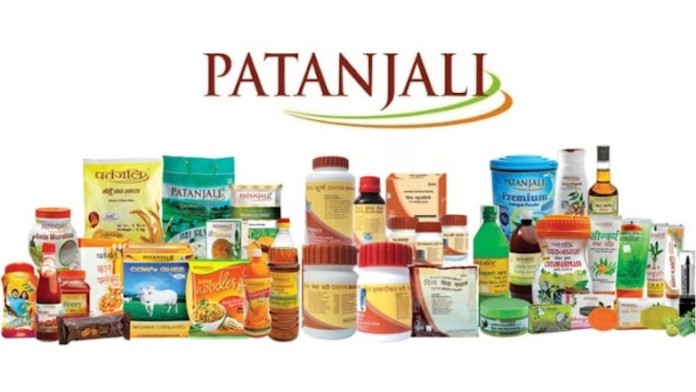
In an effort to meet listing requirements and increase public float, Patanjali Ayurved Ltd, led by Baba Ramdev, intends to sell up to 2.53 crore shares of its group company, Patanjali Foods Ltd, on stock exchanges.
Patanjali Foods, a company specializing in edible oil and other food products, will be divesting its shares through the Offer for Sale (OFS) route.
According to a regulatory filing by Patanjali Foods on Wednesday, the offer for sale will be open on July 13 and 14, with a fixed floor price of INR 1,000 per equity share.
The share sale at the floor price of INR 1,000 per equity share will enable Patanjali Ayurved, a promoter of Patanjali Foods, to generate a minimum of INR 2,530 crore.
On Wednesday, shares of Patanjali Foods closed slightly higher at INR 1,228.05 per share on the BSE. The company’s market capitalization was recorded at INR 44,454.78 crore.
“Seller (Patanjali Ayurved) proposes to sell up to 25,339,640 equity shares of face value of INR 2 each of the company (representing 7 per cent of the total paid-up equity share capital of the company)…,” Patanjali Foods said.
Currently, the public ownership in Patanjali Foods stands at 19.18 percent, which must be raised to at least 25 percent in accordance with the regulations set by Sebi.
Patanjali Foods has stated that Patanjali Ayurved also has the option to sell an additional 7,239,897 equity shares, which accounts for 2 percent of the company’s total paid-up equity share capital.
If the option is exercised, the total stake dilution will be approximately 9 percent.
“The offer is being undertaken by the seller, inter alia, for achieving the minimum public shareholding of the company,” the filing said.
The Patanjali Group acquired the bankrupt Ruchi Soya Industries and subsequently rebranded the company as Patanjali Foods.
Previously, Patanjali Foods initiated a Follow-on Public Offer (FPO) worth INR 4,300 crore with the objective of augmenting the public shareholding.
In the previous fiscal year, Patanjali Foods witnessed a growth in total income, which rose to INR 31,821.45 crore compared to INR 24,284.38 crore in 2021-22.
Among the overall revenue, the turnover of the edible oil segment in Patanjali Foods increased to INR 25,253.33 crore during the last fiscal year, compared to INR 22,468.64 crore in the preceding year.
The revenue of the Food & FMCG segment in Patanjali Foods experienced a significant surge, growing almost four-fold to INR 6,218.08 crore during the fiscal year 2022-23, in comparison to INR 1,683.24 crore in the corresponding period of the previous year.
In Tamil Nadu, a change is on the horizon for drink enthusiasts as they may soon find their beloved beverages packaged in cartons instead of bottles. The state prohibition and excise minister, S Muthusamy, recently revealed that the government is considering introducing liquor in tetra packs. However, this decision will be made only after seeking the input of all political parties involved.
“Many a times, liquor bottles are thrown in farmlands, roads, and outside garbage bins. We can avoid all this if we bring liquor in tetra packs. We will consider the opinion of all political parties and have also sought the opinion of 18 trade unions,” said Muthusamy.
According to officials from the Tamil Nadu State Marketing Corporation (Tasmac), the price range for 90-ml tetra packs will be set between INR 60 and INR 70 per unit.
“It will be more affordable for people belonging to lower-income groups and help them stay away from cheap, illicit liquor,” said a senior Tasmac official. Tasmac is the sole liquor seller in Tamil Nadu and is owned by the state government.
“Discussions are underway with manufacturers to produce and package liquor in tetra packs. A detailed project report has been submitted to the state government in this regard,” said the official. He said within 4-5 months, Tasmac is planning to launch popular liquor brands in tetra packs.
The Pattali Makkal Katchi (PMK) was the first to oppose the sale of liquor in tetra packs, declaring that party members would actively campaign against this decision.
PMK state president Anbumani Ramadoss said he did not expect an experienced minister like Muthusamy to introduce such a scheme in the state that would adversely affect students and youngsters by increasing the sale of liquor.
The former Union minister said Tamil Nadu had to roll back the sale of cheap 100ml packs when it was introduced in 1989 and 2002. He added that minors may mistake the sachets with milk and other beverage packets that are similarly packed. The PMK leader said shutting down liquor shops was the only solution to curb the problem in the state.
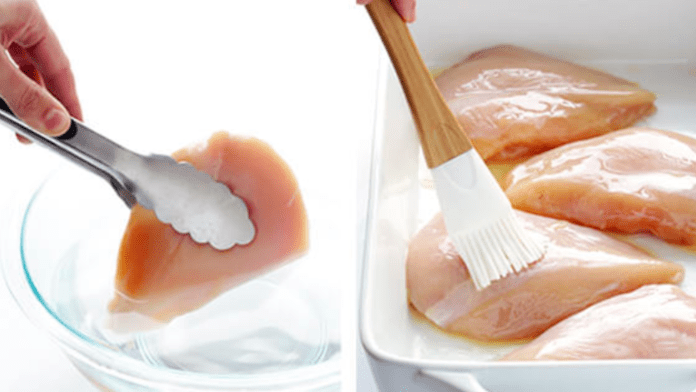
Cooking a delicious and satisfying meal for your loved ones is an art that can be truly rewarding. If you’re looking to impress your husband tonight and take your culinary skills to new heights, mastering the art of cooking chicken is a great place to start. Chicken, with its versatility and universal appeal, provides endless possibilities to create mouthwatering dishes that will leave a lasting impression. In this article, we will explore a range of ultimate chicken cooking hacks that will help you elevate your dinner game and astonish your husband with your culinary prowess. From marinating techniques to cooking methods and flavor combinations, get ready to transform your chicken dishes from ordinary to extraordinary.
Selecting the Perfect Chicken:
Before diving into the cooking hacks, it’s crucial to understand the importance of selecting high-quality chicken. Opt for fresh, organic, and locally sourced chicken whenever possible. This ensures superior flavor and texture, guaranteeing a delicious end result. If you can, consider using free-range or pasture-raised chicken for even better taste and tenderness. Look for plump and firm chicken breasts or whole chickens that have a healthy pink color and are free from any unpleasant odors.
Marinating Magic:
Marinating chicken is a game-changer when it comes to infusing it with flavor and juiciness. By combining the right ingredients and allowing the chicken to marinate for an adequate amount of time, you can take your dish to a whole new level. Experiment with various marinade recipes using a combination of acids (such as lemon juice or vinegar), oils, herbs, spices, and even dairy products like yogurt or buttermilk. The acid helps tenderize the meat, while the other ingredients enhance its taste.
Mastering Cooking Techniques:
Searing: Achieving a golden-brown crust on your chicken is a great way to enhance its texture and flavor. Before cooking, make sure to pat the chicken dry and season it with salt and pepper. Heat a skillet with oil over medium-high heat, and once hot, add the chicken. Allow it to sear for a few minutes on each side until it develops a beautiful crust.
Roasting: Roasting chicken in the oven is a classic method that yields tender and succulent results. Preheat the oven, season the chicken with desired herbs and spices, and place it on a rack in a roasting pan. Cook at the appropriate temperature and duration based on the size and cut of chicken. Basting with butter or broth during cooking helps maintain moisture.
Grilling: Grilling chicken imparts a smoky and charred flavor that many people adore. Preheat the grill to medium-high heat and oil the grates to prevent sticking. Season the chicken, place it on the grill, and cook for the recommended time, flipping once. Basting with marinade during grilling adds an extra layer of flavor.
Exploring Flavor Combinations:
Experimenting with various flavor combinations can add excitement and depth to your chicken dishes. Some popular options include:
Mediterranean: Incorporate flavors like lemon, garlic, oregano, and olive oil to create a refreshing and tangy profile.
Asian-inspired: Combine soy sauce, ginger, garlic, and sesame oil for a savory and aromatic experience.
Spicy: Infuse your chicken with spices like paprika, cayenne pepper, and chili powder to bring the heat.
Sweet and savory: Balance sweetness with soy sauce, honey, or maple syrup, and complement with herbs like rosemary or thyme.
Final Thoughts:
By incorporating these ultimate chicken cooking hacks into your culinary repertoire, you’ll be well on your way to astounding your husband with delectable and memorable meals. Remember to prioritize the quality of the chicken you select, experiment with marinades, and master various cooking techniques. The possibilities are endless when it comes to flavor combinations, so don’t be afraid to get creative and explore different cuisines and spices. With practice, patience, and a dash of passion, you can elevate your dinner game and create chicken dishes that will leave your husband amazed and eagerly awaiting your next culinary masterpiece.
So, put on your apron, get in the kitchen, and embark on a flavorful journey that will undoubtedly elevate your cooking skills and strengthen the bond between you and your loved ones.
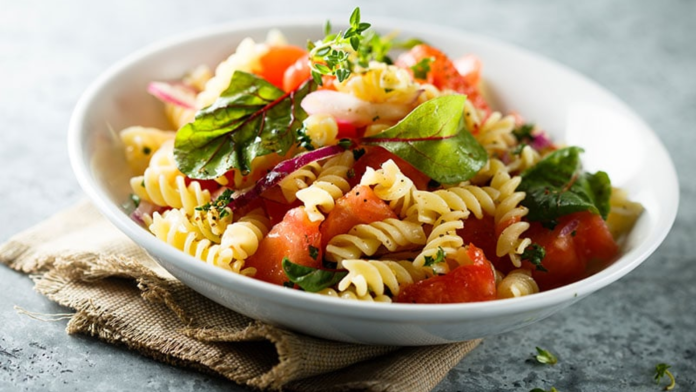
In the realm of culinary delights, pasta salad has secured a prominent place as a refreshing and versatile dish, loved by many. Often served chilled, it has become a staple at picnics, potlucks, and outdoor gatherings. However, a shocking revelation has emerged, highlighting a hidden danger associated with serving chilled pasta salad. Experts in the field have uncovered surprising facts that challenge our perceptions and raise concerns about the potential risks involved. This article aims to delve into the depths of this revelation, exploring the reasons behind the danger and offering insights that may alter the way we view and handle pasta salads.
The Appeal of Chilled Pasta Salad:
To comprehend the significance of the hidden danger, it is crucial to understand the popularity and appeal of chilled pasta salad. This beloved dish offers a harmonious blend of flavors, textures, and colors. The combination of al dente pasta, crisp vegetables, tangy dressings, and assorted toppings creates a refreshing and satisfying culinary experience. The convenience of serving it cold further enhances its desirability, especially during warm weather or as a make-ahead option. However, the revelation suggests that there is more to chilled pasta salad than meets the eye.
The Hidden Danger: Bacterial Growth:
The shocking revelation centers around the potential for bacterial growth in chilled pasta salad. According to experts, the nature of the ingredients, temperature abuse, and inadequate storage conditions can create an environment conducive to the proliferation of harmful bacteria, particularly Bacillus cereus. This bacterium is notorious for causing foodborne illnesses, ranging from mild gastroenteritis to severe vomiting and diarrhea.
One contributing factor is the high moisture content present in pasta salads, which creates an ideal breeding ground for bacteria. Moreover, the inclusion of perishable ingredients such as mayonnaise, dairy-based dressings, or seafood further amplifies the risk. Temperature abuse, such as leaving the salad at room temperature for extended periods, allows bacteria to multiply rapidly.
Another concern is the lack of awareness regarding safe storage practices. Many people are unaware of the importance of promptly refrigerating pasta salad after preparation or how long it can be safely stored. Leaving it unrefrigerated for too long can lead to bacterial growth, increasing the likelihood of foodborne illnesses.
Prevention and Safe Handling Measures:
To mitigate the hidden danger associated with serving chilled pasta salad, it is essential to adopt proper prevention and safe handling measures. Firstly, it is crucial to ensure proper hygiene during the preparation process. Hands should be washed thoroughly, surfaces sanitized, and ingredients stored correctly to prevent cross-contamination.
Secondly, attention must be given to temperature control. After preparation, pasta salad should be promptly chilled and stored at a temperature below 40°F (4°C). This prevents the growth of bacteria and maintains the freshness and quality of the dish. Additionally, it is advisable to divide large portions of salad into smaller, shallow containers for faster cooling.
Moreover, it is crucial to follow the “two-hour rule.” This rule dictates that perishable foods, including pasta salad, should not be kept at room temperature for more than two hours. Beyond this duration, bacteria can multiply to dangerous levels. When serving pasta salad at outdoor events, utilizing ice packs, coolers, or refrigerated buffet tables becomes imperative.
Furthermore, careful consideration should be given to ingredient selection. Opting for non-perishable or easily perishable alternatives, such as vinaigrette-based dressings instead of mayonnaise-based ones, can reduce the risk of bacterial growth. Regularly inspecting and discarding any pasta salad that has been stored for too long is also essential.
Final Thoughts:
The shocking revelation of the hidden danger associated with serving chilled pasta salad challenges our preconceived notions about this popular dish. The risk of bacterial growth, particularly Bacillus cereus, poses a threat to food safety and can lead to foodborne illnesses. However, by understanding the contributing factors and adopting proper prevention and safe handling measures, we can minimize these risks significantly.
It is crucial for individuals, food establishments, and event organizers to prioritize food safety and educate themselves and others about the potential dangers lurking within chilled pasta salad. By implementing proper hygiene practices, adhering to temperature control guidelines, and choosing ingredients wisely, we can continue to enjoy this delightful dish without compromising our health and well-being. Let this revelation serve as a wake-up call, reminding us all of the importance of responsible food preparation and handling.
We use cookies to ensure that we give you the best experience on our website. If you continue to use this site we will assume that you are happy with it.