Despite the increasing focus on health among Hong Kong consumers when it comes to food choices, the elevated prices of plant-based foods are dissuading them, as indicated in a report by Kantar.
High prices discourage 53% of consumers from opting for plant-based foods, while 32% express distaste for the taste and texture, and 23% find them challenging to locate in the market.
“To address these concerns, it is recommended that fast-food restaurants and Hong Kong-style cafes, known for their convenience and affordability, promote plant-based dishes,” Jeff Tsui, Managing Director of Kantar Profiles’ division, Greater China said.
According to Kantar’s research, there is a growing interest in vegan seafood, with 90% of consumers expressing a willingness to consider it in the future. However, despite this interest, only 10% have actually bought such products in the past few months.
Kantar reports that the heightened interest in vegan seafood is accentuated by recent anxieties regarding the safety of consuming seafood, stemming from Japan’s release of treated radioactive water. The report recommends that the industry leverage this trend by creating distinctive vegan seafood products and dishes. Additionally, in the government’s recent push to promote the night economy, street food assumes a pivotal role.
Nonetheless, the majority of street foods available in night markets tend to be calorie-dense and lacking in nutritional value, posing a risk of weight gain and health problems. Considering that prioritizing health is a key factor in opting for plant-based food, the industry might explore the option of providing healthy and low-calorie vegan alternatives during nighttime hours. The report indicates that 94% of consumers are open to trying vegan ready-made meals and snacks, including plant-based versions of popular street foods such as hamburgers, deep-fried spring rolls/prawn crackers, siu mai, fish balls, fried chicken nuggets, and more.
“Notably, Hong Kong’s dining culture is a blend of Chinese and Western influences, with cha chaan tengs or Hong Kong-style cafes having played a prominent role in shaping the food trend. Despite the rising popularity of cross-border consumption, there remains an opportunity for innovative plant-based dishes that incorporate local flavours to spearhead a fresh wave of healthy eating,” Tsui added.
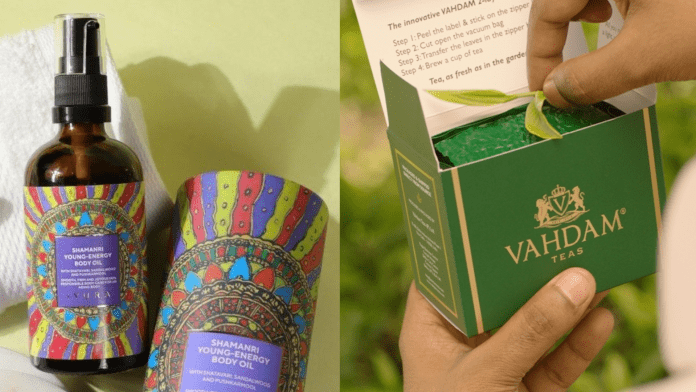
In July, Delhi-based tea brand Vahdam India expanded its presence to more than 4,000 CVS Health Stores in the United States. Founder Bala Sarda asserts that this retail expansion is a logical step forward, given Vahdam’s digital presence in the US since its establishment in 2015.
Mumbai-based Skillmatics, supported by PeakXV (formerly known as Sequoia Capital India), is experiencing a comparable journey. The company is marketing its educational games for children through online channels and in over 15,000 stores within US-based retail chains such as Walmart, Target, and Hobby Lobby.
The Ayurveda Experience, initially established in 2014 as a platform for Ayurveda content, has expanded its operations to include the sale of serums and cleansers in the US and Australia. Additionally, Skin Elements, specializing in men’s hygiene products, generates over 60 percent of its revenue through sales in the US.
In the past twenty years, India has earned recognition as a primary provider of backend technical support for numerous American multinational corporations. It has also established itself as one of the premier global providers of software services, with notable contributions from companies like Freshworks and Zoho, among other Software as a Service (SaaS) platforms.
However, Indian brands have not achieved the same level of dominance in the American consumer market as US brands have in India, spanning from food and clothing to personal care. Whether it’s Levi’s and McDonald’s or Cetaphil, every individual residing in India frequently engages with American brands.
“But it was only a matter of time before the trend of selling service from India to the world came for consumer brands,” says Vinay Singh, co-founder and partner, Fireside Ventures.
Certainly, brands such as Himalaya and Dabur have been active in international markets for several decades. Himalaya, for instance, established its initial international office in Houston, Texas, in 1996 and inaugurated its first brand store in the Cayman Islands in the same year.
“Indian papad and bhujiya companies have also been selling internationally through India food stores for many years now,” says Mohit Satyanand, an angel investor.
However, it took Himalaya nearly 66 years to expand internationally, whereas contemporary Indian consumer brands aspire to sell to American consumers right from the inception of their businesses.
Ayushi Gudwani, the founder of the clothing brand Fable Street, asserts that her company has been shipping products internationally since approximately the second month of its establishment in 2017.
This phenomenon can be attributed to technological advancements in the consumer shopping category and digital marketing, which can commence with an investment of approximately a thousand dollars.This phenomenon is a result of technological advancements in consumer shopping and digital marketing, which can start with an investment of approximately a thousand dollars.
“To start a brand, you need a place to sell, a distribution channel and someone who can take your products to the consumers,” says Dhvanil Sheth, founder, Skillmatics (Grasper Global Pvt Ltd).
E-commerce marketplaces and seller platforms like Etsy address these requirements. Channels such as social media platforms and one’s website can be utilized for brand-building and addressing advertising needs, while courier partners handle the delivery aspect.
In the past decade, many modern brands, including the recently listed Honasa Consumer Pvt Ltd, the parent company of Mamaearth, and Boat Lifestyle, began their journey on Amazon and other digital marketplaces.
But isn’t it still challenging to appeal to American consumers, who are not only enticed by domestic companies but also by firms from France, Britain, Israel, and China?
So far, Indian brands that have found success in the US have some form of differentiation.
“Any category or product, which is known to be India’s specialty, has a consumer base in international waters. India is known for silk, indigo, teas and handicraft, among many other things,” says Singh of Fireside Ventures. Just like South Korea is associated with electronics and Japan with matcha tea.
While The Ayurveda Experience introduces Ayurvedic products, Vahdam India’s offering revolves around locally sourced, high-quality tea from India.
However, companies could also venture into a category with potential for growth. Raghav Sood, the founder of Skin Elements, asserts that when he introduced his men’s intimate hygiene wash, the category did not exist on Amazon’s domestic and US websites.
Likewise, Jyoti Bharadwaj, the founder of TeaFit, identified a void in the unsweetened beverage segment in India and is currently exploring the international tea-drinking market in Singapore and New Zealand.
“There should be a real differentiation and not a perceived differentiation in your product,” explains Skillmatics’ Sheth. This means having a similar product as another brand and selling it for cheaper cost would not suffice in the American consumer market.
Pricing is a crucial aspect to take into account when selling in the US. Nevertheless, more than half a dozen founders of consumer brands assert that quality should always take precedence over everything else.
“People in the US are quality sensitive,” claims Sood. If the consumer is satisfied with the product, it can also be priced at a premium.
For example, Skillmatics’ game called Space Explorer is priced at INR 664 ($7.97) on Amazon India, whereas the same game is listed on the platform’s US website for $24.99 (INR 2,082). Similarly, Vahdam’s lemon ginger tea, comprising 50 tea bags, is available for INR 374 ($4.5) in India, while it is sold on the brand’s US website for $24.99 (INR 2,082) for 100 tea bags.
Production costs in India are lower, and the rupee is weaker in comparison to the dollar. As a result, the pricing may appear elevated when compared in rupees to the US dollar.
In India, the market is highly price-sensitive, with consumers being willing to switch brands even for a slight increase in pricing if the competitor’s product is slightly cheaper.
Furthermore, the products must align with American sensibilities. During the initial years, Sheth enlisted the services of US-based agencies to assist in developing the first few SKUs (stock keeping units). Vahdam India concurrently expanded its online distribution channel to gauge the reception of its tea among American consumers and determine what resonates.
Adopting a strategy of undercutting on price is not advisable solely based on the lower manufacturing costs in India.
“Your company is manufacturing in India. So, maybe your production cost is cheaper. But there is another company, which is manufacturing from China,” adds Sheth.
“When it comes to products, the US market is not driven by emotions but by facts,” says Sujata Biswas, co-founder of Suta, a sari brand.
Consumers prefer companies to be straightforward and highlight the functionality of the product rather than relying on sentimental slogans like ‘Desh ka namak,’ as seen in Tata Salt’s slogan. If Suta were to launch an advertising campaign in the US, it would focus on the convenience of wearing saris and the quality of the fabric, Biswas further explains.
The self-funded sari brand has established a presence in the US by selling through individual stockists. The company is actively seeking collaborations with US-based companies to navigate the nuances of the new market. Due to the unclear regulations, the founders are utilizing courier partners, including DHL Express, to facilitate the shipping of their products to the US.
“Courier partners get the paperwork sorted for sellers looking to export to the US or the UK,” says Muskaan Sancheti, founder, The State Plate. The four-year-old ethnic snack platform started selling products internationally two months ago and claims the largest number of orders as of now have come from the US.
To establish a reputable brand in the US, a company must comply with specific rules and regulations and obtain various licenses. For example, in the food and beverages category, acquiring a Food and Drug Administration (FDA) license is essential. Additionally, an import-export license is required, according to Chirag Gada, Vice President (New Businesses) at Think9 Consumer. Founded in 2022 by Ashni Biyani, Think9 Consumer Pvt Ltd has adopted a house of brands strategy, acquiring multiple brands to expand its presence beyond India.
According to at least four founders overseeing their brands in the US, it’s imperative for a company to have a few team members working locally. Presently, Vahdam India, Skillmatics, and The Ayurveda Experience have on-site teams in the US.
“If you are trying to build a brand for the American consumers, you would need to have a marketing team there to understand the market’s nuances,” says Sarda of Vahdam.
As an example, Vahdam might introduce a Halloween tea collection, considering it is a popular festival in the United States. The company could also release testimonials from well-known personalities like Ellen DeGeneres and Oprah Winfrey, who hold popularity in the country.
Similarly, Skillmatics advertises its products with American kids. “If you see our website and social media, no one would be able to say that this brand comes from India,” says Sheth. “We are currently doing Rs400 crore in revenue. At this stage, we have to expand in retail.”
Having a local logistics team can assist in determining the optimal retail route and deciding whether the products should be shipped by air or sea.
“A company’s cost can also inflate quickly if they do not get the air-to-sea export ratio right,” adds Gada.
According to Jatan Bawa, co-founder of Perfora, approximately one-tenth of the cost, when a product is sold for $100, is attributed to air shipping. The two-year-old oral care brand commenced selling in the US through Amazon international.
“It is too soon to talk about numbers. But we want to get better volumes so that we can start shipping by sea,” says Bawa.
The customer acquisition cost (CAC), a significant expense for digital-first brands in India, can also be a significant drain on cash in the US.
“The cash burn becomes even more expensive there because the spends are in dollars,” says Rishabh Chopra, founder, The Ayurveda Experience. Similarly, hiring a full-time US-based team is also an expensive affair as salaries are paid in dollars.
However, getting into brick-and-mortar stores is the only way to achieve the required volumes, potentially leading to improved unit economics.
“It is difficult to pinpoint how much a brand would earn and what volumes are required because every category has its own play. There is no formula or one-size-fits-all kind of approach,” says Think9’s Gada.
The sole logical progression for brand development in the US is to expand offline. A local operations team is essential for initiating offline expansion. Currently, Vahdam India has a presence in over 6,500 stores in the US, UK, Canada, and the UAE, and Skillmatics is available in over 15,000 stores in the US and the UK. However, Fireside Venture’s Singh asserts that these numbers are relatively small.
“Instead of thinking of store count, a brand should focus on figuring out how it can increase its presence across various retail chain formats,” he adds.
According to Singh, successfully expanding into retail stores means being present in over 4,000 stores, considering Walmart has a total of 4,623 stores in the US.
Over 50 percent of India’s retail market is unorganized, predominantly managed by kirana stores. In contrast, in the US, 90 percent of retail is overseen by organized chains such as Walmart, Target, Walgreens, Costco, and Macy’s.
Surviving in these retail stores presents another challenge.
“Getting into the US retail market is not easy. And once you do get in, your product needs to keep moving and you need to keep delivering growth in sales to the retail chain year after year. Or they will not stock your product anymore,” says Vahdam India’s Sarda.
India’s consumer expenditures have been on a consistent upward trajectory. In the quarter ending in June, consumer spending amounted to INR 23,126 billion, compared to INR 21,824 billion for the corresponding quarter in the previous financial year, as reported by the research firm Statista.
FableStreet, the fashion brand, has opted to concentrate on the Indian market, recognizing its potential for further growth. Similarly, for Skillmatics, nearly 15 percent of revenue is derived from India, making it the fastest-growing market for the children’s brand.
Nevertheless, founders of consumer brands still aspire to venture into international markets.
“As an Indian consumer brand founder, I can definitely say that we, as a country, have not yet produced a worldwide enduring brand like a Coke or a Red Bull,” says TeaFit’s Bharadwaj. But unlike two decades ago, Indian brands are also catering to and finding product acceptance from consumers outside of the India diaspora.
“If your brand is successful in the US, you have recognition in the world’s biggest consumer market,” says Gada. This is equivalent to having global recognition, he claims.
Establishing a brand in the US is not fundamentally distinct from the process in India. Shared factors, such as digital marketing, customer acquisition costs, and strategic retail expansion, apply to both countries. Notable distinctions arise in crafting a distinctive product with exceptional quality, efficiently managing the supply chain costs, grasping consumer nuances, and navigating retail distribution while sustaining a presence in those stores.
“To be able to build a made-in-India consumer brand and find acceptance the world over is a dream of every founder… it’s also a testament to the quality of products by the brand,” says Bharadwaj.
On Tuesday, Hindustan Media Ventures Ltd announced its intention to purchase a 3.54% stake in DSM Fresh Foods, the company behind the direct-to-consumer online meat delivery brand Zappfresh, for a sum of INR 11.99 crore.
On November 20, 2023, the company finalized an agreement to invest INR 11.99 crore by subscribing to 807 equity shares of DSM Fresh Foods Pvt Ltd. This investment corresponds to a 3.54% stake in the fully diluted share capital of the target entity, as disclosed in a regulatory filing by Hindustan Media Ventures Ltd (HMVL).
“Investment is being made into a growing company that is doing well in the space of online delivery of meat products (fresh and ready-to-cook/eat),” HMVL said.
It further mentioned that Zappfresh offers an extensive variety of meat products, including chicken, mutton, seafood, and specialty meats.
According to the filing, it reported a turnover of INR 56 28 crore in the fiscal year 2023.
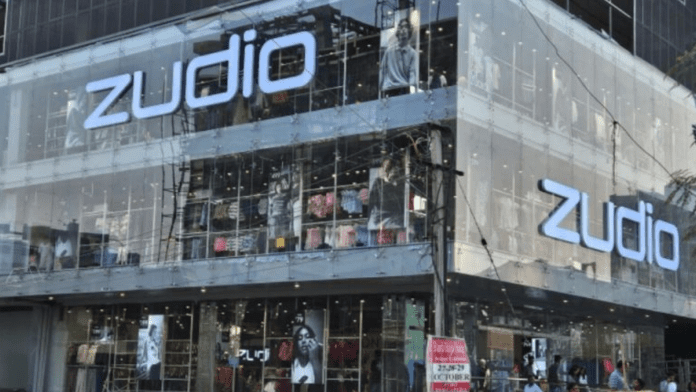
Zudio, the value retail fast fashion chain under the Tata Group, recently unveiled its largest store in North India. The expansive stand-alone store occupies 15,000 square feet of prime real estate and is conveniently located in Malviya Nagar, Jaipur, Rajasthan.
“Trent Ltd. to open one of the best selling mass driven brand Zudio at Malviya Nagar, Jaipur, Rajasthan on this Diwali2023. With more than 15,000 sq. ft. area this has been one of the biggest and largest store till now in Northern India including Rajasthan,” said Harshit Kochar, franchise consultant at Property Solution Realtors, in a LinkedIn post while sharing images of the new store.
The store offers a range of fashion, beauty, and lifestyle products for men, women, and children, with the majority of items priced below INR 1,000.
Zudio, a fashion brand owned by Trent Ltd, the retail arm of the Mumbai-based multinational conglomerate Tata Group, opened its first store in India in September 2016 at Commercial Street, Bengaluru. As of now, the company operates 422 stores across the country, according to its website.
In addition to Zudio, Tata Trent manages several other apparel brands, including Westside, Utsa, and Samoh. The company also oversees the beauty, accessories, and decor brand Misbu, as well as a hypermarket and supermarket store chain named Star.
Earlier this year, the apparel brand unveiled its plan to open about 130 stores in 2023, aiming to bring the total store count close to 500.
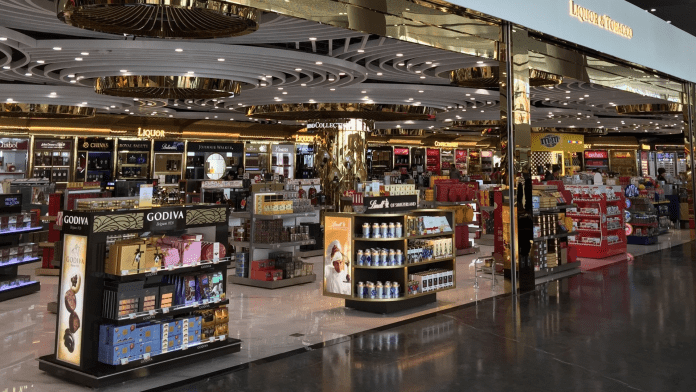
The Adani Group intends to submit a bid to establish duty-free shops at Macau International Airport, marking a move into the international arena for India’s largest airport operator.
In a filing with the stock exchange, Adani Enterprises, the leading company of the conglomerate headed by billionaire Gautam Adani, announced the successful incorporation of its wholly-owned subsidiary, MTRPL Macau Ltd, in Macau on November 20th.
The incorporation of the subsidiary is aimed at entering the duty-free industry.
“MML is incorporated for the purpose of bidding for duty-free liquor and tobacco shops at Macau International Airport,” it said.
In August, Macau International Airport (MFM) initiated an open tender for a sub-concession to provide duty-free liquor and tobacco services. The bidding period is set to conclude on November 29, as outlined in the tender document.
MFM is seeking an operator to manage duty-free liquor and tobacco services, with the option to include general merchandise retail services (excluding perfume and cosmetics) within the specified sub-concession areas at Macau International Airport.
The designed capacity of Macau International Airport enables it to accommodate up to 6 million passengers annually.
In recent years, Adani’s diversified group, spanning ports to edible oils, has expanded its portfolio to include emerging sectors such as data centers, cement, telecommunications, and media.
In 2019, the group entered the airport sector by securing operation and management contracts for six airports: Ahmedabad, Lucknow, Mangaluru, Jaipur, Guwahati, and Thiruvananthapuram.
Moreover, it possesses a 73% stake in Mumbai International Airport Ltd, which, in turn, holds a 74% stake in Navi Mumbai International Airport Ltd.
Adani Airport Holdings Ltd, a subsidiary of Adani Enterprises, stands as the largest airport infrastructure company in the country, overseeing eight airports in its management and development portfolio. As indicated on its website, it plays a pivotal role, accounting for 25% of passenger footfalls and 33% of India’s air cargo traffic.
Over the past few months, Adani Airport has acquired AirWorks, the country’s oldest air maintenance, repair, and operations (MRO) firm. Additionally, the company is exploring the possibility of acquiring AI Engineering Services (AIESL), the MRO unit of Air India.
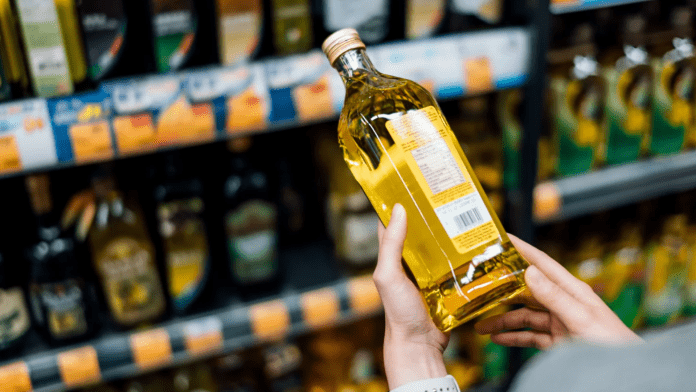
The Solvent Extractors’ Association of India (SEA), representing the edible oil industry, has urged the government to raise the duty gap between crude and refined palm oil from 7.5 percent to 15 percent. This measure is proposed to restrain the influx of imported refined cooking oil and safeguard the interests of domestic players. In a communication addressed to its members, SEA President Ajay Jhunjhunwala highlighted the existing challenges faced by the Indian vegetable oil refining industry, encompassing both edible and non-edible oils.
“The Indian edible oil Industry, with a size of Rs 3 lakh crore (USD 35 billion), holds significant importance. Over the last 12 years, Indonesia and Malaysia have imposed higher export taxes on Crude Palm Oil (CPO) compared to refined Oil to protect their refining industry. This has made refined oil cheaper, rendering Indian capacity redundant and unutilized,” he said.
In India, the duty gap between Crude Palm Oil (CPO) and refined palm oil has been decreased to 7.5 percent, a move that, according to Jhunjhunwala, caters to the interests of the refining industry in Malaysia and Indonesia.
He emphasized that the reduced duty gap is adversely affecting the domestic vegetable oil refining sector.
“In light of this, SEA has once again appealed to the Government to raise the duty difference from 7.5 per cent to 15 per cent between crude and refined palm oil,” Jhunjhunwala said.
The President of SEA stated that India recorded an unprecedented import volume of 167.1 lakh tonnes of vegetable oils in the recently concluded oil year of 2022-23 (November-October), marking a historic peak in edible oil shipments at 164.7 lakh tonnes.
“The palm oil segment accounted for almost 60 per cent of imports. The landed prices of RBD palmolein lesser than CPO due to exporting countries imposing higher export tax-cess on raw material. This situation poses a significant threat to the profitability and viability of our refining industry, with many units now functioning solely as packers,” he said.
Jhunjhunwala expressed concern about this situation, deeming it undesirable due to its potential to elevate Non-Performing Assets (NPA) for supporting banks and shareholders. Additionally, he emphasized the risk of increased unemployment within the industry and the broader value chain.
The President also voiced apprehension regarding the prohibition of deoiled rice bran exports.
“The ban negatively affects solvent extraction, without serving its intended purpose of reducing dairy costs as deoiled ricebran price has least impact on milk and dairy prices,” he said.
Jhunjhunwala noted a significant decline in the price of deoiled rice bran, plummeting from INR 18,000 per tonne in August 2023 to nearly INR 13,500 per tonne.
“SEA strongly urges the concerned ministries not to extend the ban on DORB exports beyond end November 2023. We will also be meeting the concerned Ministers and senior officials in the coming days, hoping for a positive outcome,” he told the members of the associations.
Suma Venkatesh, Exec. Vice-President, IHCL with KM Abdul Latheef, MD, Hotel Pearl Dunes
IHCL, the leading hospitality company, has announced the signing of a new Vivanta hotel in Aluva.
Suma Venkatesh, Executive Vice President – Real Estate & Development, IHCL, said, “IHCL’s brand Vivanta debuts in Kochi with this signing. This will be our seventh hotel in the city – a testament to the city’s importance. We are delighted to further strengthen our association with KM Abdul Latheef with a second hotel.”
The 95-key hotel is strategically positioned in Aluva, offering convenient access to both the airport and leisure destinations by car. It will boast amenities such as an all-day diner and bar, a 4,500 sq ft banquet space, a swimming pool, a gym, and a spa.
KM Abdul Latheef, Managing Director, Hotel Pearl Dunes Pvt Ltd.said, “We are happy to work once again with IHCL, India’s hospitality leaders. This hotel will offer guests a flavor of the stylish.”
Kochi serves as the financial, commercial, and cultural hub of Kerala, holding the top position in both international and domestic tourist arrivals in the state. Additionally, it serves as the gateway to various popular leisure destinations.
This new hotel brings IHCL’s portfolio to a total of 18 establishments, encompassing Taj, SeleQtions, Vivanta, and Ginger brands throughout Kerala, with an additional 5 under development.
ITC Ltd, a prominent conglomerate, announced plans to increase its hospitality presence in West Bengal from five to nine hotels, according to Chairman and MD Sanjiv Puri on Tuesday. Additionally, Puri revealed that the company intends to establish its 18th manufacturing unit in the state soon, sharing this information during the seventh edition of the Bengal Global Business Summit (BGBS).
He refrained from providing details on the plans announced by ITC on Tuesday.
“We have 17 manufacturing units (in Bengal)… one more will be commissioned in the near future. We have five hospitality assets in the state, and over time, ITC is going to take this to nine,” Puri said.
The cigarettes-to-soap major has invested around INR 7,000 crore in West Bengal in the last few years, Puri said.
He also noted a remarkable and multi-faceted transformation in the state under the guidance of Chief Minister Mamata Banerjee.
“Capital goes to places where it can flourish, thrive and multiply… Because our investments were bearing fruit in West Bengal, that is why the journey has continued,” Puri added.
On Tuesday, the Supreme Court issued a warning to Patanjali Ayurved, a company co-founded by yoga guru Ramdev that specializes in herbal products. The caution pertained to the company’s advertising practices, emphasizing the need to refrain from making “false” and “misleading” claims regarding the efficacy of its medicines in treating various diseases.
“All such false and misleading advertisements of Patanjali Ayurved have to stop immediately. The court will take any such infraction very seriously…,” a bench comprising justices Ahsanuddin Amanullah and Prashant Kumar Mishra orally observed while hearing a plea of the Indian Medical Association (IMA).
On August 23, 2022, the highest court served notices to the Union health ministry, the Ministry of Ayush, and Patanjali Ayurved Ltd. This action was taken in response to a plea by the Indian Medical Association (IMA), which accused Ramdev of conducting a smear campaign against the vaccination drive and modern medicines.
In the concise court session, the bench directed Patanjali Ayurved to refrain from disseminating misleading claims and advertisements targeting modern systems of medicine.
The bench mentioned that it could contemplate levying a fine of INR 1 crore on each product in case any false claim is asserted, suggesting it can cure a specific ailment.
The Supreme Court urged the counsel representing the Centre to devise a solution to the problem of deceptive medical advertisements, particularly those making claims about medicines providing a complete cure for specific diseases.
The bench is scheduled to address the IMA’s plea during the hearing on February 5 of the upcoming year.
The Supreme Court, when issuing notices on the petition, strongly reprimanded Ramdev for his criticism of allopathy and allopathic practitioners. The court emphasized the necessity of restraining him from abusing doctors and other treatment systems.
“What happened to this Guru Swami Ramdev Baba?… Ultimately we respect him as he popularised yoga. We all go for this. But, he should not criticise the other system. What is the guarantee that Ayurveda whatever system he is following will work? You see the type of advertisements accusing all the doctors as if they are killers or something. Huge advertisements (have been given),” the bench headed by the then CJI N V Ramana, since retired, had said.
The IMA pointed to numerous advertisements that purportedly portrayed allopathy and doctors negatively. The association stated that companies involved in the production of ayurvedic medicines have also made “disparaging” statements with the intent of misleading the general public.
According to the IMA’s counsel, these advertisements assert that medical practitioners are succumbing to illness despite using modern medicines.
The IMA asserted that there was a coordinated attempt to undermine vaccination efforts, including the COVID-19 vaccination drive, and to discourage the use of allopathic medicines in the country.
The Competition Commission of India (CCI) has granted approval to Tata-backed Titan for its proposal to acquire an additional 27.18% stake in the jewellery startup CaratLane.
“CCI approves acquisition of additional shareholding in CaratLane by Titan. The proposed combination relates to the acquisition by Titan of 27.18% share capital of CaratLane, on a fully diluted basis, from Mithun Padam Sacheti, Siddhartha Padam Sacheti, and Padamchand Sacheti,” the competition watchdog said in a statement.
This paves the way for the deal that was announced earlier this year. In August, Titan disclosed the signing of a share purchase agreement, outlining its intention to acquire an additional shareholding in CaratLane for a total of INR 4,621 Cr.
The transaction valued the startup at an impressive INR 17,000 Cr ($2 Bn). At that time, Titan announced its intent to acquire 91.9 Lakh equity shares from a ‘founder’ of CaratLane, with the financing of the deal to be accomplished through a blend of cash balances, internal accruals, and debt.
In 2016, Titan initially acquired a controlling stake in the jewellery brand at a valuation close to $69 million.
Now that the deal has been approved, employees are anticipating a significant windfall, with expectations of receiving between INR 340 Cr to INR 380 Cr through an ESOP buyback by Titan, which is set to secure a 100% stake in the startup.
Established in 2008 by Sacheti and Srinivasa Gopalan, CaratLane is an omnichannel startup specializing in the production and sale of jewellery items in both India and the US. In the financial year 2022-23 (FY23), it recorded a total income of INR 2,177 Cr, marking a 71% increase from INR 1,267 Cr in FY22.
After the deal was disclosed, CaratLane underwent a significant leadership transition, with co-founder and Chief Operating Officer (COO) Avnish Anand being promoted to the position of CEO of the ecommerce platform in August. This change occurred shortly after co-founder Sacheti, Anand’s former boss, departed from CaratLane.
Nevertheless, the deal has encountered its share of difficulties. Immediately after the transaction was announced, the startup contested a prior show-cause notice (SCN) issued by the Enforcement Directorate (ED). The notice alleged that between 2011 and 2014, CaratLane breached FEMA rules by accepting foreign direct investment (FDI).
The show-cause notice (SCN), delivered in March 2022, revolved around the contention that foreign direct investment (FDI) was restricted in multi-brand retail companies until 2011. Nevertheless, it is reported that Tiger Global invested in the startup in 2011 and continued to participate in subsequent funding rounds over the following three years.
Following that, foreign direct investment (FDI) was permitted for multi-brand retail companies in September 2012. However, it came with the stipulation that such investments required prior approval from the former Foreign Investment Promotion Board (FIPB) and were subject to certain conditions.
As the case remains unresolved before an adjudicating authority, CaratLane has reportedly enlisted legal assistance from a former Chief Justice of India (CJI). According to reports, the former CJI has expressed the opinion that CaratLane is not in violation of FEMA, asserting that the regulation is applicable to the B2B sector and not retail trade.
In the meantime, CaratLane is poised to join the list of startups under almost complete control of the Tata Group. The group’s portfolio also includes startups such as 1mg and BigBasket.
We use cookies to ensure that we give you the best experience on our website. If you continue to use this site we will assume that you are happy with it.