Monday, December 22, 2025
Home Blog Page 754

Kim Kardashian’s Skky Partners makes fiery first investment in condiment brand Truff

0
Truff

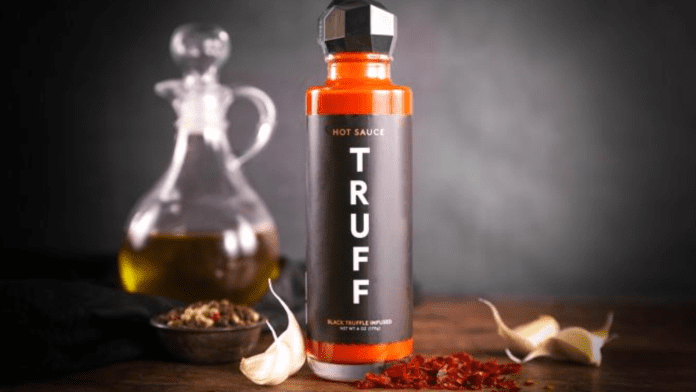
Skky Partners, the private-equity firm founded by Kim Kardashian, has opened its account by acquiring a majority stake in the US condiments company Truff.

Specifics regarding the financial aspects were not revealed.

Founded in 2017 by Nick Ajluni and Nick Guillen, the condiments brand specializes in truffle-infused products like hot sauce, pasta sauce, mayonnaise, oil, and salt. Initially oriented toward direct-to-consumer sales, the business has grown significantly and now includes prominent retailers such as Whole Foods, Target, and Publix in its distribution network.

Entrepreneur, influencer, and private-equity investor Kardashian stated that Skky Partners’ support for Truff represents its initial investment as the firm aims to focus on consumer brands. Kardashian described Truff as precisely the type of business that embodies what they were seeking.

Jay Sammons, Skky Partners’ co-founder and managing partner, said, “The business has a very strong foundation and is now at the perfect juncture for us to bring our experience building and scaling unique consumer brands to help fuel the next stage of Truff’s growth.”

As per a statement, the founders of Truff will persist in their roles as co-CEOs and maintain their status as “significant investors in the company.”

As part of the transaction, Mark Ramadan, co-founder, and former CEO of the U.S. condiments business Sir Kensington’s, will join Truff’s board as an independent director. This addition will be accompanied by the presence of David Brisske, the managing director of Skky. It’s worth noting that Unilever acquired Sir Kensington’s in 2017.

Ajluni added, “The investment will help us expand our wholesale business through continued distribution expansion, product innovation, awareness and the implementation of in-store merchandising practices.”

A joint statement from both co-founders read, “We know that Mark’s deep experience will make him an invaluable partner to us as we look to expand our distribution footprint, accelerate in-store performance and continue to introduce new products.”

Truff distributes its products in various countries, encompassing South Korea, Australia, New Zealand, the United Kingdom, Canada, and Mexico.

Upon inquiry, the company chose not to provide information regarding its annual sales and profits.
Advertisement

Indian Railways takes dining to new levels with second Rail Coach Restaurant in Pune

0
Rail Coach Restaurant

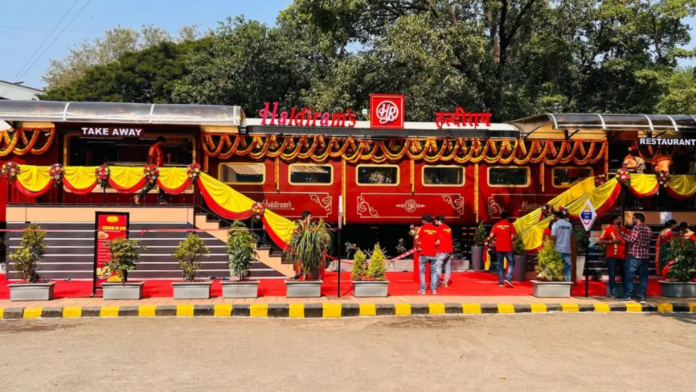
The Rail Coach Restaurant stands as a pioneering endeavor by the Indian Railways, earning acclaim among both travelers and the general public across numerous states.

At Pune, the second Rail Coach Restaurant was inaugurated in the Pune rail division, with Divisional Railway Manager Indu Dubey, Additional Divisional Railway Manager Brijeshkumar Singh, and other senior officials leading the ceremony.

The rail coach restaurant at Pune railway station has been built on an area of 100 square meters, on the side of Tadiwala road circulating area near Pune Divisional Railway Manager (DRM) office. The Restaurant on Wheels (ROW) will be managed and operated by OAM Industries India Pvt. Ltd. (Haldirams).

Delectable cuisine of the highest quality will be available round the clock, meeting the preferences of all. The air-conditioned restaurant, designed as an upscale dining destination, promises a distinctive experience for diners. Inside the coach, there will be seating for 40 patrons, featuring 10 tables, according to officials.

The restaurant’s interior ambiance has been adorned to provide a wholesome dining experience for both passengers and the public. For the convenience of passengers, a takeaway counter has been set up, enabling swift order pickups to ensure timely boarding of trains. Additionally, this service is accessible through various online food ordering apps.

“It offers a wide range of products including Raj Kachori, Chola Bhatura, Pau Bhaji, Veg Thali and combo, South Indian, North Indian, Pack Sweets and Namkeens, Chaats, Beverages, Softy, traditional Indian Sweets etc. This contract will fetch a revenue amount of INR 60,00,000/- per annum for Railways and will also provide food services to the passengers and public of Pune city,” an official said.

Chinchwad station in the Pune division is already home to a mobile restaurant, serving the local community. Furthermore, plans are underway to introduce similar restaurants on wheels at Akurdi, Baramati, and Miraj stations, with the installation process already initiated.

“The Coach Restaurant will provide hygienic and delicious food not only to the passengers but also for the common public. This coach restaurant, which is to be operated by Haldirams, will be a special attraction for the youth and college students in the nearby area as it will provide service round the clock,” said Ramdas Bhise, the divisional commercial manager and PRO of the Pune rail division.

Advertisement

Reebok unveils new flagship store in Bengaluru, boosting brand’s retail presence

0
Reebok

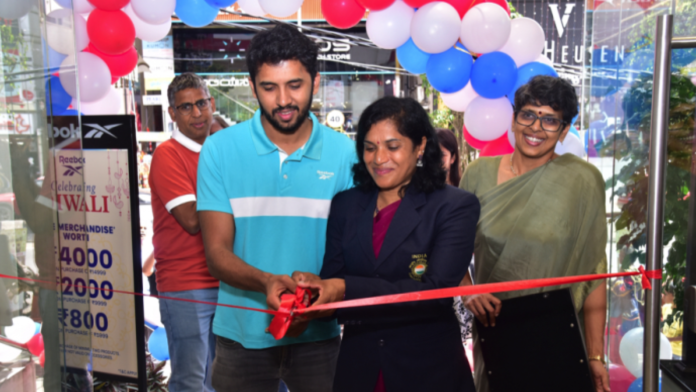
Reebok, a prominent brand in athletic footwear and apparel, has unveiled its latest flagship store in Kammanahalli, Bengaluru. The inauguration ceremony was conducted by O.P. Jaisha, a distinguished field athlete and Olympian, as stated in the company’s press release on Wednesday.

“We are delighted to bring Reebok’s innovative and high-performance products to the heart of Bengaluru through our new store in Kammanahalli,” shared Manoj Juneja, CEO of Reebok, expressing his excitement about the store’s opening.

Speaking on the inauguration, Olympian O.P. Jaisha said, “I practised early days of athletics in Reebok shoes, I am privileged to be a part of this occasion. The collection of shoes and apparel is very extensive and designed very thoughtfully for all fitness activities.”

The inauguration of Reebok’s Kammanahalli store is a component of ABFRL’s continual initiatives to broaden the brand’s retail presence and provide top-notch products to consumers throughout India.

Based in Boston, MA, USA, Reebok International Ltd. is a prominent global designer, marketer, and distributor of sports, fitness, and lifestyle footwear, apparel, and equipment.

Reebok is affiliated with the Authentic Brands Group (ABG), and in India, it operates in partnership with Aditya Birla Fashion and Retail Ltd. (ABFRL).

As of March 31, 2023, ABFRL reported a revenue of INR 12,418 crore and maintained a retail footprint covering 10.8 million square feet.

The organization operates a network of 3,977 stores, spanning around 33,535 multi-brand outlets, and has 6,723 points of sale in department stores throughout India, as of March 31, 2023.

Advertisement

ZappFresh raises $4.3 Million in latest funding round, sets sights on market expansion

0
ZappFresh
ZappFresh

ZappFresh, the meat delivery platform, has secured INR 30 crore (about $4.3 million) in a funding round co-led by Ah! Ventures, HT Media, Unity SFB, and Heifer Impact. With this latest funding, the Gurugram-based company has now raised a total of almost $14 million.

As stated in a press release, the proceeds will be directed towards acquisitions, expansions, and infrastructure upgrades in both the northern and southern markets, according to ZappFresh.

Established in 2015 by Deepanshu Manchanda, ZappFresh specializes in the sale of fresh meat, seafood, and ready-to-cook items through its app and website. The company sources its meat and fish from local farms, processes them at dedicated plants, and tailors the pieces to customer preferences before delivering them.

Presently, it operates in the Delhi-NCR and Bengaluru regions.

ZappFresh plans to introduce new product lines, aligning with the changing needs and preferences of customers to provide increased choices and convenience. The expanded offerings will encompass a diverse range, including poultry, goat meat, seafood, and ready-to-eat items, as outlined by ZappFresh.

According to Deepanshu Manchanda, the founder and chief executive of ZappFresh, the company completes approximately 4,500 orders each day, with an average basket size amounting to INR 600.

ZappFresh achieved profitability for the fiscal year ending in March 2023 (FY23), with its revenue increasing from INR 56 crore in the preceding fiscal year to INR 70 crore in FY23. The company reported a profit of INR 3.5 crore in FY23.

Read More: ZappFresh outperforms D2C meat delivery rivals with profitable growth in FY23

In July, ZappFresh successfully acquired Dr. Meat for approximately $3 million, marking a strategic investment poised to foster the company’s expansion.

Read More: ZappFresh bolsters growth strategy with acquisition of Dr. Meat, sets sights on Bengaluru market

As per information from TheKredible, a data tracking and startup intelligence platform, the co-founders of ZappFresh possess approximately 40% of the stake, with SIDBI emerging as the primary external stakeholder holding a 21% stake.

ZappFresh contends with rivals such as Licious and FreshToHome, both of which have secured substantial funding and operate on a larger scale. Despite their extensive operations, these competitors have experienced significant financial losses. In FY23, Licious reported a modest 9.6% growth, achieving INR 747.7 crore in revenue but incurring a substantial INR 500 crore loss. Similarly, FreshToHome disclosed INR 102 crore in revenue (GMV of INR 1,100 crore) for FY22, accompanied by a significant INR 477 crore loss. As of now, FreshToHome has yet to release its financial numbers for FY23.

Advertisement

Mamaearth shares soar 20% in intraday surge driven by strong Q2 FY24 earnings performance

0

Honasa Consumer Ltd, the holding company of D2C unicorn Mamaearth, experienced a 20% surge in its shares during Thursday’s intraday trading. The stock reached a record high of INR 422.5 on the BSE after the company disclosed its Q2 FY24 earnings.

On Wednesday, Mamaearth reported a profit after tax (PAT) of INR 29.4 Cr in Q2, demonstrating a substantial 94% year-on-year (YoY) increase. Simultaneously, its operating revenue saw a growth of 21%, reaching INR 496.1 Cr.

In fact, there seems to be an overall improvement in the company’s financial performance. In the previous fiscal year (FY23), Mamaearth had incurred a loss of INR 151 Cr. Although the startup’s performance for the entire fiscal year is yet to be observed, it has reported a profit after tax (PAT) of INR 54.1 Cr in the first half of FY24.

The startup reported that 40% of its revenue growth originated from online operations, with revenue from offline channels experiencing a 33% increase in H1 FY24. Additionally, it asserted that quick commerce has become a robust channel, witnessing a remarkable over 100% year-on-year (YoY) growth.

This was the first time the company submitted its quarterly financial statements since it went public earlier this month.

The D2C unicorn had a subdued start on the Indian stock exchanges. Although it began trading at an almost 2% premium on the NSE, the shares opened flat at INR 324 on the BSE. The presence of a loss-making book significantly contributed to the negative impact on its public listing.

In the current funding environment, investors are placing a strong emphasis on the profitability of emerging technology companies, whether they are publicly traded or not. Shares of startups such as Zomato, Paytm, and PB Fintech have experienced a notable upswing this year, rebounding from the challenges faced in 2022, driven by positive developments in their financial performance.

Mamaearth’s shares were on an upward trajectory at the start of the week but experienced a decline in yesterday’s trading. As of now, the stock is trading more than 30% above its initial listing price.

Advertisement

Govt mulls over voluntary ONDC registration in new ecommerce policy

0
ecommerce
(Representative Image)

The proposed new ecommerce policy may not require online business firms to mandatorily register on Open Network Digital Commerce (ONDC).

According to a report from Mint, the Department for Promotion of Industry and Internal Trade (DPIIT) might not enforce a requirement for online portals to reveal their ‘buyer and seller’ database to the ministry’s service facilitator, ONDC.

Nevertheless, the forthcoming policy is expected to suggest voluntary registration, indicating a departure from prior considerations. This change in position comes after conclusive consultations with stakeholders in early August. Initially, the government had been contemplating transforming ONDC into a comprehensive one-stop service-providing network.

The upcoming ecommerce policy may tackle concerns pertaining to unfair trade practices, encompassing issues like predatory pricing and flash sales.

In the proposed legislation, the government has already relaxed the obligatory criteria for establishing an independent regulator specifically designed to supervise online retail platforms.

Praveen Khandelwal, Secretary General of the Confederation of All India Traders (CAIT), proposed that, in addition to ONDC registration, all online players should be required to register with DPIIT. Furthermore, he recommended the establishment of a distinct regulatory body to effectively combat online fraud.

Lately, stakeholders in the industry advocated for the government to allow foreign direct investment (FDI) in inventory-based ecommerce platforms engaged in the export of goods.

From the existing policy standpoint, foreign direct investment (FDI) is only allowed in ecommerce platforms utilizing a marketplace model, while it is prohibited for inventory-based ecommerce entities.

The formulation of the e-commerce policy has been an ongoing initiative since 2018. The government’s approach involves amalgamating diverse rules and regulations governing ecommerce platforms into a comprehensive and unified regulatory framework. This holistic strategy seeks to incorporate essential elements, including the Consumer Protection Act, the Foreign Direct Investment policy issued by the DPIIT, the Competition Act, and the forthcoming Digital India Act, into a cohesive set of regulations for the ecommerce sector.

Advertisement

Indian alcoholic beverage industry calls for state-level GI tagging

0

On Wednesday, the Indian alcoholic beverage industry emphasized the importance of implementing a Geographical Indication (GI) tagging approach for food and beverage products at the state level. This strategy is seen as instrumental in enhancing price realization in international markets.

Nita Kapoor, Chief Executive Officer of the International Spirits and Wines Association of India, projected a Compound Annual Growth Rate (CAGR) of approximately six percent for the alcobev industry. She anticipates that this growth will propel the industry from its current size of USD 51.7 billion to USD 63 billion over the next five years.

She spoke with PTI during a session focused on ‘Agriculture and Allied Including Blue Economy’ held at the Bengal Global Business Summit (BGBS).

Additionally, she advocated for partnerships with major fruit-producing nations in Europe and former USSR countries to enhance the production of low-alcohol content fruit-based products in the alcobev sector.

“The GI tagging is important as it provides a distinct advantage. For example, Scotch, Champagne and Cognac are a few successful GI tag categories. The key strategic issue is to consider some number of GI-tagged products in the export basket for the state of West Bengal,” Kapoor said.

She highlighted that Europe boasts over 5000 Geographical Indication (GI)-tagged products, whereas India currently has fewer than 500 functional GI tags.

“GI tag requires a complete ecosystem that a state needs to develop. A private entity or a corporate can work within this ecosystem. It has to come from the state. We are talking to state governments for GI-tagging of products, including beverages, fruits and grains used as the raw material for the industry.

“More GI tagging of products will help get better prices in export markets,” Kapoor said.

She mentioned that the overall export of the alcobev industry currently stands at INR 1500-1600 crore.

The alcobev sector constitutes two percent of India’s nominal GDP and provides employment for 7-8 million individuals, encompassing six lakh farmers engaged in the cultivation of grains and sugarcane essential as raw materials for the industry.

Globally, India stands as the second-largest player in the spirits industry, while it holds the fifth position in the broader alcobev sector.

The leading states for the production of extra neutral alcohol (ENA), the foundational component for spirit manufacturing, are UP, Maharashtra, and Karnataka.

“West Bengal, Telangana and Rajasthan contribute roughly 3-4 per cent of supplies of grain-based ENA. There is an opportunity to seriously consider ENA distilleries in Bengal,” she added.

Advertisement

You Care Lifestyle launches ‘You Balance’, an all-natural solution for chronic health concerns

0
You Balance

In the face of increasing health concerns in India linked to unhealthy lifestyles, You Care Lifestyle is excited to unveil its first in-house creation, “You Balance.” This health powder is carefully formulated by blending scientific principles, ancient wisdom, and the extensive expertise of Team Luke. It specifically addresses chronic inflammation, a key contributor to various health issues like diabetes, cancer, thyroid disorders, and gastrointestinal problems.

The significance of maintaining balance in the fight against health-related diseases, especially in the context of the 2019 pandemic, has become more apparent. Chronic inflammation, often referred to as the silent epidemic, presents a substantial risk to overall well-being, playing a role in conditions such as cardiovascular diseases, diabetes, cancer, and neurodegenerative disorders.

“You Balance” steps forward as a proactive solution, harnessing the power of 11 scientifically proven ingredients, including Turmeric Powder, Black Pepper, Cumin Seeds, Fennel Seeds, Coriander Seeds, Ginger Powder, Ceylon Cinnamon, Cardamom, Methi Seeds, Amla Powder, and Clove. This herbal spice blend actively supports the immune system, modulates inflammatory responses, and reduces the production of pro-inflammatory molecules.

The distinctive philosophy of “You Balance” centers on cellular nutrition, angiogenesis, DNA repair, stem cell regeneration, microbiome gut health, immunity, and inflammation. Through a manufacturing process that prioritizes slow roasting and precise spice grinding, the aim is to optimize nutrient absorption, guaranteeing a 100 percent bioavailability. Additionally, the product’s environmentally conscious packaging reflects You Care Lifestyle’s dedication to a healthier planet.

Free from preservatives, additives, binders, or fillers, “You Balance” stands as a pure, chemical-free, plant-based, and non-GMO blend suitable for all age groups. This versatile health powder is designed not only to enhance individual health but also to contribute to the overall well-being of communities.

Narendra Firodia, Social Entrepreneur and Co-founder of You Care Lifestyle, expressed, “This launch reflects our dedication to providing our community with superior, science-backed solutions.”

Advertisement

Magicpin’s food delivery orders skyrocket to 1 Million on ONDC network amidst cricket World Cup frenzy

0
magicpin
Magicpin (Representative Image)

Magicpin reported on Thursday that food delivery orders soared by over twofold to one million during the cricket World Cup matches on the government-backed Open Network for Digital Commerce (ONDC) network, surpassing the monthly average.

Magicpin reported handling 35,000 food orders during the India versus Pakistan match on October 14, with orders reaching a peak of 50,000 on a single day during the India versus Australia match.

“Magicpin has crossed 10 lakh food delivery orders for the entire duration of the World Cup between October 5 and November 19. The number of orders soared beyond expectations as ONDC’s demand grew on magicpin’s own buyer app and through other large buyer apps like Paytm, Phonepe’s Pincode and Ola,” the company said in a statement.

Previously, the company had announced its plans to offer discounts totaling INR 50-100 crore at the beginning of the World Cup for cricket fans, extending across food delivery and various other categories such as dining out, fashion, and groceries, turning this event into a festive experience for the fans.

Read More: magicpin announces INR 100 Crore ‘Super Saver Match Days’ campaign for World Cup 2023 with discounts on food orders

“I’m incredibly proud to have witnessed the record-breaking number of 10 lakh orders on magicpin under the ONDC umbrella this past month and half. This milestone reflects our collaboration with the ONDC team and the combined relentless efforts to provide the best local discovery and rewards platform for the cricket lovers and Indians celebrating Diwali, other festivals,” magicpin CEO and co-founder Anshoo Sharma said.

In June, magicpin surpassed 30,000 orders per day. Preceding the World Cup, magicpin asserts to have maintained an average monthly order volume of approximately 400,000.

“This milestone is a result of the scale of the magicpin’s food delivery business, which is also witnessing 2 times growth month-on-month,” Sharma said.

Advertisement

Amazon India charts new course: Partners with IWAI to utilize inland waterways for package shipping

0
Amazon
Amazon (Representative Image)

In an industry-first move, Amazon India has forged a significant partnership with the Inland Waterways Authority of India (IWAI), operating under the Ministry of Ports, Shipping, and Waterways. The collaboration entails the signing of a memorandum of understanding (MoU) to pioneer the transportation of customer packages through inland waterways.

According to the memorandum of understanding (MoU), Amazon India and IWAI are set to collaborate on facilitating the movement of containerized cargo and establishing a network for utilizing inland waterways in cargo transportation. This initiative, outlined in a blog post on Wednesday, signifies Amazon’s foray into exploring inland waterways as an integral component of its supply chain.

In collaboration with IWAI and its carriers, Amazon is gearing up to launch a pilot run along the Patna to Kolkata waterway, specifically on National Waterway 1. Government statistics reveal that the country boasts 111 designated national inland waterways, covering approximately 20,275.5 km and facilitating the transportation of nearly 55 million tonnes of cargo each year.

Commenting on the development, minister of ports, shipping and waterways Sarbananda Sonowal said, “This MoU with Amazon India marks a significant step towards harnessing the potential of India’s inland water transport. Our focus is on increasing cargo movement through river systems, which is a more sustainable and economical mode of transport. I congratulate Amazon India on their endeavour to collaborate with IWAI to create a waterways transportation solution.”

Coincidentally, this development occurs almost a year subsequent to the introduction of Amazon Air, the air cargo network by the US-based ecommerce giant, in India. Amazon India maximizes the entire cargo capacity of a Boeing 737-800 aircraft to enhance the speed of deliveries to its customer base.

Speaking on the waterways initiative, Abhinav Singh, the VP of operations at Amazon India, said, “This MoU between Amazon India and the IWAI is poised to develop a transformative offering that will open up new possibilities for all ecommerce companies to leverage the country’s extensive inland waterways.”

Singh emphasized Amazon’s steadfast dedication to its worldwide mission of revolutionizing the future of logistics. The company is determined to leverage the untapped potential of India’s rivers, canals, and other water bodies to elevate the efficiency of logistics and transportation within the Indian ecommerce industry.

By integrating inland waterways into its operations, the prominent ecommerce player has established an extensive logistics network across India, encompassing land, air, and water transport. Additionally, Amazon is actively pursuing the expansion of its export capabilities from India. Media reports suggest that the ecommerce giant aims to achieve exports totaling $20 billion from India by the year 2025.

Advertisement