Sunday, December 21, 2025
Home Blog Page 749

Young’s adds iconic Tattenham Corner Pub to its growing portfolio

0
pub
(Representative Image)

UK-based Young’s, a pub operator, has acquired the Tattenham Corner pub in Epsom Downs, renowned for its views of the Epsom racecourse. The purchase was made from Whitbread, a British multinational hotel and restaurant company, according to The Caterer.

The specifics of the transaction’s financial terms remain undisclosed.

Spanning 8,000 square feet, the pub is a two-story establishment with seating capacity for 220.

Young’s chief executive Simon Dodd was quoted by The Caterer as saying, “As Young’s continues to expand its presence in the home counties, Tattenham Corner offers a great opportunity for growth as an established site in an affluent area where we are yet to make our mark.

“Whilst the site undergoes an extensive refurbishment to create a premium pub and dining destination, we are working closely with Whitbread, along with Young’s internal recruitment team, the Ram Agency, to offer roles to the existing team.”

Young’s plans to refurbish the site, previously operated as a Beefeater.

Once the renovation is finished, Young’s will incorporate the site into its premium pubs portfolio in the region. This collection includes the Bear in Oxshott and the Chequers at Walton on the Hill.

The addition of this acquisition will expand Young’s pub portfolio to a total of 232 establishments.

In November 2023, Young’s reached an agreement to acquire City Pubs Group for a total consideration of £162 million ($201 million).

Young’s is set to acquire all the currently issued and future ordinary share capital of City Pubs.

Investors in City Pub Group will receive 108.75p in cash per share, with the remaining portion provided in Young’s shares.

Young’s CEO Simon Dodd stated at the time, “We are excited to be announcing the proposed acquisition of City Pubs, with the full recommendation of their board.”

Advertisement

INVL Baltic Sea Growth Fund set to acquire leading Lithuanian grain company Galinta

0
Galinta

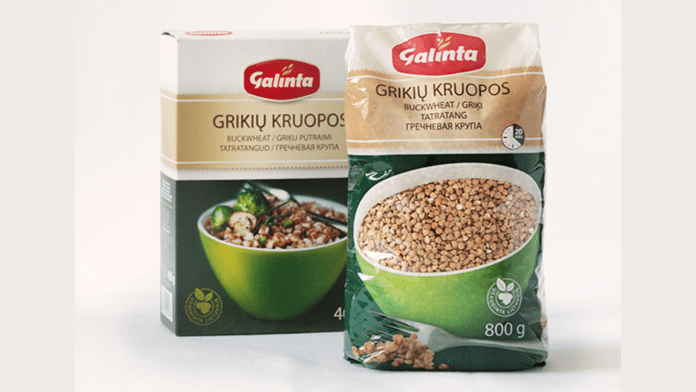
Galinta, a company headquartered in Lithuania that provides packaged oats, wheat, and rice throughout the Baltic region, is poised for a sale.

The corporation has accepted a takeover proposal from the private equity firm INVL Baltic Sea Growth Fund.

The specific financial details have not been revealed.

Galinta, with a staff of more than 100 employees, sells a range of essential products under its own brand at retailers including Rimi.

The company, possessing a buckwheat processing facility and two grain elevators as part of its assets, additionally provides private-label manufacturing services to retailers and wholesalers.

In a statement announcing the transaction, Galinta Group owner Marijus Mazuch said, “Galinta Group has been successfully operating in the market for more than two decades and holds a significant position for the production of groats and flakes as well as commercial activities across the Baltics and Europe more broadly. I strongly believe this transfer to professional investors will now allow the group to continue growing and further strengthen its already impressive market.”

The announcement provided information on Galinta Group’s 2022 revenues, noting an approximate amount of €38.5 million ($42.1 million) without offering a comparative figure.

Deimantė Korsakaitė, managing partner of INVL Baltic Sea Growth Fund, said, “The business has the potential for rapid growth by both increasing volumes in existing markets and expanding into the new ones as well as the launch of new product segments.”

The transaction is anticipated to be finalized early next year, pending approval from competition authorities in Lithuania.

Korsakaitė added, “We believe that the plant-based food sector has strong potential for growth and Lithuania demonstrates a competitive advantage in the field of food processing, especially in the grain segment. Therefore, it has represented one of the strategic sectors we have looked at for potential investment since the fund’s establishment.”

Galinta represents the ninth investment for INVL Baltic Sea Growth Fund, which has previously supported enterprises across various sectors such as healthcare, engineering, and waste management.

With the European Investment Fund (EIF) as its primary investor, the fund concentrates on the Baltic states, Poland, Scandinavia, and central European markets.

Advertisement

Radico Khaitan launches flavor-filled Magic Moments Remix Pink Vodka

0
Magic Moments Remix Pink Vodka

Radico Khaitan Limited, a prominent participant in India’s IMFL industry, has announced the launch of Magic Moments Remix Pink Vodka.

This release is strategically designed to satisfy the growing demand for flavored and vibrant alcoholic beverages.

The initial release will focus on markets in UP and Assam, with intentions to expand across the nation within the next 2-3 quarters.

The flagship brand of Radico Khaitan is the Magic Moments Vodka collection, which includes the Remix series such as Verve, Dazzle, and Vodka Cocktails.

Maintaining a steadfast presence in India’s premium vodka market, it is celebrated for its inventive selection of flavors.

The brand surpassed the five million cases sales milestone in FY2023, underscoring its commitment to providing high-quality vodka that aligns with the varied preferences of Indian consumers.

“The launch of Magic Moments Vodka was our response to the increasing premiumization trend in the Indian liquor industry way back in 2006 when Vodka was not really a household drink. Magic Moments today is the 7th largest Vodka globally. The addition of Magic Moments Remix Pink Vodka is a direct response to the positive reception of Magic Moments Verve Cranberry Tease vodka, reflecting our commitment to offering innovative flavours. We are excited to present a vodka that not only upholds the highest quality standards but also delivers a distinct and enchanting taste experience,” said, Mr. Amar Sinha, Chief Operating Officer at Radico Khaitan.

With a portfolio boasting over 20 variants, the brand currently holds a commanding 60% market share encompassing both domestic and international vodka brands.

The debut of Magic Moments Remix Pink Vodka represents a notable evolution within the Magic Moments Vodka lineup, strategically catering to the increasing demand for colored vodka.

The vodka incorporates natural flavors extracted from black mulberry, elderflower, and raspberry.

The vodka is available in three distinct sizes: 750 ml, 375 ml, and 180 ml.

Advertisement

Kraft Heinz introduces fully recyclable cap for iconic squeezy ketchup bottles

0
squeezy ketchup bottle

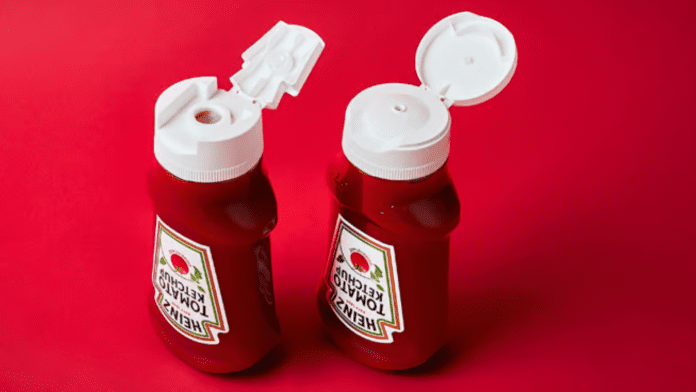
Kraft Heinz Company has unveiled its first fully recyclable cap for the widely recognized squeezy ketchup bottle. This marks a collaborative achievement, harnessing the innovative design and manufacturing capabilities of Berry Global. The initiative aims to support retail brands in their shift towards more sustainable packaging solutions.

Historically, Heinz sauce bottles utilized a flexible silicone valve to dispense a consistent portion of sauce per squeeze. However, this design posed challenges in terms of recyclability. Now, in collaboration with Berry Global, Heinz has made a significant shift to a mono-material cap manufactured in PP. This strategic change ensures that the packaging meets the necessary requirements for recyclability.

The project spanned eight years, encompassing 45 prototypes and over 185,000 hours of development to achieve the ideal equilibrium between functionality and sustainability. Berry played a pivotal role throughout the entire process, participating in the design and production phases—from conceptualization to crafting the series tools within Berry’s in-house tool shop. Additionally, Berry contributed to the development of assembly equipment for industrial production.

Heinz adhered to a meticulous testing protocol to ensure that the cap adhered to the highest quality standards. An extensive consumer survey affirmed that the novel concept would be positively embraced by the public, given its consistent dispensing of the perfect amount of sauce without compromising squeezability.

In fact, the study discovered that the latest cap design allows consumers to extract more ketchup from the bottle, particularly when it is nearly empty. This highlights Berry’s comprehensive approach to improving the cap’s performance while also addressing recyclability.

The idea secured the Rigid Pack of the Year award for Kraft Heinz during the 2023 UK Packaging Awards.

Matthias Hammersen, sales director – Food Market at Berry Global, said, “Heinz set us the kind of challenge that suits us and our development departments best: to reconstruct the design of the cap to make it fully recyclable, without affecting the performance that millions of consumers know and love. We’re delighted that the finished result exceeds our initial expectations and actually improves the consumer experience.”

The caps are currently being introduced nationwide in the UK, specifically on 400ml and larger top-down bottles of Heinz Tomato Ketchup, including the 50% Less Sugar and Salt varieties. Moving forward, there are plans to extend the rollout of the cap to encompass a broader range of Heinz sauces in both the UK and Europe.

By transitioning to the recyclable cap, Heinz asserts that it has the potential to prevent 300 million plastic lids from ending up in landfills each year on a global scale.

Jojo de Noronha, president of Kraft Heinz Northern Europe, said, “We know our consumers care about their impact on the environment and so do we, which is why we’re delighted to see our innovative, more sustainable caps on Heinz Tomato Ketchup bottles across the UK. Although a small change, this makes it easy for the millions of Heinz lovers across the country to recycle their whole squeezy bottle at once – a small action with big potential for impact.”

Advertisement

Agri-food giant Sofiprotéol diversifies portfolio with stake in vinegar producer Martin-Pouret

0
Martin-Pouret

Sofiprotéol, the investment division of the French agri-food company Avril Group, has purchased a partial ownership interest in the vinegar producer Martin-Pouret.

Specifics regarding the financial terms of the transaction were not revealed.

The investment aims to expedite the development of Martin-Pouret’s new vinegar production facility, which is due to open in September 2024.

Commenting on the news, Violaine Grison, co-head of investment at Sofiprotéol, said the funding will support the vinegar group’s “growth ambitions”, with the new factory helping to “boost the company’s local roots.”

She added, “Supporting entrepreneurs, playing a role in the development of SMEs in our regions and ensuring the know-how of our companies is preserved over the long term are at the heart of Sofiprotéol’s mission”.

In September, reports from France revealed that the new facility, with a construction cost of approximately €7.6 million, is set to be situated in Boigny-sur-Bionne within the Orléans district.

Spanning across 10,500 square meters of land, the factory is expected to feature a surface area of 4,800 square meters, as reported by the national newspaper La République du Centre.

The upcoming facility is anticipated to have a “favorable impact on employment” and enhance the “appeal” of the region.

Martin-Pouret stated that the vinegar facility will initially “generate two to four additional jobs.”

Established in 1797, Martin-Pouret is purportedly the sole company in France with the expertise to “proficiently execute the traditional Orléans vinegar-making method,” employing grapes sourced from local wine regions.

Since 2019, David Matheron and Paul-Olivier Claudepierre have co-owned the group.

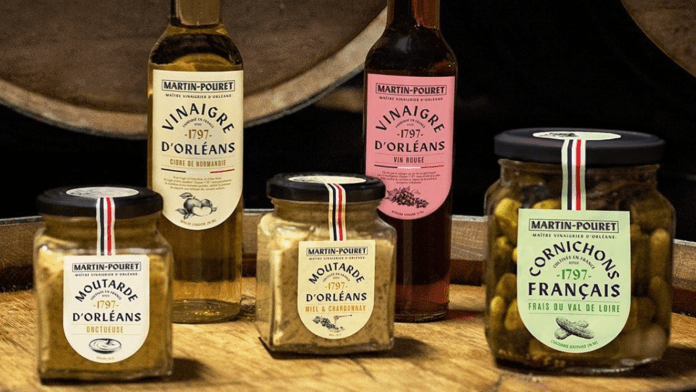
The vinegar collection of Martin-Pouret encompasses a variety of unflavored and flavored red and white wine vinegars, Normandy cider vinegar, along with Modena balsamic vinegar and dressing.

Additionally, the company manufactures mustard, ketchup, mayonnaise, pickles, and appetizer dips.

Its products are available in a blend of specialty retailers, delis, and restaurants throughout Europe, as well as in the United States, the United Arab Emirates, and New Zealand.

Speaking in a statement, Paul-Olivier Claudepierre and David Matheron, Martin-Pouret’s business partners said, “Sofiprotéol has perfect knowledge of our trade, shares our vision of responsible, high-quality food, and promotes French manufacturing”.

Among Sofiprotéol’s investment portfolio are eight consumer food companies, including the packaged salads producer Pierre Martinet, in which it acquired a 16% stake in 2019.

Over the recent years, Avril has disclosed several investments, including its acquisition of a majority stake in the French plant-based food manufacturer Hari&Co in July.

In its integrated results for 2022, the group reported a 30% growth in revenue, rising from €6.9 billion to €9 billion, with EBITDA increasing from €356 million to €583 million. The total investments made by the group last year amounted to €303 million.

Advertisement

Neighbourhood Coffee breaks new ground with Canada’s first compostable coffee pod

0
Neighbourhood Coffee Company

Neighbourhood Coffee Company, a women-led Toronto-based coffee producer, is making waves with the introduction of Canada’s first fully compostable, single-serve coffee pod.

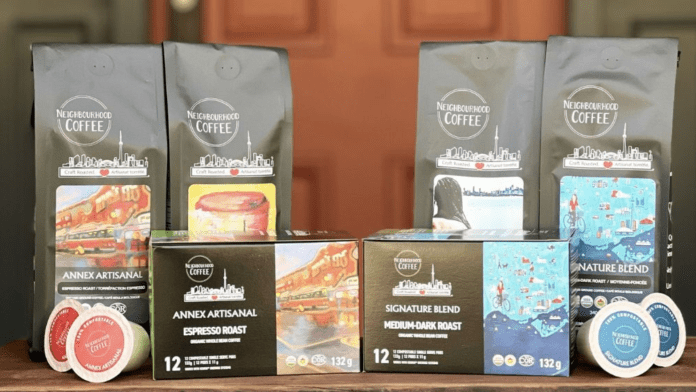
Made exclusively from plant-based materials, Neighbourhood Coffee’s biodegradable pods are designed to be compatible with all models of Keurig single-serve coffee machines.

Karen Hales, co-founder and CEO of Neighbourhood Coffee, said, “With sustainability always top of mind at Neighbourhood Coffee, we’re charting a green path forward and are thrilled to be the first roaster in Canada to offer 100% biodegradable coffee pods that break down in a matter of weeks versus the hundreds of years required for plastic capsules. This is a proud milestone for our small, local business. By making our small-batch, premium coffee available in compostable K-cups, we are marrying innovation with sustainability while still delivering the vibrant micro-roasted flavours Neighbourhood Coffee is known for.”

Nexe Innovations, the developer behind Neighbourhood Coffee’s pods, has ensured sustainability through five years of rigorous, science-backed testing.

Certified by the Biodegradable Products Institute, the pods from Neighbourhood Coffee undergo rapid composting. As they are plant-based, the company states that these pods can break down in industrial composting within a span of 17 to 25 days.

The company’s environmentally friendly capsules are presently offered in two flavors: Medium-Dark Roast Signature Blend and Annex Artisanal Espresso Roast.

All of Neighbourhood Coffee’s products are available on its website.

Advertisement

Lemon Tree Hotels set to expand internationally, targeting major cities globally

0
Lemon Tree hotels

Lemon Tree Hotels plans to extend its operational footprint to key global destinations, including New York, London, Singapore, and Hong Kong, as revealed by Patanjali Keswani, Chairman and Managing Director. Keswani emphasized that a substantial 70% of Indian travelers venturing abroad choose among seven or eight cities, namely New York, London, Dubai, Thailand, Hong Kong, Singapore, Nepal, and Sri Lanka.

“So, these are the places where ideally we would like to operate hotels under management contracts,” said Keswani.

The company underwent international expansion, inaugurating hotels in Dubai in December 2019 and in Bhutan in February 2020. Simultaneously, it also initiated hotel operations in Nepal. Patanjali Keswani, Chairman and Managing Director, mentioned plans to open 5-6 additional hotels in Nepal over the next three years.

The group provides a diverse portfolio of seven brands, encompassing Aurika Hotels & Resorts, Lemon Tree Premier, Lemon Tree Hotels, Red Fox Hotels by Lemon Tree Hotels, Keys Prima by Lemon Tree Hotels, Keys Select by Lemon Tree Hotels, and Keys Lite by Lemon Tree Hotels.

The chief of the BSE-listed hotel chain has outlined ambitious plans to tap into the growth of the unbranded hotel segment, both domestically and internationally. Presently, Lemon Tree operates over 9,400 rooms in 96 hotels across 61 destinations. Upon the completion of the current pipeline, the hotel chain is poised to manage 13,300 rooms in 153 hotels spanning 97 destinations.

He explained that the company, once primarily following an asset-heavy model where it owned hotels, is now emphasizing management contracts.

“Today, out of our 10,000 rooms, 6,000 are owned. We’ll be going up to 20,000 rooms. These rooms will be management contracts. That means 70 per cent of our inventory will be management contracts.”

Lemon Tree, coincidentally, holds the position of the third-largest player in the Indian hospitality sector, in terms of owned rooms, following Taj and ITC Hotels.

Keswani explained that the company is now utilizing management contracts as part of its multi-pronged strategy.

“Over the past six quarters since April of last year, we’ve implemented a dual strategy involving consistent price hikes and demand generation. We’re now concentrating on optimising returns from our significant hotel investments, being the third-largest owner of hotel rooms in India. Our financial figures consistently show a 15-20 per cent revenue growth, with half attributed to pricing adjustments and the other half to increased demand. This joint approach involves both repricing and segment analysis.”

According to him, India’s hotel industry underwent a prolonged down cycle due to a decade of supply growth (14-15 per cent annually) surpassing demand. This reversal began just before Covid, but the pandemic disrupted the trajectory. Post-Covid, despite losses, the sector increased prices without an immediate uptick in demand. Notably, he sees the surge in hotel demand in India as a pivotal moment, drawing parallels to the growth experienced in China.

He additionally mentioned that for the next four years, the company will sustain a year-on-year revenue growth of 15 percent.

Advertisement

Victoria’s Secret sets foot in Pune: Unveils its first store in Phoenix Mall

0
Gaye Raymond,

Victoria’s Secret, the well-known American intimate specialty retailer, has unveiled its first store in Pune, as announced by Apparel Group India, the franchisee for Victoria’s Secret in India, in a social media post a week ago.

Situated at Phoenix Mall of the Millennium in Wakad, the new establishment marks the retailer’s third store in India.

“We are thrilled to announce the opening of Victoria’s Secret’s newest beauty store at Phoenix Mall of the Millenium, Wakad, Pune. This is the brand’s 1st store in Pune and the 3rd in India,” Apparel Group India said in a LinkedIn post while sharing the pictures of the store.

Victoria’s Secret is present in the Indian market through its partner, Apparel Group India. In 2021, the global chain entered the Indian market for the first time via its e-commerce platform, providing a range of fragrances, beauty, and personal care products.

In 2022, the brand established its tangible presence in the country by opening its flagship store at Palladium Mall in Mumbai. Subsequently, another store was inaugurated at Ambience Mall in Vasant Kunj, New Delhi.

Founded in 1977 by brothers Roy and Gaye Raymond, Victoria’s Secret, the American retailer specializing in lingerie, clothing, and beauty products, has evolved into a globally recognized brand. According to its official website, the company now operates approximately 1,360 retail stores in 70 countries.

Based in Dubai, UAE, Apparel Group stands as a prominent global retail giant in the fashion and lifestyle sector. With a presence in over 14 countries, the company operates a vast network of more than 2,025 stores, featuring a diverse portfolio of over 80 brands. Among these brands are globally recognized names like Beverly Hills Polo Club, Bath & Body Works, Tim Hortons, Tommy Hilfiger, Nine West, Call it Spring, Charles & Keith, Inglot, La Senza, R&B Fashion, and Victoria’s Secret.

Advertisement

Amazon faces strikes in Europe amid Black Friday shopping rush

0
Amazon
Amazon (Representative Image)

Employees of Amazon went on strike at various sites across Europe on Friday, expressing their opposition to the working conditions enforced by the U.S. e-commerce giant. This protest occurred on one of the most hectic shopping days of the year.

The “Make Amazon Pay” campaign, organized by the UNI Global Union, announced that strikes and protests are scheduled in over 30 countries, spanning from Black Friday—the day following the U.S. Thanksgiving holiday, known for widespread discounts to drive sales—until Monday.

Initially recognized for the large gatherings at U.S. big-box stores, Black Friday has progressively shifted to the online sphere and gained a global presence. This trend is fueled, in part, by Amazon, which has promoted holiday discounts from November 17 to November 27 this year.

In Germany, which stood as Amazon’s second-largest market in terms of sales last year, the Verdi trade union approximated that approximately 2,000 employees went on strike across six Amazon fulfillment centers.

The report indicated that 500 employees at a Rheinberg warehouse, constituting almost 40% of the workforce, had gone on strike. Additionally, around 250 workers at a Leipzig warehouse, accounting for approximately 20% of the workforce, had also joined the strike.

A spokesperson for Amazon in Germany asserted that only a limited number of workers were participating in the strike. The spokesperson emphasized that employees receive fair wages, starting at over 14 euros ($15.27) per hour. Furthermore, they assured that Black Friday orders would be delivered punctually and reliably.

In England, over 200 workers participated in a strike on Friday at Amazon’s Coventry warehouse, marking an ongoing dispute regarding pay.

Nick Henderson, an employee at the warehouse functioning as a logistics hub for Amazon’s product processing and distribution to other facilities, expressed that his participation in the strike was motivated by the pursuit of higher pay and improved working conditions.

The protesters vocally advocated for their request for a wage increase to £15 ($18.69) per hour.

An Amazon UK spokesperson mentioned that the minimum pay is between £11.80 and £13 per hour, depending on the location, and will increase to £12.30 to £13 per hour from April 2024. Amazon assured that the strike would not cause disruption.

In Italy, the CGIL trade union reported that over 60% of employees at the Amazon warehouse in Castel San Giovanni were participating in the strike. In contrast, Amazon asserted that over 86% of its workforce at that location had reported to work, emphasizing that there had been no disruption to operations.

The Spanish union CCOO urged Amazon warehouse and delivery workers to conduct a one-hour strike during each shift on the upcoming “Cyber Monday.”

In France, Amazon’s parcel lockers, situated in train stations, supermarket car parks, and street corners and widely utilized by customers for order pickups, were adorned with posters and barricade tape, as reported by the anti-globalization organization Attac, the orchestrator of the protest.

Attac, characterizing Black Friday as a “celebration of overproduction and overconsumption,” disclosed that 40 lockers were singled out across the country. Amazon countered, affirming that all its lockers in France remained accessible.

Despite the swift expansion of competitors such as Shein and Temu, Amazon has sustained its popularity in Europe. Data from data.ai reveals that in October, Amazon’s app boasted 146 million active users in Europe, surpassing Shein with 64 million users and Temu with 51 million users.

Advertisement

Uttar Pradesh govt honors Sadhu Vaswani with statewide ‘No Non-Veg Day’

0
nonveg
(Representative Image)

The Yogi Adityanath-led Uttar Pradesh government has declared November 25 as a “no non-veg day” in honor of the birth anniversary of Sadhu TL Vaswani. According to an official statement, all meat shops and slaughterhouses will be closed today across the state.

Sadhu Thanwardas Lilaram Vaswani was an Indian educationist who started the Mira Movement In Education and established St. Mira’s School in Hyderabad, Sindh (now in Pakistan). A museum, the Darshan Museum, dedicated to his life and teachings, was opened in Pune.

Sadhu Vaswani’s birthday on November 25 is acknowledged globally as International Meatless Day.

The recent announcement followed the Uttar Pradesh government’s swift ban on the production, storage, distribution, and sale of food items with halal certification. This measure took immediate effect, with an exception for products specifically manufactured for export.

Read More: Uttar Pradesh implements immediate ban on sale of Halal-certified products

While making the announcement, the state government accused those attempting to dissuade the use of products without a halal certificate of engaging in “malicious efforts.” According to the government, these actions not only aim for “unfair financial advantages” but are also seen as part of a “pre-planned strategy to sow class hatred, create divisions in society, and weaken the country” orchestrated by “anti-national elements.”

After the prohibition of Halal-certified products, the Food Safety and Drug Administration (FSDA) carried out inspections at various locations to scrutinize food items. On November 22, a team from FSDA conducted a raid on a McDonald’s outlet in Lucknow, Uttar Pradesh, as part of the state government’s recent initiative to clamp down on counterfeit Halal-certified products.

During the raid, FSDA officials conducted a thorough examination of various food items, revealing the presence of Halal-certified products, particularly in the form of packaged wraps.

Raids were also conducted in Sahara Mall, Lucknow, where eight companies were discovered selling Halal-certified products, leading to the registration of legal cases against them.

Advertisement