Sunday, December 21, 2025
Home Blog Page 740

Chaayos brews success: Operating revenue surges by 77% to INR 239 Crores in FY23, marking robust growth

0
Chaayos

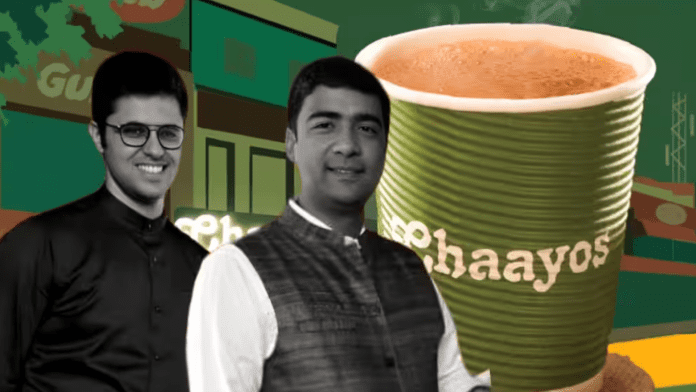
Chaayos, the Delhi NCR-based tea-cafe chain, witnessed a remarkable surge in its operating revenue. In FY23, the figures soared by 77%, reaching INR 239 Crores, a substantial increase from the INR 135 Crores reported in FY22.

Factoring in additional income, the startup achieved a total revenue of INR 253.4 Crores in FY23, marking an 81% rise compared to the INR 140.1 Crores reported in FY22.

Established in 2012 by Nitin Saluja and Raghav Verma, Chaayos specializes in the sale of tea and food items. In addition to its proprietary cafes, the startup utilizes online marketplaces as a channel to distribute its products.

Experiencing a 34% surge in its net loss for the fiscal year concluding on March 31, 2023, the startup recorded a net loss of INR 96 Crores, up from INR 71 Crores in FY22, primarily attributed to increased cash burn.

In FY23, the startup witnessed a 65% rise in its total expenditure, reaching INR 348.9 Crores, as compared to the INR 211.4 Crores reported in the preceding fiscal year.

The tea-cafe chain allocated INR 86.4 Cr for raw material procurement in FY23, reflecting a 62% increase from the INR 53.2 Cr spent in FY22. This category of expenses constituted 25% of Chaayos’ overall costs in FY23.

Operating a nationwide cafe chain necessitates a substantial workforce, evident in the startup’s comprehensive employee costs. Employee benefit expenditures surged by 53%, reaching INR 77.7 Crores in FY23, compared to INR 51 Crores in the preceding fiscal year.

Operating a network of more than 200 cafe outlets, Chaayos experienced a significant 63% increase in rent costs, rising to INR 46 Crores in FY23 from INR 28.3 Crores in the preceding year. It is noteworthy that the startup’s cafes are predominantly situated in prime locations within metro cities, where commercial space rents tend to be higher.

Since its establishment, Chaayos has secured approximately $85 million through various funding rounds, boasting notable backers such as Tiger Global, Alpha Wave, and Elevation Capital. The latest injection of funds occurred in its Series C funding round, where Chaayos raised $53 million.

The startup competes directly with counterparts like Chaipoint, Chai Sutta Bar, and MBA Chaiwala. Furthermore, it engages in indirect competition with coffee chains like The Third Wave Coffee, Blue Tokai, and Starbucks.

Advertisement

Alipay exits Zomato with INR 3,336.7 Cr stake sale; Morgan Stanley, Birla Mutual Fund among key buyers in block deals

0

Alipay, the Chinese payments group, divested its complete 3.44% share in the prominent food tech company Zomato through various block deals on Wednesday, amounting to a total of INR 3,336.7 Cr.

As of September 30, 2023, Alipay possessed 29.6 crore shares in Zomato, and the complete stake was divested yesterday, according to BSE data.

According to reports, Alipay was projected to divest its stake at INR 111.28 per share. Nevertheless, the transaction was completed at INR 112.7 per share on the BSE yesterday.

The Chinese firm withdrew from Zomato, securing a profit of over $40 million, a significant increase from its initial investment of $360 million in the Indian foodtech company back in 2018.

Even with Alipay’s divestment, Zomato’s shares demonstrated resilience, attracting interest from various buyers.

Yesterday, Morgan Stanley Asia (Singapore) acquired 4.4 crore shares of Zomato in a bulk deal, with the Government of Singapore purchasing 3.3 crore shares from the offloaded shares. Birla Mutual Fund secured 1.7 crore shares of Zomato, and BofA Securities Europe SA acquired 1.3 crore shares in the company.

Various entities affiliated with Fidelity Investment, Morgan Stanley, and Vanguard were among the purchasers of Alipay’s divested stake in Zomato.

In total, 30.4 crore shares of Zomato were traded yesterday on the BSE.

The company’s shares concluded yesterday’s session with a 2.5% increase, closing at INR 116.7 and once again surpassing its listing price of INR 115.

In November of last year, Alipay sold almost half of its Zomato stake in a bulk deal, amounting to INR 1,631 Cr.

In August of this year, the company divested a 10.3% stake in Paytm, a move that was subsequently acquired by Vijay Shekhar Sharma, the founder, and CEO of the fintech giant.

Zomato’s shares have surged approximately 97% year-to-date, driven by the company’s consecutive profitable quarters in FY24.

Read More: Zomato reports remarkable surge in profit, achieving second consecutive profitable quarter in FY24

Also Read: Zomato turns profitable in Q1 FY24, reports INR 2 Cr consolidated PAT

Advertisement

Walmart ramps up exports from India to reduce dependence on China

0
Walmart
Walmart (Representative Image)

Walmart, the worldwide retail powerhouse with ownership of Flipkart and PhonePe, is increasing its export of goods from India. This strategic move aims to diminish reliance on China and foster a more diversified supply chain, especially in light of the ongoing tensions between Washington and Beijing.

According to figures from data firm Import Yeti, Reuters revealed that the percentage of Walmart’s imports in the US from India surged to approximately 25% between January and August this year, a notable increase from the mere 2% reported in 2018. Although China maintained a dominant position, constituting 60% of Walmart’s imports during the specified period, this marked a significant decrease from the 80% reported in 2018.

“We want the best prices. That means I need resiliency in our supply chains. I can’t be reliant on any one supplier or geography for my product because we’re constantly managing things from hurricanes and earthquakes to shortages in raw materials,” the news agency quoted Andrea Albright, Walmart’s executive vice president of sourcing, as saying.

Nevertheless, Walmart clarified that the data does not inherently imply a reduction in reliance on any specific country as a sourcing market. The company emphasized its proactive efforts to enhance manufacturing capacity, with India playing a pivotal role in this strategic initiative.

Albright mentioned that Walmart is shipping a diverse range of goods, including toys, electronics, bicycles, and pharmaceuticals, from India to the United States.

Having initiated sourcing operations in India in 2002, Walmart currently sustains a workforce of 100,000 individuals in the country. This includes both permanent and temporary employees stationed across various offices affiliated with its units, namely Walmart Global Tech India, Flipkart Group, PhonePe, and sourcing operations.

Earlier this year, when discussing the strategic objectives in India for the retail giant, CEO Doug McMillon expressed a commitment to annually importing Indian goods worth $10 billion by 2027. He further emphasized the company’s intention to establish partnerships with suppliers, including small and medium enterprises, as part of this endeavor.

In 2018, the retail giant strengthened its footprint in India by acquiring a 77% stake in the prominent e-commerce player Flipkart for $16 billion. Additionally, during the six months leading up to July 31, 2023, the company invested $3.5 billion to acquire Flipkart shares from non-controlling stakeholders, such as Tiger Global and Accel.

Meanwhile, Amazon, a competitor to Walmart, asserts that it has facilitated exports totaling $8 billion from India to date and is now aiming to elevate this figure to $20 billion.

Advertisement

Meesho top performing investment in Prosus’ India portfolio for FY24

0
Meesho
Meesho (Representative Image)

During the first half of the financial year 2023-24 (FY24), Meesho, a prominent player in the e-commerce sector, stood out as the most successful investment in Prosus’ India portfolio. According to Prosus’ semi-annual financial report, Meesho delivered an impressive internal rate of return (IRR) of 32% for the investor.

In the investor’s global startup portfolio, the e-commerce giant took the third spot in terms of performance, trailing only behind Remitly and iFood.

Subsequently, ElasticRun, a domestic B2B ecommerce solutions provider, secured an impressive internal rate of return (IRR) of 31% for the Amsterdam-based investor. Despite nearly doubling its loss to INR 618.82 Cr in FY23, ElasticRun emerged as the second-best performer in Prosus’ Indian portfolio.

Fintech giant PayU India was also among the top performers in the investor’s India portfolio, registering returns exceeding 30%. The investor emphasized in its presentation that PayU showcased significant enhancements in profitability, exhibiting strong growth across both the consolidated payments and fintech verticals.

In the first half of the financial year 2023-24 (H1 FY24), PayU India witnessed a year-on-year (YoY) revenue surge of 32%, reaching $497 million compared to $412 million in H1 FY23. Additionally, the consolidated trading losses showed a notable improvement, decreasing by 72.5% YoY to $22 million during the six-month period, in contrast to $80 million in H1 FY23.

Meanwhile, the educational technology platform Eruditus achieved an internal rate of return (IRR) of 22%, while the food technology decacorn Swiggy recorded an IRR of 7% in the first half of the financial year 2023-24 (H1 FY24).

As of September 2023, Prosus maintained a 32.7% ownership stake in Swiggy. The impressive returns of the food technology giant can be attributed to substantial growth in Gross Merchandise Value (GMV) and a reduction in trading losses. According to the financial statements, GMV experienced a significant 28% year-on-year surge in the first half of the financial year 2023-24 (H1 FY24), while trading losses decreased to $208 million from $321 million in H1 FY23.

“Swiggy’s core food-delivery business grew 17% and delivered GMV of $1.43 Bn in the first six months of the year. This was led by a rise in transacting users that drove double-digit order growth and inflation in AOV. Core food-delivery EBITDA losses in H1 FY24 shrunk 89%, led by improvements in contribution margin and operating leverage…,” added Prosus.

Read More: Swiggy’s food delivery sales soar 17%, hits $1.43 Billion GMV in first half of FY24: Prosus

In the same timeframe, the prominent e-pharmacy player PharmEasy emerged as the most significant underperformer in Prosus’ Indian portfolio, concluding with an internal rate of return (IRR) of -41% in the first half of the financial year 2023-24 (H1 FY24).

Struggling edtech decacorn BYJU’S emerged as another significant underperformer for Prosus, posting an internal rate of return (IRR) of -24% in the first half of the financial year 2023-24 (H1 FY24). The Dutch investor also marked down the valuation of the edtech giant in its records to under $3 billion, reflecting an 85% decline from the previous valuation of $22 billion during its last funding round.

Prosus’ varied results can be attributed largely to the enhanced market sentiment and the renewed emphasis of startups on profitability and sustainability. In total, the investment giant reported an operating loss of $415 million in the first half of the financial year 2023-24 (H1 FY24), compared to $329 million in H1 FY23. A substantial portion of these losses stemmed from the acknowledgment of impairment loss related to investments in the edtech sector.

Advertisement

Consistency is Key: Nurturing a Cohesive Brand Image Across All Touchpoints

0
brand image

In the cacophony of today’s crowded market, where every brand strives for attention, the power of a cohesive brand image cannot be overstated. It’s not merely about having a recognizable logo or a catchy tagline; it’s about crafting a narrative that resonates across all touchpoints. From the digital realm to physical spaces, fostering consistency is the secret sauce that transforms a brand from a mere entity into a living, breathing story.

The Visual Symphony:

At the heart of brand consistency lies visual identity. Logos, color schemes, and typography form the visual symphony that should harmonize across websites, social media, packaging, and brick-and-mortar spaces. A customer scrolling through an Instagram feed or strolling down a store aisle should experience a seamless visual journey that reinforces the brand’s personality.

Language: a Lighthouse

Beyond the visual, language serves as a lighthouse guiding the brand through stormy seas of competition. From product descriptions to customer interactions, the tone and voice should be consistent, reflecting the brand’s character. Whether it’s playful banter on social media or formal language in official communications, the chosen tone becomes the heartbeat of the brand’s personality.

Digital Delight:

In the digital era, a brand’s online presence is often the first encounter customers have. Consistency across websites, social media platforms, and email campaigns is paramount. Navigation should be intuitive, colors should echo the established palette, and the overall digital experience should seamlessly extend the brand narrative.

Physical Spaces Speak Volumes:

For brands with physical storefronts, maintaining consistency in the physical realm is equally crucial. The ambiance, signage, and even the scent within a store should align with the brand’s identity. Walking into a brick-and-mortar extension should feel like turning the page of a familiar story, not entering a different narrative altogether.

The Omnichannel Symphony:

As consumers seamlessly transition between online and offline channels, brands must orchestrate an omnichannel symphony. A customer who browses products on a mobile app, visits a physical store, and then interacts on social media should encounter a cohesive experience. This not only fosters brand loyalty but also reinforces the brand image as a whole.

Employee Advocacy:

Consistency isn’t confined to customer-facing elements; it extends to internal practices. Employees, as brand ambassadors, should embody the brand ethos. Whether it’s in customer service interactions, internal communications, or even personal social media activity, employees contribute to the collective voice and image of the brand.

Adaptability without Compromise:

While consistency is crucial, it’s not synonymous with stagnation. A brand should evolve with the times, but this evolution should be a deliberate progression, not a disjointed leap. Whether incorporating new design elements or adapting the brand voice to contemporary trends, the key is to embrace change without compromising the established identity.

The Bottom Line:

In the labyrinth of consumer choices, a consistent brand image serves as a guiding light for customers. It builds trust, fosters loyalty, and transforms a brand from a mere commodity into a part of a customer’s lifestyle. From the visual elements that catch the eye to the language that captures the heart, nurturing a cohesive brand image across all touchpoints is the key to standing out in a world where consistency is not just valued but expected. As brands navigate the ever-shifting landscape, the ones that master the art of maintaining consistency while evolving will find themselves not just surviving but thriving in the hearts and minds of consumers.

Advertisement

Ordering Innovation: How to Deliver Exceptional Mobile Experiences in Food Brands

0
Mobile-Centric Strategy

Innovation and mobile experiences come together to create a winning combination in the fast-paced world of food brands. Mobile provides food brands with a platform to create experiences that extend beyond simple nourishment, from ordering while on the go to immersive applications that reimagine convenience. We’ll look at the components of great mobile experiences in this investigation, taking food brands from being just suppliers of food to being leaders in the digital space.

The cornerstone of a remarkable mobile experience for food brands lies in the ease of ordering. Intuitive interfaces that seamlessly guide users through menus, customization options, and checkout processes are not just convenient but crucial. The goal is to make the journey from craving to consumption a delightful one, with minimal friction and maximum satisfaction.

Personalization Palate:

With this picky Genz world, food brands can’t afford a one-size-fits-all approach. 

Mobile experiences that allow users to customize their orders based on preferences, dietary restrictions, and previous choices elevate the dining experience. From extra cheese to gluten-free options, a personalized palate enhances customer satisfaction and fosters a sense of connection between the brand and the consumer.

Mobile apps provide the perfect canvas for sizzling loyalty programs. From punch cards gone digital to tiered reward systems, innovative loyalty programs not only encourage repeat business but also cultivate a loyal customer base. The key is to offer rewards that align with customer preferences, turning mundane transactions into exciting opportunities for bonuses and discounts.

Visual Feast:

They say we eat with our eyes first, and in the digital realm, this rings truer than ever. Food brands must curate a visual feast within their mobile apps, tantalizing users with high-quality images and engaging visuals. From vibrant menu displays to mouth-watering animations, the visual appeal extends the dining experience beyond taste buds, creating anticipation and excitement.

Since the technological frame is constantly evolving, and food brands that seamlessly integrate with emerging technologies stay ahead of the curve. From augmented reality (AR) that allows users to visualize menu items in their own space to voice-activated ordering for hands-free convenience, embracing technological trends enhances the overall mobile experience.

Further, the anticipation of a delicious meal reaches its peak when users can track their orders in real-time. Mobile experiences that offer transparent and real-time order tracking not only reduce anxiety but also add an element of excitement. Watching a pizza progress from preparation to delivery transforms waiting time into a dynamic and engaging experience.

Social Integration for Flavorful Sharing:

Food is inherently social, and mobile experiences should reflect this communal aspect. Integrating social sharing features within the app allows users to showcase their culinary adventures. From sharing personalized orders on social media to inviting friends to join in a virtual feast, social integration amplifies the brand’s reach and fosters a sense of community. 

Exceptional mobile experiences aren’t static; they evolve based on user feedback. Food brands should implement robust feedback mechanisms within their apps, encouraging users to share their thoughts on the ordering process, delivery experience, and the quality of the food. This real-time feedback loop becomes a valuable tool for continuous improvement and refinement.

The Bottom Line:

In the competitive landscape of food brands, the mobile experience has emerged as a powerful differentiator. Crafting exceptional experiences involves a delicate blend of intuitive interfaces, personalization, loyalty programs, visual appeal, and integration with emerging technologies. As food brands embark on this digital journey, those that master the art of delivering delightful, seamless, and innovative mobile experiences will find themselves not just satisfying appetites but creating a lasting imprint in the hearts and smartphones of consumers. In the realm where innovation meets hunger, the recipe for success is written in lines of code, infused with a dash of creativity, and served on the ever-evolving plate of mobile experiences.

Advertisement

Revenue Realism: Sales KPIs Investors Analyze to Assess Business Health

0

Revenue is the vitality that keeps a business growing and attracts investors in the complex dance of business. It is critical for any company looking to raise capital to comprehend the key performance indicators (KPIs) that investors look at closely. We’ll examine the crucial sales indicators that provide insight into a business’s financial health and, ultimately, appeal to investors in this examination of revenue realism.

At the core of subscription-based models, Monthly Recurring Revenue stands as a barometer of a company’s ability to retain customers and generate consistent income. Investors closely analyze MRR trends, seeking steady growth that indicates a loyal customer base and the potential for scalable revenue streams.

Customer Acquisition Cost (CAC):

In the quest for profitability, understanding the cost of acquiring each customer is pivotal. A low Customer Acquisition Cost relative to the Customer Lifetime Value signifies an efficient and sustainable business model. Investors often scrutinize this ratio, assessing how well a company manages its resources to acquire and retain customers profitably.

Churn Rate:

The leaky bucket analogy applies aptly to businesses dealing with customer churn. Investors keenly observe the Churn Rate, gauging the percentage of customers leaving over a given period. A high churn rate can ring alarm bells, suggesting issues with product satisfaction, customer service, or market fit.

Gross Margin:

Beyond the top-line revenue figures, savvy investors delve into the Gross Margin, assessing the profitability of a company’s core operations. A healthy gross margin indicates that the business can cover its costs and have ample room for reinvestment or expansion.

Customer Lifetime Value (CLV):

The long-term value a customer brings to a business is a critical metric in evaluating sustainability. A robust Customer Lifetime Value demonstrates a brand’s ability to foster lasting relationships, ensuring that the revenue generated from each customer exceeds the cost of acquiring and serving them.

Sales Growth Rate:

Investors crave not just revenue but sustainable growth. The Sales Growth Rate showcases a company’s ability to expand its market presence and capitalize on emerging opportunities. Steady, upward-trending growth is a powerful signal for investors seeking long-term value.

Conversion Rates:

From leads to closed deals, the conversion rates at various stages of the sales funnel provide insights into the efficiency of a company’s sales process. A nuanced understanding of conversion rates allows investors to assess the effectiveness of sales and marketing efforts.

Net Promoter Score (NPS):

Beyond the quantitative metrics, the qualitative aspect of customer satisfaction comes to the forefront with Net Promoter Score. Investors value a high NPS as an indicator of a strong brand, positive customer sentiment, and the potential for organic growth through word-of-mouth referrals.

The Bottom Line:

In the realm of revenue realism, businesses vying for investor attention must embrace a holistic approach to key performance indicators. From the quantitative assurance of MRR and CAC to the qualitative insights offered by NPS, understanding and optimizing these metrics not only enhances investor appeal but also fortifies the very foundation of a resilient and thriving business. As the financial heartbeat echoes through the corridors of revenue, businesses armed with a keen awareness of these KPIs position themselves not just for investment but for sustained success in the competitive business landscape.

Advertisement

Navigating New Horizons: Communication Strategies for Emerging Brands’ Success

0

Emerging brands are poised for growth and eager to leave their mark in the ever-expanding business landscape. They stand at the brink of new horizons. A sophisticated communication strategy is necessary to successfully navigate these unexplored areas, in addition to a superior product.

One of the first steps in establishing a brand’s presence is developing a distinctive voice that resonates with the target audience. Avoiding generic messaging and clichés is crucial. Instead, brands should focus on authentic storytelling that communicates their unique identity and values. Whether through social media, content marketing, or traditional advertising, consistency in messaging helps build a recognizable brand persona.

Building Authentic Connections:

For emerging brands, building authentic connections with the audience is paramount. This involves actively engaging with customers, responding to feedback, and incorporating user-generated content into the brand narrative. Humanizing the brand fosters trust and loyalty, turning customers into brand advocates.

Traditional marketing channels are still relevant, but emerging brands can distinguish themselves by exploring innovative communication channels. Podcasts, influencer collaborations, and interactive content like quizzes or polls can create a buzz and connect with a broader audience. The key is to stay adaptive and embrace emerging trends without losing sight of the brand’s core identity. From a user-friendly website to active social media profiles, emerging brands must cultivate a strong digital footprint. Utilizing search engine optimization (SEO) strategies can enhance visibility, making it easier for potential customers to discover the brand organically.

Adaptability:

Effective communication strategies go hand in hand with analytics. Emerging brands should consistently measure the impact of their communication efforts. Analyzing data on customer engagement, conversion rates, and social media metrics provides valuable insights. This data-driven approach allows brands to adapt their communication strategies in real-time, optimizing for what resonates most with their audience.

Collaborative Partnerships:

Collaborating with complementary brands or influencers can amplify a brand’s reach. Strategic partnerships not only introduce the brand to new audiences but also lend credibility. The key is to choose partners whose values align with the brand, ensuring authenticity in the collaboration.

The Bottom Line:

Navigating the new horizons of brand communication for emerging brands requires a multifaceted approach. From crafting a distinct brand voice to exploring innovative channels and fostering authentic connections, success lies in a strategic, adaptable, and data-informed approach. By embracing these communication strategies, emerging brands can not only survive but thrive in an ever-evolving business landscape.

Advertisement

Market Pulse: The Dynamic Link Between Trends and Brand Growth

0

The development of brands and market trends interact in a fascinating dance in the dynamic world of commerce. Each component shapes and influences the other in a symbiotic relationship that is dynamic. It is critical for businesses looking to thrive in a cutthroat market to comprehend this complex relationship.

Trends, like currents in the vast ocean of consumer behavior, are constantly shifting. To navigate these waters successfully, brands must not merely ride the waves but become adept surfers, anticipating the next swell. This demands a keen eye on emerging patterns, be it the rise of sustainable practices, the digital revolution, or the subtle nuances in consumer preferences.

As trends ebb and flow, brands find themselves at a crossroads, faced with the crucial decision of adaptation or stagnation. It’s here that the true prowess of a brand emerges – the ability to not only recognize trends but to integrate them seamlessly into their identity. Take the shift towards eco-conscious living, for instance. Brands embracing sustainability not only cater to an evolving consumer ethos but also position themselves as forward-thinking stewards of the planet.

Yet, the dance doesn’t end with a brand adopting a trend; it’s about how they interpret and amplify it. The resonance between a trend and a brand’s core values is where the magic happens. Consumers today are discerning; they seek authenticity beyond surface-level trends. A brand that successfully aligns its narrative with a societal shift creates not just customers but advocates.

Conversely, trends too find validation and momentum through the brands that champion them. The cultural impact of a movement often hinges on the endorsement and integration by influential brands. Think of the tech giants that propelled the digital transformation or the fashion houses that turned sustainability into more than just a buzzword. Brands become the torchbearers, illuminating the path for wider societal acceptance.

However, the market is not a static canvas; it’s a living, breathing entity shaped by myriad forces. External factors, economic shifts, global events – all these play a role in the intricate choreography of market dynamics. Brands, therefore, must not only adapt to trends but also navigate the unpredictable currents of the broader environment. The ability to pivot, innovate, and maintain relevance in the face of unforeseen challenges is the hallmark of a resilient brand.

In this dance between trends and brand growth, data emerges as a silent but powerful partner. Analyzing consumer behavior, market analytics, and predictive modeling become the compass guiding brands through the intricate maze of trends. It’s not just about following the crowd; it’s about understanding the nuances, predicting the next move, and staying ahead in a market that waits for no one.

The link between market trends and brand growth is not a linear one but a rich tapestry of interwoven threads. Brands that master this dance, embracing trends with authenticity and navigating the unpredictable currents of the market, emerge not just as survivors but as leaders shaping the landscape they thrive in. It’s a dynamic journey where each step, each trend, and each decision contributes to the evolving narrative of success in the ever-changing market pulse.

Advertisement

Labonel steps up its game, launches its first sit-down gourmet patisserie in Bengaluru

0
Labonel

Labonel, a revered baking brand with a 25-year legacy, has unveiled its flagship Gourmet Patisserie in the heart of Indiranagar, Bengaluru.

Undergoing a strategic evolution, Labonel introduces its first-ever sit-down concept, transcending its traditional takeaway model. This marks a significant milestone, reflecting Labonel’s commitment to providing an unparalleled, immersive dessert experience for its connoisseurs.

“Labonel’s journey began with a passion for creating exceptional baking experiences as a home-style kitchen, and now, we are all set to take the next step. It’s a momentous occasion for us, and we couldn’t be happier to bring the warmth and savor of Labonel to the people of Bengaluru,” shared Mehnaz Hussain, Founder, Labonel Fine Baking.

Established in 1995 by a French visionary, Labonel embarked on its journey with a dedication to providing an authentic French finesse dessert experience through freshly made, homestyle cakes, and brownies in Hyderabad. Mehnaz Hussien, a self-taught baker, now serves as the custodian of the brand, overseeing Labonel’s evolution from a modest home kitchen into a coveted fine dessert experience. Today, the brand stands as a family-owned chain with seven stores spread across Hyderabad and Bengaluru.

As an ideal complement, Labonel has led the way in introducing the TopBrewer Machine within its establishments—a pioneering move in the country, assuring the delivery of the finest brews.

Labonel embodies the artistry of freshness and individual kitchen craftsmanship. The dedication to small-batch production guarantees a consistently exquisite dessert experience with each creation. With ambitious expansion plans underway, Labonel aims to replicate the successful Bengaluru model nationwide and envisions international ventures in the near future.

Advertisement