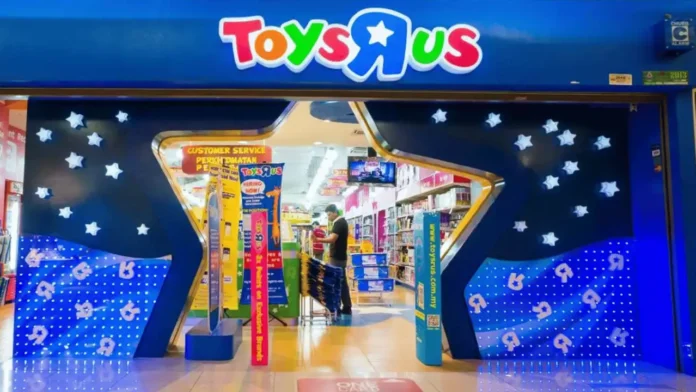
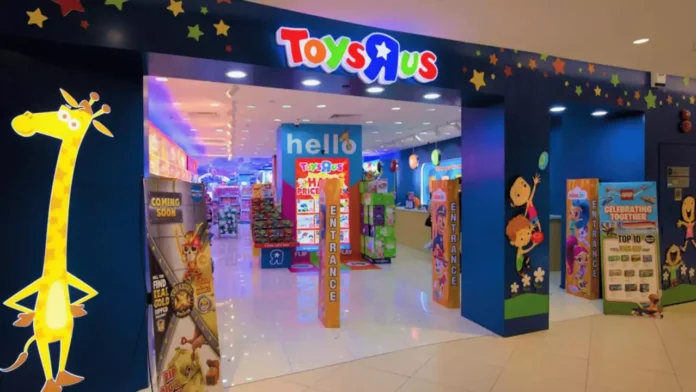
In its quest for rapid expansion in India, global toy retailer Toys ‘R’ Us is gearing up to initiate manufacturing in the country by mid-next year, according to a report by The Economic Times (ET) on Monday. This information was shared by Stanley Silverstein, the Chief Commercial Officer of WHP Global, the parent company.
According to reports, the company anticipates that India will rank among its top five markets within the next four to five years. Presently, the toy manufacturer operates two stores in the country and has ambitious plans to open an additional 75 stores over the next three years.
Toys ‘R’ Us initially entered the Indian market with a different licensee partner shortly before the onset of the COVID-19 pandemic. At that time, the company successfully launched 10-12 stores, but unfortunately, had to close them down due to lockdown measures. It made a re-entry into the market in March of this year and has since accelerated its manufacturing efforts in India.
In accordance with the prevailing regulations of the Bureau of Indian Standards (BIS), both electric and non-electric toys are required to carry an ISI mark, and the sale of any toy lacking this mark is prohibited in the Indian market. This regulatory requirement has prompted the company to explore manufacturing in India. Prior to the implementation of these norms, a significant portion of the company’s toys were imported from China.
Six years ago, the toy maker filed for bankruptcy, and subsequently, WHP Global acquired a majority stake in the brand. As of now, the company’s primary markets, ranking among the top five, include the USA, Japan, China, Italy, and Dubai.
In India, the toy retailer competes with Hamleys, which falls under the umbrella of Reliance Industries. Operating with an omnichannel strategy, the US-based retailer intends to establish smaller stores in India compared to its outlets in other regions.
The majority of the stores the company intends to open in India will span between 8,000 and 10,000 square feet. Recently, it inaugurated a store in Mumbai, covering an area of 12,000 square feet.
Starbucks has made contact with the union representing numerous U.S. stores, seeking to repair its tense rapport with certain frontline employees, as revealed in a letter observed by Reuters on Friday.
In an email to Reuters last month, Starbucks conveyed that the Workers United union had not participated in contract bargaining for over five months.
Representing over 9,000 Starbucks employees across approximately 360 U.S. stores, the union has been advocating for improved wages, staffing, and schedules from the coffee giant.
“I am writing you in the hope that Workers United and Starbucks can find a way to resume bargaining at the earliest possible time,” Starbucks Chief Partner Officer Sara Kelly said in a letter addressed to Workers United President Lynne Fox.
Kelly suggested resuming negotiations with a designated set of representative stores in January 2024.
“We are open to hearing other ideas and rules of engagement on how bargaining could proceed,” the letter said, adding that the current impasse has not helped either the company or the union.
Fox said in a statement to Reuters, “We have never said no to meeting with Starbucks. Anything that moves bargaining forward in a positive way is most welcome.”
Starbucks possesses nearly 10,000 company-owned locations in the U.S., and the company reports that fewer than 3% of these stores are unionized.
In November, Starbucks announced a minimum 3% increase in hourly pay for its U.S. retail workers from 2024. Concurrently, in that same month, employees at numerous stores staged a walkout during the prominent Red Cup Day promotional event.
Last month, the Strategic Organizing Center (SOC), a coalition of North American labor unions, announced the nomination of three candidates for board seats at Starbucks.
European wine and spirit producers are advocating for duty-free imports as part of the potential free trade agreement (FTA) with India. Their goal is to offer Polish Vodka, Champagne, and Irish Whiskey at more affordable prices within the country.
“It is still early in the negotiations as six rounds have been completed. But we would want duties to be significantly reduced in the first year and hope that it is phased out over five years,” said Ulrich Adam, director general spirits EUROPE, an industry lobby group, which was part of a delegation that travelled to India last week.
He proposed with the condition that states should refrain from raising domestic levies to compensate for the price difference.
Similar to the UK, where tariff reductions on Scotch are pivotal, the EU views wines and spirits as a significant component in the discourse on duty reduction. With 2,000 geographical indications (GIs) for wines and 250 for spirits, constituting nearly half of the GI tags in the trading bloc, the EU is also pursuing an agreement on GIs. This would assist its producers by relieving them from the obligation to adhere to food standards in India, among other advantages.
Although a substantial decrease in duties in India, currently estimated at around 150%, is perceived as potentially harmful to the domestic industry, which aims to safeguard its interests, Adam contends that permitting the importation of bulk items into the country will promote domestic bottling and associated activities. He also argues that local producers, specializing in the predominant brown beverages, will not experience significant repercussions from tariff cuts, as white spirits wines have a relatively small share of the market.
“I don’t think so. It’s the price point (for drinks)… It takes time,” Adam said, adding that there is a large shipment of bulk consignments from the EU to the US, where the final product is bottled for the American market.
“It (duty cuts) has worked in other FTAs and it has shown to deliver results… it can act as an accelerator of trade,” he added.
Toys ‘R’ Us, having recently commenced operations in India, anticipates that the Indian market will rank among its top five within the next four to five years.
“The Indian economy is more dynamic than many others. Our experience with toys is that globally there are very strong markets and Toys ‘R’ Us as a brand works in all geographies,” explained Stanley Silverstein, Chief Commercial Officer at WHP Global, during an interview.
The global toy retail chain, owned by WHP Global, has established partnerships with Ace Turtle and Flipkart in India.
“I believe that the India business will be among the top five for Toys ‘R’ Us globally in four to five years,” said Nitin Chhabra, chief executive officer, Ace Turtle.
According to Silverstein, the toy retail chain based in the US operates successfully in diverse geographical settings, and the key lies in selecting the appropriate partner.
“We are satisfied and happy about our relationship with Ace Turtle and Flipkart,” he said.
Chhabra mentioned that owing to the recent regulations set by the Bureau of Indian Standards (BIS), the retailer is increasingly sourcing the majority of its toys from India, given that even high-end toys are now being manufactured within the country.
Prior to the BIS norms, India relied heavily on importing such toys from China.
“The government’s ‘Make in India’ initiative seems to be coming in full swing with people setting up manufacturing facilities, and I think we should get there in the next year or so by having even high-end toys manufactured here,” Chhabra said.
At present, Toys ‘R’ Us operates two stores in the country. Recently, the flagship, spanning 12,000 square feet, was inaugurated in Mumbai as its second store. Chhabra mentioned a three-year plan to open an additional 75 stores across the country.
“We have signed up about 12 more locations to open more stores across the country.”
Most of the toy retail chain’s stores will typically fall within the size range of 8,000 to 10,000 square feet.
Coca-Cola India has ventured into the alcohol market with its inaugural foray, debuting Lemon-Dou, a global alcoholic ready-to-drink beverage. The company is currently conducting pilot tests for this product in Goa and certain regions of Maharashtra.
A spokesperson from Coca-Cola India verified that the company is currently conducting pilot tests for Lemon-Dou, a beverage from its global portfolio, in select states across India. Lemon-Dou is a blend of shochu, a distilled liquor akin to brandy and vodka, combined with lime.
“The preparation and distribution of these beverages is done separately in dedicated and independent facilities in India, which are different from the facilities that prepare and distribute its non-alcoholic, ready-to-drink (NARTD) beverages,” the Coca-Cola India spokesperson said in an email.
Lemon-Dou, recognized as chuhai, is an alcoholic cocktail originating from Japan. During its test launch phase, it is available at a price of INR 230 for a 250 ml can.
“We have deliberately chosen to explore within the expansive category of alcohol,” stated Manolo Arroyo, Coca-Cola’s global marketing chief, in a recent interview. “We’re very clear what kind of beverages consumers are demanding. I call it fuel for the body and the mind.”
In 2018, Coca-Cola introduced Lemon-Dou as its first ready-to-drink alcoholic beverage in Japan, advancing its positioning as a “total beverages company.”
Coca-Cola, the largest soft drinks company in India, offers a range of fizzy drinks including Coke, Sprite, Thums Up, Fanta, and Limca, as well as juices such as Maaza and Minute Maid. Additionally, it provides Kinley water, Honest tea, and coffee under the brands Georgia and Costa Coffee. The company’s venture into alcoholic beverages marks its entry into this market three decades after its re-establishment in India.
“In beverages beyond soft drinks, there’s a dynamic that is very interesting, which is an age of entering categories and retaining consumption of that category,” Arroyo had said during the interview.
“Different beverages, depending on who is drinking, who is making the decision to drink, and who is making the decision to buy, have different dynamics,” he added.
Nevertheless, executives familiar with the company’s strategies have indicated that due to the intricate nature of large-scale alcohol distribution and manufacturing in India, Coca-Cola intends to enter the market gradually. Furthermore, the spirits sector in India is subject to strict regulations and substantial taxes, with pricing under the control of individual states.
Apart from Japan and its recent introduction in India, Lemon-Dou is accessible in specific countries, including China and the Philippines.
In October, Coca-Cola and global spirits manufacturer Pernod Ricard disclosed a worldwide partnership to introduce a ready-to-drink pre-mixed cocktail featuring Absolut vodka and Sprite in 2024. The initial launch will encompass the UK, Netherlands, Spain, and Germany. The product, named Absolut & Sprite, will be crafted using Pernod’s premium Absolut vodka and Coca-Cola’s lemon-lime soft drinks Sprite and Sprite Zero Sugar.
Coca-Cola’s exploration into the alcohol sector in specific international markets extends to offerings like seltzers such as Topo Chico Hard Seltzer and pre-mixed cocktails like Schweppes and Jack Daniel’s & Coca-Cola.
The US beverages giant is strategically expanding in the alcohol ready-to-drink space.
“We take the responsibilities that come with our products in the alcohol ready-to-drink space very seriously as we grow our brands in a responsible and sustainable way,” the company said on its website.
Manu Ahuja, the Managing Director and Chief Executive Officer of Jubilant Industries, passed away at the age of 55 on Saturday.
“Ahuja’s sudden and unexpected passing away will be an irreparable loss to the company,” the company said in an exchange filing.
In May 2018, Ahuja became a part of the organization. Additionally, he served as a full-time director and CEO of Jubilant Agri and Consumer Products, a wholly owned subsidiary of Jubilant Industries.
As per the information available on the company’s website, Ahuja was a graduate of XLRI Jamshedpur and Thapar Institute of Engineering, Patiala. He possessed extensive experience in various businesses and industries spanning India and South East Asia.
The automation technologies play a symphony, orchestrating smooth processes and carrying organisations to new heights in the fast-paced world of business evolution, where growth is not just a goal but a perpetual pursuit. Automation scaling isn’t just a fad; it’s a strategic necessity for companies looking to grow, but grow profitably and sustainably. In order to harmonise processes for faster growth, we explore the tools that make up this tech symphony in this exploration.
Intelligent Process Automation: The Maestro of Efficiency
At the forefront of the tech symphony is Intelligent Process Automation (IPA), the maestro that conducts the efficiency orchestra. By combining Artificial Intelligence (AI) and Robotic Process Automation (RPA), IPA streamlines mundane tasks, enhances accuracy, and accelerates processes. From data entry to complex decision-making, IPA ensures that repetitive tasks are handled with precision, freeing up human resources for more strategic endeavors.
Robotic Process Automation: The Automation Virtuoso
Robotic Process Automation, often referred to as RPA, is the virtuoso instrumentalist in the automation ensemble. RPA bots mimic human actions across digital systems, executing rule-based tasks with speed and accuracy. From data extraction to invoice processing, RPA eliminates manual errors, reduces processing times, and allows organizations to scale operations without proportionally increasing workforce.
Workflow Automation: The Harmony of Seamless Processes
Workflow Automation is the harmony that ensures the seamless flow of tasks and information across an organization. By defining and automating workflows, organizations can optimize processes, reduce bottlenecks, and enhance collaboration. Whether it’s project management, approvals, or document routing, workflow automation accelerates task completion, fostering an environment conducive to growth.
Chatbots and Virtual Assistants: The Interactive Ensemble
Chatbots and Virtual Assistants bring an interactive dimension to the tech symphony. Leveraging Natural Language Processing (NLP), they handle customer queries, streamline communication, and provide real-time support. Whether assisting with inquiries or guiding users through processes, these automated interfaces enhance customer experiences and contribute to the scalability of customer-centric operations.
Data Integration Platforms: Unifying the Score
These platforms seamlessly connect disparate systems, ensuring that data flows cohesively across the organization. By breaking down data silos, organizations gain a holistic view, facilitating data-driven decision-making and providing a foundation for scalable growth strategies.
Cloud Computing: The Scalability Backbone
Cloud Computing serves as the scalability backbone in the tech symphony, providing the infrastructure required for growth. By moving operations to the cloud, organizations gain flexibility, scalability, and cost-efficiency. Whether it’s storage, processing power, or hosting applications, the cloud ensures that businesses can scale their technological resources in tandem with their growth trajectory.
Advanced Analytics and Machine Learning: The Predictive Pianist
These technologies analyze patterns, predict trends, and optimize processes based on historical data. By incorporating machine learning algorithms, organizations can automate decision-making, refine strategies, and stay ahead in a landscape driven by data-driven intelligence.
Cybersecurity Automation: Safeguarding the Symphony
As the tech symphony plays on, Cybersecurity Automation acts as the vigilant guardian, ensuring the safety of the ensemble. Automated cybersecurity measures continuously monitor, detect, and respond to threats in real-time. From threat intelligence analysis to automated incident response, cybersecurity automation protects the organization’s digital assets, allowing for growth without compromising security.
DevOps Automation: Accelerating Development and Deployment
DevOps Automation serves as the tempo accelerator, streamlining the development and deployment processes. By automating code integration, testing, and deployment, organizations can achieve faster release cycles, improve collaboration between development and operations teams, and respond swiftly to market demands. DevOps automation is the heartbeat that aligns development efforts with the rhythm of organizational growth.
A Harmonious Future of Efficient Growth
From Intelligent Process Automation conducting the efficiency orchestra to Robotic Process Automation as the virtuoso instrumentalist, and from Cloud Computing providing the scalability backbone to Cybersecurity Automation safeguarding the ensemble, each technology plays a vital role in orchestrating growth. As organizations embrace the tech symphony, they not only streamline processes but also create a harmonious future where efficiency and innovation are the keynotes, propelling them toward sustained and scalable growth in the dynamic landscape of business evolution.
The modern consumer is more than just a transaction; they are ambassadors of change. Understanding the eco-conscious mindset goes beyond offering green products; it involves aligning your brand with values that resonate with environmentally-aware individuals. It’s about acknowledging that sustainability isn’t a feature but a fundamental aspect of the customer experience.
Transparency as the Cornerstone: Building Trust through Clarity
From supply chain practices to production methods, customers want to know the journey of the products they purchase. Brands that openly share their eco-friendly initiatives, challenges faced, and progress made not only build trust but also invite customers to be part of the sustainability journey.
Eco-Friendly Product Innovation: Meeting Needs with Green Solutions
Sustainability isn’t just about reducing harm; it’s about actively contributing to positive change. Brands can innovate by introducing eco-friendly alternatives that not only meet customer needs but also align with their values. Whether it’s recyclable packaging, energy-efficient products, or sustainable sourcing, these innovations resonate with eco-conscious consumers seeking greener choices.
Education and Advocacy: Empowering Consumers
Educational initiatives that raise awareness about sustainable practices, environmental issues, and the impact of conscious choices contribute to a customer base that not only supports your brand but becomes advocates for a larger cause. Brands can act as catalysts for positive change by providing the information needed for informed and sustainable decisions.
Circular Economy Initiatives: Closing the Loop
Move beyond the linear product lifecycle and embrace circular economy practices. From recycling programs to take-back initiatives, brands can actively contribute to minimizing waste and promoting the longevity of products. Closing the loop not only aligns with sustainability goals but also enhances the perceived value of your brand in the eyes of environmentally-conscious consumers.
Carbon Footprint Reduction: Walking the Green Talk
Reducing carbon footprint isn’t just a buzzword; it’s a tangible commitment to sustainability. Brands can undertake initiatives to minimize their environmental impact, whether through energy-efficient operations, carbon offset programs, or sustainable transportation methods. Demonstrating a genuine commitment to walking the green talk reinforces your brand’s credibility and resonates with eco-conscious consumers.
Collaboration for Impact: Joining Forces for Sustainability
Sustainability is a collective effort. Brands can collaborate with like-minded organizations, NGOs, and sustainability-focused initiatives to amplify their impact. Collaborative projects not only contribute to meaningful change but also showcase a brand’s commitment to a larger cause, fostering a sense of community among eco-conscious consumers.
Personalized Sustainability: Tailoring Green Experiences
Recognize the diversity within the eco-conscious consumer base. Personalize sustainability efforts to cater to different preferences and values. Whether it’s offering customization options for eco-friendly products or providing tailored sustainability tips based on individual preferences, brands can create personalized green experiences that resonate on a deeper level.
Measuring Impact and Celebrating Milestones: Progress as a Journey
Sustainability is a journey, not a destination. Regularly measure and communicate the impact of your sustainability initiatives. Celebrate milestones, whether it’s achieving a certain level of carbon neutrality, reducing waste, or supporting environmental causes. Keeping customers informed about the progress of sustainability goals creates a sense of shared accomplishment and reinforces long-term loyalty.
Nurturing Loyalty through Sustainable Value
By understanding the eco-conscious consumer, embracing transparency, innovating with eco-friendly products, educating and advocating for sustainable choices, adopting circular economy initiatives, reducing carbon footprints, collaborating for impact, personalizing sustainability efforts, and measuring impact while celebrating milestones, brands can forge paths to customer-centric sustainability that transcend transactions and cultivate loyalty rooted in shared values and a commitment to a greener future.
Beyond the quality of products or services, the ability to convey value and connect with the audience is paramount. In this exploration, we unravel the strategies that harness the power of communication to not just be seen but to be valued in the eyes of consumers. Every brand has a story, and the art lies in crafting a narrative that captivates the audience. Share the journey, values, and aspirations that define your brand. A compelling story not only humanizes the brand but also establishes an emotional connection with consumers. Whether through your website, social media, or marketing materials, the narrative becomes the foundation upon which your brand’s identity is built.
Consistency Across Channels: Building Recognition
Ensure that your brand message, visual identity, and tone of voice remain uniform across all communication channels. Whether it’s your website, social media, or email campaigns, a consistent brand presence fosters recognition. It’s this recognition that transforms occasional interactions into a continuous relationship, contributing to the growth of your emerging brand.
Targeted and Personalized Messaging: Speaking to Your Audience
Effective communication isn’t about broadcasting to the masses; it’s about speaking directly to your target audience. Tailor your messaging to address the specific needs, preferences, and pain points of your audience. Personalized communication, whether through segmented email campaigns or targeted social media content, demonstrates an understanding of your audience’s individuality, forging a deeper connection.
Building Trust Through Transparency: Authenticity Matters
Be open about your brand values, processes, and even challenges. Authentic communication builds trust, and a trusted brand is one that consumers are more likely to engage with and advocate for. Whether it’s through behind-the-scenes glimpses or candid discussions, transparency lays the groundwork for long-term relationships.
Leveraging Visual Storytelling: A Picture is Worth…
Visuals are powerful storytellers. Use high-quality, consistent visuals to convey your brand’s personality and values. From striking imagery on your website to engaging social media graphics, visual storytelling captures attention and communicates messages efficiently. Invest in visuals that not only align with your brand identity but also resonate with your audience’s aesthetic preferences.
Engaging in Two-Way Communication: Listening and Responding
Communication is a two-way street. Actively listen to your audience through social media comments, reviews, and customer feedback. Respond promptly and thoughtfully, acknowledging both positive and negative interactions. This not only demonstrates that your brand values customer input but also provides an opportunity to address concerns, showcase improvements, and further enhance your brand’s reputation.
Let your satisfied customers become ambassadors for your brand. Share their success stories, testimonials, and reviews. Real-life experiences from happy customers provide social proof of your brand’s value. Whether through case studies, video testimonials, or featured customer spotlights, these stories resonate with potential customers and contribute to the perceived value of your brand.
Utilizing Influencer Partnerships: Extending Your Reach
Collaborate with influencers whose audience aligns with your target market. Influencers can effectively communicate your brand message to a wider audience in an authentic manner. Their endorsement provides social proof and introduces your brand to a new set of potential customers. Choose influencers whose values align with your brand for a more impactful partnership.
Growing Beyond Visibility to Value
Craft a compelling narrative, maintain consistency across channels, target your messaging, build trust through transparency, leverage visual storytelling, engage in two-way communication, showcase customer success stories, and utilize influencer partnerships. In the tapestry of brand communication, each thread contributes to the overall story, connecting with your audience, and nurturing the growth of your brand from an emerging contender to a recognized and valued presence in the market.
Augmented Reality (AR) becomes a disruptive force in the events and experience space, where engagement is the key to success, boosting interactions and spurring corporate growth. AR adds a dash of creativity, transforming routine events into remarkable experiences, beyond the conventional bounds of in-person meetings. We uncover the fascinating ways that augmented reality (AR) is changing the game, increasing user engagement, and launching companies into new growth phases in this investigation.
Traditional events often grapple with the constraints of physical space, limiting the scope of engagement. AR shatters these barriers, creating immersive experiences that transcend the limitations of venue size or location. From virtual product demonstrations to interactive exhibits, AR transports attendees into a world where imagination meets reality, fostering deeper connections with brands and leaving lasting impressions.
Virtual Try-Ons and Product Interactivity: Touch and Feel in the Digital Realm
For brands showcasing physical products, AR introduces a game-changing element – virtual try-ons and interactive product experiences. Attendees can use their smartphones or AR glasses to visualize how products would look or function in their own space. This not only enhances the event experience but also accelerates the decision-making process, driving tangible business results. Gamification injects an element of fun and competition into events, and AR takes this to the next level. Attendees can participate in AR-based games, scavenger hunts, or challenges that lead them through different event spaces. This not only keeps participants engaged but also creates memorable experiences that extend beyond the event, fostering brand recall and loyalty. Networking is a cornerstone of events, and AR redefines how attendees connect. AR-powered networking features can display attendee profiles, facilitate virtual introductions, and provide real-time information about potential connections. This not only streamlines the networking process but also ensures that valuable connections made during the event extend into post-event collaborations.
In this techno age, where physical attendance may be limited, AR enables virtual participation. Attendees can join events from anywhere in the world, using AR to immerse themselves in the experience remotely. This not only expands the reach of events but also opens new avenues for businesses to connect with a global audience and drive growth beyond geographical constraints.
AR also transforms event spaces into dynamic, interactive environments. Attendees can use AR to access additional information about exhibits, view 3D animations, or even unlock hidden content by scanning specific markers. This layer of interactivity transforms passive observation into active engagement, ensuring that every corner of the event becomes an opportunity for discovery.
Further, it is fair to say that, AR doesn’t just enhance experiences; it provides valuable data for event optimization. Analytics generated from AR interactions offer insights into attendee behavior, preferences, and engagement patterns. Event organizers can leverage this data to refine future experiences, tailor content based on audience interests, and ultimately drive business growth through informed decision-making.
The AR Renaissance in Events
The immersive experiences, virtual try-ons, gamification, networking enhancements, interactive event spaces, virtual attendance, and analytics-driven optimization collectively mark the dawn of a new era. For businesses and event organizers seeking to supercharge engagement and drive growth, the integration of AR isn’t just a technological advancement; it’s a strategic imperative that propels events into a realm where reality and imagination converge, leaving participants captivated and businesses flourishing.
We use cookies to ensure that we give you the best experience on our website. If you continue to use this site we will assume that you are happy with it.