Friday, December 19, 2025
Home Blog Page 37

Amazon’s $23.9 Billion Subscription Empire Faces Reckoning as FTC Secures Record $2.5 Billion Settlement for Misleading Prime Users

0

Amazon has agreed to pay $2.5 billion to settle charges brought by the Federal Trade Commission (FTC), which accused the e-commerce giant of misleading millions of consumers into signing up for its Prime membership service. The deal, announced Thursday, combines $1 billion in fines with $1.5 billion in reimbursements to affected subscribers.

Roughly 35 million Prime members are eligible for payments. According to court filings, customers who enrolled in Prime between June 2019 and June 2025 through certain promotional offers, but rarely used its benefits, will automatically receive $51. Others may claim refunds if they attempted to cancel but were unsuccessful.

The case centered on practices the FTC described as confusing and manipulative, particularly around free-trial offers and the difficulty of canceling. The agency alleged that Amazon executives resisted internal proposals to simplify enrollment and cancellation, calling the tactics “an unspoken cancer” in internal discussions.

Although Amazon denies wrongdoing, the company has agreed to introduce clearer disclosures, including a visible option to decline Prime during checkout and a simplified cancellation process. An independent monitor will oversee compliance.

FTC Chair Andrew Ferguson hailed the settlement as the agency’s second-largest consumer payout on record, calling it “a monumental win for Americans tired of subscriptions that are nearly impossible to cancel.” Former FTC chair Lina Khan described the $2.5 billion payout as “a drop in the bucket” compared to Amazon’s scale.

Prime, launched in 2005 at $79 per year and now priced at $139 annually, remains central to Amazon’s business. Subscription revenue reached $23.9 billion in the first half of 2025 alone. Analysts say the settlement is unlikely to weaken Prime’s dominance, with the service already entrenched in most U.S. households.

Advertisement

Savouron by Herbal Isolates Targets Growing Demand for Clean-Label Flavour Solutions

0

Herbal Isolates, part of the Synthite Group and a long-standing player in the global food ingredient market, has unveiled Savouron, a new sub-brand dedicated to flavour enhancement. The launch signals a strategic move to consolidate the company’s growing portfolio of taste solutions under one unified identity, while also positioning itself to capture rising demand in the fast-expanding flavour enhancer segment.

Herbal Isolates has built its reputation on decades of leadership in green pepper products and hydrolysed vegetable proteins (HVPs). With Savouron, the company is broadening its scope to address changing consumer preferences for bold flavours, cleaner labels, and responsibly sourced ingredients. The Savouron range is structured around three categories. The first includes flavour enhancers such as HVP, flavoured HVP, CleanSavour HVP, yeast extracts, reaction flavours and soya sauce powder. The second focuses on dairy and fat systems, including cheese powder, curd powder, non-dairy creamer and fat powder, aimed at delivering indulgence and creaminess across food applications. The third features specialty powders like caramel powder, vinegar powder and an expanding set of spray-dried ingredients designed for both taste and functional benefits.

Speaking on the launch, Jacob Ninan, Managing Director of Herbal Isolates, said Savouron represents the company’s commitment to shaping the next chapter of food innovation. “Consumers are looking for products that deliver flavour and indulgence, but also transparency and responsibility. Savouron allows us to partner with food brands to meet these expectations head-on,” he noted. Industry analysts estimate sustained global growth in the flavour enhancer market, driven by convenience, nutrition, and sensory appeal. Backed by the processing expertise of Herbal Isolates and the R&D strength of Synthite Group, Savouron is positioned to play a pivotal role in the evolution of flavour solutions worldwide.

Advertisement

California Burrito Bags Rs 120 Crore From Elevation Capital, Targets 140 Stores by FY26

0

Bengaluru-based quick service restaurant chain California Burrito has raised about Rs 120 crore ($14 million) from Elevation Capital, marking its biggest fundraise since inception. The deal, which had been in discussion nearly 18 months ago but stalled, has now been revived on favourable terms, people familiar with the development.

Founded in 2012 by American entrepreneur Bert Mueller along with friends Dharam Khalsa and Gaelan Connell, California Burrito has grown from four outlets in Bengaluru in its early years to more than 110 stores across India. Mueller, now the sole remaining co-founder and chief executive officer, is steering the brand into its next phase of growth.

The fresh capital will be deployed to expand the chain to about 140 outlets by March 2026, with Pune and other new cities joining Bengaluru as key markets. A portion of the funds will also be used to strengthen leadership, with recent hires from KFC and other large QSR brands already in place.

California Burrito’s revenues have nearly doubled in two years. The company reported Rs 109 crore in FY23, rising to Rs 196 crore in FY24. After several years of losses, it turned profitable last year with Rs 6.8 crore in net profit, according to regulatory filings. Results for FY25 are yet to be disclosed.

Online platforms remain the company’s biggest growth driver, with 60 percent of sales coming via Zomato and Swiggy, while dine-in contributes the remaining 40 percent.

The brand, backed by Kumar Vembu, brother of Zoho founder Sridhar Vembu, has raised under $10 million till now, making the Elevation Capital infusion a significant milestone in its funding journey. Both California Burrito and Elevation Capital declined to comment on the development.

Advertisement

Handpickd Bags $15M Series A from Bertelsmann, Titan to Scale Zero-Inventory Commerce Model

0

Handpickd, a commerce startup founded in 2024, has raised $15 million in Series A funding led by Bertelsmann India Investments, with Titan Capital Winners Fund and existing backers also participating. The company said the fresh capital will be used to expand its operations, strengthen supply chain technology, and hire across key functions.

The round marks one of the larger early-stage investments this year in India’s growing agri-commerce and fresh produce sector. Handpickd was co-founded by Anant Goel, who earlier launched Milkbasket, along with Nitin Gupta and Sahil Madan.

Unlike traditional grocery and quick commerce players, Handpickd operates on a zero-inventory model. Orders placed by customers are aggregated and sourced directly from farmers before being delivered within six to seven hours. The company does not rely on warehouses, cold storages, or dark stores, a structure it claims reduces wastage significantly while improving profitability at scale.

“We are inverting the demand-supply equation. Instead of pushing stockpiled goods, we procure exactly what the consumer wants and deliver it the same day. This systematically eliminates inefficiencies across the supply chain,” said Anant Goel, co-founder and chief executive.

The model also positions Handpickd differently in India’s competitive fresh food and grocery segment, where players such as Zepto, Blinkit, and BigBasket have invested heavily in warehousing and logistics infrastructure. By bypassing inventory holding, Handpickd aims to achieve faster growth with leaner capital requirements.

Backed by its new investors, the company plans to strengthen its technology stack to improve farmer integration, streamline sourcing, and build predictive systems for demand planning. Expansion into new cities is also on the roadmap.

With consumer demand for fresher, transparent, and waste-free food supply chains rising, Handpickd is betting its model can scale rapidly and profitably in the coming years.

Advertisement

TenderCuts Turns the Tables: Retail-First Pivot Delivers Profitability and Faster Breakeven

0

Chennai-based meat and seafood brand TenderCuts has staged a sharp turnaround, moving from the brink of closure to profitability within just 20 months. The company, which had been weighed down by high acquisition costs and slow-breaking stores, is now reporting positive unit economics after restructuring its business model.

Co-founder and CEO Sasikumar Kallanai told ETRetail that the company broke even at the corporate level in August, marking its first profitable month. The shift came after TenderCuts moved away from its online-heavy strategy, where nearly 90 percent of revenue once originated, to a retail-first approach centered on smaller, more efficient neighborhood stores.

Store formats were trimmed from 1,500–2,000 sq. ft. to 800–1,000 sq. ft., reducing capital expenditure from Rs 70–80 lakh per outlet to Rs 20–30 lakh. Operating costs were cut in half to under Rs 4 lakh. As a result, stores are now breaking even in under six months, compared to 18 months previously, and are generating 15 to 18 percent EBITDA at the outlet level.

The restructuring has also boosted customer retention. Repeat orders now account for 88 percent of transactions, while online sales are growing 5 to 8 percent each month despite zero spending on performance marketing.

Chennai remains the core market, with plans to expand from 18 to 50 outlets by March 2026. Smaller stores are expected to deliver Rs 35 lakh in monthly throughput, while larger formats could reach Rs 50 lakh.

TenderCuts closed FY25 with operating revenue of Rs 48 crore and expects to reach Rs 80 crore in FY26. The brand projects Rs 120 crore in annual recurring revenue by March 2026 and aims to scale to Rs 500 crore across Chennai, Bengaluru and Hyderabad within three years.

Advertisement

Gant Strengthens Footprint in India, Appoints Shahid Kapoor as Brand Ambassador to Drive Lifestyle

0

American sportswear brand Gant is intensifying its push in India with Bollywood actor Shahid Kapoor coming on board as its new brand ambassador. The partnership will be unveiled through a campaign titled “Button Up. Build Your Story,” aimed at celebrating resilience, individuality, and self-expression, key themes that the brand hopes will resonate with Indian consumers.

Shahid Kapoor, a prominent figure in Indian cinema with a strong following among urban millennials, emphasized the campaign’s alignment with personal authenticity. “Style for me has always been about authenticity, wearing something that not only looks good but also tells a story about who you are,” Kapoor said. “Gant’s legacy of effortless sophistication and its commitment to progress and self-expression deeply resonate with me.”

The campaign will feature a short film designed to engage consumers on an emotional level, highlighting personal narratives that mirror Gant’s values. The brand believes Kapoor’s image of confidence and elegance makes him a natural fit for its message, reinforcing its positioning as a modern, heritage-rooted lifestyle brand.

Fredrik Malm, EVP of global commercial, brand, and product at Gant, noted that the collaboration is intended to strengthen the brand’s footprint in one of the world’s fastest-growing fashion markets. “Shahid Kapoor embodies the effortless style and confidence that define Gant. Through this partnership, we aim to deepen engagement with Indian consumers and expand awareness of our cultural and lifestyle offerings,” he said.

Pawan Khandelwal, managing director of Samarth Lifestyle, which oversees Gant’s business in India, highlighted that the brand plans to leverage this campaign to elevate its presence across key metropolitan centers while delivering a premium retail and digital experience.

The move comes as Gant seeks to accelerate growth in India, where international sportswear and lifestyle brands are increasingly investing to capture a market valued at billions of dollars, fueled by rising urban incomes and evolving fashion preferences.

Advertisement

Handcrafted Metalware Brand P•TAL Raises $3 Million in Series A Led by VC Grid and Zerodha’s Rainmatter, Eyes ₹150 Crore ARR and Global Expansion

0

Handcrafted copper, brass and bronze brand P•TAL has secured 3 million US dollars (about ₹25 crore) in a Series A round led by VC Grid and Rainmatter, the venture fund backed by Zerodha cofounder Nithin Kamath. The round also saw participation from Connecticut Innovations, marking the US-based firm’s first investment in an Indian company.

Other investors joining the round include Anicut Capital, Zero Pearl VC, Jaipur Rugs Family Office, Livspace cofounder Ramakant Sharma, Genesis Luxury’s Sanjay Kapoor, CaratLane cofounder Avnish Anand, Atomberg’s Shibam Das, Innov8’s Ritesh Malik, Ekamya Ventures, the Salarpuria Group and LNB Group.

The company, which appeared on Shark Tank India and secured an all-sharks deal in Season 3, has scaled rapidly over the past two years. Revenues have jumped from ₹5 crore annual run rate (ARR) to ₹50 crore, and P•TAL now targets ₹150 crore ARR within the next 12 months.

Exports currently contribute over 55 percent of its sales, spanning the United States, United Kingdom, Europe and the Middle East. The brand expects international revenue share to climb to 75 percent in the next three to five years as it strengthens distribution abroad.

Co-founder and chief executive Aditya Agrawal said the fresh capital will be channelled into product development, technology-led supply chain efficiencies and community initiatives for its artisan base. “We want to redefine what Made in India means — craft rooted in tradition but designed for the future. Our goal is to build a brand that makes India proud on the global stage,” he said.

P•TAL, short for Punjab Thathera Art Legacy, works with traditional artisans in north India to create modern handcrafted metalware, blending design innovation with heritage techniques.

Advertisement

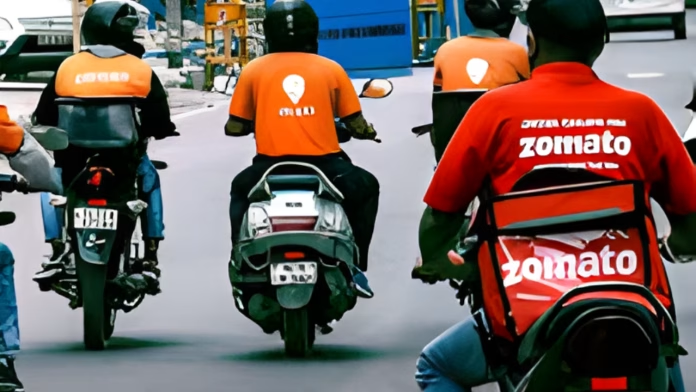
Deepinder Goyal Bets on Moving Billboards: Zomato in Talks to Sell Ads on Riders’ T-Shirts and Bags Across 5 Lakh Fleet, 47 Lakh Orders Daily

0

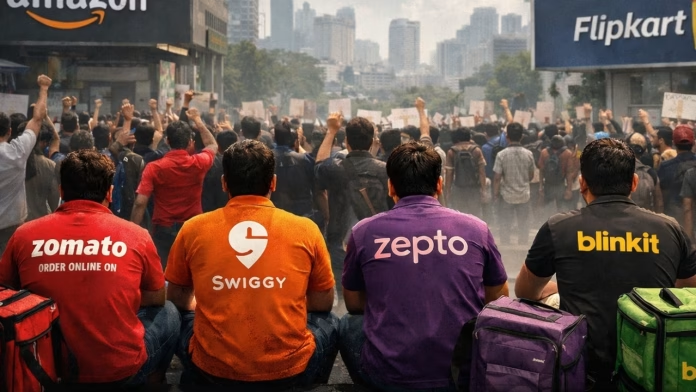
Online food delivery major Zomato is preparing to open up a fresh revenue channel by monetising its most visible assets — its delivery partners and the bags they carry. According to people familiar with the development, the company is in talks with advertisers to explore how rider uniforms and delivery bags could be redesigned to carry brand advertisements.

The idea mirrors sports sponsorship models where jerseys double up as prime ad real estate. For Zomato, the scale is significant. The company has about 5.09 lakh active delivery partners who collectively fulfill more than 25 lakh food orders every day. Its quick commerce arm Blinkit, which Zomato acquired in 2022, delivers another 22 lakh daily orders. Combined, that’s nearly 50 lakh doorstep interactions daily, giving advertisers unparalleled visibility in Indian neighbourhoods.

“If executed across food delivery and Blinkit, this could emerge as an entirely new revenue line item for Zomato,” a person aware of the discussions told Indian Startup News.

For Zomato, the timing is strategic. The company turned profitable earlier this year, overtaking rival Swiggy in terms of order volumes and market share. By layering in ad revenues, Zomato can further strengthen its balance sheet while also giving delivery partners potential upside if incentives are tied to ad campaigns.

Industry watchers note that while brand advertising on delivery fleets is not new in India, Zomato’s scale could make it commercially viable in a way smaller pilots could not. With half a million riders covering every major metro and Tier-II city, advertisers can tap into a hyperlocal, mobile media network unmatched by television or digital campaigns.

Zomato did not respond to queries on the matter. If rolled out, the move could reshape the familiar red Zomato uniform into a walking advertisement, while intensifying its battle with Swiggy, Zepto, and others in India’s fast-growing delivery economy.

Advertisement

Rapido Hits $2.3 Billion Valuation as Swiggy Exits With ₹2,400 Crore Payout

0

Bengaluru-based ride-hailing startup Rapido is in advanced talks to raise between $500 million and $550 million through a mix of primary and secondary share sales, with food delivery major Swiggy set to offload its holding. The round, among the largest venture financings this year, values Rapido at about $2.3 billion, more than double its $1.1 billion mark in February.

People familiar with the matter said the primary infusion is pegged at $300 million, led by Prosus with $240–250 million, and WestBridge Capital bringing in the remainder. The secondary leg will see Swiggy exit its 11.8 per cent stake for $270 million (₹2,400 crore), with Prosus and WestBridge absorbing the shares. Both investors already count among Rapido’s top backers, with WestBridge holding nearly 19 per cent and Prosus also the largest shareholder in Swiggy at 23 per cent.

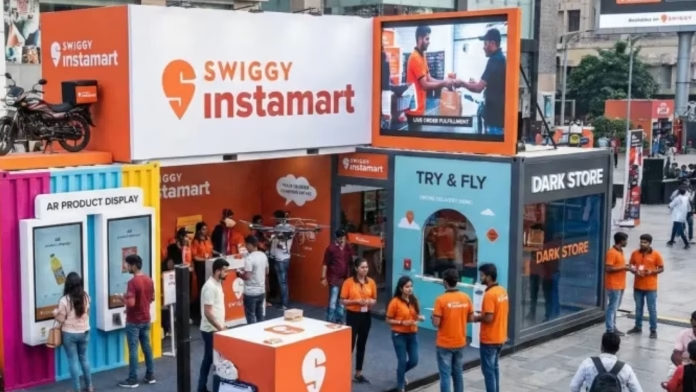
For Swiggy, which invested close to ₹1,000 crore in Rapido in 2022, the exit delivers a 2.4x return. The move comes amid a cash crunch at its quick commerce arm Instamart, where it spent over ₹1,050 crore in the June quarter. As of June 30, Swiggy reported ₹5,354 crore in cash reserves, significantly lower than Blinkit parent Eternal, which had more than ₹18,000 crore on hand. Analysts say the Rapido sale will add some cushion but may not eliminate the need for further fundraising.

Rapido, meanwhile, will use the fresh capital to expand its ride-hailing footprint and strengthen food delivery offshoot Ownly. The company claims leadership in the overall ride-hailing market, though it trails Uber in the four-wheeler category. Rapido reported FY24 operating revenue of ₹648 crore, up 46 per cent year-on-year, while trimming losses by 45 per cent to ₹371 crore. Growth in FY25 is estimated at over 40 per cent, according to people aware of internal numbers.

Advertisement

Patanjali Wins Partial Relief: Court Says ‘Ordinary Chyawanprash’ Tag Allowed, Dabur’s 61.6% Market Share Still Under Spotlight

0

The Delhi High Court on Tuesday delivered its ruling in an advertising tussle between Patanjali Ayurved and Dabur India, allowing Patanjali to continue using the phrase “why settle for ordinary chyawanprash” but directing the company to withdraw references that specifically target Dabur’s 40-herb formulation.

A division bench of Justices C Hari Shankar and Om Prakash Shukla held that while comparative advertising and “puffery” are permissible, Patanjali’s direct claim that rival chyawanprash is made with only 40 herbs unfairly singled out Dabur. The court observed that modern advertising permits a brand to say “I am the best and others are not as good,” but drew a line at statements that could mislead consumers about product composition.

The ruling came in response to Patanjali’s appeal against a July interim order of a single judge, which had restrained the company from airing parts of its commercials alleged to disparage Dabur.

Dabur, which commands an estimated 61.6 percent share of India’s chyawanprash market, argued that Patanjali’s advertisements not only belittled its product but also spread misinformation. Dabur said Patanjali falsely claimed its chyawanprash was prepared with 51 herbs, when in reality it used 47. It also objected to the “ordinary chyawanprash with 40 herbs” line, contending this was a direct swipe at Dabur’s flagship formulation.

The company further accused Patanjali of suggesting that other manufacturers lacked the Ayurvedic knowledge or Vedic traditions required to make authentic chyawanprash, creating a perception that only Patanjali’s variant was genuine.

While the bench dismissed Dabur’s contention that consumers would abandon its product because of Patanjali’s puffery, it ruled that factual inaccuracies about ingredients must be corrected.

Advertisement