Thursday, December 18, 2025
Home Blog Page 22

Premium and Mainstream Beer Sales Lift SOM Distilleries’ EBITDA Margin to 15% in Q2

0

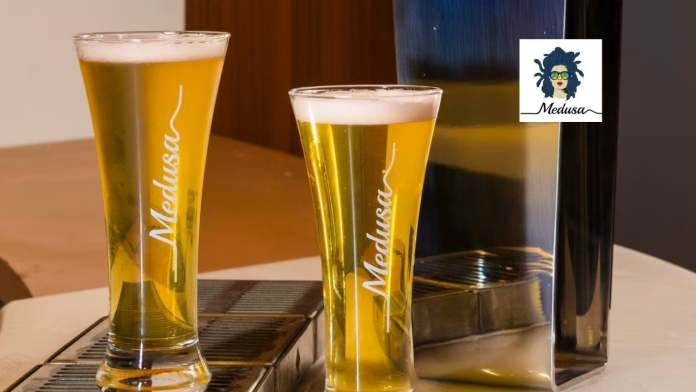
SOM Distilleries reported a robust performance in the second quarter of FY26, driven by strong traction in its beer portfolio, even as total income for the half year saw a marginal decline. The Gurugram-based beverage company sold 36 lakh cases of beer in Q2, led by key brands Hunter, Woodpecker, Power Cool, and Legend. The growth highlights rising consumer preference and deepening market penetration in core geographies, underpinned by quality brewing, expanded distribution, and brand-driven engagement.

For the first half of FY26, SOM’s total income stood at Rs. 800.09 crore, slightly down 0.6% from Rs. 804.69 crore in H1 FY25. The minor dip reflects temporary market softness, although demand fundamentals remained steady.

Gross profit for Q2 expanded to Rs. 41.06 crore, with the margin rising to 41.06% from 40.01% a year earlier. For H1 FY26, gross profit increased 4.2% to Rs. 300.9 crore, with margins improving to 37.61% compared to 35.90% last year.

EBITDA showed healthy growth, climbing 15.1% year-on-year to Rs. 40.52 crore in Q2, with margins widening to 15% from 12.1% in Q2 FY25. For the six-month period, EBITDA reached Rs. 112.57 crore, up 12.5%, with margins rising to 14.1%.

Profit Before Tax rose to Rs. 27.45 crore in Q2, a 5.5% increase, while PBT for H1 reached Rs. 85.83 crore, marking a 4.6% year-on-year growth. Net profit for Q2 increased 4.3% to Rs. 19.50 crore, with margins improving to 7.2%. For H1 FY26, net profit stood at Rs. 61.56 crore, up 3.9% from the previous year, while net margins expanded to 7.69%.

The results underscore SOM Distilleries’ resilience amid industry volatility, as its beer brands continue to gain market share in both mainstream and premium segments, positioning the company as one of India’s fastest-growing players in the alcoholic beverages sector.

Advertisement

Nestle Mass-Market Vitamins May Struggle to Attract Buyers Amid Premium Supplement Boom

0

Nestle is exploring a potential exit from its mass-market vitamin business, but shifting consumer preferences are complicating the company’s plans. The Swiss conglomerate, which in July launched a strategic review of low-growth, low-margin brands in the vitamins, minerals, and supplements segment, is now reassessing its ability to fetch a strong price amid rising demand for premium, science-backed products.

Nestle acquired these mass-market vitamin brands in 2021 in what was the third-largest deal in the sector over the past 12 years. Yet, none of these brands currently holds more than 2.1% of the U.S. vitamin market, according to Euromonitor International. With consumers increasingly favoring supplements with clinically tested claims, industry rivals such as Danone and Unilever are focusing on higher-end, tech-led products with clear growth potential. Sources at Unilever noted that any acquisition targets must demonstrate strong science-driven credibility and scalable opportunity.

The supplement market itself is fragmented and regulatory uncertainty is rising. Proposed changes to the U.S. GRAS (Generally Recognized as Safe) pathway could tighten approval for new food additives, adding complexity for mass-market brands. Trade groups such as the Council for Responsible Nutrition have expressed concern, emphasizing the need for enforcement of existing regulations rather than new rules.

Despite these challenges, the global dietary supplement market presents significant growth potential. Valued at $192.7 billion in 2024, it is projected to reach $414.5 billion by 2033, according to Grand View Research. Private equity funds appear to be the most likely buyers for Nestle’s underperforming brands, although valuations may be lower than the 2021 acquisition price due to cost inefficiencies compared with strategic industry players. Analysts suggest that PE investors may pursue the assets selectively, aiming to capitalize on market growth while navigating regulatory and competitive hurdles.

Nestle’s effort to offload its mass-market vitamin portfolio underscores broader shifts in wellness consumption, where consumers are increasingly willing to pay a premium for efficacy and scientific validation.

Advertisement

Tribe Stays Expands Co-Living and Executive Apartments with $2.8M Seed Round

0

Tribe Stays, a premium managed-hospitality startup, has secured $2.8 million in a seed funding round co-led by Artha Venture Fund and Riverwalk Holdings. The round also included participation from high-profile investors such as Kunal Khanna, Founder of Vivaldis, Krishna Jain, and other family offices and HNIs. The fresh capital will be deployed to expand Tribe’s portfolio across its three sub-brands: Tribe Student Accommodation, Tribe Commune, and Tribe Suites, catering to students, young professionals, and corporate clients.

Currently managing 650 beds in Pune, Tribe plans to launch 1,000 more beds in the current financial year and aims to scale to 25,000 beds across Tier-1 and Tier-2 cities, including Hyderabad, Bengaluru, Mumbai, Gurugram, and Pune. The startup positions itself as a lifestyle-first player in India’s co-living and managed-stays segment, emphasizing thoughtfully designed spaces, hospitality-driven services, and community engagement rather than just accommodation.

Yogesh Mehra, Founder and CEO of Tribe Stays, said, “This funding validates our vision to redefine how young India experiences living. We aim to deliver premium living experiences that combine design, comfort, and vibrant community life.”

Investors are bullish on the market opportunity. Anirudh Damani, Managing Partner at Artha Venture Fund, noted that Tribe addresses a “massive underpenetrated market in premium student and professional housing” with a scalable, asset-light model. Jai Sumer Singh, Co-founder and Partner at Riverwalk Holdings, added that scaling in this sector requires a combination of hospitality expertise and real estate excellence, which Tribe has embedded from the outset.

Founded with the goal of raising standards in India’s managed-living space, Tribe is now positioned to become a leading operator in both student and professional housing. By combining premium amenities, flexible accommodation options, and community-centric living, the startup is aiming to set new benchmarks for organized co-living and executive stays across the country.

Advertisement

McCafé BYOB returns with hands on brewing sessions as crowds flock to experience the art of espresso

0

McCafé has brought back its popular BYOB programme, short for Be Your Own Barista, and this year’s edition feels more immersive than ever. The idea is simple but very inviting. Coffee lovers of all kinds are encouraged to walk behind the McCafé counter and try their hand at making their own cup, guided by McCafé’s trained baristas. Instead of watching from a distance, participants get to experience the real craft that goes into every espresso shot and every silky layer of foam.

The session begins with a warm introduction to the basics of espresso pulling. Guests learn how the grind, tamp, and extraction time can completely change the character of a drink. After that, the focus shifts to milk, which many coffee fans consider the trickiest part. Getting the milk to the perfect temperature and texture takes patience and a calm wrist, but the coaches make the process feel enjoyable rather than intimidating.

Once the basics are in place, participants move on to latte art. Even a simple heart or swirl brings a sense of achievement, and that is exactly what makes BYOB special. It mixes learning with play in a setting that feels relaxed and friendly. People chat, laugh, compare attempts, and leave with a new appreciation for the effort behind the counter.

The programme is open to beginners, seasoned coffee drinkers, and anyone who enjoys trying something different. McCafé positions BYOB as a space for connection as much as education. With the rise of at home brewing, the brand seems eager to remind people that the joy of coffee also comes from shared moments, warm conversation, and the gentle thrill of creating something with your own hands.

Advertisement

Kaatil Unveils New Hot Barbeque Sauce, Elevating Indian Chilli Flavors

0

Kaatil is widening its footprint in India’s fast-growing hot condiments market with the launch of Hot Barbeque Sauce No. 9, a new addition to its lineup built around the country’s famed Bhoot Jolokia chilli. The release signals the brand’s intention to build deeper relevance among heat-seeking consumers and strengthen the No. 9 series, which has become its signature identity.

The new sauce brings together the sweetness and smoke of a classic barbeque profile with the sharp, lingering heat that the Bhoot Jolokia is known for. The company said it has been developed to work across the kitchen, from marinades and glazes to spreads, dips and grilling preparations, addressing the growing preference for multi-use condiments among home cooks and restaurants.

Kaatil continues to rely on locally grown Bhoot Jolokia as the backbone of its flavour architecture. According to the brand, this focus helps create products that feel rooted in Indian culinary culture while still borrowing cues from global barbeque and hot sauce formats. The result, the company noted, is a sauce that balances sweetness, smokiness and intensity without overwhelming the palate.

Founder Sagar Merchant said the new product is aimed at consumers who enjoy the depth of barbeque sauces but prefer a stronger bite. He added that the team wanted to create a heat experience that builds gradually and enhances food rather than overpowering it.

The Mumbai-based company, started in 2023 by Merchant and co-founder Arjun Panwar, now sells a growing range of hot sauces, hot ketchups and chilli oils. Kaatil has also expanded into food service, supplying its products to restaurants across the country.

The brand plans to continue building out its portfolio with more chilli-driven variants that showcase regional Indian peppers in globally familiar formats. Kaatil said its long-term goal is to position Indian chillies on the international stage and close the gap in a category dominated by Western sauces that typically use imported peppers.

Advertisement

Three O’Clock Café Brings Classic Vietnamese Brews to India With Gurugram Launch

0

Three O’Clock Café, one of Vietnam’s well-known coffee chains, has entered the Indian market with the launch of its first outlet at AIPL Joy Central in Gurugram. The debut marks the beginning of the brand’s planned expansion in the city, where a second café is already lined up at the AIPL Business Club.

The company is positioning its India entry around a familiar strength in Vietnam’s café culture. Its menu is built on traditional brewing styles and signature preparations that have shaped the country’s coffee identity. Visitors will find classic drip-brewed coffee along with egg coffee, coconut coffee and a range of cold brews made with beans sourced directly from Vietnam.

AIPL, the real estate group hosting the brand’s first two outlets, views the arrival of Three O’Clock Café as an opportunity to add an international flavour to Gurugram’s fast-maturing café circuit. Ishaan Singh, Director at AIPL, said the association fits the company’s attempt to build mixed-use spaces that carry cultural experiences alongside retail.

The opening drew the presence of Mr. Bui Trung Thuong, Trade Counsellor at the Embassy of Vietnam in India. He said food and beverage collaborations often deepen people-to-people connections and help both countries appreciate each other’s traditions.

Phi Van Nguyen, Chairwoman of the Vietnam Franchising and Licensing Network and Co-Founder of the café chain, described the brand’s India debut as an effort to offer a faithful version of Vietnamese coffee. She said the outlets are designed to give visitors a place to slow down and enjoy a style of coffee that relies on patience, aroma and methodical brewing rather than speed.

With two stores set to operate in Gurugram soon, Three O’Clock Café is aiming to create a niche as a cultural and culinary stop for customers who are exploring global coffee styles.

Advertisement

Swiggy’s Bolt Touches 10 Percent of All Orders as Quick Commerce Redefines India’s Eating Habits

0

Swiggy’s rapid delivery arm, Bolt, has quietly become one of the strongest growth engines in the food delivery giant’s portfolio. According to Restaurant India’s report by Saptopriya Ghosal, Bolt now contributes 10 percent of all orders on the platform, marking a big shift in how urban India wants its meals and essentials delivered.

The rise of quick commerce has changed the rhythm of eating and shopping in major cities. What began with ten-minute grocery runs has now moved into meals, snacks, beverages, bakery items and late-night cravings. Swiggy has been sharpening this category by improving dark store locations, increasing fleet strength and strengthening partnerships with neighbourhood brands.

Industry trackers estimate that India’s quick commerce market has crossed more than 50 million monthly orders, and Swiggy is pushing hard to increase its share in this fast-moving space. The company is also expanding Bolt into newer pin codes where demand for instant delivery is growing faster than traditional food orders.

With competition heating up between Swiggy, Zomato and Blinkit, speed has turned into the biggest differentiator in customer decision-making. Consumers now expect their pani puri kits, cold coffees, emergency ingredients or comfort food to arrive almost immediately. This shift is influencing restaurant behaviour too. Several cloud kitchen operators have started designing menus that are easier to prepare and pack within a tight delivery window.

What stands out is how quickly customers have adopted this habit. The convenience of near-instant delivery has changed evenings, weekends and even office lunch hours. Swiggy’s Bolt touching 10 percent of all platform orders shows that quick commerce is no longer a side category. It is becoming one of the main ways India chooses to eat and shop.

Advertisement

India’s Pet Food War Begins as Reliance Rolls Out Waggies, Eyeing Millions of New Pet Owners and a Rapidly Expanding Market

0

Reliance Consumer Products is gearing up to enter India’s fast growing pet care industry with its new pet food label called Waggies. The move signals Reliance’s intent to build a strong position in yet another consumer category, this time by targeting the country’s expanding community of pet owners. The company is preparing to introduce Waggies at prices that could be twenty to fifty percent lower than the top players already in stores. This is a familiar playbook for Reliance, which has often relied on sharp pricing to quickly secure market share.

India’s pet care space has grown steadily in the last five years as more households adopt dogs and cats and choose packaged food over home cooked options. Industry trackers estimate that organised pet food sales have been rising by double digits every year, helped by rising incomes and a shift in attitudes toward pet nutrition. With Waggies, Reliance is betting that value driven pricing will appeal to first time buyers as well as long time pet parents looking for more affordable choices.

Market leaders will likely face strong pressure if Reliance launches Waggies across its wide retail network. Reliance already enjoys a deep presence through JioMart, Smart Bazaar and its other chains, giving it the ability to scale quickly. Analysts believe the entry of such a large player could spark a fresh round of competition in a category that has so far been dominated by a few global brands.

If Waggies manages to win trust on quality while keeping costs low, the pet food aisle might soon look very different from what it is today.

Advertisement

Reliance Retail Expands Beauty Portfolio by Introducing essence in India

0

Reliance Retail is expanding its beauty portfolio by bringing German cosmetics label essence to India through an exclusive distribution partnership with cosnova Beauty. The move introduces one of Europe’s highest-volume makeup brands to a market where demand for affordable, trend-driven beauty products has been rising steadily.

Reliance Retail said the launch will be backed by its full omnichannel network, making essence available on major online platforms as well as in its beauty stores and partner retail chains across the country. The company plans to scale distribution quickly to ensure that the brand reaches a broad base of customers, especially younger shoppers who look for playful, accessible makeup.

Essence, founded in 2002, sells in close to 90 countries and has built a reputation around its “Make Beauty Fun” philosophy. The company manufactures most of its products within Europe and is known for renewing almost half its collection twice each year. Along with its core lineup, the brand frequently introduces limited-run editions inspired by seasonal beauty and lifestyle trends, feeding a steady pipeline of newness that has helped it maintain high engagement in global markets.

By entering India, essence will compete in a fast-growing segment where customers increasingly expect quality formulations at everyday price points. Industry trackers note that Reliance Retail’s distribution strength gives the brand a sizable advantage as it enters a crowded category that spans domestic players, Korean beauty labels and global mass-market brands.

The company stated that the focus will be on ensuring wide availability across urban beauty destinations, with an assortment tailored for Indian consumers seeking reliable, cruelty-free and vegan makeup options. The initial rollout is expected to include face, eye, lip and nail products, with plans to expand the catalogue as the brand settles into the market.

Reliance Retail’s latest partnership reflects its broader push to establish a comprehensive beauty portfolio that spans premium, professional and mass segments, underlining the retailer’s intent to become a central player in India’s growing beauty and personal care industry.

Advertisement

Ranveer Singh’s SuperYou storms past Rs 150 crore in year one as India’s protein snacking race heats up

0

SuperYou, the protein snacking label founded by Ranveer Singh and Nikunj Biyani, has completed its first year in the market with an impressive Rs 150 crore in revenue. For a brand that entered store shelves only last November, the early momentum signals how quickly India’s young consumers are shifting towards convenient, high protein snacking.

The brand was launched with a simple pitch. Snacks that taste good should also do something good for the body. SuperYou chose fermented yeast protein as its hero ingredient and backed the idea with a colourful range of bars, cookies, mixes, and bite sized treats. What helped the brand break through the clutter was Singh’s active involvement in product conversations, packaging, and early marketing. Retailers who tracked the launch shared that stores in Mumbai, Bengaluru, and Delhi NCR saw the fastest movement in the protein bar line. Some modern trade partners reported sell through rates above expectations within the first quarter.

Nikunj Biyani, who leads product development, has been vocal about creating protein options that feel familiar to Indian palates. The brand introduced flavours like Choco Jaggery Crunch, Coffee Rush, Peanut Chilli Bite, and Cranberry Lift, which drew curiosity from fitness beginners and regular gym goers.

SuperYou has also grown its presence through general trade and online marketplaces. The company closed the year with more than ten million individual packs sold across formats. Industry observers note that the functional snacking space in India is heating up as more consumers reach for healthier on the go options.

With a strong debut year behind it, SuperYou plans to add new categories and expand aggressively across Tier Two and Tier Three cities.

Advertisement