Mercadona, Spain’s top supermarket chain, announced on Wednesday that it would reduce the prices of a minimum of 500 essential food items. This move comes in response to a cost of living crisis that has led the government to request concessions from retailers.
A couple of weeks prior to this announcement, Mercadona’s president and primary owner Juan Roig stated that his company, which holds a market share of nearly 26%, had to increase prices significantly to sustain margins along the food production chain.
According to a statement released on Wednesday, the company has observed a gradual reduction in input costs and has, therefore, decided to reduce prices. It anticipates that these price cuts will result in an average saving of 150 euros ($165) for its customers this year.
The company has stated that the discounted products will include fresh fish, certain cheeses and yogurts, dried fruit, oil, and household cleaning items.
In September, Carrefour, a supermarket chain in France, initiated a campaign that provided customers with a bundle of 30 essential products for 30 euros. This move came after the Labour Minister, Yolanda Diaz, expressed her desire to collaborate with supermarkets to aid impoverished families in maintaining a healthy diet.
Despite encountering doubt from business organizations and opposing politicians, who considered it an effort to regulate prices, Eroski, a cooperative situated in the Basque Country, implemented a similar strategy in March by reducing the prices of essential food items.
Food costs have risen dramatically across the European Union, with a 16.6% YoY increase recorded in Spain in February. Analysts predict that food inflation has not yet reached its highest point.
Meridian Restaurants, a US-based company that was established in 2002, filed for bankruptcy in March of this year and is currently in the process of closing 27 of its 116 units.
According to reports, the affected locations are situated in Minnesota, Utah, Montana, Kansas, Nebraska, and North Dakota.
A significant number of these restaurants are situated in small towns, such as Lewiston, Montana, which has a population of around 6,000 residents and is located 126 miles north of Billings.
The franchisee has not ruled out the possibility of additional closures, stating that it is “possible, if not likely,” that further analysis may indicate that more closures are “appropriate.”
In a filing, the company stated that it does not expect to close “all or even a significant portion” of its restaurants.
Meridian and its advisors are currently in negotiations with landlords regarding rent concessions and operational improvements.
“It will be in the debtors’ best interest not to conduct store closings at most of its locations,” the company said in a filing.
Initially, on March 29th, the company requested court approval to close 23 restaurants. However, last week, it added four more locations to the closure list.
Meridian had a total of 120 restaurants under its operation, a majority of which were acquired while they were struggling. The company believed that these locations had the potential to be turned around.
Baskin Robbins currently has a presence in 239 cities with over 850 locations.
Baskin Robbins has established a new production facility in Shirval, Pune, with the capacity to churn out 7.5 million litres of ice cream per shift, in response to the high demand for their products in the Indian market and subcontinent.
Baskin Robbins, which entered India through a joint venture with the Graviss Group, has seen growth in footfall at its ice cream parlors and a steady increase in online sales. According to Mohit Khattar, CEO of Graviss Foods – Baskin Robbins, around one-third of the company’s sales now come from online and delivery platforms such as Swiggy, Zomato, Instamart, Big Basket, and Zepto.
According to Khattar, Baskin Robbins’ online segment could further grow if they can address the last-mile cooling requirements for home deliveries of ice cream. Currently, ice creams are delivered in ice boxes or other types of containers, but the company is exploring solutions with improved insulation that can better withstand outside heat, he added.
Their data showed that people who walked into their parlours were the ones ordering online. So, the company was looking to grow their premium (INR 69-350) ice cream parlour chain. The company’s 850 parlours in 239 cities accounted for 67% of the turnover. “We are the second-largest QSR chain in the country with a presence in Tier I, II and III markets. We will be adding another 100 stores,” Khattar said.
Despite growing 30% year-on-year, outpacing the industry’s 15% growth, Baskin Robbins CEO Mohit Khattar has expressed concern over the rising prices of key ingredients such as milk and milk products. While the demand for their ice cream remains robust, the company only uses cow milk and cream, which has been impacted by the price surge. However, they have decided to maintain their current prices for the season. Khattar explained that they had expected the prices to cool down, but this has not happened. Milk prices have risen by 25% in a year, resulting in a 2-3% hit on margins. The company last raised its prices nine months ago and will make a decision about another price hike in September-October.
The introduction of the ‘Pizza Ice Cream’, an eight-inch brownie base topped with ice cream and various toppings, marks a first-of-its-kind product for Baskin Robbins. Building on the success of their ice cream cakes, the company has also launched a new format called ‘ice cream rocks’, consisting of bite-sized ice creams coated with chocolate and other flavors.
Baskin Robbins has expanded its product line with 17 new offerings for the summer season, including flavors such as caramel milk cake, blueberry and white chocolate, and fruit ninja.
According to Khattar, the Indian ice cream market was estimated to be around INR 19,000 crore in 2022, with the unorganized sector still holding the majority share of 55-60% of the market. He also mentioned that despite the pandemic, the industry witnessed growth, and Baskin Robbins experienced a year-on-year growth rate of 30%, which was faster than the industry’s growth rate of 15%. However, the company’s only concern is the surge in the prices of key ingredients like milk and milk products, which has impacted their margins by 2-3%. Baskin Robbins uses only cow milk and cream, and they have decided to hold prices for the season, but they may consider increasing prices in September-October.
According to an IMARC Group report, the ice cream industry in India is expected to grow by 17.5% between 2023 and 2028, reaching INR 50,000 crore.
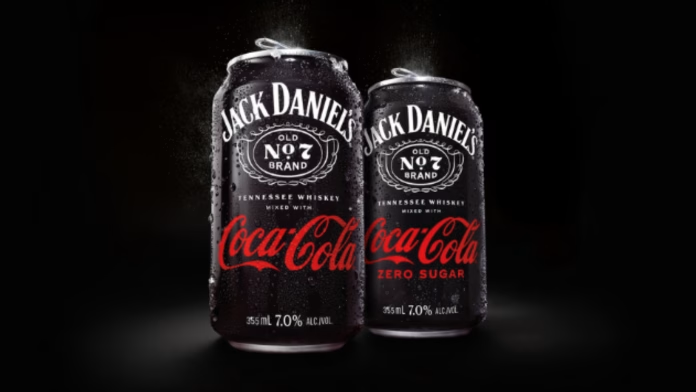
Jack Daniel’s whiskey and Coca-Cola are set to introduce the popular cocktail, “Jack & Coke,” in a convenient ready-to-drink canned format.
In 2021, Coca-Cola collaborated with Brown-Forman, the producer of Jack Daniel’s Tennessee Whiskey, to create the product, which was first launched in Mexico.
After conducting a test-and-learn trial during the initial launch in Mexico, the two companies plan to apply the insights gained to introduce the product to 13 countries within a year.
“We are excited to introduce the quintessential Jack & Coke cocktail to consumers in a consistent, convenient and portable format,” said Dallas Cheatham, RTD brand director at Jack Daniel’s.
“Jack & Coke is a cocktail consumers have known and enjoyed worldwide, with origins dating back over a century.”
The new ready-to-drink Coca-Cola and Jack Daniel’s product, available in regular and zero-sugar varieties, will soon be introduced to markets across Europe, Asia, Latin America, and Africa. The drink boasts a 7% ABV.
This cricket season, ITC Master Chef Creations and RCB have collaborated to bring the flavors of authenticity to your doorstep with traditional recipes prepared by expert chefs using time-honored methods with utmost precision.
ITC Master Chef Creations has been appointed as the official gourmet food partner for RCB during IPL 2023, as a result of their recent partnership.
Through its Instagram platforms, the Bengaluru-based company announced its collaboration.
Rajesh Menon, Head, Vice President of Royal Challengers Bangalore, said, “We are thrilled to partner with ITC Master Chef Creations and look forward to adding to the taste and elegance of match viewing experience of every RCB fan with this partnership.”
The menu has been expertly crafted to satisfy your cravings during match time meals and family gatherings. Authentic and flavorful bites like Amritsari Pindi Chole and Soft Masaledaar Kulche are available. Kebab platters, Lassi, snack platters, and Half and Half Kulcha Dabelis are perfect for indulging during match time and super over binges.
ITC Master Chef Creations is an Indian food outlet that offers a delectable range of dishes, including sweet delicacies. It is a subsidiary of ITC and is renowned for producing frozen foods that can be quickly and easily prepared.
The company based in the City of Gardens has expanded its sponsorship portfolio by adding brands such as KEI Industries Ltd, Hindware, Ampere EV, Qatar Airways, EatSure, Happilo, Equitas Small Finance Bank, JioCinema, boAt, Manipal Hospitals, and Hombale Films.
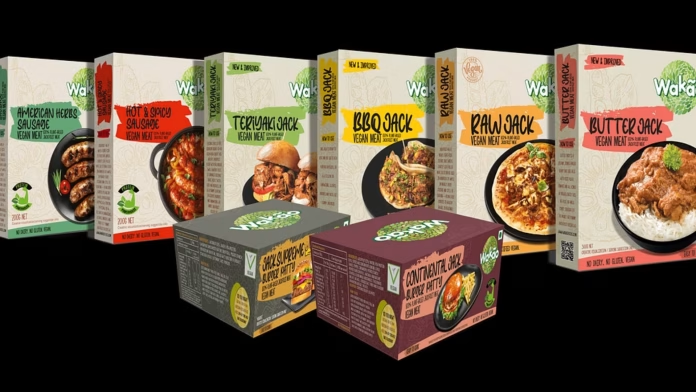
Wakao Foods has announce its entry into the Singaporean market, bringing along seven of its most popular products to the consumers. These products, namely Butter Jack, BBQ Jack, Raw Jack, Continental Burger Patty, Jack Supreme Burger Patty, Hot & Spicy Sausages, and American Herbs Sausages, will be available at retail stores like Everyday Vegan Grocer and HoReCa. Moreover, customers can also purchase them online through leading e-commerce platforms such as Shopee, Lazada, Amazon Singapore, and Redmart.
With a track record of crafting delectable and wholesome plant-based meals, Wakao Foods is set to achieve a major milestone with its launch in Singapore. The company’s plant-based offerings are an ideal match for the Singaporean market, which has witnessed an upsurge in the popularity of plant-based foods in recent times.
“We are thrilled to be bringing our range of delicious and healthy plant-based products to Singapore,” said Sairaj Dhond, Founder and Chief Executive Officer, Wakao Foods. “Our products have high-quality ingredients, and we believe they will be well-received by the Singaporean market. We are excited to be partnering with Everyday Vegan Grocer, HoReCa, and various e-commerce platforms to make our products easily accessible to consumers across the country.”
ResearchAndMarkets.com recently released a report stating that the plant-based food industry in Singapore is predicted to expand at a CAGR of 16.9% from 2021 to 2026. The report highlights the drivers behind this growth, which include heightened health awareness, the increasing popularity of veganism, and a surge in demand for ethical and sustainable food options.
Apart from retail outlets and online marketplaces, Wakao Foods’ products will also be utilized by Palate Sensations, a renowned culinary academy based in Singapore. The school is recognized for its avant-garde and eco-friendly methods of cooking, making Wakao Foods’ offerings an ideal match for its principles.
According to VK Vidyarthi, the General Manager of Agricultural and Processed Food Products Export Development Authority (APEDA), the vegan industry can bring about significant advantages to small-scale farmers by utilizing jackfruit as a resource for companies such as Wakao Foods. This can not only help to minimize wastage but also lead to employment opportunities. APEDA has extended its support to plant-based firms like Wakao through its National Programme on Vegan Products.
GFI India and Deloitte India have projected that the Indian plant-based market could achieve a worth of USD 2.2 billion by 2030, with a potential export value of USD 1.1 billion. Domestic plant-based enterprises can leverage the diversity of India’s agricultural resources by using locally sourced raw materials. Astha Gaur, a Regulatory Policy Specialist at GFI India and a member of the Vegan Committee on Export Standards, Guidelines, and Promotion for Vegan Food Products, has lauded Wakao Foods as an exemplar of how companies can utilize India’s agricultural potential to develop formulations suited to the global market.
Sanjay Sethi, Executive Director, Plant Based Foods Industry Association, said, “India has the potential to lead in plant-based foods. The success of companies like Wakao Foods is a testament. PBFIA supports members such as Wakao Foods as they expand and make plant-based foods more accessible globally. Their foray into Singapore is an example of how Indian brands can leverage the export opportunity to promote growth. We look forward to continuing our support for the entire plant-based foods industry for a sustainable and healthier future.”
Carlsberg Marston’s Brewing Company (CMBC) has publicized an agreement with Heineken UK, according to which Carlsberg Group will take over the UK rights for the French beer brand Kronenbourg. The license transfer is set to take effect on the 1st of June.
As a result of the deal, Carlsberg Group will gain exclusive rights to produce and distribute the popular premium lager in the UK through CMBC.
Carlsberg Group has ownership of the Kronenbourg 1664 brand worldwide. As per the deal, Heineken UK will continue to brew and package Kronenbourg 1664 on a contractual basis until 2024 when the responsibility will shift to CMBC.
Furthermore, a three-year business agreement has been settled to ensure that Heineken UK’s Star Pubs & Bars will continue to offer and serve the Kronenbourg brand.
Since Carlsberg and Heineken’s acquisition of Scottish & Newcastle, Heineken UK has been in possession of the license for the lager since 2008.
Heineken UK has successfully established Kronenbourg 1664 as one of the most recognizable beers in the UK, with a significant presence in both on- and off-trade markets. Widely available in retail channels, this premium lager has gained a strong reputation, owing in part to its renowned ad campaigns featuring Eric Cantona over the past few years.
“Supporting brands and innovating in the premium category is a key pillar of our strategy, and adding Kronenbourg 1664 to our enviable portfolio is an incredible opportunity to achieve this,” said CMBC Chief Executive Paul Davies.
“Kronenbourg 1664 is an excellent beer with a distinctive provenance, that is growing in both volume and value with strong brand awareness amongst consumers. We look forward to sharing our exciting plans to relaunch the brand with our partners in the on- andoff-trade and cementing Kronenbourg 1664 as a leader in the category.”
On Wednesday, the Delhi high court requested the National Restaurant Association of India and Federation of Hotels and Restaurant Associations to contemplate renaming the term “service charge” to an alternative term, such as “staff welfare charges,” in order to avoid misleading consumers into thinking that it is a government tax.
Furthermore, Justice Pratibha Singh instructed hotels and restaurants not to display on their menus that the service charge imposed has been authorized by the high court, following a protest by the central government.
The associations were also urged to hold a meeting to determine the number of members who are willing to inform their customers that the service charge is optional and to pass a resolution on the percentage of members who enforce service charges on their bills. An affidavit containing all of this information must be submitted to the court by July 24, the next scheduled hearing date.
The Delhi high court has issued a stay on the Central Consumer Protection Authority’s July 4 prohibition on imposing service charges unilaterally.
According to officials, Mumbai will host a food festival featuring millet from April 13-19. The event will feature chefs from four member nations of the Shanghai Cooperation Organisation (SCO), including Kazakhstan, Kyrgyzstan, Uzbekistan, and Russia, who will display their diverse cuisines.
The Ministry of Tourism will be organizing the SCO Millet Food Festival at the Taj Mahal Palace hotel.
In a statement, the Ministry noted that chefs from the SCO member nations will participate in the event and present their diverse cuisines to the hotel guests.
To celebrate the International Year of Millets, Taj Mahal Palace will host the SCO Millet Food Festival, which will include a variety of organic millet-based dishes carefully curated by “our SCO members’ chefs,” according to the hotel.
The statement mentioned that the festival will run from April 14-19 and will be available to the general public for lunch and dinner at Shamiana Restaurant.
Comprised of eight member nations including China, India, Kazakhstan, Kyrgyzstan, Russia, Pakistan, Tajikistan, and Uzbekistan, as well as four observer states and fourteen dialogue partners, the SCO is an intergovernmental organization.
For the year 2023, India holds the presidency of the SCO.
In Varanasi (Kashi), the Ministry of Tourism has successfully concluded the SCO Tourism Mart from February 9-11, as well as the SCO Expert Level Tourism Working Group Meeting and SCO Tourism Minister’s Meeting from March 13-18.
As per the officials, the SCO member countries possess a wide array of cultures and traditions, which is aptly mirrored in their cuisines. These cuisines will offer exceptional delights to food enthusiasts.
The United Nations has declared 2023 the International Year of Millets with the goal of raising awareness and increasing the production and consumption of millets. The statement added that promoting millets is significant since they are “climate resilient” and their consumption can aid in meeting at least six sustainable development goals mandated by the UN.
Red Fort Capital, a leading non-banking financial company (NBFC) in India, has funded Kanjiravelil Traders Private Limited (KTPL), one of India’s largest nutmeg processing companies, with 100 million. The investment will help KTPL expand its operations, increase its market share, and invest in machinery to produce high-quality nutmeg for the domestic and international markets.
Red Fort Capital Finance is an investment-grade NBFC with RBI registration that specializes in giving micro, small, and medium enterprises (MSME) quick business credits, typically in less than a week.
Red Fort Capital was established by seasoned entrepreneur Parry Singh, who has over nine successful businesses to his name. Having worked in the sector for 20 years, the seasoned veteran of Indian finance identified a gap in the country’s MSME company loan market. He established one of the earliest PE funds in the country.
Red Fort Capital has multiple financing vehicles, including its RBI regulated NBFC in India, a globally focused principal investing group, and a market-leading private equity fund of $1.3 billion+.
Meanwhile, KTPL has a strong presence in the nutmeg processing industry in India, with over 50% market share, especially in Kerala. The company produces and processes over 11,000 tons of high-quality nutmeg that are widely used in Indian cuisine, beverages, and exported to various countries. Some of their clients include Everest Agro Spices, Nestle, Irine Agro Spices, and Olam Agro India Pvt Ltd. KTPL has a strong reputation for sustainable and ethical business practices and its commitment to innovation and product development.
“We are delighted to support KTPL’s growth plans with this loan,” said Parry Singh, Chairman and CEO of Red Fort Capital. “KTPL’s increased capacity and strategic focus on innovation will enable it to further strengthen its market leadership position in the nutmeg industry. As a leading NBFC in India, we are committed to supporting promising companies like KTPL across various sectors, including FMCG, warehousing, manufacturing, healthcare, technology, textiles, and real estate.”
Red Fort Capital is known for its strategic funding in promising companies across various sectors, and this loan to KTPL is a significant investment in India’s nutmeg processing industry, which is expected to grow exponentially in the coming years.
Jenny Varghese, MD of Kanjiravelil Traders Private Limited, said, “Red Fort Capital has amazed us with the disbursement within a record time of 8 days. Timely disbursement holds such great value to us as an organization. With the speed capital provided by Red Fort Capital, we will be able to capitalize on time-sensitive opportunities and grow further.”
Red Fort Capital Finance has achieved significant milestones in the past. It has received INR 200 million in capital from SBI, financed a publicly listed company, and received investment-grade ratings from Care Ratings Limited in 2022 and CRISIL in 2019.
We use cookies to ensure that we give you the best experience on our website. If you continue to use this site we will assume that you are happy with it.