Wednesday, December 17, 2025
Home Blog Page 1184

Consumer demand for groceries and essentials hits two-year peak, report finds

0
veg
(Representative Image)

During the March quarter, the demand for daily groceries and essential goods experienced a significant boost of 3.9%, which is the highest it has been in two years. This increase in demand was primarily driven by urban markets, although there was also a noticeable improvement in sales in rural areas.

According to Kantar Worldpanel, a global consumer research firm owned by WPP, the volume of fast-moving consumer goods (FMCG) purchased increased by 2.1% in rural markets and 5.9% in cities compared to the previous year. This data is a stark contrast to a year ago when the overall market experienced a decline of 1.3% during the quarter, with the decline solely driven by a 3.7% drop in urban demand.

“Impact of inflation and monetary tightening on economic growth and demand seems to be slowing down. We are seeing demand slowly starting to come back, especially in India, in places where there is stress,” Sunil D’Souza, Managing Director at Tata Consumer Products, told analysts.

Kantar tracks household consumption and also monitors items from the unorganized sector of the market, especially in large and voluminous categories like staples. The growth during the quarter was led by food and beverages, with wheat flour performing exceptionally well in March.

K Ramakrishnan, South Asia Managing Director of Kantar, said, “This came on the back of households returning to the category after the government stopped the free grains distribution. The growth we witness, therefore at the moment, is not yet holistic.”

To increase volume growth amid easing inflationary pressures, companies have been reversing grammage cuts in the past few months. Furthermore, many companies anticipate a consistent rise in volume-led growth and recovery in rural areas as they consider reducing product prices.

According to Sanjiv Mehta, the Managing Director of HUL, the most significant factor that can boost consumption is a decrease in commodity prices. He emphasized that inflation has a detrimental impact, particularly on individuals from lower economic backgrounds, and a reduction in commodity prices can stimulate consumption. Additionally, Mehta stated that a significant portion of HUL’s growth will be driven by volume.

“In the December quarter, we had 11% price growth, now it is 7%, and in the next quarter, it will go down even more. That’s the whole cycle until it reaches a state of equilibrium, where it will again be about 70% volume growth and 30% price growth”, said Sanjiv Mehta.

Advertisement

MHA announces millet-based meals for CAPFs and NDRF personnel

0
millet
Representative Image

In an announcement made on Wednesday, the Union Home Ministry informed that meals served to the Central Armed Police Forces (CAPFs) and National Disaster Response Force (NDRF) will now include dishes prepared with millets.

According to an official statement, the decision to incorporate 30% millets in the meals served to the forces was made after thorough discussions with all the forces, as per the directive of Union Home Minister Amit Shah.

It has been stated that the Ministry of Home Affairs, led by Prime Minister Narendra Modi, has made a significant decision to incorporate millets in the meals provided to personnel of the CAPFs and NDRF, during the International Year of Millets-2023.

The United Nations has designated 2023 as the International Year of Millets, recognizing the importance of millets and their potential to create both domestic and global demand, as well as their ability to provide nutritious food to people.

Millets are a healthy food option that not only benefit individuals, but also offer advantages to farmers and the environment. These grains are rich in energy, resilient to drought, require less water, and can be cultivated effortlessly in arid soils and hilly areas. Additionally, they are less vulnerable to pests.

Millets offer several significant advantages, including being a valuable source of protein, gluten-free, low in Glycemic Index (GI), and rich in dietary fiber, micronutrients such as calcium, iron, phosphorus, and phytochemicals. These nutritional benefits make millets an excellent addition to a soldier’s diet, enhancing its overall nutritional profile.

The Home Ministry issued a directive for all military forces to incorporate millet-based meals into their menus.

The military forces have responded positively and expressed enthusiasm for regularly incorporating millets into their meals. Additionally, millets will be extensively utilized in various functions and events of the Central Armed Police Forces (CAPFs) and National Disaster Response Force (NDRF).

To make millets readily accessible, specific counters/corners will be established in Kendriya Police Kalyan Bhandar, grocery shops located on the campuses, and ration stores.

The military forces will arrange for the training of cooks in the preparation of millet-based dishes through reputable institutes specializing in this field.

Expert agencies and dieticians will be employed to raise awareness among troops and their families about the benefits of millets and their usage.

In addition to this, a variety of events such as exhibitions, seminars, webinars, workshops, and symposiums will be organized to promote the awareness of “Know Your Millets.”

According to the statement, the International Year of Millets 2023 will offer an opportunity to enhance global production, efficient processing, and better utilization of crop rotation, while also promoting millets as a significant component of the food basket.

Advertisement

Magicpin becomes largest restaurant aggregator on ONDC, fulfilling 10,000 daily orders

0
magicpin
Magicpin (Representative Image)

Magicpin, India’s inaugural hyperlocal startup, recently revealed that it is successfully fulfilling over 10,000 orders each day on the ONDC network. This is being achieved through its own seller portal as well as those of other startups such as Pincode Spice Money, Mystore, Craftsvilla, Meesho, and Paytm.

Magicpin is using its backend and logistics support to assist these startups in reaching hyperlocal markets throughout the country. Within just two weeks, magicpin has scaled up from fulfilling less than 1,000 orders per day to meeting 10,000 daily orders.

In early April, Magicpin declared that it had enlisted more than 25,000 food merchants from its network of local restaurants, becoming the biggest restaurant aggregator/supplier on ONDC. These merchants are now accessible through other startup participants such as Paytm, Pincode Spice Money, Mystore, Craftsvilla, Meesho, among others.

T Koshy, MD and CEO of ONDC said, “We are thrilled to see Magicpin’s tremendous growth on the ONDC network. Their hyperlocal expertise and logistical support has been invaluable to not only their own sellers but also to other participants on the ONDC network. This is exactly the kind of collaboration and innovation we envisioned when we created ONDC, and we look forward to continuing to facilitate it to drive the growth of digital commerce in India.”

Anshoo Sharma, CEO & Co-Founder Magicpin said, “Our first mover advantage on the Hyperlocal front, gives us a great opportunity to not only contribute towards success of ONDC, in fact we also look forward to give our logistics, delivery and reach support to other start-ups in the country wanting to penetrate the hyperlocal markets across India, it will not only save them a lot time but huge amount of financial resources to use an existing mechanism rather than creating one for themselves from the scratch. Our biggest motivation is still the fact that at the end of the day business is going to the local retailer on the ground, this evident from the fact that in two weeks from less than 100 orders a day we had a 10x jump to 1000 orders a day and then in the next 2 weeks, Magicpin has scaled up to 10,000 plus orders a day which was again another 10x from the previous landmark, making it more than 3 lakhs order per month, which eventually is helping the retailers on ground.”

Once a customer places an order on the buyer app, Magicpin takes over and manages the entire fulfillment process, including logistics and delivery from the restaurant partner to the end-user. This end-to-end delivery service is on par with the level of service offered by other providers in the market.

What’s remarkable is that the entire process has been developed with zero physical intervention. Instead, existing ecosystems are integrated through technology, creating a single platform on ONDC while generating business opportunities for local retailers. This approach avoids the need for new inventory, dark-stores, or warehouses.

Recently, PhonePe unveiled its Pincode initiative to tap into hyperlocal markets throughout the country. To facilitate this, PhonePe will be using magicpin’s last-mile connectivity on ONDC, just like other platforms such as PayTM, Spice Money, Mystore, Craftsvilla, Meesho, among others. Moreover, Magicpin is also handling the backend logistics related to ordering and delivery for other ONDC participants.

Read More: PhonePe expands e-commerce portfolio with Pincode, a hyperlocal app on Open Network

Advertisement

The rise of ONDC: A threat to Swiggy and Zomato’s dominance?

0
ONDC
ONDC

One year ago, the National Restaurant Association of India (NRAI) urged its members to stop partnering with food delivery giants Swiggy and Zomato. The objective was to eradicate the overwhelming control these food aggregators had and thereby put a halt to the alleged price monopoly these platforms were accused of creating, according to the association.

Despite launching several campaigns, including Swiggy and Zomato logout campaigns, Order Direct, and more, the association’s efforts to achieve their objective were unsuccessful.

As per their annual reports, both Zomato and Swiggy recorded significant growth in order volume in CY22 as compared to CY21.

After a year, restaurants affiliated with the NRAI have come together once again to explore alternative means of obtaining a significant share in India’s online food delivery industry. However, this time they have the support of the Open Network for Digital Commerce (ONDC).

Established on December 31, 2021, as a non-profit private company by the Department for Promotion of Industry and Internal Trade (DPIIT), the Open Network for Digital Commerce (ONDC) commenced its pilot phase in April 2022 across five cities, namely Bengaluru, Delhi NCR, Shillong, Bhopal, and Coimbatore. Additionally, ONDC has initiated its beta pilot in Bengaluru and certain Tier 2 cities.

Numerous restaurant owners and industry participants are of the opinion that the platform holds the capability to eliminate the duopoly that Swiggy and Zomato have established in the sector over the years.

At present, NRAI is collaborating with technology players and providing training to assist restaurants in joining ONDC with the objective of terminating the supremacy of Swiggy and Zomato in the industry.

ONDC has also enlisted the support of various restaurant networking partners. For example, Magicpin, a savings and discount platform backed by Zomato, has already partnered with 22,000 restaurants in Bengaluru and Delhi-NCR and intends to extend its reach to other cities soon. Similarly, DotPe, another restaurant aggregator, is also assisting restaurants in joining the ONDC network.

It is noteworthy that the current challenge to the dominance of Swiggy and Zomato in the $50 billion food services market is not the first one.

Previously, global e-commerce giant Amazon and mobility unicorn Ola attempted to secure a portion of the market share in the sector but were unsuccessful due to the supremacy of the two established players.

As per several reports, Swiggy is the leading player in the southern region, while Zomato holds a dominant position in the northern area, particularly in the food delivery segment.

Nevertheless, the dominance of these two players may be short-lived with the introduction of ONDC in the market. This is because the platform has been developed to promote healthy competition, ensure a level playing field for small merchants, and terminate the dominance of a few players.

How can the ONDC address the challenges plaguing the food technology sector?

Nearly all the players operating in the food and beverage industry bear significant expenses for customer acquisition and retention.

Over the past few years, experts in the industry have observed that Zomato and Swiggy have taken advantage of this situation by significantly increasing the commissions they charge their partner restaurants. These commissions were formerly between 2-5%, but have now risen to 18-24% of the average order value.

The reason for this is that Zomato and Swiggy have built up a vast user base comprising millions of customers, which they have chosen not to disclose to their restaurant partners.

To put it simply, your preferred restaurant may not be aware that you are a regular customer of theirs, as Zomato and Swiggy do not share customer information with their partner restaurants.

For restaurants, this becomes a significant issue since they may have been operating in the market for years, yet they have little knowledge of their end consumer’s identity due to the lack of customer information provided by Zomato and Swiggy.

The rating mechanism is another critical issue that food aggregator platforms face, as it is a crucial metric for customer retention.

According to Pranav Rungta, The Director of Mint Hospitality Ltd and The Head of NRAI’s Mumbai chapter, “The ratings system of online aggregator platforms is flawed. Although the customers are the ones who give ratings, the algorithms on Swiggy and Zomato change the game, putting restaurants at a disadvantage.”

Industry experts believe that ONDC has the potential to address the challenges mentioned above to a certain extent.

An example of how ONDC could alleviate some of the challenges mentioned is by reducing the customer acquisition cost (CAC) that restaurants often bear even for repeat orders. ONDC’s network may not require such costs, providing a more cost-effective solution for the restaurants.

One advantage of ONDC is that it has multiple buyer-side apps such as Paytm, PhonePe, Meesho, Pincode, and Magicpin with a significant number of existing users. Therefore, there won’t be a need for additional cash to be spent on customer acquisition as compared to other food aggregator platforms.

By being listed on ONDC, restaurants gain a natural advantage as they become accessible to millions of users who already use buyer-side apps like Paytm, PhonePe, Meesho, Pincode, and Magicpin, among others, without any additional cash-burn to acquire customers.

A recent McKinsey report points out that online food delivery aggregators attract customers by spending on marketing, advertising, and discounts, as well as by chasing faster deliveries and acquiring cloud kitchens, which are included in their customer acquisition costs (CAC).

The merchants/restaurants listed on ONDC will have access to the data of the customers who order food, which sets it apart from Swiggy and Zomato. This will enable them to understand their target market, customer behavior, and ordering patterns.

According to Rungta from NRAI, the rating systems of restaurants on ONDC will be based on customer feedback, rather than platform algorithms, which would lead to greater transparency in the food delivery space.

The culmination of all these factors is anticipated to be advantageous for restaurants, with the profitability of eateries and food pricing being the most crucial ones.

Can ONDC offer a win-win situation for restaurants and customers?

Currently, in the food delivery space, Swiggy and Zomato have complete control over the funnel, including pricing, logistics, discounts, payments, and more.

According to NRAI and other industry bodies, this has created a captive ecosystem where restaurants have no control.

Moreover, the food delivery entry of ONDC is significant as it comes at a time when the valuation of both the food delivery giants, Swiggy and Zomato, has suffered a setback.

Swiggy and Zomato, the two food delivery giants, have recently experienced a significant decrease in their valuations. Invesco, Swiggy’s earliest backer, has marked down its valuation by 25% to $8 billion, and Zomato’s market capitalisation on stock exchanges is hovering around $5 billion, which is down 50% from its highest market cap since its listing.

In response to the decline in their valuations, both Swiggy and Zomato have been implementing cost optimizations and revising their pricing strategies. These changes include raising delivery charges and commissions from restaurants, as well as reducing deep discounts and free deliveries.

Swiggy has recently introduced a platform fee of INR 2 per order, regardless of the order value.

Furthermore, both companies have introduced loyalty programs such as Zomato Gold and Swiggy One, which provide customers with benefits such as free deliveries and discounts.

Zomato Gold, which was reintroduced by Zomato earlier this year, offers free deliveries within a 10 km radius, VIP access during peak hours, and cashbacks for three months to customers for a fee of INR 149.

SwiggyOne is another loyalty program that Swiggy offers. For a fee of INR 299, customers can get free deliveries across Swiggy’s platforms, Instamart and Genie.

Restaurants, too, are rethinking their pricing strategies and adopting tactics such as offering free deliveries to attract more customers.

According to sources within ONDC and NRAI, the commissions charged by buyer and seller side apps, as well as third-party logistics players, will be around 2-3% each on an average order value. In total, this commission is expected to be less than half of what restaurants currently pay to Swiggy and Zomato.

According to industry experts, the combined platform commissions and third-party logistics charges on ONDC are estimated to be around 8% of the average order value, which is significantly lower than the 18-24% charged by Swiggy and Zomato. As a result, restaurants on ONDC will be able to offer cost savings to their customers and retain their loyalty.

“The restaurants may even look at absorbing the delivery costs and pay third-party logistics players instead of passing on the whole delivery charges to their customers, which is the case with Swiggy and Zomato right now,” Pranav said.

In order to gain more insight into the commissions at stake and determine whether ONDC-affiliated restaurants provided free delivery, a comparison was done. It was discovered that a McDonald’s burger from the closest location was 158% less expensive when ordered through ONDC than through Zomato.

Another comparison of the prices between ONDC and Swiggy was done, keeping all key metrics, location, and timing consistent. The examination revealed that, even with discounts applied, Swiggy was 95% more expensive than ONDC.

It is worth noting that Swiggy and Zomato both charge a delivery fee, which they state is paid to their delivery partners. Conversely, the majority of deliveries on ONDC were free of charge.

Another noteworthy point concerns the discounts provided by Swiggy and Zomato. Initially, they offered significant discounts to attract customers; however, as their user base grew, the discounts provided were considerably reduced, while the commissions charged to restaurants were raised.

As per experts in the industry, this practice has compelled several restaurants to raise the prices of their menu items.

Meanwhile, ONDC has emerged as an alternative platform where restaurants can provide more appealing discounts than Swiggy and Zomato, and additionally cover a portion of the delivery costs, resulting in advantages for the end consumer, and enabling them to retain customers.

Therefore, the network has become a new source of optimism for numerous restaurants who desire the removal of the ongoing duopoly in the market.

Nonetheless, ONDC must overcome some obstacles to succeed.

Presently, an expanding number of ecommerce platforms, payment aggregators, and logistics companies, as well as physical stores and restaurants, are joining the ONDC movement.

It is worth mentioning that the ONDC model is presently operating exclusively in a few selected cities. The true challenge for the platform will arise when it expands to cities and towns beyond the metropolitan areas. The reason being that the platform might encounter difficulties in acquiring smaller players with limited technical proficiency.

ONDC is anticipated to enlist the support of aggregators and industry organizations to address this concern. However, considering the pace at which the network has grown in the last twelve months, this process seems to be time-consuming.

Currently, the government-supported ONDC has low awareness, and the platform needs to improve its approach to onboard additional merchants.

In the coming months, the network aims to tackle the challenge of enhancing the discoverability of food menus on the buyer-end apps.

PhonePe has recently introduced an ONDC-focused buyer-side app called Pincode to enhance the user experience, whereas sources suggest that Paytm is developing UI/UX designs to help customers navigate ONDC offerings.

Regarding the food delivery sector, an essential element to consider is logistics. Swiggy and Zomato have managed to secure a significant portion of the online food delivery market promptly due to their in-house logistics capabilities and several acquisitions, which have contributed to enhancing their operational efficiency.

It would be unreasonable to expect restaurants to compete with the logistics capabilities of Swiggy and Zomato. Therefore, there will likely be a natural reliance on third-party logistics players such as Dunzo, Shadowfax, Delhivery, and Loadshare to assist with food deliveries.

It will be interesting to see how ONDC enables these third-party logistics platforms and restaurants to work together in tandem, given the current scenario.

However, unlike Amazon and Ola, which were unable to sustain in this market due to high customer acquisition costs and unsustainable discounts, ONDC may have a better chance if it is able to onboard more players like Paytm and PhonePe.

Advertisement

Swiggy provides significant insurance benefits to delivery workers, settles claims worth INR 31 Crore

0
Swiggy
Swiggy delivery executive (Representative Image)

Swiggy, a food and grocery delivery company, has facilitated the disbursement of INR 31 Crore in claim amounts to its delivery partners during FY23.

With approximately 300,000 delivery partners spread across 500 Indian cities, Swiggy has been offering insurance coverage to its partners since 2015, as stated by the SoftBank-backed company.

In collaboration with Reliance General Insurance, Swiggy now offers health insurance, personal accident coverage, accidental death coverage, and mobile phone damage coverage to its delivery workers. The mobile insurance coverage can go up to INR 5,000, and the delivery personnel can avail themselves of hospitalization and outpatient department (OPD) coverage. In case of fatalities, Swiggy delivery workers receive INR 10,00,000, and 96% of claims are settled within seven days.

Read More: Reliance General Insurance collaborates with Swiggy to provide protection plans to delivery partners

Female delivery partners and the spouses of male delivery partners are also eligible for maternity coverage under Swiggy’s policies. Furthermore, in an effort to create a safer work environment for female partners, the company launched a “Prevention of Sexual Harassment” policy in 2022 to handle any related grievances.

As tech companies face mounting pressure to compensate gig workers fairly, this announcement comes at a time when they are also striving to generate profits.

Zomato, which competes with Swiggy, has also introduced a range of benefits for its gig workers. The company, based in Gurugram, declared on September 27, 2022, that it is piloting a health cover program worth INR 3 lakh, which can be extended to the families of delivery workers who have been loyal to the company for 2-3 years. Additionally, Zomato provides its delivery partners with a life cover scheme and a sum of money to cover funeral expenses in the event of their death.

Recently, there have been protests by workers regarding payouts at Swiggy, Zomato’s quick commerce service, and Urban Company, a home services provider backed by Accel Partner.

According to a recent survey on the condition of gig workers, including those employed by Swiggy and Zomato, delivery workers were found to be earning less each year and struggling to save money. The survey also revealed that approximately 47% of respondents lacked any form of insurance.

Mihir Shah, Head Of Operations at Swiggy, said, “Delivery partners are the backbone of our service. There is a common misconception that since they are not employees, they do not have access to healthcare support from Swiggy. For several years now, we have provided carefully considered insurance and other benefits to our delivery partners and their families. Swiggy remains committed to providing industry-best safety and well-being practices to our delivery partners.”

Advertisement

Here is why Sudo Plant Based Chicken Popcorn are the must-try snack for beer lovers

0
Sudo Plant Based Chicken Popcorn

Golden brown bite-sized pieces of juicy chicken, crispy on the outside and tender on the inside, seasoned to perfection with a tantalizing blend of spices. With each bite, the flavorful aroma of herbs and spices fills your senses, leaving you craving for more. That’s the magic of chicken popcorn, a crowd-pleasing snack that’s perfect for any occasion, be it a movie night, a party, or just a lazy evening at home. 

The crispy, crunchy texture and irresistible taste of chicken popcorn make it the perfect snack to munch on while catching up with your favorite TV shows or spending time with friends and family. Just one bite of these delectable treats, and you’ll be hooked!

Vegan Chicken Popcorn V Normal Chicken Popcorn

Vegan chicken popcorn is made from plant-based ingredients, such as soy or wheat protein, instead of actual chicken. This means that it is typically lower in calories, fat, and cholesterol compared to traditional chicken popcorn. Additionally, vegan chicken popcorn may also contain more fiber, vitamins, and minerals due to the use of whole food ingredients.

By choosing vegan chicken popcorn, individuals can enjoy a tasty and satisfying snack while also reducing their intake of animal products and promoting a more sustainable food system.

Sudo’s Chicken Popcorn

Sudo’s plant-based chicken popcorn is a delicious vegan alternative to traditional chicken popcorn. Made with natural and sustainable plant-based ingredients, this snack is not only good for you, but also good for the environment. The popcorn is made from a protein-rich blend of wheat, soy, and pea protein, and coated in a crispy, golden breading that is free from artificial colors and flavors.

Sudo’s plant-based chicken popcorn is also free from cholesterol, trans fat, and dairy, making it a healthier option for those looking to cut back on animal products. It is also suitable for vegetarians and vegans, as well as those with gluten and nut allergies.

Enjoy the same great taste and texture of traditional chicken popcorn, without the guilt or negative impact on the environment. Sudo’s plant-based chicken popcorn is perfect for snacking on-the-go, adding to salads or sandwiches, or enjoying as a side dish to your favorite meal. Try it out today and experience the delicious flavor and health benefits of this plant-based snack!

Buy from: 

Plant-based-chicken-popcorn

Price: INR350

Qty: 17 gms (16 pieces) 

Advertisement

Boost your fitness with India Hemp and Co’s Hemp Seeds in a delicious peanut butter smoothie – Try this recipe now! 

0
Peanut Butter Smoothie

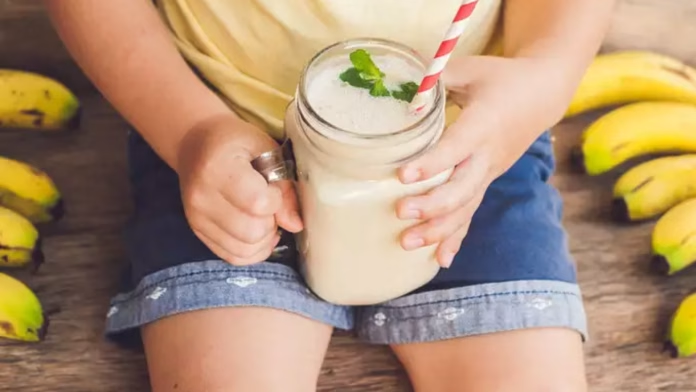
If you’re looking to boost your fitness and incorporate more nutrient-rich foods into your diet, look no further than this peanut butter smoothie made with India Hemp and Co’s Hemp hearts (hemp seeds).

India Hemp and Co is a company that specializes in hemp-based products, including hemp seeds, hemp oil, and hemp protein powder. They source their hemp from organic, non-GMO farms and use sustainable farming practices.

Hemp hearts, also called hulled hemp seeds, have a delightful flavor that is a harmonious blend of pine nut and sunflower seed with a light, nutty note. These small, protein-rich nibbles are ideal for snacking, stirring into recipes, sprinkling on top of dishes, or incorporating into baked goods. They are light and versatile, making them a popular choice for many different culinary applications.

Hemp seeds are considered a superfood due to their impressive nutritional profile. They are a complete protein source, containing all nine essential amino acids, making them a great choice for vegans and vegetarians looking to increase their protein intake. Additionally, they are rich in healthy fats, fiber, and essential minerals like magnesium and iron.

With their high protein, fiber, and healthy fat content, hemp seeds are an excellent addition to any diet, particularly for those looking to boost their fitness and overall wellness.

To make the smoothie, you will need the following ingredients:

  • 1 ripe banana
  • 1 tablespoon peanut butter
  • 1 tablespoon India Hemp and Co hemp hearts
  • 1 tablespoon India Hemp and Co organic raw cacao superfood blend
  • 1 cup plant-based milk (almond, soy, or coconut milk)
  • Handful of ice cubes
  • Optional toppings: more hemp hearts, nuts, and berries

To prepare the smoothie, simply add all the ingredients except the toppings into a blender and blend for 2-3 minutes until smooth. You can adjust the consistency by adding more or less milk depending on your preference.

Once you’ve blended the smoothie, pour it into a glass and top it with more hemp hearts, nuts, and berries for added crunch and nutrition. You can also customize the recipe by adding other superfood ingredients like chia seeds, flax seeds, or spinach.

This peanut butter smoothie is a great breakfast option or post-workout snack, providing your body with essential nutrients to fuel your day or help with recovery. It’s also a great way to satisfy your sweet tooth without consuming added sugars or processed ingredients.

Advertisement

Looking For Vegan Paneer? Here is how you can make it easily at home 

vegan paneer

Paneer, a type of fresh cheese commonly used in Indian cuisine, is a popular ingredient in vegetarian and non-vegetarian dishes alike. However, for those following a vegan diet or trying to reduce their dairy intake, traditional paneer is not an option. Fortunately, vegan paneer made from plant-based ingredients can be a delicious and healthy alternative. In this article, we will explore how to make vegan paneer from peanuts, a versatile ingredient that can be found in most households.

What is Vegan Paneer?

Vegan paneer, also known as tofu paneer or nut paneer, is a dairy-free alternative to traditional paneer. It is typically made from a combination of plant-based milks or nuts, lemon juice or vinegar, and salt. Unlike traditional paneer, which is made from cow’s milk and has a mild, creamy flavor, vegan paneer can have a variety of textures and flavors depending on the ingredients used.

Why Make Vegan Paneer at Home?

There are several reasons why you might want to make vegan paneer at home.

Firstly, it is a great alternative for those who are lactose intolerant or have a dairy allergy. Traditional paneer is made from cow’s milk, which contains lactose, a sugar that many people have difficulty digesting. Vegan paneer made from plant-based ingredients is free from lactose and other animal products, making it suitable for those following a vegan or dairy-free diet.

Secondly, making your own vegan paneer at home allows you to control the ingredients and customize the flavor to your liking. You can experiment with different nuts, such as almonds, cashews, or pistachios, to create unique variations of vegan paneer.

Lastly, making vegan paneer at home is cost-effective and easy. Traditional paneer can be expensive and difficult to find in some areas. Vegan paneer made from peanuts, on the other hand, is a budget-friendly and accessible option that can be made in just a few steps.

How to Make Vegan Paneer from Peanuts?

Paneer, also known as Indian cottage cheese, is a staple in Indian cuisine. It is a versatile ingredient that can be used in a variety of dishes, from curries to desserts. However, traditional paneer is made from dairy milk, making it unsuitable for vegans and those who are lactose intolerant. Fortunately, vegan paneer can be easily made at home using peanuts.

Here’s how to make vegan paneer from peanuts:

Ingredients:

  • 1 cup of raw, unsalted peanuts
  • 3 cups of water
  • 1 tablespoon of lemon juice
  • Cheesecloth

Instructions:

  • Soak the peanuts in water overnight.
  • Drain the water from the peanuts and rinse them with fresh water.
  • Add the peanuts and 3 cups of water to a blender and blend until smooth.
  • Pour the mixture into a large pot and bring it to a boil over medium heat, stirring constantly to prevent it from sticking to the bottom of the pot.
  • Reduce the heat to low and continue stirring for another 5-10 minutes, until the mixture thickens and becomes grainy.
  • Remove the pot from the heat and stir in the lemon juice.
  • Line a strainer with cheesecloth and place it over a bowl. Pour the peanut mixture into the cheesecloth-lined strainer.
  • Fold the cheesecloth over the top of the mixture and press down gently to squeeze out any excess liquid.
  • Place a heavy object, such as a can of beans or a cast-iron skillet, on top of the cheesecloth-wrapped paneer to press out any remaining liquid.
  • Let the paneer sit for at least 1 hour to set.
  • Once the paneer has set, remove it from the cheesecloth and cut it into cubes.

Your vegan paneer is now ready to be used in your favorite dishes.

Variations of Vegan Paneer

Once you’ve mastered the basic recipe for vegan paneer made from peanuts, you can experiment with different flavors and textures to suit your tastes. Here are a few variations to try:

  • Almond Paneer

Replace the peanuts with blanched almonds for a nuttier flavor.

  • Cashew Paneer

Replace the peanuts with cashews for a creamier texture.

  • Sesame Paneer

Replace the peanuts with sesame seeds for a nutty, slightly bitter flavor.

  • Tofu Paneer

Replace the peanuts with firm tofu for a protein-packed option.

  • Spicy Paneer

Add chili powder or other spices to the peanut mixture before cooking for a spicier paneer.

  • Sweet Paneer

Add sugar and cardamom to the peanut mixture before cooking for a sweet paneer that can be used in desserts.

Vegan paneer is a delicious and versatile ingredient that can be easily made at home using peanuts. Once you’ve mastered the basic recipe, you can experiment with different flavors and textures to suit your tastes. Whether you prefer a nuttier flavor or a creamier texture, there’s a vegan paneer variation for everyone. So why not give it a try and incorporate this tasty ingredient into your favorite dishes?

Advertisement

Why a blender is a must-have summer companion & top 5 picks for your refreshing and nutritious beverages

0
blender

It’s a hot summer day, you’re feeling the sun beating down on your skin. You start to feel parched and the heat becomes almost unbearable. But suddenly, you catch a whiff of something sweet and refreshing. You follow your nose and come across a frosty glass filled to the brim with an ice-cold beverage.

As you take a sip, you feel the cool liquid travel down your throat, washing away the dryness and quenching your thirst. The sweet and tangy flavors dance on your tongue, and you can’t help but take another sip. The refreshing beverage is the perfect balance of sweet and sour, and the coolness spreads throughout your body, making you feel refreshed and energized.

You close your eyes and savor the moment, feeling the heat and stress of the day melting away. You can’t help but think that this is exactly what you needed on such a hot day.

But why go suffer in the sun when you can just chill at home? 

With just one simple tool like a blender, you can easily beat the heat of this summer with a refreshing drink at home anytime you want.

A blender can be your best friend during the hot season, helping you make smoothies, shakes, and juices with ease. Not only are these drinks delicious, but they can also provide you with the nutrients your body needs to stay healthy and energized.

Why is Blender better than a juicer? 

When it comes to juicing, a blender is often a better option than a juicer because of the following reasons:

  1. Retains More Fiber: When you use a blender to make juice, the fiber content of the fruits and vegetables is retained in the juice. This is because the blender blends the entire fruit or vegetable, including the pulp and fiber. On the other hand, a juicer extracts only the juice from the fruits and vegetables, leaving behind the pulp and fiber.
  2. More Nutritious: The fiber content in the juice from a blender helps slow down the absorption of sugar into the bloodstream, which can be beneficial for people with diabetes or those who are watching their sugar intake. In addition, the fiber in the juice helps to keep you full for longer, reducing your overall calorie intake.
  1. Versatile: Blenders are more versatile than juicers as they can be used to make a wide range of drinks, including smoothies, shakes, and soups. This means that you can use your blender for multiple purposes, making it a more practical and cost-effective option.
  1. Less Wastage: When you use a juicer, a significant amount of pulp and fiber is left behind, resulting in wastage. In contrast, a blender ensures that all parts of the fruit or vegetable are used, resulting in less wastage.

Best top 5 Picks of Blenders in India?

Here are the top 5 picks for blenders to help you whip up some delicious and nutritious 

Philips Blender

Philips is a well-known brand for kitchen appliances in India, and their blenders are a popular choice. The Philips Viva Collection HR3556/00 Blender is a powerful blender that comes with multiple speed settings and a large capacity jug. It is priced at around INR 7,000.

Link to buy: 

https://www.domesticappliances.philips.co.in/8720389014086

Preethi Blender

Preethi is a popular brand for kitchen appliances in India, and their blenders are known for their durability and efficiency. The Preethi Zodiac MG 218 Blender is a powerful blender that comes with multiple jars for different types of blending. It is priced at around INR 4000.

Link to buy: https://www.nykaafashion.com/preethi-crown-plus-mg-258-mixer-grinder-600-watt-red-black-4-jars-super-extractor-juicer-jar/p/10451631

Bajaj Blender

Bajaj is a well-known brand in India for home appliances, and their blenders are a popular choice. The Bajaj Majesty HB12 300-Watt Hand Blender is a compact and efficient blender that comes with multiple speed settings. It is priced at around INR 1,200 on Amazon India.

Link to buy: 

https://amzn.eu/d/g3XhWSn

Morphy Richards Blender

Morphy Richards is a popular brand for kitchen appliances in India, and their blenders are known for their style and performance. The Morphy Richards Aero Plus 500-Watt Mixer Grinder is a powerful blender that comes with multiple jars for different types of blending at around INR 3500.

Link to buy: 

https://amzn.eu/d/8q8E6qK

Blenders are not only great for making refreshing beverages, but they can also help you sneak in more fruits and vegetables into your diet. Adding ingredients like spinach, kale, and avocado to your smoothies can provide your body with essential vitamins and minerals, helping you feel your best.

So, whether you’re looking for a quick and easy breakfast, a post-workout snack, or a refreshing drink on a hot day, a blender can be your go-to companion this summer. Try out one of the top 5 picks above and enjoy delicious and nutritious beverages all season long!

Advertisement

Craving Momos? Try Prasuma’s Original Chicken Momos for an unforgettable taste experience! 

0
Prasuma's Original Chicken Momos

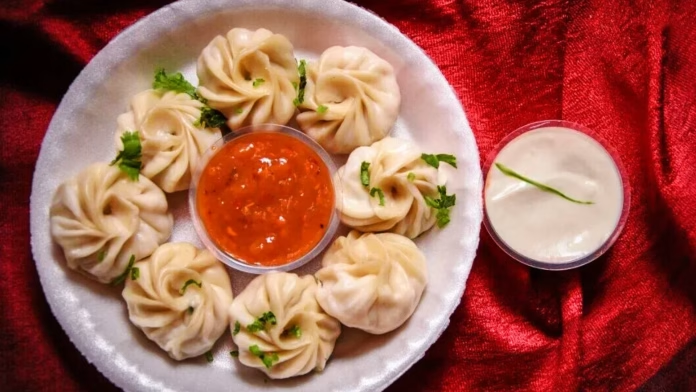
Momos are a type of steamed or fried dumpling that originated in Nepal, Tibet, and parts of northern India. These dumplings are filled with vegetables or meat and are usually served with a spicy tomato-based sauce. Over time, momos have evolved to include different fillings, such as chicken, lamb, and even cheese.

Momos have been gaining popularity all over the world due to their unique taste and flavor. With its increasing popularity, the demand for momos has also been on the rise, leading to a variety of momo stalls and restaurants. One such popular brand of ready-to-eat momos is Prasuma’s Original Chicken Momos.

Prasuma is a well-known brand in India that specializes in producing high-quality meat products. Their Original Chicken Momos are made with a unique blend of spices and high-quality chicken, making them stand out in terms of taste and quality.

Prasuma’s Original Chicken Momos are made with a combination of high-quality chicken, flour, water, vegetable oil, soy sauce, and a variety of spices. 

The nutritional value of these momos varies depending on the serving size and cooking method. A typical serving size of Prasuma’s Original Chicken Momos contains 190 calories, 9 grams of fat, 17 grams of carbohydrates, and 9 grams of protein.

Taste and Texture of Prasuma’s Original Chicken Momos:

Prasuma’s Original Chicken Momos are known for their unique taste and texture. The momos are filled with juicy and succulent chicken that is infused with a blend of aromatic spices. 

The outer layer of the momo is soft and chewy, providing the perfect texture to complement the flavorful filling. The spicy tomato-based sauce that accompanies the momos enhances the flavor profile, making it a memorable taste experience.

How to Cook Prasuma’s Original Chicken Momos:

Cooking Prasuma’s Original Chicken Momos is easy and can be done in three simple steps. 

Firstly, bring a pot of water to a boil. Then steam the momos for 8-10 minutes until they are cooked and finally serve the momos with the spicy tomato-based sauce provided or any sauce of your choice.

So if you are craving momos, Prasuma’s Original Chicken Momos are an excellent option to consider. They are made with high-quality chicken and are free from any added preservatives or artificial flavors, making them a healthier option. They are also convenient to store and cook, and their delicious taste is what sets them apart from other momos available in the market. So, go ahead and indulge in the delicious taste of Prasuma’s Original Chicken Momos for an unforgettable taste experience.

Advertisement