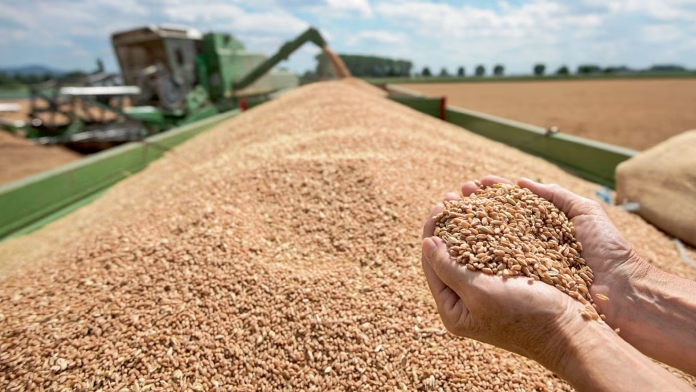
In a remarkable feat, Jammu and Kashmir (J&K) has once again secured the first rank in the Food Safety Index 2022-23 among all union territories (UTs). This achievement highlights the consistent dedication and effective measures undertaken by J&K to maintain exemplary food safety standards.
According to an official statement released on Thursday, the Department of Food and Drugs Administration in Jammu and Kashmir (J&K) has received the prestigious award for the third consecutive time in 2021, 2022, and 2023. This recognition underscores the consistent excellence demonstrated by the department in ensuring food and drug safety within the region.
The index is released annually by the Food Safety and Standards Authority of India (FSSAI) to measure the performance of states and UTs on various parameters of food safety.
The Union Minister of Health and Family Welfare, Mansukh Mandaviya, presented the award to Shakeel-ul-Rehman, the Food Safety Commissioner.
“The Jammu and Kashmir also won first prize for having maximum number of ‘Eat Right Mela’ districts in the country. These districts have implemented various initiatives of FSSAI to promote healthy and safe food habits among the consumers,” the statement added.
The Food Safety Index is a comprehensive benchmarking model that dynamically assesses and quantifies the quality of food safety measures in all states and Union Territories (UTs). It offers an unbiased framework for evaluating food safety through both quantitative and qualitative indicators.
The FSSAI began the State Food Safety Index evaluation process for 2022-2023 by undertaking correspondence with Food Safety Commissioners of all UTs/states to furnish the data for statistical evaluation.
The evaluation process focuses on several crucial indicators, including human resources, compliance levels, food testing infrastructure and surveillance, training and capacity building, as well as consumer empowerment. These factors serve as the basis for assessing the performance and effectiveness of food safety measures.
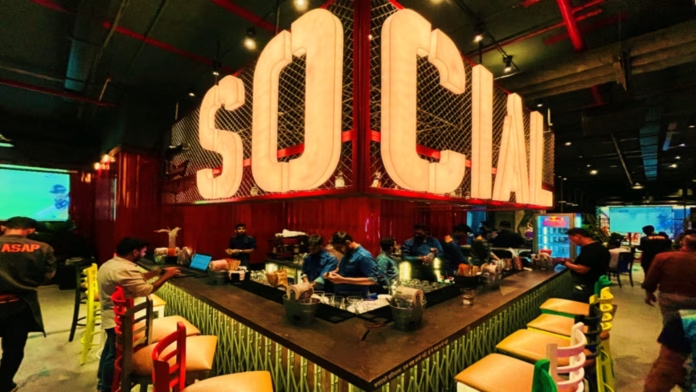
Social, a renowned restaurant chain, has recently unveiled its 43rd outlet in India, with Mumbai being the fortunate host for its 19th branch, as stated in an official press release. The latest addition to the chain is nestled on the ground floor of R City mall, located in the bustling suburb of Mumbai-Ghatkopar on LBS road. Spanning an impressive 2,600 square feet, the outlet’s interiors pay homage to the esteemed artist Raja Ravi Varma, drawing inspiration from his rich legacy.
Upon entering, guests are greeted by a vibrant and contemporary grunge aesthetic, creating an atmosphere that is both captivating and inviting. The seating arrangement showcases striking neon red and yellow tones, reminiscent of the iconic double decker buses that traverse the streets of Mumbai, adding a dash of local flavor to the ambiance. To further enhance the experience, the store walls proudly display Varma’s historic artworks, ingeniously reimagined with a twist, as highlighted in the press release.
This new outlet from Social promises to be a delightful destination for culinary enthusiasts and art lovers alike, blending delectable cuisine with a visually captivating environment inspired by the artistic brilliance of Raja Ravi Varma.
Mayank Bhatt, Chief Executive Officer of Impresario Entertainment & Hospitality Pvt. Ltd. said, “At Social, we believe in creating spaces that foster creativity and bring people together, and choosing R CITY to open our first SOCIAL in the neighbourhood was the obvious choice.”
Raja Ravi Varma holds a distinguished position as an Indian painter and artist, widely regarded as one of the most accomplished and influential figures in the realm of Indian art. His artistic contributions have earned him recognition as one of the greatest painters in the history of Indian art.
“Eating out and experiential dining has always been a great way for people to connect and bond, and we are making more space for F&B to grow as a category,” Ashish Bhandari, Head – Mall Operations, R City said.
“We are thrilled to have Social, which is one of the favourite go-to places amongst epicureans and millennial audiences. We believe that this addition will add great value to our portfolio,” he added.
The newest outlet of Social introduces an enticing menu that caters to the distinct preferences of its location. With a focus on delectable tandoor delicacies, the menu showcases an array of mouthwatering options. Guests can indulge in sizzling tandoor pizzas, flavorful Abra kebab platters, tantalizing killer kebabs, and delightful Chakori murgh rolls. Alongside these tempting offerings, the menu also features beloved classics like the hearty Riyaaz breakfast of champions, the flavorful Prawns koliwada, and the delectable Tennessee wings. This exclusive area-specific menu ensures a delightful dining experience, tantalizing the taste buds of Social’s patrons.
Customers can relish the offerings of the outlet from Social throughout the week, as it welcomes them from 11 am to 1 am, Monday to Sunday. This generous operating schedule ensures that patrons have ample time to enjoy their dining experience at the establishment, accommodating various schedules and preferences. Whether it’s a midday meal or a late-night craving, Social’s doors remain open to cater to the culinary desires of its valued customers.
Social, an all-day café and urban hangout, is renowned for its distinctive interiors that draw inspiration from the surrounding area. Each Social outlet is thoughtfully designed to reflect the essence and vibe of its location. This attention to detail creates a unique and captivating ambiance that sets Social apart. Whether it’s a bustling metropolis, a historic neighborhood, or a vibrant cultural hub, Social’s interiors serve as a reflection of the local surroundings, enhancing the overall experience for visitors.
In 2014, Social made its debut with its first outlet on Church Street in Bengaluru, aptly named Church Street Social. Social is a brand under the umbrella of Impresario Entertainment & Hospitality Pvt. Ltd., a company established in 2001. Impresario Entertainment & Hospitality Pvt. Ltd. has garnered a formidable reputation in the industry and currently boasts a diverse portfolio of over 60 restaurants across more than 15 cities throughout the country.
In addition to Social, Impresario Entertainment & Hospitality Pvt. Ltd. encompasses several other beloved brands, including Smoke House Deli, Mocha, Salt Water Café, Slink, and Bardot. These brands have garnered their own loyal following and contribute to the company’s widespread recognition.
Furthermore, Impresario Entertainment & Hospitality Pvt. Ltd. has expanded its culinary ventures with a selection of cloud kitchens, featuring popular concepts such as Boss Burger, Lucknowee, and HungLi. This diversification allows the company to cater to various culinary preferences and provides customers with a wider range of dining options.
R City mall, established in 2009, stands as the prestigious retail project of Runwal Developers Pvt. Ltd. Spanning an expansive retail area of 1.2 million square feet, this mall showcases a wide array of over 300 Indian and international brands, encompassing various sectors such as fashion, food, beverages, and entertainment.
The mall also has the first in-mall format store of Ikea in India, spread across an area of 72,000 sq. ft.
Zomato’s latest advertising campaign, titled ‘Kachra’, has received significant backlash from internet users for its insensitivity. The advertisement, aimed at promoting waste recycling, faced a barrage of online criticism for equating the term ‘kachra’ (meaning waste) with the marginalized character named ‘Kachra’ from the Bollywood film Lagaan.
The ad featured Aditya Lakhia’s character ‘Kachra’ from Lagaan.
In response to the widespread criticism and allegations of promoting casteism, the online food delivery platform took swift action and decided to withdraw the advertisement.
The primary goal of the campaign was to highlight the company’s commitment to the environment through the implementation of plastic-neutral deliveries. The campaign depicted the actor in various situations, representing the concept of recycling. These scenarios included showcasing a hand towel made from recycled materials, a flower pot crafted from similar substances, and the use of paper products.
The campaign’s intention was to demonstrate the company’s dedication to environmental contribution by adopting plastic-neutral deliveries. It achieved this by portraying the actor in numerous scenarios that symbolized recycling. Examples included showcasing a reused hand towel, a flower pot made from similar materials, and the utilization of paper products.
The inclusion of the character in the advertising campaign had a specific intention: to bring attention to the issue of food wastage and raise awareness about the struggles faced by marginalized communities in society.
In response to the mounting criticism, Zomato made the decision to remove the campaign video from its YouTube channel.
Neeraj Ghaywan, the Director of the film Masaan said, “#Kachra from #Lagaan was one of the most dehumanised voiceless depictions of Dalits ever in cinema. @zomato has used the same character and made a repulsive #casteist commercial. A human stool? Are you serious? Extremely insensitive!”
#Kachra from #Lagaan was one of the most dehumanised voiceless depictions of Dalits ever in cinema. @zomato has used the same character and made a repulsive #casteist commercial. A human stool? Are you serious? Extremely insensitive! https://t.co/xWUpDatUvD
Madhureeta Anand, Film Director, tweeted, “That is just so offensive. One has to wonder who these people are who created the advert, approved it and put it online without once thinking about it.”
#Kachra from #Lagaan was one of the most dehumanised voiceless depictions of Dalits ever in cinema. @zomato has used the same character and made a repulsive #casteist commercial. A human stool? Are you serious? Extremely insensitive! https://t.co/xWUpDatUvD
This captivating advertisement stars the charismatic NTR Jr, who delivers the message "Don't Explain Just Share" in his signature playful manner, leaving a lasting impression on the viewers.
McDonald’s India (West and South) has upped the ante on its already thrilling McSpicy fried chicken range by announcing a game-changing collaboration with none other than NTR Jr, who will now serve as the brand ambassador, bringing an extra degree of excitement to the table.
The advertising agency DDB Mudra has collaborated with the brand to introduce a new television commercial. This captivating advertisement stars the charismatic NTR Jr, who delivers the message “Don’t Explain Just Share” in his signature playful manner, leaving a lasting impression on the viewers.
The brand has unveiled a fresh take on its renowned McSpicy fried chicken range by introducing an innovative offering called the “McSpicy Chicken Sharers.” For the first time ever, customers can indulge in the flavorful McSpicy chicken through specially designed sharing buckets. The accompanying brand film puts the spotlight on the concept of “just sharing” the McSpicy chicken with others, without the need for any elaborate explanations. The film emphasizes that the irresistible spicy taste of the McSpicy chicken should be enjoyed by all, encouraging a delightful and inclusive dining experience.
In this captivating television commercial, the brand ambassador takes center stage in a whimsical and enchanting setting, delivering a delightful surprise. With a sprinkle of magic and a mischievous remark, NTR Jr effortlessly embodies the essence of the “Don’t Explain Just Share” theme that accompanies the brand’s new offerings. The commercial captures the spirit of playful sharing and adds a touch of charm, making it a memorable and engaging experience for viewers.
In the TVC, NTR Jr showcases his charismatic charm as he playfully interacts with the moon. His goal is to ensure that his beloved McDonald’s store stays open, allowing him to indulge in the irresistible McDonald’s McSpicy Chicken Sharers with his friends. With a touch of magic and a mischievous smile, NTR Jr tinkers with the moon, symbolizing his determination to keep the delicious McSpicy chicken experience alive. The commercial captures the essence of enjoyment, friendship, and the sheer pleasure of savoring McDonald’s delectable offerings.
Arvind R.P., Chief Marketing Officer, McDonald’s India (West and South), said, “We are ecstatic to have NTR Jr join the McDonald’s India family as our brand ambassador. His incredible on-screen presence, charismatic personality, and relatability among the youth and families complement our vibrant brand and this new offering very well. We look forward to captivating our fans with our latest campaign that spotlights the joy of sharing our delicious McSpicy fried chicken with friends and family.”
NTR Jr said, “I’m happy to join McDonald’s (West and South) as their brand ambassador for McSpicy chicken sharers! It is an iconic brand that resonates with millions of people across the world, and to be a part of this journey feels amazing. I have always believed in collaborating and sharing, and the McSpicy chicken sharers speak volumes about this spirit – ‘Don’t Explain Just Share.”
Rahul Mathews, Chief Creative Officer and Executive Director, DDB said, “In NTR Jr we have an icon who has changed how the world sees Indian cinema. And with McSpicy chicken sharers we’ve changed the way the consumer looks at fried chicken. We wanted to make sure that NTR Jr’s inimitable style comes through in our communication.”
CCL Products (India) Ltd, the leading instant coffee manufacturer in India, announced on Thursday that it has successfully completed the acquisition of six prominent coffee brands. The acquisition includes well-known brands such as Percol, Rocket Fuel, Plantation Wharf, The London Blend, Perk Up, and Percol Fusion. These brands were formerly owned by Food Brands Group, a subsidiary of Lofbergs Group, a coffee roaster based in Sweden. The estimated value of this deal is approximately 550,000 British Pound (equivalent to INR 5.68 crore).
“The acquisition will give CCL access to major supermarkets in the UK, which is Europe’s largest instant coffee market with annual retail sales of USD 850 mn (INR 69,187 BN),” a statement said.
Established in 1906, Lofbergs Group has emerged as one of the largest coffee roasters in the Nordic region. With its headquarters situated in Karlstad, Sweden, the company boasts an impressive production capacity that amounts to over 10 million cups of coffee per day. Throughout its long-standing history, Lofbergs Group has garnered a strong reputation for its commitment to delivering exceptional coffee experiences.
Operating its own roasting houses across multiple locations, including Sweden, Norway, Denmark, and Latvia, Lofbergs Group has established a robust presence in the coffee industry. The company’s reach extends to approximately ten markets within Northern Europe, where it offers its premium coffee products. With an extensive network of distribution, Lofbergs Group has successfully positioned itself as a key player in the coffee market across the region.
CCL, founded in 1994, stands as one of the largest global manufacturers of private-label coffee. The company’s expansive operations span across manufacturing sites located in India, Vietnam, and Switzerland. With a strong presence in these strategic locations, CCL has solidified its position as a major player in the coffee manufacturing industry.
Introduced in 1987, the Percol brand has made a significant impact in the coffee market. Over the years, it has expanded its product range to include a variety of coffee options. Currently, the Percol brand offers a diverse selection that encompasses instant coffee, roast and ground coffee, as well as coffee bags. With this extensive range of offerings, Percol caters to the preferences of coffee enthusiasts seeking different brewing methods and flavors.
“Percol is an exciting venture and a brand with undoubtedly favourable heritage. In close cooperation with our UK sales marketing partner, we will innovate, introduce new products and focus on B2C and B2B marketing to realise value,” CCL CEO Praveen Jaipuriar said.
Global prices for wheat and corn soared on Tuesday, driven by a significant event: the collapse of a major dam in Ukraine. This incident has renewed market fears surrounding the fragility of Ukraine’s ability to efficiently transport food to regions such as Africa, the Middle East, and parts of Asia. These concerns are further exacerbated by the ongoing war between Ukraine and Russia.
During early trading on Tuesday at the Chicago Mercantile Exchange, wheat prices witnessed a significant surge of 2.4%, reaching $6.39 per bushel. Additionally, the cost of corn rose by over 1%, settling at $6.04 per bushel, while oats experienced a gain of 0.73% to reach $3.46 per unit. It’s worth noting that prices had initially reached higher levels earlier in the day but later receded from those peaks.
The Kakhovka dam and hydroelectric power station, located in a region under Russian control along the Dnieper River, suffered extensive damage. This destructive event has sparked concerns regarding the potential disruption in Ukraine’s ability to provide affordable supplies of wheat, barley, corn, and sunflower oil to developing nations. These countries are already grappling with issues of hunger and soaring food prices, making the situation even more worrisome.
“Anytime this war shows signs of getting further escalated, there’s a lot of concern,” said Joseph Glauber, senior research fellow at the International Food Policy Research Institute. “Markets react to that.”
Both Ukraine and Russia play significant roles as agricultural suppliers, but the ongoing war between the two nations has severely impacted their ability to export agricultural goods. This disruption has further exacerbated a global food crisis, which has already been intensified by factors such as droughts and other challenges. While last year’s breakthrough agreements, facilitated by the U.N. and Turkey, initially allowed the movement of food through the Black Sea region, there have been setbacks that hindered the progress made.
Last year, Russia temporarily withdrew from the agreement and has since issued threats of doing so again. Furthermore, there are allegations that Russia has deliberately slowed down shipments from Ukraine. Adding to the uncertainty, Russia has agreed to renew the deal for only two-month intervals, further emphasizing the instability of the situation.
“People are going to be watching to see what happens with the agreement,” said Glauber, former chief economist at the U.S. Department of Agriculture. “This reminds everyone that it’s not just pro forma, that this could be a very serious development if indeed the agreement is broken.”
The southern region of Ukraine, where the dam rupture occurred, is home to vast agricultural fields. While the collapse of the dam has posed a threat to the crops in the affected areas, it is important to note that less wheat has been planted in that specific vicinity. This is primarily due to the proximity of the region to the ongoing conflict, leading to a larger portion of wheat cultivation taking place in other, relatively safer areas.
As a consequence of the collapse, there is a looming threat to drinking water supplies. Officials have expressed concerns about the potential for an environmental catastrophe, citing instances of oil leakage from the dam machinery as well as the substantial flooding caused by the incident. The combination of these factors raises serious alarms regarding the environmental impact of the collapse.
Andrey Sizov, Managing Director of Black Sea agricultural markets research firm SovEcon, said the dam collapse looked “like a big escalation with dire consequences and huge headline risk.”
“This could be just the start of the bull run,” Sizov wrote on Twitter early Tuesday.
After a strong rally in wheat futures overnight and early Tuesday, the momentum began to wane as the day unfolded. By approximately 3 p.m. ET, the price of wheat had dipped to $6.27 per bushel.
Following Russia’s invasion of Ukraine, food commodity prices, including wheat and vegetable oil, reached record highs. However, the subsequent Black Sea grain deal has contributed to a decline in prices. Despite this relief in prices, the impact has not yet trickled down to the markets, grocery stores, and kitchen tables where consumers can truly benefit from the decreased costs.
Citi commodities analysts called the dam breach a “reminder of lingering inflationary risk in the goods market.”
According to analysts, it is possible for temporary price increases to occur in response to significant news events, such as the collapse of the dam. These events can trigger short-term fluctuations in prices, reflecting the immediate market reactions to the news.
But circumstances are key — and expectations for food exports from Ukraine will likely “continue to diminish as we recognize that Ukrainian production will continue to be severely impaired because of the war,” said Joe Janzen, Assistant Professor at University of Illinois Urbana-Champaign’s College of Agricultural, Consumer and Environmental Sciences.
The supply of grain Ukraine is able to export is 40% lower than it was two years ago, Glauber said.
GRM Overseas, an esteemed exporter of basmati rice from India, is ready to make a strong impact in the domestic market as a provider of essential consumer goods. Taking its first steps, the company has introduced a variety of products to the domestic market, including basmati rice, convenient ready-to-eat basmati kits, an assortment of spices, and high-quality wheat flour. Furthermore, GRM Overseas has initiated a pilot project to introduce mustard oil, expanding its product offerings even further. By venturing into these diverse product categories, the company aims to establish a prominent presence and cater to the varying demands of domestic consumers.
Atul Garg, Managing Director of GRM Overseas said “We are using general trade, modern trade, and e-tailers to market our products. Nearly 70 percent of our business comes from general, 25 percent from modern trade, and the rest 5 percent through e-commerce.”
The company has set its sights on tier 2 and tier 3 markets, recognizing the growing demand for branded staples in these regions. With a strategic focus on these markets, GRM Overseas aims to capitalize on the increasing consumer preference for reliable and recognized brands. By targeting tier 2 and tier 3 markets, the company is positioning itself to tap into the emerging opportunities and meet the rising demand for essential consumer goods in these areas.
“We are seeing that the rural demand has picked up in the last five to six months. We are marketing our products in towns which have a five lakh plus population. The farmers, who were earlier inclined to loose rice and wheat flour or atta, are now shifting to branded products and we want to leverage this trend,” said Garg.
GRM Overseas has clocked a net sales of INR 1380 crore in FY 23 as compared to INR 1080 crore in FY 22. “Of the INR 1,380 crore, domestic business has contributed INR 270 crore,” Garg added. He said that the wheat flour or atta segment has huge room to grow in the domestic market. “Progressive women are buying branded atta keeping in mind the convenience and health of the family. This is why we are witnessing a shift to branded atta,” he said.
The company markets its products under several distinctive brands such as “10X,” “Himalaya River,” “10X Shakti,” and “Tanoush.” In addition to these brand offerings, GRM Overseas also engages in private label arrangements, providing products under the brands of its customers. This diverse approach allows the company to cater to a wider range of consumer preferences and expand its market reach through both its own brands and collaborative partnerships with customers.
Originally established as a rice processing and trading house, GRM is now undergoing a significant transformation into a consumer staples organization. While its roots lie in the rice industry, the company is expanding its scope and diversifying its product portfolio to encompass a broader range of essential consumer goods. This strategic evolution allows GRM to adapt to changing market dynamics and position itself as a versatile provider of various household necessities.
In its early years, GRM primarily focused on exporting rice to the Middle East, the United Kingdom, and the United States. As time went on, the company gradually expanded its market presence and successfully established a strong foothold for its rice products in 42 countries. This impressive accomplishment has positioned GRM as the third-largest rice exporter in India. With three rice processing units located in Panipat (Haryana), Naultha (Haryana), and Gandhidham (Gujarat), the company boasts an impressive annual production capacity of 440,800 metric tons. These strategically situated processing units enable GRM to meet the growing demand for its rice products efficiently and maintain its reputation as a leading player in the industry.
Furthermore, GRM Overseas possesses a spacious warehousing facility measuring 175,000 square feet adjacent to its Gandhidham plant. This strategically located facility enables the company to expedite shipments from the nearby Kandla and Mundra ports. With ample storage space, GRM Overseas can efficiently manage inventory and ensure swift transportation of its products, enhancing its logistical capabilities and maintaining a seamless supply chain to meet the demands of both domestic and international markets.
Lemonade isn’t just a beverage; it’s an experience that transports you to carefree summer days, where worries melt away and joy fills the air. It’s the perfect companion for lazy afternoons spent with loved ones, picnics in the park, or backyard barbecues. Its versatility knows no bounds, as it pairs effortlessly with various flavors and can be customized to suit your preferences.
So, whether you prefer the classic lemonade, a twist of strawberry, a hint of mint, or even a splash of sparkling water, indulge in the irresistible allure of lemonade. Let its vibrant colors, invigorating flavors, and unparalleled freshness awaken your senses and leave you longing for more. Embrace the simple pleasure of this timeless beverage, and let each sip transport you to a state of pure bliss and contentment.
Lemonade is a timeless and refreshing drink that instantly quenches our thirst on hot summer days. But what happens when Hollywood superstar Jennifer Garner puts her own twist on this classic beverage? Get ready to experience a burst of citrus flavors and take your lemonade game to the next level.
Ingredients:
4 large lemons
2 medium oranges
1 pink grapefruit
1 cup granulated sugar
4 cups water
Fresh mint leaves (optional)
Ice cubes
Instructions:
Start by juicing the lemons, oranges, and grapefruit. You can use a manual juicer or a citrus juicer to extract the juice. Make sure to remove any seeds.
In a saucepan, combine the sugar and water. Heat the mixture over medium heat, stirring occasionally, until the sugar has completely dissolved. This will create a simple syrup that will sweeten the lemonade.
Once the simple syrup is ready, remove it from the heat and let it cool for a few minutes.
In a pitcher, combine the freshly squeezed lemon, orange, and grapefruit juice. Add the simple syrup to the pitcher and stir well to combine. Adjust the sweetness according to your taste preference by adding more or less syrup.
Place the pitcher in the refrigerator and let the lemonade chill for at least an hour to allow the flavors to meld together.
When ready to serve, add ice cubes to individual glasses and pour the citrusy lemonade over the ice. Garnish each glass with a sprig of fresh mint leaves for an extra burst of freshness and aroma.
Stir the lemonade before serving to ensure that the flavors are well distributed.
Enjoy Jennifer Garner’s California Lemonade on a hot summer day or whenever you crave a refreshing citrusy drink. Sip and savor the vibrant flavors that will transport you to the sunny beaches of California.
Note: You can adjust the recipe by adding more or less citrus fruits according to your taste preference. You can also experiment with different citrus varieties to create your own unique blend of flavors. Feel free to add sparkling water for a fizzy twist or adjust the sweetness by adding more or less sugar.
Enjoy the delightful flavors of Jennifer Garner’s California Lemonade and make every sip a refreshing and memorable experience. Cheers!
Protein powder has gained immense popularity as a dietary supplement for individuals seeking to enhance their fitness and nutrition goals. While both men and women can benefit from protein supplementation, it’s essential to understand the unique differences between male and female body composition and their respective protein powder needs. In this article, we will explore the fundamentals of whey protein, examine the disparities in body composition between men and women, shed light on the major differences between women’s and men’s protein powders, and provide guidance on how women can select the right protein powder for their specific needs.
What is Whey Protein?
Whey protein is a high-quality protein derived from milk during the cheese-making process. It contains a complete amino acid profile and is easily absorbed by the body, making it an excellent choice for muscle recovery, repair, and growth. Whey protein is available in various forms such as whey protein concentrate, whey protein isolate, and whey protein hydrolysate.
Difference Between Male and Female Body Composition:
Men and women have different physiological characteristics and body compositions. Men generally have a higher percentage of lean muscle mass and higher testosterone levels, while women typically have more body fat and lower muscle mass. These differences influence the protein requirements and goals for each gender.
Major Differences Between Women’s and Men’s Protein Powders:
Women’s protein powders are formulated to meet the specific nutritional needs and goals of women. They often contain added ingredients like folic acid, iron, and collagen to support women’s health, hormonal balance, and skin health. On the other hand, men’s protein powders may focus more on muscle-building and athletic performance, with ingredients like creatine and branched-chain amino acids.
How Should Women Choose the Right Protein Powder?
When selecting a protein powder, women should consider factors such as their fitness goals, dietary preferences, and any specific health concerns. It’s important to choose a protein powder that aligns with their individual needs and preferences. Women looking to build muscle may benefit from a protein powder with a higher protein content and added amino acids. Those seeking weight management may opt for a protein powder with added fiber and appetite suppressants.
Should Women Use the Same Protein Powder as Men?
While women can certainly use protein powders marketed towards men, choosing a protein powder specifically designed for women can provide additional benefits. Women’s protein powders often address unique nutritional needs and hormonal considerations, making them a suitable choice for women looking to optimize their overall health and fitness.
Understanding the differences between male and female body composition is crucial when considering protein powder supplementation. Women have distinct nutritional needs and goals, and selecting the right protein powder can help them achieve optimal results. By considering their fitness objectives, dietary preferences, and health concerns, women can make an informed decision when choosing a protein powder that best suits their individual needs. Always consult with a healthcare professional or registered dietitian to determine the most appropriate protein powder for your specific goals and overall well-being.
Embark on a culinary adventure and immerse yourself in the delightful flavors of French cuisine as we take you on a tour of the most popular French restaurants across India. Inspired by the enchanting world of “Emily In Paris,” where the love for French gastronomy takes center stage, these restaurants bring a slice of Parisian charm to your dining experience. From flaky croissants to tantalizing paninis and delectable pastries, get ready to savor the best of French culinary delights right here in India. Join us as we explore these renowned French eateries that will transport you to the romantic streets of Paris, all within the vibrant cities of India.
The Assa House, Goa:
Located in the picturesque coastal state of Goa, The Assa House captures the essence of French cuisine with its extensive menu of delectable dishes. Indulge in their buttery croissants, accompanied by a freshly brewed cup of coffee. The restaurant’s laid-back and beachfront ambiance adds to the charm of your dining experience, creating a perfect setting to enjoy a leisurely brunch or a romantic evening meal.
Les Saveurs, Pondicherry:
Step into the quaint town of Pondicherry and discover the culinary gem, Les Saveurs. This French restaurant offers an authentic dining experience with a menu that highlights the finest French delicacies. Treat your taste buds to their signature dishes such as Coq au Vin and Bouillabaisse, expertly prepared with traditional flavors. The elegant and charming ambiance of Les Saveurs complements the dining experience, making it a must-visit for any French food enthusiast.
L’Opera Salon De Thé, New Delhi:
Immerse yourself in the world of French patisseries at L’Opera Salon De Thé in New Delhi. Known for their exquisite pastries and baked goods, this charming café offers a wide range of sweet and savory treats. Indulge in their famous croissants, macarons, and éclairs, which are crafted with precision and artistry. The elegant French-inspired décor creates a cozy atmosphere, making it an ideal spot for a leisurely afternoon tea or a quick bite.
Reve Bistro Moderne, New Delhi:
Experience the vibrant and contemporary French dining scene at Reve Bistro Moderne in New Delhi. This trendy bistro combines traditional French techniques with innovative flavors to create a unique culinary experience. From their succulent steak frites to their exquisite seafood dishes, every bite at Reve Bistro Moderne is a delight. The modern yet cozy ambiance of the restaurant adds to the overall experience, making it a favorite among food enthusiasts.
Suzette, Mumbai:
Suzette brings the flavors of Paris to the bustling streets of Mumbai. Known for their delicious crepes and galettes, this cozy café offers a range of savory and sweet options to satisfy every palate. Whether you prefer a classic ham and cheese crepe or a Nutella-filled indulgence, Suzette has something for everyone. The relaxed and welcoming atmosphere of the café makes it a perfect spot to unwind and enjoy a delightful meal.
La Plage, Goa:
Escape to a culinary paradise at La Plage in Goa, where French and Mediterranean flavors blend seamlessly. This beachfront restaurant offers a laid-back ambiance with stunning ocean views, creating a perfect setting for a memorable dining experience. Indulge in their flavorful seafood dishes, refreshing salads, and decadent desserts while enjoying the serene beach atmosphere. La Plage promises a culinary journey that will transport you to the shores of the French Riviera.
Cafe Noir, Bangalore:
Cafe Noir brings the sophistication of French cuisine to the vibrant city of Bangalore. With its chic and contemporary ambiance, this café offers an extensive menu of classic French dishes. From their delectable croque-monsieur to their heavenly crème brûlée, Cafe Noir ensures an authentic French dining experience. Whether you’re looking for a cozy brunch spot or a stylish dinner venue, Cafe Noir is a must-visit for French food enthusiasts.
Experience the magic of French cuisine without leaving the boundaries of India. These popular French restaurants across India offer a wide range of delectable dishes, capturing the essence of Parisian flavors and ambiance. Whether you’re craving a buttery croissant, a savory panini, or a delicate pastry, these eateries provide an unforgettable dining experience. Indulge in the culinary delights of France and let your taste buds take a journey to the streets of Paris, right here in India. Bon appétit!
We use cookies to ensure that we give you the best experience on our website. If you continue to use this site we will assume that you are happy with it.