Tuesday, December 23, 2025
Home Blog Page 1037

McDonald’s in Delhi grapples with tomato crisis, temporarily removes tomatoes from offerings

0

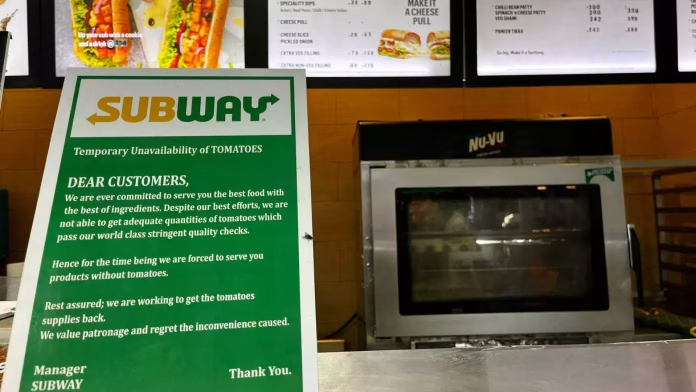
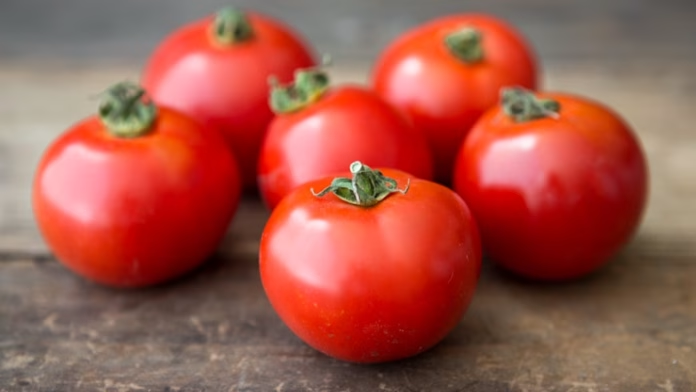
With the recent surge in tomato prices, McDonald’s in Delhi has issued a notice stating that it will be unable to serve its products with tomatoes. The decision stems from quality issues that have arisen in the procurement of tomatoes, making it difficult for the company to maintain the desired standards for its offerings.

The increase in vegetable prices can be attributed to a variety of factors, including a combination of prevailing heatwaves in major tomato-growing regions and heavy rainfall, which have disrupted the supply chains. Furthermore, the relatively shorter shelf life of tomatoes has also contributed to the fluctuations in their prices.

Aditya Saha, a SEBI registered investment adviser, took to Twitter to inform his followers about an intriguing notice spotted at a McDonald’s outlet in Delhi. The notice humorously highlighted the current situation, stating that even McDonald’s cannot afford tomatoes anymore.

To this, many social media users replied with sarcasm. One user tweeted that the supply-demand gap is causing difficulties in the situation. Restaurants and QSR chains typically do not consider price fluctuations as they operate on fixed rates for an entire year.

The issue lies with the supply side, which may affect the quality of tomatoes. The user suggested the masses accept the situation for the next 30-45 days until the price stabilises.

In the northern regions, the cost of tomatoes has experienced a significant surge, with prices soaring to INR 250 per kilogram in Gangotri Dham and ranging from INR 180 to INR 200 per kilogram in Uttarkashi district. The local vegetable vendors have taken notice of this abrupt price hike, resulting in a decline in consumer demand. The situation is mirrored in Gangotri and Yamunotri, where tomatoes are currently being sold at INR 200 to INR 250 per kilogram.

A vegetable seller said the importance of tomatoes has increased in the region all of a sudden.

According to a report by ANI, Rakesh, a vegetable seller, highlighted the adverse impact of surging tomato prices in Uttarkashi. He revealed that consumers are now facing the brunt of these price hikes and are increasingly reluctant to purchase tomatoes. In areas such as Gangotri and Yamunotri, the cost of tomatoes has reached a staggering INR 200 to INR 250 per kilogram.

In Chennai, the current market price of tomatoes ranges from INR 100 to INR 130 per kilogram. To ease the burden on consumers, the Tamil Nadu government has initiated the sale of tomatoes at a subsidized rate of INR 60 per kilogram through ration shops specifically in the state capital, Chennai.

Tomato prices have also surged in Karnataka, particularly in Bengaluru, where they now range from INR 101 to INR 121 per kilogram. This price hike can be attributed to the abrupt rise in temperatures experienced during March and April, which resulted in pest infestations affecting tomato crops. Consequently, the market rates escalated as a consequence of these adverse circumstances.

Read More: Tomato prices reach record highs as production slumps, consumers face steep costs

Advertisement

CYK Hospitalities paves the way for culinary entrepreneurs with new R&D Kitchen in Gurugram

0
CYK Hospitalities
The kitchen boasts a team of five highly skilled chefs proficient in various segments of the hospitality industry and cuisines.

With the aim of enhancing the culinary experience for aspiring F&B business entrepreneurs, Gurugram-based F&B consultancy firm, CYK Hospitalities, has recently launched an R&D kitchen in Udyog Vihar, Gurugram.

The state-of-the-art R&D kitchen serves as a hub for both existing and potential clients, providing them with an exceptional opportunity to experiment, refine, and flawlessly execute their culinary creations. With access to this innovative facility, individuals can fully realize their culinary visions and bring them to fruition.

The kitchen strives to foster a vibrant community where individuals with diverse culinary backgrounds can connect and share their ideas. Its primary objective is to nurture culinary innovation by promoting advanced research and development initiatives.

Located in Gurugram, this kitchen boasts a team of five highly skilled chefs proficient in various segments of the hospitality industry and cuisines, including Indian, Continental, PAN Asian, Desserts, Bakery, and other global flavors. Additionally, the kitchen houses specialist chefs who excel in creating exceptional FMCG products. In addition to its experienced chefs, the kitchen is dedicated to offering opportunities for aspiring culinary talents to unleash their creativity and invent extraordinary culinary masterpieces.

With a strong emphasis on nutrition, the kitchen is devoted to curating an innovative menu centered around millets, while also exploring diverse culinary cuisines. The R&D kitchen has introduced several exciting creations, such as the Rainbow Millet Salad, Kuttu Ragi Puri, Samak ki Kheer, and many more, all designed to offer multi-dimensional flavors and enhance the nutritional value of the dishes.

On the launch of the R&D kitchen, Simranjeet Singh, Director, CYK Hospitalities, said, “Our vision is to foster a vibrant community where individuals come together to engage in cutting-edge research and development within the culinary world. We aim to provide a platform for people to collaborate, exchange ideas, and collectively push the boundaries of culinary innovation.”

Pulkit Arora, Director, CYK Hospitalities adds, “At CYK Hospitalities, we strive to stay ahead of the curve by both following and setting the latest trends in the culinary world. Our R&D kitchen is a hub of innovation where we draw inspiration from traditional delicacies while developing modern culinary practices.”

Spanning a generous area of 600 square feet, the kitchen is strategically positioned on the rooftop, allowing for optimal ventilation and fresh air circulation. Its state-of-the-art infrastructure is equipped with cutting-edge technology, specifically designed to meet all essential operational needs and ensure a seamless culinary experience.

Advertisement

KFC celebrates National Fried Chicken Day with the debut of KFCShop.com: A trendy merchandise store for fried chicken lovers!

0
kfc merch

In honor of National Fried Chicken Day, Kentucky Fried Chicken is excited to introduce KFCShop.com, a fresh merchandise store catering to all your finger-lickin’ good fashion desires.

The KFC Shop offers a delightful blend of vintage and contemporary apparel and prints, along with distinctive accessories that truly embody the essence of fried chicken fashion. Notably, the shop features an exclusive collaboration with Shady Rays®, a renowned sunglasses brand hailing from Kentucky, ensuring a remarkable selection of items that perfectly encapsulate the best of fried chicken style.

“We wanted to celebrate summer with our customers this year. This new collection has it all – outfit sets, varsity jackets, slides, and the brand favorite, bucket hat. That’s a finger lickin’ good National Fried Chicken Day,” shared said Nick Chavez, CMO, KFC US.

Making its debut with an exclusive, limited-quantity Ultimate Summer Collection, each item pairs perfectly with KFC’s new Ultimate BBQ Fried Chicken Sandwich, which is available for a limited time through Aug. 13.

This Kentucky fried collection of apparel, accessories and more was created in partnership with Ink Branded. While the shop’s debut features 20+ total new items, it will be updated regularly with special collections and new items; fans should download the KFC App to be the first to know about future collections and new merch additions.

KFC, a subsidiary of Yum Brands, boasts a global presence with over 28,000 restaurants spanning across 150 countries worldwide.

Advertisement

India will set its own standards on sweeteners: FSSAI

0
artificial sweeteners
Artificial Sweetener (Representative Image)

According to a senior official from the Food Safety and Standards Authority of India (FSSAI), the Indian government is asserting its autonomy by establishing its own regulations regarding artificial sweeteners like aspartame. The official emphasized that the government is not bound to comply with the guidelines put forth by international agencies in this matter.

“We don’t have to follow the West or East as India is in a powerful situation..we are working on what the effect of consuming aspartame or other sweeteners can have on the Indian population,” FSSAI Advisor HS Oberoi said on Thursday, while addressing a conclave by the Indian Beverages Association (IBA), which represents Coca-Cola, PepsiCo, Red Bull and Dabur among other beverage companies.

Last week, Reuters published a report stating that the International Agency for Research on Cancer (IARC), the cancer research arm of the World Health Organization (WHO), is preparing to publish a report suggesting that aspartame could be categorized as a potential cancer risk for humans. Aspartame, an artificial sweetener used in products such as Diet Coke, ice cream, and chewing gum, may face increased scrutiny due to this upcoming IARC report. The report is expected to be released on July 14, and its findings could have far-reaching implications for the consumption of low-sugar and diet beverages as well as foods.

Read More: WHO’s cancer agency set to declare popular sweetener aspartame as “possible carcinogenic”

Oberoi stated that the Food Safety and Standards Authority of India (FSSAI) will establish guidelines and thresholds for the usage of artificial sweeteners. These guidelines will be determined through the FSSAI’s own risk assessment studies and in collaboration with various stakeholders, including food and beverage companies, scientists, and government agencies.

“We don’t have to go by what the world says..our regulation will be based on what our scientists feel is good for the Indian population, based on risk assessment studies and in consultation with all stakeholders,” he said.

In a previous announcement, the World Health Organization (WHO) issued conditional guidelines stating that non-sugar sweeteners, such as aspartame and stevia, do not contribute to weight loss and may potentially raise the risk of type 2 diabetes and cardiovascular diseases. The WHO emphasized that substituting free sugars with non-sugar sweeteners (NSS) does not effectively aid in long-term weight management. Furthermore, the organization highlighted that NSS are not essential components of a healthy diet and lack nutritional value.

Read More: WHO’s latest guideline advises against using artificial sweeteners for weight management

Advertisement

India and Pakistan to account for 50% of global milk output growth, finds OECD-FAO report

0
milk supply
Milk (Representative Image)

The recent agricultural outlook report published by the Organisation for Economic Co-operation and Development (OECD) and Food and Agriculture Organization (FAO) reveals that India and Pakistan will play a pivotal role in the global milk production landscape from 2023 to 2032. Although the growth rate is projected to decrease, these two nations are expected to collectively contribute to half of the overall expansion in milk production worldwide.

According to the recently released OECD-FAO Agricultural Outlook 2023-2032, although India’s ethanol production is projected to increase twofold by 2032, its consumption is still expected to surpass the production levels. The report also highlights a decline in the growth of major cereals and oilseeds production, except for coarse grains, compared to the previous decade.

The anticipated annual growth rate of milk production is projected to decline to 2.54% between 2023 and 2032, contrasting with the previous decade’s growth rate of 3.78% from 2013 to 2022. However, despite the overall slowdown, India is expected to witness an increase in its global share, rising from an average of 21% in 2020-22 to 24% during the specified period.

Conversely, when it comes to pulses, there is an expectation of faster production growth between 2023 and 2032 compared to the previous decade.

Advertisement

Coca-Cola India faces summer setback due to unseasonal rains, shifts focus to rural expansion

0

Coca-Cola India acknowledged that the company encountered a challenging summer season due to unseasonal rains in certain parts of the country. In response, the beverage company has placed a stronger emphasis on expanding its rural presence, recognizing the importance of this market segment.

Speaking on the sidelines of an event organised by the Indian Beverage Association, Sundeep Bajoria, Vice-President, Coca-Cola India, said, “Due to unseasonal rains it was a challenging summer season. But we can’t change the weather. India has seen summer rains every few years and I don’t see this changing. We continued to focus on strengthening consumer connect, growing household penetration and distribution to more outlets.”.

In recent years, the company has also embarked on a deseasonlisation strategy in a bid to grow relevance of its beverage portfolio in non-summer season. “Summer season remains a driver for consumption particularly for away-from-home channel. But we have been focusing on building consumption occasions and increasing the reach of our products even outside of the summer-season,” he added.

Responding to a query on entry of new players and intensifying competition, Bajoria said, “We welcome competition. After a long time, the beverage sector in India has started to attract investments and new players. This is clearly a validation that we are on the right track and that we are in a very attractive industry and the investments that we are making are absolutely in the right place. We are still at a very, very nascent stage in terms of development of beverages as an industry.”

He further mentioned that the company’s reach and presence in rural markets are still relatively limited.

“Our focus is on how we continuously keep expanding across outlets, recruit more consumers and grow the reach from the rural perspective. So rural offers us an opportunity for growth. We exited the summer season better than how we entered the season,” Bajoria said.

Bajoria expressed that the company remains committed to providing consumers with a wide range of choices, and emphasized that they have an active pipeline of products ready for launch, pending supply chain readiness.

Advertisement

Dabur India anticipates robust growth in domestic operations, expects double-digit growth in Q1

0
dabur
Dabur (Representative Image)

Dabur India announced on Thursday that its domestic operations are anticipated to achieve robust growth in the high single digits. Additionally, a decrease in inflation is predicted to contribute to an expansion in year-on-year gross margins for the first quarter, which concluded on June 30.

In an official filing with the Bombay Stock Exchange (BSE), the domestic fast-moving consumer goods (FMCG) leader announced that its overall business performance, encompassing Badshah Masala and other subsidiaries, is projected to achieve growth surpassing 10 percent. This optimistic outlook stems from a notable upswing in consumer demand observed across urban and rural markets.

“One of the key contributing factors to this positive development has been the reduction in inflation. Sequential moderation in inflation has positively impacted consumer spending power and is resulting in gradual improvement in offtakes in the industry,” it added.

The company highlighted that its Healthcare and HPC (Healthcare and Personal Care) divisions in India are anticipated to experience double-digit growth in the first quarter of fiscal year 2024. This positive projection is supported by a mid-single digit increase in volume.

“Within HPC, the Home Care category is expected to report value growth in high teens and Oral & Hair care categories growing in low double-digits. However, the F&B business, and in particular, the summer-centric beverages portfolio, had a muted quarter due to unseasonal rains and a moderate summer. Consequently, India business is expected to post growth in high single digit,” it added.

Dabur India mentioned that the easing of inflationary pressures has positively influenced its business. Furthermore, the company anticipates its international operations to exhibit “double-digit growth in constant currency.”

Additionally, Dabur India stated that the decrease in inflationary patterns is projected to facilitate “year-on-year gross margin expansion.” A significant portion of this expanded gross margin will be allocated towards increasing advertising and promotion expenditures.

“Consequently, operating profit should grow in line with revenue growth. However, PAT growth will be lower than operating profit growth mainly due to brand amortisation expenditure on account of acquisition. For the full year, we expect improvement in gross margins to continue,” Dabur India said.

Advertisement

Food and agriculture giants at risk: Report warns of potential 26% value loss by 2030

0
veg
(Representative Image)

The biggest players in the food and agriculture sectors have been cautioned by the Carbon Disclosure Project that a failure to implement no-deforestation/conversion policies could result in a substantial loss of $150 billion in value.

According to the latest Global Forests Report released by the non-profit organization, it has been projected that companies may face a potential loss of up to 26% in their value by the year 2030. This decline is primarily attributed to their excessive dependence on the resources provided by forests.

The CDP stated that although more companies are acknowledging the risks posed to their businesses, only a minority claim to be making progress towards eliminating deforestation from their supply chains.

The report from the NGO categorized its findings into four main industries that have the greatest potential impact on forests: materials, food, beverage and agriculture, manufacturing, and retail.

According to the report, the CDP highlighted that among the four sectors analyzed, the food, beverage, and agriculture (FBA) industry exhibited “the lowest levels of governance of deforestation.” Although the FBA industry demonstrated the second-highest percentage of ambitious targets, significant traceability, engagement in supply chain activities, and participation in conservation initiatives, it was found lacking in crucial areas such as “competent board-level oversight of deforestation,” “public company-wide no-deforestation/conversion policies,” and “comprehensive risk assessments,” as stated by the CDP.

The report indicated that over 1,000 companies reported their advancements in deforestation management through CDP in 2022, showcasing a remarkable increase of 300% since 2017.

Nonetheless, the report cautions that deforestation has the potential to become the equivalent of “new coal” in the portfolios of financial institutions. It emphasizes that companies overly dependent on forests’ resources will face significant financial, regulatory, and reputational risks as a consequence.

The report says, “The accelerating climate and nature transition and related incoming policy and demand shifts could mean that 40 of the world’s largest food and agricultural firms worth over $2trn lose up to 26% of their value by 2030, with a sector average hit of over 7%.”

The CDP argued that the potential losses mentioned earlier would arise due to several factors. These include the risks associated with companies’ excessive reliance on natural ecosystems, expensive legal actions, unfavorable regulatory changes, and increased consumer activism.

GlobalData, the analysis and intelligence group and the parent company of Just Food, has issued a new report warning about a growing trend towards more stringent environmental regulations. The report specifically highlights the implementation of new regulations in the European Union (EU) as an example of this shift.

The deforestation law being developed by the European Union (EU), which is expected to be finalized throughout the remainder of 2023, is anticipated to take effect in early 2025.

Under the forthcoming regulations, companies operating within the European Union (EU) will be restricted from selling products within the bloc unless their suppliers provide a due diligence statement. This statement must confirm that the products are not sourced from deforested areas or have contributed to forest degradation after 31 December 2020.

Companies will also have to verify that their products comply with the relevant legislation of the country of production, including on human rights, and that the rights of affected indigenous people have been respected.

The law covers cattle, cocoa, coffee, palm oil, soya, and wood as well as derivatives of these such as furniture, chocolate and leather.

“As part of their due diligence statement, suppliers must provide the longitude and latitude of the land where the product was sourced. This is on top of the EU’s proposed Corporate Sustainability Due Diligence Directive and EU Forced Labour Regulation, which would require firms to conduct due diligence on their supply chains to check for environmental harms and forced labour,” GlobalData said.

Advertisement

Mars Inc makes strategic move, acquires Kevin’s Natural Foods for health-conscious consumers

0
Mars Inc
Mars Inc (Representative Image)

Family-owned food giant Mars Inc on Wednesday agreed to buy Kevin’s Natural Foods, which is known for its sous-vide meals, sauces, and side dishes, the companies said.

According to individuals familiar with the matter, private equity-backed Kevin’s is being valued at approximately $800 million in the deal. Earlier this year, Kevin’s initiated a process of exploring various options, including a potential sale of the company.

Mars, headquartered in McLean, Virginia, boasts three significant business divisions: Mars Petcare, Mars Snacking, and Mars Food & Nutrition. With an impressive annual revenue of around $48 billion, the company excels in each of these sectors.

Upon the completion of the deal, Kevin’s will function as an independent brand within the food and nutrition division.

Within the petcare sector, Mars manages renowned brands such as Pedigree, Whiskas, and Royal Canin. Furthermore, the company recently augmented its presence in this industry by acquiring Heska Corp, a veterinary equipment firm.

Renowned for its candy brands like M&M’s and Snickers, Mars has been actively pursuing a strategy of diversification and expansion in recent years. This includes a series of acquisitions aimed at strengthening its portfolio in the areas of healthy foods and snacking.

According to Shaid Shah, Global President of Mars Food & Nutrition, Mars has expressed its plans to continue expanding its food business through potential acquisitions in the near term. The company is actively seeking opportunities to enhance its presence in the food industry.

“We are trying to deliver on a mission we have to enable healthier and more flavorful diets for consumers worldwide, while Kevin’s is trying to empower the busiest people to eat clean without sacrificing flavors,” Shah said in an interview.

“What really inspired us about Kevin’s was their purpose and their passion for food,” he added.

Kevin’s, headquartered in Modesto, California, was established in 2019 by Co-Founders Dan Costa, Kelsie Costa-Olson, and Kevin McCray. The company garnered support from private equity firms TowerBrook Capital Partners and NewRoad Capital Partners, who joined as backers of the venture.

As part of the agreement, TowerBrook Capital Partners and NewRoad Capital Partners are divesting their ownership in Kevin’s. The transaction is anticipated to be finalized during the third quarter of 2023.

After being diagnosed with an autoimmune disorder, Kevin’s, the brainchild of McCray, was born with the intention of establishing a food brand that prioritized nutritious diets.

“Joining the Mars Food & Nutrition portfolio of brands will allow us to accelerate the development of more product innovations and support our mission of bringing Kevin’s to more consumers across markets,” McCray said.

Despite the overall subdued consumer deal volumes, the food and beverage sector has emerged as a comparatively thriving area for dealmaking in recent quarters. In a notable move, Unilever announced its acquisition of Yasso, a frozen yogurt brand in North America, just last month. Similarly, Flagstone Foods made a significant acquisition in May by purchasing Emerald Nuts from Campbell Soup Co. These strategic moves highlight the ongoing activity and interest within the food and beverage industry.

Mars sought financial guidance from Citi as their financial adviser, while Simpson Thacher & Bartlett, Covington & Burling, and ArentFox Schiff provided legal counsel. On the other side, Kevin’s enlisted the expertise of Wells Fargo Securities for financial advice and Sheppard Mullin for legal guidance.

Advertisement

Herby Angel takes kids nutrition to the next level with organic milk mixes

0
SuperGro Milk Mixes
SuperGro Milk Mixes

Herby Angel, a renowned brand in the Indian retail market for organic and Ayurveda-based kids care, is proud to unveil its latest additions in the nutrition category. Introducing a range of Milk Mixes, Herby Angel sets itself apart from existing options with two exceptional variants: SuperGro Brain Booster with Ragi and Amaranth, and SuperGro Growth and Immunity Booster with Moringa. What makes these milk mixes truly unique is their commitment to excluding trans-fats, preservatives, refined sugar, and artificial coloring.

Herby Angel stands out with its milk mixes due to their carefully crafted formulation aimed at delivering vital nutrients, vitamins, and minerals essential for children’s growth and development. These mixes have been developed by Ayurvedic doctors and undergone rigorous testing in NABL-accredited labs, ensuring the highest quality standards. What sets Herby Angel apart is its commitment to providing products that are certified free from pesticides, chemicals, and toxins. With a focus on using scientifically proven ingredients sourced directly from nature, every Herby Angel product is created with meticulous care.

Sherry Jairath, CXO of Herby Angel said, “We are thrilled to introduce our latest addition to the nutrition category. Our organic, Ayurveda-based milk mixes are carefully designed to provide exceptional care during the crucial phase of children’s growth and development. We meticulously select the finest organic ingredients, ensuring they are free from harmful chemicals and additives, so that your child receives optimal nutrition without any unwanted substances. Our formulas are thoughtfully created, with each scoop containing 4.5 to 5 grams of protein to meet the growth needs of children, along with 16+ naturally occurring essential vitamins and minerals.”

Alongside their nutrition range, Herby Angel has recently launched a selection of personal care products to cater to various needs. Among these offerings are Baby Wet Wipes, designed specifically for gentle and safe cleansing. Additionally, Herby Angel introduces Bala Ashwagandhadi Aloe Vera Face Gel with Kumkuma, a nourishing gel formulation that combines the goodness of Ashwagandha and Aloe Vera, infused with the essence of Kumkuma. For lip care, they present the delightful Berry and Beetroot Lip Butter, providing moisture and natural goodness to keep lips soft and supple.

With a commitment to providing safe, organic, and chemical-free products, Herby Angel offers a range of competitively priced items that meet the highest quality standards. By combining the wisdom of nature, scientific advancements, and the principles of Ayurveda, the brand strives to deliver optimal health and wellness solutions for children from their early years. Each nutrition care product is thoughtfully crafted to promote overall well-being, ensuring that children receive the best care for their health and development. Herby Angel remains dedicated to enhancing the lives of children by prioritizing their health and offering products that nurture their growth.

Advertisement