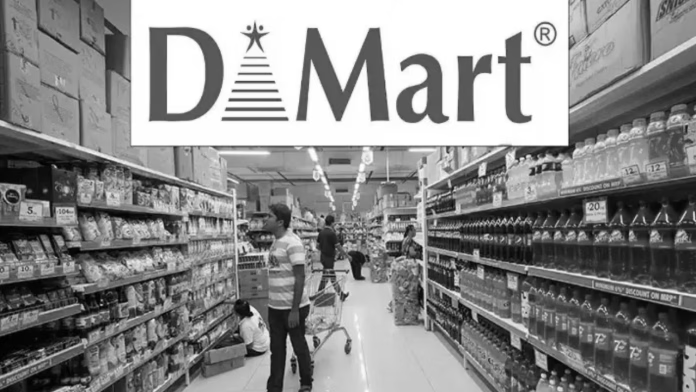
India’s largest value retailer DMart is doubling down on physical expansion as it prepares for the next decade of growth, even if that means holding back near-term cash generation. According to the latest CLSA India Weekender report, the Avenue Supermarts-owned chain is firmly in an investment-heavy phase, prioritising store additions over immediate free cash flow.
The report notes that DMart plans to grow its store network by 15 to 20 percent every year, a pace that places pressure on short-term profitability but strengthens long-term fundamentals. Management currently has visibility for nearly 2,200 stores, underlining the scale of the opportunity the company sees across urban and semi-urban India. With multiple projects under execution at any given time, free cash flow is expected to remain muted or negative in the near term, a pattern commonly seen in global retail expansion cycles.
CLSA draws parallels with international retailers such as Walmart and Costco, where sustained store rollouts initially weighed on cash flows before delivering strong balance sheet gains once expansion stabilised. DMart’s leadership appears to be following a similar path, betting that scale and consistency will eventually translate into durable returns.
Alongside store growth, the retailer is sharpening its private label strategy. DMart’s in-house brands are typically priced 40 to 50 percent lower than established national labels, and in some categories cost as little as one-third of branded alternatives. These offerings are increasingly central to the chain’s value proposition and margin structure.
While quick commerce platforms continue to gain traction, CLSA estimates they will account for less than 20 percent of urban consumption even by 2035. This leaves ample room for large-format physical retailers to thrive. On the digital front, the report highlights strong weekly active user growth for JioMart and Blinkit, even as usage dipped for several other e-commerce platforms. Meesho stood out with its user base expanding to nearly 170 million.
Despite intensifying online competition, DMart’s strategy signals confidence in brick-and-mortar retail as a long-term engine for growth, profitability and market leadership.