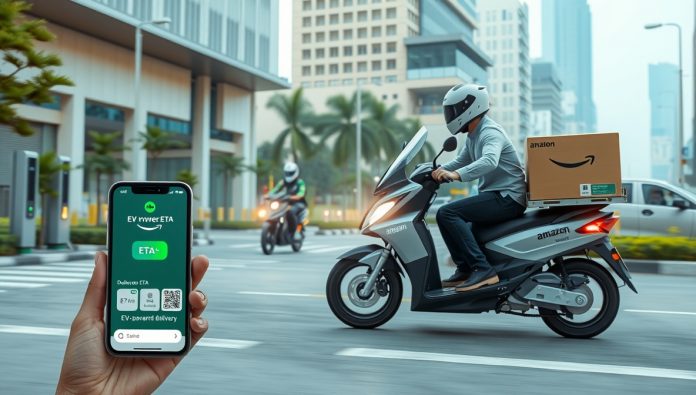
Your order came 11 minutes ago—but did you realize it was rolling in on silent wheels?
As cities across India get noisier and ordering gets faster, there is a silent shift taking place in e-commerce, omnichannel, (and everywhere else) — literally. Brands are increasingly using electric vehicles (EVs) to replace fuel, as last mile delivery fleets are moving to electric.
Brands such as Blinkit, Zepto, Amazon, Flipkart, and BigBasket are heavily investing in EV logistics. For instance, Flipkart has committed to converting 100% of its fleet to electric by 2030 while Blinkit’s hyperlocal business model has gone 75% electric in cities like Delhi and Bengaluru.
As to why brands are switching to electric, there is no shortage of reasons. Cost is one reason. EVs are cheaper to maintain, fuel-free, and save crores over the long term. Plus, with tightening emission regulations and ESG commitments, going electric is no longer just a “green” marketing initiative – it has become good business.
There’s also a shift in customer perception. “Eco delivery” is now tagged next to the ETA in your app, and guess what? Customers are clicking it.
Startups are also entering the game with battery-swapping technology, electric vehicle rental fleets, and integrated delivery-as-a-service players providing micro-mobility at scale. Brands no longer need to purchase 100 e-scooters—they can plug into a network.
But the operational advantage is what matters most. EVs can travel through traffic more quickly (acceleration), recharge in low-use hours, and eliminate urban noise. The numbers now work for short-haul, high-frequency courier deliveries, like groceries and pharmacy.
Infrastructure is still lagging. There are only a smattering of charging stations, and the rural rollout is exceedingly slow. But the transition is happening, and only accelerating.
Next time your groceries land on your doorstep in ten minutes, listen closely. That low muffle? That’s the future—clean, green and fully charged.