Tuesday, January 13, 2026
Home Blog

Start following Kiara Advani’s simple yet powerful morning ritual for glowing skin

Have you ever stopped to marvel at Kiara Advani’s radiant and flawless skin? In the exquisite glamour that is Bollywood, Kiara Advani stands out not just for her acting genius but also for her luminous and healthy skin. Amidst the overwhelming myriad of options surfaced by the beauty industry, this simple yet transformative ritual is not only a fad, but the cornerstone of her radiance.


The secret might be simpler than you think. It’s not a gruelling workout or a 10-step skincare routine; it’s a simple cup of warm water, with a slice of lemon in it. Kiara’s morning habit of indulging in warm water infused with the zest of fresh lemons has become a conscious choice rooted in her approach to holistic well-being. The actress recommends this refreshing elixir not only for its skin-enhancing benefits but also for the multiple benefits it has in improving your overall health and vitality.  

 

Hansa Yogendra, Director of The Yoga Institute in one of her videos on the health benefits of lemons mentioned, “Drinking one glass of lemon water every day in the morning will benefit you for a lifetime”.  Her claim can further be supported by a research published in the Journal of Science and Technology which reveals that “It is a healthy appetiser and helps to treat diseases with digestive aids. Lemon does not disclose any adverse effects, according to literature, but it is used all over the world as a traditional medicine”. Vitamin C, which is abundantly present in lemons, fights toxins and increases collagen production in the body, both of which help in treating acne as well as tightening the skin and reducing fine lines and wrinkles. While lemons are famously known for their Vitamin C component, not many people are aware of their Potassium-rich skin, which is an important mineral for nervous stimulation as well as maintaining blood pressure. Here are a few more benefits of adding lemon water to your everyday diet:- 

  • Immediately soothes muscle cramps
  • Peptin in lemons makes us feel fuller, thereby, helping in weight loss
  • Boosts immunity by stimulating the production of White Blood Cells in the body
  • Removal of kidney stones 
  • The lemon peel when infused in water for 30 minutes, activates its bioactive compounds which boost immunity and prevent our bodies from cellular damage
  • It also helps in the release of digestive enzymes which help in better absorption of nutrients

 

This simple kitchen hack has proudly made its way into the celebrity wellness circuit. Not only Kiara Advani but also Alia Bhatt, Deepika Padukone, Kriti Sanon, and Malaika Arora have this one drink in common at the break of dawn.

Here are 3 ways, you can incorporate the lemon water glow into your morning routine:- 

  1. Warm ginger lemon tea- Boil a glass of water with crushed ginger. When its done, squeeze a lemon into your glass and have it warm. To enjoy it in place of your morning tea, you may add a teaspoon of honey to it.

2. Ginger lemon shot – Take an inch of ginger root, and one squeezed lemon. Add enough water to blend it (3-4 tablespoons) in a blender, and have it as a morning shot.

3. Lemon-infused detox water- Cut up slices of one lemon and add it to your water bottle. Have 1-2 glasses of lemon water in the morning, and keep having the rest throughout the day. 

While lemon water offers a myriad of health benefits, it’s crucial to exercise moderation. One lemon a day is a healthy limit, and people with gastroesophageal reflux disease should be cautious about excessive lemon juice intake. As with any dietary rituals, balance is key to ensuring you enjoy the advantages without overdoing it. 
Raghav Chadha’s Blinkit Rider Act Sparks Fresh Debate on Gig Workers’ Rights in India

0

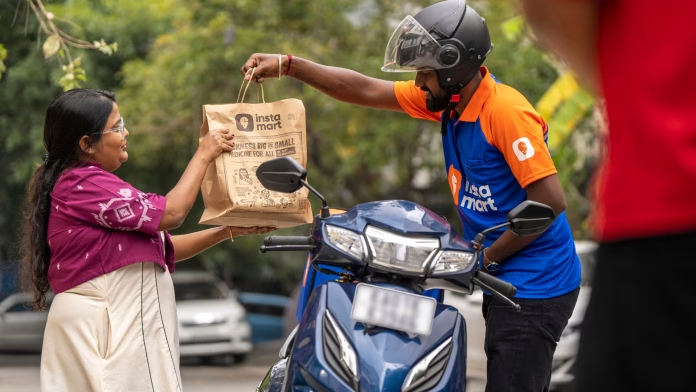
A video featuring Aam Aadmi Party MP Raghav Chadha dressed as a Blinkit delivery partner and completing grocery drop-offs has quickly spread across social media, triggering a wider discussion on the working conditions of India’s gig economy workforce. The visuals show Chadha riding a scooter in a delivery-style uniform, navigating city roads while handing over orders, an uncommon sight for a sitting parliamentarian.

According to people familiar with the initiative, the exercise was intended to draw attention to the realities faced by delivery partners who power India’s fast-growing quick commerce sector. Platforms promising ultra-fast deliveries have expanded rapidly across metros, employing lakhs of riders who operate under strict timelines, incentive-linked payouts, and algorithm-driven performance tracking.

Chadha used the moment to highlight issues that delivery workers routinely raise, including income volatility, long working hours, exposure to traffic and weather risks, and limited access to benefits such as health insurance, accident cover, and social security. While the gig model offers flexibility and entry-level earning opportunities, labour experts note that it also shifts risk from companies to workers.

The move has generated mixed reactions. Supporters argue that the gesture helped humanise a workforce often viewed only through app interfaces and delivery times. They say public representatives experiencing such roles firsthand can better advocate for labour protections. Critics, however, questioned whether symbolic participation leads to policy reform, pointing out that regulatory clarity around gig work remains unresolved despite years of debate.

India’s gig economy is estimated to employ millions across food delivery, quick commerce, ride-hailing, and logistics. As competition intensifies and delivery promises become shorter, concerns around rider safety, fair compensation, and legal recognition are increasingly central to discussions on the sector’s long-term viability.

While opinions differ on the effectiveness of Chadha’s approach, the episode has succeeded in pushing gig worker welfare back into public focus. Whether this renewed attention translates into legislative action or platform-level changes will be closely watched by workers, companies, and policymakers alike.

Advertisement

Papa Johns Expands Bengaluru Footprint with New Dine-In Restaurants and Cloud Kitchen

0

Papa Johns is stepping up its expansion in Bengaluru as part of a broader push to deepen its footprint in key Indian urban markets. Operated in India by master franchisee PJP Foods India Private Limited, the global pizza brand has added a new dine-in restaurant in Koramangala and is preparing to open two more outlets in Kasturi Nagar and BTM Layout later this month. A new cloud kitchen in Electronic City is also scheduled to become operational, strengthening the brand’s delivery-led presence in the southern tech corridor.

With these additions, Papa Johns will operate a total of seven dine-in restaurants and one cloud kitchen in Bengaluru by early 2026, underscoring the city’s importance in its India growth strategy. The latest openings build on momentum from October 2025, when the company launched four dine-in locations across Indiranagar, Hennur, Electronic City, and Sarjapur Road.

The company is betting on a multi-format model that combines dine-in, takeaway, and delivery, supported by a unified digital backbone. All Bengaluru outlets are integrated with Papa Johns’ mobile app and online ordering systems, enabling customers to move seamlessly across formats while allowing the company to maintain tighter control over operations and service quality as it scales.

According to PJP Foods India, Bengaluru continues to show strong demand for premium quick-service dining, driven by a young, digitally engaged consumer base. The brand’s expansion strategy in the city is designed to balance physical visibility with delivery efficiency, particularly through cloud kitchens that help improve reach without heavy real estate investments.

Papa Johns’ menu in India blends its global offerings with adaptations for local tastes, while staying rooted in its core positioning around ingredient quality. Pizzas are prepared using fresh dough made daily, sauces crafted from a blend of Indian Naati and Californian tomatoes, and real mozzarella cheese.

As competition intensifies in India’s organised pizza and QSR segment, Papa Johns is positioning Bengaluru as a critical market for testing scale, operational discipline, and long-term brand building before expanding further across major metros.

Advertisement

Manam Chocolate in Talks to Raise $5–10 Million in Maiden VC Round Led by Omnivore

0

Hyderabad based craft chocolate brand Manam Chocolate is in discussions to raise its first institutional funding round, signalling growing investor interest in India’s premium and artisanal chocolate segment. According to sources familiar with the matter, the company is in advanced talks with Omnivore, a venture capital firm known for backing agribusiness and consumer brands.

The proposed round is expected to be in the range of $5 million to $10 million, though the final size may be revised if both parties align on a more aggressive expansion plan. The capital, if finalised, would mark Manam Chocolate’s maiden venture funding since its inception. The company and Omnivore declined to comment on the development.

Founded in 2023 by Chaitanya Muppala, Manam Chocolate has quickly built strong brand recognition in Hyderabad’s premium food and beverage scene. Unlike most chocolate makers in India, Manam operates a vertically integrated model, controlling the entire value chain from cacao cultivation to finished chocolate sold through its own retail outlets. This approach has helped the brand position itself as a differentiated player in a market dominated by mass produced chocolate.

Manam’s philosophy centres on preserving the natural flavour characteristics of cacao, a contrast to industrial chocolate manufacturing that prioritises consistency and scale. The brand has repeatedly highlighted the limitations of conventional bean to bar production in India, arguing that starting with cacao beans rather than the fruit restricts flavour development and product depth.

India’s craft chocolate category remains relatively small but is gaining momentum as urban consumers show increasing willingness to pay for premium, ethically produced food products. Industry observers note that rising disposable incomes, exposure to global food trends and interest in traceable sourcing are driving demand.

If the funding materialises, Manam Chocolate is expected to channel capital into expanding its farming operations, strengthening production capabilities and entering new regional markets. The move would also underscore how niche food brands with strong sourcing narratives are beginning to attract mainstream venture capital attention.

Advertisement

Bata India Targets 800 Zero-Based Merchandising Stores by 2026

0

Bata India is stepping up its retail overhaul with plans to expand its zero based merchandising store network to 800 outlets by the end of 2026, as the footwear major sharpens its focus on technology, franchising and deeper penetration into smaller towns.

The company has already rolled out the zero based merchandising model across 400 stores, a fourfold increase from about 100 outlets a year ago. The approach moves away from uniform, centrally driven assortments and instead builds store-level ranges based on local demand patterns, pricing preferences and buying behaviour. According to Bata India’s leadership, this model is now central to how the company designs its retail network.

Expansion will be driven largely through franchising. Bata’s franchise base has grown from around 100 stores five years ago to nearly 700 today, while company-owned outlets stand at about 1,300. The retailer plans to accelerate store additions, with franchise stores expected to outnumber company-owned locations within the next few years. While metros and tier one cities will continue to house larger, company-run stores with premium offerings, tier two and tier three markets will see faster franchise-led growth focused on family purchases and value-led assortments.

Technology is playing a key role in this shift. Bata has consolidated more than 20 internal applications into a single platform, enabling better control over inventory, staff management, customer feedback and visual merchandising. Store expansion decisions are now backed by data tools that assess trade potential, store size and revenue estimates before a location is finalised.

The company is also scaling its omnichannel capabilities. More than 400 stores are expected to support omnichannel fulfilment by the first quarter of 2026, up from about 100 last year. Around 40 percent of outlets currently offer hyperlocal delivery, with pilots underway for faster delivery options through partnerships.

A recent cut in GST on footwear priced below Rs 2,500 has added momentum. Bata passed on the benefit early, aiming to strengthen its value positioning. Industry data shows Bata’s market share rose from 4.3 percent in 2020 to 4.8 percent in 2024, and the company believes its store expansion and technology-led strategy will help it gain further ground in organised retail.

Advertisement

Good Farmer Food Concepts Raises $1.5 Million in Pre-Series A Funding

0

Good Farmer Food Concepts, the Bengaluru-based company behind specialty coffee label Maverick & Farmer Coffee and quick service brand Square Burgers & Co., has raised $1.5 million in an ongoing pre-Series A funding round as it prepares to scale its café and retail operations across India.

The round is being led by investment firm CreedCap, with participation from Indian tennis player Rohan Bopanna, former India cricket captain Rahul Dravid and Meraki Sport & Entertainment. The fresh capital will be used to expand the company’s national café footprint, strengthen research and production capabilities and accelerate growth in its retail business.

Good Farmer Food Concepts currently operates seven outlets across Bengaluru and Goa and plans to increase this to 10 locations by the end of the year. New cafés are planned in Mumbai, Delhi NCR, Goa and Bengaluru as the company looks to build a wider presence in major urban markets. The café network is anchored by Maverick & Farmer, which positions itself as a farm-to-cup coffee brand focused on traceability, quality and experimentation.

Alongside cafés, the company is placing a growing emphasis on its retail vertical. This includes the development of multiple SKUs of specialty coffee roasts aimed at home brewers, as well as curated brewing equipment designed to deepen consumer engagement beyond the café format. The brand also has a steadily expanding B2B presence, supplying coffee to hospitality partners and offices.

Founded by Ashish D’abreo, Sreeram Gangadharan and Tej Thammaiah, Good Farmer Food Concepts operates across specialty coffee, cafés and health-forward food concepts. Its portfolio includes Square Burgers & Co., a modern fast food brand built around a health-first menu, reflecting a broader shift in consumer preferences toward cleaner and more balanced eating options.

Company executives said the focus ahead will be on disciplined expansion backed by strong operations. Early investor Rohan Bopanna said the brand’s emphasis on quality, authenticity and innovation has been consistent since its early days, adding that he looks forward to supporting its next phase of growth.

The funding comes as India’s premium café and specialty coffee segment continues to attract consumer interest and investor attention, driven by urban demand for differentiated food and beverage experiences.

Advertisement

Akul Narula exits District by Zomato after shaping its live events and ticketing push for years

0

Akul Narula has stepped down from his role as Vice President Events at District by Zomato, bringing an end to a multi year association with the live events and experiences platform. His exit marks a significant leadership change for District, which has been steadily building its presence in India’s rapidly growing events and ticketing space.

During his time at District by Zomato, Narula played a central role in shaping the platform’s live events strategy. He was closely involved in expanding event formats beyond metros and scaling operations across multiple markets. Under his leadership, District strengthened its relationships with promoters, artists and venue partners, helping the platform gain credibility in an otherwise fragmented events ecosystem.

Narula was also instrumental in driving execution on ground, ensuring that live events maintained consistency in quality while reaching newer audiences. His focus on partnerships and operational depth helped District position itself as more than just a ticketing tool, but as a full stack events platform aligned with Zomato’s broader consumer ecosystem.

Before joining District by Zomato, Narula spent over three years at Insider.in as Head of New Business, where he worked on building revenue streams and partnerships in the events and experiences category. His earlier stints include roles at DLF Limited in central marketing for its shopping malls, as well as experience with White Fox India and Comic Con India, giving him deep exposure to both corporate and cultural event formats.

While Zomato has not yet announced a successor or outlined next steps for the events vertical, Narula’s departure comes at a time when competition in the live events and ticketing space is intensifying. His next move will be closely watched by industry observers.

Advertisement

Apparel Group Launches India’s First Levi’s Kids Store in Hyderabad

0

Apparel Group has entered India’s premium kidswear space with the launch of the country’s first exclusive Levi’s Kids store, opening its doors at Lakeshore Mall in Hyderabad. The move marks the debut of the global denim brand’s children’s line in the Indian market and strengthens Apparel Group’s long-standing partnership with Levi Strauss & Co.

The new store introduces a dedicated retail format for Levi’s Kids, targeting families seeking branded, durable and stylish apparel for children. The range is designed for kids between the ages of 4 and 16 and features denim-led offerings alongside everyday casualwear. According to the company, the collection blends Levi’s classic American design language with fabrics and fits suited for active, growing children.

Hyderabad has been chosen as the launch market due to its growing base of affluent urban consumers and strong mall-led retail traffic. The outlet has been positioned as a family-friendly destination, with a modern layout that reflects Levi’s heritage while catering to the expectations of Indian parents shopping for premium kidswear.

Apparel Group said the Hyderabad store will serve as a reference model for a broader expansion strategy. The company plans to roll out Levi’s Kids stores across major metro cities and select high-growth urban centres in a phased manner over the coming months. The expansion will be supported by Apparel Group’s retail operations, local market expertise and omni-channel capabilities.

Commenting on the launch, Abhishek Bajpai, Chief Executive Officer of Apparel Group India, said the introduction of Levi’s Kids aligns with the company’s focus on bringing established global brands to fast-growing consumer categories in India. He noted that premium kidswear represents a significant growth opportunity, driven by rising disposable incomes and increasing demand for trusted international labels.

With the addition of Levi’s Kids, Apparel Group continues to deepen its presence in India’s fashion and lifestyle retail market. The company has been steadily expanding its portfolio by scaling international brands through physical stores and digital channels, positioning itself to benefit from the country’s evolving consumer preferences and organised retail growth.

Advertisement

Honey Mama’s Raises $4 Million in Funding Led by Bochi Investments

0

Honey Mama’s, a US-based maker of refrigerated chocolate treats, has raised $4 million in a fresh funding round led by Bochi Investments, as the brand prepares to accelerate its national expansion and scale up operations.

The company plans to deploy the capital toward increasing production capacity, widening its retail presence and developing new products, according to chief executive officer Jared Schwartz. The funding comes at a time when demand for clean-label, better-for-you indulgence products continues to grow across the natural and mainstream grocery channels.

Founded in 2013 by Christy Goldsby, Honey Mama’s began as a small operation at the Portland State Farmers Market. The brand built early traction with its honey-sweetened, cacao-based products that require refrigeration and avoid refined sugar and artificial ingredients. Over the past decade, it has developed a loyal following in the natural foods segment, particularly across the US West Coast.

The new capital will support Honey Mama’s push into larger national retailers. The company is rolling out its products across Albertsons stores nationwide and is also expanding distribution with Costco, marking a significant step up from its earlier regional footprint. Scaling manufacturing has become a priority as volumes increase and supply chain complexity grows with wider distribution.

Schwartz said the funding will allow the company to invest in infrastructure while maintaining the quality standards that have defined the brand since its early days. Product development is also a key focus, with Honey Mama’s planning to introduce new flavours and formats aimed at attracting a broader consumer base without straying from its core positioning.

Bochi Investments’ involvement adds another high-profile consumer investor to the company’s cap table. The firm has backed a number of fast-growing food and beverage brands, including Mid-Day Squares, Ancient Crunch, GNGR Labs, Ketone-IQ and Purely Elizabeth. Its investment underscores continued investor interest in brands that sit at the intersection of indulgence and health, even as funding conditions remain selective across the consumer sector.

Advertisement

Unilever Sells SariWangi to Djarum Group for IDR 1.5 Trillion, Exits Indonesia Tea Market

0

Unilever Indonesia has agreed to sell its entire tea business, including the widely recognised SariWangi brand, to Djarum Group in a transaction valued at IDR 1.5 trillion, marking the company’s exit from Indonesia’s packaged tea market.

The deal will see PT Savoria Kreasi Rasa, a subsidiary of Djarum Group, acquire the SariWangi brand and related operations from PT Unilever Indonesia Tbk. The agreement was signed in early January and is expected to be completed by March 2, 2026, subject to regulatory approvals and customary closing conditions. The transaction values the business at roughly USD 89 million.

SariWangi has been a household name in Indonesia for decades and played a key role in introducing tea bags to a market long dominated by loose-leaf tea. Founded in 1973, the brand was acquired by Unilever in 1989 and subsequently scaled into one of the country’s most familiar tea labels with nationwide distribution.

Unilever’s decision to divest the business reflects a broader strategic shift. The tea segment accounted for less than 3 percent of Unilever Indonesia’s total revenue and net profit, according to company disclosures. With growth in packaged tea slowing, the category no longer aligned with the company’s focus on higher-margin and faster-growing segments such as beauty, personal care, home care, health and wellbeing.

This is the second major portfolio move by Unilever Indonesia in recent months. In late 2025, the company exited the ice cream category following the sale of its Wall’s business, signalling a deliberate move away from food and refreshment categories in the country.

For Djarum Group, the acquisition strengthens its presence in consumer staples. By taking over SariWangi, the group gains immediate scale in the tea bag segment, a brand with more than five decades of consumer recognition, and an established distribution network across Indonesia.

Industry observers view the valuation as in line with a mature category. The deal underscores a wider trend in Southeast Asia, where multinational FMCG companies are narrowing their portfolios, while local conglomerates step in to take ownership of legacy brands with stable cash flows.

Advertisement

L Catterton to Acquire Cottage Cheese Brand Good Culture in $500 Million-Plus Deal

0

Private equity firm L Catterton has agreed to acquire a majority stake in US-based dairy brand Good Culture in a deal valued at more than $500 million, marking one of the largest transactions in the fast-growing cultured dairy segment.

The acquisition comes as cottage cheese, once a niche product, has staged a strong comeback in the US food market. Good Culture’s sales have grown nearly fourfold over the past three years, outpacing broader dairy growth. Over the same period, the cottage cheese category expanded by almost 60 percent, supported by rising consumer interest in high-protein, minimally processed foods.

Founded in Austin, Texas, Good Culture has built its reputation around clean-label dairy products and a modern brand identity that appeals to health-conscious consumers. While best known for cottage cheese, the company has also expanded into adjacent categories such as sour cream and cream cheese. The brand is widely distributed across major grocery chains in the US and has gained traction through consistent product innovation and marketing.

As part of the transaction, existing investor Manna Tree will reinvest in the business, signalling continued confidence in the brand’s growth trajectory. L Catterton will provide capital and strategic support to accelerate Good Culture’s next phase of expansion. This will include increasing manufacturing capacity, strengthening national distribution and developing new products to deepen its presence in the cultured dairy aisle.

Andrew Taub, managing partner of L Catterton’s Flagship Fund, said Good Culture has helped reinvent cottage cheese, turning it into a mainstream and versatile food choice after years of limited consumer interest. He added that the firm sees significant headroom for growth as eating habits continue to shift toward protein-rich and functional foods.

The transaction is subject to regulatory approvals and is expected to close in the first quarter of 2026. Backed by luxury group LVMH, L Catterton manages about $37 billion in assets and invests globally in consumer-focused businesses. Its portfolio includes brands across food, wellness and fitness, reflecting its strategy of backing companies aligned with changing consumer preferences.

Advertisement