Home Blog

Start following Kiara Advani’s simple yet powerful morning ritual for glowing skin

Have you ever stopped to marvel at Kiara Advani’s radiant and flawless skin? In the exquisite glamour that is Bollywood, Kiara Advani stands out not just for her acting genius but also for her luminous and healthy skin. Amidst the overwhelming myriad of options surfaced by the beauty industry, this simple yet transformative ritual is not only a fad, but the cornerstone of her radiance.


The secret might be simpler than you think. It’s not a gruelling workout or a 10-step skincare routine; it’s a simple cup of warm water, with a slice of lemon in it. Kiara’s morning habit of indulging in warm water infused with the zest of fresh lemons has become a conscious choice rooted in her approach to holistic well-being. The actress recommends this refreshing elixir not only for its skin-enhancing benefits but also for the multiple benefits it has in improving your overall health and vitality.  
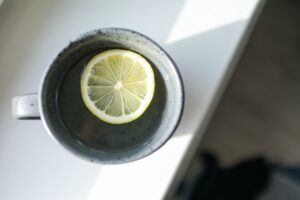
 

Hansa Yogendra, Director of The Yoga Institute in one of her videos on the health benefits of lemons mentioned, “Drinking one glass of lemon water every day in the morning will benefit you for a lifetime”.  Her claim can further be supported by a research published in the Journal of Science and Technology which reveals that “It is a healthy appetiser and helps to treat diseases with digestive aids. Lemon does not disclose any adverse effects, according to literature, but it is used all over the world as a traditional medicine”. Vitamin C, which is abundantly present in lemons, fights toxins and increases collagen production in the body, both of which help in treating acne as well as tightening the skin and reducing fine lines and wrinkles. While lemons are famously known for their Vitamin C component, not many people are aware of their Potassium-rich skin, which is an important mineral for nervous stimulation as well as maintaining blood pressure. Here are a few more benefits of adding lemon water to your everyday diet:- 

  • Immediately soothes muscle cramps
  • Peptin in lemons makes us feel fuller, thereby, helping in weight loss
  • Boosts immunity by stimulating the production of White Blood Cells in the body
  • Removal of kidney stones 
  • The lemon peel when infused in water for 30 minutes, activates its bioactive compounds which boost immunity and prevent our bodies from cellular damage
  • It also helps in the release of digestive enzymes which help in better absorption of nutrients

 

This simple kitchen hack has proudly made its way into the celebrity wellness circuit. Not only Kiara Advani but also Alia Bhatt, Deepika Padukone, Kriti Sanon, and Malaika Arora have this one drink in common at the break of dawn.

Here are 3 ways, you can incorporate the lemon water glow into your morning routine:- 

  1. Warm ginger lemon tea- Boil a glass of water with crushed ginger. When its done, squeeze a lemon into your glass and have it warm. To enjoy it in place of your morning tea, you may add a teaspoon of honey to it.
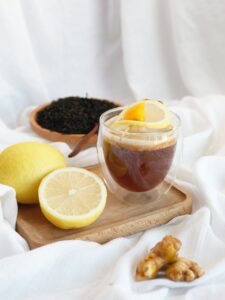
2. Ginger lemon shot – Take an inch of ginger root, and one squeezed lemon. Add enough water to blend it (3-4 tablespoons) in a blender, and have it as a morning shot.

3. Lemon-infused detox water- Cut up slices of one lemon and add it to your water bottle. Have 1-2 glasses of lemon water in the morning, and keep having the rest throughout the day. 

While lemon water offers a myriad of health benefits, it’s crucial to exercise moderation. One lemon a day is a healthy limit, and people with gastroesophageal reflux disease should be cautious about excessive lemon juice intake. As with any dietary rituals, balance is key to ensuring you enjoy the advantages without overdoing it. 
Buon Compleanno, Tiramisu! Celebrating World Tiramisu Day 2026

0

Today, March 21, marks World Tiramisu Day, a global celebration of Italy’s iconic dessert that has charmed taste buds across generations. Known for its rich layers and indulgent flavor, Tiramisu—which translates to “pick me up”—has evolved from a humble specialty in Treviso into a worldwide culinary sensation. Whether you prefer the classic espresso-soaked version or enjoy experimenting with modern twists, today offers the perfect excuse to indulge in this timeless treat.

At its core, a traditional tiramisu follows a simple yet precise formula often referred to as the “Golden Six” ingredients. These include ladyfingers (savoiardi) that provide the sponge-like base, egg yolks for richness, mascarpone cheese for its creamy texture, strong unsweetened espresso, a dusting of cocoa powder, and just enough sugar to balance the flavors. According to Italian purists and culinary bodies like the Accademia del Tiramisù, sticking to these elements is key to preserving the authenticity of the dish.

However, 2026 has seen a wave of innovation as tiramisu continues to evolve with changing consumer preferences. Cafés and dessert brands are experimenting with fruit-forward versions, such as strawberry or raspberry tiramisu, sometimes even replacing espresso with fruit liqueurs or light craft beer in what’s being dubbed the “Birramisu” trend. Meanwhile, pistachio tiramisu—often made with premium Bronte pistachios and layered with white chocolate ganache—has emerged as one of the most searched variations this year. The influence of health-conscious eating is also evident, with functional food concepts introducing protein-enriched tiramisu using alternatives like high-protein creams or oat-based layers soaked in cold brew.

Another major shift is in format and convenience. The rise of quick commerce platforms and delivery-first dessert brands has popularised deconstructed tiramisu jars, making the dessert more portable and accessible for on-the-go consumption without compromising on taste.

Beyond its evolving forms, tiramisu also carries fascinating history. It is widely believed to have been created in the 1960s by Ado Campeol at Le Beccherie restaurant in Treviso, Italy. Interestingly, the earliest versions did not include alcohol, as the dessert was originally conceived as a nourishing, energy-boosting dish. The addition of Marsala wine or rum came later as the recipe travelled globally. Today, tiramisu holds a special place in culinary culture, even earning records such as the world’s largest tiramisu, weighing over 2,300 kilograms.

For those looking to celebrate, there are plenty of ways to join in. Many cafés are offering curated tiramisu tastings or “flights”, featuring multiple flavors like classic, citrus, and pistachio. For home cooks, the golden rule remains patience—tiramisu tastes best when left to rest for several hours or overnight, allowing the coffee and cream layers to fully meld. Pairing it with beverages like an espresso martini or a cold brew adds an extra layer of indulgence.

From its traditional roots to its modern reinventions, tiramisu continues to prove why it remains one of the world’s most beloved desserts—simple in structure, yet endlessly adaptable in spirit.

Advertisement

HUL Reaffirms Commitment to Foods Business Amid Unilever Deal Talks

0

Hindustan Unilever Limited (HUL) has clarified that its foods business remains a core part of its strategy and is not up for sale, putting to rest speculation around a potential divestment. The statement comes even as parent company Unilever confirmed it is in discussions with McCormick & Company following an offer for its global food division.

In a regulatory filing, HUL emphasized that it is not engaged in any talks to divest its foods portfolio, underscoring the segment’s importance to its India operations. The foods business—which includes leading brands such as Knorr and Horlicks—generates over ₹15,000 crore in annual revenue and contributes roughly 22% to the company’s total sales, making it a significant growth pillar.

While Unilever has acknowledged ongoing discussions regarding its broader food portfolio, it also reiterated that there is no certainty of a deal and highlighted the strong financial profile and strategic relevance of the business. Globally, Unilever’s packaged foods division contributes more than a quarter of its revenue, though it has been facing structural challenges such as slowing demand, rising competition from private labels, and shifting consumer preferences away from ultra-processed foods.

The clarification also comes in the context of Unilever’s ongoing portfolio reshaping efforts. Last year, both HUL and Unilever spun off their ice cream businesses into a separate entity to improve operational focus and competitiveness. However, unlike ice cream, the foods segment continues to be viewed as a stable and scalable category, particularly in markets like India where demand for packaged staples and nutrition products remains strong.

For HUL, maintaining a strong foothold in foods aligns with its broader strategy of balancing high-growth categories with steady, high-volume segments. With established leadership across multiple categories including tea, ketchup, and malted beverages, the company appears committed to leveraging its scale, distribution network, and brand equity to drive sustained growth in the foods space.

Advertisement

Moe Puppy Raises ₹2 Cr to Build a New-Age D2C Pet Care Brand in India

0

Emerging pet care startup Moe Puppy has raised ₹2 crore in a pre-seed funding round led by PedalStart, with participation from Zindagi Live Angel Fund and other investors, as it looks to scale its presence in India’s rapidly growing pet wellness market. Founded in 2023 by Manish Paul, the brand is building a direct-to-consumer (D2C) platform focused on science-backed grooming and wellness products designed specifically for Indian pet owners.

Moe Puppy is targeting a clear gap in the market by offering products that combine effectiveness, ease of use, and safety, catering to a new generation of pet parents who increasingly view pets as family members. Its current portfolio includes practical, everyday solutions such as dry shampoos and anti-tick sprays, aimed at simplifying grooming routines while maintaining high standards of care. The brand’s positioning aligns with a broader shift in consumer behavior, where demand is rising for premium, convenient, and wellness-oriented products across emerging categories like pet care.

The fresh capital will be deployed across key growth areas, including marketing, research and development, supply chain optimisation, and team expansion in functions such as operations, growth, and customer experience. This reflects a disciplined approach to building a strong foundation early, a strategy increasingly adopted by D2C startups aiming for sustainable scale rather than rapid but inefficient expansion.

On the distribution front, Moe Puppy has adopted an omnichannel strategy, combining its own website with presence on major marketplaces like Amazon, quick commerce platforms such as Blinkit and Zepto, and specialised pet platforms like Supertails. This multi-channel approach enables the brand to reach consumers across different touchpoints while capitalising on the growing importance of quick commerce and digital-first discovery in India.

The company has already demonstrated strong early traction, serving over 100,000 customers and achieving a repeat purchase rate of nearly 30%, indicating solid product-market fit. Additionally, Moe Puppy reports a 10x growth over the past year, positioning it among the faster-growing startups in the D2C pet care segment.

The broader Indian pet care market is witnessing significant expansion, driven by rising pet ownership, increasing disposable incomes, and a growing focus on pet health and wellness. As consumers shift toward higher-quality, specialized products, the category is becoming an attractive opportunity for venture-backed startups. Investor interest in Moe Puppy reflects this trend, with early-stage funds increasingly backing niche, high-growth consumer brands operating in underpenetrated segments.

Looking ahead, Moe Puppy aims to scale its product portfolio, deepen its market reach, and strengthen its brand positioning as a trusted, accessible pet care solution. With fresh funding, strong early metrics, and a clear focus on innovation and consumer needs, the company is well-positioned to carve out a meaningful space in India’s evolving D2C ecosystem and the fast-growing pet wellness industry.

Advertisement

Akshayakalpa Organic Raises ₹175 Cr to Scale D2C Dairy and Deepen Sustainable Growth

0

Organic dairy brand Akshayakalpa Organic is raising ₹175 crore (approximately $19 million) in a Series D funding round led by ABC Impact Fund, with backing from Temasek and participation from existing investors including Rainmatter, Asha Ventures, Catamaran Ventures, Waterfield Fund, Pratithi Growth Fund, and A91 Partners. The round underscores continued investor confidence in India’s fast-growing D2C food ecosystem, particularly in categories centered around health, sustainability, and transparency.

According to regulatory filings, the company plans to issue over 36.8 lakh Series D compulsorily convertible preference shares at ₹475 each, with ABC Impact contributing ₹101 crore and Rainmatter adding ₹21 crore. The funding is expected to value the company between ₹1,600 and ₹1,700 crore, positioning it among the most well-capitalised players in India’s organic food and dairy segment.

Founded by GNS Reddy and Shashi Kumar, Akshayakalpa Organic has built a strong direct-to-consumer (D2C) model focused on delivering organic milk and dairy products directly to consumers while maintaining strict quality and sourcing standards. The brand currently serves over 60,000 customers daily across Bengaluru, Hyderabad, and Chennai through its D2C platform, while also maintaining an omnichannel presence in more than 2,000 retail outlets and across major e-commerce and quick commerce platforms.

The fresh capital will be used to strengthen working capital, expand supply chain infrastructure, and accelerate its D2C-led growth strategy. The company plans to deepen its presence in existing markets while entering new cities, supported by investments in logistics, sourcing networks, and production capabilities. This aligns with broader industry trends where supply chain efficiency and last-mile delivery are becoming critical differentiators for D2C brands.

Financially, the company has demonstrated steady growth, reporting a 38% year-on-year increase in revenue to ₹387 crore in FY25. While net losses remained stable at ₹27.3 crore, the performance indicates a balanced approach toward scaling, with a focus on sustainable growth rather than aggressive, loss-heavy expansion. This disciplined trajectory is increasingly valued by investors in the current funding environment.

The funding round is also expected to include a secondary component, allowing early investors to partially exit, reflecting the company’s maturity and the evolving dynamics of India’s startup ecosystem where liquidity events are becoming more common. Reports suggest that Akshayakalpa may explore raising up to ₹350 crore in total, further strengthening its expansion plans.

The company’s growth is closely tied to shifting consumer behavior in India, where demand for clean-label, ethically sourced, and nutritionally superior products is rising. As awareness around health and sustainability increases, organic dairy is emerging as a high-potential category within the broader food and beverage sector.

By combining a strong D2C backbone with an expanding omnichannel presence, Akshayakalpa Organic is positioning itself as a leader in India’s organic dairy market. With robust investor backing, a clear focus on supply chain excellence, and alignment with long-term consumer trends, the company is well-placed to drive the next phase of growth in the country’s evolving D2C food landscape.

Advertisement

Pickle Power: Good Girl Snacks Raises $3M to Turn Viral Hype into Retail Scale

0

Gen Z-driven food startup Good Girl Snacks has raised $3 million in a seed funding round as it looks to scale its breakout “Hot Girl Pickles” phenomenon into a national retail brand. The round was co-led by Strand Equity and RiverPark Ventures, with participation from Nucleus Ventures and Collaborative Fund, signaling strong investor confidence in culturally driven, digitally native food brands.

Founded by Leah Marcus and Yasaman Bakhtiar, the company has rapidly evolved from a viral TikTok trend into a fast-growing consumer brand. Its flagship product, “Hot Girl Pickles,” gained massive traction online thanks to its bold, spicy flavor profile and eye-catching pink-and-red branding, resonating strongly with Gen Z audiences. Unlike traditional pickle brands that position the product as a side item, Good Girl Snacks has reframed pickles as a standalone snack and lifestyle product, tapping into the “hot girl summer” cultural wave and redefining how the category is perceived.

The fresh capital will be used to transition the brand from limited, hype-driven drops to broader retail distribution. Currently available in boutique grocers and select West Coast outlets, the company is targeting expansion into over 2,000 retail locations by the end of 2026, with potential pilots in major chains such as Target and Whole Foods. Alongside retail growth, the startup is also investing in product innovation, exploring new formats like single-serve pickle pouches for on-the-go consumption and even brine-based functional beverages aimed at the hydration and recovery segment.

Operational scaling is another key priority, with investments planned in manufacturing and supply chain infrastructure to maintain product quality while meeting growing demand. This shift reflects a broader evolution from a social-media-led brand to a structured, omnichannel business capable of sustaining long-term growth.

Investors are particularly drawn to the brand’s ability to transform a traditionally commoditized category into a culturally relevant, high-engagement product. By combining strong branding, community-led marketing, and product differentiation, Good Girl Snacks is tapping into a larger trend where younger consumers are embracing bold flavors and snackable formats over conventional packaged foods.

As the “pickle renaissance” gains momentum, Good Girl Snacks is positioning itself at the forefront of the category, demonstrating how viral consumer behavior—when paired with strong execution—can translate into a scalable, venture-backed business.

Advertisement

Unilever Explores Food Business Tie-Up with McCormick Amid Portfolio Reset

0

Global FMCG major Unilever is reportedly in discussions to combine its food business with U.S.-based spice giant McCormick & Company in a potential all-stock deal that could materialise in the coming weeks. If finalised, the move would bring together a portfolio of iconic brands, including Unilever’s Hellmann’s and McCormick’s Cholula, under a single entity—potentially reshaping the global packaged food landscape.

The development comes as Unilever evaluates strategic options to streamline its business and sharpen its focus on higher-growth segments such as beauty, personal care, and wellbeing. The company has been under pressure to improve performance in its food division, which has been impacted by slowing demand as consumers increasingly cut back on discretionary spending and shift toward more affordable private-label alternatives. Additionally, broader global trends—including changing dietary habits and the growing adoption of weight-loss drugs—have further weighed on consumption in certain food categories.

This potential tie-up aligns with a series of portfolio restructuring efforts by Unilever in recent years. The company has already explored divestments of legacy food brands such as Marmite, Colman’s, and Bovril, while also spinning off parts of its ice cream business. Reports also suggest that Unilever had previously engaged in discussions with Kraft Heinz regarding a possible merger of certain food assets, though those talks did not progress.

For McCormick, the deal could provide an opportunity to significantly scale its global presence and diversify beyond spices and seasonings into broader packaged food categories. The company, currently valued at around $14.5 billion, has also been navigating its own challenges, including margin pressures from rising input costs and tariffs.

While neither company has officially confirmed the discussions, a potential combination of Unilever’s food portfolio with McCormick would signal a major shift in strategy—highlighting how global consumer goods players are increasingly restructuring their portfolios to focus on faster-growing, higher-margin categories while seeking scale and synergies in slower-growth segments like packaged foods.

Advertisement

Rasna Bets on Rural Demand and Quick Commerce to Drive Summer Growth

0

Beverage concentrate major Rasna International is witnessing a clear shift in consumption patterns, with growth increasingly being driven by smaller towns and semi-urban markets, even as metro demand shows signs of saturation. Chairman Piruz Khambatta highlighted that regions such as Bihar, Jharkhand, the North-East, and cities like Indore are emerging as key growth engines, while traditional metro markets like Mumbai and Bengaluru are reaching maturity for mass products.

The company is targeting a 15–20% growth rate, supported by an early onset of summer and deeper penetration into rural markets. Rasna continues to dominate the concentrates segment with over 70% market share, with much of its volume driven by affordable, low-unit packs priced at ₹2, ₹5, and ₹10—formats that resonate strongly with value-conscious consumers in non-metro regions. According to Khambatta, consumption trends are evolving, with affluent urban consumers gradually shifting toward ready-to-drink beverages, while concentrates are finding stronger demand in smaller towns.

At the same time, Rasna is adapting to changing consumer preferences by expanding into health-oriented offerings such as Nutri+, a fortified concentrate aimed at combining taste with nutritional value. This move aligns with a broader industry trend where even mass-market brands are incorporating functional benefits into their portfolios.

On the distribution front, quick commerce is emerging as a significant growth lever. Once negligible, the channel is now beginning to capture share from modern trade, prompting Rasna to partner with multiple platforms to strengthen its presence. In parallel, the company is enhancing its direct retail reach through a B2B app developed in collaboration with the Confederation of All India Traders, currently covering around 30,000 retailers. Digital is also playing a central role in marketing, with Rasna increasingly linking social media campaigns directly to e-commerce platforms to enable instant purchase conversions.

To capitalise on the peak summer season, the company has revived its ‘Prankies’ collectibles, bundling them with larger packs to drive consumer engagement, particularly among younger audiences. Despite increased spending on promotions, Rasna has maintained stable pricing, given its strong reliance on entry-level price points that are critical to its volume-driven strategy. The company currently operates at EBITDA margins of 16–18%.

While summer remains a key sales driver, Rasna is also seeing traction in non-seasonal categories such as honey, soups, and ready-to-drink beverages, helping to reduce dependence on seasonal demand. However, weather volatility continues to be a major risk factor, as unseasonal rains during peak months can significantly impact sales.

With strong rural demand, an expanding digital ecosystem, and rising traction in quick commerce, Rasna is positioning itself to sustain double-digit growth while adapting to a rapidly evolving consumption landscape in India.

Advertisement

Nestlé India Boosts Munch Capacity with ₹225 Cr Sanand Expansion

0

Nestlé India is ramping up production of its popular chocolate brand Munch with the addition of a new manufacturing line at its Sanand facility in Gujarat. The expansion, which involves an investment of approximately ₹225 crore funded through internal accruals, is expected to add around 8,300 tonnes per annum to the company’s production capacity and is slated for completion by FY2025–26.

This move is part of Nestlé India’s broader capital expenditure strategy, which includes both greenfield and brownfield expansions aimed at meeting rising consumer demand across categories. By strengthening output for Munch—one of its key confectionery products—the company is reinforcing its supply chain and ensuring consistent availability in a highly competitive chocolate market.

The Sanand facility, which now joins Nestlé’s network of manufacturing plants producing Munch, plays a strategic role in supporting the brand’s growth trajectory. With demand for affordable indulgence products continuing to rise in India, the capacity expansion reflects Nestlé’s focus on scaling high-volume brands while improving operational efficiency and market responsiveness.

Advertisement

Anveshan Eyes ₹200 Cr Raise at ₹1,000 Cr Valuation Amid Rapid Growth

Direct-to-consumer food brand Anveshan is in advanced discussions to raise ₹150–200 crore in fresh funding from Vertex Ventures and the International Finance Corporation, a move that could more than double its valuation to ₹900–1,000 crore. If finalised, the round would mark a sharp jump from its previous valuation of around ₹430 crore in April 2025, highlighting strong investor confidence in the fast-growing clean-label food segment.

Founded in 2020 by Kuldeep Parewa, Akhil Kansal, and Aayushi Khandelwal, Anveshan has built its brand around minimally processed, traditionally made food products sourced from rural India. What began with A2 cow ghee has since expanded into a broader portfolio that includes cooking oils, honey, flours, and spices, catering to a growing base of health-conscious consumers seeking transparency and authenticity in their food choices.

The company’s rapid scale-up has been driven in part by its strong adoption of quick commerce and digital channels, which have enabled faster distribution and higher repeat purchases, particularly in urban markets. According to sources, Anveshan is expected to close FY26 with revenues of ₹200–220 crore, a significant jump from approximately ₹75 crore in FY25, while its current annualised run rate stands at ₹325–350 crore. This growth trajectory has played a key role in driving the anticipated valuation surge.

The potential funding comes amid heightened investor interest in India’s clean-label and organic food ecosystem, where multiple startups are raising capital to capture shifting consumer preferences toward healthier, less processed products. The category has seen increased activity in recent months, with brands across dairy, staples, and packaged foods attracting both venture capital and private equity investments.

For Anveshan, the fresh capital is expected to fuel further expansion across product categories, strengthen supply chains, and deepen its presence across online and quick commerce platforms. The brand is also likely to invest in building stronger sourcing networks in rural regions, which form the backbone of its differentiated proposition around traditional processing methods.

As competition intensifies in the D2C food space, Anveshan’s ability to combine authentic sourcing, product quality, and scalable distribution will be critical in sustaining its growth momentum. With a potential unicorn valuation within reach, the company is positioning itself as one of the leading players in India’s evolving clean-food movement, where trust, transparency, and nutrition are becoming key purchase drivers for consumers.

Advertisement

Sunny Beaches Gains Rapid Traction in Karnataka with 3% Market Share

0

Homegrown beer brand Sunny Beaches, backed by SOM Group’s Woodpecker Distilleries and Breweries, is quickly emerging as a strong challenger in Karnataka’s competitive beer market, capturing over 3% market share within a short span of its launch. The brand sold more than 12 lakh bottles in February 2026 alone, reflecting strong early traction and consumer acceptance across key cities such as Bengaluru, Mangalore, and Mysore. With a presence in over 8,000 outlets—including bars, wine stores, clubs, and premium retail formats—Sunny Beaches has already reached more than one million consumers and is now aiming to expand its distribution network to 11,000–12,000 outlets ahead of the peak summer season.

The brand’s rapid growth is being driven by its value-led premium positioning, offering a competitive price point that sits between mass and premium segments. Priced at ₹100 for a 650 ml bottle, ₹90 for a 500 ml can, and ₹65 for a 330 ml pint, Sunny Beaches is targeting consumers seeking an elevated experience without a significant price premium. In addition to pricing, the company is focusing on product innovation to enhance consumer engagement, including a thermochromic “chill indicator” that signals the ideal serving temperature, adding a differentiated touch to the drinking experience.

According to company executives, strong repeat purchases and outlet-level reorder trends indicate that the brand’s appeal extends beyond initial trials, pointing to sustained demand driven by taste, balance, and drinkability. Building on this momentum, the company has also introduced Sunny Beaches Strong Premium Beer to cater to Karnataka’s dominant strong beer segment, further broadening its consumer base and reinforcing its position in the market.

Advertisement