Friday, January 23, 2026
Home Blog

Start following Kiara Advani’s simple yet powerful morning ritual for glowing skin

Have you ever stopped to marvel at Kiara Advani’s radiant and flawless skin? In the exquisite glamour that is Bollywood, Kiara Advani stands out not just for her acting genius but also for her luminous and healthy skin. Amidst the overwhelming myriad of options surfaced by the beauty industry, this simple yet transformative ritual is not only a fad, but the cornerstone of her radiance.


The secret might be simpler than you think. It’s not a gruelling workout or a 10-step skincare routine; it’s a simple cup of warm water, with a slice of lemon in it. Kiara’s morning habit of indulging in warm water infused with the zest of fresh lemons has become a conscious choice rooted in her approach to holistic well-being. The actress recommends this refreshing elixir not only for its skin-enhancing benefits but also for the multiple benefits it has in improving your overall health and vitality.  

 

Hansa Yogendra, Director of The Yoga Institute in one of her videos on the health benefits of lemons mentioned, “Drinking one glass of lemon water every day in the morning will benefit you for a lifetime”.  Her claim can further be supported by a research published in the Journal of Science and Technology which reveals that “It is a healthy appetiser and helps to treat diseases with digestive aids. Lemon does not disclose any adverse effects, according to literature, but it is used all over the world as a traditional medicine”. Vitamin C, which is abundantly present in lemons, fights toxins and increases collagen production in the body, both of which help in treating acne as well as tightening the skin and reducing fine lines and wrinkles. While lemons are famously known for their Vitamin C component, not many people are aware of their Potassium-rich skin, which is an important mineral for nervous stimulation as well as maintaining blood pressure. Here are a few more benefits of adding lemon water to your everyday diet:- 

  • Immediately soothes muscle cramps
  • Peptin in lemons makes us feel fuller, thereby, helping in weight loss
  • Boosts immunity by stimulating the production of White Blood Cells in the body
  • Removal of kidney stones 
  • The lemon peel when infused in water for 30 minutes, activates its bioactive compounds which boost immunity and prevent our bodies from cellular damage
  • It also helps in the release of digestive enzymes which help in better absorption of nutrients

 

This simple kitchen hack has proudly made its way into the celebrity wellness circuit. Not only Kiara Advani but also Alia Bhatt, Deepika Padukone, Kriti Sanon, and Malaika Arora have this one drink in common at the break of dawn.

Here are 3 ways, you can incorporate the lemon water glow into your morning routine:- 

  1. Warm ginger lemon tea- Boil a glass of water with crushed ginger. When its done, squeeze a lemon into your glass and have it warm. To enjoy it in place of your morning tea, you may add a teaspoon of honey to it.

2. Ginger lemon shot – Take an inch of ginger root, and one squeezed lemon. Add enough water to blend it (3-4 tablespoons) in a blender, and have it as a morning shot.

3. Lemon-infused detox water- Cut up slices of one lemon and add it to your water bottle. Have 1-2 glasses of lemon water in the morning, and keep having the rest throughout the day. 

While lemon water offers a myriad of health benefits, it’s crucial to exercise moderation. One lemon a day is a healthy limit, and people with gastroesophageal reflux disease should be cautious about excessive lemon juice intake. As with any dietary rituals, balance is key to ensuring you enjoy the advantages without overdoing it. 
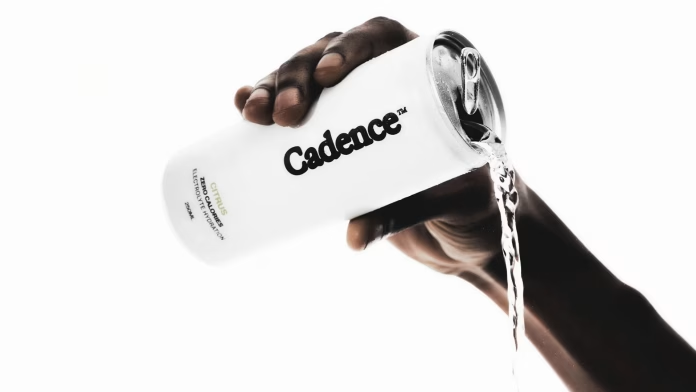
P&G Acquires Clean Digestive Health Brand Wonderbelly to Expand OTC Wellness Portfolio

0

Procter & Gamble has acquired clean digestive health brand Wonderbelly in a deal whose financial details have not been disclosed, according to a LinkedIn post shared by the company. The acquisition marks P&G’s latest move to strengthen its presence in the fast-growing over-the-counter wellness and digestive care segment, where consumer demand is increasingly shifting toward cleaner formulations and transparent ingredient labels.

Founded in 2023 by brothers Lucas Kraft and Noah Kraft, Wonderbelly entered the market with a clear proposition: modern, clean-label alternatives to legacy digestive remedies such as antacids and gas relief products. In a category long dominated by brightly coloured, synthetic-heavy formulations, the brand differentiated itself through products that are non-GMO and free from dyes, artificial sweeteners, and titanium dioxide, an additive that has drawn regulatory and consumer scrutiny globally.

Despite being a relatively young company, Wonderbelly scaled rapidly across major US retail channels. Its digestive health products are stocked at large-format and pharmacy retailers including Walmart, Target, CVS, and Kroger, giving the brand nationwide visibility within a short period of time. The retail footprint, combined with its focus on everyday digestive concerns, helped position Wonderbelly as a credible challenger in the OTC space.

The startup had attracted backing from a roster of consumer and growth-focused investors, including Loft Growth Partners, Silas Capital, Elizabeth Street Ventures, AF Ventures, and L Catterton, among others. The participation of established consumer investors underscored confidence in the brand’s positioning and its ability to disrupt a traditionally conservative category.

For Procter & Gamble, the acquisition aligns with its broader strategy of expanding into premium and wellness-oriented segments within personal health care. By bringing Wonderbelly into its portfolio, P&G gains access to a younger brand with modern aesthetics, clean formulations, and strong retail traction, at a time when shoppers are increasingly questioning ingredient safety and efficacy.

While neither company has shared integration plans, the deal signals continued consolidation in the digestive health market, as global FMCG players look to acquire innovation rather than build it from scratch.

Advertisement

Haldiram’s Appoints Rajiv Singh as VP Marketing & Growth to Accelerate QSR Expansion

0

Haldiram’s has made a senior leadership addition as it scales up its quick service restaurant ambitions, appointing Rajiv Singh as Vice President and Head of Marketing and Growth for its QSR business. The move signals the company’s intent to sharpen brand visibility, accelerate store-led growth and deepen consumer engagement across India’s rapidly expanding organised food services market.

Singh brings more than ten years of experience spanning FMCG, retail, direct-to-consumer and food technology businesses. Before joining Haldiram’s, he was part of ITC’s food-tech and cloud kitchen venture, where he helped shape the company’s entry into emerging digital food formats and contributed to building its early growth engine. His career also includes stints at Happilo International, Blackberrys Menswear, Cheil Worldwide, Spencer’s Retail and Intex Technologies, where he worked across brand strategy, digital marketing, retail expansion and strategic partnerships.

Over the years, Singh has built a reputation for operating at the intersection of legacy consumer brands and new-age platforms. His work has covered brand positioning, consumer acquisition, D2C growth models, omnichannel marketing, portfolio planning and new product launches. This blend of experience is expected to support Haldiram’s as it balances its heritage brand equity with the demands of a modern QSR customer.

The appointment comes at a critical phase for Haldiram’s, which has been increasing its focus on the QSR format alongside its core packaged foods business. The organised QSR market in India has been growing steadily, driven by urbanisation, higher discretionary spending and changing eating habits. Industry estimates suggest the segment will continue to expand at a healthy pace over the next few years, attracting both domestic and global players.

With Singh leading marketing and growth, Haldiram’s is expected to place stronger emphasis on consumer-led innovation, digital-first outreach and scalable store expansion. The company aims to leverage its strong brand recall while building a sharper, more contemporary QSR identity suited to India’s evolving food service landscape.

Advertisement

Giva in Advanced Talks to Raise ₹150–200 Crore at Up to ₹4,400 Crore Valuation

0

Silver jewellery brand Giva is in the final stages of closing a fresh funding round of ₹150 to ₹200 crore, a deal that is set to value the company between ₹4,200 crore and ₹4,400 crore, according to people familiar with the matter. The round is being led by existing backers Premji Invest and Creaegis, with participation from Titan Capital and Kenro Capital.

The transaction includes both primary capital infusion and a secondary share sale. While the primary portion will provide growth capital to the company, the secondary component will see partial exits by early investors. Growth equity firm A91 Partners, which backed Giva in 2021, is understood to be trimming its stake as part of the transaction. The secondary sale is being anchored by Kenro Capital, a secondaries-focused fund launched in 2024 by former Peak XV Partners executive Piyush Gupta and ex-TR Capital director Norbert Fernandes. This portion values the business at an estimated ₹3,800 to ₹3,900 crore, reflecting the customary discount seen in secondary transactions.

Giva last raised capital in June 2025, securing ₹530 crore in a round led by Creaegis that valued the company at ₹4,000 crore. Sources indicate the company is already preparing for a larger fundraise of ₹550 to ₹600 crore, which could be concluded over the next few months.

Founded in 2019 by Ishendra Agarwal and Nikita Prasad, Giva began as a direct-to-consumer silver jewellery brand and has since expanded into 14-carat and 18-carat gold jewellery, along with lab-grown diamond offerings. The brand operates at the intersection of fashion and fine jewellery, a segment that continues to see growing consumer interest.

Giva is expected to post revenue of ₹800 to ₹850 crore in FY26, marking a growth of over 50 percent from FY25, when it reported ₹518 crore in revenue. While losses widened to ₹72 crore last year, the company remains one of the fastest-growing players in India’s increasingly competitive D2C jewellery market.

Advertisement

WellBe Foods Launches Millet-Based Snacks to Expand Healthy Snacking Portfolio

0

WellBe Foods has widened its product play in the healthy snacking space with the launch of a new millet-based snack range, signalling a sharper push toward traditional grains adapted for modern consumption. The direct-to-consumer brand, part of the Nimida Group, is betting on familiarity and convenience to bring millets back into everyday diets.

The newly introduced portfolio includes millet versions of popular Indian snacks such as nippatu, kodbale, chakli, tengolu and chivda. Rather than positioning these as niche health products, the company has focused on retaining familiar taste and texture while replacing refined flour with a blend of rice flour and millets. Kodo millet, a naturally gluten-free grain known for its nutritional profile and ease of digestion, forms the core of the range.

Millets have gained renewed attention in India for their health benefits and climate resilience, but their adoption at scale has been limited. One of the key challenges has been the time and skill required to cook them in everyday kitchens. By integrating millets into ready-to-eat snack formats, WellBe is attempting to remove that friction and make healthier grains accessible without altering eating habits.

Gaurav Manchanda, Founder and Director of WellBe Foods, said the idea was to modernise traditional foods rather than reinvent them. According to him, Indian consumers are more likely to adopt healthier ingredients when they appear in formats they already enjoy and trust. The company believes this approach can help bridge the gap between nutrition and indulgence, especially in the snacking category.

The launch also reflects broader shifts in consumer behaviour, with increasing demand for clean-label products made without artificial additives. WellBe has positioned the new range around simple ingredients and transparency, aligning with its larger brand promise of minimally processed foods.

Looking ahead, the company plans to extend its millet-focused innovation beyond snacks. It is exploring new categories, including millet-based beverages such as millet milk, as part of a longer-term strategy to build a diversified portfolio around traditional grains.

The millet snack range will be sold through WellBe’s website, major e-commerce platforms, modern retail chains and general trade outlets. The brand also plans to expand distribution in Tier 2 and Tier 3 markets, where demand for affordable and healthier packaged foods continues to rise.

Advertisement

Scandalous Foods posts 264% revenue jump in CY25 as restaurant partnerships drive rapid expansion

0

Scandalous Foods reported a sharp acceleration in growth during calendar year 2025, posting a 264 percent year on year increase in revenue as it deepened its presence across India’s organised food service market. The Mumbai based dessert brand attributed the surge to its technology driven operating model and growing partnerships with mid sized and legacy restaurants in major cities, particularly Mumbai and Bengaluru.

Rather than positioning itself as a consumer facing sweets brand, Scandalous Foods has increasingly operated as a backend solutions provider for restaurants. Its focus has been on solving long standing operational issues that affect dessert consistency and profitability. These include high wastage, dependence on skilled confectioners, variable portion sizes and short shelf life. By offering frozen, portion controlled desserts with a shelf life of up to six months, the company enables restaurants to standardise output while reducing labour pressure and improving margins.

During CY25, the company expanded its portfolio to cater to different food service formats. It rolled out single serve dessert portions for quick service outlets, bulk packs designed for catering and banquets, and limited period mithai based sundaes aimed at seasonal demand. These formats are designed to be thawed on demand, helping restaurants manage inventory more efficiently while adding a high margin dessert option to their menus.

Founder Sanket S said the company’s shift in approach was deliberate. Instead of focusing on selling sweets, the brand focused on solving execution and supply chain challenges for restaurant operators. He noted that many established neighbourhood and legacy restaurants have strong demand but struggle to maintain consistency at scale, an issue the company’s preservative free frozen products are designed to address.

Looking ahead, Scandalous Foods plans to expand its footprint significantly, targeting an increase from around 2,400 touchpoints to nearly 12,000 in the next phase of growth. The roadmap includes launching smaller 55 gram dessert formats, strengthening cold chain infrastructure and exploring overseas markets. The company sees its growth as part of a broader shift toward formalising traditional Indian dessert categories through food technology and scalable infrastructure.

Advertisement

Balaji Wafers Secures Strategic Investment From General Atlantic to Fuel National Expansion and Innovation

0

Balaji Wafers, one of India’s largest homegrown snack companies, is set to bring in global private equity major General Atlantic as a strategic investor, marking a defining moment in the Gujarat-based firm’s four-decade journey. The company has signed definitive agreements for the investment, with the transaction expected to be completed later in 2026, subject to regulatory approvals.

While the companies have not officially disclosed financial details, industry sources had earlier indicated that General Atlantic is likely to acquire around a 7 percent stake for approximately ₹2,500 crore. This would value Balaji Wafers at close to ₹35,000 crore, placing it among the most valuable packaged food companies in the country.

The partnership is aimed at strengthening Balaji’s corporate capabilities and accelerating product and market expansion. With General Atlantic’s experience across global food and consumer brands, Balaji plans to scale beyond its traditional strongholds and deepen its national footprint. The company currently dominates the organised salty snacks market in Gujarat, Maharashtra and Rajasthan, where it commands nearly 65 percent share across categories such as potato chips, namkeen and bhujia.

Founded in 1982 by Chandubhai Virani, Balaji Wafers began as a small snack supply business in a Rajkot cinema hall. Today, it has grown into India’s third largest salty snack brand, behind only Haldiram’s and PepsiCo. In the last financial year, the company reported revenues of around ₹6,500 crore and net profits of nearly ₹1,000 crore.

Balaji’s growth has been driven by a tightly controlled, low-cost operating model. The company spends roughly 4 percent of its revenue on advertising, significantly lower than the industry average, allowing it to reinvest in manufacturing and pricing efficiency. It currently operates four manufacturing facilities and plans to double capacity as part of its expansion strategy.

General Atlantic’s India head Shantanu Rastogi said the firm sees strong long-term opportunity in India’s packaged snacks market, driven by demand for affordable and convenient food products. Balaji had previously attracted interest from several global strategics and private equity firms, though valuations remained a key hurdle. With this deal, the company is positioning itself for its next phase of growth on a national scale.

Advertisement

Dhun Wellness Raises $4 Million to Expand Luxury Urban Wellness Network Across India

0

Luxury urban wellness brand Dhun Wellness has raised $4 million in fresh funding as it prepares to scale its footprint across major Indian cities and deepen its focus on preventive and longevity-led healthcare. Founded by entrepreneur Mira Kapoor, the Mumbai-based venture is positioning itself to build what it describes as India’s first integrated luxury wellness ecosystem designed specifically for urban consumers.

The funding round drew participation from a mix of prominent Indian family offices and individual investors. Backers include SRF Ltd from the Kama Group, Havells India through QRG Investment & Holdings, and Arushi Aayush Agrawal of Inspira Global. The round also saw investments from angel investors such as Saama Capital’s Ash Lilani, Timmy Sarna, Tracxn cofounder Abhishek Goyal, Sunil Punjabi and Kaushik Deva. Sanjay Kapoor of Genesis led the round.

The capital infusion will be deployed toward geographic expansion and capability building. Dhun Wellness plans to open its next flagship centre in Delhi, followed by launches in Pune, Hyderabad, Bengaluru and Ahmedabad over the coming phases. Alongside physical expansion, the company intends to develop a dedicated longevity vertical that focuses on preventive care, personalised wellness programs and evidence-based interventions aimed at long-term health outcomes.

Dhun Wellness operates at the intersection of traditional healing practices and contemporary wellness science. Its offerings blend age-old therapeutic systems with modern diagnostics and longevity technologies, catering to an urban audience that is increasingly seeking structured, premium and science-backed wellness solutions.

Commenting on the expansion, founder Mira Kapoor said urban lifestyles are driving a shift in how wellness is perceived, moving beyond reactive care toward prevention and long-term vitality. She noted that the company’s approach is centred on making wellness both refined and personal, without diluting clinical depth.

India’s organised wellness market has been expanding steadily, driven by rising disposable incomes, greater health awareness and growing interest in preventive care. With fresh capital and a city-led expansion strategy, Dhun Wellness is looking to carve out a distinct position in the premium urban wellness segment while scaling its model across multiple metros.

Advertisement

Cumin Co Raises $5 Million Pre-Series A Led by Fireside Ventures to Scale D2C Kitchenware Business in India

0

Gurugram based direct to consumer kitchenware startup Cumin Co has raised $5 million, or roughly ₹41.5 crore, in a pre Series A funding round as it looks to scale its product and distribution footprint across India. The round was led by Fireside Ventures, with participation from Huddle Ventures and Alteria Capital, according to people familiar with the development.

The funding also drew interest from a group of angel and strategic investors, including Atrium Angels, Mokobara cofounders Sangeet Agrawal and Navin Parwal, Tracxn cofounder Abhishek Goyal, along with other founders and operators from the consumer and startup ecosystem.

Founded in 2024 by Niharika Joshi and Udit Lekhi, Cumin Co operates in the fast growing premium kitchenware segment. The company designs and manufactures a range of products spanning cookware, bakeware and everyday kitchen tools, positioning itself as a modern, design led alternative to traditional kitchen brands. The startup currently offers over 100 stock keeping units through its own website and digital channels.

The fresh capital will be deployed across multiple areas of the business, with a strong focus on building long term product differentiation. The company plans to invest significantly in research and development to expand its product portfolio and improve material innovation and usability. Alongside this, Cumin Co is looking to widen its distribution reach beyond its current online presence and strengthen brand visibility.

Talent acquisition is another key priority, as the startup looks to build deeper capabilities across design, supply chain, marketing and operations. Joshi said the company is focused on creating a strong foundation rather than chasing rapid scale, with investments planned across product expansion, channel growth, brand building and team development.

The funding comes at a time when Indian consumers are increasingly upgrading to higher quality, design focused kitchen products, creating opportunities for new age homegrown brands to challenge legacy players.

Advertisement

India Enters Smirnoff’s Global Top Five as Diageo’s Minty Jamun Fuels Growth

0

India has emerged as one of Smirnoff’s five largest global markets, underscoring the growing importance of the country within Diageo’s international spirits portfolio. The milestone has been driven largely by strong consumer response to locally developed flavoured variants, most notably Minty Jamun, which has reshaped the growth trajectory of the Smirnoff brand in India.

Speaking to analysts after the company’s latest quarterly results, Diageo India Chief Executive Praveen Someshwar said flavour-led innovation tailored to Indian tastes has played a decisive role in expanding the brand’s footprint. He noted that Minty Jamun has not only accelerated volumes for Smirnoff but has also lifted performance across Diageo’s broader whites portfolio, validating the company’s India-first product strategy.

The update came alongside Diageo India’s October to December performance, which the company described as steady despite regulatory and pricing pressures in key states. Excluding Maharashtra, where policy changes have disrupted parts of the liquor market, the company’s prestige and above portfolio posted volume growth of around 6 percent during the quarter, while net sales value rose 14 percent. Adjusting for a one-off retail pipeline build-up in Andhra Pradesh in the previous year, volumes in this segment were largely stable.

Someshwar pointed out that pressure in Maharashtra has been most pronounced in lower-priced categories, following the introduction of locally produced spirits at more affordable price points. This, he said, has intensified competition at the bottom end of the market while supporting a healthier national price mix, which stood at roughly 10 percent for the quarter.

To protect share, Diageo India has increased focus on sharper pricing, smaller pack formats and in-market activation for mass brands such as McDowell’s and Royal Challenge. Looking ahead, the company remains cautiously positive on demand trends, citing early signs of improving consumer spending and seasonal uplift. Diageo also expects potential benefits from the India UK free trade agreement to begin reflecting in financials later in the year, once existing inventory cycles normalise.

Advertisement

Healthy Master Targets ₹500 Cr Revenue in Five Years, Bets Big on Quick Commerce and Global Expansion

0

Bengaluru-based healthy snacking brand Healthy Master is charting an aggressive growth path, aiming to build a ₹500 crore business over the next five years by leaning into quick commerce and overseas markets while maintaining profitability.

Founded in 2019, the bootstrapped startup has seen its scale accelerate sharply over the past year. The company closed FY25 with revenue of ₹9.23 crore and expects this to more than double to ₹20 crore in FY26. Revenue is projected to reach ₹40 crore in FY27 and about ₹75 crore by FY28, translating into near triple-digit annual growth, according to cofounder and CEO Tarun Agrawal.

A key driver of this momentum is quick commerce, which already contributes nearly half of Healthy Master’s sales. That share is expected to rise to 60 percent in the near term and as much as 75 percent over the next year. The brand is present across major rapid-delivery platforms including Blinkit, Zepto, Swiggy Instamart, Flipkart Minutes, Amazon Now, BigBasket and FirstClub. Since its nationwide rollout in January 2025, monthly orders have climbed to around 75,000, growing at roughly 20 percent month on month.

Despite operating in a price-sensitive snacking category, Healthy Master has stayed profitable. It ended FY25 with an EBITDA margin of about 7 percent and currently reports 8 to 10 percent margins on quick commerce channels, supported by gross margins of roughly 65 percent. To broaden its consumer base, the company has introduced ₹30 snack packs as portion-controlled options, alongside a portfolio of more than 250 SKUs, with baked and non-fried products seeing the strongest traction online.

Offline expansion is being approached cautiously. After earlier challenges with returns and delayed payments, the company is prioritising organised retail over general trade. Products are already available on DMart Ready in Bengaluru, with discussions underway with chains such as DMart and Reliance Freshpik.

International markets form the next leg of growth. Following its entry into the US, Healthy Master plans launches in Singapore, Dubai, Canada and the UK, with a presence targeted across eight to ten countries by the end of 2025. To support this phase, the company is preparing to raise about ₹3 crore in its first external funding round, earmarked for inventory, product development and selective brand building.

Advertisement