Home Blog

Start following Kiara Advani’s simple yet powerful morning ritual for glowing skin

Have you ever stopped to marvel at Kiara Advani’s radiant and flawless skin? In the exquisite glamour that is Bollywood, Kiara Advani stands out not just for her acting genius but also for her luminous and healthy skin. Amidst the overwhelming myriad of options surfaced by the beauty industry, this simple yet transformative ritual is not only a fad, but the cornerstone of her radiance.


The secret might be simpler than you think. It’s not a gruelling workout or a 10-step skincare routine; it’s a simple cup of warm water, with a slice of lemon in it. Kiara’s morning habit of indulging in warm water infused with the zest of fresh lemons has become a conscious choice rooted in her approach to holistic well-being. The actress recommends this refreshing elixir not only for its skin-enhancing benefits but also for the multiple benefits it has in improving your overall health and vitality.  

 

Hansa Yogendra, Director of The Yoga Institute in one of her videos on the health benefits of lemons mentioned, “Drinking one glass of lemon water every day in the morning will benefit you for a lifetime”.  Her claim can further be supported by a research published in the Journal of Science and Technology which reveals that “It is a healthy appetiser and helps to treat diseases with digestive aids. Lemon does not disclose any adverse effects, according to literature, but it is used all over the world as a traditional medicine”. Vitamin C, which is abundantly present in lemons, fights toxins and increases collagen production in the body, both of which help in treating acne as well as tightening the skin and reducing fine lines and wrinkles. While lemons are famously known for their Vitamin C component, not many people are aware of their Potassium-rich skin, which is an important mineral for nervous stimulation as well as maintaining blood pressure. Here are a few more benefits of adding lemon water to your everyday diet:- 

  • Immediately soothes muscle cramps
  • Peptin in lemons makes us feel fuller, thereby, helping in weight loss
  • Boosts immunity by stimulating the production of White Blood Cells in the body
  • Removal of kidney stones 
  • The lemon peel when infused in water for 30 minutes, activates its bioactive compounds which boost immunity and prevent our bodies from cellular damage
  • It also helps in the release of digestive enzymes which help in better absorption of nutrients

 

This simple kitchen hack has proudly made its way into the celebrity wellness circuit. Not only Kiara Advani but also Alia Bhatt, Deepika Padukone, Kriti Sanon, and Malaika Arora have this one drink in common at the break of dawn.

Here are 3 ways, you can incorporate the lemon water glow into your morning routine:- 

  1. Warm ginger lemon tea- Boil a glass of water with crushed ginger. When its done, squeeze a lemon into your glass and have it warm. To enjoy it in place of your morning tea, you may add a teaspoon of honey to it.

2. Ginger lemon shot – Take an inch of ginger root, and one squeezed lemon. Add enough water to blend it (3-4 tablespoons) in a blender, and have it as a morning shot.

3. Lemon-infused detox water- Cut up slices of one lemon and add it to your water bottle. Have 1-2 glasses of lemon water in the morning, and keep having the rest throughout the day. 

While lemon water offers a myriad of health benefits, it’s crucial to exercise moderation. One lemon a day is a healthy limit, and people with gastroesophageal reflux disease should be cautious about excessive lemon juice intake. As with any dietary rituals, balance is key to ensuring you enjoy the advantages without overdoing it. 
Sunny Beaches Gains Rapid Traction in Karnataka with 3% Market Share

0

Homegrown beer brand Sunny Beaches, backed by SOM Group’s Woodpecker Distilleries and Breweries, is quickly emerging as a strong challenger in Karnataka’s competitive beer market, capturing over 3% market share within a short span of its launch. The brand sold more than 12 lakh bottles in February 2026 alone, reflecting strong early traction and consumer acceptance across key cities such as Bengaluru, Mangalore, and Mysore. With a presence in over 8,000 outlets—including bars, wine stores, clubs, and premium retail formats—Sunny Beaches has already reached more than one million consumers and is now aiming to expand its distribution network to 11,000–12,000 outlets ahead of the peak summer season.

The brand’s rapid growth is being driven by its value-led premium positioning, offering a competitive price point that sits between mass and premium segments. Priced at ₹100 for a 650 ml bottle, ₹90 for a 500 ml can, and ₹65 for a 330 ml pint, Sunny Beaches is targeting consumers seeking an elevated experience without a significant price premium. In addition to pricing, the company is focusing on product innovation to enhance consumer engagement, including a thermochromic “chill indicator” that signals the ideal serving temperature, adding a differentiated touch to the drinking experience.

According to company executives, strong repeat purchases and outlet-level reorder trends indicate that the brand’s appeal extends beyond initial trials, pointing to sustained demand driven by taste, balance, and drinkability. Building on this momentum, the company has also introduced Sunny Beaches Strong Premium Beer to cater to Karnataka’s dominant strong beer segment, further broadening its consumer base and reinforcing its position in the market.

Advertisement

DailyObjects Eyes ₹1,000 Cr Milestone with Aggressive Retail Expansion and D2C Strength

0

Design-led tech accessories brand DailyObjects is charting an ambitious growth trajectory, targeting ₹1,000 crore in revenue over the next three years while planning to expand its offline footprint to 150 stores within four years. Founder and CEO Pankaj Garg revealed that the company is currently operating at an annual revenue run rate (ARR) of ₹320–330 crore and expects to close FY27 at around ₹400 crore in net revenue, as it continues to scale rapidly across both online and offline channels.

The brand, which has been growing at nearly 100% year-on-year, reported ₹115 crore in revenue in FY25 and is projecting ₹230–240 crore for FY26. Alongside topline growth, DailyObjects is also focusing on profitability, with plans to achieve EBITDA positivity of around 5% in FY26 and scale margins to 15–20% over the next four to five years. This dual focus on growth and profitability reflects a more disciplined approach compared to earlier D2C expansion models.

A key pillar of DailyObjects’ strategy remains its strong direct-to-consumer (D2C) backbone, which currently contributes nearly 70% of total sales. The company expects this share to remain stable over the coming years, highlighting its ability to build a loyal customer base through owned channels. At the same time, it is rapidly strengthening its offline presence, having opened nine exclusive brand outlets (EBOs) in the past few months, all of which have reportedly been profitable from the first month of operations. With around 20 additional stores already in the pipeline, the company is accelerating its retail rollout across high-footfall locations such as malls and IT parks.

Beyond its own stores, DailyObjects has also expanded into approximately 300 Apple Authorised Reseller (APR) outlets, a channel it entered recently and plans to double in the next two to three months. The brand’s retail strategy is focused on the top 20 cities, while also tapping into strong demand from Tier 2 and Tier 3 markets, which already contribute 40–45% of its overall sales. Store economics remain tightly controlled, with an ideal store size of 1,000–1,200 sq. ft. and capital expenditure ranging between ₹6,000–7,000 per sq. ft.

On the product front, DailyObjects is doubling down on its core categories—tech accessories, bags, and work essentials—rather than diversifying aggressively. Technology products contribute around 45% of revenue, followed by bags at over 40%, while the remaining share comes from work essentials. The company has built a strong product moat through 100% in-house design and a focused portfolio of around 50 core SKUs, enabling tighter control over quality and brand differentiation.

Manufacturing is another key strength, with 80–90% of its bags produced in-house at a 60,000 sq. ft. facility in Gurugram. The unit has a monthly production capacity of 80,000–100,000 units and is already operating at high utilisation levels, ensuring scalability while maintaining cost efficiencies.

Financially, the company has raised approximately $12 million to date and has diluted around 50% equity, leaving it well-capitalised for the near term. Any future fundraising is expected to be strategic, with a cautious approach toward dilution. Looking ahead, DailyObjects also harbours global ambitions, with offline expansion and international markets expected to play a crucial role in its next phase of growth.

As part of its growth engine, the brand continues to leverage its flagship promotional event, the Half Price Sale (HPS), which has historically delivered significant spikes in demand. The latest edition is expected to drive up to a 15x increase in revenue compared to regular business levels, with strong traction from both new and repeat customers.

With a balanced strategy combining D2C strength, offline expansion, disciplined product focus, and operational efficiency, DailyObjects is positioning itself to evolve from a niche accessories brand into a large-scale, globally relevant consumer brand from India.

Advertisement

Laani Raises ₹9.1 Cr to Build a High-Performance Personal Care Brand for Modern India

0

Personal care startup Laani has secured ₹9.1 crore in a pre-seed funding round led by V3 Ventures and Saama Capital, as it sets out to disrupt India’s body care segment with a focus on high-performance, functional products. The round also saw participation from a strong lineup of industry leaders and angel investors, including Arjun Purkayastha, Manish Taneja, Kunal Bahl, and Dr. Aneesh Sheth, reflecting growing investor confidence in emerging, innovation-led personal care brands in India.

Founded in 2024 by Nirja Bhatt, a Harvard Business School alum, Laani is entering the market with a clear proposition—building high-performance personal care solutions designed specifically for Indian consumers, taking into account local climate conditions, skin types, and evolving lifestyle needs. At a time when the broader beauty and personal care industry is witnessing rapid premiumisation and increased consumer awareness, Laani is positioning itself at the intersection of efficacy, convenience, and modern formulation science.

The company’s strategy is deeply rooted in consumer insights. Prior to launch, Laani conducted extensive research involving over 500 women to identify key gaps in the existing body care market. The findings pointed to a consistent dissatisfaction with current products, particularly around effectiveness, ease of use, and suitability for Indian weather conditions, where heat, humidity, and pollution often reduce product performance. This insight-led approach is shaping the brand’s product development philosophy, ensuring that innovation is not just cosmetic but functional and outcome-driven.

Laani’s debut product, a Clear Deodorant Stick, reflects this thinking. In a category largely dominated by roll-ons and aerosol sprays, the brand has introduced a format-led innovation designed to offer up to 24-hour odour protection while eliminating common pain points such as residue, stickiness, and stains on clothing. By rethinking both formulation and delivery format, Laani aims to elevate everyday personal care routines into more effective and user-friendly experiences.

The fresh capital will be strategically deployed across three core areas: brand building, research and development, and portfolio expansion. On the branding front, Laani plans to invest in building a strong, differentiated identity that resonates with young, urban consumers who are increasingly seeking performance-driven products rather than purely cosmetic benefits. In parallel, the company is doubling down on R&D to develop a pipeline of innovative offerings across adjacent categories within body care, potentially expanding into areas such as hygiene, skin maintenance, and functional grooming.

This funding also comes at a time when India’s personal care market is undergoing a structural shift. Consumers are moving away from legacy, mass-market products toward science-backed, ingredient-led, and performance-oriented brands. The rise of D2C channels, quick commerce platforms, and digital-first discovery has further enabled new-age brands like Laani to scale faster and engage directly with consumers. Investors are increasingly backing startups that can combine strong product innovation with sharp consumer positioning, a space where Laani appears to be gaining early traction.

Speaking on the vision, founder Nirja Bhatt emphasised that the goal is not just to participate in the market but to redefine how personal care products are perceived and used. The brand aims to create solutions that seamlessly integrate into modern routines while delivering measurable results, addressing both functional needs and lifestyle aspirations.

Looking ahead, Laani’s roadmap includes expanding its product portfolio, strengthening its digital presence, and building a loyal consumer base through consistent innovation and performance delivery. As competition intensifies in India’s beauty and personal care landscape, the company’s success will likely depend on its ability to maintain product differentiation, consumer trust, and operational agility.

With a strong founding vision, early investor backing, and a clear focus on solving real consumer problems, Laani is positioning itself as a next-generation personal care brand—one that goes beyond aesthetics to deliver tangible performance in a market that is rapidly evolving.

Advertisement

Flipkart CFO Sriram Venkataraman Steps Down Ahead of IPO Push

0

Flipkart is set to see a key leadership transition as its Group CFO Sriram Venkataraman steps down after nearly a decade with the company, amid preparations for a highly anticipated initial public offering (IPO). Venkataraman, who joined the Walmart-owned firm in 2015, will exit over the coming months, with the company yet to name a successor. As part of its IPO readiness, Flipkart has appointed Nishant Verman as senior vice president to support the transition and public listing efforts.

The leadership change comes at a pivotal moment for Flipkart as it restructures its corporate framework, including a reverse flip of its domicile from Singapore back to India, a move aligned with its IPO ambitions. The restructuring involves merging multiple Singapore-based entities into Flipkart Internet Private Limited, including key business arms such as Ekart, Myntra, Cleartrip, Flipkart Health, and its fintech platform Super.money. Originally founded by Sachin Bansal and Binny Bansal, Flipkart had shifted its holding structure to Singapore in 2011 to access global capital, a strategy now being reversed as it gears up to list in India.

The exit of a long-time finance leader during such a critical phase underscores the scale of transformation underway at Flipkart, as it aligns its leadership, structure, and operations to transition from a private ecommerce giant into a publicly listed company.

Advertisement

L’Oréal Eyes ₹4,000 Cr Innovist Deal to Reignite India Growth

0

L’Oréal is in advanced discussions to acquire a majority stake in Innovist, the parent company behind digital-first brands like Bare Anatomy, Chemist at Play, and Sunscoop, in a deal reportedly valued at around ₹4,000 crore. The potential acquisition reflects a strategic shift by L’Oréal to strengthen its position in India’s rapidly evolving beauty market, particularly as competition intensifies and growth momentum slows.

The move comes at a critical juncture for L’Oréal’s India business, which has seen sales growth moderate to around 5% in FY25, compared to 14% in FY24 and nearly 30% in previous years. Under the leadership of CEO Jacques Lebel, the company is under pressure to regain market share and accelerate growth in a market long considered a key expansion driver. Globally, CEO Nicolas Hieronimus has also acknowledged that India has not met expectations, further underscoring the urgency behind this strategic push.

Founded in 2018 by Rohit Chawla, Sifat Khurana, and Vimal Bhola, Innovist operates a house-of-brands model focused on science-backed personal care products, with a strong presence across e-commerce and quick commerce platforms. The company has demonstrated rapid growth, reporting a 182% jump in revenue to ₹301 crore in FY25 while turning profitable with a net profit of ₹12.5 crore, compared to a loss in the previous year.

The potential deal highlights a broader trend in the beauty industry, where global giants are increasingly acquiring digital-native, high-growth brands to stay relevant with younger, online-first consumers. For L’Oréal, acquiring Innovist could provide not just scale but also access to agile product innovation, data-driven marketing, and stronger traction in emerging channels like quick commerce.

If finalised, the acquisition could mark one of the most significant bets by a global beauty major on India’s D2C ecosystem—signaling that the next phase of growth in the country’s beauty market will be driven by digital-first brands, premiumisation, and consumer-centric innovation.

Advertisement

Pinq Polka Raises ₹4 Cr from IPV as Revenue Surges 19X to ₹20 Cr

0

Innerwear and shapewear brand Pinq Polka has secured ₹4 crore in a Pre-Series A funding round led by Inflection Point Ventures, as it looks to accelerate its expansion in the fast-growing intimate wear segment. The Faridabad-based startup plans to deploy the capital towards scaling marketing efforts for its shapewear category, strengthening its core team, and supporting working capital requirements. Founded in 2017 by Manveen Ssharma, the brand has delivered a strong ~19X growth over the past three years, with revenue rising from ₹1.22 crore to ₹20 crore, driven by a focus on research-led product design, innovation, and a robust supply chain. After gaining visibility through Shark Tank India Season 4, Pinq Polka is positioning itself as a comfort-first brand in a category witnessing a clear shift towards better fit, functionality, and everyday wearability. With India’s lingerie and intimate wear market currently valued at around ₹50,000 crore and projected to reach ₹90,000 crore by 2030–31, the company aims to capitalise on rising demand, particularly in high-growth sub-segments like shapewear and comfort wear.

Advertisement

Sazerac Scoops Up Dirty Shirley to Strengthen Its RTD Playbook

0

Global spirits giant Sazerac Company has acquired Austin-based RTD brand Dirty Shirley, marking a strategic push into nostalgia-driven, high-growth ready-to-drink cocktails. The deal, announced on March 19, 2026, underscores Sazerac’s ambition to deepen its presence in the fast-expanding RTD segment while diversifying beyond its traditional whiskey-heavy portfolio.

Founded by Adam Kost, Dirty Shirley rose rapidly by reinventing the classic Shirley Temple into a vodka-based adult beverage, tapping into a powerful mix of childhood nostalgia and modern convenience. The brand witnessed a breakout moment in 2024, recording a staggering 934% year-on-year sales growth and scaling distribution to over 3,500 retail outlets, including major chains like Target, Walmart, and Total Wine. Its clean, less-syrupy flavor profile helped it stand out in a crowded RTD market increasingly dominated by overly sweet offerings.

The acquisition fits into Sazerac’s broader expansion strategy, which has seen the company aggressively build a multi-category alcohol portfolio spanning RTDs, vodka, and premium spirits. Recent moves include acquiring BuzzBallz in 2024, adding scale in single-serve cocktails, and bringing SVEDKA Vodka and Western Son Vodka into its portfolio to strengthen its position in the vodka category. Alongside legacy labels like Buffalo Trace and Fireball, the company is now building a more balanced portfolio aligned with evolving consumer preferences.

For Sazerac, Dirty Shirley fills a critical gap—a playful, lifestyle-driven RTD brand that resonates strongly with Millennials and Gen Z consumers. The company is expected to leverage its global production and distribution capabilities to scale the brand efficiently, potentially transforming it from a U.S.-centric success into an international player.

As the RTD category continues to blur the lines between spirits, convenience, and culture, Sazerac’s latest acquisition signals a clear shift: growth in the alcohol industry is increasingly being driven not just by heritage, but by relevance, storytelling, and ready-to-drink innovation.

Advertisement

DryWater Eyes $100M Milestone as It Scales the “Next Liquid I.V.” Playbook

0

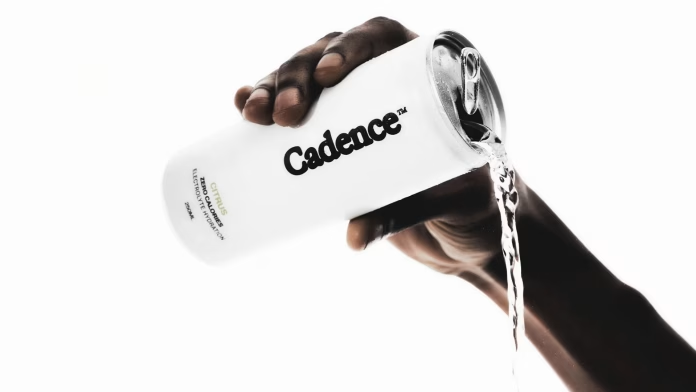
Emerging hydration brand DryWater is rapidly scaling its presence in the competitive functional beverage market, with projections to reach $100 million in sales by the end of 2026—drawing comparisons to category leader Liquid I.V., now part of Unilever.

Founded in 2024 by Bryan Appio, the startup is transitioning from a D2C-led brand into a mass retail player, with an ambitious plan to expand into over 41,000 retail doors. The rollout includes launches across major chains like Target, Kroger, CVS, and The Vitamin Shoppe, building on early traction in Walmart and Walgreens.

To support this growth, DryWater has significantly scaled its operations, moving into a larger 17,900 sq. ft. headquarters in Irvine, reflecting its rapid expansion from startup to national contender.

At the product level, DryWater is differentiating itself with a clean-label, sugar-free hydration formula powered by its proprietary IsoCell Technology. Unlike many competitors that rely on sugar for nutrient transport, the brand uses natural sweeteners like stevia and monk fruit while incorporating real fruit bases (such as strawberry, mango, and peach). Each serving contains a blend of electrolytes, vitamins, and amino acids, targeting what the company calls “complete cellular hydration.”

The brand recently achieved NSF Certified for Sport status, opening doors to professional athletic partnerships, including its role as a founding partner of League One Volleyball—signaling a strong push into performance and sports-driven marketing.

Industry observers see clear parallels between DryWater and Liquid I.V.’s early trajectory: both leveraged D2C traction before rapidly scaling into big-box retail, with a strong focus on functional benefits and lifestyle branding. However, DryWater is betting on zero-sugar formulations and clean-label positioning as its key differentiators in a more evolved market.

Beyond retail expansion, the company is also targeting underserved segments like women’s sports and wellness-focused consumers, aligning with broader shifts toward performance nutrition and lifestyle hydration.

As the global hydration category continues to blur the lines between sports drinks, supplements, and wellness products, DryWater is positioning itself as a next-generation challenger brand—combining scale ambitions with a clean, science-backed narrative.

Advertisement

Kelly Slater’s Freaks of Nature Enters Functional Hydration with “Inside-Out” Sun Care

0

Performance skincare brand Freaks of Nature, co-founded by surfing legend Kelly Slater, has expanded into ingestible wellness with the launch of its Skin Support Electrolyte, marking its entry into the fast-growing functional beverage space.

The move signals a strategic shift from topical skincare to “inside-out” skin protection, targeting consumers who want hydration products that go beyond basic electrolyte replenishment. Positioned at the intersection of sports performance and beauty-from-within, the product is designed to support skin health under environmental stress such as sun exposure, heat, and endurance activity.

Unlike traditional electrolyte drinks that focus primarily on hydration minerals, the formula incorporates a blend of antioxidants and botanical extracts aimed at internal photoprotection. Key ingredients include Polypodium Leucotomos (linked to improved UV tolerance), red orange extract, and astaxanthin, all working to combat oxidative stress caused by sun exposure. The product also taps into the emerging gut-skin axis, adding prebiotic fiber and ginger root to support microbiome health and skin resilience.

Further differentiating itself, the electrolyte mix includes hyaluronic acid and vitamin C to promote cellular hydration and collagen support—extending its appeal beyond athletes to wellness-focused consumers. The product is zero sugar, vegan-friendly, and free from artificial additives, aligning with clean-label expectations.

Priced at around $55 for a 30-serving pack, the electrolyte powder is being sold via direct-to-consumer channels and select performance retailers, positioning it as a premium daily ritual rather than a functional supplement.

The launch is backed by Squared Circles, the brand’s incubator, which recently raised funding led by L Catterton. With this expansion, Freaks of Nature is aiming to bridge two high-growth markets—the electrolyte hydration segment and the beauty-from-within category—by redefining how consumers think about sun care and performance nutrition.

As the lines between skincare, nutrition, and fitness continue to blur, the brand’s latest move underscores a broader industry trend: wellness products are evolving into multi-functional ecosystems that deliver benefits both externally and internally.

Advertisement

Urban Company Shares Jump 9% as SBI Mutual Fund Buys ₹632 Crore Stake

0

Shares of Urban Company surged nearly 9% after SBI Mutual Fund acquired shares worth ₹632 crore through block deals, boosting investor sentiment following recent weakness in the stock.

The buying activity coincided with the expiry of the mandatory pre-IPO lock-in period, triggering significant stake sales by early investors. Entities including DF International Partners II, ABG Capital, and Wellington Hadley Harbor Aiv Master Investors (Cayman) III collectively offloaded shares worth ₹734 crore, representing around 4.6% of the company’s equity. Notably, DF International Partners II and Wellington Hadley Harbor exited their entire holdings.

Despite the sharp rally, Urban Company’s stock performance has remained under pressure. The shares are down 16% year-to-date and have declined over the past month, trading only modestly above their IPO price of ₹103, after debuting at a strong premium in September 2025.

On the financial front, the company reported a net loss of ₹21 crore in the December quarter, compared to a profit in the year-ago period, as continued investments in its high-frequency services vertical—particularly housekeeping—impacted profitability. However, revenue from operations grew 33% year-on-year to ₹383 crore, while net transaction value rose 36%, indicating sustained demand and business expansion.

The recent block deal activity highlights a typical post-lock-in reshuffling of shareholding, where early investors exit and institutional players step in. SBI Mutual Fund’s entry at scale suggests long-term confidence in Urban Company’s growth trajectory, even as the company navigates profitability challenges amid aggressive expansion.

Advertisement