Monday, January 19, 2026
Home Blog

Start following Kiara Advani’s simple yet powerful morning ritual for glowing skin

Have you ever stopped to marvel at Kiara Advani’s radiant and flawless skin? In the exquisite glamour that is Bollywood, Kiara Advani stands out not just for her acting genius but also for her luminous and healthy skin. Amidst the overwhelming myriad of options surfaced by the beauty industry, this simple yet transformative ritual is not only a fad, but the cornerstone of her radiance.


The secret might be simpler than you think. It’s not a gruelling workout or a 10-step skincare routine; it’s a simple cup of warm water, with a slice of lemon in it. Kiara’s morning habit of indulging in warm water infused with the zest of fresh lemons has become a conscious choice rooted in her approach to holistic well-being. The actress recommends this refreshing elixir not only for its skin-enhancing benefits but also for the multiple benefits it has in improving your overall health and vitality.  

 

Hansa Yogendra, Director of The Yoga Institute in one of her videos on the health benefits of lemons mentioned, “Drinking one glass of lemon water every day in the morning will benefit you for a lifetime”.  Her claim can further be supported by a research published in the Journal of Science and Technology which reveals that “It is a healthy appetiser and helps to treat diseases with digestive aids. Lemon does not disclose any adverse effects, according to literature, but it is used all over the world as a traditional medicine”. Vitamin C, which is abundantly present in lemons, fights toxins and increases collagen production in the body, both of which help in treating acne as well as tightening the skin and reducing fine lines and wrinkles. While lemons are famously known for their Vitamin C component, not many people are aware of their Potassium-rich skin, which is an important mineral for nervous stimulation as well as maintaining blood pressure. Here are a few more benefits of adding lemon water to your everyday diet:- 

  • Immediately soothes muscle cramps
  • Peptin in lemons makes us feel fuller, thereby, helping in weight loss
  • Boosts immunity by stimulating the production of White Blood Cells in the body
  • Removal of kidney stones 
  • The lemon peel when infused in water for 30 minutes, activates its bioactive compounds which boost immunity and prevent our bodies from cellular damage
  • It also helps in the release of digestive enzymes which help in better absorption of nutrients

 

This simple kitchen hack has proudly made its way into the celebrity wellness circuit. Not only Kiara Advani but also Alia Bhatt, Deepika Padukone, Kriti Sanon, and Malaika Arora have this one drink in common at the break of dawn.

Here are 3 ways, you can incorporate the lemon water glow into your morning routine:- 

  1. Warm ginger lemon tea- Boil a glass of water with crushed ginger. When its done, squeeze a lemon into your glass and have it warm. To enjoy it in place of your morning tea, you may add a teaspoon of honey to it.

2. Ginger lemon shot – Take an inch of ginger root, and one squeezed lemon. Add enough water to blend it (3-4 tablespoons) in a blender, and have it as a morning shot.

3. Lemon-infused detox water- Cut up slices of one lemon and add it to your water bottle. Have 1-2 glasses of lemon water in the morning, and keep having the rest throughout the day. 

While lemon water offers a myriad of health benefits, it’s crucial to exercise moderation. One lemon a day is a healthy limit, and people with gastroesophageal reflux disease should be cautious about excessive lemon juice intake. As with any dietary rituals, balance is key to ensuring you enjoy the advantages without overdoing it. 
Bagelstein Opens Third India Outlet in Bengaluru, Targets 100 Stores Nationwide by 2029

0
Image of Bagelstein
Bagelstein Opens Third India Outlet in Bengaluru, Targets 100 Stores Nationwide by 2029

French café brand Bagelstein has stepped up its India expansion with the launch of its third outlet in Bengaluru, reinforcing its long term ambition to build a nationwide presence in the country’s organised foodservice market.

The new store, located at EGL Business Park, marks Bagelstein’s first entry into Bengaluru after earlier openings in Delhi and Hyderabad in 2025. With this launch, the brand is establishing itself in one of India’s most competitive and consumption driven urban food markets, known for its strong appetite for global café and quick service formats.

Founded in France in 2011, Bagelstein operates in the premium café and QSR segment, offering freshly prepared bagels, sandwiches and beverages tailored for fast paced urban consumers. The brand has built its international reputation on a casual dining experience that combines convenience with a distinctly European café culture.

India is emerging as a strategic focus market for Bagelstein as rising disposable incomes, changing eating habits and exposure to international food trends continue to reshape urban consumption. Western café formats, in particular, are seeing increased traction among office goers, students and young professionals seeking quick meals in social settings.

According to the company, the Bengaluru outlet is part of a larger rollout plan that targets 100 stores across major Indian cities by 2029. Planned markets include Delhi, Mumbai, Bengaluru, Chennai and Hyderabad, with future locations expected to focus on high footfall business districts, malls and mixed use developments.

The expansion comes at a time when India’s café and QSR space is witnessing intense competition from global chains and homegrown brands alike. Despite this, Bagelstein is betting on its differentiated menu, consistent quality and premium positioning to carve out a sustainable share of the market.

As organised foodservice continues to expand beyond metros into new consumption hubs, Bagelstein’s India strategy reflects growing confidence among international brands in the country’s evolving dining landscape.

Advertisement

Salty Raises ₹5.4 Crore Led by Anicut Capital to Scale Fashion Jewellery Business in India

0

Indian fashion jewellery startup Salty has raised ₹5.4 crore in a fresh funding round led by Anicut Capital, with participation from All In Capital, Suashish Diamonds, JK Group and a group of angel investors, as the brand looks to scale operations and broaden its product portfolio.

Founded by Twishaa Gupta, Kanishka Garg and Sonaal Goel, Salty operates in the fast-growing affordable fashion accessories segment, offering trend-driven jewellery across categories such as earrings, necklaces, bracelets and statement pieces. The brand positions itself at the intersection of everyday wear and occasion-led styling, targeting young, digital-first consumers seeking expressive yet accessible designs.

According to the company, the newly raised capital will be deployed toward expanding its core team, strengthening supply chain capabilities and launching new collections. A portion of the funds will also be used to accelerate product development as Salty plans to significantly widen its design catalogue over the next year.

The founders said the backing from consumer-focused investors reflects confidence in the long-term potential of India’s fashion jewellery market, which continues to benefit from rising online consumption, social media-led discovery and increasing acceptance of non-precious accessories among urban shoppers.

Operationally, Salty claims to have delivered over one lakh orders within a little over a year of launch, highlighting strong early traction in a competitive category. The brand has also built a social media following of close to 100,000 users on Instagram, which it actively uses as a sales and community engagement channel.

Looking ahead, the startup is targeting an annual revenue run rate of ₹40 crore in 2024 and plans to scale its assortment to more than 3,000 designs. Salty is also preparing to launch its own mobile application to deepen customer engagement and improve repeat purchases, alongside expanding its digital footprint across platforms.

The company has previously been selected under the Startup India Seed Fund programme and believes the current funding round puts it on a clear path toward building a ₹100 crore fashion accessories business over the coming years, supported by strong demand for affordable, trend-led jewellery in India’s evolving retail landscape.

Advertisement

Nom Nom Express Partners Farah Khan for Content-Driven Marketing Push as Pan-Asian QSR Expands Rapidly in India

0
– Image of nom nom.
Nom Nom Express Partners Farah Khan for Content-Driven Marketing Push as Pan-Asian QSR Expands Rapidly in India

Nom Nom Express, a fast-growing pan Asian quick service restaurant brand under Aspect Hospitality, has roped in filmmaker and television personality Farah Khan for a content focused brand partnership as it accelerates its expansion across India’s organised foodservice market.

The collaboration also features Farah Khan’s long time home cook Dilip, whose appearances in her digital videos have built a strong following among food loving audiences. Rather than a conventional celebrity endorsement, the association is structured around digital storytelling, everyday food conversations and informal kitchen led content aimed at strengthening consumer recall.

Nom Nom Express operates with a compact, value oriented menu covering popular Asian formats across dine in and delivery. Within a year of operations, the brand has scaled to 50 outlets across multiple Indian cities, reflecting growing consumer demand for affordable, familiar Asian flavours in the QSR format. The brand’s expansion has been driven by a focus on standardised operations, delivery friendly menus and cost efficiency, allowing it to grow rapidly without significant dilution in quality.

Industry data shows that the Indian QSR market continues to expand at a high single digit pace, with Asian cuisine emerging as one of the fastest growing sub segments due to its adaptability to Indian tastes and strong performance on delivery platforms. Nom Nom Express is positioning itself to capture this demand by blending consistency with mass appeal pricing.

Hitesh Keswani, managing director of Aspect Hospitality, said the partnership was built on alignment rather than star power. He noted that Farah Khan’s digital food content resonates with everyday consumption habits and mirrors the brand’s focus on accessible dining experiences.

The move highlights a broader shift in QSR marketing strategies, where brands are increasingly investing in creator led content instead of high cost advertising campaigns. By tapping into established digital communities, Nom Nom Express aims to keep customer acquisition costs in check while building familiarity as it enters new markets.

With outlet additions planned across urban centres and select emerging cities, the brand is betting that relatable content and steady execution will support its next phase of growth.

Advertisement

Imperial Blue Records 1.79 Million Case Sales in First Month, Strengthens Tilaknagar’s Pan-India IMFL Presence

0

Tilaknagar Industries has begun its ownership of Imperial Blue whisky on a strong footing, recording robust volumes in the very first month after completing the acquisition from Pernod Ricard India. In December 2025, Imperial Blue clocked primary sales of 1.79 million cases, signalling a smooth transition and immediate traction under its new owner.

Including Imperial Blue, Tilaknagar Industries reported total primary sales of 3.09 million cases during the month, underscoring the scale the company has achieved following the landmark transaction. The addition of one of India’s largest selling whisky brands has transformed Tilaknagar from a largely regional player into a truly national contender in the Indian Made Foreign Liquor market.

Company executives attributed the early momentum to strong execution and a well established distribution network. The performance, they said, reflects the company’s ability to absorb and scale a large brand quickly while maintaining continuity in supply across key markets.

The impact of the acquisition has been particularly visible in southern India, where Tilaknagar has strengthened its leadership position. According to regulatory disclosures, the company has emerged as the second largest national player in the South IMFL market with a 9.7 percent share. It also leads the Prestige and Above segment with a 32 percent share, supported by secondary sales of 2.11 million cases in the region.

State level performance highlights further underline the gains. In Telangana, Tilaknagar has become the largest IMFL player with sales of around one million cases and a market share of 21.7 percent. The company commands over 30 percent share in the premium segment across Telangana and Karnataka. In Andhra Pradesh, it now ranks second overall with sales of 6.37 lakh cases and holds a leading 38.7 percent share in the Prestige and Above category.

The Imperial Blue business was acquired through a slump sale valued at Rs 3,442 crore, with an additional deferred payment of €28 million scheduled after four years. With integration underway, Tilaknagar is now focused on improving supply chain efficiencies and expanding margins as it builds scale across markets.

Advertisement

Kay Beauty Enters Luxury Makeup Space with Falguni Shane Peacock Couture Collaboration

0

Kay Beauty, the cosmetics brand co-founded by actor Katrina Kaif and Nykaa, is stepping into the premium beauty segment with a limited-edition collaboration alongside Indian couture label Falguni Shane Peacock. The new range, titled Kay Kouture, marks the brand’s first foray into luxury-priced makeup and signals a broader ambition to blend high fashion with everyday beauty.

The collection features matte lipsticks and multifunctional face palettes, with prices starting at ₹1,799, a noticeable shift from Kay Beauty’s core assortment, which is largely positioned below the ₹1,000 mark. In the Indian market, where designer-beauty collaborations remain relatively rare, the launch stands out. Comparable partnerships have largely been limited to global luxury players, such as the Sabyasachi and Estée Lauder collaboration in 2024.

Drawing inspiration from Indian textiles and couture craftsmanship, the range includes 12 lipstick shades that reflect traditional fabrics and finishes. Colours such as Blush Zari, Champagne Brocade and Mulberry Cashmere reference embroidery, metallic threads and rich weaves often seen in bridal and occasion wear. The face palette has been designed for versatility, allowing use across eyes, cheeks and lips, catering to consumers seeking fewer but more adaptable products.

Visually, the collection leans into a strong design narrative. Packaging reflects a 1920s Art Deco influence, combining structured geometry with metallic accents and ornate detailing. Motifs drawn from Falguni Shane Peacock’s design language, including sun-ray patterns from the brand’s logo, appear across lipstick bullets and palettes.

The collaboration is also rooted in consumer insight. According to Nykaa Fashion CEO and Nykaa co-founder Adwaita Nayar, Indian beauty shoppers are increasingly looking beyond basic performance. With access to a customer base exceeding 45 million users, Nykaa’s data indicates rising demand for products that feel expressive, premium and emotionally engaging while remaining practical for daily use.

For Kay Beauty, Kay Kouture represents both a creative and commercial experiment, positioning the brand closer to the luxury end of the spectrum while testing appetite for fashion-led makeup in India’s evolving beauty market.

Advertisement

India’s Ready-to-Cook and Heat-and-Eat Food Market Set for Strong Growth Through 2029

0

India’s ready to cook and heat and eat food segment is moving into a high growth phase as large FMCG companies and consumer focused startups intensify competition for a bigger share of household kitchens. The market, estimated at about $6.7 billion in 2024, is gaining momentum as urban consumers seek faster meal options without compromising on taste, familiarity or ingredient quality.

Industry estimates suggest the category will expand at a compound annual growth rate of 6 to 8 percent through 2029. Growth is being driven by rising disposable incomes, smaller family sizes and longer working hours, particularly in metro and Tier 1 cities. Consumers are also showing a clear shift toward cleaner labels, regional flavours and products positioned as closer to home cooked food rather than heavily processed meals.

Large FMCG players are scaling up investments to capture this demand. ITC has strengthened its presence in frozen and premium ready meals through brand expansion and acquisitions, while integrating culinary expertise from its hospitality business into packaged offerings. Tata Consumer Products is focusing on shelf stable ready meals that do not require freezing, addressing distribution challenges beyond major cities. MTR continues to defend its leadership in breakfast mixes by launching faster cooking formats targeted at younger consumers, while Godrej Tyson Foods is expanding its ready to cook portfolio across vegetarian and non vegetarian segments to compete directly with quick service restaurants.

Startups are also reshaping the category by pushing freshness and transparency. iD Fresh Food has moved beyond batters into ready to heat accompaniments such as sambar and chutneys. Licious is shifting emphasis toward marinated and quick cook products to improve margins and encourage premium consumption. Brands such as Slurrp Farm are carving out niches with clean label, millet based mixes aimed at children.

Regional cuisine is emerging as a key differentiator, with companies launching products inspired by local gravies and spice blends. At the same time, advances in preservation technology are allowing room temperature storage, reducing logistics costs and expanding reach.

As competition sharpens, the next phase of growth is expected to be driven by consolidation, private labels and continued innovation around shelf life, taste and trust. For Indian consumers, convenience is no longer about speed alone but about familiarity and confidence in what reaches the plate.

Advertisement

Lulu Group to Raise India Sourcing to 35%, Eyes E-commerce Partnerships by Q1 2026

0

Lulu Group International is deepening its engagement with India as it sharpens its global sourcing and retail strategy amid volatile trade conditions and geopolitical uncertainty. The Abu Dhabi headquartered retail major plans to increase India’s contribution to its overall imports to 35 percent over the next two years, up from the current 26 to 27 percent, according to chairman and managing director M A Yusuff Ali.

The group currently sources goods worth nearly ₹11,000 crore annually from India, with food and agricultural products forming the bulk of imports. Fresh fruits and vegetables, spices, FMCG items and textiles are procured through more than 30 sourcing and food processing centres spread across the country. Ali said India’s scale, competitive pricing and improving quality standards make it a critical pillar of Lulu’s long term supply chain planning, not only for the Gulf markets but also for other international geographies.

Lulu operates over 260 retail stores across the GCC, India, Southeast Asia and parts of Africa. In response to rising input costs, new trade barriers and shipping disruptions, the group has accelerated supplier diversification, strengthened audit processes and worked closely with logistics partners to secure container availability. It is also expanding direct sourcing, private labels and contract farming while investing in cold chain and backend infrastructure to stabilise prices and ensure consistent supply.

As part of its omni channel push, Lulu is preparing to partner with Indian ecommerce platforms and expects to roll out its hypermarket offerings through local online aggregators in the first quarter of 2026. The group already has similar digital tie ups in the Middle East with platforms such as Amazon, Talabat and HungerStation.

Lulu Group, which listed on the Abu Dhabi Securities Exchange in late 2024 and raised $1.72 billion, continues to invest aggressively in India. Its ₹10,000 crore investment plan announced in 2023 remains on track, with spending underway across retail expansion, logistics, food processing and technology. The retailer currently operates malls and hypermarkets in 10 Indian cities, with new projects planned across metros and Tier 2 markets including Ahmedabad, Visakhapatnam, Chennai, Hyderabad and several towns in Kerala.

Advertisement

India Apparel Retail Market Set to Touch ₹16 Lakh Crore by FY30 on Value Fashion and E-Commerce Boom

0

India’s apparel retail industry is heading into a decisive growth phase, with market size expected to expand to nearly ₹16 lakh crore by FY30, according to a recent assessment by CareEdge Ratings. The surge is being fuelled by rising household incomes, deeper digital penetration and a rapid shift toward organised and value-led fashion formats.

The sector, currently valued at about ₹9.3 lakh crore in FY25, has recorded steady expansion over the past several years, growing at an average annual rate of around 7 percent since FY18. What is changing now is the structure of demand. Organised retail, which accounts for roughly 41 percent of apparel sales today, is projected to outpace the broader market with growth of 10 to 13 percent annually. Greater preference for branded clothing, expansion of mall-led retail and the steady entry of international labels are reshaping how Indians shop for apparel.

Value fashion is emerging as one of the strongest pillars of this growth. Estimated at ₹3.5 lakh crore in FY24, the segment is on track to reach nearly ₹5 lakh crore by FY30. Brands such as Zudio, Max Fashion and Reliance-backed Yousta are accelerating store rollouts, especially across Tier II and Tier III cities where demand for affordable, trend-driven clothing is rising sharply.

Digital channels are also playing a larger role. Online sales currently contribute about 22 percent of organised apparel retail and are expected to climb close to 25 percent by the end of the decade, translating into a market opportunity of nearly ₹5 lakh crore. Wider smartphone usage, improving internet access and Gen Z’s influence on fashion discovery are pushing brands to adopt omnichannel and digital-first strategies.

While inflation and erratic weather patterns weighed on demand earlier in FY25, momentum improved during the festive and wedding season, aided by promotional sales and better consumer sentiment. CareEdge notes that recent GST revisions are likely to further support growth in the mass segment. Apparel priced below ₹2,500 now attracts a lower 5 percent tax, improving affordability and potentially driving higher volumes, even as premium categories face pricing pressure.

Together, these shifts point to a more structured, value-conscious and digitally driven apparel market over the next five years.

Advertisement

CCPA Fines Amazon, Flipkart, Meesho and Meta ₹44 Lakh for Illegal Sale of Unauthorised Walkie-Talkies

0

India’s consumer watchdog has cracked down on the online sale of unauthorised walkie-talkies, levying penalties totalling ₹44 lakh on leading ecommerce platforms and sellers for violations of consumer protection and telecom norms.

The Central Consumer Protection Authority has imposed fines of ₹10 lakh each on Amazon, Flipkart, Meesho and Meta Platforms, which operates Facebook Marketplace. Additional penalties of ₹1 lakh each were slapped on JioMart, Talk Pro, Chimiya and MaskMan Toys. The authority said some entities have already deposited the fines, while payments from others are still awaited.

The action followed a suo motu probe that uncovered widespread non-compliance in the sale of walkie-talkies online. The investigation flagged over 16,900 listings across multiple platforms that failed to meet regulatory requirements. Several more cases involving platforms such as IndiaMART, TradeIndia and others are still under examination.

According to the CCPA, ecommerce platforms allowed the sale of Personal Mobile Radios operating on restricted frequencies, without mandatory Equipment Type Approval certification and without proper disclosure of licensing conditions. Many devices were marketed as “licence-free” or “fully legal”, even though they operated on ultra-high frequency bands reserved for police, emergency response and disaster management agencies.

Under Indian rules, only devices operating strictly within the 446.0–446.2 MHz band qualify for licence exemption, and even those require prior technical clearance before sale. The watchdog held that listing such products without clear disclosures amounts to misleading advertising and unfair trade practice.

The probe revealed significant volumes sold despite gaps in compliance. Flipkart recorded tens of thousands of unit sales with missing or unclear frequency information, while Amazon, Meesho and JioMart also showed multiple instances of inadequate disclosures. Facebook Marketplace removed hundreds of listings after intervention but was found to have allowed repeated relisting.

Rejecting claims that platforms act merely as intermediaries, the CCPA said responsibility extends to marketplaces that enable discovery and promotion of regulated goods.

Citing public safety and national security concerns, the authority has also rolled out new guidelines for ecommerce platforms, mandating stricter verification, automated monitoring and regular self-audits to prevent illegal listings going forward.

Advertisement

Blinkit Cuts Delivery Fees in Select Cities as Quick Commerce Competition Intensifies

0

India’s quick commerce battle is entering a sharper phase, with pricing emerging as the latest lever in a rapidly intensifying race. Blinkit, the country’s largest instant delivery platform, has quietly removed delivery charges in select micro-markets across cities such as Gurgaon, Bengaluru and Mumbai, according to industry sources familiar with the development.

The move is seen as a targeted response to heightened competition from newer and aggressively expanding rivals, particularly Amazon Now and Flipkart Minutes, both of which are scaling up dark store networks and offering low or zero delivery fees in key urban pockets. Sources indicate that Blinkit’s fee rollback is not a nationwide policy change but a calibrated step aimed at defending high-value customer cohorts in strategically important locations.

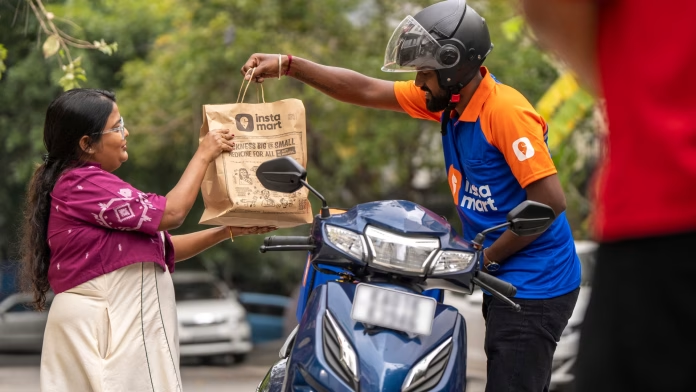
Over the past three to four months, rival platforms Zepto and Swiggy Instamart had already eased cost pressures on consumers. Zepto, following its $450 million fundraise in October, eliminated handling and surge fees and lowered the minimum cart value for free delivery to ₹99. Instamart soon mirrored similar incentives. Blinkit had, until recently, held its pricing line.

Quick commerce has become a critical sales channel for packaged food and daily essentials brands, many of which credit the segment for incremental volume growth over the past two years. Industry executives note that fee waivers tend to accelerate consumer adoption, particularly when a new player enters a market. Amazon Now’s zero-delivery-fee strategy has been a notable catalyst in cities where it has launched operations.

Amazon has been expanding aggressively, adding roughly two dark stores a day in December and crossing 300 micro-fulfilment centres by the end of the year. Company leadership has said that Prime members in launch zones typically migrate to Amazon’s quick commerce service within three months of a dark store opening.

According to BofA Research, Blinkit continues to lead the segment with over half the market share. The remaining share is split among Zepto, Instamart, Tata Digital backed BigBasket, Flipkart Minutes and Amazon Now. Flipkart, owned by Walmart, is also accelerating its presence and is expected to scale its dark store network to around 800 locations.

As platforms race to lock in users through pricing and proximity, the next phase of quick commerce growth is likely to be shaped as much by operational discipline as by how long companies can afford to keep deliveries free.

Advertisement