Monday, January 19, 2026
Home Blog

Start following Kiara Advani’s simple yet powerful morning ritual for glowing skin

Have you ever stopped to marvel at Kiara Advani’s radiant and flawless skin? In the exquisite glamour that is Bollywood, Kiara Advani stands out not just for her acting genius but also for her luminous and healthy skin. Amidst the overwhelming myriad of options surfaced by the beauty industry, this simple yet transformative ritual is not only a fad, but the cornerstone of her radiance.


The secret might be simpler than you think. It’s not a gruelling workout or a 10-step skincare routine; it’s a simple cup of warm water, with a slice of lemon in it. Kiara’s morning habit of indulging in warm water infused with the zest of fresh lemons has become a conscious choice rooted in her approach to holistic well-being. The actress recommends this refreshing elixir not only for its skin-enhancing benefits but also for the multiple benefits it has in improving your overall health and vitality.  

 

Hansa Yogendra, Director of The Yoga Institute in one of her videos on the health benefits of lemons mentioned, “Drinking one glass of lemon water every day in the morning will benefit you for a lifetime”.  Her claim can further be supported by a research published in the Journal of Science and Technology which reveals that “It is a healthy appetiser and helps to treat diseases with digestive aids. Lemon does not disclose any adverse effects, according to literature, but it is used all over the world as a traditional medicine”. Vitamin C, which is abundantly present in lemons, fights toxins and increases collagen production in the body, both of which help in treating acne as well as tightening the skin and reducing fine lines and wrinkles. While lemons are famously known for their Vitamin C component, not many people are aware of their Potassium-rich skin, which is an important mineral for nervous stimulation as well as maintaining blood pressure. Here are a few more benefits of adding lemon water to your everyday diet:- 

  • Immediately soothes muscle cramps
  • Peptin in lemons makes us feel fuller, thereby, helping in weight loss
  • Boosts immunity by stimulating the production of White Blood Cells in the body
  • Removal of kidney stones 
  • The lemon peel when infused in water for 30 minutes, activates its bioactive compounds which boost immunity and prevent our bodies from cellular damage
  • It also helps in the release of digestive enzymes which help in better absorption of nutrients

 

This simple kitchen hack has proudly made its way into the celebrity wellness circuit. Not only Kiara Advani but also Alia Bhatt, Deepika Padukone, Kriti Sanon, and Malaika Arora have this one drink in common at the break of dawn.

Here are 3 ways, you can incorporate the lemon water glow into your morning routine:- 

  1. Warm ginger lemon tea- Boil a glass of water with crushed ginger. When its done, squeeze a lemon into your glass and have it warm. To enjoy it in place of your morning tea, you may add a teaspoon of honey to it.

2. Ginger lemon shot – Take an inch of ginger root, and one squeezed lemon. Add enough water to blend it (3-4 tablespoons) in a blender, and have it as a morning shot.

3. Lemon-infused detox water- Cut up slices of one lemon and add it to your water bottle. Have 1-2 glasses of lemon water in the morning, and keep having the rest throughout the day. 

While lemon water offers a myriad of health benefits, it’s crucial to exercise moderation. One lemon a day is a healthy limit, and people with gastroesophageal reflux disease should be cautious about excessive lemon juice intake. As with any dietary rituals, balance is key to ensuring you enjoy the advantages without overdoing it. 
India’s Ready-to-Cook and Heat-and-Eat Food Market Set for Strong Growth Through 2029

0

India’s ready to cook and heat and eat food segment is moving into a high growth phase as large FMCG companies and consumer focused startups intensify competition for a bigger share of household kitchens. The market, estimated at about $6.7 billion in 2024, is gaining momentum as urban consumers seek faster meal options without compromising on taste, familiarity or ingredient quality.

Industry estimates suggest the category will expand at a compound annual growth rate of 6 to 8 percent through 2029. Growth is being driven by rising disposable incomes, smaller family sizes and longer working hours, particularly in metro and Tier 1 cities. Consumers are also showing a clear shift toward cleaner labels, regional flavours and products positioned as closer to home cooked food rather than heavily processed meals.

Large FMCG players are scaling up investments to capture this demand. ITC has strengthened its presence in frozen and premium ready meals through brand expansion and acquisitions, while integrating culinary expertise from its hospitality business into packaged offerings. Tata Consumer Products is focusing on shelf stable ready meals that do not require freezing, addressing distribution challenges beyond major cities. MTR continues to defend its leadership in breakfast mixes by launching faster cooking formats targeted at younger consumers, while Godrej Tyson Foods is expanding its ready to cook portfolio across vegetarian and non vegetarian segments to compete directly with quick service restaurants.

Startups are also reshaping the category by pushing freshness and transparency. iD Fresh Food has moved beyond batters into ready to heat accompaniments such as sambar and chutneys. Licious is shifting emphasis toward marinated and quick cook products to improve margins and encourage premium consumption. Brands such as Slurrp Farm are carving out niches with clean label, millet based mixes aimed at children.

Regional cuisine is emerging as a key differentiator, with companies launching products inspired by local gravies and spice blends. At the same time, advances in preservation technology are allowing room temperature storage, reducing logistics costs and expanding reach.

As competition sharpens, the next phase of growth is expected to be driven by consolidation, private labels and continued innovation around shelf life, taste and trust. For Indian consumers, convenience is no longer about speed alone but about familiarity and confidence in what reaches the plate.

Advertisement

Lulu Group to Raise India Sourcing to 35%, Eyes E-commerce Partnerships by Q1 2026

0

Lulu Group International is deepening its engagement with India as it sharpens its global sourcing and retail strategy amid volatile trade conditions and geopolitical uncertainty. The Abu Dhabi headquartered retail major plans to increase India’s contribution to its overall imports to 35 percent over the next two years, up from the current 26 to 27 percent, according to chairman and managing director M A Yusuff Ali.

The group currently sources goods worth nearly ₹11,000 crore annually from India, with food and agricultural products forming the bulk of imports. Fresh fruits and vegetables, spices, FMCG items and textiles are procured through more than 30 sourcing and food processing centres spread across the country. Ali said India’s scale, competitive pricing and improving quality standards make it a critical pillar of Lulu’s long term supply chain planning, not only for the Gulf markets but also for other international geographies.

Lulu operates over 260 retail stores across the GCC, India, Southeast Asia and parts of Africa. In response to rising input costs, new trade barriers and shipping disruptions, the group has accelerated supplier diversification, strengthened audit processes and worked closely with logistics partners to secure container availability. It is also expanding direct sourcing, private labels and contract farming while investing in cold chain and backend infrastructure to stabilise prices and ensure consistent supply.

As part of its omni channel push, Lulu is preparing to partner with Indian ecommerce platforms and expects to roll out its hypermarket offerings through local online aggregators in the first quarter of 2026. The group already has similar digital tie ups in the Middle East with platforms such as Amazon, Talabat and HungerStation.

Lulu Group, which listed on the Abu Dhabi Securities Exchange in late 2024 and raised $1.72 billion, continues to invest aggressively in India. Its ₹10,000 crore investment plan announced in 2023 remains on track, with spending underway across retail expansion, logistics, food processing and technology. The retailer currently operates malls and hypermarkets in 10 Indian cities, with new projects planned across metros and Tier 2 markets including Ahmedabad, Visakhapatnam, Chennai, Hyderabad and several towns in Kerala.

Advertisement

India Apparel Retail Market Set to Touch ₹16 Lakh Crore by FY30 on Value Fashion and E-Commerce Boom

0

India’s apparel retail industry is heading into a decisive growth phase, with market size expected to expand to nearly ₹16 lakh crore by FY30, according to a recent assessment by CareEdge Ratings. The surge is being fuelled by rising household incomes, deeper digital penetration and a rapid shift toward organised and value-led fashion formats.

The sector, currently valued at about ₹9.3 lakh crore in FY25, has recorded steady expansion over the past several years, growing at an average annual rate of around 7 percent since FY18. What is changing now is the structure of demand. Organised retail, which accounts for roughly 41 percent of apparel sales today, is projected to outpace the broader market with growth of 10 to 13 percent annually. Greater preference for branded clothing, expansion of mall-led retail and the steady entry of international labels are reshaping how Indians shop for apparel.

Value fashion is emerging as one of the strongest pillars of this growth. Estimated at ₹3.5 lakh crore in FY24, the segment is on track to reach nearly ₹5 lakh crore by FY30. Brands such as Zudio, Max Fashion and Reliance-backed Yousta are accelerating store rollouts, especially across Tier II and Tier III cities where demand for affordable, trend-driven clothing is rising sharply.

Digital channels are also playing a larger role. Online sales currently contribute about 22 percent of organised apparel retail and are expected to climb close to 25 percent by the end of the decade, translating into a market opportunity of nearly ₹5 lakh crore. Wider smartphone usage, improving internet access and Gen Z’s influence on fashion discovery are pushing brands to adopt omnichannel and digital-first strategies.

While inflation and erratic weather patterns weighed on demand earlier in FY25, momentum improved during the festive and wedding season, aided by promotional sales and better consumer sentiment. CareEdge notes that recent GST revisions are likely to further support growth in the mass segment. Apparel priced below ₹2,500 now attracts a lower 5 percent tax, improving affordability and potentially driving higher volumes, even as premium categories face pricing pressure.

Together, these shifts point to a more structured, value-conscious and digitally driven apparel market over the next five years.

Advertisement

CCPA Fines Amazon, Flipkart, Meesho and Meta ₹44 Lakh for Illegal Sale of Unauthorised Walkie-Talkies

0

India’s consumer watchdog has cracked down on the online sale of unauthorised walkie-talkies, levying penalties totalling ₹44 lakh on leading ecommerce platforms and sellers for violations of consumer protection and telecom norms.

The Central Consumer Protection Authority has imposed fines of ₹10 lakh each on Amazon, Flipkart, Meesho and Meta Platforms, which operates Facebook Marketplace. Additional penalties of ₹1 lakh each were slapped on JioMart, Talk Pro, Chimiya and MaskMan Toys. The authority said some entities have already deposited the fines, while payments from others are still awaited.

The action followed a suo motu probe that uncovered widespread non-compliance in the sale of walkie-talkies online. The investigation flagged over 16,900 listings across multiple platforms that failed to meet regulatory requirements. Several more cases involving platforms such as IndiaMART, TradeIndia and others are still under examination.

According to the CCPA, ecommerce platforms allowed the sale of Personal Mobile Radios operating on restricted frequencies, without mandatory Equipment Type Approval certification and without proper disclosure of licensing conditions. Many devices were marketed as “licence-free” or “fully legal”, even though they operated on ultra-high frequency bands reserved for police, emergency response and disaster management agencies.

Under Indian rules, only devices operating strictly within the 446.0–446.2 MHz band qualify for licence exemption, and even those require prior technical clearance before sale. The watchdog held that listing such products without clear disclosures amounts to misleading advertising and unfair trade practice.

The probe revealed significant volumes sold despite gaps in compliance. Flipkart recorded tens of thousands of unit sales with missing or unclear frequency information, while Amazon, Meesho and JioMart also showed multiple instances of inadequate disclosures. Facebook Marketplace removed hundreds of listings after intervention but was found to have allowed repeated relisting.

Rejecting claims that platforms act merely as intermediaries, the CCPA said responsibility extends to marketplaces that enable discovery and promotion of regulated goods.

Citing public safety and national security concerns, the authority has also rolled out new guidelines for ecommerce platforms, mandating stricter verification, automated monitoring and regular self-audits to prevent illegal listings going forward.

Advertisement

Blinkit Cuts Delivery Fees in Select Cities as Quick Commerce Competition Intensifies

0

India’s quick commerce battle is entering a sharper phase, with pricing emerging as the latest lever in a rapidly intensifying race. Blinkit, the country’s largest instant delivery platform, has quietly removed delivery charges in select micro-markets across cities such as Gurgaon, Bengaluru and Mumbai, according to industry sources familiar with the development.

The move is seen as a targeted response to heightened competition from newer and aggressively expanding rivals, particularly Amazon Now and Flipkart Minutes, both of which are scaling up dark store networks and offering low or zero delivery fees in key urban pockets. Sources indicate that Blinkit’s fee rollback is not a nationwide policy change but a calibrated step aimed at defending high-value customer cohorts in strategically important locations.

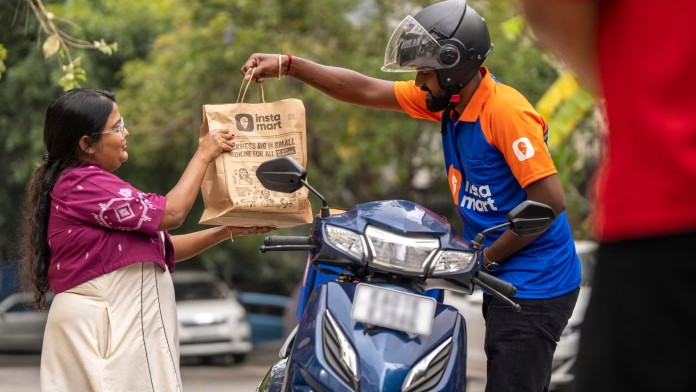
Over the past three to four months, rival platforms Zepto and Swiggy Instamart had already eased cost pressures on consumers. Zepto, following its $450 million fundraise in October, eliminated handling and surge fees and lowered the minimum cart value for free delivery to ₹99. Instamart soon mirrored similar incentives. Blinkit had, until recently, held its pricing line.

Quick commerce has become a critical sales channel for packaged food and daily essentials brands, many of which credit the segment for incremental volume growth over the past two years. Industry executives note that fee waivers tend to accelerate consumer adoption, particularly when a new player enters a market. Amazon Now’s zero-delivery-fee strategy has been a notable catalyst in cities where it has launched operations.

Amazon has been expanding aggressively, adding roughly two dark stores a day in December and crossing 300 micro-fulfilment centres by the end of the year. Company leadership has said that Prime members in launch zones typically migrate to Amazon’s quick commerce service within three months of a dark store opening.

According to BofA Research, Blinkit continues to lead the segment with over half the market share. The remaining share is split among Zepto, Instamart, Tata Digital backed BigBasket, Flipkart Minutes and Amazon Now. Flipkart, owned by Walmart, is also accelerating its presence and is expected to scale its dark store network to around 800 locations.

As platforms race to lock in users through pricing and proximity, the next phase of quick commerce growth is likely to be shaped as much by operational discipline as by how long companies can afford to keep deliveries free.

Advertisement

KitKat Partners with Formula 1, Unveils F1 Car-Shaped Chocolate Ahead of 2026 Season

0

KitKat has signed a global partnership with Formula 1, becoming the sport’s official chocolate bar from the 2026 season, as the Nestlé-owned brand looks to tap into motorsport’s rapidly expanding international audience. The collaboration will be marked by the launch of a limited-edition Formula 1 car shaped chocolate, scheduled to debut in January 2026, ahead of the new racing calendar.

The partnership places KitKat within Formula 1’s worldwide ecosystem at a time when the sport is seeing strong growth across younger demographics and new markets. Formula 1’s global fanbase has crossed 750 million, with digital engagement and entertainment-led formats driving renewed interest beyond traditional race followers. KitKat’s entry into the sport reflects a broader strategy to align with high-energy, culturally relevant platforms while reinforcing its long-standing “take a break” positioning.

At the centre of the launch is a newly designed chocolate product moulded in the shape of a Formula 1 car. The confection features a milk chocolate exterior, a smooth cream filling, and crisp cereal inclusions, offering a texture-led experience that mirrors KitKat’s core product identity. The chocolate has been developed at Nestlé’s confectionery research and development centre in York, United Kingdom, which supports innovation across the company’s global chocolate portfolio.

The Formula 1 chocolate car will initially be released in the United Kingdom and Ireland in mid-January 2026. It will be available in a 29-gram single bar and a multipack format comprising five smaller units, allowing both impulse and sharing occasions. Wider market rollouts are expected to follow as the season progresses.

Beyond product innovation, the partnership includes a comprehensive marketing and fan engagement plan. KitKat will activate across retail, digital platforms, and select Formula 1 events, with promotions, exclusive merchandise, and interactive campaigns designed to deepen consumer participation. The brand also plans targeted visibility around Formula 1 content consumed by younger audiences, including entertainment-led programming.

For Nestlé, the collaboration strengthens KitKat’s global relevance by blending sport, entertainment, and everyday indulgence. As Formula 1 continues to broaden its cultural footprint, the partnership positions KitKat to connect with fans during moments of excitement while reinforcing its presence in a competitive global confectionery market.

Advertisement

India Set to Become Coca-Cola’s Third Largest Market as Sales, Profits and Investments Accelerate

0

India is steadily moving toward becoming one of Coca-Cola’s most critical global markets, with the country expected to rank among the company’s top three by volume in the coming years, according to John Murphy, President and Chief Financial Officer of The Coca-Cola Company.

During a recent visit to India, Murphy said the market’s growth trajectory remains strong, supported by favourable demographics, rising consumption, and policy-driven economic momentum. India currently sits within Coca-Cola’s top five markets globally, driven by brands such as Coca-Cola, Thums Up, Sprite, Maaza, Dasani, and Honest Tea.

Financial performance reflects this momentum. Coca-Cola India reported a 46 percent jump in consolidated net profit to ₹615 crore in FY25, while revenue from operations rose 7 percent to ₹5,042.6 crore, as per filings accessed via Tofler. The company has benefited from improving affordability, expanded distribution, and increased demand across urban and semi-urban markets.

Murphy pointed to government-led investments in infrastructure, electrification, and digital payments as key enablers of consumption growth. He noted that digitisation in particular is reshaping retail and supply chains, creating opportunities for faster reach and improved execution.

Coca-Cola continues to deepen its long-term commitment through its bottling ecosystem, which includes its in-house arm Hindustan Coca-Cola Beverages and franchise partners such as Moon Beverages. These partners are expanding capacity across bottling, retail execution, and digital capabilities. Industry executives said investments are being made ahead of demand to support future scale.

The company is also open to selective acquisitions in India as part of its broader strategy to strengthen its presence across beverage categories. Globally, Coca-Cola’s past acquisitions include Maaza, Thums Up, Limca, Costa Coffee, Fairlife, BodyArmor, and Vitaminwater.

With more than six million retail outlets and three billion-dollar brands in India, Coca-Cola is also increasing focus on low- and no-sugar options to match evolving consumer preferences. Despite intensifying competition from regional and new-age brands, Murphy said the Indian beverage market remains underpenetrated, offering significant headroom for growth.

As Coca-Cola sharpens its focus on Asia through recent organisational changes, India is emerging as a central pillar in the company’s global growth strategy.

Advertisement

OneVeda Enters India’s Wellness Market with Science-Validated Modern Ayurvedic Products

0

India’s wellness market has a new entrant with the launch of OneVeda, a modern Ayurvedic brand that aims to blend classical Indian healing systems with contemporary scientific validation. Founded by entrepreneur Sahil Sonigara, the brand enters a crowded wellness landscape with a clear positioning around credibility, traceability and research-led formulations.

Headquartered in Bengaluru, OneVeda says its core objective is to address growing consumer scepticism around Ayurvedic products by reintroducing rigour into how traditional remedies are developed and presented. The company works closely with experienced Ayurvedic physicians and research professionals to formulate products that remain rooted in classical texts while being assessed through modern quality and safety benchmarks.

All raw materials used by OneVeda are sourced from certified farms and suppliers, with a focus on ethical procurement and consistency. According to the company, every ingredient is tested for potency, purity and contamination before it enters the production cycle, a step it believes is essential for building long-term trust in the category.

The brand has launched with a focused portfolio spanning wellness supplements, therapeutic oils and skin and body care products. These offerings target common health priorities such as immunity support, energy, stress management and daily rejuvenation. The formulations are designed for regular use, positioning Ayurveda as a practical part of everyday life rather than an occasional intervention.

Sonigara said the idea for OneVeda emerged from observing a disconnect between the promise of many wellness products and the outcomes consumers actually experience. The brand’s approach, he said, is centred on restoring authenticity by combining time-tested formulations with scientific validation and transparent communication.

Looking ahead, OneVeda plans to expand its range with clinically supported Ayurvedic nutraceuticals. The company is also developing a digital wellness platform that will offer personalised guidance based on Ayurvedic principles, signalling a move toward more customised health solutions.

As India’s wellness industry continues to grow, driven by rising health awareness and demand for natural solutions, OneVeda is positioning itself as a bridge between traditional knowledge and evidence-led modern consumption.

Advertisement

KASS Enters Indian Market as Science-Backed Bio-Intelligent Skincare Brand Focused on Long-Term Skin Health

0

Bengaluru: Luxury skincare label KASS has entered the Indian market with a clear focus on science-led, long-term skin health, positioning itself as the country’s first bio-intelligent skincare brand built specifically for Indian skin types and conditions.

Founded by Deepti Kulkarni, a trained skincare formulator and certified esthetician, KASS has been developed around a research-driven philosophy that looks beyond quick fixes and hero ingredients. Instead of targeting surface-level concerns, the brand’s formulations are designed to address the biological processes that influence skin behaviour over time. Each product uses layered combinations of bio-mimetic actives that work across multiple skin pathways, supporting the skin’s natural ability to repair, regenerate and maintain balance.

Product development for KASS has been carried out in collaboration with international bio-laboratories, with a strong emphasis on ingredient stability, absorption and compatibility. Several of the actives used are clinically validated and, in select cases, patented, underscoring the brand’s focus on measurable outcomes rather than cosmetic claims. The formulations blend advanced skin science with nature-derived components, aiming to suit India’s diverse climate conditions and increasingly urban lifestyles.

Kulkarni said the brand was shaped by a gap she observed in the domestic skincare landscape. Despite India’s long tradition of ingredient knowledge and ritual-based care, she noted that few homegrown brands were investing deeply in intelligent, globally benchmarked formulation science. KASS, she said, was created to bring a more thoughtful and root-cause-driven approach to skincare, one that prioritises skin health over short-term results.

The launch comes as India’s skincare market continues to expand rapidly. Industry estimates suggest the segment is growing at a compounded annual rate of 13 to 15 percent, driven by higher awareness, increased spending on personal care and growing trust in science-backed products. With consumers becoming more ingredient-conscious and outcome-focused, brands that combine credibility with performance are gaining traction.

KASS plans to build its presence gradually, positioning itself in the premium skincare space while focusing on education, transparency and long-term efficacy. By treating skin as a living, responsive organ rather than a cosmetic surface, the brand aims to carve out a distinct place in India’s evolving beauty market.

Advertisement

Sachin Tendulkar’s Ten X You Debuts on Myntra, Expands Play-First Sportswear Reach in India

0

Sachin Tendulkar’s sports and athleisure venture, Ten X You, has made its formal entry into India’s mainstream online retail ecosystem with a launch on Myntra, marking a significant step in the brand’s national expansion. The move brings the former cricketer’s vision of encouraging everyday physical activity closer to a wider base of Indian consumers through one of the country’s largest fashion-led e-commerce platforms.

Positioned as a brand for recreational players and fitness-first beginners, Ten X You is built around accessibility rather than elite performance alone. The label targets consumers who want sports and movement to blend naturally into daily routines, whether through structured play, casual workouts or comfort-focused everyday wear.

The debut range on Myntra is sizeable, featuring more than 90 products across footwear and apparel. Footwear forms a core part of the offering, with options spanning cricket-specific shoes, multi-sport designs suited for indoor and outdoor courts, walking and running recovery footwear, and casual silhouettes intended for daily use. A key focus during development was adapting designs to Indian foot anatomy, which is generally wider than global averages, to improve fit, stability and long-term comfort.

On the apparel side, the collection includes performance t-shirts, vests and shorts made using premium nylon-based fabrics. These are engineered for breathability, sweat management and ease of movement, while also being styled for wear beyond sporting environments. The aim is to bridge the gap between functional sportswear and relaxed lifestyle clothing.

Ten X You’s design philosophy draws on Tendulkar’s decades-long exposure to professional sport, combined with insights from athletes across disciplines and everyday users. According to the company, the emphasis is on durability, comfort and versatility rather than trend-driven fashion.

The launch also aligns with broader shifts in consumer behaviour. Activewear and athleisure continue to be among the fastest-growing lifestyle categories in India, driven by rising fitness awareness, hybrid work culture and a preference for comfort-led dressing. Myntra has reported strong repeat buying in its sportswear segment, highlighting sustained demand.

With its marketplace debut, Ten X You is now positioned to scale reach across metros and smaller cities alike, tapping into India’s growing appetite for accessible, play-focused sportswear.

Advertisement