Home Blog

Start following Kiara Advani’s simple yet powerful morning ritual for glowing skin

Have you ever stopped to marvel at Kiara Advani’s radiant and flawless skin? In the exquisite glamour that is Bollywood, Kiara Advani stands out not just for her acting genius but also for her luminous and healthy skin. Amidst the overwhelming myriad of options surfaced by the beauty industry, this simple yet transformative ritual is not only a fad, but the cornerstone of her radiance.


The secret might be simpler than you think. It’s not a gruelling workout or a 10-step skincare routine; it’s a simple cup of warm water, with a slice of lemon in it. Kiara’s morning habit of indulging in warm water infused with the zest of fresh lemons has become a conscious choice rooted in her approach to holistic well-being. The actress recommends this refreshing elixir not only for its skin-enhancing benefits but also for the multiple benefits it has in improving your overall health and vitality.  

 

Hansa Yogendra, Director of The Yoga Institute in one of her videos on the health benefits of lemons mentioned, “Drinking one glass of lemon water every day in the morning will benefit you for a lifetime”.  Her claim can further be supported by a research published in the Journal of Science and Technology which reveals that “It is a healthy appetiser and helps to treat diseases with digestive aids. Lemon does not disclose any adverse effects, according to literature, but it is used all over the world as a traditional medicine”. Vitamin C, which is abundantly present in lemons, fights toxins and increases collagen production in the body, both of which help in treating acne as well as tightening the skin and reducing fine lines and wrinkles. While lemons are famously known for their Vitamin C component, not many people are aware of their Potassium-rich skin, which is an important mineral for nervous stimulation as well as maintaining blood pressure. Here are a few more benefits of adding lemon water to your everyday diet:- 

  • Immediately soothes muscle cramps
  • Peptin in lemons makes us feel fuller, thereby, helping in weight loss
  • Boosts immunity by stimulating the production of White Blood Cells in the body
  • Removal of kidney stones 
  • The lemon peel when infused in water for 30 minutes, activates its bioactive compounds which boost immunity and prevent our bodies from cellular damage
  • It also helps in the release of digestive enzymes which help in better absorption of nutrients

 

This simple kitchen hack has proudly made its way into the celebrity wellness circuit. Not only Kiara Advani but also Alia Bhatt, Deepika Padukone, Kriti Sanon, and Malaika Arora have this one drink in common at the break of dawn.

Here are 3 ways, you can incorporate the lemon water glow into your morning routine:- 

  1. Warm ginger lemon tea- Boil a glass of water with crushed ginger. When its done, squeeze a lemon into your glass and have it warm. To enjoy it in place of your morning tea, you may add a teaspoon of honey to it.

2. Ginger lemon shot – Take an inch of ginger root, and one squeezed lemon. Add enough water to blend it (3-4 tablespoons) in a blender, and have it as a morning shot.

3. Lemon-infused detox water- Cut up slices of one lemon and add it to your water bottle. Have 1-2 glasses of lemon water in the morning, and keep having the rest throughout the day. 

While lemon water offers a myriad of health benefits, it’s crucial to exercise moderation. One lemon a day is a healthy limit, and people with gastroesophageal reflux disease should be cautious about excessive lemon juice intake. As with any dietary rituals, balance is key to ensuring you enjoy the advantages without overdoing it. 
10on10 Foods Raises ₹2 Crore to Reinvent India’s Staples Market with Freshly Milled

0

Food-tech startup 10on10 Foods has secured ₹2 crore in pre-seed funding from a group of angel investors as it looks to disrupt India’s staples market with freshly milled, nutritionally richer flours.

The round saw participation from investors including Dr. Vikas Katoch, entrepreneur and CEO of Adomantra and Adotrip; Sumit Maheshwari, CFO at Odessa Technologies; and Shashikant Shenoy, Partner at Uniqus Consultech.

A Personal Problem Turned Business Idea

Founded by Dr. Ashish Bajaj, Avinash Jain, and Mohsin Ali, the Bengaluru-based startup blends traditional stone-grinding techniques with modern distribution channels to deliver fresher staples to households.

The idea behind the company emerged from Bajaj’s personal experience after his son was diagnosed with Type 1 diabetes. While searching for healthier food options, the family discovered that most packaged atta sold in the market is milled months before consumption, causing oxidation that reduces flavour, oils, and nutritional value.

This gap inspired the founders to build a system focused on fresh milling and rapid delivery, ensuring consumers receive flour closer to the time of production.

Product Portfolio and Nutritional Focus

10on10 Foods currently offers a range of flour products, including whole wheat atta, multigrain atta, khapli atta, jowar atta, ragi atta, bajra atta, makki atta, pure besan, and a high-protein atta variant.

According to the company, its high-protein atta contains around 25 grams of protein per 100 grams, making it roughly 60% higher in protein and 40% higher in fibre compared with several conventional packaged flours, while being significantly lower in carbohydrates.

Distribution and Expansion Plans

The startup currently operates in Bengaluru and sells through multiple channels, including its D2C website, WhatsApp communities, and quick-commerce platforms such as First Club and Swiggy Instamart.

Expansion plans are already underway. The company intends to launch in Delhi in April and enter Hyderabad later in the year. It has also partnered with BigBasket, Flipkart Minutes, and Amazon India to strengthen its marketplace presence.

Scaling Manufacturing and Operations

The company operates a 4,000 sq. ft. manufacturing facility in Bengaluru, built with an investment of about ₹40 lakh. Production capacity has expanded from around 30–35 tonnes per month to over 200 tonnes monthly, with further automation planned to improve margins.

As it scales geographically, 10on10 Foods plans to adopt a hybrid manufacturing strategy by partnering with OEM manufacturers in new cities while maintaining strict quality control.

Community-Led Growth

Since launching in July last year, the brand has focused heavily on community-driven growth and repeat purchases. It currently processes more than 300 orders daily, supported by over 15 WhatsApp communities in Bengaluru.

These communities have helped the company achieve 70% repeat purchases within the same month, while second-month repeat rates hover around 36–37%. Customer acquisition costs have also declined from over ₹400 initially to around ₹200.

Path to Profitability

The startup expects to reach operational breakeven soon. With projected gross merchandise value exceeding ₹40 lakh in March, the company aims to turn profitable before marketing expenses.

Looking ahead, 10on10 Foods is targeting ₹1 crore in monthly recurring revenue in its first full financial year, translating to ₹12–15 crore in annual revenue, while continuing to expand its product pipeline with around 12 new SKUs planned within the flour category.

Advertisement

Amazon India Eliminates Referral Fees on 12.5 Crore Products to Support Sellers

0

Amazon India has expanded its Zero Referral Fee programme to cover more than 12.5 crore products, aiming to support lakhs of sellers and accelerate growth for small businesses across the country.

The move significantly broadens the initiative introduced last year. Coverage has increased more than tenfold—from 1.2 crore products in 2025 to over 12.5 crore items priced below ₹1,000 across 1,800+ product categories.

Lower Costs for Sellers

In addition to eliminating referral fees, Amazon India has also reduced Easy Ship logistics fees by more than 20% for products priced under ₹300.

The Easy Ship programme allows sellers to store inventory at their own premises while Amazon manages product pickup, shipping, and delivery, simplifying logistics for small and medium-sized businesses.

Focus on Small Businesses

Amit Nanda, Director of Selling Partner Services at Amazon India, said the expanded programme is designed to make selling on the platform more accessible and profitable—particularly for entrepreneurs and sellers in Tier-II and Tier-III cities.

According to the company, the combined impact of eliminating referral fees and reducing logistics charges could help sellers save up to 70% in platform-related costs for eligible products.

Strengthening the Seller Ecosystem

The initiative is part of Amazon India’s broader strategy to deepen its seller ecosystem while encouraging greater participation from small businesses and local entrepreneurs. By lowering operational costs and simplifying logistics, the company aims to attract more sellers to its marketplace and expand product availability for customers across India.

Advertisement

Middle East Conflict Raises Risks for Global Luxury Brands

0

Escalating geopolitical tensions in the Middle East are creating fresh challenges for global luxury brands, adding pressure to an industry already grappling with weak demand recovery. Airspace closures and travel disruptions following military action involving Israel, the United States, and Iran have affected major regional hubs, including Dubai and Doha, forcing temporary airport shutdowns and disrupting tourism and business travel.

A Small but Important Luxury Market

Although the Middle East accounts for roughly 5–6% of global luxury sales, it remains a strategically significant region for the industry. According to estimates by financial institutions, a large share of purchases in the region is driven by international tourists, particularly from Russia, Saudi Arabia, China, and India.

The United Arab Emirates alone generates about half of the region’s luxury revenues, with Dubai serving as the primary shopping hub. Amid the current tensions, several luxury stores across Dubai and other regional retail centres have reportedly operated with limited staff or remained temporarily closed.

Why the Situation Matters

Luxury companies had been looking to the Middle East as a growth driver while sales in China remain sluggish and macroeconomic uncertainty continues in the United States and Europe.

The latest conflict also threatens the seasonal boost typically associated with Ramadan, when affluent Gulf consumers often travel to Europe and other global shopping destinations. Any disruption to travel patterns during this period could weigh further on luxury sales.

Brands Most Exposed

Some luxury houses have deeper exposure to the region than others. Switzerland-based Richemont, owner of Cartier, and Italian fashion group Zegna derive around 9% of their total revenues from the Middle East, making them among the most vulnerable to regional disruption.

By contrast, brands such as Burberry have comparatively lower exposure to the market.

Impact on Market Sentiment

Investor sentiment has already reflected the heightened risk. The STOXX Europe Luxury 10 Index has fallen about 9% since the beginning of the week, marking its steepest two-day drop since the tariff-related market shock in April.

As geopolitical uncertainty persists, luxury companies may face a renewed test of resilience—particularly in regions that have recently served as rare pockets of growth for the sector.

Advertisement

Pricklee Rebrands as “Natural Hydration” Drink to Accelerate National Expansion

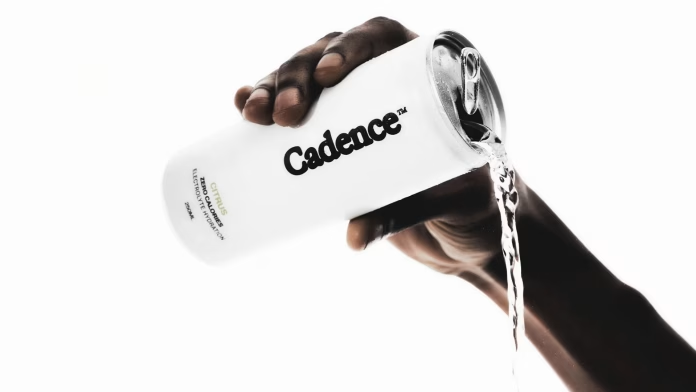
Functional beverage brand Pricklee has unveiled a major brand refresh, repositioning itself from a “cactus water” product to a broader Natural Hydration drink. The rebrand comes shortly after the company secured $2 million in seed funding and coincides with its showcase at Natural Products Expo West 2026.

Founded by pharmacists Kun Yang and Mo Hassoun, Pricklee originally launched in Boston in 2021 with a focus on the health benefits of prickly pear cactus. However, the founders found that the “cactus water” category required extensive consumer education. The new positioning aims to shift the conversation toward hydration benefits rather than the ingredient itself.

From Ingredient to Benefit

The transition to the “Natural Hydration” label reflects a strategy focused on communicating functionality and wellness. Drawing on their healthcare backgrounds, Yang and Hassoun designed the beverage as a cleaner alternative to conventional sports drinks, targeting consumers looking to avoid artificial sweeteners, synthetic colours, and heavily processed ingredients.

The drink continues to feature prickly pear cactus as its key ingredient, known for naturally occurring antioxidants and electrolytes. The formulation maintains a low-sugar profile while delivering hydration benefits that the brand claims compete with popular options such as coconut water.

New Identity and Packaging

At Expo West 2026, Pricklee introduced a refreshed brand identity featuring vibrant desert-inspired graphics and a shift from plastic bottles to aluminium cans to improve sustainability. The redesign places greater emphasis on taste, refreshment, and the product’s functional hydration benefits.

The brand’s core flavour lineup currently includes Prickly Pear, Mango, and Strawberry. Two additional flavours are expected to be introduced as part of the company’s 2026 retail expansion, with details unveiled during the trade show.

Expansion Plans

Following early retail traction at Whole Foods Market and Sprouts Farmers Market, Pricklee plans to use the new funding to accelerate nationwide growth.

Key priorities include expanding its Direct Store Distribution (DSD) network, strengthening product-market fit beyond its Northeast base, and securing more than 2,000 additional retail placements by the end of 2026.

As the functional hydration category becomes increasingly competitive—with players ranging from electrolyte powders to sports drinks—Pricklee is betting that its cactus-derived ingredients and clean-label positioning will resonate with consumers seeking natural alternatives in the beverage aisle.

Advertisement

Dabur Invests ₹60 Crore in Luxury Skincare Brand RAS Beauty

0

FMCG major Dabur has announced a ₹60 crore investment to acquire a minority stake in luxury skincare D2C brand RAS Beauty. The investment has been made through Dabur Ventures, the company’s dedicated investment arm focused on high-growth, new-age consumer brands.

The move marks Dabur’s strategic entry into the premium beauty and skincare segment, as it looks to tap into the fast-expanding luxury and digital-first beauty market in India.

A Fast-Growing Farm-to-Face Brand

Founded by three women entrepreneurs, RAS Beauty is a Raipur-based, digital-first brand positioned in the natural and luxury skincare category. The company follows a “Farm-to-Face” philosophy, offering products such as face elixirs, serums, and moisturisers formulated with essential oils and plant-derived actives.

Over the past three years, RAS Beauty has recorded a compound annual growth rate (CAGR) of around 75%, with an annual recurring revenue (ARR) of approximately ₹100 crore.

Strategic Bet on Premium Beauty

Abhinav Dhall, Executive Director and Group Head – Corporate Strategy at Dabur India, stated that RAS Beauty presents a differentiated value proposition at the intersection of nature, science, and luxury. He added that the premium beauty segment is expected to witness robust growth over the next decade, and the brand is well positioned to capitalise on this opportunity.

For RAS Beauty, the fresh capital will support expansion across online and offline channels, strengthen research and development capabilities, and accelerate brand-building initiatives. Co-founder and CEO Shubhika Jain said the investment will help scale operations while staying aligned with the brand’s core values and long-term global ambitions.

First Investment from Dabur Ventures

The deal represents the first investment by Dabur Ventures, which was launched in October 2025 with a ₹500 crore capital allocation. The platform aims to back high-potential startups operating in personal care, healthcare, wellness foods, beverages, and Ayurveda.

With this investment, Dabur is signalling a stronger push into premium, digitally native beauty brands as it diversifies beyond its traditional FMCG portfolio and strengthens its presence in high-growth consumer categories.

Advertisement

Pronto Raises $25 Million, Achieves $100 Million Valuation

0

Home services startup Pronto has secured $25 million in a funding round led by Epiq Capital, with participation from existing backers Glade Brook Capital, General Catalyst, and Bain Capital Ventures.

Following the raise, Pronto’s post-money valuation stands at $100 million, founder and CEO Anjali Sardana told ET.

Capital to Address Supply Constraints

The newly raised funds will be deployed over the next 12 to 18 months to expand into new cities and service categories, deepen operations in existing markets, and significantly scale hiring and training of service professionals.

“We are supply constrained, so our focus is on supply acquisition and scaling in a way that allows us to maintain really high quality,” Sardana said.

Currently operating in 10 cities with a network of 3,000 professionals, Pronto connects households with trained workers for services including cleaning, laundry, dishwashing, and basic meal preparation. The company has also piloted car washing services in select Gurugram micro-markets and is testing additional services in Bengaluru, Pune, and Hyderabad.

Rapid Growth in Orders

Pronto reported strong order growth, clocking over 350,000 orders in February, up from 150,000 in December. Sardana noted that the platform’s customer engagement remains high, with the top 1% of users booking services more than 23 times a month, and the top 10% averaging over nine bookings monthly.

The company has burned approximately $8 million over the past year as it competes aggressively in the fast-growing on-demand home services segment.

Competitive Landscape

Founded in April 2025, Pronto was initially domiciled in Delaware but redomiciled to India last August. The company has also shifted its headquarters from Gurugram to Bengaluru to tap into the city’s talent ecosystem.

The fundraise comes amid heightened competition in the sector. Rival Snabbit recently raised $30 million led by Bertelsmann India Investments and has reportedly seen significant order growth. Meanwhile, Urban Company, which offers on-demand house-help services under InstaHelp, continues to expand following its public listing last year.

As customer demand for structured, tech-enabled domestic services rises, Pronto is betting on supply-side expansion and service quality to carve out market share in India’s increasingly competitive home services ecosystem.

Advertisement

Mezcla Raises $9.5 Million in Series B to Accelerate Growth in Plant-Based Protein Bars

0
Mezcla Raises $9.5 Million in Series B to Accelerate Growth in Plant-Based Protein Bars

Plant-based snack brand Mezcla has secured $9.5 million in a Series B funding round, reinforcing investor confidence in the evolving protein bar category. The round was led by Bluestein Ventures, with participation from Santatera Capital and Lever VC, as the brand accelerates its transition from niche wellness label to national retail contender.

Founded in 2019 by Griffin Spolansky and Coco Sotelo, Mezcla was created to challenge the conventional protein bar format—often criticised for dense textures and limited flavour variety. The brand differentiates itself through globally inspired flavour profiles and a light, crispy texture built on a pea protein crisp base.

From Startup to National Retail

Over the past two years, Mezcla has significantly expanded its retail presence. The brand is now stocked at major US retailers including Costco, Target, Whole Foods Market, Sprouts Farmers Market, and Publix—an expansion that signals strong consumer uptake and shelf velocity.

The company’s flavour portfolio, featuring options such as Mexican Hot Chocolate and Japanese Matcha, reflects its strategy of blending international culinary inspiration with functional nutrition.

Protein Bar Category Remains Active

Mezcla’s latest funding comes amid sustained momentum in the protein bar and better-for-you snack segment. The category continues to see strong investor interest and consolidation activity, with several high-profile acquisitions and rapid-growth challengers entering the space in recent years.

Despite saturation concerns, consumer demand for clean-label, high-protein, and plant-based snacks remains resilient, supporting innovation and premium positioning within the segment.

Growth Priorities

With fresh capital in place, Mezcla is expected to focus on scaling operations, particularly to meet the volume requirements of club retailers. Additional priorities include new product development and increased marketing efforts to strengthen brand visibility in a competitive market dominated by legacy players.

As consumers increasingly seek snacks that balance indulgence with functionality, Mezcla’s crisp texture and flavour-forward positioning place it among the emerging brands aiming to reshape the plant-based protein bar aisle.

Advertisement

Mumbai Airport Launches ₹10 Tea Initiative with Udaan Yatri Café

0

The long-standing perception of inflated food prices at airports received a reset on February 20, 2026, with the launch of the Udaan Yatri Café at Chhatrapati Shivaji Maharaj International Airport (CSMIA). The facility was e-inaugurated by Union Civil Aviation Minister Kinjarapu Rammohan Naidu and is located in Terminal 2 (T2) near the departures check-in area between Gates 1 and 2.

The initiative directly addresses years of passenger complaints and parliamentary discussions around steep food and beverage pricing at Indian airports.

A Budget-Friendly Menu at T2

While T2 houses premium lounges and international dining brands, the Udaan Yatri Café offers essential refreshments at street-level prices, ensuring affordability for all travellers.

Menu Highlights:

  • Tea (Chai): ₹10
  • Bottled Water: ₹10
  • Coffee: ₹20
  • Snacks (including samosas): ₹20
  • Desserts: ₹20

The concept aims to ensure that basic hydration and snacks remain accessible, especially for budget-conscious passengers and families travelling under tight itineraries.

Part of the Broader UDAN Vision

The Udaan Yatri Café aligns with the government’s UDAN (Ude Desh ka Aam Nagrik) scheme, which focuses on making air travel more inclusive and affordable.

The concept was first piloted at Netaji Subhas Chandra Bose International Airport in December 2024, where it reportedly served over 27,000 passengers within its first month. Since then, the model has expanded to airports in Chennai, Pune, Bhubaneswar, Ahmedabad, Hollongi (Itanagar), Vijayawada, and Hyderabad.

At Mumbai’s CSMIA, the outlet is operated by Adani Airport Holdings, and its performance is expected to guide similar rollouts at other privately managed and Airports Authority of India (AAI) facilities, including the upcoming Navi Mumbai International Airport.

Rethinking Airport Retail Economics

Traditionally, airport operators have relied heavily on non-aeronautical revenues from premium retail and dining. However, the introduction of Udaan Yatri Café reflects a recalibration toward inclusive pricing models.

By offering affordable food options alongside luxury brands, airports are moving away from the perception of a “captive audience” marketplace and toward a more balanced ecosystem that caters to diverse income groups.

As Indian aviation continues to expand into Tier-II and Tier-III cities, initiatives like the ₹10 tea at Mumbai Airport signal a broader shift—where accessibility and passenger goodwill become as important as premium revenue streams.

Advertisement

West Asia Conflict Raises Dal Price Concerns; Rice Exports to Iran Face Disruption

0

Escalating tensions in West Asia are beginning to ripple through India’s trade channels, with potential implications for food inflation, export flows, and bullion markets. Industry stakeholders warn that prolonged disruption could push up retail prices of pulses, while rice exports to Iran and other Gulf nations may face immediate risks.

Pulses Prices Under Pressure

India imports approximately 5–6 million tonnes of pulses annually, including tur, urad and lentils, primarily from Myanmar, Canada and African nations. According to Suresh Agarwal, president of the All India Dal Mill Association, any extended disruption to shipping routes could raise logistics costs and, consequently, landing prices.

“If the war continues beyond a week, the price of pulses will increase,” Agarwal said, noting that higher freight rates would quickly filter into retail markets. With pulses being a staple in Indian households, any spike could add pressure to food inflation.

Rice Trade Advisory Issued

While pulses prices may rise, rice prices could soften domestically if export shipments to Iran and Gulf countries slow. The Indian Rice Exporters Federation (IREF) has advised members to avoid new CIF (cost, insurance and freight) contracts for these regions, recommending FOB (free on board) terms instead so that freight and insurance risks remain with buyers.

Dev Garg, vice president of IREF, cautioned that rising bunker fuel costs and oil price volatility could sharply increase container and bulk freight charges. Insurance premiums may also climb, exposing exporters to losses on fixed delivered-price contracts.

Gem and Jewellery Sector at Risk

Beyond agriculture, the conflict poses challenges for India’s gem and jewellery trade, particularly its strong linkages with the UAE and Dubai.

Kirit Bhansali, chairman of the Gem & Jewellery Export Promotion Council, warned that supply disruptions in rough diamonds and bullion could impact employment in Surat, India’s diamond cutting and polishing hub, which supports nearly one million workers.

Dubai remains India’s second-largest supplier of gold. In calendar year 2025, India imported gold bars worth $16.48 billion, up 28.47% year-on-year. Rough diamond imports through Dubai rose marginally to $7.45 billion, while exports of cut and polished diamonds to Dubai surged nearly 49% to $2.39 billion.

The India-UAE Comprehensive Economic Partnership Agreement has significantly strengthened bilateral trade flows in recent years, reducing duties and boosting competitiveness. Any geopolitical escalation could disrupt this momentum.

Bullion Markets Brace for Volatility

Precious metals are also expected to remain volatile as investors seek safe-haven assets amid heightened geopolitical risk.

Jateen Trivedi, VP Research Analyst (Commodity and Currency) at LKP Securities, noted that renewed military tensions involving Iran could trigger a gap-up opening in gold and silver prices when global markets resume trading. As equity markets face pressure, capital typically shifts toward bullion as a hedge against uncertainty.

With oil prices, freight rates, and insurance costs all vulnerable to further escalation, the evolving West Asia situation carries significant implications for India’s food inflation trajectory, export stability, and commodity markets in the weeks ahead.

Advertisement

Kay Beauty Surges to ₹132 Crore in FY25, Posts 50% Revenue Growth

0

Celebrity-founded cosmetics brand Kay Beauty, co-created by Katrina Kaif in partnership with Nykaa, has reported a 50% year-on-year jump in revenue, reaching ₹132.4 crore in FY25.

The performance marks a significant leap from ₹88.3 crore in FY24, underscoring the growing strength of celebrity-led beauty brands in India’s competitive cosmetics market.

Investing for Scale

Financial filings with the Registrar of Companies show that Kay Beauty sharply increased spending to support its rapid expansion. Total expenses rose 60% to ₹117.6 crore during the fiscal year, outpacing revenue growth as the brand prioritised scale and international expansion.

Marketing and advertising outlays doubled to ₹16.6 crore, reflecting intensified efforts to sustain brand visibility in the crowded “clean beauty” segment. Beauty advisor expenses climbed to ₹13.2 crore, signalling a continued focus on omnichannel retail and in-store engagement.

Employee benefit costs more than doubled to ₹7.5 crore as the team expanded to support growing operations, while cost of goods sold rose to ₹40.8 crore in line with higher sales volumes.

Despite the revenue surge, net profit edged down slightly to ₹11 crore from ₹11.3 crore a year earlier. The company spent ₹0.89 to earn every rupee in FY25, compared with ₹0.83 in FY24—indicating a strategic tilt toward market share acquisition over short-term margin expansion.

Expanding Beyond India

Founded in 2019, Kay Beauty has steadily transitioned from a domestic favourite to a global aspirant. Its vegan, cruelty-free formulations infused with skincare ingredients have gained traction internationally.

In 2025, the brand entered the United Kingdom, launching at premium beauty retailer Space NK—becoming the first Indian-founded beauty label to secure placement at the luxury chain. It has also expanded into the UAE through Nysaa, Nykaa’s international retail arm, strengthening its presence in the GCC market.

Domestically, Kay Beauty continues to leverage Nykaa’s extensive distribution network, alongside ecommerce platforms and physical retail outlets.

Strong Partnership Model

The brand operates under a strategic celebrity-corporate alliance. Nykaa (FSN E-Commerce Ventures) holds a 50.99% majority stake, providing retail infrastructure and distribution muscle. Katrina Kaif owns 41.5% and remains actively involved in product development and creative direction, while Matrix India Entertainment Consultants holds the remaining 7.5%.

As it enters FY26, Kay Beauty appears focused on deepening its premium positioning in Europe and the Middle East while consolidating its leadership as one of India’s most successful celebrity-led beauty brands.

Advertisement