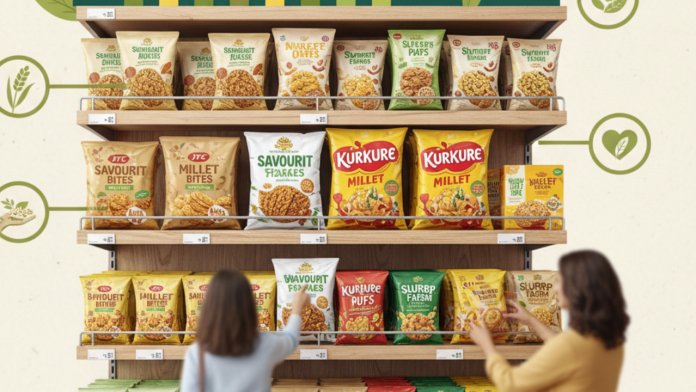
India’s snack aisles are witnessing a quiet revolution as millets transition from niche health foods to mainstream munchies. FMCG giants, multinational corporations, and startups alike are experimenting with nutrient-rich twists on familiar snacks, offering consumers options that are both tasty and wholesome. Products such as ragi crisps, foxtail-millet nachos, and choco-millet bars are becoming increasingly common, reflecting the growing appetite for better-for-you alternatives.
PepsiCo India’s homegrown Kurkure brand has joined the millet bandwagon, marking its 25th anniversary with the launch of Kurkure Jowar Puffs. Saakshi Verma Menon, chief marketing officer for foods at PepsiCo India, said the move combines the traditional appeal of jowar with the signature chatpata taste, aligning with changing consumer preferences while driving innovation in the snacking segment.
Two years ago, millet-based offerings were largely confined to health aisles in modern retail stores. That has changed as value growth returned to FMCG in 2024–25, with rural markets outpacing urban consumption. Consumers are increasingly willing to explore healthier options, integrating millet into everyday snacking and quick-service restaurant menus.
ITC has expanded its Mission Millets portfolio to include atta, cookies, noodles, and snacks, reinforcing its broader ‘Help India Eat Better’ strategy. Executive director Hemant Malik noted that digital and quick commerce platforms are helping accelerate consumption by making millet products more accessible to urban and rural consumers alike.
Startups like Wholsum Foods, which operates Slurrp Farm and Mille, are also riding the trend. Co-founder Meghana Narayan said demand is largely driven by digital-first shoppers seeking nutritious alternatives, and the company continues to broaden its “better-for-you” offerings while keeping millets at the core.
Analysts say the growing adoption of millet-based snacks reflects a broader evolution in India’s food culture. Traditional grains, once relegated to niche segments, are now fueling innovation across mainstream packaged foods, catering to health-conscious, convenience-oriented consumers across cities and small towns alike.