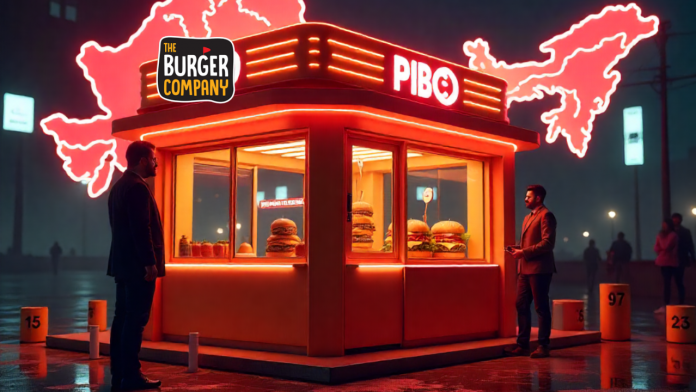
The Burger Company is betting on small formats to go big. The homegrown QSR brand has rolled out a new franchise concept, TBC PICO, designed as a compact, low-cost model that it hopes will fuel aggressive expansion across India. The company is targeting 500 such outlets within three years, its founder and chief executive Neelam Singh confirmed.
The timing is deliberate. India’s quick service restaurant sector is expanding at nearly 20 percent annually, and analysts expect micro-QSRs to account for close to a third of new store openings by the end of the decade. Rising rentals and shifting consumer demand for quicker, more accessible dining formats have made smaller, high-yield spaces an attractive proposition.
For entrepreneurs, PICO comes with an investment tag of ₹7.89 lakh plus taxes, making it 60 to 80 percent cheaper than a traditional QSR setup. Each outlet requires only 80 to 100 square feet and promises breakeven within 8 to 12 months, with projected monthly revenues of ₹3 to 4 lakh. The franchise package covers everything from kitchen machinery and billing systems to branding, training, launch marketing and opening-day stock. Deliveries will be handled by platforms such as Swiggy and Zomato.
Singh noted that menu engineering is central to PICO’s model. Built on historical point-of-sale data, the menu is optimized for a four-to-five-minute order fulfillment time. This approach cuts ingredient inventory by 40 percent while ensuring higher cross-utilization, translating into better revenue per square foot. A controlled localization framework will allow for up to 15 percent regional customization while keeping the rest standardized to preserve brand consistency.
The company, which currently earns 60 percent of its sales from dine-in formats, closed last fiscal with ₹55 crore in revenue and is targeting ₹75 crore this year. With PICO, The Burger Company is placing a bold bet on the future of India’s fast-growing but increasingly cost-conscious QSR market.