


Mumbai-based food brand Khetika has bagged $18 million in a fresh round of Series B funding, with Narotam Sekhsaria Family Office and Anicut Capital leading the charge. The round also included backing from existing supporters like Incofin India Progress Fund, Rajasthan Gum, and Shree Ram India Gums, while offering a partial exit to SIDBI Venture Capital and a group of early angel investors.
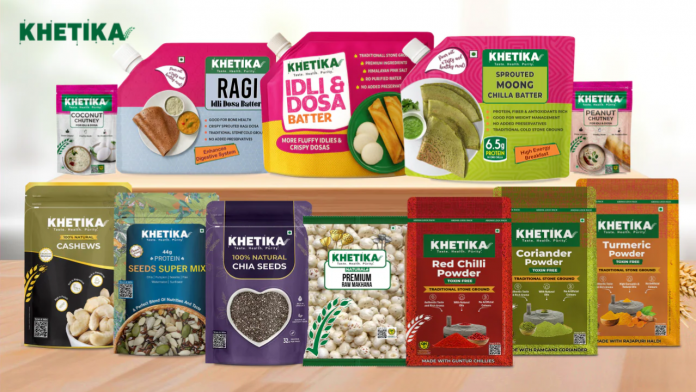
Started back in 2017 by Prithwi Singh, Darshan Krishnamurthy, and Raghuveer Allada, Khetika has built a reputation for selling everyday essentials—think batters, chutneys, spices, millets, dry fruits, and rice—without a trace of preservatives or additives. The company sources directly from a wide network of 25,000+ farmers spread across 14 Indian states, powered by its supply chain engine, SuperZop.
Now, with new funds in hand, Khetika is ready to widen its offering and modernize its backend. The team is gearing up to launch a new lineup of ready-to-eat meals and region-specific staples, crafted using age-old Indian recipes and minimal processing. A big chunk of the capital will go into automated production units, with a goal to triple output within the next 18 months. The company recently rolled out a batter facility in Delhi and a spice processing plant in Unjha, Gujarat, with more infrastructure planned.
Continue Exploring: Lahori Beverages Nears ₹450 Crore Fundraise as Valuation Soars to ₹2,500 Crore – A New Challenger in India’s Booming Drinks Market
Tech-wise, Khetika is doubling down on transparency. SuperZop will soon feature real-time quality checks and consumer-facing traceability tools, including QR codes that let buyers track exactly when and where their food was grown and packed.
Khetika’s products are sold via large retail chains, over 15,000 kirana stores, and e-commerce platforms like Amazon, BigBasket, and Blinkit. Interestingly, quick commerce now accounts for 25% of its sales—and it’s growing faster than any other channel.
“We’re building for scale, but not at the cost of quality,” said co-founder Singh. “This round helps us stay true to our clean-label ethos while reaching more homes across India.”