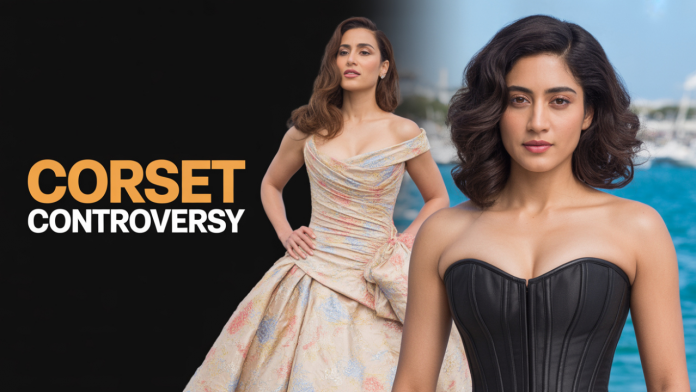
This Cannes, all eyes were on the chain‐corset controversy—when influencer Nancy Tyagi claimed to have designed her showpiece look, but singer Neha Bhasin—and designer Surbhi Gupta—called her out.
The drama? A social-media explosion. Nancy said it was her handmade creation; Neha revealed proof she’d worn a similar corset by The Source Bombay before—and Surbhi noted that Nancy had bought the dress for ₹25K. Meanwhile, Diet Sabya traced the original chain-corset style to The Blonds and Raakesh Agarwal.
This isn’t just gossip—it’s a masterclass in fashion ethics. It highlights the difference between curated self-expression and rebranded iterations. Questions of originality, credit, and cultural appropriation came under the spotlight—all in one Cannes moment.
The ripple? Influencers and brands are reevaluating credit-sharing, transparency, and public representation. Meanwhile, Nancy’s case reminds us: in a digital age, no look stays private. If you’re selling creativity, ownership matters.
Final Take: This isn’t a curtains-down moment—it’s fashion’s accountability act. If we want Indian fashion to be seen as credible and creative, we must also ensure it’s credit-worthy. The corset may have been the garment—but the lesson is bigger: integrity is always in style.