Sunfeast Dark Fantasy is thrilled to introduce an exciting collaboration with the renowned ‘King of Fantasy,’ Shah Rukh Khan, who will now be the proud ambassador of the brand. With the unveiling of its revitalized brand identity, ‘Sunfeast Dark Fantasy – Har Dil Ki Fantasy,’ the brand aims to establish a profound connection with its audience. Grounded in the universal longing for a touch of enchantment in our everyday existence, this innovative concept strives to strike a chord with diverse sets of consumers, sparking personal moments of imagination irrespective of time or place. Shah Rukh Khan, a beloved figure for countless individuals, personifies the dreams of numerous fans worldwide. The harmonious fusion of these two forces creates a spellbinding synergy that is truly captivating.
This exceptional partnership establishes a remarkable milestone, bringing together the ‘King of Bollywood’ with the ‘King of Biscuits.’ Sunfeast Dark Fantasy embarks on the journey of ‘Har Dil Ki Fantasy,’ encouraging consumers to partake in an unparalleled adventure led by Shah Rukh Khan’s magnetism and the delightful indulgence of its biscuits. This collaboration not only reshapes the brand’s identity but also enhances the notion of fantasy within the hearts of individuals all over India.
Ali Harris Shere, Chief Operating Officer of Biscuits and Cakes Cluster, ITC Foods Division shared, “We are thrilled to welcome Shah Rukh Khan, the King of Bollywood, as the face of Sunfeast Dark Fantasy. His iconic charm, sophistication, and larger-than-life persona make him the perfect choice to represent the brand. Through this association, we are confident in enhancing the brand’s presence and strengthening its connection with consumers. Together, we aim to embark on an extraordinary journey that celebrates their fantasies, crafting a memorable experience.”
Romi Nair, National Creative Director at FCB Ulka expressed, “We acknowledge that everyone harbors fantasies, and ‘Har Dil ki Fantasy’ is a product of this insight. This campaign urges everyone to take flights of fancy and return with vitality. And who better than Shah Rukh Khan, the Fantasy of India, to bring this concept to life? The campaign presents Shah Rukh Khan in a beloved avatar that resonates with all. He will captivate India with this campaign.”
The television advertisement, meticulously crafted by FCB Ulka, opens in the waiting area of a salon, where a woman eagerly awaits her turn. To while away the time, she treats herself to a Choco Fills cookie, which mysteriously transports her into a world of fantasy. The iconic Bollywood star, Shah Rukh Khan, makes an appearance, attending to her with elegance, overseeing her makeup and nail care. As she returns to reality with a smile, she realizes that it was all a daydream and shares a cookie with a curious girl nearby. Shah Rukh Khan’s voiceover enhances the delightful sensation, stating, “A crispy cookie with molten choco.” The advertisement concludes with Shah Rukh Khan’s enthusiastic proclamation, “Har Dil Ki Fantasy,” while a pack of cookies takes the spotlight.
The net loss of Dairytech startup Country Delight surged by more than 6.5 times to reach INR 186.4 Crore during the financial year 2021-22 (FY22), compared to INR 28.2 Crore in the preceding fiscal year. This significant increase in losses can be attributed to a substantial rise in the company’s expenses.
The startup headquartered in Delhi-NCR witnessed a 1.6-fold increase in its operational revenue, reaching INR 542.6 Crore in FY22, as compared to INR 320.7 Crore in FY21.
Country Delight derives its revenue from the sales of various products, including milk, curd, paneer (cottage cheese), ghee, eggs, fruits, vegetables, and coconut water.
During the fiscal year 2021-22 (FY22), the company garnered INR 367.8 Crore from milk sales, marking a notable increase from the INR 251.8 Crore recorded in FY21. Furthermore, revenue from the sale of other products amounted to INR 171.3 Crore in FY22, showcasing a substantial rise from the INR 68.2 Crore generated in the preceding fiscal year.
The overall income, encompassing additional sources of revenue, experienced a 68% upswing, reaching INR 547.2 Crore in FY22, as compared to INR 325.6 Crore in the preceding year.
Meanwhile, the cumulative expenditures surged by over two-fold, soaring to INR 733.7 Crore from INR 353.9 Crore in FY21. The largest proportion of these expenses, standing at INR 288.2 Crore, was attributed to the cost of materials consumed, marking a substantial 56.8% increase from the INR 183.7 Crore recorded in FY21.
The startup allocated significant resources to promotional activities during FY22. Expenditures on promotions witnessed an almost fivefold surge, escalating to INR 124.6 Crore from the previous FY21 figure of INR 25.3 Crore.
Employee benefit expenditures saw a robust growth of 78.7%, reaching INR 67.4 Crore in comparison to the FY21 figure of INR 37.7 Crore. These expenses encompass a range of components such as employee salaries, PF contributions, and other welfare benefits for employees.
The rise in employee welfare benefits signifies a corresponding expansion in the number of employees. According to data from LinkedIn, Country Delight boasts a workforce exceeding 1,000 individuals.
Established in 2013 by Chakradhar Gade and Nitin Kaushal, Country Delight operates on a subscription-oriented framework, procuring milk directly from farmers and facilitating doorstep deliveries for customers. The company further extends its offerings to encompass an array of products, including bread, ghee, assorted dairy items, as well as fruits and vegetables.
To date, the startup has secured in excess of $158 million in funding and achieved a recent valuation surpassing $600 million. Notable investors in the company include Orios Venture Partners, Elevation Capital, and Temasek.
Country Delight faces competition from Milk Mantra, an Odisha-based company. In FY22, Milk Mantra witnessed a 48% surge in revenue, reaching INR 271 Crore, in contrast to the INR 182 Crore reported in FY21. However, its profit experienced a decline of 36%, decreasing to INR 13.6 Crore from the FY21 figure of INR 21.3 Crore.
Furthermore, Country Delight is in competition with Milk Basket, which has been acquired by Reliance Retail. The integration of Milk Basket with JioMart is expected to lead to the departure of more than 100 employees.
Food Industry offers plenty of opportunities for people looking for opportunities to start their own ventures. One such huge chunk of people to whom Food Industry is a great boon is comprising of Home Chefs.
Starting a home chef business can be an excellent opportunity for those passionate about cooking and seeking to turn their culinary skills into a profitable venture. With minimal investment and the convenience of working from home, home chefs have the freedom to explore various business models.
The home chef industry is a growing sector within the culinary world, where individuals with a passion for cooking and a desire to share their culinary skills operate their food businesses from their homes. Home chefs offer a range of food options, including prepared meals, baked goods, speciality cuisines, and catering services.
This industry has gained popularity due to various factors, including the increasing demand for convenient and personalized food options, the rise of online platforms that connect home chefs with customers, and the desire for unique and homemade culinary experiences. Home chefs often leverage social media, online marketplaces, and word-of-mouth referrals to market their services and attract customers.
The home chef industry provides a platform for culinary talents to showcase their skills, connect with customers directly, and create unique dining experiences in the comfort of their own homes. It offers a pathway for individuals to turn their love for cooking into a fulfilling and potentially profitable business venture.
Advantages of Home Chef Businesses
1. Low Startup Costs: Compared to opening a traditional restaurant or food establishment, starting a home chef business requires a significantly lower initial investment. This makes it a more accessible option for aspiring entrepreneurs with limited capital.
2. Flexibility and Convenience: As a home chef, you have the freedom to choose your working hours, allowing you to balance your business with personal commitments. You can cater to client’s needs by offering flexible meal options, delivery schedules, and customizations.
3. Direct Customer Interaction: Operating from a home kitchen enables you to have direct contact with your customers. This allows you to build personal relationships, understand their preferences, and receive immediate feedback, fostering a sense of community and loyalty.
4. Creativity and Specialization: A home chef business provides an opportunity to showcase your culinary skills and creativity. You can specialize in a specific cuisine, dietary niche, or unique dishes, setting yourself apart from larger food establishments and appealing to customers seeking specialized experiences.
5. Reduced Overhead Costs: By operating from home, you can save on expenses associated with renting or purchasing commercial space, utilities, and additional staff. This allows you to maintain higher profit margins and offer competitive pricing for your products or services.
6. Minimal Food Wastage: As a home chef, you have better control over portion sizes and ingredient management. This helps to minimize food wastage, ensuring efficient use of resources and reducing costs.
7. Authentic and Personalized Experience: Home chef businesses often provide a more personalized and intimate culinary experience. Customers appreciate the attention to detail, the homemade touch, and the ability to interact directly with the person responsible for their meals.
8. Opportunity for Growth and Expansion: Starting as a home chef provides a solid foundation for future growth. Once you establish a strong customer base and build a reputable brand, you can explore expansion opportunities, such as opening a larger kitchen space, offering catering services, or even opening a brick-and-mortar restaurant.
Business under INR 100000 of Investment for Home Chefs
1. Meal Prep Service
Meal prep services have gained immense popularity as busy individuals and families seek convenient and healthy meal options. As a home chef, you can offer personalized meal plans, catering to specific dietary needs and preferences. With a modest investment in quality ingredients, packaging, and basic kitchen equipment, you can prepare and deliver pre-packaged meals for customers to enjoy throughout the week. Building a strong customer base and focusing on efficient operations can lead to substantial growth in this business.
2. Baked Goods and Desserts
If you have a flair for baking and a passion for creating delectable desserts, starting a home-based bakery business can be an excellent choice. With a small investment in baking essentials, you can offer a wide range of homemade cakes, cookies, pastries, and other sweet treats. Consider specializing in niche products or catering to specific dietary requirements such as gluten-free, vegan, or sugar-free options to target a broader customer base. Marketing your baked goods through social media platforms and local networks can help attract customers and generate repeat orders.
3. Ethnic Food Catering
Catering services that focus on serving authentic ethnic cuisine can be highly sought after in many communities. If you have expertise in a specific cuisine, such as Indian, Chinese, Mexican, or Thai, consider launching a home-based catering business that specializes in preparing and delivering traditional dishes. Invest in essential kitchen equipment, spices, and ingredients specific to the cuisine you are offering. Building strong relationships with local event planners, businesses, and community organizations can help secure catering contracts for parties, corporate events, and cultural gatherings.
4. Personalized Cooking Classes
If you enjoy teaching others how to cook and sharing your culinary knowledge, starting personalized cooking classes can be a rewarding and profitable home-based business. Offer one-on-one or group cooking lessons either in your kitchen or at the client’s location. Tailor the classes to different skill levels and cuisines, allowing individuals to learn specific techniques or master dishes they have always wanted to prepare. Invest in basic cooking equipment, recipe materials, and marketing materials to promote your classes. Additionally, consider offering virtual cooking classes to expand your reach beyond your local area.
Starting a home chef business offers an exciting opportunity to turn your passion for cooking into a profitable venture. With a modest investment of under INR 100,000, you can launch a successful home-based business in the food industry. You can carve a niche in the food industry and create a successful and fulfilling career as a home chef.
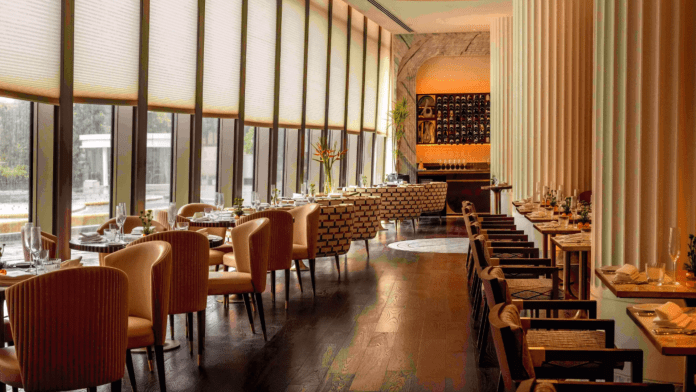
The restaurant's interior design is the creative vision of the renowned Russell Sage Studio, based in London
Ending all speculation and anticipation, EHV International has officially inaugurated Indian Accent, its exquisite fine-dining establishment from Delhi, in the vibrant city of Mumbai.
Restaurateur Rohit Khattar, Chairman EHV said, “For many years we have been offered locations in Mumbai for Indian Accent. Our search has ended at the spectacular Nita Mukesh Ambani Cultural Centre. Indian Accent has a loyal clientele of discerning guests from Mumbai. So we are particularly thrilled to be able to bring the Indian Accent experience to this vibrant city and look forward to it embracing us as warmly as New Delhi and New York have.”
Leading the culinary team at Indian Accent Mumbai will be Head Chef Rijul Gulati, bringing with him eight years of experience from Indian Accent, New Delhi, where he honed his skills under the expert guidance of Culinary Director Chef Manish Mehrotra.
“We are most excited about bringing Indian Accent to Mumbai. In addition to Indian Accent’s signature dishes, Chef Rijul and I have taken care to craft a menu that features more seafood and many more vegetarian options, recognising the dining habits and seasonal produce of this great metropolis,” says Mehrotra.
Overseeing the bar program is Varun Sharma, the mastermind behind the beverage experiences at EHV’s other esteemed establishments, Comorin & Hosa. Varun has now brought his expertise to Indian Accent Mumbai, introducing an array of captivating signature cocktails. Meanwhile, Kevin Rodrigues, the Head of Wines, has meticulously curated a sprawling wine selection that spans the globe, enriching the dining experience. For those indulging in the chef tasting menus, a choice of wine pairing and reserve wine pairing options is also available.
Paying homage to Mumbai’s iconic Art Deco movement, the design of the 75-seat restaurant exudes its distinctive flair. The establishment further boasts two intimate private dining spaces: the first accommodating up to 18 guests and the second seating 10, both accompanied by an adjacent interactive show kitchen.
The restaurant’s interior design is the creative vision of the renowned Russell Sage Studio, based in London. Collaborating closely with EHV’s Design Director, Rohini Kapur, and Director of Development, Vikas Bhasin, the team oversaw the project’s evolution from concept to opening. Local architectural expertise was provided by Incubis Consultants.
“Rashmi and Rohit Khattar were always keen to pay homage to Mumbai’s Art Deco movement and Russell Sage Studios have captured that essence in a contemporary fashion in their design. While thinking of the artwork to complement the design, we chose leading fine art photographer Rohit Chawla, who photographed some of the images of UNESCO Indian heritage sites and curated art deco images from Mumbai to add a romantic, timeless quotient to the space,” says Kapur.
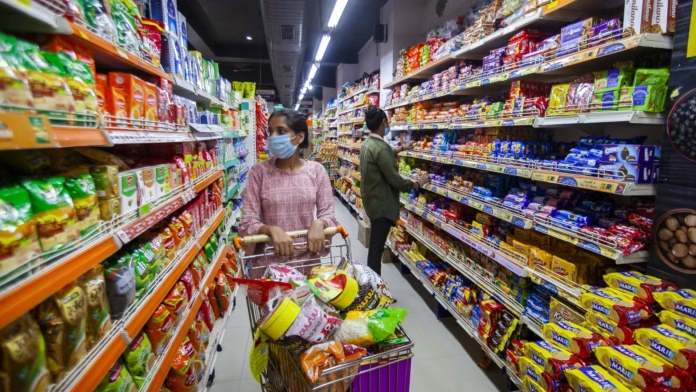
Fueled by a remarkable 7.5% surge in consumption growth, the FMCG sector experienced a substantial 12.2% increase in value during the June quarter, marking the highest growth rate observed in the past eight quarters.
The growth exceeds the previous quarter by 2 percentage points and surpasses the corresponding period from the previous year by 1.3 percentage points, as indicated by NIQ’s (formerly NielsenIQ) FMCG overview. During the quarter, volume growth of 7.5% has outpaced price growth of 4.4%. In the preceding March quarter, volume growth was merely half (3.1%) of the price growth (6.9%).
The rural market’s growth rate surged to 4% during the June quarter, a significant improvement compared to the 0.3% growth recorded in the March quarter. Before this, the rural market had been experiencing a decline. Urban markets, on the other hand, maintain a faster growth pace than rural areas. The growth momentum in urban markets experienced a substantial boost during the June quarter, expanding by 10.2%, whereas it had grown by 5.3% in the March quarter.
NIQ India MD Satish Pillai said, “The softening of India’s inflationary rate and decline in food inflation is good news for the industry. This has led to confidence in spending reflected in retail channels across the country that are growing.”
The decrease in price growth, primarily influenced by the food categories, has yielded a favorable effect on consumers and is expected to be replicated as we approach the festive season.
NIQ lead (customer success), Roosevelt D’Souza, said, “Recovery in rural markets which was in the negative territory for the last few quarters, is primarily driven by non-foods. This, combined with a 21%+ growth in modern trade, augers well for the festive seasons.”
“At this stage, it is important to focus on the right assortment and pack sizes of products. The reduction in input costs, if continued to being passed on to consumers, will only increase consumption benefitting manufacturers, retailers and consumers,” D’Souza added.
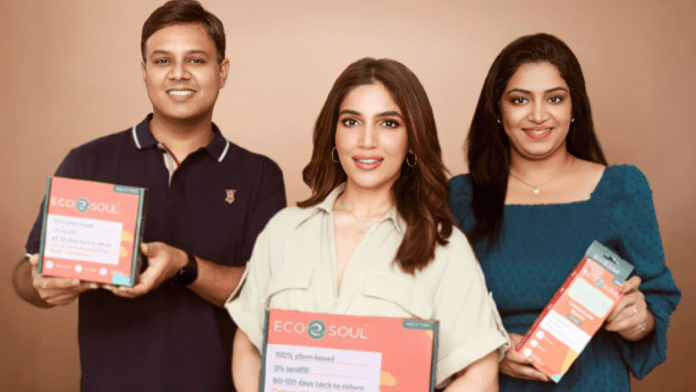
L-R: Rahul Singh, Co-Founder of EcoSoul Home Inc., Bhumi Pednekar, brand ambassador for EcoSoul Home Inc. and Priyanka Aeron, India Managing Director and Head of global HR & tech at EcoSoul Home Inc.
EcoSoul Home Inc., a prominent name in eco-friendly products, is excited to unveil its latest collaboration with the esteemed actor and environmental advocate, Bhumi Pednekar. Serving as their esteemed brand ambassador, Bhumi Pednekar’s partnership with EcoSoul Home echoes the company’s steadfast dedication to nurturing sustainable lifestyles and promoting eco-conscious alternatives derived from renewable sources. This partnership marks a significant stride in elevating environmental consciousness and fostering a culture of mindful consumer choices.
Bhumi Pednekar holds a revered position within the climate action sphere, praised for her unwavering dedication to environmental initiatives and her efforts in championing sustainable lifestyle choices. Through her collaboration with EcoSoul, she aims to amplify her advocacy for mindful consumption and emphasize the importance of choosing eco-friendly alternatives over single-use plastics.
Rahul Singh, Co-Founder of EcoSoul Home Inc., said, “We take immense pride in embarking on this transformative journey alongside Bhumi Pednekar, who joins us as our brand ambassador. As a passionate proponent of environmental sustainability and the National Advocate for Sustainable Development Goals (SDGs) for the United Nations Development Programme, Bhumi’s resolute dedication to driving positive change seamlessly aligns with EcoSoul Home’s mission. Her influential voice and dynamic social media engagement, where she highlights critical topics such as climate change, sustainability, SDGs, and plastic pollution, will undoubtedly galvanize individuals globally to embrace eco-conscious choices and take meaningful steps for our planet.”
“With Bhumi’s endorsement, we are well-positioned to expedite the global embrace of sustainable products, fostering a formidable movement toward a greener, more robust, and sustainable future, thereby leaving a profound legacy for generations to come,” he added.
Bhumi Pednekar, renowned for her exemplary commitment to sustainable living, expressed, “It is an honor to associate with EcoSoul Home as their brand ambassador. Together, we can empower individuals to make conscientious decisions that contribute to a healthier planet. By endorsing EcoSoul’s products, we aim to influence a shift in consumer behavior and encourage businesses to adopt sustainable alternatives. The range of eco-friendly and compostable offerings by EcoSoul Home resonates perfectly with my values, and I am excited to be part of this impactful journey.”
EcoSoul Home’s wide range of environmentally friendly products has already gained acclaim in various countries including the USA, Canada, UK, Germany, UAE, India, China, and Vietnam. With Bhumi Pednekar on board, this partnership is poised to magnify the sustainability message on a global level, elevating worldwide environmental consciousness and inspiring responsible decisions across the globe.
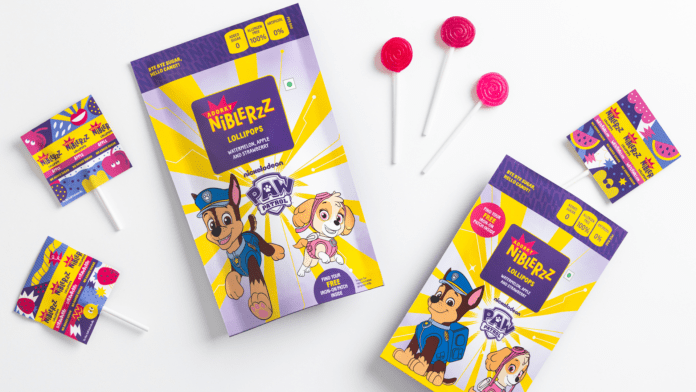
Niblerzz, a well-known and respected confectionery brand in India’s retail sector, has joined forces with Viacom18 Consumer Products in an exciting venture. Together, they are unveiling a novel product known as Paw Patrol Lollipops. This inventive creation showcases the beloved characters from the immensely popular Paw Patrol cartoon series, a prominent feature on Nick Jr. These lollipops, a much-loved confectionery choice, represent a groundbreaking partnership between the renowned children’s show and a local brand. The goal is to provide a confectionery treat with a clean-label approach, tailored to delight the discerning Indian market.
The beloved animated show, Paw Patrol, which chronicles the daring escapades of Ryder and his intrepid canine squad as they tackle missions in Adventure Bay, harmoniously aligns with Niblerzz’s dedication to transforming the world of candies and sweets. Niblerzz is steadfastly engaged in a quest to eradicate sugar from their offerings, guaranteeing their products retain their purely natural essence.
Co-Founders of Niblerzz, Sandhya Seshadri, and Aashnee Gajaria, shared their motivation for this creative venture. They expressed that many parents had expressed a desire for a clean lollipop option, one that could captivate their children for a brief period while granting them a much-needed break. Simultaneously, parents are increasingly seeking healthier candy and confectionery alternatives, recognizing the challenges of evading candies altogether due to children’s insistent demands. The co-founders elaborated on this trend stated, “Today’s parents actively seek ‘better for you’ options devoid of refined sugar and packed with natural goodness for their children, knowing the perils of sugar in terms of hyperactivity, sleep disturbances, learning issues, emotional well-being, and even diabetes. Additionally, children exhibit allergies to artificial flavors and colors. As clean alternatives are scarce in the Indian market, parents usually resort to purchasing such products while traveling abroad or requesting friends and family to bring them.”
The partnership with Paw Patrol highlights Niblerzz’s unique position as India’s exclusive 100 percent clean candy and confectionery brand, particularly in the realm of lollipops. This collaboration effectively addresses a significant consumer need, as evidenced by the Paw Patrol team’s deliberate choice to unite with Niblerzz.
Sachin Puntambekar, Business Head of Vicom18 Consumer Products, shared the company’s perspective on the partnership, “We always strive to stay at the forefront of innovation through partnerships that resonate with consumer preferences. Paw Patrol holds a special place in the hearts of its audience, and we are delighted to present it to young fans in a novel and enjoyable form.”
The Paw Patrol Niblerzz Lollipops will be available in two different options – a trial bag containing six lollipops, and a share bag containing fifteen. Both bags will offer a variety of three tempting flavors: Strawberry, Watermelon, and Apple, providing everyone the opportunity to enjoy guilt-free indulgence.
Accessible through Niblerzz’s direct-to-consumer website and diverse online platforms such as Amazon, Swiggy Mini, and Big Basket, the Paw Patrol Niblerzz Lollipops will also be readily available at physical retail outlets. The packaging will prominently feature the Paw Patrol characters, while children will also be delighted to discover 22 captivating Paw Patrol collectibles alongside their lollipops.
Beyond the innovative Lollipop selection, Niblerzz offers a diverse product range that includes other wholesome candy options such as Real Fruit Gummies available in Orange, Mango, and Mixed Fruit flavors, along with Chocolate Peanut Butter Cups.
Pradeep, Founder & CEO Farmers Fresh Zone and other selected startups with Stefanous Fotiou - Director, Office of Sustainable Development Goals at FAO
Farmers Fresh Zone (Farmers FZ), a startup headquartered in Kochi, was chosen as one of the twelve agri-food startups from around the globe by the United Nations’ Food and Agriculture Organization.
In a historic event, the United Nations hosted the inaugural SDG Agrifood Accelerator Programme, where Farmer’s Fresh Zone distinguished itself through its innovative framework and adaptable practices that can be implemented anywhere in the world.
Among the panel discussions held during the event, Farmers Fresh Zone was among the trio of startups selected to participate. While six startups were invited to showcase their distinctive Sustainable Development Goals (SDGs), a total of twelve were chosen to be part of the program.
Sharing more details, Pradeep P S, Chief Executive Officer, AgriTech D2C & FAAS (Farm to fork as SaaS), said, “India is the second largest country in agriculture production and we, at Farmers Fresh Zone, are super proud to represent as the only one from India at a global forum. The event was at Rome, Italy aiming to attain the UN sustainable development goals. Being recognized as a leader of sustainability in the agriculture sector is no mere feat. I am extremely elated that our sincere thoughts and efforts to bring down carbon emissions have garnered attention. We presented our model before an august audience in the event. Participation at UN function in Rome also opened roads to network with global names in this sector.”
Through this initiative, Farmers FZ will be granted funds and resources to implement essential adaptations tailored to each market, thereby facilitating an expansion of their outreach and the globalization of their business. The accelerator’s assistance encompasses financial preparedness, innovation capabilities, and market expansion. The primary aim of the program is to support agrifood startups in their growth endeavors while aligning with the United Nations’ Sustainable Development Goals. The business model of Farmers Fresh Zone significantly contributes to SDG 1, SDG 2, SDG 12, and other relevant goals.
Farmers FZ embarked on its journey by bridging the divide between rural farmers and urban consumers, accomplishing this by delivering wholesome, premium-quality, and safe-to-consume vegetables directly from the fields to the dining table within a single day. Drawing from six years of profound insight into the agricultural sector, the startup introduced a new vertical that facilitates seamless operations for agribusinesses and farmers’ organizations, all while quantifying their carbon footprint.
Operating under their Farming-as-a-Service (FaaS) model, the startup has garnered clients spanning India, Germany, the US, and Canada. Anchored in sustainability, the startup’s business model embodies the farm-to-fork concept, meticulously curbing food wastage and championing regional production and consumption practices.
Patanjali Foods witnessed a significant decline of almost 5%, with its shares falling to INR 1,232 during Monday’s trading session on the BSE. This drop came in response to the company’s financial report, which revealed a substantial 64% year-on-year (YoY) decrease in net profit for the quarter ending June 2023, amounting to INR 878 crore. Despite this profit setback, the company experienced a noteworthy growth in revenue from operations, recording a nearly 8% YoY increase to reach INR 7,767 crore.
The significant decline in net profit was a result of subdued sales growth and a pronounced deterioration in operational performance.
Meanwhile, its total expenses for the quarter rose to INR 7,691 crore from INR 7,038 crore a year ago.
The operating profit, computed as EBITDA (earnings before interest, taxes, depreciation, and amortization), experienced a sharp 57% year-on-year decline, reaching INR 169 crore. Additionally, the operating margin contracted by 326 basis points to 2.17%.
The core edible oils segment registered a 13% decrease in quarterly revenue, amounting to INR 5,891 crore. On the other hand, the food and FMCG division recorded a notable 8.2% increase in revenue, reaching INR 1,952 crore.
The significant decline in EBITDA can be attributed mainly to an operational deficit in the edible oils segment. Specifically, the edible oils business incurred an operating loss of INR 147 crore during the quarter.
The Food & FMCG category demonstrated growth both in terms of value and volume, making a significant contribution of approximately 25% to the overall sales. During the quarter, branded sales constituted around 71% of the company’s total revenue.
The company noted the presence of subdued market conditions within the edible oil sector, attributed to the persistent decline in prices. Despite the decline in revenue, the company managed to uphold its market share. Notably, there was a remarkable 36% year-on-year increase in volumes during this period.
Exports turnover experienced a substantial 128% year-on-year surge, reaching INR 162.45 crore. Branded sales, encompassing both the foods and FMCG segment as well as edible oils, amounted to INR 5,527.78 crore.
Despite facing the challenges of increasing inflation and macroeconomic factors, the Foods and FMCG segment disclosed an EBITDA of INR 360.80 crore, maintaining an EBITDA margin of 18.48%. The company attributed this performance to effective cost efficiency measures.
By 11:19 am, the stock was trading 2% down at INR 1,267.4 on the BSE. Notably, the stock has witnessed a substantial surge of nearly 40% over the past six months, and its value has risen by 7% year-to-date.
According to data from Trendlyne, the stock’s average target price stands at INR 1,405, reflecting a potential upside of 11% based on the current market prices. Notably, one analyst has given the stock a consensus recommendation of ‘Strong Buy’.
From a technical perspective, the stock’s 14-day Relative Strength Index (RSI) is currently at 51.3. According to Trendlyne data, an RSI reading below 30 is indicative of an oversold condition, while a reading above 70 suggests the stock might be overbought. Additionally, the Moving Average Convergence Divergence (MACD) stands at 43.2, positioning itself above its Center Line but still below the signal line.
The Central government has selected the street food hub near V.O.C. Park in Coimbatore city for transformation into a Healthy and Hygienic Food Street as part of the National Health Mission (NHM) initiative.
According to a notification issued by the Ministry of Health and Family Welfare on August 11th, Elliot’s Beach in Chennai, V.O.C. Park and its adjacent road, the street food hub at Velankanni, and the temple street food stalls at Mamallapuram are slated to undergo development as Healthy and Hygienic Food Streets. Under this program, each of these street food hubs will receive INR 1 Crore for the purpose of revitalizing the area and enhancing facilities.
A representative from the Food Safety and Standards Authority of India (FSSAI) has indicated that a committee consisting of the Health Secretary, Municipal Administration Secretary, and Food Safety Commissioner was responsible for selecting the names of the four street food hubs. These selections were made in accordance with recommendations received from each district. Subsequently, the list was forwarded to the NHM, which allocated a collective sum of INR 4 crore to facilitate the enhancement of these four street food hubs.
A representative from the Food Safety and Standards Authority of India (FSSAI) has indicated that a committee consisting of the Health Secretary, Municipal Administration Secretary, and Food Safety Commissioner was responsible for selecting the names of the four street food hubs. These selections were made in accordance with recommendations received from each district. Subsequently, the list was forwarded to the NHM, which allocated a collective sum of ₹4 crore to facilitate the enhancement of these four street food hubs.
Having selected the street food hub at V.O.C. Park for this initiative, the Coimbatore Corporation will collaborate with the district administration to formulate a proposal for its execution, which will then be submitted to the State government. On Saturday, Corporation Commissioner M. Prathap conducted a visit to the location and engaged in discussions with the food vendors.
It has come to light that as part of the rejuvenation effort, amenities such as vendor platforms, street lighting, water access, and restroom facilities will be made available.
S. Krishnan, president of V.O.C. Park Platform Vendors’ Association affiliated to the CITU, welcomed the move. “There are 89 vendors who sell food in the area, of which 56 have registration certificates from the FSSAI. We are in the process of getting registration certificates for the remaining 33 vendors,” he said.
V.O.C. Park, Power House at Tatabad, and Saravanampatti represent the trio of street food clusters in Coimbatore which have been granted the Clean Street Food Hub recognition by the FSSAI.
We use cookies to ensure that we give you the best experience on our website. If you continue to use this site we will assume that you are happy with it.