Wednesday, February 4, 2026
Home Blog Page 991

Tata NourishCo dives into premium spices market, unveils Kashmiri Saffron; Ready to tackle local brands with unique offerings

0
NourishCo
NourishCo (Representative Image)

During an interview, Vikram Grover, the Managing Director of NourishCo Beverages, a subsidiary of Tata Consumer Products, stated that while local FMCG brands may have experienced rapid growth compared to national brands over the past year, they are ready to face any competition with their unique and distinct products.

“The problem (of local competition) magnifies if companies sell the same products. We have a combination of differentiated products, great value, national advertising at scale and investments in distribution muscle, which is difficult to emulate,” he said.

According to a report by Kantar last week, the volume growth of regional and local brands surpassed that of national ones in the 12-month period ending on 30th April. The volumes of regional and local brands experienced a significant growth of 12.7%, while national brands only grew by 8.2% during the same period.

“We believe we have a potent mix of levers to help us overcome any such competition,” Grover said.

Tata NourishCo, known for its sales of Himalayan mineral water, Tata Gluco Plus functional drinks, Fruski juices, and honey, is now venturing into the premium spices category. Under the Himalayan brand, the company is introducing Kashmiri saffron, which Vikram Grover described as potentially the world’s most expensive spice.

“Given the adulteration prevalent in the category, there is a trust deficit in the saffron category in India and lack of awareness among consumers. We are addressing this with our product,” he said.

India’s total saffron demand is roughly estimated to be 100 tonnes per year, with domestic production accounting for 13 tonnes of Kashmiri saffron.

The company has plans to expand into other areas under the Himalayan franchise, but they will exclusively focus on premium offerings.

“The attempt is to move beyond the water space. But we will get into spaces within the guardrails of premiumisation and purity,” he said.

Functional beverages continue to be a niche category, unlike the mass entry-level segment where major players like Bisleri, Coca-Cola’s Kinley, and PepsiCo’s Aquafina engage in competition.

In FY23, NourishCo recorded net sales of INR 621 crore. Initially established as a joint venture between Tata Consumer Products and PepsiCo, a renowned beverages and snack foods maker, the company underwent changes in 2020 when the Tatas acquired PepsiCo’s stake in NourishCo. Since then, the Tata group has expanded its premium beverages portfolio within the NourishCo brand.

Grover said the company sees “a lot of scope to convert consumers to branded beverages and expand distribution”.

During the quarter ending June 30, 2023, Tata Consumer Products, a subsidiary of the Tata Group, announced a notable year-on-year increase of 22.1 percent in net profit, amounting to INR 337.7 crore. Within the same quarter, the packaged beverages business showed a 2 percent growth in revenue and a 3 percent increase in volume. The coffee business reported a substantial 21 percent growth, while the India foods business witnessed impressive revenue growth of 24 percent.

Earlier this year, the company revealed a business reorganization plan, consolidating Tata Coffee’s plantation business into Tata Consumer Products Foods and Beverages division.

Advertisement

Alcohol duty overhaul: UK introduces ABV-based taxation system, affecting drink prices

0

Many alcoholic drinks will now cost more as a new alcohol duty has been introduced by UK Prime Minister Rishi Sunak and Chancellor Jeremy Hunt on August 1st.

The new duty system will impose taxes on all alcoholic beverages based on their alcohol by volume (ABV) content, moving away from the previous approach that taxed them according to the type of alcohol.

Nevertheless, the increases will result in a reduction of duty on numerous alcoholic beverages found on supermarket shelves, such as bottles of pale ale, pre-mixed gin and tonic, and prosecco.

The new tax regulations will implement reduced taxes on low-alcohol products, specifically those with an alcohol by volume (ABV) below 3.5%. Additionally, all beverages with an ABV above 8.5% will be subjected to a uniform tax rate, irrespective of their type.

In a news release, the previous duty system was described as “complex and unfair”. The new system, however, is said to “support wider UK tax and public health objectives”.

Prime Minister Rishi Sunak said, “I want to support the drinks and hospitality industries that are helping to grow the economy and the consumers who enjoy the end result. Not only will today’s changes mean that the price of your pint in the pub is protected, but it will also benefit thousands of businesses across the country.”

He added, “We have taken advantage of Brexit to simplify the duty system, to reduce the price of a pint, and to back British pubs”.

The government is also introducing ‘Small Producer Relief’, which replaces and extends the previous Small Brewers Relief scheme, which was introduced to reduce rates of beer duty for small brewers.

Under this scheme, small enterprises producing alcoholic products with an alcohol by volume (ABV) of less than 8.5% can avail reduced rates of alcohol duty for eligible items. This initiative is designed to offer small producers the financial flexibility to explore new beverage varieties and expand their business.

Barry Watts, head of policy and public affairs at Society of Independent Brewers, commented, “These are the most significant changes to the alcohol duty system for generations which will have far-reaching implications for what we order in the pub and what appears on the shop shelves. It is the culmination of five years of consultation on the future of Small Breweries’ Relief – a scheme that has made the huge growth of craft breweries possible over the past twenty years.

“These changes will finally address the ‘cliff edge’ which was a barrier to small breweries growing and build on the scheme’s success by applying it to other alcoholic products below 8.5%.”

Advertisement

Punjab Grill’s ambitious growth spree: Five new outlets set to debut in August!

0
Punjab Grill
Punjab Grill (Representative Image)

Punjab Grill, the exquisite fine-dining restaurant chain, is excited to reveal a remarkable expansion strategy that is sure to bring joy to culinary aficionados all across the country.

Driven by its surging popularity and steadfast dedication to culinary mastery, Punjab Grill is poised to tantalize the palates of an even broader array of discerning diners in fresh and uncharted territories.

The restaurant chain is thrilled to announce the grand opening of five new outlets in prime locations across the country. In August, the new restaurants will be welcoming customers in vibrant cities like Hyderabad, Bangalore, Pune, and Delhi-NCR. Additionally, there are plans for several other openings in prominent cities scheduled for September 2023.

This strategic expansion exemplifies Punjab Grill’s steadfast commitment to sharing the opulence of Indian culinary traditions with every nook and cranny of the nation.

Rohit Aggarwal, Co-Founder and Managing Director of Lite Bite Foods, said, “We are immensely grateful for the love and support we have received from our patrons over the years. This expansion marks an important chapter in our journey, allowing us to share the essence of Punjab Grill with an even broader audience. We remain committed to delivering an unparalleled dining experience that showcases the essence of India’s culinary heritage.”

The expansion of Punjab Grill not only showcases its culinary expertise but also underscores its commitment to offering remarkable career prospects within the hospitality sector. Through the establishment of each new outlet, the restaurant chain aims to generate employment while nurturing a culture of enthusiasm and creativity among its staff.

Advertisement

FMCG giant Adani Wilmar reports net loss of INR 78.92 Crore in Q1 FY24

0
adani-group-wilmar
Adani Wilmar (Representative Image)

Adani Wilmar, a prominent player in the Fast-Moving Consumer Goods (FMCG) sector, has announced a combined deficit of INR 78.92 crore for the initial quarter (Q1) concluding on June 30, 2023. As per an official filing with regulatory authorities, the company had achieved a consolidated profit of INR 193.59 crore during the corresponding period in the previous financial year.

According to the filing with the Bombay Stock Exchange (BSE), the total revenue of the company also saw a decrease, reaching INR 12,994.18 crore in the first quarter of the fiscal year 2023-24, compared to INR 14,776.39 crore in the same period of the fiscal year 2022-23.

Nevertheless, the company managed to curtail its total expenses to INR 13,061.86 crore in the first quarter of the fiscal year 2023-24, marking a decrease when contrasted with the total expenses of INR 14,516.13 crore incurred in the first quarter of the fiscal year 2022-23.

Angshu Mallick, MD and CEO of the company said, “We have regained the momentum in our edible oil business with the decline in the edible oil prices. The soft prices of edible oil are expected to augur well for the industry.”

The company is gaining good share from regional brands in the under-indexed customer segments with marketing and sales focus on specific geographies and oil categories. To capture the opportunity in the value-added blended oils, the FMCG major is investing in this segment, under Xpert brand.

For the food and FMCG sector, this marked the eighth consecutive quarter of achieving growth, with volumes increasing by over 20 percent and revenues surging by more than 30 percent year-on-year for the standalone company. Acknowledging the urgent requirement of Indian households for authentic and consistent quality whole wheat products, the company introduced a range of four premium grades (including Sharbati) of Whole Wheat under the esteemed Fortune brand, catering to specific markets.

Mallick shared, “We developed a multi-purpose cleaner as a forward integration of our oleo-chemical products and launched this product under ‘Ozel’ band for HoReCa segment. Our margins during the quarter got impacted by high-cost inventory in a falling edible oil price environment and dis-aligned hedges compared to spot prices of physical commodity.”

Advertisement

Sapphire Foods India, operator of KFC and Pizza Hut, faces Q1 profit decline; Expenses outpace revenue growth, shares drop 3.5%

0
KFC
KFC (Representative Image)

On Wednesday, Sapphire Foods India, the company responsible for operating KFC and Pizza Hut restaurants domestically, announced a first-quarter profit that fell below expectations. The increase in expenses surpassed the growth in revenue, leading to the lower-than-anticipated financial results.

According to an exchange filing, the net profit of the company for the quarter ended June 30 was 249.4 million rupees ($3.02 million). This figure represents a decline from the net profit of 382.7 million rupees recorded in the same quarter of the previous year. The franchisee of Yum Brands, based in the U.S., provided this financial information.

According to Refinitiv IBES data, analysts had an average expectation that the company would report a profit of 273.8 million rupees.

Expenses witnessed a notable increase of 21.6%. The cost of materials consumed rose by 17.4%, reaching 2.06 billion rupees, while employee costs surged by 24.3%.

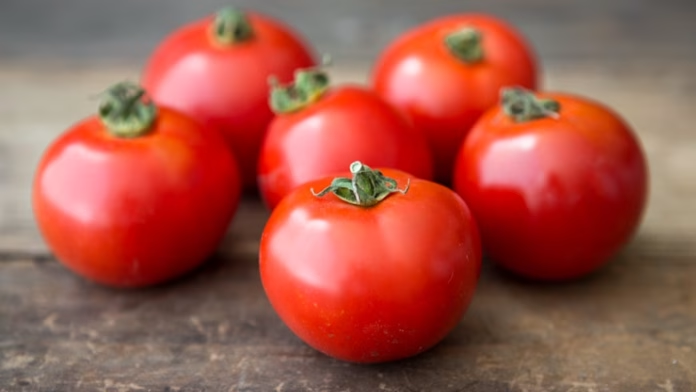
Due to disruptions in supplies caused by monsoon rains, India is grappling with soaring prices of essential goods. In response to this inflationary pressure, companies like Domino’s are “re-engineering” their flagship products, such as the 49-rupee pizza, by reducing the price and using fewer tomatoes compared to its earlier cheapest offering priced at 59 rupees.

Read More: After McDonald’s, Subway India outlets remove tomatoes from salads and sandwiches amidst soaring prices

Sneha Poddar, Associate Vice President at Motilal Oswal Financial Services, pointed out that raw material prices have reached their lowest point and are now contributing to an improvement in margins. She also expressed her optimistic view on the long-term potential for quick-service restaurants, seeing strong opportunities ahead.

During the quarter, Sapphire Foods’ Pizza Hut restaurants experienced a decline of 9% in same-store sales. In contrast, the company’s KFC business reported a flat growth in same-store sales.

Jubilant Foodworks, the operator of rival Domino’s Pizza, faced a significant 74% drop in quarterly profit due to the challenge of higher costs. On the other hand, Westlife Foodworld, responsible for operating McDonald’s stores in West and South India, reported a rise in profit that was smaller than anticipated.

Following the release of the results, shares of Sapphire, which manages a network of more than 700 restaurants spanning India, Sri Lanka, and Maldives, experienced a decline of up to 3.5%.

Advertisement

India’s edible oil imports hit record high in July, surging to 1.76 million metric tonnes

0
Edible oil
Edible oil (Representative Image)

India’s edible oil imports reached a new pinnacle in July, surging to a record-breaking 1.76 million metric tonnes. This substantial rise can be attributed to refiners strategically bolstering their stocks in anticipation of impending festivals. The uncertainty surrounding supplies from the Black Sea region further propelled this trend, as reported by five knowledgeable dealers to Reuters.

Increased purchases by the world’s largest importer of vegetable oils may contribute to reducing palm oil stocks in Indonesia and Malaysia, providing support to benchmark futures. Additionally, this move could bolster soyoil futures and potentially lead to decreased inventories in sunflower oil-producing Black Sea countries.

According to the Solvent Extractors’ Association of India (SEA), India’s monthly average imports of edible oil during the 2021/22 marketing year stood at 1.17 million tonnes. In June of the same year, the country’s edible oil imports reached 1.3 million tonnes.

Read More: India’s edible oil imports soar by 39.31% to 13.11 Lakh tonnes in June amidst surging demand

Based on estimates from dealers, palm oil imports surged from 683,133 tonnes in June to 1.09 million tonnes in July, marking the highest volume in the past seven months.

Read More: India’s palm oil imports witness sharp 49% surge in June, reaching 3-month high

Sandeep Bajoria, CEO of Sunvin Group, a vegetable oil brokerage and consultancy firm, stated that the discount of palm oil compared to soyoil and sunoil has expanded. This development has encouraged refiners to boost their purchases in preparation for the upcoming festivals.

The July vegetable oil import data is expected to be published by the Solvent Extractors’ Association of India (SEA) around mid-August.

Rajesh Patel, managing partner at GGN Research, an edible oil trader and broker, mentioned that importers are building up significant oil reserves in response to the Russia-Ukraine crisis. This precautionary measure aims to ensure ample stock availability and prevent any potential shortages.

Dealers estimated that sunflower oil imports experienced a significant surge of 73% from the previous month, reaching 330,000 tonnes, marking the highest volume in the past six months. On the other hand, soyoil imports witnessed a decline of 22%, settling at 340,000 tonnes.

According to Patel, soyoil imports in July fell short of expectations due to delays in berthing, which resulted in some vessels being unable to unload at Kandla port.

India’s primary sources of palm oil are Indonesia, Malaysia, and Thailand, while soyoil and sunflower oil are mainly imported from Argentina, Brazil, Russia, and Ukraine.

Advertisement

Amazon Fresh expands customer base: Non-Prime members can now order groceries

0
amazonfresh
Amazon Fresh (Representative Image)

Amazon has commenced the provision of its Fresh grocery delivery service to individuals who are not subscribed to Prime membership. The initial launch will be confined to twelve cities, which encompass Boston, Phoenix, Dallas, and San Francisco, as stated in a communication sent to customers on Wednesday.

Before, Amazon exclusively provided grocery delivery services to Prime members, a subscription that costs $139 per year and grants benefits such as expedited shipping and additional privileges.

Individuals who are not subscribed to Prime membership and wish to explore the service will incur a fee of $13.95 for deliveries under $50. This amounts to an additional $4 compared to the charge for Prime members placing an order of the same size.

For orders falling between $50 and $100, the delivery charge will be $10.95, while orders exceeding $100 will carry a fee of $7.95, as stated by the company. Additionally, pick-up orders from certain metro areas will be provided free of charge.

Amazon manages a total of 44 Fresh grocery stores throughout the country, primarily concentrated in California, Illinois, Virginia, and Washington state. Besides, the company operates over 20 cashier-free convenience stores under the Amazon Go brand within the United States. Furthermore, Amazon is the proprietor of Whole Foods, which it acquired in 2017 for a significant sum of $13.7 billion.

However, despite its burgeoning aspirations to become a prominent contender in the industry, the corporation has faced obstacles in pinpointing the optimal strategy for its operations and capturing a substantial portion of the market, a task made challenging by rivals such as Walmart and Kroger.

According to Neil Saunders, the Managing Director of GlobalData Retail, the move by Amazon to extend grocery deliveries to non-Prime members is logically sound. This decision broadens their customer demographic, a crucial factor for fueling growth, he noted.

However, given that Prime membership penetration is extremely high, the scale of the upside remains to be seen and it is likely that further changes will be needed to help move the business forward, Saunders said in an emailed statement.

Meanwhile, the company has also been trimming costs by closing some Amazon Fresh and Go stores and cutting hundreds of jobs as part of a restricting plan across its Whole Foods and Fresh grocery stores. It has also paused expansion on Fresh supermarkets as it aims to find the right formula that will allow it to scale its business.

In a blog post on Wednesday, the company also provided a look into two redesigned Fresh stores in Schaumburg and Oak Lawn, Illinois. It says the new format provides more product selections, low prices on more items and greater convenience during checkout. They also feature Krispy Kreme Doughnut shops.

Advertisement

Sana-di-ge announces exciting culinary expansion: New locations to open in Mumbai, Gurgaon and Dubai

0
Sana-di-ge
Sana-di-ge

Sana-di-ge, a renowned name in the culinary world for its coastal cuisine, has exciting news to share. With its exceptional reputation and a loyal following of food enthusiasts, the restaurant is now ready to embark on an ambitious expansion plan. This culinary gem is all set to spread its flavorsome delights to new horizons, with upcoming openings in Mumbai, Gurgaon, and Dubai. By reaching out to these vibrant cities, Sana-di-ge aims to cater to a wider audience across different regions and continue its culinary legacy of tantalizing taste buds with coastal culinary delights.

Talking about expansion, Akshay Shetty, group general manager, hospitality, MRG Group, shared, “For quite some time, we have been receiving numerous queries and demands to open a new restaurant. However, we were determined not to rush into it solely for the sake of profits. Our core belief is centered around providing unparalleled experiences to our valued clients. Our mission is to deliver the joy of savoring exquisite cuisine and spreading happiness through our culinary offerings. With this steadfast commitment in mind, we took the necessary time and effort to perfect our vision. Now, we are excited to announce that we are finally prepared to bring the ultimate coastal cuisine experience to our patrons, starting with the vibrant city of Mumbai, followed by Gurgaon and even extending to the cosmopolitan city of Dubai. With our continued dedication to quality, authenticity, and innovation, we are confident that our new locations and dining concepts will captivate the hearts and palates of even more food enthusiasts.”

As part of its expansion, Sana-di-ge is introducing a luxurious dining experience in carefully chosen locations. This upscale offering is tailored to satisfy guests in search of a refined ambiance while relishing the restaurant’s signature dishes. A team of expert chefs will employ traditional techniques and the freshest ingredients to craft these exquisite culinary delights, ensuring a memorable and delightful experience for discerning diners.

In addition to its expansion, Sana-di-ge is embracing diversity by introducing a range of new menu options. These additions include vegan, Jain, and kids’ menu choices, ensuring that every segment of the dining community is catered to with care.

Moreover, Sana-di-ge is demonstrating its commitment to responsible and sustainable practices. As an integral part of the expansion plan, the company will incorporate eco-friendly initiatives, such as sourcing locally-produced ingredients to support local communities and reduce carbon footprint. Additionally, the restaurant will actively work towards reducing waste and exploring sustainable packaging options, all aimed at minimizing its environmental impact and contributing to a greener and more sustainable future.

Advertisement

Raise your glasses! Brewpit 69 launches in Delhi-NCR, setting new heights for brewery experiences

0
Brewpit 69
Brewpit 69 (Representative Image)

Brewpit 69, the brainchild of visionary entrepreneur Shashank Misra, has emerged as the tallest and most cutting-edge brewery in Delhi-NCR. With its grand opening, this beer joint is poised to redefine the brewery experience, offering patrons a truly distinctive and energetic atmosphere. Get ready to embark on a beer adventure like no other at Brewpit 69!

Nestled in the heart of Delhi-NCR, Brewpit 69 stands as a rooftop lounge and bar, meticulously designed to exude a warm and inviting atmosphere. Blending contemporary elegance with rustic charm, it creates the perfect setting for both intimate gatherings and lively soirées with friends. The snug seating arrangements and dim lighting combine harmoniously to fashion an ideal ambiance that beckons you to savor every moment at this charming haven. Whether it’s a private get-together or a boisterous celebration, Brewpit 69 promises an unforgettable experience for all who step through its doors.

At Brewpit 69, the menu caters to an array of discerning taste buds, offering a delightful selection of handmade beers. From refreshing and crisp lagers to indulgent and intricate ales, our brewmaster’s craftsmanship ensures a diverse range of flavors to suit every palate. Whether you’re a connoisseur seeking a complex brew or a casual enthusiast in search of a refreshing pint, our beer menu has something special in store for you. Embrace the delectable world of handcrafted beers at Brewpit 69!

With carefully chosen music playlists and sporadic live performances, Brewpit 69’s beat comes to life. The heartfelt sounds and varied musical choices complement the atmosphere, resulting in an immersive experience, whether it’s a relaxed day or a lively evening.

Misra, the proprietor of The Barbeque Company, has ambitious plans to establish multiple Brewpit locations across India in the coming years.

Advertisement

Is Peanut Butter Harming Your Furry Friend? Experts Reveal the Truth!

0
Peanut Butter dog

Peanut butter is a beloved treat for many humans, and it has also become a popular snack for our furry companions, particularly dogs. The delightful taste and creamy texture of peanut butter make it an enticing reward during training or simply as a special treat. However, recent concerns have arisen regarding the potential dangers of feeding peanut butter to our four-legged friends. In this article, we will explore the truth behind these claims by consulting experts and delving into the scientific evidence.

The Love for Peanut Butter:

Dogs, in particular, have earned a reputation for their affinity for peanut butter. The internet is replete with adorable videos of dogs enthusiastically licking peanut butter off spoons or attempting to lick it from the roofs of their mouths. Its high protein content and rich flavor make it a desirable addition to their diets, but is it safe for them?

Xylitol: A Hidden Danger

One of the primary reasons for concern is the presence of xylitol, a sugar substitute, in certain peanut butter brands. Xylitol is safe for human consumption and has gained popularity as a sugar alternative due to its low-calorie content and dental benefits. However, it can be extremely toxic to dogs.

According to veterinarians, even small amounts of xylitol can lead to a rapid release of insulin in dogs, causing a dangerous drop in blood sugar levels, a condition known as hypoglycemia. In severe cases, xylitol ingestion can lead to liver failure and even death. As such, it is crucial to read the labels of peanut butter jars carefully and avoid any products that contain xylitol.

Nutritional Considerations:

Beyond xylitol, the nutritional aspect of peanut butter for dogs warrants scrutiny. While peanut butter is a good source of healthy fats and protein, it is also high in calories. Regularly feeding large amounts of peanut butter to dogs, especially smaller breeds or overweight dogs, can lead to obesity and associated health issues such as joint problems and heart disease.

Moreover, some peanut butter brands contain added sugar, salt, and unhealthy hydrogenated oils, which can be harmful to dogs. The consumption of these additives can contribute to obesity and other health concerns, just as it can in humans.

Allergies in Dogs:

Allergies to peanuts and peanut butter are another concern when it comes to canine consumption. Dogs, like humans, can develop allergies to certain foods. Some common symptoms of food allergies in dogs include skin irritation, itching, gastrointestinal issues, and ear infections.

If your dog has never had peanut butter before, it’s essential to start with a small amount and carefully observe their reaction. If any adverse symptoms occur, discontinue the use of peanut butter and consult with a veterinarian to identify the cause and appropriate treatment.

Feeding Peanut Butter Responsibly:

While there are potential risks associated with peanut butter consumption in dogs, it can still be given as an occasional treat when done responsibly. Here are some guidelines to ensure safe peanut butter enjoyment for your furry friend:

1. Check the ingredients: Always read the label and avoid peanut butter products that contain xylitol or excessive amounts of sugar, salt, and unhealthy fats.

2. Moderation is key: Peanut butter should be a rare treat, not a regular part of your dog’s diet. Be mindful of the high-calorie content and potential weight gain.

3. Introduce gradually: If your dog has never had peanut butter before, introduce it in small quantities and monitor their reaction for any signs of allergies or digestive issues.

4. Homemade peanut butter: Consider making homemade peanut butter for your dog, using only natural and dog-friendly ingredients. This way, you have full control over what goes into the treat.

Final Thoughts:

Peanut butter can be both a delightful and potentially harmful treat for your furry friend. The presence of xylitol in certain brands poses a significant risk to dogs, making it crucial to read labels diligently. Additionally, the high-calorie content and potential for additives raise concerns over excessive consumption, especially in overweight or smaller breeds. It is essential to feed peanut butter to dogs responsibly, in moderation, and preferably as a homemade treat with safe ingredients. As with any dietary changes, it is always best to consult with your veterinarian to ensure your dog’s health and well-being are safeguarded.

Advertisement