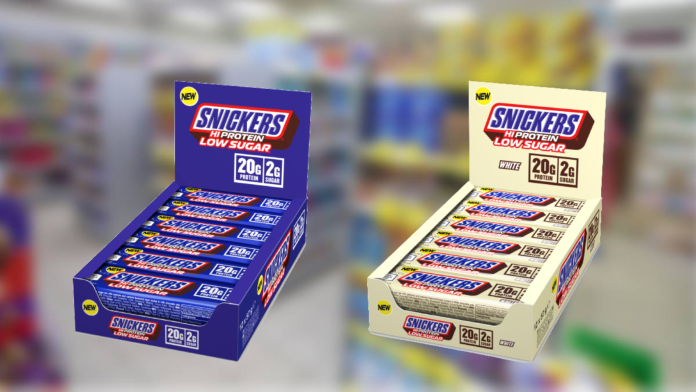
Mars Chocolate Drinks & Treats is broadening its selection of protein-infused items by introducing the Snickers Hi Protein Low Sugar and Snickers Hi Protein Low Sugar White variants.
The company’s intention behind this release is to make a substantial impact on the market presence of Mars’ Snickers brand within the protein bar industry. This market segment is currently valued at £151.7 million in the UK, as indicated by data from Total Market and Convenience.
Crafted to deliver the well-known essence of Snickers with its blend of peanut, nougat, and caramel, the Snickers Hi Protein Low Sugar and Snickers Hi Protein Low Sugar White versions come in a fresh, reduced-sugar configuration. These bars have calorie counts of 217 and 218 calories respectively. Each bar contains a generous 20g portion of protein and a mere 2g of sugar.
Michelle Forest, general manager at Mars Chocolate Drinks & Treats, said, “Although the protein bar market is growing, take home penetration figures over the past 12 months show a relatively flat scenario at an average of 5.1%. Even with notable launches to the market, they have not attracted significant numbers of new consumers.”
“We believe that with our world-renowned trusted Snickers brand … we have the potential to significantly drive category penetration across both major multiples and impulse channels.”
Starting from November of this year, both bars will be accessible at Asda, and they will also be distributed through wholesale and convenience channels starting from August. The recommended selling price (RSP) for these bars is set at £2.79.
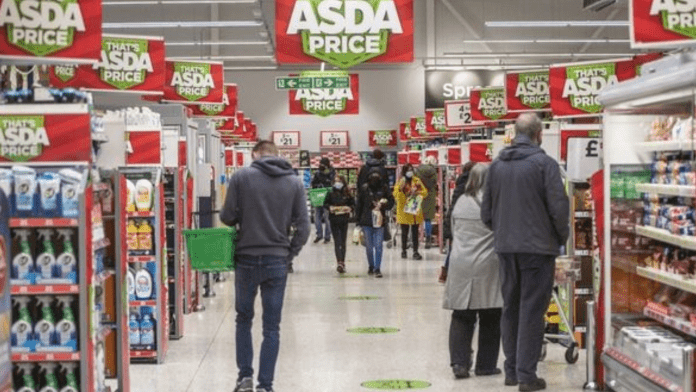
On Thursday, Asda, a British supermarket, joined the ranks of its competitors, Ocado Retail and Sainsbury’s, in revealing a new series of price reductions. This further contributes to the ongoing decline in the trajectory of food inflation in the UK.
As the cost-of-living crisis persists into its second year, the focus on grocery prices continues to remain intense for Britons.
Announcing a reduction in prices, Asda, the third largest grocery chain in the UK, revealed that it has lowered the costs of 425 products, both branded and own-label, including items like diapers, bread, cereals, and sausages. On average, these price cuts amount to 11%.
This action is incurring a cost of 23 million pounds ($29 million), according to the company’s statement.
On Wednesday, both Ocado Retail and Sainsbury’s disclosed reductions in prices.
In March, food price inflation in the UK surged to its highest level since 1977, surpassing 19%. However, this official metric gradually eased to 14.9% by July. Despite industry data indicating a decrease to 12.7% in August, the persistent increase in food prices continues to exert significant financial pressure on numerous households.
The well-known sandwich franchise, Subway, has recently been acquired by the private equity firm Roark Capital in a transaction amounting to $9.55 billion. This acquisition marks the conclusion of an extensive auction process characterized by numerous competing offers. The agreement also includes specific terms that involve the postponement of payment for a portion of the total transaction value.
Established in 1965, Subway remains under the ownership of its original founding families. Throughout its history, it has evolved into one of the globe’s most expansive restaurant franchises, boasting a presence of 37,000 establishments across over 100 nations. As reported by Reuters and sourced from insiders, the company has affixed specific requirements to a portion of the substantial sum that will accrue to the two owning families.
The agreement carried an appraisal of $8.95 billion, not factoring in the earn-out target. To trigger the complete payment, Subway’s cash flow must achieve specific milestones within a predetermined timeframe following the conclusion of the transaction.
A press note from the sandwich maker said that the deal would combine the chain’s “global presence and brand strength with Roark’s deep expertise in restaurant and franchise business models”.
With approximately $37 billion in assets under its management, the private equity company specializes in managing franchised enterprises. Its portfolio encompasses various restaurant franchises such as Arby’s, Dunkin’, and Buffalo Wild Wings.
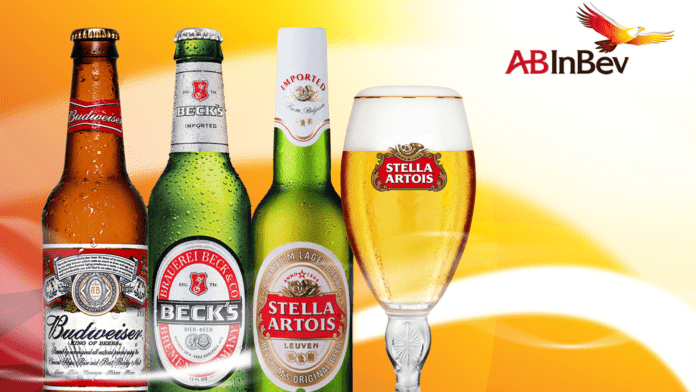
Anheuser-Busch InBev (AB InBev) India has registered a 30 percent upsurge in sales during the initial half of 2023, accompanied by positive growth in specific markets. Kartikeya Sharma, the President of AB InBev India, anticipates this favorable momentum to persist throughout the latter half of the year.
Being a prominent contender within the premium and super premium beer sector, the company boasts renowned brands like Budweiser, Hoegaarden, and Corona. Notably, it has recorded a growth increase of 200-300 basis points in major markets like Karnataka, Maharashtra, Uttar Pradesh, Haryana, and West Bengal, according to his statement.
“The beer industry grew 20 per cent from January to June 2023… We grew ahead of the industry by almost 50 per cent. So our growth was closer to 30 per cent, said Sharma in a media roundtable here.”
Nonetheless, there are certain challenges emerging from the urban market, where demand is experiencing a slight decline in urban centers. Despite this, Sharma remains optimistic about sustaining the current growth rate.
The challenge is for us to see how in H2 we are going to sustain and expand the share gains but in H1, we were been very satisfied with the numbers, said Sharma.
Within its top 10 priority markets, AB InBev envisions narrowing the difference between its position and the leading market competitor to a range of two to three percentage points.
In a lot of our focus markets, we actually see the gap close to the market leader and in some cases, we have become a market leader, he added.
Regarding consumption trends, following the Covid pandemic, there was an elongation of the peak in the premium segment. However, during the last two months, urban centers have been deviating from this trend, as the peak in demand is diminishing.
“The growth rates in the post-peak period have not tapered off quite dramatically due to the peak period. And subsequently within that, in these urban centres premium actually sees almost peak level growth and therefore our positioning in the premium has allowed us to share gain in H2,” Sharma said.
Dominating the Indian beer market is United Breweries Ltd (UBL), a company under the ownership of the Dutch brewing powerhouse, Heineken.
AB InBev’s super premium brands Corona and Hoegaarden, Sharma said, contributing in high single digits of the total sales here. “Together with Budweiser, Corona and Hoegaarden contribute 58 per cent of the total volume,” he said and rest 42 per cent comes from entry-level beers such as Haywards, Royal Challenge, Knockout and Indus Pride. The mainstream entry-level beer contributes to 35 per cent of the value.
Last year, AB InBev made its foray into the Indian whisky market, introducing brands like Budweiser Magnum Double Barrel and D’YAVOL INCEPTION.
Over sales of Whiskey, Sharma added, “It is difficult to put a number on that because it is very early days. We are at three to four markets and 2,000 to 3,000 worth of points of sale in terms of distribution.”
During 2023, the company also unveiled three Gin variants as an expansion of its Hoegaarden brand in this category, along with the introduction of Seven Rivers Spiced Rum.
AB InBev ventured into the Indian market in 2008 with the introduction of Budweiser through a joint venture. Over the course of 15 years, India has ascended to the position of being the fourth-largest market for Budweiser on a global scale.
Within its Budweiser portfolio, AB InBev uniquely offers beer, whiskey, and energy drinks only in the Indian market.
Regarding inflation, Sharma mentioned that there hasn’t been any noticeable impact, as the company chose not to transfer the effects to consumers. Instead, they opted to manage the situation by tightening their profit margins, all while maintaining their growth trajectory.
Livpure Pvt. Ltd proudly announced a significant upswing in revenue of close to 50 percent during the inaugural quarter of the present fiscal year. This milestone serves as a testament to the brand’s resolute commitment to upholding excellence, fostering innovation, and ensuring utmost customer contentment.
During the first quarter (Q1), Livpure observed noteworthy growth across every facet of its operations, reaffirming the strong reliance and trust that customers repose in Livpure’s array of products and services. Notably, the retail division emerged as a standout contributor, contributing significantly to a 35 percent increment in overall growth. The modern trade sector saw a substantial surge of 87 percent, while the e-commerce segment showcased an impressive rise of 63 percent. Particularly astonishing was the exceptional performance of Livpure’s Water As A Service (WAAS) business, surpassing all projections with an extraordinary 94 percent surge in revenue. This achievement further solidifies Livpure’s preeminent standing within the market.
Rakesh Kaul, MD of Livpure, said, “Our team at Livpure is exhilarated with the impressive growth we have achieved in Q1. This milestone is a testament to the tireless efforts of our team members and the unwavering support from our customers. Livpure’s ability to adapt to evolving market dynamics and customer preferences has been a significant factor in maintaining this momentum. It motivates us to strive for excellence in every aspect of our business. Our relentless focus on innovation, superior service, and expanding our distribution network has also played a pivotal role in driving our success.”
“Livpure has adopted a strategic proactive risk management approach to sustain this impressive momentum. We have thoroughly assessed the landscape and are well-prepared to overcome any challenges that may arise. Rest assured, we are fully geared up to achieve our targets and deliver exceptional value to our customers. Looking ahead, Livpure has ambitious growth and development plans for the future. We aim to achieve over 100 percent growth compared to the last financial year by the end of this fiscal year,” he added.
Livpure’s unwavering dedication to providing pure and secure drinking water to numerous households has garnered the faith of customers across the country. As the company forges ahead with its expansion, its determination to achieve excellence and establish fresh standards in the industry remains steadfast.
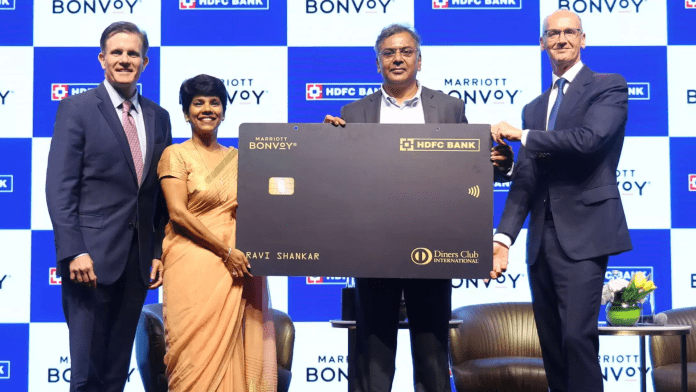
HDFC Bank has announced its partnership with Marriott Bonvoy to introduce India’s first co-branded hotel credit card, named the ‘Marriott Bonvoy HDFC Bank Credit Card’. Playing a pivotal role in this collaboration, Diners Club, a prominent member of the Discover Global Network, will function as the card’s designated network partner.
Blending the capabilities of both entities, the HDFC Bank Marriott Bonvoy credit card presents customers with an exceptional assortment of travel perks. These encompass Silver Elite Status within the Marriott Bonvoy framework, granting access to benefits like prioritized late checkout, exclusive member rates, additional Marriott Bonvoy bonus points, and a range of other privileges.
Parag Rao, the Country Head of Payment Business, Consumer Finance, Technology, and Digital Banking at HDFC Bank, holds the perspective that the card’s unveiling aligns perfectly with the current scenario. He points out that in the aftermath of the pandemic, there has been a notable surge in what is termed ‘revenge spending’ among Indians. This trend indicates a heightened focus on extracting enhanced experiences from their travel activities.
The collaborative card delivers a plethora of advantages, including a complimentary night award valued at a maximum of 15,000 points. This award can be redeemed at select Marriott Bonvoy hotels across the globe, within a span of one year. Moreover, the card extends Silver Elite Status, accompanied by the benefit of receiving ten elite night credits on a yearly basis. As cardholders meet designated spending criteria, they also have the opportunity to secure up to three extra complimentary nights at participating hotels.
Customers who hold the card will be able to accumulate eight Marriott Bonvoy points for every INR 150 spent on qualifying purchases made at participating Marriott Bonvoy hotels (excluding Homes and Villas). This earning rate is applicable for monthly expenses up to INR 10 lakh. Additionally, they can gather four Marriott Bonvoy points for every INR 150 spent on eligible travel, dining, and entertainment transactions, with a cap of INR 5 lakh per month.
Cardholders who are already earning eight Marriott Bonvoy Points per INR 150 for expenditures at participating Marriott Bonvoy and Marriott-branded establishments will not be eligible to receive an extra four Marriott Bonvoy Points within this specific earning category.
For all other qualifying transactions, excluding those associated with fuel, wallet reloads, and rentals, customers using the card can accumulate two Marriott Bonvoy points for every INR 150 spent. The card additionally offers complimentary access to domestic and international lounges annually, along with a personal air accident insurance cover at no cost.
Discussing the potential, Rao said, “Post the convergence, we have in excess of 100 million customers across India. We have 17-18 million credit cards and therefore see a massive opportunity to grow. The Marriott Bonvoy will be one of our several offerings to our premium customers, catering to those who are discerning and focused on travel.”
A month prior to this, HDFC Bank and Swiggy introduced the Swiggy HDFC Bank co-branded credit card, which is hosted on Mastercard’s payment network. The credit card aims to provide cardholders with rewards and benefits across various online platforms, with a particular focus on Swiggy.
As per the latest guideline introduced by the Food Safety and Standards Authority of India (FSSAI), alcoholic beverages are required to exclude all nutritional details from their labels. The only exception is the optional disclosure of energy content in kilocalories (kcal). This directive is outlined in the ‘Food Safety and Standards (Alcoholic Beverages) First Amendment Regulations, 2023’ and is scheduled to take effect on March 1, 2024.
The amendment also provides definitions for single malt whiskey and single grain whiskey, as outlined by the FSSAI.
“Alcoholic beverage shall not contain any nutritional information on the label except energy content in kcal. Such declaration related to energy content shall be voluntary,” FSSAI said in the regulation.
The Food Safety and Standards (Alcoholic Beverages) Regulations of 2018 explicitly indicated that labels of alcoholic beverages must not display any nutritional information.
In its recently issued regulations dated August 21, the FSSAI has outlined that “single malt whisky is a distilled product derived from mashed and fermented malted barley, excluding any additional grains. It must be distilled solely in a pot still and originate from a single distillery.”
It further stated that single grain whisky is a distilled product acquired from a fermented mash employing malted or unmalted grains. This type of whisky is crafted within a single distillery.
“Single grain whisky shall not include single malt whisky and blended malt whisky or blended grain whisky,” FSSAI said.
Within the regulations established in 2018, the definitions for single malt whisky and single grain whisky were outlined as follows: They are distilled products derived from fermented mashes utilizing specifically malted barley or malted grains, respectively. The distillation process is limited to pot stills and must take place within a singular distillery.
Whisky is an alcoholic beverage produced through the distillation of fermented extracts derived from malted cereal grains like corn, rye, and barley. It can also be crafted from neutral grain spirit, rectified grain spirit, neutral spirit of agricultural origin, or a blend thereof.
Capital Foods, the company driving renowned brands like Ching’s Secret and Smith & Jones, is set to amplify its marketing expenditure by 15-20% during this fiscal year, as stated by a high-ranking corporate official.
According to Digbijoy Chakraborty, the Marketing General Manager at Capital Foods, the company’s marketing expenses could potentially reach up to INR 100 crore during a bustling year.
“Our marketing budget will increase by 15-20% in FY24 compared to last fiscal year. Our marketing spend varies from year to year, but in a busy year, it’s around INR 100 crore,” Chakraborty said, while declining to share the marketing spend figure for FY24.
The majority of the company’s marketing budget is allocated to television and digital platforms, while the remaining portion is divided among other mediums such as print, outdoor, and activations.
In the realm of television and digital marketing, the company’s expenditure leans significantly towards reality shows, attributed to the substantial brand impact they generate.
“Overall, we spend between 25% and 30% of our marketing budget on reality shows,” he said.
Besides TV and digital, the company also uses regional print and outdoor advertising to reach its core consumers. “Our media mix for reaching out to our target audience comprises TV and OTT, followed by outdoor and print,” he said.
Chakraborty emphasized that creating strong top-of-mind recall among consumers is a crucial strategy for effectively competing against both global and regional competitors.
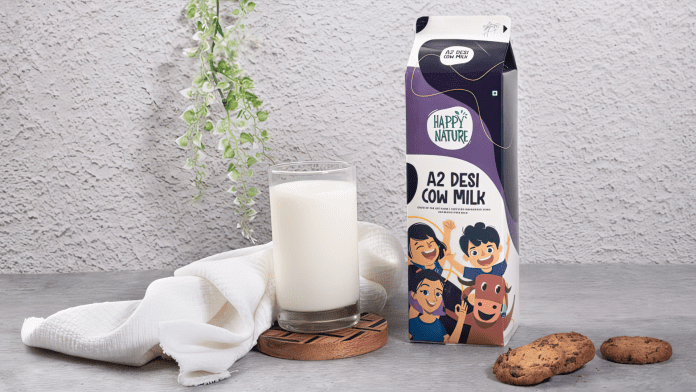
In a world that often prioritizes convenience over origin, the magnetic pull of farm-fresh goodness remains unwavering. Enter brands like Happy Nature, an embodiment of quality birthed from a reverence for nature, standing tall as a tribute to the enduring truth that authenticity is beyond compare. Behind the façade of every cherished brand, lies a narrative of fervor, tenacity, and a voyage that converts a vision into reality. This is the captivating chronicle of Happy Nature, the treasured purveyor of farm-fresh milk and breakfast delights, nurtured within the nurturing embrace of Doozy Farms.
Is it yet another classic story of how an IIT graduate started his own business and became a full-time entrepreneur after listening to his inner call? Perhaps, but it’s also about passion, hard work, and something that everyone loves – food! The genesis of Happy Nature traces back to Vishal Rastogi, the Founder of Doozy Farms, who, once a full-time IT professional, found himself at a college reunion. During this gathering of minds from IIT Roorkee, an unconventional idea germinated—an idea that would combine business with social corporate responsibility. In an exclusive interview with SnackFax, Vishal reveals, “something different which has a social corporate responsibility as well” was the notion that seized their imagination.
The idea took root in Vishal’s mind and began to evolve. Simultaneously, he realized the unsettling truth that milk, a staple of many lives, was tainted with reports of adulteration according to the World Health Organization. It was then that the seeds of a solution were sown, and the vision to provide unadulterated, high-quality milk materialized. As Vishal delves into how this notion emerged while juggling a demanding 9-to-5 IT job, the transformation from a technology professional to a dairy farmer gains clarity. The shift from an IT cubicle to cultivating a full-time dairy farm housing around 350 animals was no easy feat. Vishal confesses, “It was not an easy journey for the first couple of years because we never realized, after coming from IT where we just sat in a room, after taking a car ride from the morning to the office because that’s where you are and that’s what you become after two decades into IT.”
Cultivating Authenticity: The Essence of Happy Nature
At the heart of Happy Nature’s ascent lies an unwavering commitment to authenticity. The founders recognized the yearning for genuine connections with the source of sustenance – the land itself. Doozy Farms, nestled in nature’s embrace, became the nurturing canvas where authenticity found its brushstrokes. In this haven, cows roamed freely, vegetables flourished, and the symphony of life played on, all while fostering a sense of trust that would resonate with consumers.
The evolution of Happy Nature pivoted around the cornerstone of quality. Right from its inception, the brand was dedicated to nurturing the land and its inhabitants with profound care. This devotion translated into the milk that flowed from contented cows and the ingredients that adorned breakfast tables. The meticulous symphony of quality ensured that every product bearing the Happy Nature insignia bore witness to the farm’s unwavering pursuit of excellence.
As Doozy Farms thrived, an exquisite synergy between people and nature flourished. Fueled by engaging farm tours, vibrant community events, and shared moments, this connection became the very soul of Happy Nature’s brand identity. The breakfast table transformed into a nexus where conversations meandered, laughter reverberated, and bonds deepened. Happy Nature ceased to be merely a brand; it became a bridge that united hearts.
Sustainability wasn’t a mere afterthought for Happy Nature; it was interwoven into its very essence. The farm’s commitment to ethical practices and eco-conscious choices seamlessly aligned with the values of discerning consumers seeking brands with a conscience. This commitment transcended responsible choices; it was a resounding pledge to safeguard the environment for generations yet to come.
A Journey Paved with Resilience and Growth:
Happy Nature’s ascent as a brand wasn’t without its share of trials. It demanded unwavering perseverance, adaptability, and an unflinching dedication to evolve in tandem with shifting consumer expectations. Whether it was expanding breakfast offerings or incorporating innovative packaging, the brand’s metamorphosis served as a testament to its resolute commitment to continuously enhance the customer experience.
The voyage from dream to reality underscores the transformative power of passion, authenticity, and connection. Happy Nature’s evolution into a cherished emblem of farm-fresh goodness wasn’t a mere occurrence; it was the culmination of boundless dedication, a profound love for nature, and a shared vision of spreading joy. From the fertile embrace of Doozy Farms to the breakfast tables of homes spanning continents, Happy Nature stands as a shining exemplar of how dreams metamorphose into brands that touch lives and stir souls.
Watch our exclusive conversation with Vishal Rastogi here:
Zomato, the prominent player in the food technology sector, initially introduced a platform fee of INR 2 per order for specific users. This fee has now been expanded to a larger user base and has also been subjected to an increase.
Analyzing orders made through the platform across diverse cities, it has come to light that Zomato is imposing a platform fee of INR 3 on certain users in Tier II cities. Conversely, the platform fee appears to stand at INR 2 for the majority of users in metropolitan cities.
Furthermore, Zomato has initiated the practice of levying the platform fee on Zomato Gold users as well. Previously, individuals with a Zomato Gold subscription were exempt from this charge.
Addressing inquiries regarding the alterations in the platform fee structure, a representative from Zomato commented, “Platform fee will be applicable for all our customers. We are still in the experiment stage, and are gradually rolling it out across India.”
Previously, the prominent food technology company had stated that the ‘fixed fee’ would be applicable regardless of the total order value, and this implementation would empower the company to enrich its platform features.
Zomato’s decision to impose the platform fee followed several months after its competitor Swiggy initiated a platform fee of INR 2 in April of the current year.
The introduction of the new fee can primarily be attributed to the food technology platforms’ endeavors to establish an additional income stream while striving for improved profitability.
This recent advancement arrives during a period when Zomato has been introducing fresh features. In June, the company introduced a multi-restaurant cart feature, and it has also been conducting experiments with generative artificial intelligence (AI) across its various platforms.
Zomato achieved profitability in the initial quarter of the fiscal year 2023-24 (FY24), reporting a consolidated post-tax profit (PAT) of INR 2 crore, in contrast to a net loss of INR 186 crore recorded in the same quarter of the preceding financial year.
In the previous March quarter, Zomato incurred a net loss of INR 188 crore, while also achieving a positive adjusted EBITDA, excluding Blinkit.
In the first quarter of FY24, the gross order value (GOV) for Zomato’s food delivery segment amounted to INR 7,318 crore, marking an increase from INR 6,425 crore recorded in the corresponding quarter of the previous fiscal year.
We use cookies to ensure that we give you the best experience on our website. If you continue to use this site we will assume that you are happy with it.