Renowned Indian chef, Ranveer Brar, is all set to launch his inaugural restaurant in the UAE, titled ‘KashKan’, situated in the vibrant city of Dubai.
According to a report from The National News, KashKan is slated for its grand opening on September 2nd. This marks Chef Ranveer Brar’s inaugural foray into the Middle East region.
As indicated in the report, the upcoming restaurant will be situated on the first floor of Dubai Festival City mall and will offer seating for a maximum of 210 individuals.
The dining space of the restaurant will have a view overlooking the mall’s fountain.
Furthermore, the restaurant will feature five exclusive private dining rooms, referred to by Brar as ‘cabanas’. Each cabana will embody a distinct theme representing different regions of India. These spaces will be equipped with screens displaying continuous travel and food clips in alignment with their respective themes.
The kitchen of the establishment will be partitioned by a glass window, while the interior will predominantly exhibit the lively culture of India.
KashKan boasts a central bar responsible for crafting and serving desserts and beverages. Moreover, the establishment includes an outdoor area that overlooks the waterfront promenade.
Brar has meticulously crafted the menu to showcase the authentic flavors of India, presenting a delightful reinterpretation of traditional Indian cuisines.
According to the report, the upcoming restaurant’s name, ‘KashKan,’ is a fusion of India’s northernmost region, Kashmir, and its southernmost point, Kanyakumari.
KashKan’s logo, looking like a compass, will demonstrate its vision to “capture the breadth of Indian cuisine”.
After a hiatus of over four years, Brar is inaugurating this restaurant. The chef and restaurateur presently possesses and manages numerous dining establishments spanning the North American and South Asian territories.
Brar noted that the food industry suffered significant repercussions due to the Covid-19 pandemic but is now undergoing a resilient recovery.
“Restaurants like this are not even a blip on the screen, relative to the cuisines of entire countries and regions. KashKan only hopes to spark meaningful conversations about Indian food,” Brar told The National News during a media preview of his new restaurant in Dubai Festival City Mall.
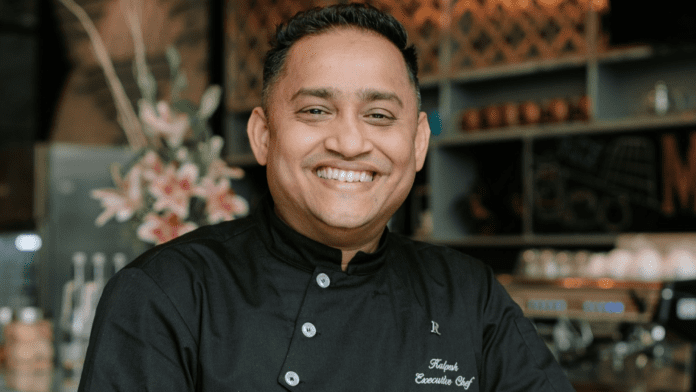
The Renaissance Ahmedabad Hotel is delighted to introduce Chef Kalpesh Kature as the face of their Executive Chef role. With his exceptional skills and innovative approach, Chef Kalpesh is all set to elevate the culinary offerings and take the dining experience to unprecedented heights.
With an extensive reservoir of culinary wisdom and a remarkable engagement of more than 14 years in the realm of Hospitality and Food and Beverage Operations, Chef Kalpesh comes adorned with a treasure trove of expertise.
The Chef’s remarkable leadership aptitude harmonizes effortlessly with his skill in orchestrating elaborate dining events, curating exceptional menus, and skillfully steering a diverse team with precision.
He possesses adeptness in effective communication and showcases a track record of thriving in diverse environments, fostering collaboration among individuals from a multitude of backgrounds.
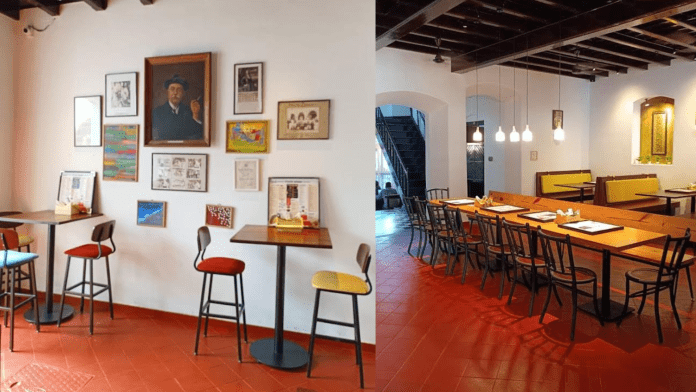
Stepping into the role of Executive Chef, Chef Kalpesh will undertake the responsibility of overseeing the culinary operations of the esteemed hotel’s three distinct dining establishments: R Kitchen, Kuro – The Asian Bistro, and Mill & Co – Coffee House.
Moreover, he will lend his culinary expertise to our banquet offerings, ensuring that every guest encounters exquisite flavors and a memorable culinary journey.
“We are excited to welcome Chef Kalpesh to our team and are eager to witness the impact of his expertise on our culinary operations. With his unmatched skills and boundless creativity, we are confident that he will redefine our culinary offerings, setting a new benchmark for excellence under his leadership.” said, Rohit Dasgupta, our General Manager.
Chef Kalpesh’s journey through the culinary world has been undeniably remarkable. His experiences at renowned establishments like Fairfield by Marriott Pune Kharadi, Ibis India, Royal Orchids Golden Suite, and Radisson showcase his flexibility and steadfast commitment to the art of cooking.
Amidst the vibrant celebrations of the Onam festival, Plan B has unveiled a special Onam platter for its aficionados. This delightful offering will be served from August 28 to 30 at the Fort Kochi venue.
While the entire city indulges in a culinary extravaganza, enthusiasts of fine dining can relish a delectable platter featuring an extensive array of finger foods, including both chicken and seafood. Therefore, if you’re seeking a relaxing haven in Kochi this festive season, your top choice should be Plan B at the magnificent Fort Kochi property.
Introducing the Plan B Special Onam Platter priced at INR 599/- only. Enjoy a delectable assortment of flavors, including:
3 pieces of Chicken Wings with your preferred choice of flavors
3 pieces of Fish Finger with your preferred choice of flavors
Flavorful Squid Rings with your chosen flavors
Veggie Wingers with a variety of flavors
3 pieces of Jalapeno Poppers
3 pieces of Chicken and Cheese Bites
1 piece of Veg Taco
1 piece of Chicken Taco
Savor this diverse and delicious selection, celebrating the essence of Onam at Plan B.
Zomato’s stock experienced a remarkable uptick of up to 6 percent in the initial trading hours on Monday. This surge was propelled by substantial trading activity and the revenue generated from platform fees charged by the food delivery aggregator. Notably, the stock has yielded impressive returns to investors over the past several months, making it a highly profitable investment.
Based on exchange data, there were several instances of block deals involving Zomato shares at the outset of the trading session. The significant trading volumes provide validation for this occurrence. However, as of the time of preparing this report on Monday, the identities of the buyers and sellers have not been determined.
As per data provided by BSE, Zomato saw a trading of more than 152.4 million shares, equivalent to a value of INR 1,388.81 crore, by 10 am on Monday. Similarly, on the National Stock Exchange (NSE), a volume of over 46.2 million shares, totaling INR 431.30 crore, had been exchanged by the same time.
Shifting focus, Zomato has introduced a platform fee of INR 2 per order for select users, and this initiative has been further extended with an increased fee structure. In specific tier-II cities, the fee has been raised to INR 3 per order. Notably, the previous exemption granted to Zomato Gold subscribers from this fee has now been rescinded.
At the commencement of trading on Monday, Zomato’s shares exhibited a robust surge of up to 6 percent, reaching INR 96, propelled by the recent developments and trading volumes. However, these gains were subsequently relinquished to some extent, with the price retreating to INR 93. The company’s total market capitalization stood at over INR 80,000 crore. In the previous trading session on Friday, the stock had settled at INR 90.94. Noteworthy is the fact that Zomato’s shares have experienced a remarkable ascent, surpassing 116 percent from their 52-week low of INR 44.35, a level attained in January of the current year.
Following the conclusion of the Blinkit deal, the lock-in period for investors concluded on Friday, August 25th. Consequently, the shares acquired through the Blinkit deal will become available for trading on Monday. Notably, SoftBank owned a 3.35 percent stake in the food delivery aggregator Zomato, whereas other notable investors like Sequoia Capital and Tiger Global also held substantial stakes in the company.
In August 2022, Zomato successfully finalized the purchase of Blinkit, a quick commerce company previously known as Grofers, along with its associated warehousing and supplementary services division. This acquisition had been announced by Zomato in June 2022, receiving approval from its board for the transaction valued at INR 4,447 crore. The calculated value for Zomato shares issued to SoftBank amounted to INR 70.76 per share.
In the quarter of June 2023, Zomato achieved a significant milestone by achieving profitability for the very first time. The food aggregation platform company disclosed a consolidated profit after tax amounting to INR 2 crore, marking a noteworthy contrast to the loss of INR 186 crore incurred during the corresponding period in the previous year. Impressively, the revenue generated from operations demonstrated a substantial year-on-year growth of 71 percent, surging to INR 2,416 crore in Q1FY24 from INR 1,414 crore in the analogous period of the preceding year.
Morgan Stanley, a prominent international brokerage firm, has upheld an ‘overweight’ rating for Zomato, accompanied by a target price of INR 115 per share. The global investment bank noted that the sustained implementation of Zomato’s platform fee has the potential to catalyze enhancements in the company’s profitability.
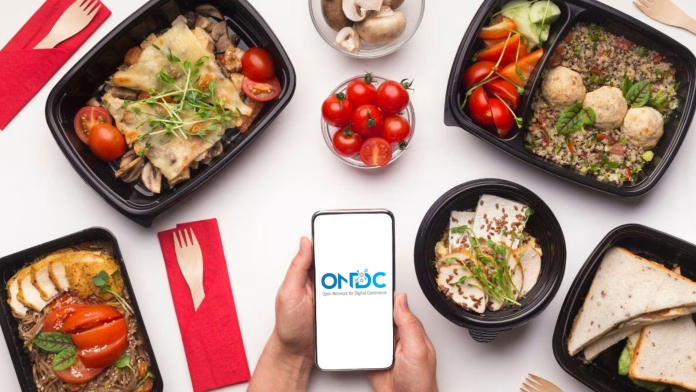
Challenging the dominant position of Zomato and Swiggy in the online food delivery market, the Open Network for Digital Commerce (ONDC), a government-led initiative, announced on Monday that it has successfully onboarded 50,000 restaurants onto its platform for accepting online orders. This development spans across 172 cities, showcasing the growing influence of ONDC in the sector.
The count of restaurants within the Open Network experienced an exponential surge, soaring from 500 in February 2023 to a remarkable 50,000 by August 2023.
T. Koshy, MD and CEO at ONDC said, “What started with our first order in September 2022, the Network has onboarded over 50,000 restaurants till now. As we continue to grow and expand, we are excited about the future of online food delivery in the ecommerce ecosystem and our role in shaping it.”
According to ONDC, the accomplishment was largely attributed to the pivotal role played by Seller Network Participants (NPs) such as Magicpin, uEngage, Bitsila, EkSecond, Growth Falcons, Mystore, nStore, and eSamudaay.
By the end of 2023, ONDC aims to double the existing count of restaurants. Through Buyer Apps like Paytm, Pincode, Magicpin, Mystore, and more, customers can seamlessly place their food orders online via the ONDC Network.
With Raksha Bandhan just around the corner, Cornitos is thrilled to present a magnificent range of gift choices that seamlessly blend the richness of tradition with the excitement of contemporary taste. Embrace the camaraderie of sibling affection and reinforce your connections with our meticulously crafted assortment of delectable Cornitos treats.
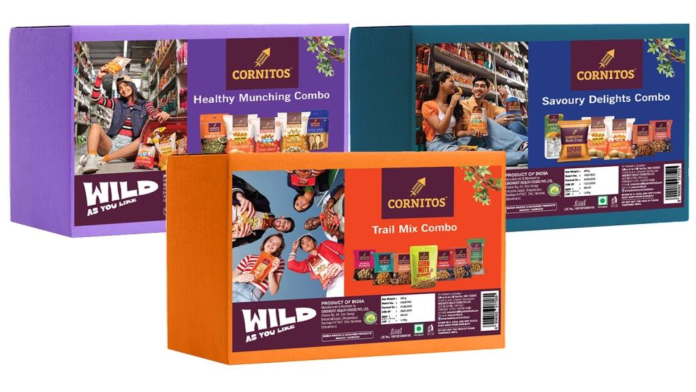
Trail Mix Combo: The journey begins with an unparalleled snacking adventure as one delves into a meticulously curated selection by Cornitos. Bursting with an array of savory, crispy, and delectable treats, this combo has been expertly designed to awaken the taste buds and satisfy every craving. From the lively and tangy notes of Roasted Corn Nut Chilli Lemon Cilantro to the classic appeal of Salted Peanuts, and the bold and fiery intensity of Hot and Spicy Coated Green Peas, each flavor encapsulates a unique snacking experience.
Indulgence takes a new form with Cornitos Roasted Cashews, thoughtfully available in Pepper & Herbs as well as Salted variations. The perfectly seasoned Cornitos Roasted Almonds add another layer of delight to the ensemble. Beyond mere snacking, this combo extends an invitation to a realm of unparalleled gastronomic pleasure. With the Trail Mix Combo, one can truly immerse themselves in the art of snacking.
Healthy Munching Combo: Embrace the essence of a nourishing lifestyle through the Cornitos Healthy Munching Combo. Immerse yourself in the satisfying crunch and captivating flavors of Italian Cheese, King Curry, and Cheesy Garlic Crusties. Elevating the experience further, Cornitos Super Seeds and Pumpkin Seeds offer a wealth of essential nutrients, providing a protein-packed, fiber-rich, and antioxidant-filled boost. Whether you’re on-the-go or enjoying a relaxing moment at home, this combo allows you to relish delectable treats with a clear conscience.
Savoury Delights Combo: The Savoury Delights Combo offers a journey into a world of bold flavors, enticingly curated for an unforgettable snacking experience. As individuals delve into this assortment, they find themselves immersed in a symphony of tastes. The zing of Peri Peri Crusties and the savoury allure of Cheese and Herbs Nacho Crisps awaken the senses, while the delightful crunch of Potato Italian Cheese Crusties leaves a lasting impression. The palate is treated to a spicy kick with the Nacho Jalapeno Tray, thoughtfully balanced by the wholesome nuttiness of Roasted Cashews and Almonds. This meticulously crafted combo caters to snack enthusiasts, offering an array of flavors and textures that are sure to satiate their cravings and create a memorable snacking affair.
The chance to enhance the gifting experience becomes even more special with Cornitos’ Raksha Bandhan coupon code – Rakhi25. Customers can enjoy a generous 25% discount on their entire order with a minimum purchase of INR 600.00. This remarkable offer remains valid from the 16th of August till the 1st of September. The offer is exclusively available at https://shop.cornitos.in/collections/gift-pack, providing an excellent opportunity to make the most of this festive season.
This exquisite hotel is all set to welcome guests starting from October 2023
Renest Hotels & Resorts is thrilled to announce the official opening of its newest establishment, the Renest Calangute Goa. This exquisite hotel is all set to welcome guests starting from October 2023.
Strategically positioned, this establishment offers the convenience of being just a brief 10-minute drive from Candolim beach, and a mere 15-minute journey to the famous Calangute Beach.
Renest Calangute Goa showcases 30 meticulously designed rooms that exude both luxury and comfort.
“As we elevate our ambitions for expansion throughout the nation, we are thrilled to unveil our latest establishment, Renest Calangute Goa. The burgeoning tourism, both from local and international travelers, in Goa is experiencing rapid growth, and we are enthusiastic about demonstrating our exceptional hospitality benchmarks to visitors exploring the state,” remarked Vishal Lonkar, General Manager of Brand Development at Renest Hotels & Resorts.
The restaurant’s menu skillfully combines the vibrant flavors of Indian, Asian, and European cuisines, creating a masterful blend of tastes.
The adept group of therapists at the hotel has thoughtfully curated an array of rejuvenating treatments, ranging from massages to facials, all designed to restore your balance and enhance your overall sense of well-being.
The property is located approximately 38 kilometers from Dabolim Airport, while the recently opened Manohar International Airport in Mopa, North Goa, is conveniently situated at a distance of just 29 kilometers.
Travelers have the option to reach Goa via Madgaon Railway Station, which serves as a stop for trains from prominent cities across India.
Other railway stations in Goa include Thivim, Karmali, and Vasco da Gama. The state is well linked through roadways, accessible through national highways, and regular bus services run from cities such as Mumbai, Pune, Hyderabad, and Bangalore.
Working alongside her students, she led the preparation of 2,500 food packages that were later distributed among those who are less fortunate.
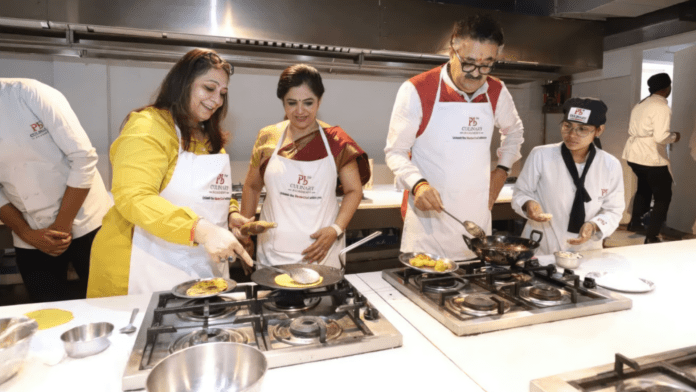
To mark the seventh anniversary of the Pankaj Bhadouriya Culinary Academy, Pankaj Bhadouriya, the winner of the first season of MasterChef India in 2010, took the initiative to organize a community kitchen event. Working alongside her students, she led the preparation of 2,500 food packages that were later distributed among those who are less fortunate.
Over 100 of her students engaged in the creation of the food parcels, investing nearly three full days in the project. The packages consisted of a diverse array of items, ranging from millet cookies and cupcakes to freshly harvested fruits.
“We make it a point to organise the community kitchen annually as a part of our anniversary celebration,” Bhadouriya expressed. “In Indian culture, food is intertwined with our significant occasions, spanning from birthdays to funerals. We aimed to convey this sentiment by extending it to the underprivileged.”
She added that this initiative also plays a role in fostering the comprehensive development of her students.
“This endeavour emphasises work ethic. Culinary expertise transcends mere recipes and plating; it encompasses the joy and emotions that emanate from nourishing others. I aspire for my students to carry this profound intention as they delve into the world of culinary arts,” Bhadouriya stated.
The academy established affiliations with a variety of non-profit organizations, such as Ummeed NGO, Sarthak NGO, Prabhat, and various others. Through this collaboration, they were able to provide support to marginalized communities by distributing the food packages.
Prominent bureaucrats, politicians, and notable figures also participate in endorsing and increasing awareness of the event, along with the marginalized communities it aims to support.
Bhadouriya added, “My students thrive under the pressure of such responsibilities.” She referred to the challenge of preparing and packaging 2,500 units of food within a mere three days. “Among my students, there are two groups of bakers and three groups of culinary arts students who have dedicated themselves to this project over the past three days,” she pointed out.
These exclusive bottles will be on offer across Kerala, as well as in select cities in Tamil Nadu.
Bisleri, the foremost brand in packaged drinking water in India, has joined forces with the highly anticipated Mollywood film “King of Kotha,” which stars the beloved heartthrob of the industry, Dulquer Salmaan. This collaboration showcases Dulquer Salmaan’s image on exclusive Bisleri bottles, available in three sizes: 500 ML, 1 Litre, and 2 Litre. These exclusive bottles will be on offer across Kerala, as well as in select cities in Tamil Nadu, including Coimbatore, Pollachi, Tirupur, Nagercoil, Tenkasi, and Theni.
Commenting on the collaboration, Tushar Malhotra, Head of Marketing, Bisleri International Pvt. Ltd., said, “Through the limited-edition pack collaboration with King of Kotha, we aim to strengthen our local brand love in Kerala and select cities of Tamil Nadu by providing an exciting experience to both our consumers and trade partners.”
Also commenting on the collaboration, Wayfarer Films Private Ltd. & Zee Studios said, “Much like the south film industry, Bisleri has carved a special place in the hearts of millions. This collaboration allows us to connect with audiences in new and engaging ways with Dulquer Salmaan’s collectible on the limited-edition bottles, thereby creating a memorable experience beyond the silver screen.”
Remaining committed to its hyper-local strategy, the company further reinforces cultural subtleties through its continuous collaboration with South Indian cinema. The limited-edition King of Kotha packs serve as a tribute to the opulence of Malayalam cinema, simultaneously honoring the captivating charisma of Dulquer Salmaan. These packs will receive extensive promotion across a network of more than 12,000 points of sale, encompassing both general and modern trade outlets in Kerala, as well as chosen urban centers within Tamil Nadu. Furthermore, they will be conveniently accessible online through the Bisleri @Doorstep App.
With a heritage spanning over half a century, Bisleri International Pvt. Ltd. has flourished into one of India’s premier beverage enterprises. Renowned as the producer of the nation’s highest-selling packaged drinking water, Bisleri meticulously adheres to a rigorous process involving 114 quality assessments and a comprehensive 10-stage purification procedure. This unwavering commitment echoes its fundamental principle of delivering pure, safe, and wholesome water to consumers.
Bisleri International boasts a formidable presence with 128 operational facilities and a robust distribution network encompassing more than 6,000 distributors and 7,500 distribution trucks, serving both India and neighboring countries. Its portfolio comprises a spectrum of beverages tailored for diverse occasions. From the commitment to goodness, trust, and purity embodied by Bisleri Mineral Water, to the daily wellness offered by Vedica Himalayan Spring Water, the company caters to various preferences. Furthermore, Bisleri International has delved into the realm of enjoyable refreshments, offering an array of carbonated beverages available in a multitude of flavors, including Pop, Rev, Limonata, and Spyci Jeera. These products can also be conveniently acquired through the Bisleri @Doorstep e-commerce platform, ensuring a secure and uninterrupted supply of the consumer’s most trusted brand directly to their homes.
At the heart of Bisleri International’s ethos lies the pursuit of growth intertwined with a commitment to sustainability, demonstrated through responsible practices across all facets of its operations. The organization has unveiled “Sustainability 2.0” through the Bisleri Greener Promise initiative, focused on forging a more sustainable future for all. This endeavor involves the implementation of various initiatives centered around recycling, water conservation, and sustainability, reflecting the company’s dedication to fostering a greener world.
Basic food items such as cereals and pulses are not expected to provide immediate relief due to rising global prices and low domestic cultivation.
A research report by brokerage firm Prabhudas Lilladher suggests that there is an increased probability of inflation staying above 7 percent in August.
During July, India experienced a notable rise in CPI inflation, hitting a 15-month high at 7.44 percent. This marked a substantial increase from June’s 4.81 percent. These figures highlight two main observations regarding July’s inflation scenario. Firstly, the main factor behind this surge in inflation was the escalation in food prices.
Secondly, the inflation is not solely linked to vegetables, particularly tomatoes. Instead, a broader array of food products, encompassing cereals, pulses, and spices, have collectively contributed to the escalation in prices.
The report stated that the combination of climate risks posed by unpredictable weather and fluctuating rainfall patterns, coupled with an increase in global food inflation, led to a significant and unexpected surge in domestic food prices in July 2023.
“El Nino can turn out to be a potential potboiler for food inflation in coming months. We have seen sharp increase in food inflation in last two months mainly due to damage to a few crops and unseasonal weather pattern,” the report said.
Pulses cultivation has decreased by 9.2 percent, and oilseeds sowing is reduced by 1.7 percent. This is expected to have an effect on the production of moong, toor, urad, and spices.
“Dry climate in the coming couple of months can impact height, density and yields of pulses in a major way as their cultivation is done more in the rain-fed areas. We note that prices of some of the spices are on the boil and don’t rule out higher prices of pulses and oilseeds,” the report said.
“We believe high inflation can be a political hot potato in an election year, forcing govt to slow down capex,” it added.
According to a report by Motilal Oswal Financial Services, the monsoon in August has deviated considerably from the long-term average, experiencing a shortfall of 30 percent.
Especially in the southern regions of India, there have been noticeably arid conditions.
After starting the month on a positive note with a 5 per cent surplus due to a wet July, the monsoon took a downturn in August, with an overall deficit of 7 per cent as on August 20, the report said.
The Northwest region (6 percent above normal) has encountered rainfall exceeding the usual levels, while Central India (2 percent below normal), the South Peninsula (13 percent below normal), and the Eastern and Northeastern regions have observed inadequate rainfall patterns (20 percent below normal).
El Nino has progressed from a “weak” to a “moderate” state, as indicated by the most recent report from US weather agencies. According to this update, there is a 66 percent likelihood of it intensifying into a strong event later in the year.
As of August 18, Kharif sowing is slightly elevated by 0.1 percent compared to the previous year. The expanse dedicated to paddy cultivation has grown by 4.3 percent in comparison to last year. However, the cultivation area for pulses remains notably lower by 9.2 percent compared to the preceding year. Additionally, production of jute, cotton, and oilseeds has also experienced a decline.
According to the report, coarse cereals (up by 1.6 percent year-on-year) and sugarcane (up by 1.3 percent year-on-year) are maintaining their positive performance.
The reduction in irrigation coverage across key states might exert a more noticeable influence on pulses production. Inflation within the pulses category has almost doubled over the last five months. Inadequate rainfall, leading to decreased cultivation of rice and pulses, has contributed to the upward surge in prices.
Rice holds a weight of approximately 4.4 percent, while pulses account for around 6 percent in the overall CPI basket.
Sujan Hajra, Chief Economist and Executive Director at Anand Rathi Shares and Stock Brokers, mentioned that the significant increase in food inflation and other potential factors contributing to upward inflationary pressures could prompt the RBI to consider a minimal rate hike, primarily to stabilize inflationary expectations.
This is even more probable due to the RBI’s perspective that inflation is predominantly a monetary phenomenon, necessitating monetary policy measures for its regulation, regardless of whether it stems from supply-side or demand-side factors.
These have adverse implications for the financial markets, Hajra said.
The case for a rate cut in the next 12 months seems to have vanished with adverse consequences for the financial markets, including debt and equity.
Apart from high food inflation, the sharp jump in global crude oil and grain prices are serious concerns. While edible oil inflation is currently extremely benign, the global El Nino effect can change the situation. Progressive softening of core inflation is a silver lining.
At 7.4 per cent in July, India recorded the highest inflation in the last 15 months. On an annualised basis, food inflation jumped nearly 70 per cent and fuel more than 20 per cent, resulting in an over 50 per cent jump in non-core inflation. The silver lining included the year on year fall in fuel and core inflation, Hajra added.
The year-on-year food inflation jumped from 4.7 per cent in June to 10.6 per cent in July.
While above 200 per cent inflation in tomato was a major driving force, many other items under fruit and vegetables recorded high inflation chiefly on account of weather disturbances in the recent past, Hajra said.
We use cookies to ensure that we give you the best experience on our website. If you continue to use this site we will assume that you are happy with it.