In Bengaluru, a Zomato delivery partner was captured on video eating food from the delivery bag while waiting at a traffic signal. The video quickly spread across social media, raising doubts about whether the food he was consuming belonged to a customer or if it was his own meal taken during working hours.
The viral video captured the delivery partner behind his bike, indulging in small bites of what appeared to be snacks, possibly fries, taken from the delivery bag while waiting at the signal. A fellow commuter at the same signal recorded the incident and shared it on Facebook with the caption, “For all those who order from Zomato / Swiggy.”
The internet is divided as a few people argue that the delivery agent is breaching the rules, and some people stood with him, saying it might be his own food. A user commented, “The vendor must seal the food perfectly and see that it’s not tampered.”
Another person said, “Common sense is that’s his office bag with name and logo and expected to have food to be delivered. It’s in best interest to keep a separate pouch or bag for their own food to avoid being a target if food companies want to be reliable and expect to have a huge market and keep up with the rapid growth.”
Meanwhile, a section of people argued, “It is not fair to jump the gun as it could be his own food.”
“Pack will be sealed, He might be eating his own food. Without knowing correctly or seeing with my own eyes, I don’t believe such posts. Never blame a person so easily who does hard work for bread,” another user commented.
However, Zomato is yet to provide clarification regarding the incident that took the internet by storm. A similar incident occurred in the food delivery business in the national capital earlier.
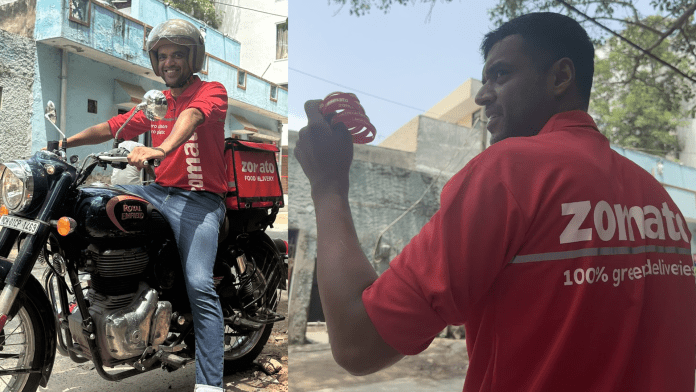
Zomato CEO Deepinder Goyal on Sunday observed Friendship Day with a heartwarming gesture. He took to X (formerly Twitter) to share his plan of spreading joy by personally delivering meals and friendship bracelets to the dedicated delivery executives, esteemed customers, and valued restaurant partners.
The founder of the food-tech giant wrote, “Going to deliver some food and friendship bands to our delivery partners, restaurant partners and customers. Best Sunday ever!!”
In addition, he delightedly posted images of himself on a Royal Enfield motorcycle, clutching a collection of friendship bands adorned with the inscription, ‘best food friends forever.’
Going to deliver some food and friendship bands to our delivery partners, restaurant partners and customers. Best Sunday ever!! pic.twitter.com/WzRgsxKeMX
The CEO’s heartwarming gesture drew praise and excitement from amused users, who couldn’t help but express their admiration and delight.
One person wrote, “Zomato orders over Swiggy today where people are hoping to meet the CEO.”
Another user expressed their desire to have Goyal as their delivery partner and playfully inquired if he would be delivering in Chandigarh. Meanwhile, a grateful individual thanked Zomato for being their reliable ‘food friend’ during the absence of their domestic help.
Goyal has previously embraced the role of a Zomato delivery person on more than one occasion. On New Year’s Eve, he took it upon himself to deliver a few orders received through the app. Sharing the experience on Twitter, he even mentioned that his first delivery was made to the Zomato office itself.
In total, he proudly fulfilled four orders, adding to the excitement of his delivery adventures. Interestingly, his X (formerly Twitter) bio humorously reads, “Delivery boy at Zomato,” showcasing his playful and hands-on approach to the company he leads.
Just last week, Zomato achieved a significant milestone, posting a profit for the first time since its establishment in 2008. On August 3, the company proudly announced a net profit of INR 2 crore in the first quarter of the current financial year. In a light-hearted exchange on X (formerly Twitter), a user playfully suggested that Goyal could have borrowed the INR 2 crore from him instead of going door-to-door for deliveries. Responding with humor, the CEO appreciated the quip and playfully dubbed it the “Tweet of the day.”
In a recent move, the food delivery platform introduced a trial fee of INR 2 per order, regardless of the cart value. According to the app, this modest fee is aimed at helping them cover operational costs and ensure the smooth functioning of Zomato.
The surge in inclement weather has led to a notable rise in inflation for both everyday kitchen essentials and premium superfoods favored by the affluent and health-conscious individuals. A combination of droughts in Europe and Bihar has triggered a staggering 80% increase in prices for olive oil and makhana (fox nut) within a year, with predictions of further escalation in the days ahead.
This week, Turkey, the world’s leading olive oil producer, implemented an export ban, exacerbating global shortages of olive oil and contributing to the maintenance of high prices. India, which relies entirely on imports to fulfill its olive oil demands, is also affected by this situation.
Since the onset of the Covid pandemic, Makhana, a traditional snack from eastern India made by popping water lily seeds, has gained widespread popularity among affluent consumers throughout the nation. However, in recent months, the prices of Makhana have surged by 70% at the factory gate due to the adverse effects of extreme heat, which resulted in the drying up of artificial ponds utilized for Makhana cultivation.
“Retail prices of olive oils in India have increased by around 70-80% YoY, while the prices have shot up by 20% in the last two months. The prices of extra virgin and extra light categories will go up by another 40% in the next two months, while the pomace category is stable for now,” said Akshay Modi, an office bearer of the Solvent Extractors’ Association.
On various online platforms, the Maximum Retail Price (MRP) for extra virgin olive oils from the top brands ranges between INR 1,000 and INR 1,400 per liter.
India imports about 13,000 tonnes of olive oil of all grades every year. Global olive oil prices will remain firm as supplies from Turkey have stopped. “Imports have remained flat for the last few years due to high import duty and increasing prices at origin,” said Modi.
Makhana gained immense popularity as a superfood after 2017 when seed prices skyrocketed, reaching a historic high of INR 22,000 per quintal. The significant returns enticed numerous paddy farmers to venture into Makhana cultivation in artificial ponds, effectively meeting the rising demand. However, the scenario changed drastically as demand declined, causing seed prices to plummet to a mere INR 3,500 per quintal in November of the following year.
In response to the unfortunate incident at Mahaveer Ranches apartment in Bengaluru, where 100 residents fell ill due to a sudden water contamination problem, DrinkPrime, a Bengaluru-based tech-driven startup specializing in Water Quality and Safety solutions, took immediate action to address the situation.
With a firm commitment to ensuring sustenance and uninterrupted access to safe drinking water, DrinkPrime promptly reached out to its subscribers residing in the affected apartment to prioritize their safety and well-being.
After conducting rigorous water quality testing, the subsequent report revealed some alarming findings.
Vijender Reddy Muthyala, Co-Founder and CEO, DrinkPrime, said, “During the water contamination period, we saw a drop in input water quality on our servers. Our team reached out to 40+ DrinkPrime subscribers residing in the apartment to ensure their safety and scheduled water quality and maintenance checks as part of the #DrinkPrimeComesHome initiative.”
“From the water quality report, we could figure out that the level of total dissolved solids (TDS) and hardness was higher than acceptable limits. This means that the water quality did not conform to IS 10500:2012 drinking water specification for the two parameters. Our IoT servers run with data from our IoT-enabled water purifiers, and the water quality data we got from the samples collected from our subscriber homes have shown similar results.”
Upon reaching out to their subscribers and offering support, the DrinkPrime team went a step further by providing free water quality checks even to non-subscribers. Through this initiative, the team was able to conduct complimentary water quality tests for all concerned individuals who were worried about the potential health effects of contaminated water. Notably, DrinkPrime documented the entire incident along with the testimonials of both subscribers and non-subscribers in a video that was subsequently published to create awareness about the situation.
Watch the video here:
Leveraging IoT technology, DrinkPrime relies extensively on monitoring water quality and the health of their water purifiers. This tech-driven approach plays a vital role in ensuring clean, safe, and healthy drinking water for all their subscribers. In light of the recent incident, DrinkPrime remains vigilant, closely monitoring the situation in the affected apartment. Moreover, they are extending their efforts to the rest of their subscribers, offering free water quality checks to uphold their commitment to providing safe drinking water to everyone.
The Delhi government has taken a step to streamline the issuance of hotel, club, and restaurant (HCR) category licenses through its Excise department, aiming to invigorate the city’s hospitality industry. An official stated that the application process for an HCR license, which previously involved four steps, has now been reduced to just two steps, significantly saving time by minimizing paperwork.
“This four time back and forth movement of files was found to be not only consuming valuable time but also a hassle to the applicants. Now, a simplified process put in place will ensure speedier disposal of HCR license applications,” said the officer.
Under the new procedure, the HCR license application, accompanied by the necessary documentation, will be presented before the licensing authority, who is the deputy commissioner (excise). This authority will be responsible for granting approval to dispatch an inspection team to assess the suitability of the intended HCR establishment. Upon receiving the team’s endorsement, a notice will be issued to proceed with the licensing process.
The inspection report would then be signed by an assistant commissioner and notice would be issued to be pasted at the proposed premises seeking any objections from the local residents within 15 days.
In the next step, the file will be again placed before the licensing authority after the notice period is over, and if there are no objections, sent for approval to issue the offer letter on payment of license fee.
After receipt of the payment online, the assistant commissioner (HCR) will notify the applicant, who will receive the copy of license, the login id and password through registered mail, added the document.
Hotels and restaurants in Mangaluru have implemented a 10 percent increase in food and beverage prices. This decision comes in response to the rising costs of food commodities, gas, rent, and electricity. Moreover, other establishments are also considering following suit with price adjustments in the coming days.
Some hotels said that they usually hike prices on menus in September, but this year they were forced to do it early, since it is difficult to sustain their business.
According to Kudpi Jagadeesh Shenoy, a hotelier and president of the Dakshina Kannada Hotel Owners Association, the association has made a decision to increase food and beverage prices by 10 percent, starting from August 1st.
“The milk price has been hiked twice within a year, and increased by INR 6. Apart from that, the price of every commodity has seen a steep rise in the past year. Adding to it, LPG and electricity rates have been hiked too. In addition, hotels need to give pay increments to their employees. Considering all this, a 10 percent hike has been done,” said Shenoy.
Despite the fear of losing customers, only a few hoteliers have currently implemented the revised menu prices. However, they emphasized that it is inevitable and more establishments are likely to follow suit in the near future.
“Our hotel was following a wait-and-watch policy, and hoped that prices of some items that are commonly ordered will come down. However, it has not. We’re going for an 8 percent to 10 percent hike starting next week,” said Vasant Kamath of Anmol Family Veg Restaurant, Bejai. “The prices of all commodities are expected to go up. For example, tur and urad dal, widely used in hotels, have seen an increase in price by INR 50 per kg. We will not be able to sustain our business unless we hike the price,” stressed Kamath.
Prakash Udupa, the proprietor of Indra Bhavan and Vishwa Bhavan hotels, both of which have a history spanning more than seven decades, confirmed that they had raised the prices of their items back in April.
“I cannot imagine hiking it again, though the profit margin is less. In April, we increased the prices of items by a few rupees. We may consider hiking tea or coffee prices in the coming days, since the price of milk, as well as tea or coffee powder has increased,” he added.
The hoteliers emphasized that previously, the profit margin stood at approximately 10 percent to 12 percent, but it has now diminished to 5 percent.
Hotels offering non-vegetarian food have also chosen to increase their prices, attributing the decision to the extraordinary surge in the costs of edible oils, commercial LPG gas, and other essential materials used in the industry.
Melt Cocktail & Bar, the newest sensation in the world of food and beverage, has just arrived in Delhi-NCR. With an enchanting fusion of the finest attributes and a fervent devotion to chocolates, this exceptional establishment proudly takes its place as the first chocolate-infused cocktail bar in the region.
Melt offers a captivating showcase of live chocolate-making sessions, where skilled chocolatiers enthrall guests with the artistry of crafting chocolates and creating delectable chocolate desserts. This interactive and immersive experience adds an extra layer of delight to every visit, allowing patrons to witness firsthand the expertise and passion of the chocolatiers.
Beyond the enchanting chocolate-making display, Melt stands as the epitome of indulgence, catering to those seeking a flavorful dessert paired with a steaming cup of hot coffee, as well as those in search of an unforgettable nightlife experience. Whether you’re a sweet connoisseur or a night owl looking to savor unique concoctions, Melt promises to be a haven of pleasure and culinary innovation.
Chef Gourav Singh, a culinary virtuoso with over two decades of experience in luxury hotels and renowned restaurants, is at the helm of Melt’s kitchen brigade. Having honed his craft at esteemed establishments such as the Oberoi, Leela, Kempinski, Radisson, Delhi, and Lite Bite Foods, he brings a wealth of expertise and a touch of culinary finesse to the heart of Melt.
With an unwavering passion for creating exceptional dishes and an unparalleled understanding of flavors, Chef Singh elevates Melt’s offerings to an extraordinary level. His curated selection of appetizing dishes, unique drinks, and exquisite chocolate desserts showcases his dedication to culinary excellence. At Melt Cocktail & Bar, prepare to embark on a delectable journey that celebrates the artistry and innovation of Chef Gourav Singh.
At the core of Melt lies a vibrant celebration of progressive modern Indian cuisine, skillfully blending traditional flavors with unique elements to craft exceptional dishes. The meticulously crafted menu caters not only to those seeking early lunch options or relaxed casual dining but also entices enthusiastic individuals who revel in lively parties.
Infused with the expertise of the talented expat chef Sercan Akgol, the menu showcases an array of irresistible main course selections, including tantalizing Neapolitan Pizzas, indulgent Pesta Burrata Risotto, succulent Grilled Sole, and the delectable Funghi. Each dish is a masterpiece, representing the harmonious fusion of culinary artistry and contemporary flair. Whether you crave a leisurely lunch or an exciting night out, Melt promises an unforgettable dining experience that encapsulates the essence of modern Indian cuisine.
“Melt is more than just a name, it’s a feeling, it’s the happiness you feel when you’re with friends, and the anticipation you feel before starting a new adventure. We invite guests to join us at Melt and allow our food, drinks, and hospitality to melt their heart and soul.” says Suddhanshu Shekar, General Manager of Melt Cocktail & Bar.
Zomato is currently testing a new initiative in specific markets, wherein select users will be charged a flat INR 2 platform fee on its food delivery app. This experimental approach aims to enhance profitability, and if successful, it is likely to be extended to all users, benefiting the company as a whole.
“This is in an experiment phase right now, and we may or may not scale,” a spokesperson for the Gurgaon-based food delivery company conveyed in response to a query.
This follows a similar move taken by its arch-rival Swiggy, which started levying a platform fee back in April. As a result, both Zomato and Swiggy are exploring these strategies to enhance their revenue streams and optimize profitability in the fiercely competitive food delivery market.
On Thursday, Zomato announced its inaugural quarterly profit of INR 2 crore for the June quarter. The company’s leadership expressed confidence in maintaining this profitability trend in the upcoming quarters.
Significantly, the implementation of the platform fee comes shortly after Zomato’s chief financial officer, Akshant Goyal, informed analysts during the post-earnings call that the company had not yet made a decision regarding such a charge.
“So, it’s a business call…we are aware about that and I think we’ll take a call when we think it’s right for business. At this point, we haven’t done that…there is no platform fee on our platform,” Goyal had said.
He was addressing an inquiry about whether Zomato had intentions to introduce a platform fee, or if it had experimented with such a fee in specific smaller markets, taking into account its competitor’s actions.
Currently, the company is conducting an experimental phase of levying the platform fee, including on users of its loyalty program, Zomato Gold. Upon full implementation, this move is anticipated to increase the company’s take rate significantly.
The development was first reported by online news portal Moneycontrol.
Although Zomato’s INR 2-crore profit for the June quarter was unexpected and surpassed the company’s projections, the potential expansion of the INR 2 platform fee to a broader user base presents an opportunity for the company to enhance its margins even further.
According to analysts, it is challenging for food delivery platforms like Zomato and Swiggy to persuade restaurants to accept higher take rates. This difficulty arises due to the limited willingness of restaurants to share their revenues with these platforms beyond a certain threshold, making it difficult to push for further increases.
During the April-June timeframe, as reported by brokerage firm Jefferies, Zomato’s food delivery segment experienced an average order value of INR 421. This figure marked a 7% increase compared to the previous year’s value of INR 395. The same brokerage firm estimated Zomato’s overall take rate to be around 23.8%, with 18.7% originating from restaurants and the remaining 5.1% contributed by customers.
In February, Zomato had reached out to several restaurant chains, requesting a commission increase ranging from 2% to 6%. This move sparked a new conflict between the platform and restaurant operators.
As per a research note by Nomura in response to Zomato’s results, the company recorded an approximate total of 177 million food delivery orders during the April-June period.
During the three-month period, the gross order value (GOV) for food delivery witnessed an 11% sequential growth, primarily driven by an increase in the number of orders and the average order value.
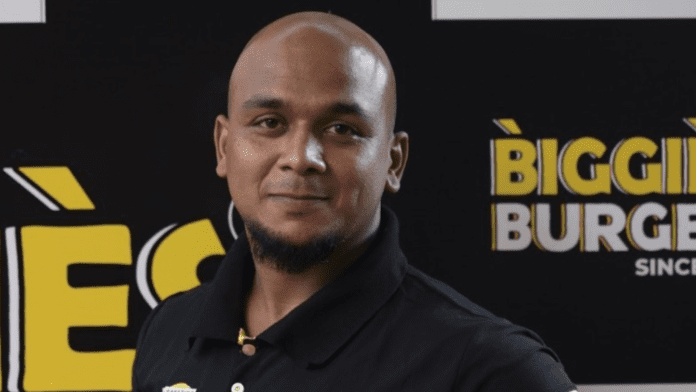
In a world dominated by fast-food giants like McDonald’s, KFC, and Dominos, it takes a special kind of passion and courage to step into the quick-service restaurant (QSR) industry and carve out a niche of your own. Biraja Prasad Rout, a young Indian entrepreneur, did just that when he embarked on a journey to revolutionize the love for burgers in India and create a brand that would stand tall amidst global competition. This is the story of how Biraja’s love for burgers and his entrepreneurial spirit combined to give birth to “Biggies Burger”.
Love at First Bite:
Back in 2011, in the bustling city of Bangalore, Biraja Prasad Rout was a young and curious first-year college student, just 21 years old. At that age, he felt like he had experienced almost everything the world had to offer, and nothing seemed to surprise him anymore. But little did he know that a delightful surprise awaited him in the form of a mouthwatering creation called the “burger.”
For Biraja, the concept of burgers had been entirely different until his time in his hometown, Odisha. It wasn’t the usual bun-tikki wala burger that he had encountered before. This was the real deal – a masterpiece with a succulent, juicy patty, oozing melted cheese, and a burst of fresh veggies, all embraced by soft buns. This extraordinary burger left an indelible impression on Biraja, igniting a spark of passion and curiosity in him.
In an exclusive conversation with SnackFax, Biraja said, “Like Odisha there are a lot of other states where the accessibility of these global brands and products are not much and burger as a product was not established in the Indian ecosystem, it was only for the metro cities as it was the era of pizza plants like Dominos, Pizza Hut, Papa Johns.”
His experience in Bengaluru, where he encountered a typical American burger, left him amazed and wondering why he hadn’t tried it earlier.
From that moment on, Biraja’s mind was consumed by the idea of bringing this sensational burger experience to more people in India. He couldn’t shake off the thought of creating a brand that would redefine burgers and elevate them to a whole new level of taste and satisfaction.
With every bite he took, the desire to share this culinary delight grew stronger within him. The more he learned about different burger variations and global flavors, the clearer his vision became. He knew he had to offer something extraordinary, something that would stand out amidst the ordinary fast-food options available.
Little did he know that his love for burgers and his entrepreneurial spirit would intertwine to give birth to a brand that would leave a lasting impact on the fast-food industry in India. Thus, the story of “Biggies Burger” began, and it would soon capture the hearts and taste buds of people all across the nation.
The Birth of Biggies Burger:
More than a tale of inspiration or motivation, this is a love story that revolves around a person’s passion and deep affection for a dream. He shares, “Coming from a middle-class family, I aspired to achieve independence and something of my own.” Although lacking a business degree, the concept of entrepreneurship fascinated him, particularly when he observed that burgers were one of the most widely consumed single meal products worldwide.
Residing in Electronic City, Bangalore, he was well aware of the distance from the main city, but his dedication was commendable. He traveled there almost every day to study burgers and even pursued business studies on weekends, admitting, “I am neither an MBA nor do I have any business background.”
Despite his unconventional path, the allure of combining business and burgers was irresistible to him, especially during his early days in 2011. Fueled by excitement, he took a bold step and opened a small kiosk named “Biggies Burger” near his house. Initially, the journey was not smooth as people were perplexed about what he was selling, with some even asking if he was selling bread or roti in his thela (cart).
Yet, he remained undeterred because he knew that something significant was in store for him. While his initial goal was not to open a hundred outlets, he soon realized that established brands like KFC, McDonald’s, and Domino’s were dominating the Quick Serving Restaurants (QSR) sector, and there was no prominent Indian brand in the competition.
Believing in the inevitability of globalization, he adopted an inclusive and creative approach, which ultimately enabled him to stand tall in the Indian market.
Sharing his inspiring story with SnackFax, Biraja said, “Whether we have an Indian Brand or not Indians are eating Pizza. At the verge of globalization, every country has to adopt everything.”
Thus, Biraja’s love for burgers and his determination to create something unique and Indian in the QSR realm turned into a successful venture. His “Biggies Burger” would soon become a significant player in the fast-food industry, rewriting the narrative and establishing itself as a symbol of Indian ingenuity and taste.
Growing Beyond Boundaries:
“Are you looking to do the journey all on your own or are you looking forward to creating a team?” Guided by this principle in 2013, Biraja embarked on his inaugural franchise venture, a novel concept for both him and the community. Biraja’s core belief has always centered around sharing and collective growth, a sentiment that led to two of his inaugural franchisees becoming co-founders on his path.
Despite limited capital and a clear vision, Biraja remained steadfast, refusing to allow others’ skepticism to dim the blazing passion within him. He emphasized, “It’s all about the conviction that you bring through the concepts and make them convince to be a part of you.”
With this steadfast belief, he single-handedly nurtured a team from the ground up, even though substantial salaries were not feasible at the time. Up until 2019, every team member was a fresh recruit, often originating as customers who held strong faith in the concept and had the potential to evolve into professionals. Biraja invested significant time in nurturing his initial team, a practice that bore fruit and facilitated exponential growth.
“That was the way i had taken it up, it might be different from other founders but for me it was like heavy conviction on what you’re doing, confidence and transferring that energy to other people,” Biraja said.
Today, Biggies Burger stands tall as a testament to a decade of unwavering commitment to quality ingredients, signature recipes, and affordable prices. With 40 outlets spanning across India, the brand has etched its name into the hearts of burger enthusiasts all over the country. Fueling its journey of growth and success, Biggies Burger has garnered support from two esteemed investors, LetsVenture and Indian Angel Network, raising an impressive sum of INR 55 million. The most recent milestone in their journey was the successful conclusion of a Seed round of funding on September 20, 2022. This achievement marks a pivotal moment in the brand’s evolution, setting the stage for even greater accomplishments in the years to come.
Wastage in the food supply chain is a significant issue with far-reaching implications. From farm to fork, there are various stages where food can be wasted, leading to environmental, economic, and social consequences. However, by implementing effective strategies, businesses can make a significant impact in reducing food wastage.
Reducing wastage across the food supply chain is not only an ethical imperative but also a smart business strategy. The food industry faces significant challenges in managing and minimizing wastage, from agricultural production and processing to distribution and consumption. Food wastage not only impacts the environment but also represents a loss of valuable resources and financial implications for businesses.
Reducing wastage in the food supply chain is of paramount importance as it helps minimize food waste, decrease costs, improve sustainability, and ensure efficient resource utilization. Reducing wastage in the food supply chain is of great importance for several reasons:
1. Environmental Impact: Food wastage contributes to environmental degradation. When food is wasted, all the resources that went into producing, processing, and transporting it are also wasted. This includes water, energy, and agricultural inputs. By reducing wastage, we can minimize the environmental footprint of the food industry and conserve valuable resources.
2. Food Security: With a growing global population, ensuring food security is crucial. Wastage in the food supply chain means that a significant portion of food that could have been consumed is lost. By reducing wastage, we can make more food available for consumption, thereby improving food security and reducing hunger.
3. Economic Efficiency: Food wastage represents a substantial economic loss for businesses. Wasted food translates to wasted investments in production, transportation, and storage. By minimizing wastage, businesses can improve their profitability and efficiency, leading to better economic outcomes.
4. Social Responsibility: Reducing food wastage is a socially responsible practice. It aligns with the values of sustainability, responsible consumption, and ethical business practices. It demonstrates a commitment to reducing inequalities and ensuring that food resources are distributed more equitably.
5. Ethical Considerations: Wasting food when millions of people suffer from hunger and malnutrition is ethically unacceptable. By taking steps to reduce wastage, we can contribute to a more just and equitable society where food resources are utilized effectively to meet the needs of all.
6. Reputation and Consumer Perception: Consumers are increasingly conscious of sustainability and waste reduction. Businesses that actively work to reduce wastage in their supply chains enhance their reputation and attract environmentally-conscious customers. This can lead to increased customer loyalty and support.
8 ways to minimize wastage across the food supply chain
1. Optimize Inventory Management
Implementing robust inventory management systems and practices is crucial for minimizing food wastage. Accurate forecasting, proper storage, and regular inventory audits help businesses maintain optimal stock levels, reduce overstocking, and prevent spoilage or expiration of food items.
2. Improve Supply Chain Visibility
Enhancing visibility across the supply chain enables better coordination and communication between stakeholders. Utilize technologies like tracking systems, sensors, and real-time data analytics to monitor inventory, transportation, and storage conditions. This allows for early identification of potential issues and prompt action to prevent wastage.
3. Enhance Collaboration with Suppliers
Develop strong relationships with suppliers and foster open communication. Encourage suppliers to implement sustainable practices and share information on inventory levels, quality, and shelf life. Collaborative efforts can lead to improved forecasting accuracy, reduced overordering, and better management of perishable items.
4. Implement Quality Control Measures
Ensure strict quality control at every stage of the supply chain to identify and remove damaged or substandard products. Establish clear quality standards and protocols for inspection, sorting, and grading to minimize wastage caused by low-quality or unsuitable products.
5. Optimize Packaging
Rethink packaging materials and design to minimize waste generation. Use sustainable and eco-friendly packaging options that are recyclable or biodegradable. Optimize package sizes to reduce excess material and consider innovative packaging solutions that extend the shelf life of perishable items.
6. Educate and Train Employees
Provide comprehensive training programs to employees to raise awareness about food wastage and its impact. Train staff in proper handling, storage, and preservation techniques to minimize spoilage. Encourage employees to contribute ideas and suggestions for waste reduction initiatives.
7. Implement Donation and Redistribution Programs
Partner with local food banks, charities, or organizations that can redistribute surplus food to those in need. Implement donation programs to redirect edible food that may otherwise go to waste. Establish clear guidelines and processes for safe and efficient donation and redistribution practices.
8. Educate Consumers
Promote consumer awareness and engagement to reduce food wastage. Educate customers about proper food storage, expiration dates, and ways to minimize wastage at home. Provide recipe ideas for using leftovers or slightly blemished produce, encouraging consumers to make the most of their purchases.
Final Thoughts:
Reducing wastage across the food supply chain is a collective effort that requires commitment from all stakeholders. With right efforts and strategies, businesses can make a significant positive impact on both their operations and the environment, fostering a more efficient and sustainable food supply chain for the future.
We use cookies to ensure that we give you the best experience on our website. If you continue to use this site we will assume that you are happy with it.