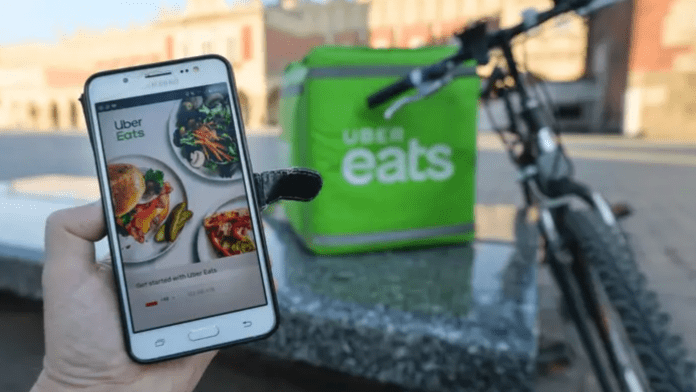
According to a recent Bloomberg report, Uber Eats is in the process of creating an AI-powered chatbot. This chatbot aims to provide users with personalized recommendations and a more efficient method of placing their orders. The report reveals that Steve Moser, a developer, uncovered information about this chatbot within the concealed code of the Uber Eats app.
Collecting information from users regarding their budget and food preferences, the chatbot will subsequently assist them in placing their orders. The exact public launch date of this chatbot by Uber remains undisclosed.
A request for comment from Uber went unanswered.
The report coincides with recent statements made by Uber CEO Dara Khosrowshahi in an interview with Bloomberg Television. Khosrowshahi mentioned the company’s ongoing development of an AI chatbot; however, he refrained from disclosing specific particulars about it. He did highlight that Uber presently employs AI to pair customers with drivers and couriers.
With this upcoming initiative, Uber is joining the ranks of other delivery apps that are also embracing AI integration within their platforms and services. Earlier, DoorDash made headlines by announcing its forthcoming AI-powered voice ordering technology, designed to empower restaurants in handling incoming calls efficiently and potentially amplifying their sales. Moreover, DoorDash is actively engaged in the creation of an AI-driven chatbot, aimed at expediting the ordering process and aiding customers in exploring a diverse array of food options.
Several months back, Instacart introduced an AI-powered search tool driven by OpenAI’s ChatGPT. The recently unveiled “Ask Instacart” search feature is meticulously crafted to enhance time-efficiency for customers and provide guidance on shopping inquiries through tailored suggestions.
After the widespread adoption of OpenAI’s ChatGPT across the internet, technology firms have been integrating AI-driven functionalities into their offerings to make this technology more accessible to the public. Consequently, it’s logical for delivery platforms to follow suit. Many users might appreciate the introduction of a chatbot within their food delivery app that can consider their budget and preferences while assisting them, adding value to their experience.
Nestle SA continues to maintain its position as the most valuable food brand globally, reaffirming its dominance in Brand Finance’s latest report titled “Food & Drink 2023.”
By assessing metrics such as brand resilience, revenue, and royalty rates to calculate brand worth, Brand Finance’s yearly publication has persistently granted the top rank to the Switzerland-headquartered corporation in Vevey. This trend has been unbroken since the report’s inaugural edition in 2015.
“As an iconic global brand, Nestle continues to raise the bar, setting new benchmarks for the industry and inspiring trust among consumers worldwide,” said Savio D’Souza, valuation director for Brand Finance. “With a rich heritage and a portfolio of trusted brands, Nestle has built a legacy of success and an unmatched global reputation.”
Over the past year, Nestle witnessed an 8% rise in its brand value, climbing from $20.8 billion to $22.4 billion. Brand Finance credited a portion of this increase to robust sales expansion across Nestle’s assortment of brands and notable advancements in plant-based products, exemplified by creations like Toll House’s whole grain cookie dough and novel non-dairy milk offerings. In a move to explore dairy alternatives, the company delved deeper in September by creating and testing an innovative product formulated using animal-free dairy protein from Perfect Day.
The report also highlighted Nestle’s coffee enterprise, which experienced substantial single-digit growth in organic sales in the initial half of fiscal year 2023. Nestle amplified this segment and furthered its worldwide coffee partnership with Starbucks, a progression that followed the incorporation of Seattle’s Best Coffee in October. Additionally, Brand Finance pointed out that Nestle’s Nespresso holds the title of the swiftest expanding non-alcoholic beverage brand on a global scale, exhibiting a remarkable 208% surge in value, currently resting at $2.9 billion.
“Nestle’s ability to meet evolving consumer preferences, stay ahead of trends, and effectively launch new products has been a driving force behind its continued brand value growth,” Brand Finance said.
Part of the company’s accomplishment in discerning consumer preferences stems from its Project Tasty initiative, which focuses on rationalizing stock-keeping units (SKUs). Initiated by Nestle in 2021, this endeavor aimed to streamline its product offerings, alleviate complexities, and enhance the availability of its top-performing SKUs, particularly given the challenges posed by supply chain disruptions during the pandemic. By implementing this program, Nestle effectively identified and phased out underperforming items within its extensive assortment of 100,000 SKUs. Remarkably, approximately 33% of these SKUs were contributing a mere 1% to the overall sales figures. Subsequently, the initiative’s scope expanded, transitioning from assessing individual product lines to encompassing entire brands and categories. Ulf Mark Schneider, the CEO of Nestle, anticipates that this broader approach under Project Tasty will yield positive outcomes for fiscal year 2023.
“We are seeing the first expected benefits come in as planned, in particular higher service levels for the company overall and for our high rotation items, in particular,” Mr. Schneider said in a conference call on April 25.
Following Nestle, Yili secured the second position in Brand Finance’s ranking of the most valuable food brands. The Chinese dairy manufacturer has consistently maintained this spot since surpassing Danone in 2020.
Yili achieved substantial value growth, experiencing a 17% increase to reach $12.4 billion, driven by robust domestic sales and enhanced international revenue. The inauguration of its Global Smart Manufacturing Industrial Park in Hohhot, China, also contributed to the brand’s value. Notably, this facility integrates cutting-edge, large-scale technology, making it one of the world’s most advanced, as indicated in the report.
“Yili has fostered strong customer loyalty in its local market by consistently delivering products of exceptional quality and perceived health benefits,” Brand Finance said. “Yili’s focus on quality, innovation, and environmental responsibility has contributed to its world-leading reputation in the dairy industry.”
Among food brands, the snack category demonstrated remarkable expansion, witnessing an average value surge of 40% among its top five brands. Notably, four brands under Frito-Lay, a division of PepsiCo, Inc. based in Purchase, NY, attained prominent positions within the snacking domain. These include Lays (also holding the No. 3 position in the list of most valuable food brands), Doritos, Cheetos, and Tostitos. Additionally, the report’s compilation of the top five most valuable snack brands included Want Want, a Chinese rice cracker brand.
In the realm of non-alcoholic beverage brands, Atlanta-based Coca-Cola Co. retains its top position yet again. Despite a 5% decrease in value to $33.5 billion in 2023, the brand successfully maintained its lead over PepsiCo, which experienced an 11% decline, securing the second rank.
“With a rich history, iconic brand story, and a steadfast dedication to customer experience and satisfaction, Coca-Cola has remained a global leader,” Mr. D’Souza said. “The brand continues to boost its international reputation and capture the loyalty of generations across the globe through ingenious and powerful marketing campaigns, product evolutions and innovative digital strategies.”
A recent survey, released on Monday, revealed that the typical delivery worker on a food platform possesses higher qualifications, works more extended shifts, yet earns less compared to a similar male worker in urban India.
The survey conducted by the think tank NCAER focused on employees of a food delivery platform based on apps. It demonstrated that the average platform worker dedicates 69.3 hours per week to their job, while a worker included in the Periodic Labour Force Survey (PLFS) works for 56 hours weekly. This indicates that the platform worker puts in an additional 23% in terms of working hours.
Additionally, the survey indicated a decline in the average actual monthly earnings, dropping from INR 13,471 per month in 2019 to INR 11,963 by the conclusion of May 2022, primarily due to the increased proportion of fuel expenses. However, in comparison to a similar worker, the monthly income was lower by 8% at INR 20,774, compared to INR 22,494. The disparity in hourly wages would result in a substantially greater difference.
Exacerbating the issue is the lack of health insurance coverage, despite the availability of accident insurance. In contrast, approximately one-third of the average workers covered under PLFS enjoyed some form of social security protection. Additionally, the workers on the app-based platform did not receive compensated leave, unlike their comparable worker counterparts, over 35% of whom had access to such benefits.
The survey revealed that more than 66% of the food delivery workers had become part of the platform with the intention of achieving a higher income. While the respondents pointed to accessible entry as one of the factors, 9% joined as a result of unemployment, out of which 67% made this decision during the pandemic, amounting to 6% of the total worker base.
The survey findings unveiled that possessing a two-wheeler, which was a requirement for the job, did not pose as significant of an obstacle as owning a smartphone – a crucial tool for food delivery. Only 55% of individuals had smartphones prior to securing a contract. Additionally, the average app worker needed to invest more than INR 680 to purchase a kit containing T-shirts and bags.
Sanjiv Puri, the Chairman of ITC, revealed that the conglomerate has joined forces with around 45 startups. This collaboration aims to foster agility and cultivate an entrepreneurial mindset among employees, especially during a period when small businesses are progressively causing disruptions in larger enterprises.
The conglomerate, which spans industries from cigarettes to hotels, is actively collaborating with startups across various sectors including consumer goods, social commerce, content production, distribution, packaging, and agritech solutions. Sanjiv Puri, who serves as both the Managing Director and Chairman of ITC, highlighted this diversified engagement.
“As an organisation, the focus is on how do we remain consumer centric and resilient; how do we dial up on the digital journey and press the accelerator on purposeful innovation,” Puri said.
“All these multidimensional initiatives come together to make the organisation agile and nimble, paving the way for sustained growth,” he added.
The Chairman of ITC mentioned that the company has made investments in startups both directly and through venture capital funds.
“The idea is to look at new-age opportunities in an integrated manner and not in isolation,” he said.
Up until now, ITC’s direct investments have included startups like YogaBar in the realm of healthy food, Mothers Sparsh, a company focusing on baby and maternal care products, and Mylo, a content-community-commerce platform catering to baby and maternal care.
Furthermore, the conglomerate has extended its investments to encompass funds dedicated to startups, including Fireside Ventures and Chiratae Ventures. In addition, ITC is engaged in collaborations with startups spanning various domains. To illustrate, it has joined forces with logistics company Shadowfax to enhance its e-store deliveries and has formed a partnership with Zepto to bolster its online quick-commerce sales efforts.
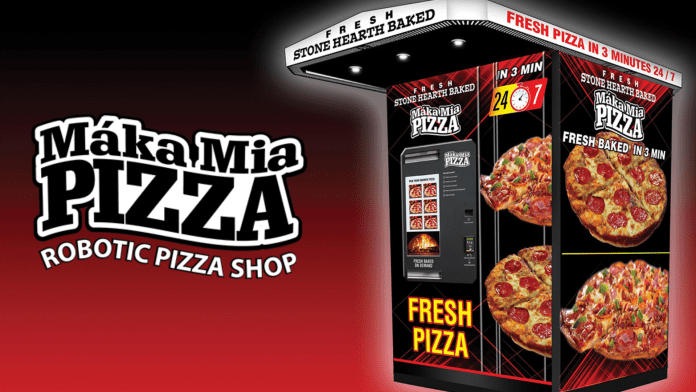
Máka Mia Pizza, a subsidiary of JTM Food Group, proudly presents its latest innovation: the Mia V4.5 Robotic Pizza Shop. Teaming up with a cutting-edge European pizza robotic system, Máka Mia has ingeniously merged its renowned pizza expertise with the state-of-the-art robotic oven technology, now making its debut in the American food industry. As outlined by the company, this revolutionary process utilizes precision robotics to craft deliciously flavorful pizzas within a mere three-minute timeframe, ensuring an exceptional culinary experience.
Crafted using an exclusive blend of cheeses, an authentic Italian family pizza sauce recipe, and specially formulated dough balls that yield a delicately airy center paired with a satisfyingly crispy edge and base, Máka Mia Pizza is a culinary masterpiece. The centerpiece of this innovation is the Robotic Pizza Shop, boasting a duo of stone hearth ovens that flawlessly bake and serve pizzas in under three minutes, all without the need for human intervention. Impressively, Máka Mia presents a state-of-the-art, ready-to-operate solution ideal for retailers situated in high-traffic areas. This encompasses diverse locations like college campuses, airports, hotels, theme parks, convenience stores, as well as stadiums and sports complexes.
“This is a perfect opportunity for retailers looking to increase revenue with limited labor requirements while still delivering a premium product,” says Matt Maas, Founder and CEO of Máka Mia Pizza. “The quality is hard to believe until you experience it for yourself. That’s why we’re scheduling demos across the U.S., to give foodservice industry and retail partners the chance for a hands-on presentation and taste test. I challenge anyone to match the total package of quality, convenience, and advanced technology of Máka Mia’s Robotic Pizza Shop.”
Established in Berlin in 2020, Holy introduces a line of powdered soft drinks.
Germany-based soft drinks brand Holy has successfully raised €10.5 million through a Series A funding round, with the intention of expanding its reach across Europe.
Leading the funding round was Left Lane Capital, a global venture capital firm, with participation from current investors FoodLabs and Simon Capital (previously recognized as Bitburger Ventures). Additional contributions came from V3 Ventures, a London-based consumer fund affiliated with the international consumer investment entity Verlinvest, as well as OMR’s venture arm, associated with the media company based in Hamburg. Notable figures from the food and beverage sector, including Bela Seebach, co-founder of Just Spices, and YFood’s founders Benjamin Kremer and Noel Bollmann, also took part in the round.
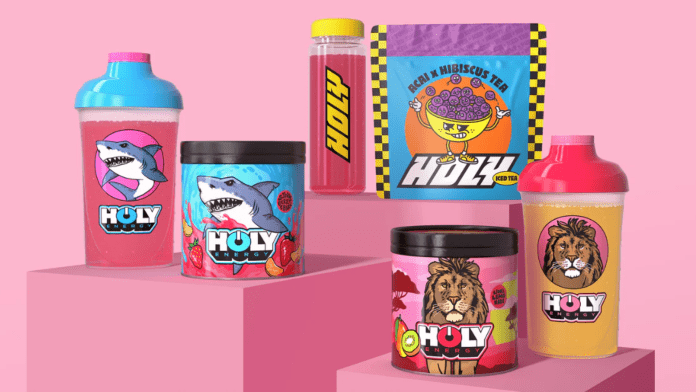
Established in Berlin in 2020, Holy introduces a line of powdered soft drinks. This innovative range is designed to present a more environmentally conscious and health-oriented substitute to conventional soft drinks. The brand achieves this by utilizing a reduced packaging waste format and incorporating natural ingredients.
Founder and CMO, Philipp Nass, said, “With low sugar, low calories, functional ingredients like vitamins, nootropics, antioxidants and fibre, as well as natural flavours and colours, our drinks really appeal to the next generation of consumers”.
Functioning as a direct-to-consumer (DTC) enterprise, the firm boasts over 200,000 customers spanning Germany, France, Austria, and Switzerland. These customers have embraced the Holy Energy and Holy Iced Tea offerings from the company’s product portfolio.
Amidst a present decline in direct-to-consumer (DTC) investments, the funding round has garnered recognition from investors as one of this year’s most fiercely contested consumer-focused campaigns. This achievement marks a noteworthy milestone, elevating Holy’s accumulated funding to €12.3 million. These funds are poised to bolster the brand’s ambitious objective of assuming a premier position as Europe’s healthier soft drink choice. The strategy encompasses diverse facets, such as introducing fresh product lines, venturing into untapped markets including the UK, and making inroads into retail distribution channels.
Mathias Horsch, Founder and Co-CEO, said, “Holy is currently a team of 25. Now we’re looking for new talent to fuel our product, geographic, and channel expansion as we accelerate our growth across Europe.”
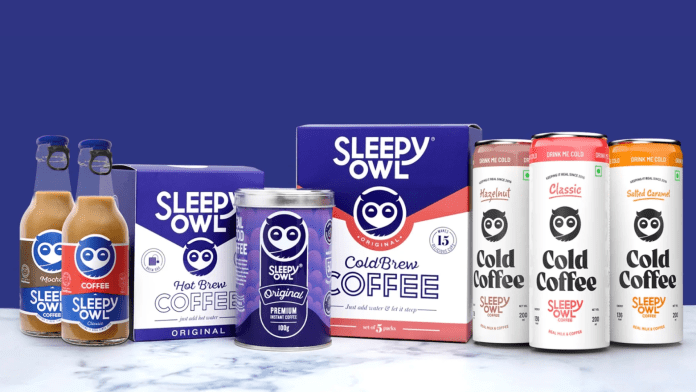
In a country known for its love affair with tea, a silent revolution was brewing, one cup of coffee at a time. Sleepy Owl, the embodiment of innovation and authenticity, emerged as a brand that not only transformed how India savors its caffeine fix but also redefined the concept of cold brew coffee.
India, a nation steeped in tea tradition, has long been synonymous with the aromatic brew that fills every home, street corner, and bustling market. Yet, amidst this sea of tea leaves, a subtle shift began to percolate. Sleepy Owl, a brand that would soon become a beacon of flavor, culture, and entrepreneurial spirit, was taking shape.
At the heart of Sleepy Owl’s inception lay the passionate hearts of its founders. Inspired by a devotion to coffee and a desire to infuse innovation into India’s coffee culture, Sleepy Owl was born. The audacious vision of crafting a premium cold brew coffee experience in a market dominated by tea was the seed that would germinate into a thriving coffee revolution.
Seeds of Inspiration:
For the makers of Sleepy Owl, this endeavor was more than just business; it was a manifestation of their unwavering love for coffee. Arman Sood, the Co-Founder of Sleepy Owl Coffee, reminisces about the genesis of their journey, “We wanted to introduce India to a trendy new innovation that hadn’t hit the market here but was still gaining popularity.” The concept was daring yet rooted in a simple question: if tea could be easily brewed, why not coffee?
Recognizing that coffee culture in India was ripe for innovation, the founders embarked on a mission to introduce something spicy and exciting to the coffee industry. Arman insightfully noted, “Indians are used to taking a tea bag to make tea. Why not brew a cup for coffee like that instead of using a French press?” This thought marked the turning point. Today, instant coffee stands as the flagship product for Sleepy Owl, a testament to their visionary understanding of people’s desires.
Revolutionizing the Coffee Culture:
The rise of Sleepy Owl marked a pivotal moment in India’s coffee culture. In a landscape where instant coffee held sway, the brand introduced the concept of cold brew coffee, reshaping the taste and experience of this beloved beverage. With painstaking attention to quality, Sleepy Owl’s cold brew offered a smoother, less acidic alternative, captivating the palates and hearts of coffee connoisseurs.
At the core of Sleepy Owl’s ascension lies an unswerving commitment to authenticity. The brand is more than just a coffee retailer; it is a curator of an experience. Every batch of Sleepy Owl cold brew is meticulously handcrafted, brewed slowly to perfection. This dedication to authenticity stands as a testament to the founders’ aspiration to provide consumers with a genuine coffee experience, devoid of artificial additives and shortcuts.
A Blend of Innovation and Community:
Sleepy Owl’s journey from obscurity to prominence was propelled by its innovative approach. Recognizing the potential of e-commerce and direct-to-consumer sales in the digital era, Sleepy Owl made its premium cold brew coffee accessible to a broad spectrum of consumers. This approach bypassed traditional distribution channels, forging a direct connection with its audience.
Beyond the realm of coffee, Sleepy Owl nurtured a community. Through dynamic social media campaigns, interactive content, and events, the brand initiated a dialogue with its consumers. This connection extended beyond transactions; it was a shared ardor for exceptional coffee. Sleepy Owl evolved into a platform where enthusiasts could exchange stories, experiences, and tips, fostering a sense of belonging.
Caffeinating Dreams and Redefining Culture:
Sleepy Owl’s journey to prominence was not devoid of challenges. The brand deftly navigated obstacles, from the intricacies of the supply chain to educating consumers about the nuances of cold brew coffee. Yet, each challenge was met with resolute determination for growth, culminating in a fortified brand identity and a devoted customer base.
The emergence of Sleepy Owl as a brand stands as a testament to the potency of dreams realized through innovation and perseverance. It is a narrative of transforming a love for coffee into a cultural metamorphosis. With every sip of Sleepy Owl’s cold brew, India’s coffee landscape awakens to a new era of flavors, experiences, and possibilities.
From a mere concept to a revered brand, Sleepy Owl’s journey epitomizes authenticity, innovation, and an unwavering pursuit of excellence. In a nation where tradition is steeped in tea, Sleepy Owl dared to provide an alternative that resonated with the contemporary palate. As Sleepy Owl continues to kindle aspirations and redefine coffee culture, it serves as a living testament to how a humble cup of brew can transcend taste, becoming an emblem of passion, identity, and a brewing revolution.
Watch our exclusive conversation with Arman Sood here:
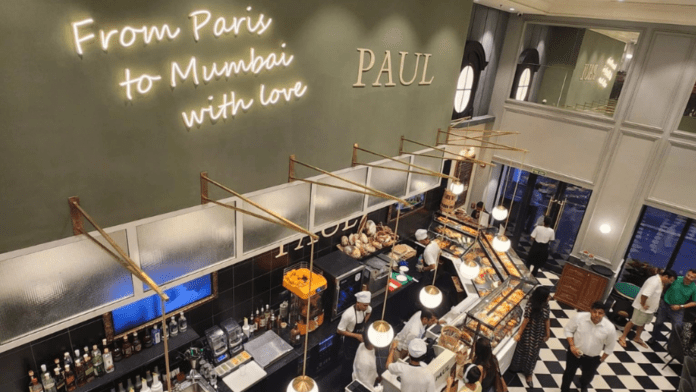
French bakery chain Paul Depuis 1889 has unveiled its latest venture in Mumbai’s Phoenix Palladium, as revealed by a mall official’s social media update. This establishment stands as the bakery chain’s debut store in the city.
“Mumbai’s first. PAUL depuis 1889 at Phoenix Palladium,” Smita Mookherjee Rai, senior vice-president leasing- Phoenix Mills posted on Linkedin.
The offerings encompass an array of delectable items such as pastries, cakes, croissants, sandwiches, quiches, tarts, crepes, eggs, and an extensive selection of over 140 varieties of bread. Additionally, their menu features an assortment of beverages including tea, wine, soft drinks, and various coffee-based drinks.
Established in 1889, Paul stands as a renowned French bakery chain with a global presence. In India, Paul Bakery Café was introduced by Stellar Concept Pvt. Ltd. through its affiliated entity, Cogent Hospitality Pvt. Ltd., in 2019. Presently, the chain boasts five establishments across India, situated in prominent locations including Ambience Mall in Gurugram, Ambience Mall in Vasant Kunj, One Horizon in Gurugram, Select Citywalk in Saket, New Delhi, and the recently inaugurated outlet in Mumbai.
Phoenix Palladium forms a integral component of The Phoenix Mills Ltd., a distinguished company in India known for its preeminent focus on retail-centric mixed-use developments. This enterprise is spearheaded by Atul Ruia, who holds the position of Managing Director at The Phoenix Mills Ltd. Their footprint spans multiple cities across the nation and encompasses diverse assets, including the likes of Phoenix Palladium in Mumbai, Phoenix Marketcity malls located in Mumbai, Pune, Bengaluru, and Chennai, Phoenix Palassio in Lucknow, Phoenix United in Lucknow and Bareilly, as well as Palladium in Chennai. The company also boasts a range of hospitality assets such as The St. Regis Mumbai and Courtyard by Marriott Agra, along with residential ventures like One Bangalore West and Kessaku in Bengaluru, and a collection of commercial properties that include Art Guild House, The Centrium, Phoenix Paragon Plaza, Phoenix House in Mumbai, and Fountainhead in Pune.
Parag Milk Foods, a manufacturer of dairy and FMCG products, has brought on board nine key executives to reinforce its management team and expedite its growth trajectory, as stated in a media release on Tuesday.
The following individuals have been assigned pivotal roles across the plant and operations, sales, finance, and strategic planning divisions:
Bheemanappa Manthale takes on the role of President for plant operations. Gajanan Patil assumes the position of GM Operations. Binod Das is appointed as the Head of Sales. Lakshya Rastogi will lead the Modern Trade Business. Biswajit Mishra becomes the Senior Vice President of Finance. Anand Sharda and Amol Sawant are designated as GMs of Finance. Abhinav Gupta will be responsible for leading strategic projects, while Vivek Rathod takes the helm of Business Intelligence, Transformation, Analytics & Assurance.
Commenting on the appointments, Devendra Shah, Chairman, Parag Milk Foods said, “Their diverse expertise and leadership will be instrumental in driving Parag Milk Foods towards new heights of innovation. With this investment in our management team we cement our dedication to delivering excellence to our stakeholders and driving sustainable success.”
SoftBank, a prominent technology investor from Japan, is preparing to divest a 1.17% ownership share in the Indian foodtech leader Zomato, with the transaction expected to yield a minimum of INR 940 Crores.
According to the agreement’s conditions, an affiliate of the investment company, SVF Growth Singapore, intends to sell 10 crore shares of Zomato at a base price of INR 94 per share, as reported by CNBC. This value signifies an approximate 0.7% reduction compared to Zomato’s closing stock price on August 29th.
According to the report, Kotak Securities has been appointed as the exclusive book runner for this transaction. This development follows recent reports indicating that the technology investor was exploring the possibility of divesting additional shares of the foodtech powerhouse through block deals.
This sequence of events comes after the conclusion of the lock-in timeframe for Blinkit investors. These investors had received Zomato shares as a result of Zomato’s acquisition of Blinkit, which occurred on August 25. Following this acquisition in the previous year, SoftBank, one of the investors in Blinkit, secured a 3.35% ownership in Zomato.
Even considering the minimum price of INR 94, SoftBank is poised to generate substantial gains, given that the calculated worth of the Zomato shares it obtained from the Blinkit agreement was INR 70.76 per share.
This marks the second instance of a notable Zomato investor divesting their share in the foodtech behemoth. Just the day prior, Tiger Global, a hedge fund headquartered in the United States, concluded its involvement with Zomato by offloading a 1.44% stake through open market transactions, yielding INR 1,123 Crores.
Since commencing operations in Mumbai in late 2018, the Japanese technology investor has successfully executed exits totaling $5.5 billion from its portfolio in India. Out of this sum, exits amounting to $1.5 billion have been accomplished within the last 12 to 18 months.
This recent advancement occurs against the backdrop of significant share offloading by prominent global investment firms in emerging tech startups. This trend has emerged due to the surge in stock values this year, attributed to shifts in investor sentiment.
Before this incident, Tencent, a tech investor from China, divested 2.1% of its ownership share in PB Fintech, which oversees Policybazaar and Paisabazaar, for a sum of INR 562 Crores ($68 million). Furthermore, Ant Group, a major Chinese internet player, recently relinquished a 3.6% stake in fintech leader Paytm for INR 2,037 Crores through a series of block transactions earlier in the current month.
Meanwhile, Zomato’s shares have been experiencing an increase on the stock market due to its enhanced financial performance. The prominent foodtech company disclosed a net profit of INR 2 Crores in the June quarter of 2023. In terms of year-to-date (YTD) performance, Zomato’s shares have surged by 59.70%.
On Tuesday (August 29), Zomato’s shares concluded the trading session at INR 94.65, marking a 2.51% increase on the BSE.
We use cookies to ensure that we give you the best experience on our website. If you continue to use this site we will assume that you are happy with it.