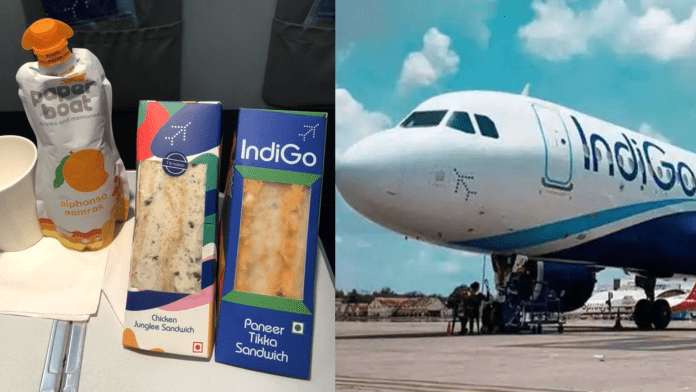
Passengers can look forward to experiencing the revamped 6E Eats menu starting from September 1, 2023 (Representative Image)
IndiGo is undergoing a transformation of its in-flight catering service, 6E Eats, with the aim of enhancing the overall customer experience. The updated fast-service menu has been meticulously crafted to offer novel choices to passengers, all the while emphasizing affordability, heightened service efficiency, and minimization of waste. Passengers can look forward to experiencing the revamped 6E Eats menu starting from September 1, 2023, across both IndiGo’s domestic and international flights.
IndiGo’s new offering introduces a unique opportunity for passengers to pre-book from a meticulously curated menu. This menu, now enriched with flavors inspired by India’s street food and kitchen traditions, showcases regional favorites. By celebrating the country’s culinary diversity and heritage, these delectable meals provide passengers, both on domestic and international routes, with a novel perspective of India. Alongside this, IndiGo is also revolutionizing its onboard services by introducing a poured beverage option, available as a combo. This enhancement aims to minimize waste and enhance overall service efficiency, benefiting passengers who pre-book meals or make onboard purchases.
With the convenience of corporate and other patrons in mind, whose fares encompass a meal yet opt not to pre-book it, IndiGo is unveiling ‘Snacks on the Plane’. This tailored, on-the-go snack bag is designed to cater to their needs.
Commenting on the new service concept, Sanjeev Ramdas, Executive Vice President of Customer Services & Ops Control, IndiGo said, “As India’s leading carrier, we are constantly looking at ways of improving our service offering for our customers. Our new 6E Eats menu incorporates feedback from customers, cabin crew and service partners and brings a host of new options. They say food unites a country and that is exactly what we are attempting with our new choice-of-the day regional meals to present #IndiaByIndiGo.”
IndiGo will continue to offer sale of alcoholic beverages and newly introduced options of mixers at affordable prices, in international sectors.
In today’s digital age, building trust and credibility with your audience is paramount for the success of any business or brand. Consumers are more discerning than ever, and they rely on authenticity as a key factor in their decision-making process. Video marketing has emerged as a powerful tool to convey authenticity, establish trust, and build credibility with your target audience.
Authenticity is the cornerstone of effective video marketing. It’s about being genuine, transparent, and true to your brand’s values and promises. In a world saturated with advertising and content, consumers crave authenticity, and video marketing provides an ideal platform to deliver it. Here’s how you can use video to unveil authenticity and strengthen your brand’s trustworthiness.
1. Storytelling: Video allows you to tell your brand’s story in a compelling and emotionally engaging way. People connect with stories on a deep level, and when your video conveys the genuine journey and values of your brand, it creates a strong emotional bond with your audience. Authentic storytelling is not about creating a perfect narrative; it’s about showing the human side of your brand, including your challenges and successes.
2. Transparency: Authenticity thrives on transparency. Use video to give your audience a behind-the-scenes look at your company, manufacturing process, or the faces behind your brand. This transparency shows that you have nothing to hide and builds trust. Customers appreciate knowing where their products come from and who they are supporting when they choose your brand.
3. Testimonials and Reviews: Video testimonials and reviews from satisfied customers are powerful tools for building trust. When potential customers see real people sharing their positive experiences with your product or service, it creates a sense of authenticity that traditional advertising cannot match. Encourage your customers to create video testimonials and share them on your platforms.
4. Live Streaming: Live video, whether it’s a product launch, a Q&A session, or a behind-the-scenes tour, is an excellent way to interact with your audience in real-time. Live streaming allows for unfiltered, spontaneous communication, which can be highly authentic. Your audience sees your brand in its raw, unedited form, and this can foster a sense of trust and connection.
5. User-Generated Content: Encourage your customers to create their own videos related to your brand or product. User-generated content is inherently authentic because it comes from real people who have experienced your offerings. Sharing this content on your channels not only builds trust but also strengthens your community.
6. Consistency: Consistency in your video content is crucial for building trust and credibility. When your audience knows what to expect from your videos in terms of style, tone, and frequency, they are more likely to trust your brand. Inconsistency can lead to confusion and erode trust.
7. Value-Driven Content: Focus on creating video content that provides value to your audience. Whether it’s educational tutorials, how-to guides, or entertaining stories, when your videos genuinely help or entertain your viewers, they are more likely to trust your expertise and return for more.
8. Authentic Personal Branding: If you are the face of your brand, being authentic in your videos is essential. Be yourself, share your personal experiences, and let your passion shine through. Authentic personal branding fosters a connection with your audience that goes beyond just the products or services you offer.
9. Respond to Feedback: When viewers leave comments or feedback on your videos, engage with them authentically. Respond to questions, acknowledge concerns, and thank them for their support. This level of interaction demonstrates that you value your audience’s input and are committed to providing the best experience possible.
10. Ethical Marketing: Finally, ensure that your video marketing practices align with ethical standards. Avoid clickbait, misinformation, or manipulative tactics that can erode trust. Authenticity goes hand in hand with integrity.
Final Thoughts:
Video marketing is a powerful tool for unveiling authenticity, building trust, and establishing credibility with your audience. By incorporating storytelling, transparency, testimonials, live streaming, user-generated content, consistency, value-driven content, authentic personal branding, responsive feedback, and ethical marketing into your video strategy, you can create a genuine connection with your audience that goes beyond the transactional. Remember, authenticity is not just a marketing tactic; it’s a commitment to being true to your brand’s values and delivering on your promises, and video is the perfect medium to showcase that commitment.
In the ever-evolving landscape of digital marketing, social media has emerged as a powerful tool for businesses to connect with their audiences. However, successful social media strategies go beyond simply posting content; they revolve around creating customer-centric connections. In this era of heightened competition and information overload, a well-crafted social media strategy that places the audience at its core can make all the difference.
Understanding the Audience:
The first step in crafting a customer-centric social media strategy is to thoroughly understand your audience. It’s not enough to have a vague idea of who your customers are; you need to delve deep into their demographics, psychographics, and behaviors. Conduct surveys, analyze data, and engage in social listening to gain insights into what your audience cares about, what problems they face, and how they use social media.
Once you have a comprehensive understanding of your audience, you can create buyer personas. These personas represent different segments of your target audience, helping you tailor your content and messaging to specific groups. For example, a fitness brand might have personas for fitness enthusiasts, busy professionals, and seniors looking to stay active. Each persona would have distinct preferences and pain points that the brand can address through its social media content.
Content that Resonates:
With a clear understanding of your audience, you can now create content that resonates with them. Customer-centric content is not about pushing your products or services relentlessly; it’s about providing value to your audience. This can take various forms:
1. Educational Content: Share informative articles, how-to guides, and tutorials related to your industry. This positions your brand as an authority and helps your audience solve problems.
2. Entertaining Content: People love to be entertained. Share funny memes, inspiring stories, or behind-the-scenes glimpses of your business. Such content humanizes your brand and fosters a sense of community.
3. Interactive Content: Run polls, surveys, quizzes, and contests to engage your audience. Interactive content encourages participation and fosters a sense of involvement.
4. User-Generated Content: Encourage your customers to create content related to your products or services. Share their testimonials, reviews, and experiences. This not only provides social proof but also strengthens your customer relationships.
5. Storytelling: Narratives are powerful. Share stories about your brand’s journey, values, and the impact you’ve had on customers’ lives. Authentic storytelling can create emotional connections.
Remember that the content should align with the interests and needs of your specific buyer personas. Use the language and tone that resonate with each group, and don’t forget to incorporate relevant keywords for better discoverability.
Consistent Engagement:
A customer-centric social media strategy is not a one-way street. It involves ongoing engagement with your audience. Respond promptly to comments, messages, and mentions. Acknowledge feedback, whether positive or negative, and use it to improve your products or services.
Consistency is key. Maintain a regular posting schedule to keep your audience engaged. Use social media management tools to plan and schedule posts in advance. However, don’t rely solely on automation. Real-time engagement and spontaneity can also help build authentic connections.
Building Community:
Beyond individual interactions, aim to build a sense of community among your followers. Create a space where your audience can connect with each other over shared interests. Encourage discussions, facilitate networking, and provide valuable resources.
Host live events, such as webinars or Q&A sessions, where your audience can interact with you directly. These events humanize your brand and allow for real-time engagement.
Measuring Success:
A customer-centric social media strategy is not complete without measuring its success. Use key performance indicators (KPIs) to track the impact of your efforts. These may include metrics like engagement rates, click-through rates, conversion rates, and customer sentiment.
Regularly analyze the data to see what’s working and what needs improvement. Adjust your strategy accordingly to better cater to your audience’s preferences and needs.
Final Thoughts:
In today’s digital age, a customer-centric social media strategy is paramount for businesses looking to thrive. Understanding your audience, creating valuable content, consistent engagement, and community-building are the pillars of such a strategy. By putting your audience at the center of your social media efforts, you can create meaningful connections, foster brand loyalty, and ultimately drive business growth. In a world where competition is fierce and attention spans are short, it’s those who truly connect with their audience that stand out and succeed.
In the bustling realm of digital marketing, where every click and scroll matters, businesses are constantly seeking ways to connect with their audience on a deeper level. Gone are the days of one-size-fits-all marketing strategies; today’s savvy consumers demand a personalized experience. This is where data-driven marketing steps into the spotlight, offering a potent means to deliver the personal touch that customers crave.
Understanding the Data Goldmine
In the digital age, data is the lifeblood of marketing. Every interaction, from website visits to social media likes, generates valuable information about your audience. This data, when harnessed effectively, can be a treasure trove of insights into consumer behavior, preferences, and needs.
Tailored Content and Recommendations
One of the most compelling aspects of data-driven marketing is the ability to serve up personalized content and product recommendations. Algorithms analyze a user’s past behavior to predict their future interests, presenting them with relevant content and products. Amazon’s product recommendation engine, for example, has become a shining example of how effective this approach can be.
Imagine you’re an online bookstore. With data-driven marketing, you can recommend books similar to those a user has previously purchased or viewed, creating a shopping experience that feels tailored just for them. It’s akin to having a knowledgeable bookstore owner who knows your tastes inside out.
Another advantage of data-driven marketing is the ability to optimize the timing of your messages. Knowing when your audience is most active online can significantly impact engagement. For instance, sending an email campaign at a time when your subscribers are likely to be checking their inboxes can boost open rates and conversions.
People are bombarded with marketing messages every day. To stand out, your content needs to resonate on a personal level. Data-driven marketing allows you to address users by their names, recommend products based on their past purchases, and send them tailored offers that match their interests.
Personalized experiences foster trust and loyalty. When users feel that a brand understands their needs and preferences, they are more likely to return. Think about your favorite local coffee shop where they know your name and your “usual” order. Data-driven marketing strives to replicate this personalized, friendly experience in the digital world.
Data Privacy and Responsibility
While data-driven marketing holds immense potential, it’s crucial to handle user data responsibly and ethically. In an era where data breaches make headlines, consumers are increasingly concerned about their privacy. Building trust involves being transparent about how you collect and use data, as well as providing robust security measures.
As technology continues to advance, data-driven marketing is set to become even more sophisticated. Machine learning and artificial intelligence will refine our ability to predict user behavior and preferences, allowing for ever more personalized interactions.
Data-driven marketing isn’t just a buzzword; it’s the key to delivering a personal touch in the digital age. By harnessing the power of data, businesses can create tailored experiences that not only engage users but also build lasting relationships. In this data-driven world, personalization is the bridge that connects brands and customers in a meaningful way, leaving a lasting impression and driving business growth.
In today’s digital age, content is king, and businesses of all sizes are racing to create compelling online material to engage their audience. However, a dilemma often faced by content creators and marketers is whether to opt for long-form or short-form content. Is it a case of “the longer, the better” or “short and sweet”? In reality, it’s a nuanced decision that depends on your brand’s unique goals, audience, and the story you want to tell.
The Art of Storytelling
Content, in any form, is essentially storytelling. It’s how brands communicate their message, values, and personality to the world. And like any great story, it needs to capture attention, maintain interest, and, ultimately, resonate with the audience. That’s where the long-form vs. short-form conundrum comes into play.
The Power of Short-Form Content
Short-form content is like a well-crafted haiku – concise and impactful. In today’s fast-paced world, where time is a precious commodity, short-form content reigns supreme. Social media platforms like Twitter, with its character limit, and Instagram, with its focus on visuals and brief captions, thrive on short content.
2. Brand Awareness: Memorable taglines, catchy slogans, and witty one-liners can make your brand stick in people’s minds.
3. Teasers and Previews: Offering a glimpse of what’s to come can generate excitement and anticipation.
The Allure of Long-Form Content
Long-form content, on the other hand, is more like a novel. It allows for in-depth exploration, detailed storytelling, and thorough information sharing. Blog posts, articles, whitepapers, and eBooks fall under this category.
Long-form content is beneficial when:
1. Expertise is Showcased: It’s an opportunity to demonstrate your authority and knowledge in your field.
2. Complex Topics are Discussed: Some subjects require a deep dive to provide valuable insights and understanding.
3. SEO and Authority Building: Search engines often favor longer, informative content, which can boost your website’s ranking.
Balancing Act
So, which one should you choose? The answer is both.
The real magic happens when you strike a balance between long-form and short-form content. Short-form content can act as teasers, directing your audience to the longer pieces where they can explore the subject in-depth. This approach ensures that you capture the widest audience, from the quick-scrollers to the detail-seekers.
Consider Your Audience
Your audience is the compass guiding your content strategy. Understanding their preferences is key. Short-form content can cater to the time-poor, while long-form content can engage those seeking in-depth information.
Whether you’re crafting a 280-character tweet or a 2,800-word blog post, remember that quality should never be compromised. Your content should add value, entertain, educate, or inspire. Irrespective of length, it should be engaging.
The long-form vs. short-form content debate is not a battle; it’s a symbiotic relationship. Like yin and yang, both have their place in the content ecosystem. The key is to understand when and how to utilize each to maximize your brand’s reach and impact. So, embrace both, and let your brand’s story unfold in captivating ways, short and long.
Due to the recognized “special relationship” shared with Singapore, India has opted to authorize the export of rice in order to fulfill the Southeast nation’s food security needs, as stated by the Ministry of External Affairs (MEA).
“India and Singapore enjoy a very close strategic partnership, characterized by shared interests, close economic ties and strong people-to-people connect. In view of this special relationship, India has decided to allow the export of rice to meet the food security requirements of Singapore,” said MEA official spokesperson, Arindam Bagchi on Tuesday in response to media queries on rice export to Singapore.
“Formal orders in this regard will be issued shortly,” Mr Bagchi added.
On August 27, India implemented further protective measures concerning the export of basmati rice, aimed at preventing the shipment of non-basmati white rice, which is currently restricted for export.
Last Sunday witnessed the government’s statement confirming the receipt of credible field reports regarding the misclassification and illegal export of non-basmati white rice.
“It has been reported that non-basmati white rice is being exported under the HS codes of parboiled rice and basmati rice,” the government said in a statement.
Significantly, the export of non-basmati white rice was banned starting from July 20, aiming to stabilize domestic prices and uphold domestic food security. The government observed that despite limitations imposed on specific rice types, rice exports have remained elevated throughout the current year.
On July 20, the central government revised the rice export regulations by categorizing non-basmati white rice under the “prohibited” classification.
The export policy relating to non-basmati white rice (semi-milled or wholly milled rice, whether or not polished or glazed) has been revised from “free” to “prohibited” and it has come into force immediately, a Directorate General of Foreign Trade (DGFT) notification said.
Zomato saw its stock price surge by over 5% during early trading on Wednesday, driven by a block deal linked to the foodtech giant. This upward momentum led the company’s shares to reach a peak of INR 99.50 each on the BSE.
Based on data from Bloomberg, a block deal took place on the stock exchanges involving around 10 crore Zomato shares, which corresponds to a 1.17% ownership in the company. These shares were traded at an average floor price of INR 94.70 per share. The overall worth of this transaction tallied up to roughly INR 947 crore.
After the lock-in period for Blinkit ended on August 25, Zomato Ltd. encountered an alteration in its equity on Monday, which also impacted 2.14% of its shares.
As indicated by significant trade data from Bloomberg, a sum of 18.4 crore shares were exchanged on Monday, spanning a price range between INR 92.20 and INR 94.00. The individuals or entities responsible for buying and selling have not been revealed as of now.
In the past week, news emerged indicating that SoftBank was considering the possibility of selling extra shares of Zomato through block trades.
SoftBank, having invested in Blinkit as well, obtained Zomato shares as part of Zomato’s acquisition of the quick-commerce startup in August of the previous year. This acquisition deal amounted to INR 4,447 crore. The shares acquired by SoftBank were subjected to a lock-in period lasting 12 months.
On Monday, investment firm Tiger Global made its exit from Zomato through open market transactions, selling 12.24 crore shares which represented a 1.44% stake in the company. Tiger Global’s Internet Fund III Pte Ltd conducted the sale in multiple parts at an average price of INR 91.01 per share. The total value of these transactions, based on BSE bulk deal data, amounted to INR 1,123.84 crore.
During the first quarter of FY24, Zomato reported a consolidated profit after tax (PAT) of INR 2 crore, marking a significant turnaround from the net loss of INR 186 crore recorded in the same quarter of the previous fiscal year.
In the initial quarter of FY24, the gross order value (GOV) for Zomato’s food delivery segment reached INR 7,318 crore, indicating an increase from INR 6,425 crore achieved during the same period in the previous fiscal year.
In pursuit of profitability, the foodtech leader has expanded the scope of its platform fee while simultaneously increasing its amount. In its earlier phase, Zomato levied a fee of INR 2 per order for select users. Presently, the company has raised the platform fee to INR 3 for particular users situated in Tier II cities, as disclosed by SnackFax. Meanwhile, the fee for the majority of users in metropolitan cities remains steady at INR 2.
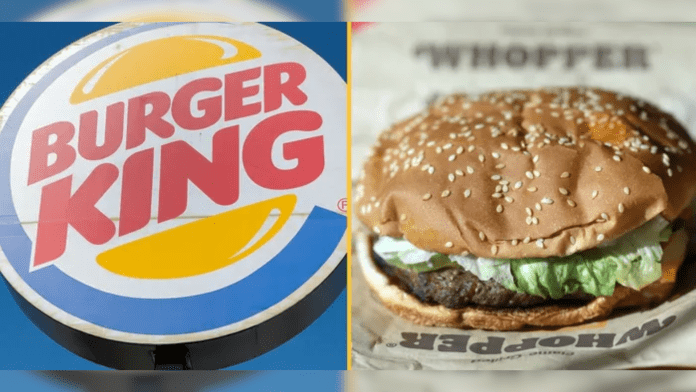
Burger King is currently facing legal action from discontented customers who contend that its flagship Whopper burger falls short in size, as per their claims.
In a potential class action lawsuit in the US, customers have alleged that Burger King engaged in false advertising by presenting images of their popular fast-food item, the Whopper burger, in a way that exaggerates its size compared to its actual dimensions.
The lawsuit asserts that the images depict the burger with ingredients spilling over the bun, creating an illusion of being 35% larger and containing over twice the amount of meat than what is actually provided.
Burger King’s recent attempt to have the case dismissed by a US judge was denied last week, thereby allowing the arguments to proceed for consideration by a jury.
The legal dispute surrounding the Whopper, Burger King’s signature flame-grilled burger, is just one among several cases in the US that highlight the discrepancy between fast food advertising and the actual product.
McDonald’s is currently facing a comparable lawsuit in Brooklyn, New York, while Taco Bell encountered a lawsuit last month in the same court. The lawsuit against Taco Bell accuses them of selling Crunchwraps and Mexican pizzas with purportedly only half the amount of filling as advertised.
Each of these lawsuits is pursuing a minimum of $5 million in damages. The plaintiffs contend that the evident nature of false advertising is so significant that it constitutes a breach of contract.
In relation to the Whopper case, Burger King asserted that there was no obligation to provide burgers that perfectly matched the appearance depicted in the images.
Nevertheless, US District Judge Roy Altman in Miami emphasized that it falls upon the jurors to determine the perspective of “reasonable individuals.”
The inception of the Whopper burger dates back to 1957 when James McLamore, Co-Founder of Burger King, introduced it. He was inspired to create the burger after observing a competing chain’s success with the sale of larger burgers.
The item has become synonymous with the chain, so much so that Burger King’s official motto is “the home of the Whopper”.
A spokesman for Burger King said, “The plaintiffs’ claims are false. The flame-grilled beef patties portrayed in our advertising are the same patties used in the millions of Whopper sandwiches we serve to guests nationwide.”
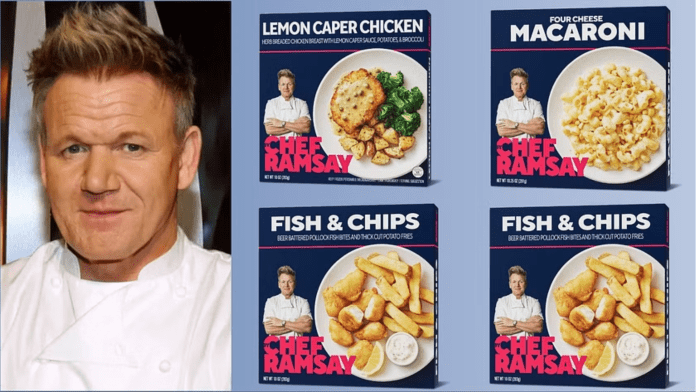
Exclusively available at Walmart, the collection named "By Chef Ramsay" comprises eight distinct meals
Walmart will be the sole provider of a fresh selection of frozen, prepared meals designed by none other than celebrity chef Gordon Ramsay, as revealed by a report from People.
While Ramsay has explored various business ventures such as cooking shows, competitions, and restaurants, this marks his inaugural venture into the realm of prepared grocery store foods.
Exclusively available at Walmart, the collection named “By Chef Ramsay” comprises eight distinct meals, each designed to be conveniently heated and served within minutes. These eight meal options are currently accessible across all Walmart stores nationwide.
Amidst a growing trend of exclusive supermarket offerings, the introduction of this frozen food line coincides with the emergence of various “unavailable elsewhere” products. Following a similar strategy, Kroger has also joined the trend by presenting their own unique contribution – the time-limited Late Night Loaded Taco Doritos, exclusively procurable at Kroger outlets.
Ramsay’s frozen meal selection encompasses classic British favorites like shepherd’s pie and fish and chips. Additionally, the assortment features a variety of other dishes such as four-cheese lasagna, macaroni bake, mushroom risotto, chicken pot pie, lemon caper chicken, and slow-roasted beef with potatoes.
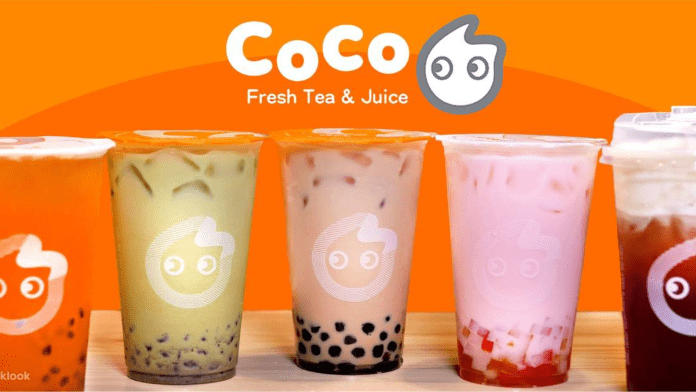
Prominent boba tea label, CoCo Fresh Tea & Juice, has just announced its intentions to broaden its presence in South Asia, capitalizing on the increasing global popularity of this East Asian delight.
In the midst of global challenges, South Asia’s economy has demonstrated remarkable strength. Concurrently, the global bubble tea market is poised to expand significantly, projected to increase from $2.46 billion in 2023 to $4.08 billion by 2030, with a steady CAGR of 7.51%. Given these advantageous circumstances on a regional level and the broader global market trend, CoCo has received notable interest from entrepreneurs in South Asia who are eager to uncover the yet unexplored possibilities within the bubble tea sector.
“We’re thrilled to be here and look forward to future partnerships and to scaling up localized support,” commented Kody Wang, deputy director of Business Development at CoCo Fresh Tea & Juice. “After reaching 5000 stores worldwide this year, CoCo has the most international coverage of any pearl milk tea brand, and our confidence level is high that South Asia is the next major market for bubble tea globally.”
South Asia’s dynamic consumer market:
Having already gained substantial popularity across various Asian regions, as well as in the United States and Europe, bubble tea has achieved a global following owing to its ability to captivate diverse demographics, notably Generation Z. Within the context of South Asia, a number of pivotal elements contribute to the profitability of this beverage:
Growing market size: Rising urbanization and a booming middle class in countries like India and Pakistan provide opportunities for international brands.
Changing consumer preferences: A growing interest in flavours from other countries combined with the Instagram-worthy appeal of bubble tea positions the beverage uniquely to captivate the younger, more urban populations of South Asia.
Cultural adaptability: CoCo embraces customization, enabling the creation of numerous region-specific flavors to amplify appeal and bridge global trends with local tastes.
The most expansive bubble tea franchise network worldwide:
Playing a pivotal role in the recent expansion of bubble tea culture in the United States and Europe, CoCo has achieved a remarkable stride, escalating its store count from 3,500 to 5,000 between 2019 and 2023. This impressive growth has solidified its widespread presence, strategically positioning the brand for its upcoming endeavors.
Furthermore, the substantial enthusiasm displayed by South Asian franchise holders and business visionaries during diverse international conferences underscores a substantial demand for bubble tea within the region. As part of this expansion strategy, the brand will primarily emphasize forging partnerships with established beverage enterprises and accomplished master franchisors.
Empowering South Asian entrepreneurs:
For franchisees in the region, CoCo Fresh Tea & Juice offers:
Established brand reputation: High brand recognition to attract customers and drive business growth
Proven, flexible business model: The ability to apply a successful model to local economies with room for adaptation
Customisation for local tastes: CoCo’s diverse offerings allow for franchisees to cater to the various tastes within South Asia
Favorable long-term prospects: The brand’s strength translates to franchising opportunities having a positive outlook for long-term ROI
Active support and training: Comprehensive guidance for South Asian partners to seamlessly establish and run successful stores
We use cookies to ensure that we give you the best experience on our website. If you continue to use this site we will assume that you are happy with it.