Captain Fresh, a B2B seafood startup, has secured $20 million in an expanded Series C funding round spearheaded by SBI Investments of Japan and Evolvence Capital.
In addition, the funding round witnessed the involvement of Captain Fresh’s current backers, including Tiger Global, Accel Partners, Matrix Partners India, and Prosus Ventures.
The Bengaluru-based startup intends to leverage the newly secured capital for expanding its presence in the European and US markets.
Captain Fresh has also announced the appointment of Basola Valles as the CEO for its European market operations.
Commenting on expansion plans for Europe, Valles said, “We aim to reduce turnaround times, invest in product innovation, and deliver on transparency and traceability needs. We will initially focus on selected European countries in partnership with local players.”
The funding round comes almost a year after Captain Fresh raised $7.3 million from Evolvence Group as part of its extended Series C round.
In March 2022, Captain Fresh had previously disclosed securing $50 million to expand its operations into Africa and the Middle East. Prosus Ventures and Tiger Global led this funding round, with additional participation from Accel India, Matrix Partners India, Ankur Capital, and Incubate Fund.
Established in 2019 by Utham Gowda, Captain Fresh operates as a farm-to-retail platform specializing in animal proteins such as fish, seafood, and sheep. The company directly sources its products from agents and farmers and distributes them through various channels, including B2B, B2R, and B2B2C.
The startup indirectly competes with well-established players in the market, including FreshtoHome, Licious, and Tendercuts, which was acquired by Good To Go.
Araiya Hotels and Resorts proudly unveils their third global dining experience, MÉZ, an alluring gastronomic haven nestled on the picturesque shores of Spinola Bay in Malta.
The space invites you to traverse an epicurean odyssey, drawing inspiration from the historical maritime routes of the Indian Ocean world. In a heartfelt tribute to the fusion of flavors that have left an indelible mark on world cuisine, MÉZ unfolds as an exquisite exploration of Indo Coastal Cuisine, where the artistry of spices and the tapestry of diversity seamlessly intertwine.
“We are excited to open MÉZ with the mission to celebrate gastronomic history by bringing forth a tapestry of flavours from across the Indian Ocean. Chef Vanessa’s dedication to sourcing locally while honouring tradition and embracing innovation makes her a driving force behind MÉZ’s culinary journey,” shared Amruda Nair, Founder and Director, Araiya Hotels and Resorts on launching MÉZ.
The concept is rooted in the rich historical tapestry of spice trade that linked civilizations across Asia, Northeast Africa, and Europe, harkening back to the ancient traditions of spice utilization and exchange.
The restaurant has enlisted the talents of Chef Vanessa Filix, a culinary virtuoso with an illustrious career that spans renowned establishments. She currently serves as the Kitchen Coordinator & Chef de Partie at Ion Harbour By Simon Rogan in Malta, adding her considerable expertise to the team.
In partnership with local farmers, Chef Vanessa meticulously highlights the essence of Maltese produce, and her expert menu curation guarantees a consistent culinary experience. Her impressive culinary journey encompasses roles such as Junior Sous Chef at Freehouse in Singapore, as well as Demi Chef positions at renowned establishments like Fat Lulu’s and Mama-San.
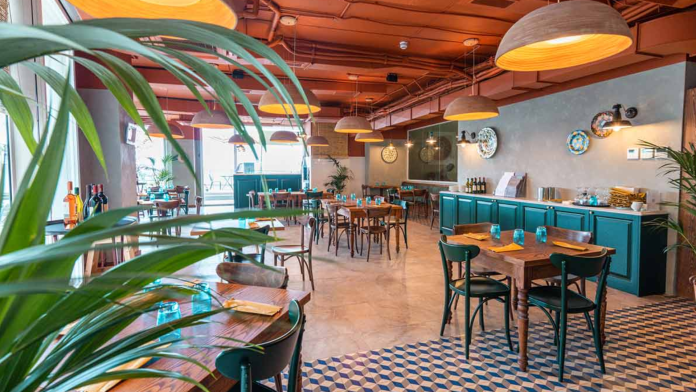
Nestled in the midst of the enchanting Mediterranean harbor of St. Julian’s, MÉZ presents a mesmerizing vista of the iconic Spinola Bay. The restaurant’s terrace accommodates al fresco dining for up to 70 guests, while indoors, you’ll find an exclusive private dining room with bay views, accommodating 20 guests, as well as a cozy bar area.
MÉZ’s nautical-inspired interiors seamlessly weave a maritime theme, whisking guests away to an era when the world’s oceans served as conduits for exploration and cultural exchange.
MÉZ is more than just a restaurant; it’s a culinary journey that delves into the intersection of history and flavor.
Cheesiano Pizza, a prominent player in the Quick Service Restaurant (QSR) sector, is delighted to share a momentous accomplishment: consistently surpassing INR 1 crore in monthly gross sales (excluding one-time revenue). This remarkable achievement is a testament to the steadfast support and loyalty of our cherished customers across all our brands.
The exceptional growth can be attributed to the impressive 35% repeat customer rates observed across all Cheesiano Pizza’s brands, demonstrating the trust and satisfaction customers have in the company’s products and services. Furthermore, the company has efficiently handled more than 100,000 quarterly orders, further affirming the popularity of its offerings.
Niraj Bora, Co-Founder of Cheesiano Pizza, said, “We are extremely delighted and grateful to all our customers for their continued patronage, which has enabled us to achieve this remarkable milestone. This achievement is a testament to the hard work and dedication of our team and our commitment to delivering top-quality pizzas that leave a lasting impression on our customers.”
Looking forward, Cheesiano Pizza is filled with enthusiasm for upcoming growth opportunities. The company is gearing up to introduce a new brand, Saucy Subs, which will diversify its product range to cater to a broader spectrum of tastes and preferences. Additionally, Cheesiano Pizza is steadfast in its commitment to expanding its presence, with plans to establish new stores in strategically chosen locations, ensuring accessibility and convenience for pizza lovers everywhere.
Prasad Tilve, Co-Founder of Cheesiano Pizza, said, “We are optimistic about the future and are geared up for further growth. Our upcoming brand launch and the addition of new stores will allow us to reach even more customers, and we are committed to maintaining the same level of excellence and customer satisfaction across all our outlets.”
With an unwavering commitment to quality, innovation, and exceeding customer expectations, Cheesiano Pizza has solidified its position as the preferred choice for pizza enthusiasts. Its remarkable achievement of consistently reaching INR 1 crore in monthly gross sales, coupled with a consistent uptick in order volumes, positions the company for sustained success and future growth within the pizza industry.
The Confederation of Indian Alcoholic Beverage Companies (CIABC) asserted on Tuesday that the elimination of non-tariff obstacles in G20 nations, such as the minimum maturation condition for whisky, would contribute to a significant boost in India’s alcoholic beverage exports. Vinod Giri, the Director-General of CIABC, highlighted that G20 countries, which collectively represent 80 percent of worldwide alcoholic beverage imports, not only offer opportunities for higher product pricing but also offer improved operating margins.
Nonetheless, India’s portion of that market is extremely small, constituting a mere 0.1 percent of their total imports.
“It is therefore a massive opportunity not only from the volume point of view but also from the value and profits. G20 nations have great interest in it. While allowing them better access to our markets, we must ensure a return access by demanding the removal of non-tariff barriers such as minimum maturation conditions for whisky that these countries have put up to protect their own industry,” Giri said.
He further emphasized that numerous Indian alcoholic beverage products boast world-class quality, yet enticing customers proves to be a challenging endeavor within the fiercely competitive markets of G20 countries.
“The G20 presidency with India has helped on that front by moving India towards the centre of this grouping. It has increased engagement with India and we hope it spills over to an interest in Indian products and a favourable disposition towards them,” he said.
Giri also noted that thus far, the exports of alcoholic beverages have primarily relied on the industry’s efforts, with minimal government intervention or support. However, the advocacy from India’s trading partners, such as the UK and Australia, for liquor and wine has prompted the government to pay closer attention to the industry.
Recognizing the potential in the Indian market, countries like the UK are actively pursuing substantial reductions in whiskey duties.
“We note a welcome interest in the government on promoting export of Indian alcoholic beverages products now. India is amongst the largest liquor markets in the world,” he said.
Besides removing barriers, he suggested that Indian missions abroad can help in promoting domestic products by serving those in their official functions.
“This is a great endorsement and this is what every other country does. Our trade fairs and exhibitions should include Indian products. We must showcase our indigenous liquor like Feny, Mahua etc. to the world as a specialty,” Giri said. Alcoholic beverage exports from India to G20 countries are just 12 per cent of India’s total alcohol exports.
G20 countries import USD 56.8 billion of alcoholic beverages, out of which India’s share is just USD 36.7 million.
G20 has 43 members and not 20 countries. These include 19 countries (Argentina, Australia, Brazil, Canada, China, France, Germany, India, Indonesia, Italy, Japan, Korea, Mexico, Russia, Saudi Arabia, South Africa, Turkiye, the UK and the US) and the European Union (27-member group). Three EU countries — France, Germany, and Italy — are counted among 19 countries.
Share of G20 nations in India’s merchandise export was 64 per cent and import was 52.4 per cent in 2022.
India’s leading export destinations among G20 nations in 2022 were the US (USD 91 billion), the EU (USD 87 billion), China (USD 17.5 billion), the UK (USD 14.4 billion), Turkiye (USD 10.7 billion) and Saudi Arabia (USD 10 billion).
The country’s leading import suppliers last year included China (USD 118.5 billion), the EU (USD 59.1 billion), Saudi Arabia (USD 43.3 billion), the US (USD 38.4 billion), Russia (USD 34 billion), Australia (USD 19.2 billion), Korea (USD 18.9 billion), and Japan (USD 13.9 billion).
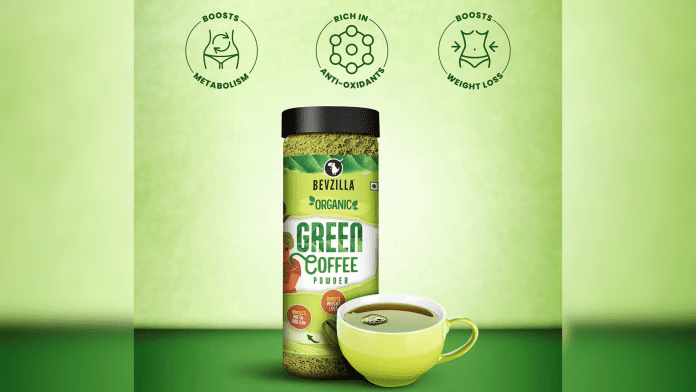
Bevzilla, an innovative company committed to transforming the world of coffee, is setting new standards by introducing Green Coffee Powder. Embracing a health-conscious approach within today’s fast-paced world has become more accessible, thanks to Bevzilla’s Green Coffee Powder. It provides an opportunity to enjoy a healthier and naturally derived green coffee option, seamlessly aligning with a busy, on-the-go lifestyle.
In the midst of the prevailing coffee culture, Bevzilla introduces an exciting newcomer: Green Coffee Powder. This innovative addition not only elevates the coffee experience but also offers the convenience of health benefits. Derived from unroasted beans of Coffea arabica and Coffea canephora, Green Coffee Powder sets a new benchmark for those who prioritize wellness while satisfying their coffee cravings. Packed with chlorogenic acid, it promotes metabolism and aids in weight management, providing a remarkable 4.9 grams of protein per 100ml to align seamlessly with fitness goals. Furthermore, this potent compound has been shown to help stabilize blood sugar levels and reduce carbohydrate absorption, as confirmed by a 2013 review, further highlighting its growing popularity.
Bevzilla’s Green Coffee Powder stands out thanks to its distinct taste profile. Unlike traditional coffee beans, it doesn’t undergo the roasting process, allowing its nuanced flavors to take center stage. This results in a milder, more herbal tea-like taste. When prepared with water and complemented with ingredients like honey, cardamom, and lemon, it delivers a refreshing and unique twist to your beverage. Moreover, this coffee’s particular thickness and acidity can promote the growth of beneficial gut bacteria, which can contribute to improved digestion.
Divisha Chaudhary, Co-Founder of Bevzilla commented, “Bevzilla acknowledges the demands of modern urban living, where health-conscious choices are imperative, but time is a precious commodity. With Green Coffee Powder, Bevzilla caters to the fast-paced lifestyle by offering a healthier coffee option, rich in antioxidants, without compromising on refreshment or ease of consumption.”
Anurag Chhabra, Co-Founder added, “By embracing the natural essence of unroasted beans, we’ve unlocked a world of delicate flavors that work wonders for your health. In today’s health-conscious world, a beverage promising to boost metabolism and support gut health is a true asset. It’s not just a drink; it’s a rejuvenating journey that delights your taste buds and nurtures your gut health. We hope our customers will rediscover coffee in a whole new light with Bevzilla’s Green Coffee Powder.”
Mrs. Bectors Food Speciality has appointed Arnav Jain as its Chief Financial Officer, following the company’s board meeting on September 4.
“As recommended by the Nomination and Remuneration Committee, Board has appointed Mr. Arnav Jain as Chief Financial Officer of the Company w.e.f. 11.08.2023.,” the company said in a regulatory filing.
At 10 am, Mrs. Bectors’ shares experienced a marginal 0.14 percent decrease, settling at INR 1,040.90. The company has appointed Arnav Jain to head its finance function. Mr. Jain joins the company from his previous role as the Commercial Controller- Coatings at Akzo Nobel. With over 18 years of extensive experience in various industries, including FMCG, telecom, paint, and consumer durables, he has excelled in roles spanning Business Finance, Controls, Treasury, and P&L Responsibility. Prior to joining Mrs. Bectors, Arnav Jain has held positions at Phillips, Nokia, Pepsi, Bharti Airtel, and Britannia Industries.
Arnav Jain is set to take over the role of CFO, succeeding Parveen Kumar Goel, who has been a board member at the company since 2008. Additionally, the biscuit manufacturer disclosed that its Annual General Meeting is scheduled for September 29.
Mrs. Bectors Food’s stock price has nearly doubled, yielding a remarkable return of close to 100 percent over the past six months. In their June quarterly report, the company reported a substantial surge in revenue, which soared from INR 12.7 crore in the previous year to an impressive INR 34.85 crore. Furthermore, the company’s overall revenue also displayed significant growth, surging by nearly 25 percent to reach INR 374.16 crore.
Online food delivery services in the New Delhi district will be temporarily unavailable from September 8-10 due to the Delhi Police enforcing extensive security arrangements and implementing traffic restrictions during the G20 leaders’ summit.
“Cloud kitchens and food deliveries, or any commercial deliveries like Amazon deliveries, will not be allowed as we have stopped commercial services in the NDMC area,” Special Commissioner of Police SS Yadav said.
Nevertheless, countering the rumors of a citywide lockdown, the Delhi Police has officially declared that there will be no lockdown in place during the G20 Summit.
“Dear Delhiites, don’t panic at all! There is no lockdown. Just keep yourself updated with traffic information available on @dtpftraffic’s Virtual Help Desk,” the Delhi Police posted on X (formerly Twitter).
Extensive traffic arrangements have been unveiled in the city, as per the Gurugram Traffic Police’s advisory. It mentions that access to Delhi for vehicles will be limited from midnight on September 7 to midnight on September 10, with the most significant impact expected on the Dhaula Kuan route.
Police also advised companies in Gurugram to put in place work-from-home arrangements on September 8.
The Delhi government has officially declared a public holiday in the national capital spanning from September 8 to September 10. Additionally, the government has issued directives for shop owners, businesses, and commercial establishments in the city to grant paid leave to their employees and workers on September 8, 9, and 10 in light of the summit.
Delhi will be on “high alert” during the summit, with the deployment of over one hundred thousand security personnel across the city as it prepares to host world leaders.
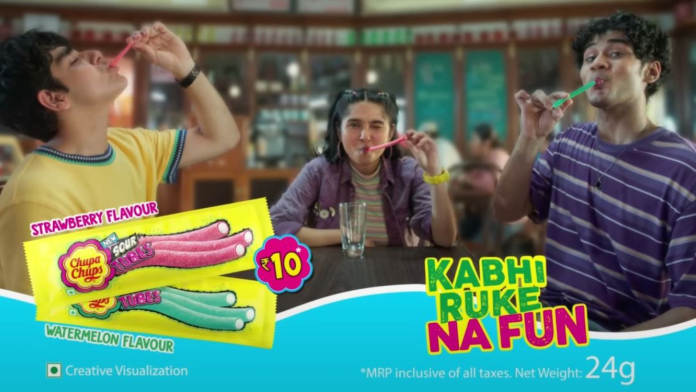
These tubes are available in Strawberry and Watermelon flavors
Chupa Chups, a renowned confectionery brand under the Perfetti Van Melle umbrella, is set to elevate the enjoyment factor with the introduction of Chupa Chups Sour Tubes – a jelly presented in an elongated tubular form!
The Chupa Chups Sour Tubes feature an innovative tubular design filled with a delightful chewy fondant center and the signature sweet-sour sanding that Chupa Chups is known for. These tubes are available in Strawberry and Watermelon flavors, offering three tubes in a single pack for just INR 10. For those looking to share, there’s also a larger Modern Trade pack containing eight tubes for INR 50. With their vibrant colors and delicious flavors, these tubes are sure to delight both the eyes and taste buds!
Chupa Chups has continuously challenged the traditional norms in the confectionery industry by introducing groundbreaking innovations that have captured the imagination of consumers. From blending lollipops and bubble gum with the Chupa Chups Gum Filled Lollipop to pioneering the range of Chupa Chups jellies, featuring distinctive sour-sanded and interactive formats like belts, bites, and mini tubes, the brand has reshaped the confectionery landscape. With the debut of the all-new Sour Tubes, Chupa Chups is set to reinforce its identity as an innovative and youthful brand, especially for those seeking one-of-a-kind and distinct confectionery products.
Talking about the new launch in Chupa Chups, Rajesh Ramakrishnan – managing director, Perfetti Van Melle India, emphasized the vital role of innovation in the confectionary segment, “Confectionery segment thrives on innovation. For Chupa Chups, we have always endeavored to explore novel, never-tried-before formats to maintain the brand’s growth while up-aging and premiumizing the category. With the launch of Chupa Chups Sour Tubes, we are taking yet another step in that direction and cannot wait to see our consumer’s response.”
The upcoming launch will be accompanied by a digital campaign designed to enhance the brand’s promise of ‘forever fun’ for its target audience. In the digital film, a group of friends gathers in a café and creatively extends their fun by using Sour Tubes as makeshift straws in their empty glasses. They amusingly convince a skeptical waiter that they are sipping on an invisible drink, all the while secretly relishing the delightful flavors of the Sour Tubes. The scene is enhanced by an upbeat soundtrack that not only heightens the excitement but also expertly ties the entire sequence together. This playful scenario is inspired by the fruity flavors of Chupa Chups Tubes, which consistently embody the philosophy of ‘Forever Fun.’ To further engage consumers, the product launch will be supported by digital initiatives and modern trade activations.
Speaking about the supporting campaign, Gunjan Khetan – director Marketing, Perfetti Van Melle India, said, “At Perfetti, we believe in refreshing consumer interest in our product categories with the introduction of contemporary offerings. Chupa Chups’ diversification in the unique format of Sour Tubes benefits the category, and the distinctive shape and texture offers great scope for playful consumption. Therefore, we have attempted to bring alive the same ‘spontaneous fun’ philosophy in our launch campaign as well. The campaign will be supported with digital, product sampling and POSM, providing a comprehensive and engaging experience for consumers.”
Commenting on conceptualizing the campaign, Anurag Agnihotri, creative partner, Ogilvy West, said, “Every Chupa product is fun to play with. Sour Tubes is probably the most playable yet. The long tube shape sparked our imagination. So, all we did was, have fun showing how you can have fun with it.”
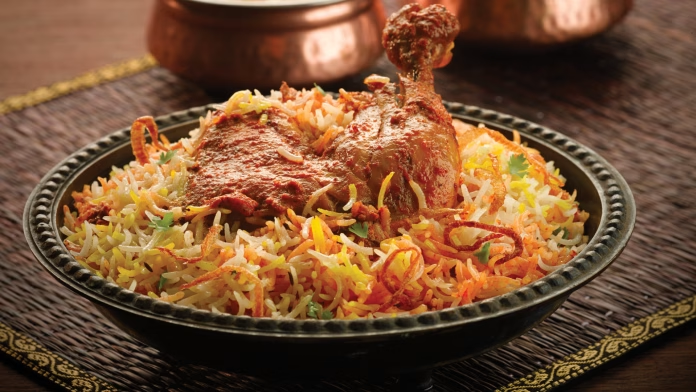
On September 2, the much-anticipated 2023 Asia Cup cricket showdown between India and Pakistan unfolded at the Pallekele International Cricket Stadium in Kandy, Sri Lanka. Unfortunately, the match was abruptly halted due to relentless rain, resulting in a complete washout. This unforeseen turn of events must have been disheartening for a resident of Bengaluru who, during the game, placed an astounding order for 62 servings of biryani via Swiggy. Yes, you read that correctly. This colossal order even surprised the food delivery platform, prompting them to take to social media, specifically X (formerly Twitter), to share the astonishing update with their followers.
The tweet exclaimed, “A customer from Bengaluru just placed an order for 62 portions of biryani?? Who could you be? Where exactly are you? Perhaps hosting an #INDvsPAK match viewing party? Can we join?”
someone from bengaluru just ordered 62 units of biryanis?? who are you? where exactly are you? are you hosting a #INDvsPAK match watch-party?? can i come?
The post attracted a plethora of comments from users, with some expressing intrigue about the enigmatic person responsible for the massive biryani order, while others lightheartedly asked if they would be rewarded with biryani should India emerge triumphant in the showdown.
One user humorously speculated, “Perhaps it’s KL Rahul’s extended family.” Another chimed in, saying, “If India wins, can I expect free food Swiggy?
Swiggy also delightedly shared, “In the past 24 hours, a staggering 79,239 dosas were ordered, and Team India just served up another 200*!”
79,239 dosas were ordered in last 24 hours and team India just delivered another doso (200*) ? #INDvsPAK
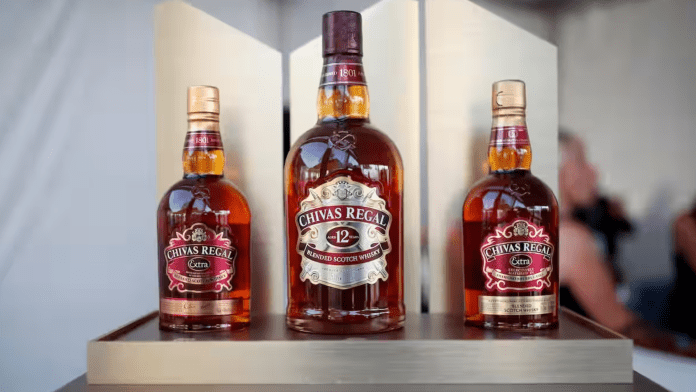
Chivas Brothers, the scotch whisky division of Pernod Ricard, has unveiled a £60 million investment strategy aimed at achieving carbon-neutral distillation by the conclusion of 2026.
The multi-year investment announcement coincided with Chivas Brothers revealing its financial results for FY23, which it characterized as its “most robust financial performance in ten years,” marked by a remarkable 17% increase in net sales.
Over the upcoming three years, this investment will expedite the brand’s efforts to reduce energy consumption and carbon emissions, with the ultimate goal of achieving carbon-neutral distillation by the close of 2026.
Chivas Brothers intends to utilize the earmarked investment to introduce heat recovery technologies and incorporate electric boilers in distilleries where feasible. In addition to reducing its carbon footprint, the brand will allocate resources to enhance strategic inventory management, thereby ensuring a future-proof model capable of consistently meeting the worldwide demand for its Scotch whiskies.
Chivas Brothers chairman and CEO, Jean-Etienne Gourgues, said, “The historic highs we’re seeing across our strategic brands signal the success of our premiumisation strategy which has enabled Chivas Brothers to outperform the market. Our highest growth of the last decade reinforces our position to shape the future of sustainable Scotch while continuing to meet demand.”
In July, the brand extended the availability of its carbon-reduction technology to the broader industry. This decision followed the successful integration of the company’s heat recovery technology at Pernod Ricard’s Glentauchers distillery in Scotland, resulting in a substantial 53% reduction in the site’s carbon emissions.
He continued, “We have fast-tracked a number of sustainability initiatives to meet our own ambitious targets and remain committed to supporting the industry in ushering in this new era – as we demonstrated earlier this year by making our heat recovery findings open source”.
We use cookies to ensure that we give you the best experience on our website. If you continue to use this site we will assume that you are happy with it.