Sunday, January 18, 2026
Home Blog Page 965

Sip by Sip: Rajat Agrawal’s Recipe for Barista’s Success in India’s Coffee Scene

0
Rajat Agrawal

In the realm where tea reigned as the quintessential beverage, a scent of change wafted through the air, carried by the enchanting aroma of freshly roasted coffee beans. This aromatic uprising marked the emergence of Barista in India, an emblematic brand that not only introduced a novel libation but also ignited an unprecedented passion for coffee that swept the nation. For true coffee connoisseurs, ‘Barista’ became more than a name; it transformed into a sanctuary of flavor and culture.

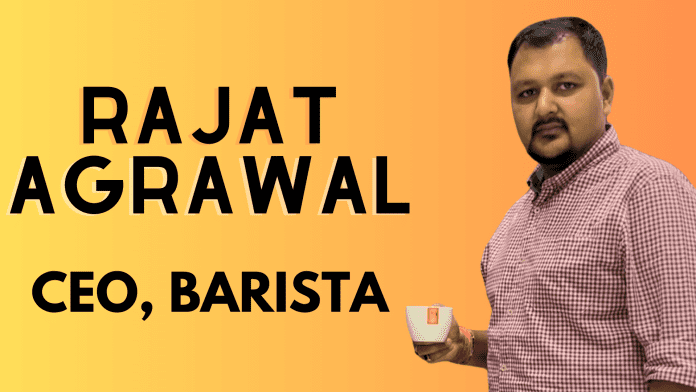
Yet, the illustrious stature Barista now enjoys wasn’t always its reality. It was once a distant aspiration, a flicker of a dream. And orchestrating this astonishing metamorphosis was none other than Rajat Agrawal – the visionary CEO behind Barista’s meteoric rise. For those who hold a genuine fondness for the distinguished offerings of Barista, this narrative is tailored to your discerning palate. Embark on a journey of discovery, as we delve into the essence of your cherished coffee experience.

As we navigate the chronicles of Barista’s genesis within the Indian coffee landscape, prepare to be entranced by the captivating tale that stirred the nation’s sensory inclinations, kindling an insatiable yearning for the essence of coffee like never before.

The Brains Behind Barista: Rajat Agrawal’s Revolution of the Market

“We don’t want perfect 11, we want cohesive 11.” This quote might ring a bell – it’s a sentiment that finds its roots in cricket, specifically the Chennai Super Kings (CSK). If you’re a cricket aficionado, you’ll recognize the philosophy of valuing teamwork and synergy over individual perfection. This philosophy, borrowed from the world of cricket, encapsulates Rajat’s approach, a strategy that he shared in an interview with SnackFax. Just as the Chennai Super Kings (CSK) thrive on unity rather than individual brilliance, Rajat fostered a sense of togetherness within Barista.

Rajat’s background as a chartered accountant and his previous roles in consulting firms might seem disconnected from the food industry. However, this fresh perspective breathed new life into Barista. He never aspired to helm a business, but destiny had other plans. What transformed a two-decade-old company? A revitalized vision! Even during the throes of the pandemic (Covid-19), when businesses worldwide were grappling with losses, Barista’s resilience stood tall. It was Rajat’s financial acumen and the cohesive strategies he implemented that buoyed the brand, leading to his appointment as CEO in 2021.

23 Years of Barista: A Journey of Tenacity and Innovation

In an interview with SnackFax, Rajat Agrawal highlighted three pivotal factors steering a business in a country: technological advancement, infrastructure capabilities, and consumer spending potential. Over the past seven years, India has harnessed these factors to its advantage, resulting in an influx of brands.

Furthermore, Rajat’s understanding of consumers shines. He recognizes their education and awareness, shaping Barista’s offerings accordingly. He affirms, “Coffee as a culture is coming out in India in a big way.”

Yet, the most commendable aspect is Rajat’s unwavering commitment to quality. At Barista, coffee transcends being a mere beverage; it embodies uncompromising quality and a ceaseless dedication to excellence. Each cup crafted with precision becomes a testament to culinary mastery. The symphony of flavors and the bewitching aroma of freshly roasted beans coalesce, forming a sensory masterpiece. Every sip is an indulgent dance, a journey beyond taste, elevating the coffee experience into a realm of pure delight. In every aspect, Barista redefines coffee enjoyment, infusing each moment with sophistication and the pursuit of unparalleled pleasure.

A Coffee Revolution to Remember

From tea’s longstanding dominance to the irresistible allure of freshly brewed coffee, Barista’s journey is nothing short of a revolution. Rajat Agrawal’s visionary leadership breathed new life into the brand, steering it toward unparalleled success. As India’s coffee culture flourishes, Barista remains at the forefront, an emblem of quality and innovation, inviting us all to savor the symphony of flavors that redefine the art of coffee consumption.

Barista, founded in 2000 by Puneet Gulati, Ajay Kaul, and R. S. Soni, started as a single outlet in New Delhi, but quickly expanded to other locations in India and abroad. Today, Barista has over 200 outlets in India and a presence in several other countries, including Nepal, Sri Lanka, and the United Arab Emirates. The brand’s journey reflects a confluence of vision, passion, and dedication, spearheaded by Rajat Agrawal, a visionary who turned coffee into a cultural phenomenon, creating a legacy that will linger in every aromatic cup for generations to come.
Watch our exclusive interview of Rajat Agrawal here:

Advertisement

Rajasthan CM Ashok Gehlot to inaugurate free food packet scheme today

0
Ashok Gehlot
Rajasthan CM Ashok Gehlot (File Photo)

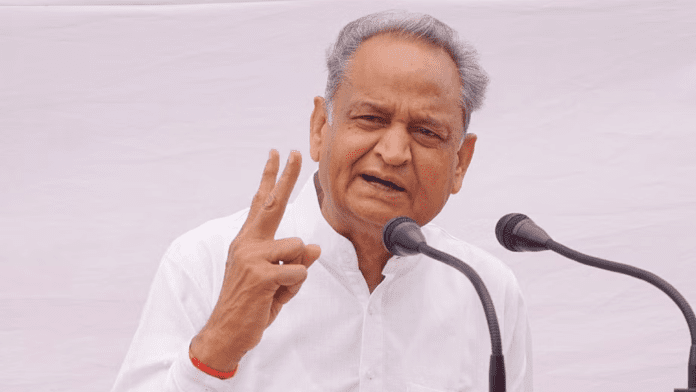
On Tuesday, which marks Independence Day, Ashok Gehlot, the Chief Minister of Rajasthan, is set to inaugurate the Mukhyamantri Nishulk Annapurna Food Packet Scheme.

The Annapurna food packets, encompassed by the scheme, will be provided every month to families eligible under the National Food Security Act (NFSA) through fair price shops (FPS) at no cost. Each packet will comprise one kilogram of gram pulses, sugar, and iodized salt, along with one liter of soybean refined edible oil. Additionally, 100 grams each of chili powder and coriander powder, as well as 50 grams of turmeric powder, will be included in each packet.

In a statement, the government said that this scheme “will be a milestone in the direction of realising the state government’s resolution of ‘No one should sleep hungry in the state’.

The inauguration event will take place at over 25,000 FPS locations, spanning across district and block headquarters, even encompassing the recently established districts. The entire event will be live-streamed for broadcast.

At the district and block level function, designated FPS kiosks will be established. During this event, public representatives will utilize point of sale (POS) machines to distribute the food packets to beneficiaries. The program is anticipated to be attended by members of the state council, MLAs, and various other public representatives.

The scheme was unveiled by CM Gehlot during his budget presentation earlier this year. This initiative is estimated to incur an annual expenditure of approximately INR 4,500 crore for the state treasury.

“This sensitive initiative by the Chief Minister will provide relief to over one crore needy families in the era of inflation,” the government said.

Up to this point, more than 1.04 crore individuals have enrolled at the Mehangai Rahat Camps to access the advantages offered by this program. The registration process continues at the permanent camps designated for this particular scheme.

The scheme stands as the most recent addition to a series of public welfare initiatives proclaimed by Gehlot.

Advertisement

Pizza Hut’s innovative emoji avatar film showcases diverse pizza range for every mood

0
emoji
The film showcases a pair of emoji avatars, embodying diverse emotions that individuals experience in their everyday scenarios.

Pizza Hut has once again left the audience amazed, this time with its new film accompanying the launch of its latest brand campaign.

The film showcases a pair of emoji avatars, embodying diverse emotions that individuals experience in their everyday scenarios. It effectively illustrates how Pizza Hut’s selection of 10 new and unique pizzas caters to a wide range of moods, ensuring there’s a perfect match for every conceivable sentiment.

Aanandita Datta, Chief Marketing Officer, Pizza Hut India, said, “We understand the role of emotions in determining our food choices. This inspired us to introduce emoji avatars to further strengthen our bond with the audience. Pizza Hut acknowledges customer’s fluctuating moods and greets them with ample options to satisfy their cravings. Emojis have become a universal language today and our emoji avatars stand out to bring our customers together under one roof, making them experience best-tasting pizzas enveloped in our warm service.”

Varieties such as Makhni Paneer, Dhabe Da Keema, Cheezy Mushroom Magic, Mexican Fiesta, Awesome American Cheesy, and Nawabi Murg Makhni offer a plethora of choices for individuals to indulge their culinary desires, influenced by an array of emotions.

Additionally, the brand has introduced a value proposition, presenting an opportunity for pizza enthusiasts to enjoy 2 personal pizzas beginning at INR 299, accompanied by 2 complimentary glasses of Pepsi. This offer is available across Pizza Hut’s extensive network of over 800 restaurants.

Crafted and filmed by Creativeland Asia Pvt. Ltd, Pizza Hut’s latest cinematic creation is an integral component of the extensive 360-degree marketing endeavor. This comprehensive campaign spans television, digital platforms, social media engagement encompassing PR and influencer interactions, outdoor advertising, and in-store branding, ensuring consumer engagement at every conceivable point of contact. The film is being showcased across various mediums including television, OTT platforms, and prominent contemporary social media platforms such as Glance, Saavn, Spotify, Instagram, Facebook, YouTube, Snapchat, Amazon, PhonePe, Uber, among others.

Watch it here:

Advertisement

India’s palm oil imports reach 7-month high in July as refiners ramp up purchases

0
edible oil
(Representative Image)

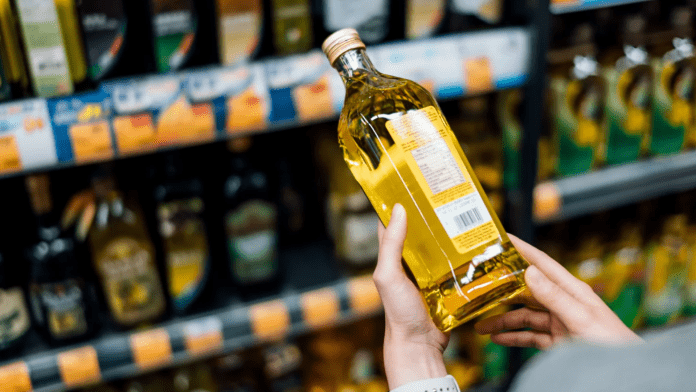
According to a trade association’s report on Monday, India witnessed a significant surge in palm oil imports during July. The imports rose by 59% compared to the previous month, reaching a total of 1.08 million metric tons. This figure marks the highest import level in the span of seven months. Refiners capitalized on the favorable drop in prices to boost their buying activities.

Increased imports from India, the globe’s largest purchaser of vegetable oils, could contribute to reducing stockpiles and providing support to Malaysian prices, which in turn would benefit the primary producers Malaysia and Indonesia.

The Mumbai-based Solvent Extractors’ Association of India (SEA) reported that imports of soyoil experienced a decline of approximately 22% to reach 342,270 tons, while imports of sunflower oil saw a significant increase of 71%, totaling 327,259 tons.

According to dealers, India’s edible oil imports reached an all-time high of 1.76 million tons in July. Refiners boosted their stockpiles in preparation for upcoming festivals due to uncertainties surrounding supplies from the Black Sea region.

A Mumbai-based dealer from a global trade house mentioned that the price difference between crude palm oil and crude soyoil expanded to more than $150 per ton. This led refiners to shift towards palm oil.

“This trend would continue even in coming months. We are expecting around 1 million tons of imports in September,” the dealer said.

In a statement, the Solvent Extractors’ Association of India (SEA) projected that the nation’s aggregate imports of edible oil for the marketing year concluding on October 31, 2022/23, could surge to an unprecedented 15.5 million tons.

India primarily procures palm oil from Indonesia, Malaysia, and Thailand. Additionally, the country imports soyoil and sunflower oil from Argentina, Brazil, Russia, and Ukraine.

Advertisement

Naksha unveils exquisite Middle Eastern inspired baking kits, bringing luxury desserts to UK homes

0
Naksha baking kit
Naksha baking kit

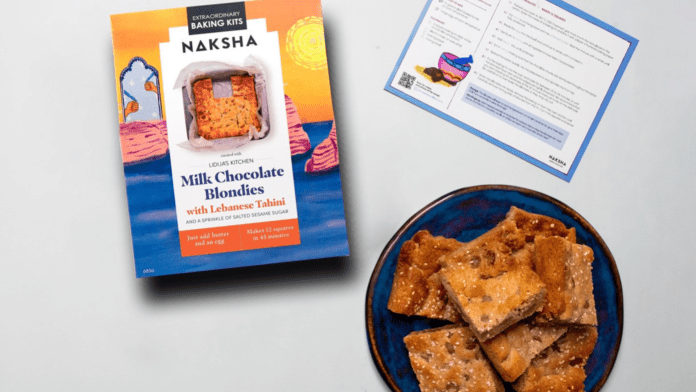
Naksha is introducing a pair of baking kits with delightful sweet themes, drawing inspiration from the rich flavors of the Middle East, within the United Kingdom.

Naksha asserts that its Baked Collection empowers individuals to create imaginative and lavish treats within the comfort of their homes, employing high-quality ingredients and accompanied by detailed recipe cards.

The selection comprises a duo of meticulously hand-crafted gourmet baking kits, available for individual or combined purchase: The first showcases milk chocolate blondies infused with Lebanese tahini and a delicate sprinkling of salted sesame sugar, while the second features dark chocolate fondant elevated with Turkish coffee and adorned with a subtle dusting of cocoa cardamom.

Naksha’s Co-Founder, Nisha Ramisetty, said, “Our vision was authentic, carefully curated recipe kits from diverse culinary destinations using lesser-known, off-the-beaten-track recipes and infusing specialist ingredients”.

Ramisetty continued, “While there is a spectrum of savoury recipe kits, when it comes to sweet baked treats, there was little that was truly luxurious or standout – something one might want to take to a dinner party or treat their family. Our first baking kit collection offers innovative flavour combinations with a light contemporary twist which celebrates the magical spirit of the Middle East.”

Starting August 23rd, the sweet baking kits will be accessible for purchase at renowned locations such as Whole Foods UK, Harrods, John Lewis, and other select retailers.

Advertisement

Food price surge propels India’s retail inflation to nearly 15-month high of 7.44% in July

0
grocery shopping
(Representative Image)

According to data released by the Ministry of Statistics on Monday, India’s retail inflation climbed to an almost 15-month peak of 7.44 percent in July on a yearly basis, compared to 4.81 percent in June.

In a recent survey conducted by Reuters involving 53 economists, the estimated annual increase in the Consumer Price Index (CPI) inflation was projected to reach 6.40 percent, driven by the sharp rise in food prices.

After a continuous four-month period of remaining within the Reserve Bank of India’s (RBI) tolerance range of 2-6 percent, the consumer-price index (CPI) based inflation has now exceeded the upper limit.

The Consumer Food Price Index (CFPI) saw a notable increase to 11.51 percent from its previous level of 4.49 percent in June. In terms of breakdown, rural inflation reached 7.63 percent, while urban inflation reached 7.20 percent.

The notable increase can be attributed to an unexpected and substantial rise in vegetable prices, particularly tomatoes, throughout the previous month.

In the past two months, food prices, constituting nearly half of the inflation measurement, have experienced a significant surge. This surge can be primarily attributed to the erratic monsoon conditions across the nation, leading to wholesale market tomato prices rising by over 1,400 percent in the last three months.

“There are no signs of any sequential moderation in food prices in August,” Reuters had quoted Rahul Bajoria, chief India economist at Barclays, as saying. “Although it is still early in the month, we expect CPI inflation prints to remain elevated in the next couple of months, and then start easing in Q4 2023,” he added.

During its August Monetary Policy Committee (MPC) meeting, the RBI revised its inflation projection for the current fiscal year, increasing it to 5.4 percent from the 5.1 percent forecast that was issued in the June policy.

The bank associated this decision with the elevated prices of food products, encompassing basic essentials as well as vegetables and even premium culinary offerings.

RBI Governor Shaktikanta Das stated that policymakers should be prepared to do more than just observe like Arjuna and be ready to utilize policy tools if required, in the August meeting.

Advertisement

Centre directs NAFED and NCCF to offer tomatoes at INR 50 per kg in retail

0
tomato
Tomatoes (Representative Image)

In response to the decrease in tomato prices within wholesale markets, the government has instructed the National Cooperative Consumers’ Federation (NCCF) and NAFED to commence retail sales of tomatoes at INR 50 per kilogram starting August 15th.

Coincidentally, the directive coincides with a day when India’s consumer price index (CPI), a measure of retail inflation, surged significantly to 7.44 percent in July. This increase can be attributed to the escalation in food prices, with food inflation experiencing a substantial leap of 11.51 percent. This spike is mainly due to elevated prices of essentials such as tomatoes, cereals, pulses, and dairy products.

Initially, the retail price of tomatoes obtained by NCCF and NAFED was set at INR 90 per kilogram. Subsequently, this price was revised to INR 80 per kilogram starting from July 16, 2023, and further lowered to INR 70 per kilogram beginning July 20.

According to official sources, this recent adjustment to INR 50 per kilogram will provide additional advantages to consumers.

As per the Ministry of Consumer Affairs, Food and Public Distribution, over the past month, the two agencies have acquired a cumulative total of 15 lakh kilograms of tomatoes (until August 13). These tomatoes are being consistently distributed to retail consumers in significant consumption hubs across the nation.

These areas encompass Delhi-NCR, Rajasthan (Jaipur, Kota), Uttar Pradesh (Lucknow, Kanpur, Varanasi, Prayagraj), and Bihar (Patna, Muzaffarpur, Arrah, Buxar).

In recent days, NCCF has notably augmented the volume of tomatoes supplied to retail consumers by strategically deploying mobile vans at 70 sites throughout Delhi, as well as 15 locations within Noida and Greater Noida.

Furthermore, NCCF is consistently engaging in retail tomato sales via the Open Network for Digital Commerce (ONDC) platform.

According to official sources, the government initiated the acquisition of tomatoes from marketplaces in Andhra Pradesh, Karnataka, and Maharashtra. These tomatoes are being distributed concurrently in significant consumption hubs where retail prices have observed the most substantial surge over the past month.

Advertisement

ITC board gives nod to hotel business demerger plan; listing expected in 15 months

0
itc
ITC (Representative Image)

On Monday, the ITC board granted its approval to a proposed arrangement that entails the separation of its hospitality business. According to this scheme, ITC shareholders will be issued 1 share of ITC Hotels for every 10 shares they currently hold in ITC.

Following the execution of the scheme, ITC shareholders will possess approximately 60 percent ownership in ITC Hotels, aligning with their existing holdings in ITC. The remaining ownership stake, accounting for roughly 40 percent in the newly established entity, will be retained by ITC itself, as previously disclosed by the company.

Read More: ITC board approves hotel business demerger, expects ROCE to improve significantly

ITC has outlined a 15-month timeframe for the listing of ITC Hotels. The demerger scheme is contingent upon obtaining multiple regulatory clearances, which encompass approval from stock exchanges, the Securities and Exchange Board of India (SEBI), and the National Company Law Tribunal (NCLT).

As outlined in its investor presentation submitted to the stock exchanges, the company clarified that the share entitlement ratio is determined by the share capital of both entities. This ratio is independent of the market capitalization of ITC Hotels and solely influences the per-share price.

In accordance with the agreement, ITC Hotels will be granted a license to incorporate the ‘ITC’ prefix within its corporate title and also within certain property and brand names, subject to an appropriate fee.

Trademarks that are utilized collaboratively by ITC’s diverse enterprises and its hotels division will be licensed to ITC Hotels under terms that are mutually agreed upon.

Employees associated with or connected to the hotels business will be transitioned to ITC Hotels, with the company assuring that their employment terms will be upheld at a level no less advantageous than their current terms of employment within the company.

Nevertheless, financial holdings such as East India Hotels Ltd (EIH Ltd) and Hotel Leelaventure Ltd (HLV Ltd), as well as non-operational entities like Logix Developers, will remain excluded from the transfer process.

Advertisement

ITC posts strong Q1 FY24 results, notches 16% rise in net profit at INR 5,180.12 Crore

0
ITC

On Monday, ITC, a conglomerate involved in both cigarettes and hotels, announced a 16 percent increase in its combined net profit. The figures show a consolidated net profit of INR 5,180.12 crore for the quarter ending on June 30, 2023. This is in comparison to the INR 4,462.25 crore consolidated net profit recorded in the same quarter of the previous fiscal year, as stated in a BSE filing.

Nevertheless, the company’s operational revenue witnessed a decline to INR 18,639.48 crore in the first quarter of FY24, in contrast to the INR 19,831.27 crore reported in the first quarter of FY23.

According to the regulatory filing, the conglomerate’s combined overall expenditures decreased to INR 12,421.77 crore in the first quarter of FY24, down from the total expenses of INR 14,201.51 crore recorded in the first quarter of FY23.

In a media statement, the company noted that while certain commodities experienced price moderation due to a high base from the previous year, overall, input costs remained higher compared to pre-pandemic levels.

The company’s various business sectors persisted in enhancing profitability through a range of approaches, including premiumization, optimizing the supply chain, prudent pricing strategies, digital endeavors, strategic cost control, and leveraging fiscal incentives.

ITC’s FMCG divisions have experienced strong expansion in both urban and rural markets. This growth has been propelled by valuable consumer insights, purposeful innovation, upgrading the product portfolio, expanding distribution networks, effective last-mile implementation, and harnessing digital projects.

According to a media statement, the company reported that it achieved significant progress in both conventional and emerging channels, which encompass modern trade (MT), e-commerce, and quick commerce. This momentum was generated by the effective implementation of channel-specific business strategies, partnerships, tailored product assortments tailored to a wide range of consumer preferences, and targeted approaches to selling specific product categories.

ITC has revamped its trade marketing and distribution system into an intelligent omnichannel network, encompassing six direct-to-consumer (D2C) platforms. Furthermore, the company’s dedicated D2C platform, the ITC e-Store, has expanded its operations to cover more than 24,000 pin codes during this period.

The company’s digitally enabled eB2B platform, UNNATI, now spans across more than 570,000 outlets. This platform facilitates direct interaction with retailers, offers analytics, provides personalized suggestions for hyperlocal product assortments derived from consumer purchasing trends, and fosters a more profound connection with the brand.

Aligned with its strategy to explore value-added opportunities through core brands, ITC’s branded packaged foods division introduced several distinctive variations of Rava and various other products.

Inspired by the Government of India’s campaign to boost the consumption of millets and recognizing 2023 as the ‘International Year of Millets,’ ITC has adopted a targeted approach to create a diverse range of millet-based products suitable for various occasions, age groups, and formats.

Throughout the quarter, Mangaldeep Agarbattis and Dhoop achieved significant growth through the utilization of a product lineup that centers around a diverse array of distinctive offerings.

ITC experienced a 10.9 percent growth in net segment revenue and a corresponding 11.2 percent increase in segment PBIT on a year-over-year basis. The company’s cigarettes business remains committed to combating illicit trade while strengthening its market position. This is achieved through a strategic approach that includes innovative product offerings, making premium experiences accessible to a wider audience, ensuring product availability through effective on-ground execution, and recently introducing unique product variations to sustain strong performance in this segment.

The company highlighted in its media presentation that, as observed in previous instances, maintaining stable cigarette taxes and implementing effective measures by enforcement agencies have consistently facilitated a rebound in volumes for the legal cigarette sector. This has resulted in increased demand for Indian tobacco and contributed positively to the revenue generated by the tobacco sector, benefitting the exchequer.

Advertisement

Shah Rukh Khan joins forces with Sunfeast Dark Fantasy to ignite ‘Har Dil Ki Fantasy’ in a captivating collaboration

0
Shah Rukh Khan
Shah Rukh Khan

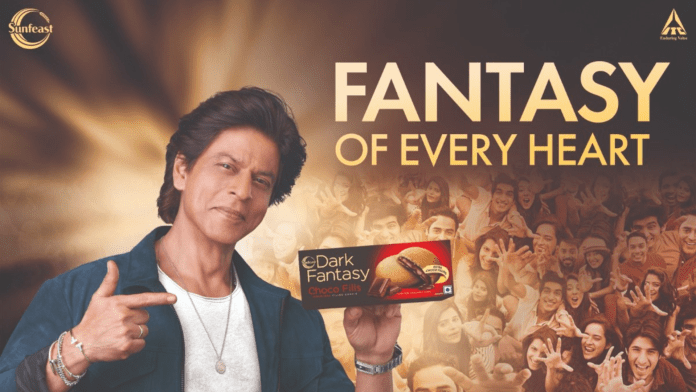
Sunfeast Dark Fantasy is thrilled to introduce an exciting collaboration with the renowned ‘King of Fantasy,’ Shah Rukh Khan, who will now be the proud ambassador of the brand. With the unveiling of its revitalized brand identity, ‘Sunfeast Dark Fantasy – Har Dil Ki Fantasy,’ the brand aims to establish a profound connection with its audience. Grounded in the universal longing for a touch of enchantment in our everyday existence, this innovative concept strives to strike a chord with diverse sets of consumers, sparking personal moments of imagination irrespective of time or place. Shah Rukh Khan, a beloved figure for countless individuals, personifies the dreams of numerous fans worldwide. The harmonious fusion of these two forces creates a spellbinding synergy that is truly captivating.

This exceptional partnership establishes a remarkable milestone, bringing together the ‘King of Bollywood’ with the ‘King of Biscuits.’ Sunfeast Dark Fantasy embarks on the journey of ‘Har Dil Ki Fantasy,’ encouraging consumers to partake in an unparalleled adventure led by Shah Rukh Khan’s magnetism and the delightful indulgence of its biscuits. This collaboration not only reshapes the brand’s identity but also enhances the notion of fantasy within the hearts of individuals all over India.

Ali Harris Shere, Chief Operating Officer of Biscuits and Cakes Cluster, ITC Foods Division shared, “We are thrilled to welcome Shah Rukh Khan, the King of Bollywood, as the face of Sunfeast Dark Fantasy. His iconic charm, sophistication, and larger-than-life persona make him the perfect choice to represent the brand. Through this association, we are confident in enhancing the brand’s presence and strengthening its connection with consumers. Together, we aim to embark on an extraordinary journey that celebrates their fantasies, crafting a memorable experience.”

Romi Nair, National Creative Director at FCB Ulka expressed, “We acknowledge that everyone harbors fantasies, and ‘Har Dil ki Fantasy’ is a product of this insight. This campaign urges everyone to take flights of fancy and return with vitality. And who better than Shah Rukh Khan, the Fantasy of India, to bring this concept to life? The campaign presents Shah Rukh Khan in a beloved avatar that resonates with all. He will captivate India with this campaign.”

The television advertisement, meticulously crafted by FCB Ulka, opens in the waiting area of a salon, where a woman eagerly awaits her turn. To while away the time, she treats herself to a Choco Fills cookie, which mysteriously transports her into a world of fantasy. The iconic Bollywood star, Shah Rukh Khan, makes an appearance, attending to her with elegance, overseeing her makeup and nail care. As she returns to reality with a smile, she realizes that it was all a daydream and shares a cookie with a curious girl nearby. Shah Rukh Khan’s voiceover enhances the delightful sensation, stating, “A crispy cookie with molten choco.” The advertisement concludes with Shah Rukh Khan’s enthusiastic proclamation, “Har Dil Ki Fantasy,” while a pack of cookies takes the spotlight.

Watch the ad here:

Advertisement