Wednesday, January 21, 2026
Home Blog Page 928

Indian startup Responsible Whatr shines at G20 Summit with sustainable spring water and eco-packaging

0
Ankur Chawla, Founder and CEO, Responsible Whatr

Responsible Whatr, an innovative Indian startup brand committed to sustainability, has made a significant impact at the recently concluded G20 summit hosted by ITC Hotels by showcasing its natural spring water beverage. The brand is proud to present its eco-friendly packaging solution, featuring aluminum cans crafted from over 70 percent recycled aluminum.

Demonstrating its dedication to sustainability, Responsible Whatr supplied forward-thinking and eco-conscious aluminum cans to meet the hydration requirements of world leaders and summit attendees. This collaboration underscored Responsible Whatr’s unwavering commitment to advocating for sustainable initiatives on a global stage.

Furthermore, the company proudly declared that it has achieved an impressive milestone, surpassing the sale of one million aluminum cans through a combination of online and offline distribution channels. This success has led to a significant reduction in the use of plastic bottles, showcasing Responsible Whatr’s effective transition to eco-friendly aluminum cans.

Situated amidst the Himalayas in Solan, Responsible Whatr takes pride in its cutting-edge facility and the pure water source it harnesses. The exceptional quality of their product originates from their sourcing of water from an unspoiled, pristine spring aquifer nestled in the Himalayas. This source provides water with naturally balanced essential minerals and a pH level of around 7.4.

Emerging amidst the global pandemic, the brand experienced a remarkable surge in demand as consumers placed growing importance on environmentally responsible choices. In direct response to this heightened interest, the indigenous startup is now gearing up for expansion into multiple new states. These include Gujarat, Tamil Nadu, Uttarakhand, Rajasthan, Punjab, and Goa, all within the upcoming quarter. This expansion endeavor not only promises to generate more employment opportunities but also pledges support to the local economy in Solan, Himachal Pradesh.

Since its establishment on June 5, 2020, in commemoration of World Environment Day, Responsible Whatr has remained steadfast in its dedication to sustainable practices and vigorous marketing efforts, even in a period when the hotel and tourism sector faced severe challenges due to the pandemic. Despite the demanding circumstances, the brand reached a notable milestone by selling 50,000 cans within just 70 days of launching its product, demonstrating resilience and adaptability in the midst of adversity. The demand for Responsible Whatr has been evenly spread across various distribution channels, including retail, online, and HoReCa (Hotel, Restaurant, and Cafe). With a robust online presence spanning across India and physical availability in Delhi-NCR, Maharashtra, Kolkata, Hyderabad, and Himachal Pradesh, Responsible Whatr has established a strong presence in the market.

At present, Responsible Whatr has a physical presence in six Indian states. In Delhi, the brand is available both online and through the HoReCa segment, which includes renowned establishments such as ITC Hotels, Taj Palace, JW Marriott, Grand Hyatt, The Lodhi, The Leela, Holiday Inn, and more. Additionally, Responsible Whatr can be found in various restaurants like Kampai and Sidecar, as well as cafes and clubs like The Quorum Club, Meta offices (Facebook), and Greener, among others.

The brand enjoys a nationwide online presence, and sales through direct website orders have played a substantial role in driving its increasing sales figures, thereby expanding its outreach to a broad and diverse audience.

“The decision to use aluminium for packaging was a natural choice, as it avoids contributing to landfills and is infinitely recyclable, unlike glass and plastic, which are typically downcycled. In fact, the cans currently in circulation are crafted from 70 percent recycled aluminium. Furthermore, aluminium cans maintain the water’s freshness even when exposed to light or heat, ensuring that consumers enjoy a consistently refreshing and cold beverage,” says Ankur Chawla, Founder and CEO, Responsible Whatr.

“Responsible Whatr remains committed to its mission of promoting sustainability and environmental responsibility through its premium natural spring water product. As the brand expands its presence to new regions in India, we anticipate continued success and a growing impact on reducing single-use plastics while delivering a refreshing and environmentally conscious beverage option to consumers,” added Bhrigu Seth, Co-Founder, Responsible Whatr.

Advertisement

Tanmiah Food Company and MHP SE invest in poultry value chain to enhance food security in Saudi Arabia

0
Tanmiah Food Company
The Tanmiah Food Company and MHP SE signing ceremony brought together leadership from Tanmiah, Saudi officials, the Ambassador of Ukraine, and representatives from MHP.

Tanmiah Food Company, commonly referred to as Tanmiah, is excited to share the news of the finalized shareholder agreement between its wholly-owned subsidiary, Desert Hills Veterinary Services Company Limited (DHV), and MHP SE (LSE: MHPC), a prominent global leader in the food and agrotech industry. This collaboration is poised to have a substantial impact on enhancing food security and poultry self-sufficiency in Saudi Arabia.

The signing event took place in Jeddah on September 7, 2023, and was graced by the presence of prominent figures. Among those in attendance were His Excellency Sheikh Amr Al-Dabbagh, Chairman of the Board of Tanmiah, along with board members and top executives. The event also saw the participation of Saudi Government officials representing various ministries, authorities, funds, and centers of excellence, as well as the Ambassador of Ukraine, His Excellency Mr. Anatolii Petrenko.

Representing MHP SE at the ceremony were Dr. John Rich, the Executive Chair, and Eugene Levterov, the MENA Managing Director, both of whom played pivotal roles in the proceedings.

Expanding upon the groundwork established through the previously signed Memorandum of Understanding earlier this year, this collaboration will witness DHV and MHP SE uniting their efforts in a substantial investment exceeding SAR 200 million. The investment will be directed towards farming operations designed to accommodate over 1 million parent stock, with the goal of yielding approximately 175 million hatching eggs annually. Additionally, state-of-the-art facilities, including a cutting-edge hatchery and a poultry feed mill, will be established as part of this initiative.

In terms of ownership, DHV will possess a majority stake of 55%, while MHP will hold a 45% stake in this joint venture.

Zulfiqar Hamadani, CEO of Tanmiah Food Company, remarked, “Our collaboration with MHP signifies more than just a partnership; it represents our commitment to strengthen Saudi Arabia’s food security framework. Utilizing our local knowledge combined with global best practices, our portfolio of best-in-class products, services, and solutions demonstrates our commitment to our customers, partners, and the broader objectives of Vision 2030.”

Dr John Rich, Executive Chairman of MHP SE, stated, “Deepening our alliance with Tanmiah is a strategic pivot in MHP’s global outreach. This partnership is emblematic of our shared vision to integrate international expertise with local insights, ensuring that Saudi Arabia’s food security targets are met. Our collective strengths will catalyze transformative advancements in the poultry sector, fostering innovation and setting new benchmarks for excellence. The formation of this joint venture is an important first step. We are committed to a long-term, fruitful relationship that will benefit our organizations, the entire Kingdom of Saudi Arabia and the region. We will continue pursuing strategic opportunities in the region, seeking to capitalize on our expertise. “

Ahmed Bin Sharaf Osilan, Executive Board Member and Managing Director of Tanmiah Food Company, commented, “Our partnership with MHP is a strategic step to delivering sustainable value to our stakeholders and making significant strides towards Vision 2030. As we are working towards boosting food security and self-reliance in Saudi Arabia, we are building facilities that are critical in the entire poultry ecosystem in Saudi Arabia, increasing non-oil GDP private sector contribution, local employment opportunities, and knowledge transfer.”

The execution of the shareholder agreement marks a crucial milestone in the establishment of the joint venture company. This pivotal step comes after obtaining the required approvals, which include clearance from the General Authority for Competition of Saudi Arabia and other pertinent jurisdictions.

Advertisement

JustMyRoots expands its reach with strategic acquisition of Shark Tank-featured, The State Plate

0
JustMyRoots team
JustMyRoots team

The intercity food delivery startup, JustMyRoots, has successfully acquired The State Plate (TSP), a company specializing in non-perishable packaged foods. This strategic move is a crucial step in JustMyRoots’ overarching strategy to broaden its footprint in the nationwide packaged intercity food market.

TSP made its debut on Season 1 of Shark Tank India, where it secured funding from Peyush Bensal, the CEO of Lenskart. Additionally, the company has successfully secured pre-seed capital from the venture capital fund Antler India, valuing it at approximately $2 million.

As per the agreement, Muskaan Sancheti and Raghav Jhawar, the Founders of TSP, will seamlessly merge into the JustMyRoots team and retain their roles in overseeing the business operations.

“JustMyRoots has always been committed to redefining intercity food delivery in India and this acquisition represents a significant stride toward that vision,” said Samiran Sengupta, CEO at JustMyRoots.

Sourav Ganguly, the former Indian cricketer, has recently acquired a minority stake in JustMyRoots.

Read More: Sourav Ganguly acquires stake in food delivery startup JustMyRoots, signs endorsement deal

Advertisement

Global rice prices soar to 15-year high amid India’s export restrictions: FAO Report

0

In August, global rice prices surged to their highest point in 15 years following India’s decision to restrict certain rice exports, as reported by the Food and Agriculture Organization on Friday, September 8th.

Despite a general decline in global food prices during August, the cost of rice increased by 9.8 percent compared to the preceding month. This rise is attributed to trade disruptions caused by India’s ban on exports of Indica white rice, as reported by the FAO in their monthly update.

“Uncertainty about the ban’s duration and concerns over export restrictions caused supply-chain actors to hold on to stocks, re-negotiate contracts or stop making price offers, thereby limiting most trade to small volumes and previously concluded sales,” the UN agency said.

Rice stands as a crucial global food staple, and its prices have experienced significant increases on the international market due to the repercussions of the Covid-19 pandemic, the conflict in Ukraine, and the effects of the El Niño weather phenomenon on production levels.

In July, India implemented a ban on the export of non-basmati white rice, which constitutes approximately 25% of its total rice exports.

Read More: India prohibits non-basmati white rice exports amidst supply concerns

At that time, the Ministry of Consumer Affairs and Food stated that this action was taken to “guarantee sufficient availability” and “mitigate the increase in domestic market prices.”

Read More: India’s rice export ban expected to improve domestic supplies and modestly impact retail prices, says CRISIL

India accounts for more than 40 percent of all global rice shipments, making it a major player in the international rice trade.

In a July note, data analytics firm Gro Intelligence cautioned that the ban was anticipated to have adverse effects on African nations, Turkey, Syria, and Pakistan, all of which were already grappling with elevated inflation rates.

On Thursday, the Philippines, one of the world’s leading rice importers, finalized a five-year agreement with Vietnam to purchase rice.

According to the FAO, global rice stocks are projected to reach a record-breaking 198.1 million tonnes, with India and China collectively holding almost three-quarters of this quantity, mirroring trends from previous seasons.

This figure accounts for approximately 38 percent of the anticipated rice consumption during the same period.

However, the combined rice reserves held by the rest of the world are predicted to decline for the second consecutive year by the end of the year, according to the report.

El Niño might also exert a detrimental impact on upcoming harvests.

The disruption in the rice market coincides with a gradual decline in global food prices since reaching their peak last year, following the conflict between major grain-producing countries, Russia and Ukraine.

In August, the FAO’s global food price index, monitoring monthly fluctuations in the prices of a variety of food commodities, averaged 121.4 points, indicating a 2.1 percent decrease from July.

The index was 24 percent lower than its peak reached in March 2022.

In August, the prices of cereals, meat, dairy products, and vegetable oils all experienced declines.

Sugar prices, on the other hand, increased by 1.3 percent due to heightened concerns regarding the potential impact of the El Niño phenomenon on sugarcane crops, coupled with below-average rainfall in August and ongoing dry weather conditions in Thailand.

Global food prices had slightly rebounded in July when Russia pulled out of a deal brokered by the UN and Turkey that had enabled Ukraine to ship grains via the Black Sea.

The FAO said on Friday it had lowered its forecast for world trade in cereals in 2023 and 2024 to 466 million tonnes — a 1.7 percent drop from the previous marketing season.

“Traded volumes of wheat and maize are all predicted to decline, due to a mix of reasons, including falling exports by Ukraine due to trade disruptions associated with the ongoing war,” it said.

“FAO has also lowered its forecast for world trade in rice from the July figure considering the stepped-up export restrictions by India,” the FAO added.

An expected recovery of the rice trade in 2024 would be “modest” if the India restrictions are protracted and El Nino disrupts production in other Asian exporters, the FAO added.

Advertisement

G20 leaders pledge collective action to strengthen global food security and eradicate hunger

0
G20 2023
G20 2023

The G20, representing leaders from the world’s largest economies, has made a collective commitment to address global hunger and malnutrition, in accordance with the New Delhi Leaders’ Declaration. This dedication is in harmony with the 2023 G20 Deccan High-Level Principles on Food Security and Nutrition.

The declaration emphasized the pressing need to enhance research collaboration concerning climate-resilient and nutritious crops, including millets, quinoa, and sorghum, while also underscoring the importance of traditional staples like rice, wheat, and maize. This follows the successful conclusion of the 12th G20 Meeting of Agriculture Chief Scientists (MACS).

In addressing the broader agricultural requirements, G20 leaders also underscored key areas demanding immediate attention. These encompass enhancing access to and the efficient utilization of fertilizers, strengthening local fertilizer production, and prioritizing soil health.

At the core of their dedication lies a strong emphasis on promoting innovations and investments aimed at improving agricultural productivity, reducing food waste, and reinforcing sustainable and climate-resilient food systems. Furthermore, G20 leaders reaffirmed their commitment to assisting developing nations in achieving their food security objectives and ensuring the universal right to sufficient food for all.

The leaders, in their collective commitment, also vowed to assist developing countries in enhancing their capacity to confront food security issues. They pledged to collaborate in making affordable, safe, nutritious, and healthy diets accessible and in facilitating the gradual realization of the right to adequate food.

According to the declaration document, the leaders have committed to promoting open, fair, predictable, and rules-based trade in agriculture, food, and fertilizers. They will facilitate trade while refraining from imposing export prohibitions or restrictions and aim to reduce market distortions, all in accordance with relevant WTO rules.

The leaders reached a consensus on bolstering the Agricultural Market Information System (AMIS) and the Group on Earth Observations Global Agricultural Monitoring (GEOGLAM). This initiative aims to enhance transparency in order to mitigate food price volatility. Their agreement includes supporting AMIS in its efforts related to fertilizers, expanding its scope to encompass vegetable oils, and fostering increased collaboration with early warning systems.

While global food and energy prices have receded from their previous peaks, the potential for significant volatility in these markets persists, owing to uncertainties within the global economy.

“In this context, we take note of the G20 Report on Macroeconomic Impacts of Food and Energy Insecurity and their Implications for the Global Economy. We look forward to an ambitious replenishment of the International Fund for Agricultural Development (IFAD) resources at the end of the year by IFAD members to support IFAD’s fight against food insecurity,” it read.

Advertisement

Foodpanda Singapore to provide ultra-fast grocery delivery service with new strategic alliance

0
Foodpanda
Foodpanda (Representative Image)

Foodpanda Singapore, in collaboration with DFI Retail Group and yuu Rewards Club, has forged a strategic alliance aimed at enhancing quick commerce and enabling the delivery of groceries in under an hour, setting a new benchmark for swift shopping delivery in the nation.

According to a statement released by foodpanda, this partnership will empower its users to rapidly purchase nearly 20,000 grocery items from Cold Storage, CS Fresh, and Giant stores nationwide, all at the same in-store prices.

The available product range encompasses specialty items like premium fresh produce and meats, organic food and beverages, plant-based products, and bulk household essentials.

“The launch of Singapore’s most iconic supermarkets on foodpanda signifies a major milestone in our ambition to deliver a holistic grocery shopping experience for our customers,” said foodpanda Singapore CEO Lawrence Wen.

“As a pioneer in q-commerce, the partnership is a natural extension of foodpanda’s existing grocery offerings. Customers can now easily shop from a breadth of grocery choices conveniently available at their fingertips through foodpanda shops, complementing our existing pandamart stores which will continue to grant round-the-clock, super-fast deliveries for curated household necessities,” he added.

Additionally, in collaboration with yuu Rewards, users placing orders from foodpanda’s extensive network of over 20,000 restaurants and merchants in Singapore can now earn yuu Points at a rate of 1 yuu Point per order, equivalent to $1.

These points can be employed to reduce the cost of upcoming purchases or exchange for rewards from an array of yuu partner brands. These partners encompass renowned names such as foodpanda, Cold Storage, CS Fresh, Giant, Guardian Health & Beauty, 7-Eleven, BreadTalk, Toast Box, Food Junction, Food Republic, Food Opera, and various others.

Advertisement

Thali prices drop slightly but remain high: CRISIL

0
thali
Thali (Representative Image)

According to an analysis conducted by the ratings agency Crisil, the price of a typical household thali saw a slight decrease in August compared to the previous month, primarily influenced by a strong comparative base. However, it remained notably higher when compared to the same period last year for the second time in this fiscal year, mainly due to the elevated prices of tomatoes.

The agency’s Roti Rice rate, a crucial indicator for assessing food price inflation, indicated that the price of a vegetarian thali increased by 24% year-on-year, while a non-vegetarian thali experienced a 13% year-on-year rise in cost for the month.

“Of the 24% rise in the vegetarian thali cost, 21% can be attributed solely to the price of tomato, which rose 176% on-year to INR 102 per kg in the month compared with INR 37 per kg a year ago,” according to the agency.

According to the analysis, onion prices surged by 8%, chillies by 20%, and cumin by a staggering 158% compared to the previous year. These price increases contributed to approximately a 1% overall rise in the cost of a vegetarian thali. A vegetarian thali typically includes items such as roti, vegetables (onion, tomato, and potato), rice, dal, curd, and salad. In the case of a non-vegetarian thali, all dishes are the same except for the substitution of dal with chicken. The estimate for broiler prices in August 2023 is forthcoming.

The analysis revealed that the cost increase for a non-vegetarian thali was more moderate, primarily because the price of broilers, which constitute over 50% of the total cost, is estimated to have increased by a relatively modest 1-3% year-on-year.

The report highlighted that a 17% year-on-year reduction in vegetable oil prices and a 14% decrease in potato prices partially mitigated the overall cost of both types of thalis.

Costs may experience a reduction in September due to certain factors, such as the retail prices of tomatoes declining by 50% month-on-month to INR 51 per kg. Additionally, the cost of a 14.2 kg cooking gas cylinder, which was priced at INR 1,103 in August, has been reduced to INR 903 in September.

“This will also come as a relief for consumers,” according to the agency.

Persistent price pressures have resulted in elevated retail prices. The most recent data for July indicated that retail inflation, as measured by the consumer price index, surged from 4.9% in June to 7.4%. This increase was primarily driven by soaring prices of vegetables and cereals, sparking concerns about the overall price situation.

RBI Governor Shaktikanta Das cautioned on Tuesday that frequent occurrences of recurrent food price shocks pose a risk to the stability of inflation expectations. These expectations have been gradually anchoring since September 2022, and the central bank will maintain a vigilant stance in monitoring this situation.

Advertisement

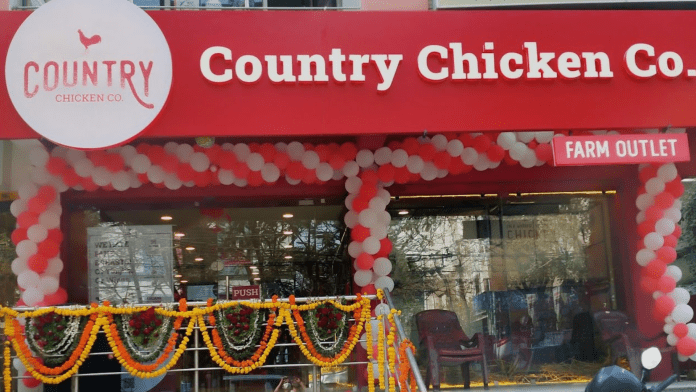
Country Chicken Co expands its reach in Telangana with the fifth premium outlet in Attapur

0
Country Chicken Co
Country Chicken Co (Representative Image)

Country Chicken Co, the renowned brand known for its premium quality country chicken, celebrated the grand opening of its fifth city outlet in Attapur. The esteemed inauguration was conducted by Thanneru Harish Rago Garu, the honorable Minister for Health, Medical, and Family Welfare of the Telangana government. Joining the event were T Prakash Goud, the MLA of Rajendra Nagar, and Shri Swami Goud. The occasion was further graced by the presence of the company’s key figures, including G Saikesh Goud, the Founder and CEO, Mohd Sami Uddin, Co-Founder and COO, and Abhishek Patawar, CSO of Country Chicken Co.

In addition to Attapur, the brand is set to launch two more stores in Chandanagar and Sainikpuri.

Country Chicken Co offers several advantages to its customers. They specialize in providing authentic Natu Kodi (desi chicken) and related products. These chickens are raised in rural backyards and free-range farms, ensuring they are free from steroids and antibiotics. The brand offers three distinct categories of chicken: Village Birds, Free Range Birds, and Nutrisoft Chicken, which serves as a healthier alternative to regular chicken. Additionally, visiting their stores is a delightful experience, thanks to their innovative, odor-free outlets.

Country Chicken Co. boasts a diverse selection of seven poultry varieties, ensuring they meet the preferences of customers from all backgrounds. Moreover, they provide a range of complementary products, including eggs and pickles, which add a distinctive flair to their offerings.

Speaking on the occasion, Goud said, “Our chicken is grown in a natural environment without any steroids or antibiotics being injected.”

Sami Uddin added, “We started Country Chicken Co., two and half years ago, through this we want to promote natu kodi meat which is healthy and are aiming to revolutionise the entire chicken meat industry. We are currently tied up with 15000 chicken farmers, we provide them with chicks, feed, training to breed them and have a buy back arrangement with them.”

Advertisement

Odisha’s first-ever rail coach eatery set to launch in Rourkela this October

0
railway restaurant
(Representative Image)

A cutting-edge, air-conditioned restaurant inside a railway coach is set to debut near the second entrance of Rourkela railway station in October, just in time for Durga Puja. This groundbreaking establishment will mark the very first railway coach restaurant in the state of Odisha.

Previously, these restaurants had been inaugurated in Nagpur, Maharashtra, and New Jalpaiguri, West Bengal.

As per insider information, in January of this year, the Chakradharpur railway division issued a tender inviting interested bidders to establish an air-conditioned restaurant within a rail coach, located near the second entrance of Rourkela railway station. After a competitive bidding process, a Kolkata-based firm secured a 15-year lease contract for INR 2.5 crore. Under the terms of the agreement, the railway authorities provided the firm with an old coach and allocated a 250-square-meter area for the project. Subsequently, the contractor transformed the coach into a brand-new dining experience.

The interior work for the railway coach restaurant is currently in full swing and is expected to wrap up by the end of this month. This restaurant, equipped with a television, is designed to accommodate up to 48 patrons.

Additionally, two street food counters will be situated in close proximity to the railway coach restaurant. The ambiance will exude a rural charm, and a garden area will also be cultivated adjacent to the restaurant.

Advertisement

Bengaluru restaurants to offer paper napkins only on demand in effort to reduce waste

0
Paper napkins
Paper napkins (Representative Image)

In an effort to diminish the daily generation of solid waste in Bengaluru, the hotel industry has called upon its members to decrease their usage of paper napkins.

With approximately 10 tonnes of napkins consumed daily across its 40,000 member establishments, the Bruhat Bengaluru Hotels Association (BBHA) has issued a plea to its affiliated hotels, darshinis, caterers, and flight catering services to reduce consumption and provide napkins to customers only upon request.

The association’s choice to offer paper napkins exclusively upon request, rather than placing them routinely on tables, is tied to concerns over their wasteful usage by the public. Additionally, this decision aligns with the range of initiatives being considered by the hospitality sector to curb wastage, counterbalance the impact of escalating input expenses, and address declining customer traffic. In a recent development, the association conducted a formal meeting to raise awareness among its members regarding the reduction of excessive consumption of paper napkins, electricity, and water.

Acknowledging the decision, PC Rao, president of BBHA, said that post-pandemic there is an increased tendency among people to use paper napkins. “Already, we are generating huge quantity of food waste. In addition to this, we are ending up generating tonnes of paper waste, which largely comprises paper napkins. If you look at our customers’ paper napkin consumption, it’s erratic and very difficult to comprehend. Due to free availability, they tend to grab them and use them recklessly, resulting in a huge mound of garbage.”

Another hotelier, who runs a chain of restaurants, said, “Paper napkins are used for the most absurd reasons. Be it to keep mobile phones on the table or personal belongings, people mindlessly use them. Had it been only for wiping hands, then it would have been acceptable. But if four people are at a table, they end up exhausting an entire pack of paper napkins by the time they finish a meal. We just wanted to regulate its use.”

In the initial phase, all members have been directed to eliminate paper napkins from tables and provide them to customers solely upon request.

Rao said the hospitality industry consumes close to 10 tonnes of paper napkins daily. “While a few purchase it in bulk for a week, others buy it twice or thrice a week. Another problem with paper napkins is storage. The paper waste generated is so huge that in half a day our storage area is filled with bags full of them. Just because we place them visibly on the table, customers grab and use them. What if we do not keep them? They will use their handkerchiefs, which are not only sustainable but can also help cut down on waste generation,” he pointed out.

The association has already conducted an initial series of meetings with Food and Civil Supplies Minister KH Muniyappa and other state government officials to discuss the reduction of food waste and other forms of wastage, such as paper napkins, water, and electricity.

According to reports, the state government has agreed to support the industry by creating an awareness film that can be screened at all hotels and hospitality establishments, in addition to displaying posters on tables and in hotel washrooms.

Advertisement