Kellanova, formerly known as the Kellogg Company and traded under the ticker symbol “K” on the New York Stock Exchange (NYSE), has announced the successful completion of its separation of the North American cereal business.
This action leads to the formation of two independent publicly traded companies, each well-positioned to unlock its distinct potential. Starting at 12:01 a.m. EDT today, all WK Kellogg Co shares were distributed to common stockholders of Kellanova. For every four Kellanova shares held as of September 21, shareholders received one share of WK Kellogg Co.
Starting today, WK Kellogg Co will commence trading on the NYSE under the symbol “KLG,” while Kellanova will continue to use its existing ticker, “K.” The separation agreements for Kellanova will be formally filed with the U.S. Securities and Exchange Commission (SEC).
“With the completion of the separation, Kellanova has entered a new era with a new name and a new ambition,” said Steve Cahillane, Kellanova’s Chairman and CEO. “We are starting from a position of strength that is rooted in a century-old legacy as we embark on a journey to achieve our vision of becoming the world’s best performing snacks-led powerhouse.”
Kellanova’s impressive portfolio includes internationally acclaimed brands such as Pringles, Pop-Tarts, Kellogg’s Rice Krispies Treats, and RXBAR. While the corporate name has evolved to Kellanova, the iconic Kellogg’s branding will remain unchanged on its global products. The company projects net sales for 2024 to range between $13.4 billion and $13.5 billion.
Kellanova’s newfound independence will provide it with enhanced operational concentration, facilitating substantial growth in net sales and earnings. Additionally, the company will uphold its dual campuses in Battle Creek, Michigan, and Chicago, Illinois, with Chicago serving as the location for its corporate headquarters.
Kellanova shareholders who qualified for the distribution have now received either a book-entry account statement or a brokerage account credit reflecting their ownership of WK Kellogg Co stock. Fractional shares were not distributed; instead, these fractional shares were liquidated, and the respective shareholders will receive a cash payment equivalent to their portion of the proceeds.
In anticipation of the approaching festive season sales, the Open Network for Digital Commerce (ONDC) has launched an incentive initiative. This program offers significant bonuses, with the potential to reach up to INR 35 lakh per week, to buyer-side platforms that achieve predetermined order volume goals.
Moreover, as reported by Moneycontrol, ONDC has raised the weekly cap on discounts offered to consumers from 2 to 5 per week.
The government-supported network has implemented a graduated bonus structure in which it will provide the INR 35 lakh reward to consumer-oriented applications that can reach the benchmark of 1,00,000 weekly orders. The incentive program, structured in tiers, commences at INR 5 lakh for platforms capable of securing 50,000 weekly orders.
ONDC will additionally provide a refund of INR 1,000 for each order placed by new customers on live B2B seller apps. This sum will be transferred to sellers for the initial purchase made by a new or distinct buyer, provided the order value reaches a minimum of INR 5,000 (inclusive of shipping). Sellers are eligible to claim this incentive for a maximum of 50 new buyers each month.
The government-backed e-commerce network has also introduced a graduated incentive structure for seller-side applications. In this system, platforms will receive different incentives for enlisting sellers depending on their geographical location – up to INR 6,000 in metropolitan areas, up to INR 7,500 in tier-2 and tier-3 cities, and INR 5,000 in all other cities, provided they offer more than 5,000 stock-keeping units (SKUs) in the grocery category.
To improve its logistics operations, ONDC will also offer an incentive of INR 15 per delivery to logistics service providers, with a maximum limit of 1,00,000 deliveries.
These new initiatives are designed to enhance participation and operational effectiveness within the ONDC network in anticipation of the upcoming festive season.
ONDC, supported by the government, seeks to diminish the dominance of major players such as Amazon, Flipkart, Swiggy, and Zomato in the e-commerce and food delivery industries.
Recently, ONDC launched the ‘ONDC Network Gift Card’ for corporate gifting and employee engagement. This innovative gift card allows cardholders to make purchases using any ONDC-enabled buyer application.
Earlier, it was disclosed that ONDC has plans to launch a comprehensive suite of financial services on its network. These services will encompass personal and SMB loans, insurance options covering areas like car, health, and marine, as well as mutual funds.
The Good Glamm Group is strategically honing its focus on profitability as it gears up for an Initial Public Offering (IPO) within the next two years, as revealed by Group Co-Founder Priyanka Gill.
Leveraging its omnichannel strategy and digital capabilities, the group, with a notable footprint in the content-to-commerce sector, is actively exploring fresh sources of revenue and streamlining expenses to maintain strong growth rates.
In a conversation with PTI, Gill expressed optimism about the demand in the upcoming festive season, attributing it to strong consumer sentiment and shopping intentions across the company’s diverse product portfolio.
The company has experienced a remarkable year-on-year growth rate exceeding 250% on a compound annual growth rate (CAGR) basis in recent years, with online sales accounting for up to 70% of the total revenue.
“Profitability has become a key drive for all of us,” Gill stated, emphasizing the company’s concerted efforts to enhance revenue through new streams, product launches, and tapping into different consumer bases, all while maintaining a keen eye on costs and the bottom line.
“We’ve been working really hard on those fronts, and we’ve been doing our job to target and really hopeful that we’ll be able to achieve that,” she added.
As the group prepares for an IPO within the next two years, the emphasis on achieving profitability becomes paramount. “Being a profitable company is the precursor to that,” Gill remarked, highlighting that the group’s energies are primarily directed towards achieving this goal.
Established by Darpan Sanghvi, Priyanka Gill, and Naiyya Saggi, the Good Glamm Group manages a collection of Direct-to-Consumer (D2C) beauty and personal care brands, complemented by a digital ecosystem encompassing content and influencer platforms, along with community networks.
Within its structure, the group comprises several divisions, including The Good Brands Co, The Good Media Co, The Good Creator Co, and The Good Community, all playing integral roles in fostering the overall growth of the company.
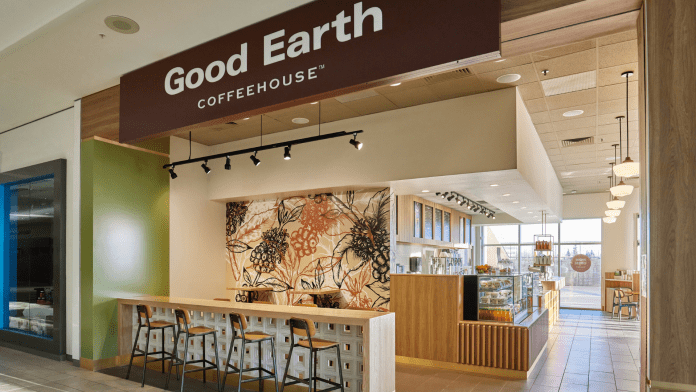
The Canadian coffee chain, Good Earth Coffeehouse, has joined forces with the real estate company Marcus & Millichap to enhance its presence across the nation.
Under this arrangement, Marcus & Millichap will assume the role of the coffeehouse chain’s national real estate representative, tasked with identifying optimal locations from Vancouver Island to Ontario.
By means of this strategic alliance, Good Earth Coffeehouse seeks to advance its nationwide expansion strategy and strengthen its brand’s foothold in the region.
Good Earth Coffeehouse Founder and CEO Michael Going said, “This partnership with Marcus & Millichap is a significant step towards realising our vision of bringing the Good Earth Coffeehouse experience to even more Canadians.
“With our shared commitment to excellence, sustainability and community, we are confident in our ability to find ideal locations for our coffeehouses and further enhance our brand presence nationwide.”
Marcus & Millichap will be actively searching for spaces of approximately 1,500 square feet in size to set up new coffee shops.
Additionally, the focus will extend to smaller kiosk sites situated in a variety of settings, including street-front locations, multi-use buildings, and shopping centers.
Marcus & Millichap Toronto vice-president Mark Paterson said, “We are pleased to be selected for this assignment and look forward to working with Good Earth Coffeehouse in Canada to expand their brand through our firm’s specialisation, market knowledge and access to the industry’s largest inventory of the commercial real estate.”
Southpaw, a Quick Service Restaurant (QSR) operator supported by Balance Point Capital, has completed the acquisition of 39 Taco Bell establishments within the Atlanta metropolitan region in the United States.
Southpaw is a proactive purchaser of Taco Bell franchises. Founded in 2009, Southpaw presently manages a diverse portfolio consisting of over 180 Taco Bell and Dunkin’ establishments spread across eight states in the United States.
Balance Point Capital managing partner Seth Alvord said, “We are thrilled to continue our partnership with Southpaw on this transaction.
“We are strong believers in the Taco Bell brand and Southpaw has a proven track record as an innovative owner and operator of QSRs. We look forward to helping the Southpaw team implement its operational strategy and driving growth in the Atlanta market.”
Its plan involves expanding its presence through both acquisitions and the establishment of new units.
Southpaw Co-Founder Judd Wishnow said, “Balance Point has been a terrific partner to Southpaw and we are delighted to have them leading this new investment in the Atlanta market.
“This acquisition presents a meaningful opportunity to add geographic diversity and scale to our existing Taco Bell network and build upon the strong performance we’ve experienced in our other geographies.
“Balance Point’s speed of execution and knowledge of the industry were critical to completing this acquisition and we look forward to continued growth and success alongside the Balance Point team.”
Amidst intense competition within India’s thriving e-commerce arena, Flipkart, a subsidiary of Walmart, has introduced “Flipkart VIP” as its response to Amazon’s Prime program.
This strategic move comes just a few days before the annual festive season sale, during which both e-commerce titans aim to attract customers with attractive discounts.
“VIP is Flipkart’s subscription-based loyalty program where customers enjoy extra privileges enhancing customer experience. Customers can buy a subscription at INR 499 and become a VIP member for a year,” Flipkart said on its website.
The newly launched Flipkart VIP is offered at an introductory rate of INR 499 per year, assuring VIP members in specific regions of free same-day or next-day deliveries. In comparison, Amazon Prime currently costs INR 999 annually.
While Flipkart’s VIP program closely mirrors Amazon Prime’s offerings, the Walmart-owned company still has room for improvement in extending similar services to customers across a broader geographical scope. Currently, Flipkart does not universally offer the assurance of free same-day or next-day deliveries, a feature that has given Amazon a competitive edge through its Prime program.
Furthermore, Flipkart VIP has been crafted to streamline the returns process for its members, ensuring the collection of returns within a 48-hour timeframe. What distinguishes Flipkart VIP is its commitment to providing dedicated agents to assist VIP members with their inquiries, a service that is not presently available through Amazon.
“Convenience benefits include free fast shipping and faster returns within 24 to 48 hours on select products on the FLIPKART platform (except grocery) in Delhi NCR, Mumbai, Kolkata, Bengaluru and other select pincodes making your shopping experience smoother and more enjoyable,” it said on the website.
As an enhancement to its VIP program, Flipkart has unveiled an enticing perk for its members. Starting on October 8, 2023, members will enjoy the exclusive ability to modify or reschedule their flight reservations through Cleartrip without incurring any extra charges. It’s worth mentioning that Flipkart acquired Cleartrip in 2021 as part of its strategy to broaden its range of services.
On the flip side, Amazon Prime provides an all-encompassing bundle that encompasses Prime Video, Prime Music, Gaming, and Reading. In contrast, Flipkart VIP currently lacks entertainment offerings in its package.
The prominent e-commerce company recently revealed the launch dates for its much-anticipated sales event, “The Big Billion Days,” scheduled to commence on October 8 and extend until October 15. Coincidentally, this aligns with Amazon’s sales event, set to start on October 8 and run through to October 15.
The domestic e-commerce leader also announced its intention to generate 100,000 direct and indirect seasonal job opportunities to bolster its supply chain, ensuring it can meet customer demands during its flagship seasonal sale this year.
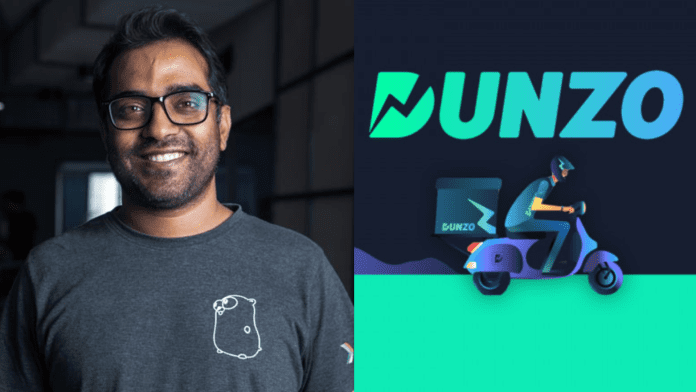
Dunzo, the Indian quick commerce startup, continues to grapple with challenges. Just one day after the company officially announced the departure of Co-Founder Dalvir Suri, fresh reports have emerged regarding the exit of yet another Co-Founder and Chief Technology Officer, Mukund Jha.
A Dunzo spokesperson, in their statement, neither affirmed nor refuted the reports. Instead, they stated, “Mukund remains an integral part of Dunzo’s leadership team. While we are restructuring the org with new leaders driving key mandates, Mukund will continue to be an important part of the strategic leadership team guiding and directing Dunzo’s future roadmap.”
The possibility of Jha leaving has not been officially disclosed within the startup. As per a report by Moneycontrol, only a limited number of employees have been apprised of this situation. The report indicates that Jha has stepped back from daily operations, and an official announcement regarding his position may be anticipated in the upcoming weeks.
Both Jha and Suri have also resigned from their positions on the board of the quick commerce startup.
In addition, a report from The Morning Context mentioned that a number of company board members have recently resigned, including Vaidhehi Ravindran from Lightrock and Rajendra Kamath and Ashwin Khasgiwala from Reliance Retail.
Following these changes, the startup’s board now comprises only three members: Dunzo CEO Kabeer Biswas, Siddharth Talwar from Lightbox, and Hongjim Kim from STIC Investments.
Dunzo initially had four Co-Founders, but following the departure of two, only Biswas and Ankur Aggarwal remain with the company. It’s worth noting that among the four Co-Founders, only Biswas holds equity in the company, while the others receive fixed salaries.
Jha’s exit coincides with Dunzo’s efforts to secure funding and raise capital in the range of $25 million to $30 million to sustain its operations. There are indications that Reliance Retail may also consider boosting its ownership stake in the company during this period.
Since its inception in 2015, Dunzo has secured approximately $500 million in funding from prominent investors such as Reliance, Google, Lightrock, Lightbox, Blume Ventures, and various others. Reliance holds the largest share, accounting for 25.8% ownership in the company, followed by Google as the second-largest shareholder, with approximately 19% ownership in Dunzo.
In the midst of a severe liquidity crunch, Dunzo has been deferring employee salaries for an extended duration. The company has also undertaken several rounds of layoffs, and CEO Biswas recently hinted at the possibility of further job reductions in the future.
During the fiscal year 2022, Dunzo experienced a doubling of its net losses, amounting to INR 464 crore, despite its operating revenue showing a significant growth of 2.1 times, reaching INR 54.3 crore for the same period.
When we think of restaurants as food enthusiasts or consumers, we often focus on the overall experience: the atmosphere, the mood, and everything about the location. It’s not just about the food; it’s about the entire journey. And if you’re someone with a profound passion for food, or perhaps dreaming of making your mark in the food industry, then the story of Priykant Gautam is one that will resonate with you.
Priykant Gautam’s journey begins with a vision and an unyielding passion for food. Growing up in a modest household that cherished culinary delights, Priykant’s love for food was evident from a young age. However, it wasn’t just about savoring delicious dishes; he harbored dreams of creating his culinary empire.
The Journey From 9 to 5 to a Business Tycoon:
The journey begins when this management grad who brings dreams decided to take a bold step and leave his safe 9 to 5 job and take risks. However, this journey was not a cakewalk. When Priykant decided to open up about his decision to his family, they were skeptical for the obvious reason as no one in the family belonged to the business line. However, his father stood with him as his backbone and told him to go for it. After getting the green light from his father, he decided to break the news to his friend and partner in business who was also a bit skeptical but later gave in.
And when all that was started, Priykant opened his first restaurant called the Smoke Factory in Noida. However, as Priykant describes it in an interview with Snackfax, people found it icky and felt, “What kind of name is ‘smoke factory’?” They often used to be misunderstood by the name. However, that never disappointed Priykant as he also adds, “Nothing becomes a brand in its initial stage. When people experience it, start liking it and believing it, it is at that point of time that it becomes a brand,” and that is when the road for Priykant started getting smoother and smoother.
Following the success of the Smoke Factory, Priykant went on to open Skyhouse Bar & Cafe in Noida. It’s clear that he was persistent in pursuing his passion for the food industry and creating unique dining experiences for his customers.
Hydrama in Gurgaon
Building a Restaurant Business From Scratch:
When we as consumers think of a fine dining experience, it is indeed not just about the food as it is everything that matters from ambiance to presentation and everything else. Fortunately, for us, business sharks like Priykant, know exactly what we as consumers look for!
On being asked in his interview with Snackfax about all the brands that are currently being operated by Priykant, he humbly mentions that there are around 10 locations throughout India that are handled by him, and some of these, we are pretty sure, are known by everyone, especially if one belongs to the NCR area.
In India, Chef Harpal Singh Sokhi is a well-known figure, and his restaurant “Kaarigari: Ek Ehsaas” is equally famous. Kaarigari offers a carefully curated menu featuring dishes from renowned restaurants, all elegantly presented with Chef Sokhi’s distinctive touch. However, there’s another visionary behind Kaarigari who deserves recognition—Priyakant Gautam. He conceptualized this innovative dining experience, along with other popular establishments like PLAKA, where the head chef is the celebrity chef Ajay Chopra. Priyakant also ventured into the vibrant lounge bar scene with “High Drama” in Gurugram, showcasing his diverse interests. He even hinted at upcoming locations in Gurugram, Udaipur, and Delhi, promising a “new format” that promises to be unlike anything seen before, as he revealed in his conversation with Snackfax.
Plaka in CyberHub, Gurgaon
“Apart from that, I am also coming with chef Vicky Ratnani, along with whom I am trying to introduce a European bakery concept in India,” he reveals further that “I am also planning to come with chef Hari Naik, who is a Michelin star chef and also has a well-known restaurant in New York with a concept of an Indo-Mexican food concept.”
He is trying his hands on more innovative foods now as he is well aware of how a consumer tends to behave and about the market dynamics. “I have tried my hands on massy products, and now I am planning to try more innovative products as for the last few years customers are more into authentic foods with places with bursting environments rather than the trend before with darker places and fusion foods, hence the scenario is ideal for now, however, it is definitely going to bubble up in the coming years.”
He further adds that “There are three industries that can never go out of business as three basic needs for a human to survive, which are: 1. Roti (or food industry) 2. Kapda (fashion and clothing industry) 3. Makaan (real estate) and till the very last day of Earth these industries are gonna sustain as there is no alternative to them.
However, people still feel it is a very risky industry and the thought process itself is that this is a scary industry to touch, and that the investment is very high, and in my experience, I can say that the consumer today is well-troubled and well-aware of what he wants to eat. Even in terms of interior, there has been evolution over the years as consumers are aware of food, the environment, and even the service process, and unless you aren’t a superhit about these three, you can’t really go anywhere and the food industry is not remotely close to how it looks on social media. They might show that they are into fusion foods but that is only for making reels there is no demand for it in the real-time market.”
Apart from that, he also talks about scalability and the target audience in his conversation with Snackfax. When it comes to scalability, Priykant says that a luxury restaurant cannot really go to a tier 2 or tier 3 city. However, if you take an example of a location like SOCIAL, where the price range is low and where people can connect socially. It is in a price range where anyone can connect with it.
Even the market sentiment in the food industry is very sunny for now as investors from around the world are pouring in so hopefully, it is all going north.
Today, Priykant Gautam stands as a testament to what determination, innovation, and a passion for one’s craft can achieve. His restaurant empire continues to expand, with a growing number of satisfied customers and culinary accolades.
Priykant’s journey serves as an inspiring example for aspiring young entrepreneurs, demonstrating that age need not be a barrier to success. His story underscores the importance of unwavering dedication, a customer-centric approach, and a willingness to adapt and innovate in the ever-evolving food biz.
FMCG companies will provide distributors with the option to choose from a variety of Stock Keeping Units (SKUs) in different pack sizes, offering greater flexibility.
Previously, the All India Consumer Products Distributors’ Federation (AICPDF) had expressed apprehensions regarding the distribution of lower-priced SKUs specifically aimed at rural markets.
The federation, in its engagement with the Ministry of Public Distribution, has requested companies to classify their products into entry-level packs, small packs, and medium to large packs to facilitate smoother distribution.
“Currently, navigating the market is fairly difficult because every brand uses a different packaging approach, frequently adapted to certain regions and locations. For instance, some brands sell cooking oil in 12-litre cartons, while others sell it in 15- or 20-litre carton sizes. We give retailers and distributors the option to order 5-pack cartons, thus improving storage and broadening the range of products available for display and sale. This strategic initiative is designed to offer our valued retailers and distributors increased flexibility. They now have the choice of selecting multiple ranges of products but in lesser quantities, simplifying storage issues, and expanding the array of products they can showcase and provide to their customers. We are now introducing smaller packaging options for some of our best-selling items such as ike gluten-free flour and IndiMix,” said Shammi Agarwal, Director of Pansari Group.
The AICPDF had mentioned issues related to pricing confusion, inventory management, and retailers’ hesitancy as key concerns.
“The difference in per-gram pricing among the numerous SKUs within the same price bracket leads to consumer confusion,” the body said in a letter.
Companies have stated that they are sticking to standardized pack sizes, which have proven to be effective in boosting product sales.
“Packaging plays an essential role in expanding our local presence In FMCG. Right from the outset, we have maintained a commitment towards ensuring the consistency and clarity of our packaging. This thoughtful approach helps prevent any doubts related to the product’s weight and pricing. Even during the challenging times of the Covid-19 pandemic, we remained firm in our decision to retain our standard pack sizes,” said Manish Aggarwal, Director of Bikano, Bikanervala Foods Pvt Ltd.
Tea production across the country witnessed a decline of approximately four percent in August of this year, with the total output reaching 177.95 million kilograms. This marks a decrease when compared to the production volume in the same month the previous year, which amounted to 185.48 million kilograms.
Based on data from the Tea Board, tea production in northern India, mainly encompassing the states of Assam and West Bengal, declined to 158.04 million kilograms in the current month from the 170.97 million kilograms produced in August 2022.
In Assam, tea production volumes dropped to 99.78 million kilograms in August this year, down from 109.81 million kilograms in the same month of the previous year.
In West Bengal, production also saw a decrease to 53.65 million kilograms in August 2023, compared to 56.19 million kilograms in the corresponding month of the previous year.
According to sources within the tea industry, the decline in production in northern India can be attributed to adverse weather conditions and pest attacks.
On the contrary, there was an increase in production volumes in South India, reaching 19.91 million kilograms in August this year, compared to 14.51 million kilograms in the corresponding month of 2022.
We use cookies to ensure that we give you the best experience on our website. If you continue to use this site we will assume that you are happy with it.