Friday, January 23, 2026
Home Blog Page 908

Tata Consumer Products leads acquisition race for Capital Foods, valuing company at INR 5,500 Crore

0
Capital Foods
Capital Foods (Representative Image)

Tata Consumer Products Ltd (TCPL) has taken the lead in the race to acquire Capital Foods Pvt Ltd, the company known for producing condiments, food products, and ingredients under the Ching’s Secret and Smith & Jones brands. This development marks the conclusion of weeks of lengthy negotiations, according to individuals familiar with the situation.

TCPL plans to initially purchase a 65-70% stake in the company from its three investors, with an option to acquire the remaining stake gradually. This transaction values the company at INR 5,500 crore. Other competitors in this bid include Nestle SA, the largest food company globally, and The Kraft Heinz Co.

Read More: Nestle, Kraft Heinz and Tatas among leading FMCG players vying for Capital Foods buyout

Throughout its history, Capital Foods has introduced a range of products infused with authentic “desi” flavors. These offerings encompass Ching’s Secret instant noodles, soups, condiments, curry pastes, and frozen entrees, as well as the Smith & Jones lineup, which includes ginger-garlic paste, specialized sauces, and baked beans.

The legal documentation and final negotiation rounds are currently in progress to determine whether the existing shareholders will retain a portion of their stake or choose to exit the investment entirely.

Kotak Mahindra is providing advisory services to TCPL.

Last year, Capital Foods’ major shareholders opted to initiate the sale of the company. These shareholders comprise Invus Group, a European family office and investment entity, holding a 40% stake; the US private equity firm General Atlantic, with a 35% ownership; and Ajay Gupta, the founder chairman of Capital Foods and a former advertising executive turned food entrepreneur, who holds a 25% stake.

The possible acquisition will set TCPL in competition with Nestle’s Maggi, the leader in the INR 5,000 crore branded instant noodles market, commanding a 60% share. The Maggi brand falls under Nestle’s prepared dishes and cooking aids business. Additional contenders in this category encompass Top Ramen, Wai Wai, and Patanjali.

“Tata Consumer Products does not comment on market speculation,” the company said in an email. Gupta, GA and Invus remained unavailable for comment.

The individuals mentioned earlier have indicated that Gupta is expected to remain with the company for the time being, although his specific role or capacity remains uncertain.

The sale process had garnered attention from various multinational corporations and domestic consumer companies, including ITC, Hindustan Unilever, Orkla, Nissin Foods, and McCormick. Initially, the asking price had been significantly higher, nearly at $1.5 billion (INR 12.45 crore).

While Capital Foods has not yet submitted its FY23 financial figures to the Registrar of Companies (RoC), insiders familiar with the company anticipate that sales will reach approximately INR 900 crore, accompanied by a 25% EBITDA margin. These sources also note that the company’s core business has consistently experienced a compounded annual growth rate (CAGR) of 30%, outpacing competitors who are experiencing single-digit expansion.

“A potential deal such as this and other recent acquisitions show a rebound of valuations in the FMCG market,” said Rajat Wahi, partner at Deloitte India. “While sales for most brands have now exceeded the pre-Covid values and volumes, the weaker rural sales over the last six quarters have impacted overall growth.”

He mentioned that the commencement of the festive season, enhancements in supply chain and sourcing, the decrease in raw material costs, potential interest rate reductions in the upcoming months, enhanced liquidity, and the anticipation of elections would likely lead to a substantial upsurge in the sales of fast-moving consumer goods (FMCG) products, both in rural and urban areas.

Nonetheless, a senior executive from a competing food company, who had assessed the opportunity but did not secure it, emphasized the challenge of maintaining the growth that companies like Capital Foods experienced during the pandemic. This growth, fueled by increased consumer demand for packaged foods, could be sustained effectively only if a national player with substantial distribution, advertising, and marketing capabilities takes control. Even amidst the COVID-19 pandemic, Capital Foods faced challenges in its sales of noodles, sauces, and condiments within the crucial hotels, restaurants, and caterers (HoReCa) channel due to reduced mobility and the widespread adoption of remote work arrangements (WFH).

As per analysts closely monitoring TCPL, the company has embarked on a multi-year transformation journey, evolving from a primarily tea-and-salt-focused entity into a more comprehensive food and beverage enterprise. This transformation occurred as a result of the Tata Group’s strategic portfolio rationalization and consolidation efforts, including an impending merger with Tata Coffee anticipated to conclude by the end of FY24. Over the past six months, the company’s stock has gained a notable 24%. With the foundational elements of distribution and portfolio expansion in place, the stock market anticipates that TCPL is poised to achieve robust growth over the medium term. Despite tea and salt still contributing to approximately 85% of the revenue, emerging growth segments within beverages and food (such as NourishCo, Sampann, Soulfull, etc.) are displaying impressive growth rates, exceeding 40% CAGR.

The company has been actively engaged in acquisitions, notably acquiring Soulfull in 2021, a company specializing in breakfast cereals and millet-based snacks. This move led to a remarkable 50% surge in revenue through brand extensions and the introduction of new products, all achieved at minimal additional costs. Furthermore, in May 2020, the company acquired PepsiCo’s 50% stake in NourishCo Beverages Ltd, a joint venture equally owned by both companies, housing brands such as Himalaya packaged water and GlucoPlus. However, despite extensive discussions spanning nearly two years, the highly-publicized takeover attempt of Bisleri did not come to fruition. The proposed deal for India’s largest bottled water brand was valued at approximately INR 7,000 crore.

“M&A remains high on agenda but strategic fit and right price are a must,” said Vivek Maheshwari, analyst with Jefferies.

The company has placed significant emphasis on enhancing its distribution strategy, which is built upon three key pillars. Firstly, it aims to extend its overall reach to 4 million outlets by the end of this calendar year, and as of the end of June, it had already achieved a figure of 3.9 million. Secondly, the company has introduced segmented routes for its salesmen in cities with a population of over one million, while also simultaneously investing in direct distribution efforts in smaller towns. The majority of analysts anticipate that these strategic initiatives will contribute to increased revenue growth rates and market share in FY24-25.

“Scale-up of the India growth businesses would support the growth trajectory. Strong FCF, improving return ratios, attractive long-term potential for Starbucks and the opportunity to leverage Tata Group assets (e.g., BigBasket) are other potential positive drivers,” said Latika Chopra, analyst with JP Morgan.
Advertisement

Bengaluru’s culinary scene booms as White Garden opens its doors

0
White Garden
White Garden

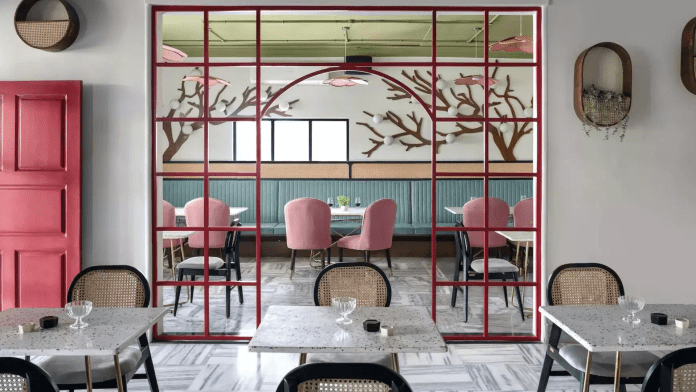
Bengaluru’s growing affection for culinary excellence and creativity now has a fresh destination to savor Indian cuisine with delicious contemporary twists. White Garden, located in Kalyan Nagar, introduces a stylish enclave inspired by nature, embracing aesthetics that instill serenity amidst the bustling streets. This artisanal kitchen presents a harmonious blend of Indian flavors with a forward-thinking, trending approach to recipes.

White Garden owes its success to the steadfast support of its Founders, Pattabhi Ram Madhyastha and Shrinidhi Hegde, two dynamic professionals with extensive backgrounds in the hospitality industry. Their shared dedication to delivering extraordinary guest experiences has been instrumental in propelling this venture to newfound heights of popularity.

“We wanted to embark on our passion for innovation into the culinary experience, especially for vegetarians. The vibrancy of Bengaluru’s food scene seemed just ideal to pave the way and blend in our hotel management expertise over the years. We created a space that fuels artistic expression. White Garden is not just a restaurant; it’s an experience of taste, aesthetics, and serenity,” says Hegde.

As a vegetarian artisanal kitchen, White Garden excels in its unwavering dedication to employing fresh, organic ingredients to create a gratifying dining affair. In a bold departure from conventional notions of limited diversity in vegetarian cuisine, it also serves as a culinary delight for those embracing a plant-based lifestyle. The menu, thoughtfully curated by chefs Krishna Khetle and Sanjoy Dhali, showcases their culinary expertise.

Advertisement

Black Sheep Coffee makes its debut in East England with new Peterborough outlet

0
Black Sheep Coffee
Black Sheep Coffee

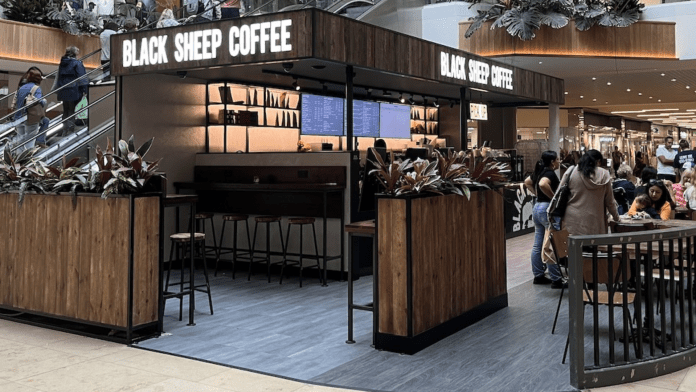
Black Sheep Coffee has marked its first appearance in the eastern region of England, setting up shop at Queensgate in Peterborough.

The company has launched a 1,800 square foot kiosk on the ground level of the mall, where customers can enjoy a menu featuring waffles, bagels, toasties, and smoothie bowls, all complemented by their signature Robusta coffee blend.

It becomes part of an expanding roster of food and beverage establishments at the Peterborough center, including Turtle Bay, Tap & Tandoor, and Burger King. Additionally, you can find other kiosk units at Queensgate, such as Churros-Locos, Millie’s Cookies, and Bubble CiTea.

Ed Ginn, director of investment management at asset manager Invesco Real Estate, said, “We are pleased to welcome another established coffee operator to the centre, an expanding brand that has chosen Queensgate to make its regional debut. We know that Black Sheep Coffee’s offer will suit the needs of our community, which will play an important role as we continue to develop the wider scheme.”

The news comes as Black Sheep Coffee continues its expansion drive, with the brand strategically pursuing prime locations characterized by bustling foot traffic and high customer volume.

Advertisement

Uber Eats targets broader market with new AI features and expanded payment options

0
Uber Eats
Uber Eats (Representative Image)

Uber Technologies (UBER.N) announced on Wednesday its plans to broaden the array of payment choices for its food delivery platform. Additionally, the company intends to introduce an artificial intelligence (AI)-driven assistant to aid users in discovering discounts and exploring diverse food offerings.

Uber Eats is gearing up to introduce a specialized “Sales Aisle” section to highlight promotional offers. These enhancements are expected to be launched either later this year or in 2024.

Food delivery platforms have been investing in AI to enhance their services, aiming to provide a more tailored experience and increase the overall convenience of their apps.

In May, Instacart’s competitor, CART.O, introduced “Ask Instacart,” a search tool powered by artificial intelligence (AI) designed to assist customers with their grocery shopping inquiries. This initiative was developed in collaboration with OpenAI, the creator of the AI chatbot ChatGPT.

In July, Bloomberg News reported that DoorDash (DASH.N) is also in the process of developing an AI chatbot named “DashAI” with the aim of expediting the food ordering process.

Uber has announced partnerships with federal healthcare programs like Managed Medicaid and Medicare Advantage. Starting in 2024, the company will start accepting applicable waiver payments on both Uber and Uber Eats.

Additionally, in 2024, the company will extend the option for individuals receiving Supplemental Nutrition Assistance Program (SNAP) benefits, which offer cash benefits for purchasing food, to utilize their waivers for grocery purchases on Uber Eats.

This action highlights a broader industry trend of targeting low-income households and vying for market share in an ever more competitive landscape.

DoorDash and Instacart have already enabled consumers to utilize SNAP waivers on their respective platforms.

Advertisement

Govt mulls direct tomato purchases from farmers to tackle price plunge amidst abundant harvest

0
Tomatoes
Tomatoes (Representative Image)

The government is considering purchasing tomatoes directly from farmers in areas where prices have significantly dropped because of an abundant harvest, resulting in an oversupply in the local market.

Sources indicate that the Price Stabilization Fund (PSF) of the Consumer Affairs Ministry will be deployed to procure the produce. This initiative aims to offer assistance to struggling farmers who have resorted to using their crops as livestock feed due to prices failing to cover transportation expenses in certain regions.

The states of Maharashtra, Karnataka, and Andhra Pradesh have experienced the most severe impact, as an exceptional harvest has led to an oversupply in the market. Prices tumbled to as little as INR 3-10 per kilogram last week, contrasting sharply with the INR 250 per kilogram peak witnessed in August when heavy rains damaged crops and caused a scarcity in the market.

As per data collected by the National Horticulture Board, the mean wholesale and retail prices of tomatoes stood at approximately INR 30 and INR 16 per kilogram, respectively, in various regions of the country on Tuesday.

Advertisement

Meesho enters branded products market with the launch of Meesho Mall

0
Meesho
Meesho (Representative Image)

Meesho, the leading e-commerce marketplace, has announced its strategic entry into the branded products arena through the launch of Meesho Mall. This strategic move underscores their commitment to cater to the unique and varied demands of the vast Indian consumer base by providing a wide selection of both niche and branded products.

With this move, the company is determined to make online commerce accessible to everyone and support the digitization of small businesses and regional brands, as stated in their official release.

Furthermore, the unicorn company pointed out that even though customers may not actively seek out specific brands for their shopping requirements, there is a consistent trend of searches for branded products in specific categories like personal care and beauty, footwear, and electronic accessories.

Likewise, brands have also demonstrated a keen interest in joining Meesho to harness the platform’s robust capabilities, extensive presence in tier-2+ markets, and vast customer base.

Presently, Meesho Mall boasts partnerships with more than 400 national and regional brands, featuring prominent names like Bajaj, Biotique, boAt, Decathlon, Bewakoof, Himalaya, Mamaearth, Milton, Paragon, Philips, Plum, Sirona, WOW Skin Science, and numerous others. The mall consistently draws over 25 lakh unique transacting users each month.

Dhiresh Bansal, Chief Financial Officer at Meesho, said, “The strategic expansion into branded products aligns with our goal of offering a diverse and affordable selection to our consumers while being an enabler for several emerging and regional brands looking to tap a larger audience across the country.

Since its launch last year, Meesho Mall has been growing by 30 per cent month-on-month, processing over 1 crore orders in the past six months. “ We aim to double down on accessibility, affordability, selection, and experience for its diverse stakeholders,” he added.

Advertisement

The Derma Co outperforms Mamaearth with a staggering INR 30 Crore monthly revenue

0
The Derma Co
The Derma Co (Representative Image)

IPO-bound Honasa Consumer’s subsidiary, The Derma Co, is celebrating a significant achievement. In just 41 months since its inception, the company has successfully crossed the milestone of generating a monthly revenue exceeding INR 30 crore. This remarkable feat translates into an annual recurring revenue of more than INR 350 crore.

The skincare brand supported by active ingredients, with a monthly sales figure of INR 30 crore, has outperformed Mamaearth, another brand under the Honasa umbrella.

“Being the second brand (The Derma Co) from our house, we deployed the playbooks that were created from our learnings from Mamaearth’s journey. Through the incubation and scale up phase, we realized that we have established repeatable playbooks that helped us reach milestones faster than Mamaearth,” said Varun Alagh, Co-Founder, Chairman & Chief Executive Officer, Honasa Consumer Limited.

Alagh expressed that this achievement by The Derma Co. serves as a strong validation of their strategies, reaffirming their confidence in their playbooks. Honasa intends to leverage these insights and apply them to the entire portfolio of brands within the parent company.

Honasa Consumer is gearing up to generate INR 400 crore through an initial public offering, with the primary intent of deploying the proceeds towards expanding its offline presence, introducing new brands to the market, and pursuing strategic acquisitions.

Alagh had previously informed PTI that Honasa’s primary objective is to enhance the brand’s reach by expanding its distribution network and increasing awareness of its flagship brand, Mamaearth. Moreover, the company has ambitious plans to elevate the performance of other successful brands such as The Derma Co, Aqualogica, and Ayuga, all of which are consistently achieving higher monthly sales.

According to Alagh, Mamaearth, a brand under Honasa, achieved the remarkable feat of becoming a INR 1,000 crore brand in India’s direct-to-consumer (D2C) industry at an astonishing pace.

Advertisement

Apparel retailers anticipate 7-8% revenue growth in current fiscal year: Crisil Report

0

According to a recent report by Crisil Ratings, brick-and-mortar apparel retailers in the organized sector are projected to experience a revenue growth of 7-8 percent this fiscal year. This growth is anticipated to be driven by increased demand during the festival and marriage seasons, despite the impact of inflation on discretionary spending during the initial quarter. The report highlights that ongoing expansion of stores, particularly into tier-II and III cities, will contribute to revenue growth in the current fiscal year as well as in the medium term.

The report indicated that although there has been a moderation in topline growth, the expected revenue growth will be on par with the 8 percent range observed prior to the pandemic.

Last fiscal, retailers witnessed a substantial 38 percent growth, stemming from a low starting point. This remarkable upswing was attributed to a swift recovery from the pandemic-induced economic downturn and higher profitability resulting from a sharp increase in raw material prices.

The report predicts that operating margins for this fiscal year are expected to reach 8 percent. This positive outlook is driven by a more favorable product mix, with a focus on the premium segment, as well as reduced input costs, which are anticipated to counterbalance the effect of increased marketing expenditures.

According to the report, the rate of expansion in store area will return to the pre-pandemic level of 2.2 million square feet in FY24, contrasting with the last fiscal’s 3.7 million square feet.

The Crisil report is founded on an examination of 39 organized apparel retailers, collectively representing a quarter of the INR 1.9 lakh crore revenue generated in the previous fiscal year.

According to Anuj Sethi, a senior director at the agency, demand in the premium segment is rising gradually with consumers increasingly preferring branded garments, driven by return to office and buoyant corporate activity.

This is helping offset muted-to-low demand from the economy and value segments, which account for 60 per cent of the revenue, because of changes in discretionary spends, he said.

With continuous store expansion, and the onset of the festive and wedding seasons, demand should improve in the third quarter, which normally fetches around 35 per cent of the annual revenue.

Operating margin is seen at previous year’s level of 8 per cent, despite significant reduction in prices of cotton, the key raw material, as per the report.

While store expansion in metros and tier-I cities will continue, retailers are also expanding to small towns, which will be relatively smaller-sized outlets.

Hence, the pace of area addition will normalise to pre-pandemic levels this fiscal. That, coupled with continuing investments to augment technology platforms and omni-channel infrastructure, will keep annual capex flat at last fiscal’s INR 2,000 crore.

Advertisement

Myntra pilots new fee structure for customers with high return rates

0
Myntra
Myntra (Representative Image)

Online fashion retailer Myntra is piloting an innovative approach by implementing return fees for customers with a history of high return rates, as reported by insiders.

The “return-as-a-service” project, introduced a few months following Myntra’s implementation of a fixed “convenience fee” ranging from INR 199 to INR 299 on each purchase made by customers exhibiting a significant history of product returns, has been unveiled. According to an insider, these customers typically engage in twice as many or more product returns compared to the average customer.

The company is currently adopting a more lenient approach towards returns, and in the coming weeks, it will test a fee structure ranging from INR 15 to INR 30 per return for high-return-rate customers once they have utilized their allocated free returns.

“Myntra feels that the flat charge of INR 199 to INR 299 per order may negatively impact user behaviour, not only among these users but also in their wider circle… although this is a small percentage of the overall cohort, it is still a sizable number of people,” the person said.

The “convenience fee” was imposed on approximately 2% to 5% of the platform’s customer base, totaling about 50 million active users. Active users refer to individuals who engaged with the platform at least once in the last 12 months and are distinct from users who carried out transactions.

A spokesperson for Myntra said it keeps experimenting on the platform. “In our endeavour to enhance customers’ shopping experience, we are trying to solve how customers can choose to make more informed shopping decisions and minimise their returns,” the spokesperson said, without giving further details.

In contrast to segments like smartphones, electronics, and appliances, the fashion category experiences a notably higher rate of returns within the ecommerce industry. Industry executives have indicated that between 25% and 30% of clothing products bought online are subject to returns. This is primarily attributed to factors like variations in sizing and fit across brands, as well as disparities in color, texture, or design between online depictions and the physical products.

Enforcing a return fee, if applied on a broader scale, has the potential to reduce the per-order servicing expenses. Among ecommerce companies, logistics stands out as the most substantial cost center.

Myntra has prioritized the reduction of returns as one of its key objectives this year. In addition to applying fees to customers with elevated return rates, the company has been endeavoring to encourage these customers to opt for exchanges over full returns by providing additional discounts as an incentive.

Myntra’s initiative to reduce returns coincides with the upcoming peak festival season, scheduled to commence in October. This period represents a significant portion of annual sales for ecommerce platforms in India. Despite facing growing competition from rivals like Reliance’s Ajio, Tata Group’s Tata Cliq, and numerous other brands that directly sell to consumers through their websites, Myntra maintains a leadership position in the online apparel sector.

This year’s festive season carries increased significance due to its occurrence during a broader downturn in ecommerce sales. As per a report from Unicommerce, dated August 10, the order volume growth in India’s ecommerce sector decelerated from 69.4% in FY22 to 26.2% in FY23. Moreover, the growth in gross merchandise value also declined to 23.5% in FY23, down from 73.6% in the previous year.

Reducing return rates is a crucial factor for companies striving to achieve profitability, as returns can significantly inflate logistics expenses. In an effort to offset operational costs, online clothing retailers have already implemented surcharges. For instance, Myntra imposes a convenience fee of INR 15 per order for all customers, Ajio charges INR 19, and Nykaa Fashion levies approximately INR 29.

Advertisement

Premium cold-cut brand Meisterwurst makes a grand debut at Delhi and Gurgaon’s top locations

0
Meisterwurst
Meisterwurst (Representative Image)

Meisterwurst, the premium cold-cut meats brand, is delighted to announce its official debut at several prominent locations: Le Marché DLF Galleria, South Point Mall, Khasra, and Modern Bazaar outlets within Select City Walk, Vasant Vihar, Defence Colony, Green Park, Kailash Colony, and SS Plaza Gurgaon. This exciting launch introduces a delectable range of European-inspired cold cuts to discerning customers.

Meisterwurst’s introduction at Le Marché and Modern Bazaar represents a noteworthy achievement for the brand, underscoring its ongoing worldwide growth while satisfying the tastes of Delhi and Gurgaon residents who appreciate premium offerings. These esteemed supermarket chains were selected as partners because of their mutual dedication to delivering outstanding products and customer experiences.

Arthur Maurer, Founder & CEO of Meisterwurst said, “This allows us to raise the bar for customer expectations and bring online standards to the offline experience. It’s important to have our products in premium stores like Modern Bazaar and Le Marche which goes well with our high quality brand developed all these years. With this collaboration we aim to make customers’ shopping experience easier and more efficient.”

Advertisement