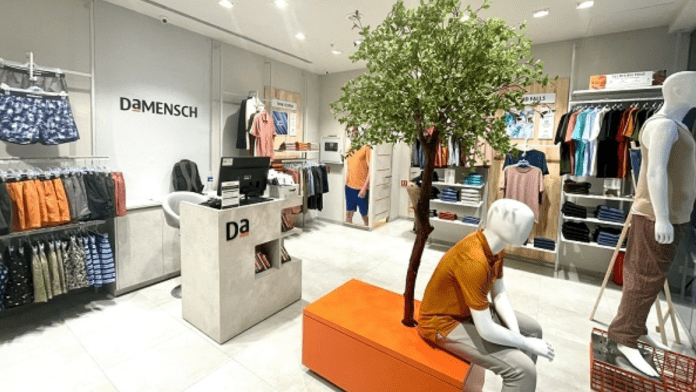
Homegrown men’s fashion label DaMensch announced on Wednesday that they have successfully launched 25 exclusive retail outlets throughout India in just a year.
The direct-to-consumer (D2C) innerwear brand is striving to surpass the INR 100 crore milestone by strategically expanding its retail presence in major cities including Delhi-NCR, Pune, Mumbai, Hyderabad, and Bengaluru.
“Even though DaMensch has always banked on a multi-channel approach, offline continues to be a focus channel for us. We have stocked the stores with the entire range of products offered by DaMensch, so that the consumers can touch and feel their premium prowess before making their purchasing decision,” said Gaurav Pushkar and Anurag Saboo, Co-Founders of DaMensch.
“We intend to expand to at least 100 stores by the end of 2024,” they added.
Based in Bengaluru, DaMensch was established in 2018 as a brand specializing in men’s innerwear. In the year 2021, they expanded their offerings to include outerwear as well.
The brand opened its first physical store at Mantri Square Mall in Malleshwaram, Bengaluru in 2022.
As of today, it serves over 1 million consumers. According to the most recent audited financial results for the fiscal year 2022, DaMensch has achieved a revenue of nearly INR 60 crore, as stated by Ashmeer Sayyed, the brand’s Chief Retail Officer.
The state excise department has assigned government officials to carry out comprehensive investigations into the complaints lodged against each establishment and make a determination.
It is worth noting that Tamil Nadu currently has 4,289 Tasmac liquor outlets. The state had previously closed down 500 outlets in response to similar complaints from the public. The closure of these establishments significantly empowered the complainants, who are now advocating for the closure of an additional 275 liquor outlets.
R.M. Surulirajan, a businessman in Coimbatore while speaking to said, “The decision of the state government to shut down 500 Tasmac outlets in June 2023 has emboldened the complainants and gives a feeling that the government would act and shut down liquor outlets if it finds that the complaint was genuine.”
The state government has already assigned government officials to conduct a thorough intelligence analysis of the outlets for which complaints have been brought to its attention.
Sources within Tasmac indicated that numerous complaints were unfounded, and the department was diligently investigating the authenticity of these complaints.
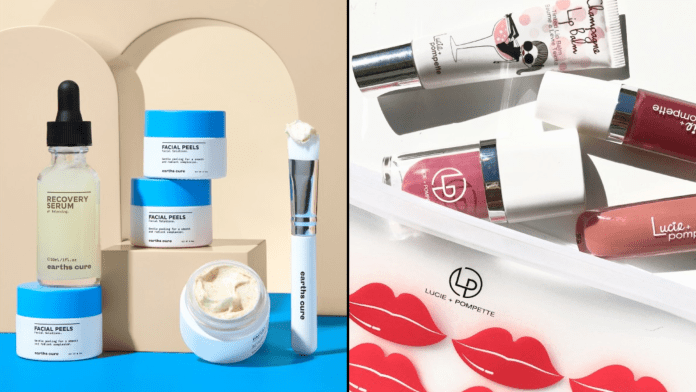
MorLuxury, a renowned American beauty e-commerce platform, is on the verge of making a thrilling debut in the flourishing beauty market of India. With a strategic vision to transform the beauty landscape in India, MorLuxury is introducing an intricately curated selection of high-end American beauty, cosmetics, skincare, and haircare brands, thoughtfully chosen to captivate beauty enthusiasts across the nation. MorLuxury is set to establish itself as the premier choice for discerning Indian consumers in pursuit of emerging American indie beauty brands.
This expansion into the heart of India seamlessly harmonizes with MorLuxury’s fundamental values, which are firmly grounded in innovation, a steadfast dedication to excellence, and a strong commitment to inclusivity. The platform’s sophisticated and user-friendly interface perfectly matches its carefully curated product selections, guaranteeing a personalized shopping experience that gracefully caters to the individual needs of each customer.
MorLuxury’s allure extends beyond the mere commitment to convenience; it entices Indian beauty aficionados with a opulent selection of top-tier beauty, haircare, and skincare brands readily available at their fingertips. The shopping experience at MorLuxury is distinguished by its effortless nature and transparency, ushering in an era where the quest for authentic beauty recognizes no limits.
Prachi Vaidya, Co-Founder at MorLuxury, expressed their enthusiasm, stating, “We are delighted to introduce our exclusive selection of US-based beauty and skincare brands to the Indian market. Recognizing the surging demand for authenticity and uncompromising quality in the Indian beauty sphere, our platform is dedicated to delivering an unparalleled international experience, inviting Indian consumers to embark on a journey of exploration and discovery, to luxuriate in the very essence of American indie beauty.”
Manny Khan, Co-Founder at MorLuxury, added, “With MorLuxury, the pursuit of authentic beauty is limitless, and we’re excited to embark on this transformative journey with Indian beauty enthusiasts. Through innovation and dedication, we’re igniting a global passion for authenticity and quality in beauty. Our carefully curated selection of exclusively available premium American beauty brands is designed to captivate the senses of Indian consumers.”
MorLuxury’s aspiration transcends the role of a mere shopping platform; it strives to become a trusted companion on every individual’s beauty journey, committed to ensuring that every facet of the experience exudes authenticity, product excellence, and unmatched customer service. This commitment sets MorLuxury apart in the bustling landscape of beauty e-commerce.
As MorLuxury gears up for its grand debut in the Indian market, customers can eagerly anticipate the unveiling of an expansive array of high-end beauty and skincare products that were previously hard to come by. This launch is poised to revolutionize the beauty industry in India.
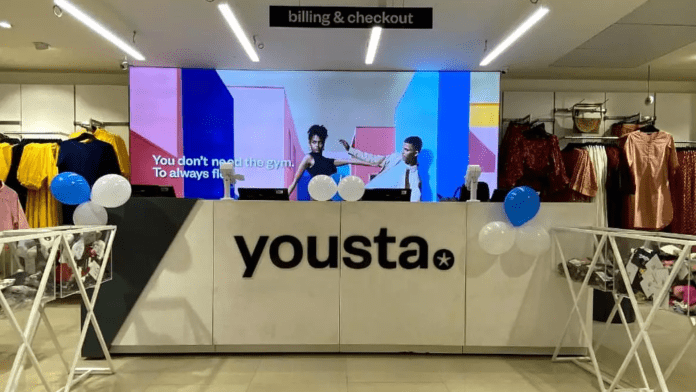
Reliance Retail is set to enhance its youth-oriented fashion retail concept, “Yousta,” by opening four new stores in Kerala. These newly established outlets in Palakkad, Edappal, Alathiyur, and Vengara are poised to collectively offer cost-effective, stylish fashion options to the young demographic throughout the state.
Every item in the Yousta inventory is priced under INR 999, and a significant proportion can be purchased for less than INR 499. Yousta showcases a diverse range of products, including fashionable clothing sets, unisex and character-themed merchandise, and regularly introduces fresh fashion selections in its “Starring Now” collection each week.
The new Kerala stores, much like their Telangana and Chhattisgarh counterparts, are equipped with modern, technology-driven layouts, positioning themselves as the preferred fashion hubs for the youth. In alignment with Yousta’s dedication to innovation and customer-centric interactions, these stores will incorporate multiple tech-enhanced features, such as QR codes for effortless access to information, self-checkout counters for speedy transactions, and convenient charging stations.
Yousta has joined forces with a non-profit organization, enabling customers to contribute their gently used clothing within the stores, with the intention of utilizing them for community initiatives.
According to a press release, customers can also browse the collection online via Ajio, and in the near future, it will also be available on JioMart.
On Wednesday, Orkla ASA, a Norwegian industrial investment firm that holds ownership of MTR Foods, announced the consolidation of its Indian operations into a single business entity called Orkla India. This move positions Orkla India as one of the twelve independent portfolio companies within the organization.
As part of this restructuring, three distinct business units have been established: MTR, Eastern, and International Business (IB).
According to the company, this step will bolster the overall business capabilities and foster a more concentrated growth strategy across the various business units.
In the midst of this restructuring, Sanjay Sharma from MTR will assume the role of CEO for Orkla India. In this capacity, Sharma will be in charge of supervising the three distinct business units, each with its own CEO reporting directly to him.
The company announced that it will expand its product range to include offerings from MTR and Eastern, while also strengthening its global presence through the recently formed IB unit.
MTR and Eastern will retain their distinct brand identities, while capitalizing on the shared synergies, scale, expertise, and cost advantages facilitated by this restructuring.
Atle Vidar Nagel Johansen, Chairman of Orkla India, said, “Our acquisition of Eastern has significantly scaled our business in India reaffirming our position in this market. The three business units will play a pivotal role in fortifying Orkla’s overall portfolio which believes in the strength of local brands and leadership within distinct markets.”
On this reorganization, Sharma said, “Each of our business units is at a different stage of evolution, and under one umbrella of Orkla India, we will have a deep dedicated focus to accelerate their growth.”
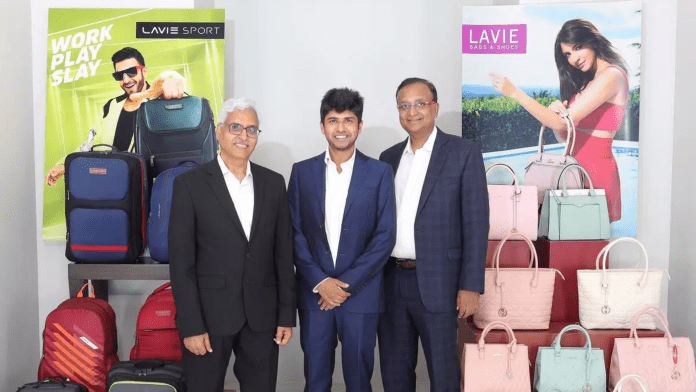
Krishankant Rathi, Founder of First Bridge; Ayush Tainwala, CEO of Bagzone Lifestyles, and Vishal Gupta, Co-Founder of First Bridge
Bagzone Lifestyles, the parent firm of the fashion accessories label Lavie, secured $9 million in funding from the First Bridge India Growth Fund.
As per the company’s statement, this collaboration assists in establishing the company as a frontrunner in the fashion accessories sector. Given the handbag market’s proximity to INR 10,000 crore, the company asserts its market share to be in the range of 5–10 percent.
The company intends to utilize the funds for expanding its in-house manufacturing capabilities, setting up a 150,000 square foot facility. Furthermore, it envisions broadening its offline footprint through the inauguration of 300 exclusive brand outlets.
Further, “we are planning to introduce a new product category by the end of this year. The production for this category is still in its initial stages,” Ayush Tainwala, CEO of Bagzone Lifestyles, said.
“We are very excited to partner with First Bridge. They come with a long track record of building many successful consumer businesses. We hope to grow 10X in the next few years and become a multi-category, multi-brand business,” Tainwala added.
During the fiscal year 2023, it achieved customer sales totaling INR 500 crore.
At the same time, it seeks to attain a 70 percent localization rate in its procurement initiatives, all the while increasing its physical store footprint. As a consequence of this growth strategy, it anticipates generating employment opportunities for 1,000 people across the country, thereby making a direct contribution to the nation’s economic advancement. Moreover, it plans to enter Tier-2 and Tier-3 markets.
Managing Partner of First Bridge, Vishal Kumar Gupta, said, “The company operates in a market that will benefit from the shift to organised and an exponential increase in women’s consumption in the next few years. We are confident of a successful journey of hyper-growth with team Lavie.”
As per a recent Statista survey, the handbags sector in India is expected to achieve a revenue of $4.19 billion in 2023, projecting an estimated annual growth rate of 6.14 percent from 2023 to 2026 (CAGR 2023–2026).
Hyperlocal services unicorn Urban Company has diversified its portfolio by venturing into the world of branded products, marking its entry with the introduction of a fresh range of smart RO water purifiers under the sub-brand ‘Native’.
Urban Company asserts that ‘Native’ stands as India’s pioneering line of water purifiers, boasting a remarkable two-year maintenance-free operation and an impressive capacity to produce 12,000 liters of pure water without the need for filter replacements. To put this into perspective, key competitors in this sector encompass brands like Livpure and DrinkPrime.
Manufactured in India, Native water purifiers feature cutting-edge ‘rapid reverse rinse’ technology and multi-micron filter surfaces, enhancing the longevity of the filters to an impressive two years. This innovation substantially lowers the overall ownership costs for consumers.
Urban Company has introduced two distinct RO water purifier models, namely the M1 and M2, with the Native M2 water purifier available at an introductory price of INR 17,499, while the M1 model is priced at INR 13,499.
Furthermore, the company stated that the M2 version of its RO device incorporates IoT functionality, allowing users to monitor real-time metrics such as Total Dissolved Solids (TDS) levels, water consumption, and filter life status through the Urban Company app.
Presently, these products can be found on the Urban Company app, website, and Amazon. They will also soon be offered in offline retail locations at Croma stores.
Additionally, the company will provide a comprehensive warranty at no additional cost, covering filters, membranes, and all other spare parts for the entire two-year duration, as per their statement.
According to the company’s assertions, the Native M1 incorporates a nine-stage filtration process, effectively eliminating 99.99% of impurities, including chemical contaminants like metal ions, chromium, lead, sodium, and reducing arsenic, radium, fluoride, sulfate, and magnesium. On the other hand, the M2 device offers an enhanced ten-stage filtration system, encompassing all the stages of the M1 model, and additionally featuring copper-charged filters, as stated.
“Over the past few years, we have repaired and serviced over a million water purifiers. One pain point we constantly heard from customers is why water purifiers need filter changes and servicing every few months. We decided to address this problem head-on with our new range of Native water purifiers,” said Abhiraj Singh Bhal, Co-Founder and CEO of Urban Company.
In addition to the water purifiers, the company’s app also presents purchasing options for the Native Smart Locker. Notably, Urban Company has not issued any official statement regarding the launch of this product.
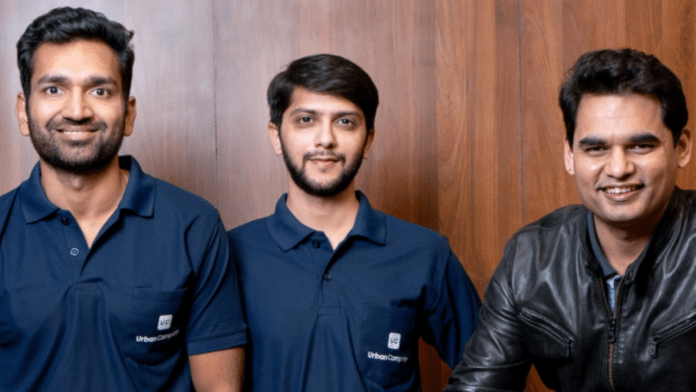
Established in November 2014 by Abhiraj Bhal, Raghav Chandra, and Varun Khaitan, Urban Company has emerged as a prominent player in the technology-driven home services sector. The company provides a diverse array of services, including salon and massage, home cleaning, appliance repairs, and painting. With a presence in over 50 cities across India, the UAE, Singapore, and the Kingdom of Saudi Arabia, it has established a strong international footprint.
This startup has received backing from notable investors, including Tiger Global, Steadview Capital, and Vy Capital.
The company found itself embroiled in controversy recently due to a series of protests by its gig workers, who raised concerns about the company’s alleged partner practices.
Recently, Urban Company claimed that its Indian operations, at an adjusted EBITDA level, achieved breakeven in the first quarter of fiscal year 2024, all while maintaining a negative working capital.
The net loss saw a substantial reduction of more than 40%, dropping to INR 308 crore in FY23 from INR 514 crore in the prior fiscal year, primarily attributable to robust business growth.
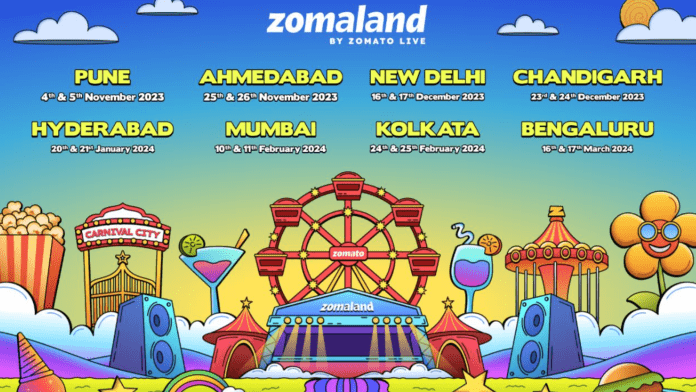
Foodtech giant Zomato’s event branch, Zomato Live Entertainment, has revealed that the upcoming Zomaland festival, an exciting fusion of food and live entertainment, will mark its fourth edition starting on November 4th in Pune.
In its latest edition, Zomaland is set to be hosted in eight cities: Pune, Mumbai, Delhi, Bengaluru, Chandigarh, Hyderabad, Ahmedabad, and Kolkata.
Zomaland is a carnival organized by Zomato Live, which brings together a delightful fusion of food, performances by artists from across the country, and various other engaging experiences.
The Zomaland 2023-24 carnival will kick off in Pune and then continue its journey through Ahmedabad, Delhi, Chandigarh, Hyderabad, Mumbai, Kolkata, and Bengaluru. Although the event lineup for Pune is still under wraps, tickets are already up for grabs on both Zomato’s food delivery app and Paytm Insider.
This year, the ticket price for Zomaland starts at INR 599, marking an increase from last year when it commenced at INR 499.
Commenting on the previous editions of Zomaland, Zeenah Vilcassim, CEO of Zomato Live, said, “The previous seasons of Zomaland charmingly captured the heart of each city and this year, we are gearing up to take it to new heights. It is a true celebration of food, music, and culture and we can’t wait to entertain and delight our audiences as alway.”
In a statement, Zomato Live announced that the upcoming season of the carnival will feature more than 60 establishments in the food industry.
According to Zomato Live, during the last season of Zomaland, the event attracted a footfall of over 175,000 attendees and featured the participation of more than 400 restaurants across seven cities.
Over the recent years, live events have become a significant business prospect for Zomato. In the context of revealing its financial results for the first quarter of FY24, Zomato expressed its consideration of separating the ‘Going Out’ category, encompassing Zomato’s dining out and live events ventures, into a distinct mobile application.
It’s important to highlight that Zomato recorded its first profitable quarter, achieving a post-tax profit of INR 2 crore in Q1 FY24.
This development has provided a significant uplift to the company’s stock price, with its shares trading more than 75% higher year to date. On Wednesday, the company’s shares reached a new intraday 52-week high for the second consecutive day, and at 03:15 PM IST, they were trading 2.6% higher at INR 108.85 on the BSE.
In another major shakeup within the troubled Dunzo, Sudharshan N, the head of finance, has parted ways with the quick commerce startup.
Sudharshan’s LinkedIn profile indicates that he concluded his role as the head of finance at Dunzo in September 2023, following a year-long tenure with the company. This departure coincides with a period of turmoil at the quick commerce startup, characterized by financial challenges and delays in employee salary disbursements.
The company’s financial leadership transition remains uncertain.
Sudharshan’s time at Dunzo, which lasted only 14 months, marks the briefest chapter in his career. Previously, he dedicated almost four years to the prominent foodtech company, Swiggy, and nearly eight years at Ernst & Young (EY). An alumnus of Bangalore University, Sudharshan holds an undergraduate degree in commerce and is a certified chartered accountant (CA).
Significantly, the departure occurs during a period when Dunzo has faced financial challenges and has been actively seeking investment capital. Just last week, there were reports that the company was preparing to seek board approval for a rights issue, aiming to secure up to $35 million, but at a considerably reduced valuation. The startup had apparently been intending to secure the funds with a valuation of $200 million, a substantial decrease from its earlier valuation of $800 million.
Sudharshan was at the heart of the startup’s fall from grace, overseeing delayed salaries and missed payment deadlines due to cash flow issues. Despite pledging multiple times to release pending salaries that have been held since July, the startup has now pushed the deadline all the way to January-February 2024.
In addition to Sudarshan, Dalvir Suri, one of the Co-Founders of Dunzo, has departed from the company. Reports emerged last week indicating that another Co-Founder, Mukund Jha, is currently in the process of leaving the startup. Furthermore, Ashwin Khasgiwala and Rajendra Kamath from Reliance Retail, along with Vaidehi Ravindran from Lightrock India, have resigned from Dunzo’s board.
Additionally, there have been significant departures from various teams, such as the departure of Akansha Kumari, who served as the head of the product team. These exits have contributed to high attrition rates, which have been further exacerbated by extensive layoffs that have taken place over the past year.
In the meantime, it’s been reported that the company has chosen OneTap, a payroll financing company, to ensure timely wage payments and mitigate the salary crisis.
The unfolding saga began when it became apparent that the quick-commerce giant had accumulated cumulative losses exceeding $150 million, despite generating only $12 million in revenue between 2018 and 2022.
With losses steadily depleting the $240 million in funding raised from Reliance Retail, the company initiated a restructuring initiative. This involved reducing the workforce and shifting towards a hyperlocal model, all while competitors like Blinkit, Zepto, and Swiggy Instamart surged ahead in the market.
As the company readies itself for more financially constrained periods, the question remains whether it can successfully avert the ongoing crisis.
The world of business is a dynamic, ever-evolving ecosystem. To thrive in this environment, it’s crucial to have a well-structured and adaptable sales process that can help your product shine. Creating a winning sales process is about more than just closing deals; it’s about building relationships, solving problems, and ensuring long-term success.
1. Know Your Product Inside and Out
Before you can sell it effectively, you need to understand your product like the back of your hand. This knowledge isn’t just about the features; it’s about knowing how your product addresses your customers’ pain points and fulfills their needs. Be ready to answer any question, anticipate objections, and communicate the value your product brings.
2. Understand Your Audience
Different products are made for different people. Knowing your target audience is paramount. Create detailed buyer personas to understand the unique needs and preferences of your potential customers. This will help you tailor your sales process to speak directly to their concerns and desires.
3. Develop a Consistent Sales Framework
Consistency is key in sales. Your sales team should follow a standardized process from the first point of contact to closing the deal. This ensures that every customer interaction is optimized for success. Outline the stages your leads go through, from initial outreach to follow-ups, and stick to this structure.
4. Effective Sales Training and Onboarding
Equip your sales team with the knowledge and skills they need to excel. Offer comprehensive training and onboarding programs to ensure that everyone on your team is on the same page. This consistency in approach will help maintain your brand’s integrity and customer experience.
5. Personalization is Powerful
While consistency is crucial, so is personalization. Tailor your approach to individual leads whenever possible. Show them that you’re genuinely interested in solving their specific problems. Personalized communication builds trust and strengthens relationships.
6. Sales Tools and Technology
Leverage the power of technology and sales tools. Customer Relationship Management (CRM) software, email marketing platforms, and analytics can streamline your sales process, helping your team work more efficiently and make data-driven decisions.
7. Effective Communication and Active Listening
Successful salespeople are not just skilled talkers; they’re also active listeners. Pay attention to your customers’ needs and concerns, and address them effectively. Open, two-way communication helps build trust and rapport.
8. Objection Handling
Objections are a natural part of the sales process. Prepare your team to handle objections professionally and persuasively. Understanding objections can actually be an opportunity to provide more information and demonstrate the value of your product.
9. The Art of Closing the Deal
The final step is often the most challenging: closing the deal. Your team should be well-versed in various closing techniques, such as the assumptive close, the summary close, or the trial close. Each approach can be used to nudge the customer towards a decision.
10. Continuous Improvement
A winning sales process is not static; it’s an ever-evolving strategy. Regularly assess the results and feedback, and be ready to adjust and improve your process as needed. Monitor key performance indicators and leverage data to refine your approach.
Developing a winning sales process is a continuous journey. It’s about understanding your product, your audience, and your team’s strengths and weaknesses. By building a consistent, personalized, and adaptable sales process, you can navigate the challenges of the business world and set your product on the path to long-term success. Sales isn’t just about transactions; it’s about building relationships, solving problems, and ensuring that your product truly shines in the market.
We use cookies to ensure that we give you the best experience on our website. If you continue to use this site we will assume that you are happy with it.