Suffolk-based coffee company, Paddy & Scott’s, has extended its reach to the Midlands with a new location in Lichfield.
Lichfield boasts historical connections as the ancestral home of Charles Darwin’s grandfather and the birthplace of Dr. Johnson, all set against the backdrop of its splendid, three-spire cathedral.
The Lichfield cafe showcases contemporary decor with the distinctive Paddy & Scott’s corrugated wall design. The comfortable seating and inviting ambiance create a perfect setting for patrons to enjoy their coffee, whether they choose to relax indoors or opt for an al fresco experience to soak in the lively city atmosphere.
At Lichfield, Paddy & Scott’s will be serving their renowned Muchomba coffee, a harmonious blend with hints of dark chocolate and a rich, enticing fragrance. This coffee originates from Paddy & Scott’s private coffee estate situated in Meru, Kenya.
Back in 2016, Paddy & Scott’s collaborated with the Muchomba family to bridge the gap between coffee shops and coffee producers. The brand made significant investments in farm infrastructure and partnered with local schools to facilitate long-term, sustainable improvements for the coffee-growing community.
“This is a very exciting time for us as a business. A new cafe means a new chapter. I’m thrilled our coffee will be fuelling the ambition of the Lichfield community,” Scott Russell, Founder of Paddy & Scott’s, said.
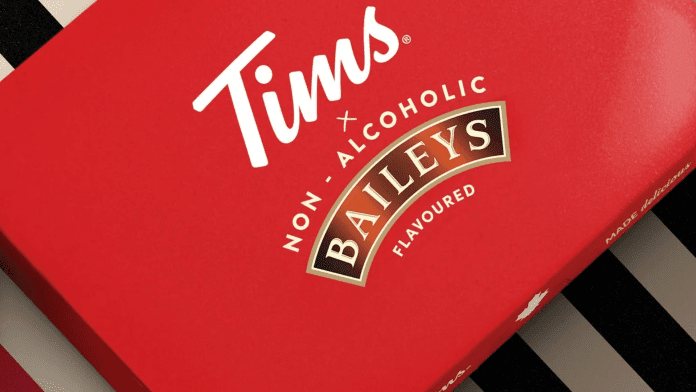
Tim Hortons, the Canadian coffeehouse chain, has revealed an exciting partnership with BAILEYS to introduce a fresh non-alcoholic menu.
Through this collaboration, Tim Hortons customers all over Canada will have the opportunity to enjoy Baileys’ non-alcoholic drinks and baked goods for a limited time starting later this year.
Tim Hortons chief marketing officer Hope Bagozzi said, “Can you think of a better pairing? We’re excited to team up to give Canadians the unmistakable flavour of Tim Hortons classics and Bailey’s that Canadians know and love.
“Since the line-up is non-alcoholic, Tim’s guests will be able to enjoy these delicious flavour combinations any time.”
Launched in 1974 in Ireland, Baileys is now owned by Diageo, a multinational alcoholic beverage company.
Diageo Canada marketing head Nadia Niccoli said, “Baileys and Tim Hortons are known for food and beverage innovations that push boundaries and this collaboration is sure to be a match made in decadence.”
This past August, Tim Hortons introduced a fresh array of Pumpkin Spice-flavored drinks along with a new doughnut.
These offerings encompass the Pumpkin Spice latte, the Pumpkin Spice cold brew, the Pumpkin Spice iced cappuccino, and the delectable Dulce Apple Fritter Dream doughnut.
Every one of the new beverages can be enjoyed either hot or cold.
As of 2022, Tim Hortons possessed and ran 5,600 stores spanning more than 14 countries, with a presence in Canada, the United States, the United Arab Emirates (UAE), and the United Kingdom.
Post Holdings has expanded its presence in the pet food industry by finalizing an agreement to acquire Perfection Pet Foods, a US-based company.
In February, Post Holdings entered the US pet-food market with a significant acquisition of several pet-food brands from J.M. Smucker, valued at approximately $1.2 billion. Now, the company is poised to acquire Perfection Pet Foods for $235 million.
On October 10th, Post Holdings announced its anticipation of completing the transaction in the last quarter of 2023, aligning with the commencement of the company’s new financial year.
California-based Perfection Pet Foods, operating out of the Golden State, specializes in crafting private-label pet food and snacks while also extending co-manufacturing services. Their wide-ranging expertise encompasses the production of both cat and dog foods, catering to a diverse pet food market.
Post Holdings is poised to acquire ownership of Perfection Pet Foods’ two Visalia-based factories. The parent company of Weetabix and Peter Pan peanut butter, known for its human food brands, stated that the Perfection Pet Foods acquisition will not only enhance its manufacturing capacity for in-house pet food production but also serve as an entry point into the private-label and co-manufacturing segments of the pet-food industry.
In a subsequent communication, Nicolas Catoggio, President and CEO of Post Holdings’ Consumer Brands Division, mentioned that 250 employees from Perfection Pet Foods will become part of this division.
The company acquired six brands from its American food counterpart, J.M. Smucker, which encompassed Rachael Ray, Nutrish, 9Lives, Kibbles’n Bits, Nature’s Recipe, and Gravy Train. This transaction also included the purchase of three manufacturing facilities, with two located in Pennsylvania and one in Kansas.
Post Holdings, a prominent American food producer, primarily concentrates on its consumer portfolio, which centers around breakfast cereal, eggs, and frozen food. Additionally, the company possesses popular cereal brands like Alpen and Pebbles, and it has a presence in the egg market through products such as Easy Eggs and Abbottsford Farms.
During discussions on the second-quarter results in May, President and CEO Rob Vitale expressed a strong interest in broadening the presence of publicly-listed Post Holdings in the animal food category.
His optimism was even more evident when he presented the third-quarter figures in August, coinciding with the company’s upward adjustment of guidance for adjusted EBITDA for fiscal 2023.
At that time, Vitale mentioned that this metric was expected to reach approximately $1.18 billion to $1.20 billion by the end of the year, surpassing the previous guidance of $1.09 billion to $1.13 billion.
Post Holdings anticipates that Perfection Pet Foods will contribute approximately $25 million to adjusted EBITDA in the 12 months following the completion of the transaction.
In the third quarter ending on June 30, the company disclosed net sales of $1.9 billion, marking a 21.9% increase compared to the previous year. Operating profit also saw substantial growth, reaching $158.3 million, a 50% increase. Moreover, adjusted EBITDA experienced a robust rise of 34%, reaching $338 million.
In August, Vitale mentioned that the pet food segment added $275.3 million to the total net sales figure.
Talking about acquisition prospects for the category in May, he said, “We are open for M&A, particularly around opportunities within and without pet that have the ability to be freestanding businesses within our portfolio.
“We have a lot of opportunities as you would imagine once we became an active player in pet. But we look through a lens of both human and financial resources when we start to think about what the next step should be.”
Commenting on the Perfection Pet Foods deal, Vitale said, “Perfection Pet nicely complements our recent acquisition of several pet-food brands by enabling us to compete in additional segments and more effectively leverage the combined manufacturing footprint.”
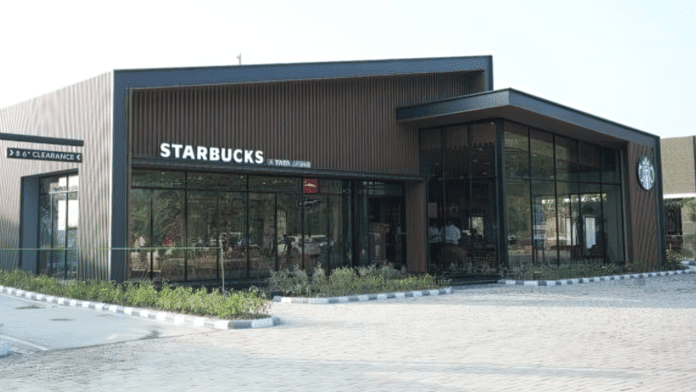
Starbucks, the renowned coffeehouse chain, has recently opened its sixth drive-through location in India, as announced by a company representative on social media. This new establishment is located in Punjab, specifically in Pathankot, along the scenic Kanyakumari-Srinagar Highway (NH 44).
“We are elated to announce the opening of our 6th Starbucks drive-thru store at Pathankot, Punjab. We can’t wait to welcome you to our newest addition to the brand and provide you the best 3rd place experience as always,” said Aayush Sharma, manager – projects at Tata Starbucks in a LinkedIn post while sharing the images of the new store.
The first drive-through Starbucks outlet in India was introduced in 2020 along the Ambala Chandigarh Expressway in Zirakpur, Punjab.
Last week, Starbucks unveiled several new stores in various cities across the country, including Noida, Bhatinda, Pune, Hyderabad, Mussoorie, Delhi, and Paschim.
“The last week has been nothing short of extraordinary as we proudly announce the grand opening of not one, not two, but multiple new Starbucks stores across the country,” said Udit Shah, manager- business development at Tata Starbucks in a social media post.
“This is just the beginning of an incredible journey. We’ve got many more store openings planned in the coming months, so stay tuned for even more opportunities to experience the Starbucks magic firsthand,” added Shah.
In October 2012, Starbucks Corporation entered India by launching its first store in Mumbai. The American coffee chain’s presence in the country is the result of a strategic partnership with Tata Global Beverages. Together, both companies have established a 50:50 joint venture known as Tata Starbucks Pvt. Ltd., responsible for operating all Starbucks outlets in India.
In April 2023, Starbucks inaugurated its first beachfront outlet in India, situated in Calicut, Kerala, on South Beach Road, Kozhikode.
In April 2023, Starbucks launched its first beachfront outlet in India, located on South Beach Road in Calicut, Kerala.
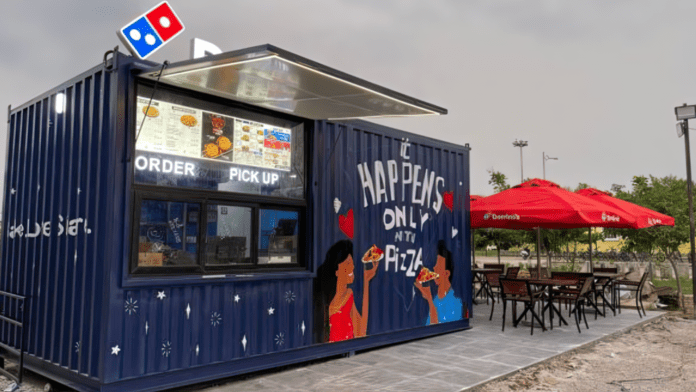
US-Based pizza chain Domino’s recently inaugurated its pioneering container model store in the southern region of India. The grand opening took place at the campus of the Indian Institute of Technology Hyderabad Sangareddy in Telangana last week, as announced by a company official on social media.
“Happy to share our First Domino’s Container Model for the South Region at IIT Campus Sangareddy,” wrote Hemanth Koppisetty Deputy Manager – Business Development Dominos – Telangana on LinkedIn.
The concept was first introduced by the brand at Royal Global University in Guwahati, Assam earlier this year.
In 2021, Domino’s introduced the global concept of container stores with the opening of its first such store in Tawa, New Zealand.
The design of this store sets it apart from the chain’s typical restaurant layout. It’s more compact and features an optimized internal arrangement, as noted in the blog. The Tawa location resembles a drive-through, where patrons collect their food from the store window and enjoy it in the outdoor seating area.
As per an official report from Jubilant Foodworks, the official franchise partner of Domino’s in India, a total of 249 new Domino’s outlets were inaugurated in 56 previously untapped cities. This expansion has brought the network to a grand total of 1,816 stores, spanning 393 cities across India during the financial year 2022-23. According to Livemint, the company is also planning to open an additional 250 stores in the upcoming 12-18 months.
Retail prices of kitchen staples products are projected to remain stable during the peak festival season due to the rigorous measures implemented by the government, as indicated by industry experts.
While food inflation had previously surged to high levels, it has recently begun to subside following a series of government actions. These measures include imposing export restrictions, implementing stock holding limits, and releasing wheat, rice, chana, and onions into the local market to bolster supplies and stabilize prices.
The demand for wheat flour, gram flour, dairy products, cooking oil, and sugar typically reaches its zenith during the festival season, commencing with Onam and extending through to Christmas, with a peak during Diwali.
“No spike in the prices of sugar is expected on account of shortages,” Shree Renuka Sugars executive director Ravi Gupta said, adding that the sweetener from the new sugar season will reach the market before Diwali, he said.
“After a sharp increase last year, prices of milk have stabilised. We also don’t expect to see any spike in the coming quarters despite the increase in consumption of dairy products such as ghee, on account of festivals,” said Akshali Shah, executive director, Parag Milk Foods.
During September, the Food Secretary, Sanjeev Chopra, mentioned that the government did not anticipate a significant surge in the prices of any food item throughout the festival season.
Kolkata’s Annapurna Swadisht Ltd, a company renowned for its expertise in packaged snacks, food, and beverages, has recently appointed Mr. GP Sah (Gajanan Prasad Sah Kalwar) as an Additional Director and Joint Managing Director.
In his new role, Mr. GP Sah will spearhead the company’s advancement into the next stage of development, with a primary emphasis on broadening its product portfolio, especially in the recently explored domains of biscuits and noodles.
Moreover, he will concentrate on enhancing the company’s market influence in the eastern, central, and northern regions of India.
“There is a strong demand for packaged foods in urban and semi urban markets and the products of Annapurna Swadisht have tremendous potential to become folk favourites. I will strive to inculcate a culture of innovation and work towards enhancing productivity and efficiency which will set the foundation for sustainable business growth. In the medium term, I will also focus on building the organizational capability to make it ready to face challenges and become one of the fastest growing ready-to-eat food product companies in the coveted INR 1000 crore (in revenue) FMCG companies club.” said, Mr. GP Sah.
The company issued a formal announcement to the stock exchanges, stating, “The company’s Board of Directors has granted approval for the appointment of Mr. GP Sah as an Additional Director. Subsequently, he has been designated as the Joint Managing Director of the Company, effective from September 22, 2023.
This appointment is valid for a three-year term, contingent upon shareholders’ approval.”
In his previous role, Mr. Sah served as the Global CEO of the FMCG Division within CG Corp Global/Chaudhary Group. This division oversees the manufacturing of a range of products, among them the popular Wai Wai noodles.
Mr. Sah has an established track record of effectively revitalizing businesses, driving growth, expanding into global markets, bolstering brand visibility, optimizing operational efficiency, introducing cost-effective innovations, cultivating organizational development, and assembling high-performing teams.
“With his years of experience of building and nurturing various brands across the FMCG space, Mr Sah’s presence in the company is set to add tremendous value at a time when Annapurna Swadisht is looking to scale up and tap into the under-penetrated branded snacks markets in Tier III and Tier IV towns of the country”. said, Mr Shreeram Bagla, Managing Director, Annapurna Swadisht.
Mr. Sah has held a variety of positions across multiple domains, including production, engineering, product development, operations, project management, sales, marketing, and export. He has accumulated extensive experience in diverse business landscapes across more than 35 countries.
Annapurna Swadisht specializes in a wide range of product categories, including pellet-based snacks, corn-extruded snacks, potato chips, cakes, namkeen, candies, sweets, savories, biscuits, ready-to-drink beverages, and instant noodles.
Significantly, particular categories such as instant noodles, biscuits, and ready-to-drink beverages are relatively recent inclusions. The company foresees substantial growth potential in further developing these segments in the future.
Burger Singh, the Indian burger chain, has achieved remarkable success with its multi-channel marketing strategy in Kolkata. Over the past three months, the brand has effectively implemented a below-the-line (BTL) marketing approach to strengthen its brand identity and boost visibility, leading to a substantial increase in both overall sales and daily orders.
They employed a variety of captivating activities in their approach. These ranged from eye-catching pole boards and interactive traffic booth branding to umbrella branding, influencer and social media marketing, and dynamic look walkers distributing enticing flyers. This collective endeavor to connect with the local audience on a personal level undeniably played a pivotal role in the brand’s triumphant journey.
The results of these initiatives have been truly outstanding. When comparing August to September, there has been a remarkable 75 percent surge in daily orders and a substantial 50 percent boost in net sales, clearly highlighting the burgeoning popularity of Burger Singh in Kolkata.
Among these accomplishments, it’s essential to highlight the remarkable performance of the Park Street outlet, which serves as the flagship store for Burger Singh in the eastern region. This month alone, the Park Street outlet is poised to achieve an impressive net sale of INR 27 lakh.
Commenting on this remarkable success, Rahul Seth, Co-Founder of Burger Singh, expressed, “We are thrilled to witness the remarkable results of our substantial investments in the Kolkata region. It’s a testament to our commitment to bringing quality burgers to this vibrant community, and we’re grateful for the overwhelming response.”
Impresario Entertainment and Hospitality Pvt. Ltd. (Impresario), a well-known player in India’s food services industry, has announced the appointment of Divya Aggarwal as the Chief Growth Officer.
In her new role, Divya will take on the responsibility of supervising marketing and communication strategies while spearheading growth initiatives for all of Impresario’s brands.
Divya will assume a pivotal role in advancing Impresario’s portfolio of brands, such as SOCIAL, antiSOCIAL, Smoke House Deli, BOSS Burger, Lucknowee, Slink & Bardot, and Prithvi Café, elevating them to new levels and extending their presence across India.
Divya began her career at IMRB International and subsequently assumed roles at Nestlé, where she managed well-known brands such as Nescafé, Maggi, and Cerelac.
“I feel grateful and privileged to lead the role of Chief Growth Officer for Impresario. Some of the brightest minds of India’s food services market work here and are driven towards offering memorable experiences to people. I’m excited to be at the confluence of this growth curve and I look forward to learning and shaping the trajectory of India’s culinary, co-working, community, and cultural landscape.” said, Divya Aggarwal, Chief Growth Officer, Impresario Entertainment & Hospitality Pvt. Ltd.
She has also accrued experience with esteemed global brands, including Disney Star, Jubilant FoodWorks Ltd., where she played an instrumental role in introducing Popeyes to the Indian market, and X (formerly known as Twitter).
Apart from her corporate background, Divya has explored entrepreneurship with The Green Snack Co. It’s noteworthy that Divya previously held the position of Head of Marketing at Impresario in 2019.
“Divya has been a leader, a guide, and a force to reckon with in the F&B and hospitality industry. She has been an asset to the Impresario team, helping to grow the brand in new businesses and regions. We are excited to be working with her and see where this leads as we scale new heights for Impresario.” said, Riyaaz Amlani, Managing Director, Impresario Entertainment & Hospitality Pvt. Ltd.
Impresario serves as the parent company for renowned brands such as SOCIAL, Smoke House DELI, BOSS Burger, Slink & Bardot, and Prithvi Café.
Over the years, these brands have steadfastly strived to enchant their audience by offering unique atmospheres along with community-centric interactions.
With its wide-ranging network of establishments, the company has ingrained itself as a vital component of India’s social and cultural fabric, committed to serving a diverse array of preferences and tastes.
Novotel Pune marks a decade of success by introducing the “Novolution” Premier Rooms to enhance its offerings.
Novotel Pune, under the Accor India brand, has initiated a mission to revolutionize the guest experience.
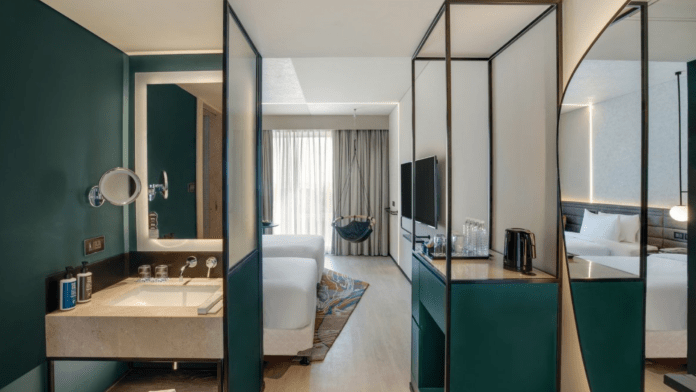
They’ve carefully designed a selection of modern, technologically advanced rooms to cater to the preferences and tastes of today’s contemporary travelers.
With their minimalistic design, sleek aesthetics, and subdued color palettes, these rooms offer an unparalleled experience for guests.
The deluxe rooms, starting at approximately 290 square feet, exude a lively and contemporary ambiance.
The premier suites encompass about 560 square feet. These suites feature a spacious bedroom with a king-sized bed, complemented by a separate living area for relaxation or entertainment.
The bathrooms are equipped with both bathtubs and rain shower facilities, ensuring a luxurious experience.
Novotel is established in over 60 countries, boasting a network of more than 530 establishments, and is affiliated with Accor, a global hospitality company that encompasses over 5,200 properties and 10,000 dining venues across 110 nations.
We use cookies to ensure that we give you the best experience on our website. If you continue to use this site we will assume that you are happy with it.