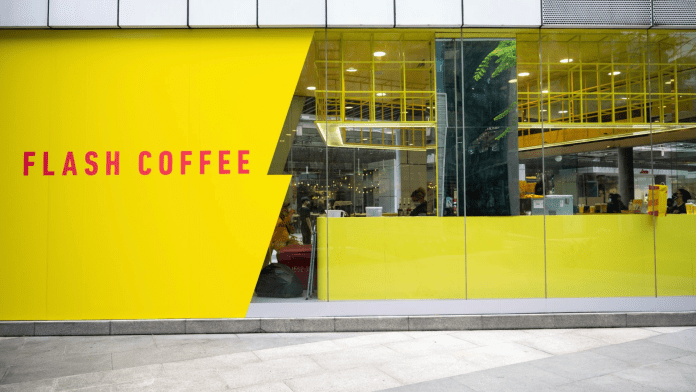
Flash Coffee is shutting down its last 11 branches in Singapore, following an announcement that the company cannot sustain its operations due to ‘liability-related reasons’.
Established in 2020, Flash Coffee is a tech-enabled coffee chain appealing to tech-savvy young professionals in search of their daily coffee fix.
According to reports, Flash Coffee has accumulated debts exceeding $10.2 million, owed to over 150 creditors. Additionally, video footage circulating in the media depicts one of the company’s branches closed with a sign attributing the closure to a staff strike resulting from delayed salary payments.
At the same time, a company representative refuted any claims of a strike among the Singaporean staff.
The company stated its intention to concentrate on its operations in Hong Kong, reassuring that its recent operational adjustments will have no impact on its standing in the city.
As per a report in the Singapore-based Business Times, Flash Coffee is allegedly indebted to more than 150 creditors, with a sum exceeding S$14 million (equivalent to $10.2 million). The newspaper also noted that the coffee chain has not disbursed the most recent monthly salaries to its staff in Singapore.
In the past few months, the coffee chain with a tech focus has either temporarily or permanently shuttered several of its outlets throughout the city-state. On October 11, 2023, the company submitted a notice to local regulators, indicating its inability to sustain operations due to its liabilities.
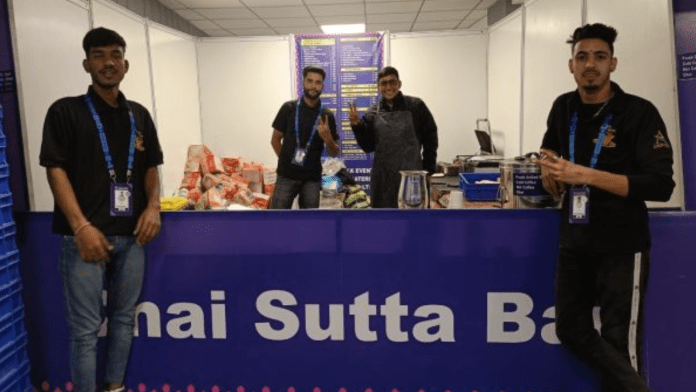
Chai Sutta Bar is making a bold move by opening five new kiosks at the HPCA Stadium in Dharmshala, the venue for the ICC World Cup 2023 matches. This strategic expansion aims to leverage the buzz and fervor surrounding the World Cup event.
According to a company statement released on Wednesday, these kiosks will be in operation during the upcoming five matches, providing a variety of beverages such as tea, cold coffee, and sandwiches.
“Our journey has always been about love for chai. We’re honoured to extend our warm and inviting atmosphere to Dharamshala’s cricket-loving community,” said Anand Nayak, Co-Founder, Chai Sutta Bar.
Established in 2016, Chai Sutta Bar sets itself apart by serving tea in authentic kulhad cups.
With a daily production of approximately 450,000 kulhad teas and a turnover of roughly INR 150 crore, Chai Sutta Bar has a notable presence in over 300 cities across India, contributing to sustainable employment for nearly 500 potter families.
Arya.ag, India’s foremost and singularly successful grain commerce platform, has introduced blockchain-based agricultural loans. Through its financial technology subsidiary, Aryadhan, warehouse receipt loans will now be executed on their blockchain, ensuring users the utmost confidence and transparency in the process.
Arya.ag has digitized the commodities stored within its warehouses, allowing the platform to now facilitate disbursements on the blockchain.
“Trust and transparency are key values for us at Arya.ag. Porting all disbursements on the blockchain while making payments in under five minutes will mark a significant leap in the efficiency of agri-lending services. The blockchain will ensure unprecedented visibility and assurance to control all physical risks in commodity storage and finance,” said Prasanna Rao, CEO of Arya.ag.
In collaboration with 35 financial institutions, encompassing banks and NBFCs, Arya.ag has established itself as a significant player, overseeing 7.6 million tonnes of commodities and boasting an AUM of 3 billion USD in the previous fiscal year.
“We look at collaborating with other lenders to move commodity-based warehouse-receipt financing onto the blockchain and improve the overall transparency, speed, and reliability of these transactions,” said Rao.
Within the realm of agricultural lending, a central challenge is to instill trust between lenders and borrowers. Arya.ag addresses this issue by leveraging blockchain technology. Arya.ag serves as the reliable custodian for every generated token, preventing duplication of pledges and ownership disputes. When a pledge is made, a smart contract is activated, enabling banks to assign a unique identifier to the token lien. This process ensures the uniqueness of each pledge while affording banks a consolidated overview of all pledged commodities.
Transitioning the lending process to a blockchain offers the dual benefits of accelerating transactions and substantially elevating security and trust among all involved parties. The decentralized characteristics of blockchain guarantee unchangeable record-keeping, rendering data both transparent and exceptionally secure, virtually immune to tampering. This, in turn, results in a notable reduction in fraud and errors. Furthermore, such a transition would establish standardized procedures and documentation, thereby streamlining interactions among diverse stakeholders in the commodity trading and financing sectors.
Arya.ag joined forces with Newrl, a decentralized trust network blockchain, to create this infrastructure. As of now, Arya.ag’s ledger hosts 3.2 million metric tons of commodities spread across 894 warehouses within the blockchain network. Through this endeavor, Arya.ag is forging a realm of swifter and more secure transactions, benefiting not only large enterprises but also, significantly, smallholder farmers. This technology levels the economic landscape, granting them expedited and fortified access to the financial resources necessary for their prosperity.
On Wednesday, the Center announced that the second edition of World Food India, scheduled for November 3-5 in the national capital, is expected to draw an investment exceeding INR 75,000 crore in the food processing sector. The first edition took place in 2017, but consecutive editions had to be canceled in the following years due to the COVID-19 pandemic.
“We have requested Prime Minister (Narendra Modi) to inaugurate World Food India (WFI) 2023 to be held at Pragati Maidan here. For the valedictory function, the President of India will be present,” Minister of State for Food Processing Industries Prahlad Singh Patel said.
India’s food processing sector presents numerous investment opportunities. Notably, certain companies have already expressed their intent to make investment commitments, which will be formally announced during World Food India 2023, he noted.
The minister said, “China has not been invited for the event due to strategic reasons.”
The event is expected to witness the participation of approximately 16 countries, 23 state governments, 11 Union ministries, and central bodies. It anticipates hosting 950 exhibitors and welcoming 75,000 visitors, he mentioned.
The Netherlands will serve as the partner country for World Food India 2023, with a special focus on Japan and Vietnam, he further added.
Additional Secretary in the Food Processing Industries Minhaj Alam, in his presentation, said about INR 642 crore indicated investment has been committed by Britannia, GreenGrahi, Foods and Inns Ltd, St Peter & Paul Sea Food Exports as well as US-based General Mills so far.
A verbal investment commitment has been received from Swiss-based Buhler Group, US-based Mondelez and Coca Cola and UAE-based Lulu Group, he said.
“We are expecting to cross INR 75,000 crore investment this time,” Alam told PTI on the sidelines of the press briefing.
Asked about the status of investment received in the first edition of the World Food India, the official said, “We had received a commitment for an investment of INR 75,000 crore, out of which INR 23,000 crore has come.”
The investments were expected to fructify in three years. Due to the pandemic, there was a delay, he added.
Sanoj Kumar Jha, Additional Secretary in the Food Processing Industries, was also present at the briefing.
The focus areas would be millets, unlocking the potential for growth, positioning India as the global hub, efficient ecosystem, and sustainable development.
The event will see 60 to 80 chefs making the world’s longest ‘Millet dosa’ of over 100 feet in attempt to set a Guinness Record.
Numerous legal actions have been initiated in federal courts throughout the United States and Canada, targeting subsidiaries of Dabur International Ltd. These lawsuits allege that the company’s hair-relaxer products are responsible for cases of ovarian and uterine cancer, as reported by CNBC-TV18.
Dabur International Ltd markets hair straightening and relaxing products under multiple brand names for over-the-counter purchase.
As per the CNBC-TV18 report, there are 5,400 cases involved in multidistrict litigation (MDL).
“Cases filed in the US and in Canada against 3 subsidiaries of Dabur,” the report claimed.
Nonetheless, the company anticipates that the expenses associated with defending the litigation will soon exceed the materiality threshold.
At present, the cases are in the initial stages of litigation, encompassing pleadings and early discovery.
“There are various motions pending as well. Since we are in the initial stage of litigation, any final quantum of claim amount is neither probable nor estimable,” it said.
Hair straighteners and relaxers are promoted with the aim of achieving smoother and more manageable hair. Class action lawsuits have asserted that these products contain endocrine-disrupting chemicals, which are known to raise the risk of developing health issues.
Other major corporations have also faced lawsuits, with consumers claiming the use of hazardous chemicals in their products. Additionally, these consumers have asserted that beauty companies were aware of the presence of these dangerous substances in their products but continued to market and sell them.
The Gurugram-based cosmetics brand Belora seems to be on the brink of closure, as it has struggled to secure additional funding or attract potential buyers. Two sources from Entrackr have indicated that the company may be forced to cease its operations.
“Belora tried to raise capital from new and existing investors including Surge but the efforts didn’t materialize,” said one of the sources requesting anonymity. “The company also explored consolidation opportunities in the cosmetic space and held discussions with several players.”
It has been reported by sources that the discussions regarding a potential merger and acquisition (M&A) also failed to culminate in an agreement, raising the likelihood of the company having to shut down its operations entirely.
The imminent shutdown is also evident from the company’s website, which has been non-functional for several weeks. A message on the site states, “The Site is getting upgraded, we will relaunch soon. Thank You.”
Established in 2019 by Ainara and Akaljyot Kaur, the company secured pre-Series A funding from Peak XV Partners’ Surge, DSG Ventures, and several angel investors. It was also a participant in the fifth cohort of the Surge accelerator program.
Surge chose not to provide a comment on the matter, and inquiries sent to Belora’s co-founder and CEO, Ainara Kaur, as well as DSG on Tuesday, remained unanswered.
Belora used to offer vegan and toxin-free makeup and skincare products, including lipsticks, moisturizers, kohl, and eyeshadows. According to the company, it focused on finding ingredients that follow international certifications and claimed to be the first certified makeup brand across Europe and Asia.
Last year, the company stated its presence in 100 stores-in-stores and outlined intentions to open another 100 in the following couple of months. CEO Kaur expressed the goal for Belora to become a INR 500 crore brand in terms of annual run rate over the next 3-4 years. The firm reported an annual revenue of INR 15 crore for the fiscal year 2022, and its FY23 figures are pending disclosure.
BanyanTree Growth Capital, a private equity fund that holds ownership of the food and beverage brand Nirula’s, has recently completed the acquisition of the confectionary chain ‘Angels in My Kitchen’ for an undisclosed amount.
The company opted not to disclose the financial specifics of the deal.
Commenting on the acquisition, Sumedha Singhal, director, Nirula’s and a member at BanyanTree Growth Capital said, “Nirula’s sells icecreams, pizzas, and burgers. Angels is a bakery and confectionery brand. They are both different genres of food. Additionally, Icecream is the bulk of Nirula’s business and is a Holi to Diwali business, while Angels, a confectionary brand, is a Diwali to Holi business. So, the seasonality evens out and complements each other well.”
Established in 2003 in Delhi by Bijoy Majhi and Bhupesh Kumar Jain, Angels currently operates 20 outlets throughout the Delhi-NCR region.
When inquiring about the founders’ role in the company after the acquisition, Singhal mentioned that the existing owners will remain integral to the organization.
Discussing their upcoming strategies, she revealed that the company intends to launch an additional 30 Angels stores by the end of the fiscal year. In addition to standalone locations, the private equity firm also envisions establishing co-branded stores featuring both Angels and Nirula’s. They have recently inaugurated the first co-branded outlet in M Block, GK-II, as well as in Qutub Plaza.
When discussing upcoming deals in the pipeline for BanyanTree Growth, Singhal emphasized that the fund is actively seeking opportunities in the SME sector and in tier 2 and tier 3 cities.
“BanyanTree typically gets excited by companies on a growth trajectory with positive cash flow that has been bootstrapped by the entrepreneur and they are the first outside investor,” she added.
When it comes to attracting investors, businesses need to speak the language of numbers and demonstrate their potential for growth. Investors scrutinize various aspects of a company’s operations, and one of the most critical areas of focus is sales that means that, for a businesses seeking investment, making a compelling case to potential investors is paramount.
To do so effectively, it’s crucial to not only have a great product or service but also to present robust and convincing sales metrics. Investors are keen on scrutinizing key sales indicators to gauge the potential for return on their investment.
That is why we are here with some of the key sales indicators, which are closely observed by the investors before they decide to invest into a particular business:
1. Revenue Growth
The growth of a company’s revenue over time is perhaps the most crucial indicator for investors. It’s a clear measure of the company’s ability to generate income and scale its operations. Investors want to see consistent and ideally accelerating revenue growth. If a company is experiencing a plateau or decline in revenue, it can be a red flag.
2. Customer Acquisition Cost (CAC) and Customer Lifetime Value (CLV)
Investors analyze the efficiency of a company’s sales and marketing efforts by examining the Customer Acquisition Cost (CAC) and the Customer Lifetime Value (CLV). A low CAC in relation to a high CLV is a positive sign, indicating that the company can acquire and retain customers profitably. High CAC and low CLV, on the other hand, suggest inefficiency.
3. Sales Funnel Efficiency
Understanding how leads progress through the sales funnel is crucial. Investors often want to see a well-optimized sales funnel that efficiently converts leads into paying customers. This involves measuring conversion rates at each stage of the sales process, from initial contact to closing the deal.
4. Gross Margin and Profitability
Investors are keen to know about a company’s gross margin and profitability. A healthy gross margin indicates that a company can cover its costs and generate profits. Sustainable profitability, either current or projected, is a key factor that investors consider.
5. Churn Rate
Churn rate, typically associated with subscription-based businesses, is the rate at which customers cancel their subscriptions or stop doing business with a company. A high churn rate can erode revenue and profits, making it an important metric for investors, especially in industries where customer retention is critical.
6. Sales Forecast Accuracy
Investors appreciate companies that can accurately forecast their sales. Consistently meeting or exceeding sales forecasts demonstrates good visibility and control over the company’s revenue streams. It builds investor confidence and helps with long-term planning.
7. Repeat Business and Customer Retention
Repeat business and customer retention rates are indicators of a company’s ability to build a loyal customer base. Investors seek businesses that can sustain long-term customer relationships and secure a steady stream of recurring revenue.
8. Market Penetration and Growth Potential
Investors look for signs that a company has not only established a presence in its market but also has the potential for growth. This can include analysis of market share, the total addressable market, and any expansion plans or strategies.
9. Sales Team Efficiency
Investors assess the efficiency of a company’s sales team by examining metrics like the sales cycle length, deal close rates, and the ratio of salespeople to revenue generated. A well-optimized sales team is seen as an asset.
10. Competitive Positioning
Understanding a company’s competitive positioning is essential for investors. This involves analyzing the company’s pricing strategy, differentiation, and market share in comparison to competitors.
The sales metrics that investors scrutinize are indicative of a company’s past performance and future potential. A strong focus on revenue growth, efficiency in customer acquisition and retention, profitability, and a well-structured sales process can make a business more appealing to investors. As businesses seek investment, being well-prepared with a comprehensive understanding of these metrics can be the key to securing the necessary funds for growth and expansion.
Understanding and assessing performance is a delicate skill in the fast-paced world of sales. Sales teams are the backbone of any successful firm, and accurately assessing their performance is critical for continuous progress and growth and that is why we are here with some of the ways via which you can learn the techniques and strategies that enable businesses to measure sales performance effectively, offering insights on how to fine-tune your approach and boost results.
A fundamental step in measuring sales performance is setting clear and relevant Key Performance Indicators (KPIs). These KPIs serve as the compass for your sales team, guiding their efforts and helping you evaluate their performance. KPIs can encompass various aspects of sales, including conversion rates, revenue generated, customer acquisition cost, and sales cycle length.
2. Regular and In-Depth Performance Reviews
Consistent performance reviews are essential to understand how your sales team is doing over time. Regular check-ins provide opportunities to offer constructive feedback, identify areas of improvement, and acknowledge successes. These reviews should be comprehensive, encompassing both quantitative metrics and qualitative assessments of the sales process.
3. Tracking Sales Funnel Progression
The sales funnel is a valuable tool for gauging the journey of a lead from initial contact to final purchase. By tracking this progression, you can pinpoint where leads tend to drop off and identify bottlenecks in the sales process. Understanding the sales funnel helps you optimize conversion rates and shorten sales cycles.
4. Conversion Rate Analysis
Conversion rates are a fundamental metric for assessing the effectiveness of your sales efforts. By analyzing conversion rates at different stages of the sales process, you can pinpoint areas where your team excels and areas where they may need more support or training. The goal is to optimize conversion rates at every stage to maximize results.
5. Sales Velocity Assessment
Sales velocity is a metric that combines the volume of sales opportunities, conversion rates, and deal sizes to measure the speed at which your team closes deals. A high sales velocity indicates efficient sales processes, while a low velocity might signal bottlenecks that need attention.
6. Sales Forecasting
Sales forecasting is an essential part of assessing sales performance. By predicting future sales based on historical data and current trends, you can set realistic targets and measure your team’s ability to meet them. Accurate sales forecasting is critical for resource allocation and long-term business planning.
7. Customer Feedback and Satisfaction
Satisfied customers are more likely to become repeat buyers and brand advocates. Measuring customer satisfaction through surveys, feedback, and post-purchase reviews is a crucial aspect of sales performance assessment. A happy and loyal customer base is a testament to your sales team’s effectiveness.
8. Training and Development
Regular training and development opportunities are key to maintaining a high-performing sales team. Investing in ongoing education, coaching, and skills development can significantly improve sales performance. Assessing the impact of training initiatives can help refine your team’s capabilities.
9. Peer Benchmarking
Comparing your sales team’s performance to industry benchmarks and competitors can provide valuable insights. Benchmarking helps you understand where your team stands relative to the market and identifies areas where you can outperform or areas that need improvement.
10. Adaptability and Innovation
Finally, successful sales performance assessment should include a focus on adaptability and innovation. The sales landscape evolves rapidly, and staying ahead of the curve is essential. Encourage your sales team to embrace new technologies, strategies, and best practices to drive continual improvement.
The art of measuring sales performance with precision requires a multifaceted approach that blends quantitative metrics with qualitative assessments. By setting clear KPIs, tracking sales funnel progression, analyzing conversion rates, and investing in training and development, you can continually fine-tune your sales team’s performance and drive success in the ever-evolving world of sales. Effective performance assessment is not just about evaluation; it’s about creating a culture of improvement and a path to sustained growth.
Staying ahead of the curve and capitalising on emerging market trends can mean the difference between thriving and stagnating in the fast-paced world of business. Forward-thinking brands understand the importance of constantly evolving and adapting to shifting consumer tastes, technological advances, and global upheavals.
1. Sustainable and Eco-Friendly Practices
One of the most significant market trends today is the growing emphasis on sustainability and eco-friendliness. Consumers are increasingly conscious of the environmental impact of their purchases. Brands that incorporate sustainable practices, such as using renewable materials, reducing waste, and minimizing their carbon footprint, not only help the planet but also attract eco-conscious customers.
Take, for example, the rise of eco-friendly packaging and the elimination of single-use plastics. Companies that lead the charge in adopting sustainable practices are not only reducing costs but also strengthening their brand image and attracting a loyal customer base.
2. E-Commerce and Online Shopping
The internet has transformed the way people shop, and this trend is continually gaining momentum. As e-commerce continues to grow, brands that embrace online sales channels and invest in user-friendly, secure, and efficient online shopping experiences are better positioned for success. In the wake of the COVID-19 pandemic, many traditional brick-and-mortar stores shifted their focus to online sales, showcasing the importance of adaptability.
3. Personalization and Customer Experience
Consumers today expect more than just products or services; they want tailored experiences. Brands that leverage data analytics, artificial intelligence, and customer insights to offer personalized recommendations, customized products, and exceptional customer service can build a strong competitive advantage.
By understanding their customers’ preferences, brands can create unique and memorable experiences that foster brand loyalty and encourage repeat business.
4. Health and Wellness
The health and wellness trend is not limited to fitness and nutrition; it extends to various industries. Brands that offer products and services promoting physical and mental well-being are seeing substantial growth. Whether it’s the rise of organic foods, mindfulness apps, or fitness wearables, businesses that cater to the health-conscious consumer are poised for success.
5. Technological Advancements and Innovation
Rapid technological advancements are reshaping industries across the board. Brands that invest in emerging technologies such as artificial intelligence, augmented reality, blockchain, and the Internet of Things are setting themselves up for innovation-driven growth.
For instance, companies that utilize AI for data analysis and customer interaction can streamline their operations and offer more personalized services. Brands in the retail sector are also adopting AR for virtual try-ons, enhancing the shopping experience.
6. Remote Work and Flexibility
The COVID-19 pandemic catalyzed a remote work revolution, with companies realizing the potential for flexible work arrangements. Forward-thinking brands are embracing this trend, not only in their internal operations but in their products and services as well. Companies offering remote work solutions, digital collaboration tools, and virtual team-building experiences are in high demand.
Market trends play a pivotal role in shaping the business landscape. For forward-thinking brands, these trends represent opportunities for growth and innovation. By embracing sustainability, adapting to e-commerce, prioritizing personalization, focusing on health and wellness, leveraging technology, and capitalizing on remote work, brands can unlock the potential for substantial growth and position themselves as leaders in their respective industries. The key is to stay open to change, actively seek out emerging trends, and continuously evolve to meet the evolving demands of today’s dynamic market.
We use cookies to ensure that we give you the best experience on our website. If you continue to use this site we will assume that you are happy with it.