In an effort to draw in more customers amidst increasing competition in China, Starbucks, the prominent American coffee chain, has introduced a new, smaller cup size, targeting its second-largest market.
Launched on Tuesday across its network of 6,500 stores, the 259ml cup is a key addition to Starbucks’ recently unveiled “Intenso Collection.” This cup allows for a higher espresso-to-milk or cream ratio, intensifying the flavor compared to the larger cup sizes. It’s available for 33 yuan ($4.51).
It is approximately one-third smaller than the 355ml “tall” cup, which begins at a base price of 30 yuan, yet larger than the company’s most compact “short” size, which holds 236 ml.
According to Ben Cavender, who serves as the Managing Director and leads the strategy division at China Market Research Group, Starbucks’ latest product launch is a strategic move aimed at consistently providing “innovative options” in the market, specifically targeting dedicated coffee enthusiasts.
“These probably won’t appeal to everyone but are a relatively easy line extension to implement,” he said.
This development coincides with Starbucks’ domestic competitors, like Luckin Coffee and Manner Coffee, which is backed by ByteDance, aggressively expanding and swiftly introducing new products.
These brands have garnered considerable consumer attention through partnerships, including Manner Coffee’s collaboration with the renowned French luxury brand Louis Vuitton and Luckin’s introduction of a liquor-infused latte in conjunction with China’s Kweichow Moutai. An insider familiar with the situation revealed that Starbucks’ novel cup size, a debut in China, is presently exclusive to mainland China, with its availability abroad contingent upon customer feedback.
Back in August, Starbucks reported a notable resurgence in China, as the easing of COVID restrictions led to increased demand in the catering and tourism sectors. The company has set a target of expanding its store count in the country to 9,000 by the year 2025.
The Cabinet Committee of Economic Affairs on Wednesday approved the increase of up to 9 per cent in the Minimum Support Prices (MSP) for all mandated Rabi crops for marketing season 2024-25.
The maximum MSP raise has been granted for lentil (masur) at INR 425 per quintal, with rapeseed and mustard receiving an increase of INR 200 per quintal.
An increase of INR 150 per quintal has been sanctioned for both wheat and safflower.
Barley will see an increase of INR 115 per quintal, while gram will receive an approved raise of INR 105 per quintal.
The MSP hike for the prescribed Rabi crops for the marketing season 2024-25 aligns with the commitment made in the Union Budget of 2018-19, which aimed to set the MSP at a minimum of 1.5 times the All-India weighted average cost of production.
The anticipated margin over the All-India weighted average cost of production stands at 102 percent for wheat, followed by 98 percent for rapeseed & mustard, 89 percent for lentil, 60 percent for gram, 60 percent for barley, and 52 percent for safflower.
The heightened MSP for Rabi crops will guarantee profitable returns to farmers and encourage the diversification of crops.
According to the latest data released by the Ministry of Agriculture and Farmers Welfare, India has achieved a remarkable record in foodgrain production for the 2022-23 season. The total foodgrain production is estimated to be 3296.87 lakh tonnes, marking a significant increase of 140.71 lakh tonnes compared to the 3156.16 lakh tonnes produced during the previous year (2021-22).
In the 2022-23 season, foodgrain production has exceeded the five-year average (2017-18 to 2021-22) by an impressive 308.69 lakh tonnes.
The rice production for the 2022-23 season is projected to reach an all-time high of 1357.55 lakh tonnes, which is 62.84 lakh tonnes more than the 1294.71 lakh tonnes produced in the previous year.
The wheat production for the 2022-23 season is anticipated to reach a historic high of 1105.54 lakh tonnes, representing an increase of 28.12 lakh tonnes compared to the previous year’s wheat production of 1077.42 lakh tonnes.
The production of Nutri/Coarse Cereals is projected to be 573.19 lakh tonnes for the 2022-23 season, showing a notable increase of 62.18 lakh tonnes compared to the 511.01 lakh tonnes produced in the previous year (2021-22).
The total production of pulses for the 2022-23 season is expected to be 260.58 lakh tonnes, reflecting an increase of 14.02 lakh tonnes compared to the average pulses production of 246.56 lakh tonnes over the last five years.
Total Oilseeds production in the country during 2022-23 is estimated at record 413.55 Lakh tonnes which is higher by 33.92 Lakh tonnes than the oilseed production during 2021-22.
Total production of Sugarcane in the country during 2022-23 is estimated at 4905.33 Lakh tonnes. The production of sugarcane during 2022-23 is higher by 511.08 Lakh tonnes than the previous year sugarcane production of 4394.25 Lakh tonnes.
Production of Cotton is estimated at 336.60 Lakh bales (of 170 kg each) which is higher by 25.42 Lakh bales than the previous year’s cotton production.
Production of Jute & Mesta is estimated at 93.92 Lakh bales (of 180 kg each).
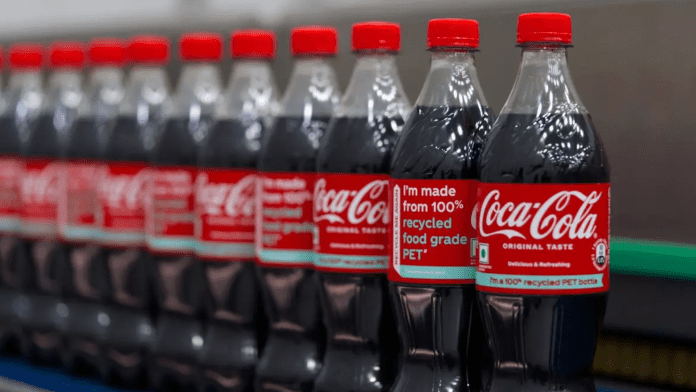
SLMG Beverages, a prominent member of the Ladhani Group and an authorized franchise bottler for Coca-Cola in India, unveiled a groundbreaking initiative on Wednesday by introducing 100% recycled PET bottles for the renowned cola brand.
In a statement, the company emphasized that this strategic leap not only underscores SLMG’s commitment to environmental responsibility but also marks a significant turning point in the beverage industry’s trajectory within India.
“By significantly limiting its consumption of virgin PET, SLMG Beverages is reducing its carbon footprint, seamlessly aligning with the Indian government’s ambitious target of 25 per cent recycled resin by April 2025 PET,” it said.
The company stated that it provides 90% of Coca-Cola bottles in Uttar Pradesh, a complete 100% supply in Uttarakhand, and also maintains a presence in Bihar and Madhya Pradesh. In Uttar Pradesh, it operates seven plants with a daily production capacity of 41 crore bottles.
The company serves over 300 million individuals through a network of 1.5 million outlets and a distribution system comprising more than 1,500 distributors, extending to rural areas. It has achieved remarkable success with its bottling franchises across all four states, encompassing the entire northern region of India.
“The introduction of Coca-Cola bottles made from 100 per cent recycled food-grade PET is a remarkable milestone in the beverage industry that underscores SLMG Beverages’ resolute commitment to environmental stewardship,” said S N Ladhani, Chairman and Managing Director of SLMG Beverages.
The recycled PET bottles will be available in 250 ml and 750 ml pack sizes and invite consumers to actively participate in this environmentally conscious initiative.
Made from 100 per cent food-grade PET (excluding caps and labels), the bottles feature the “Recycle Me Again” prompt, which can be read on the packaging.
Ladhani said, “When Coca Cola re-entered the Indian market, we produced the first Coca-Cola bottle in India then and are now proud to be the first bottler in India to launch the Coca-Cola brand in 100 per cent recyclable PET bottles.” Vivek Ladhani, the executive director at SLMG Beverages, said PET plastic bottles have value beyond their first life. “Recycled PET is a big step in the right direction towards making the circular economy for plastic a reality in India,” he said.
SLMG Beverages officials earlier this week met with UP government’s chief secretary Durga Shankar Mishra in Lucknow.
“We encourage all food industries in the state of Uttar Pradesh that use plastics to use proven and approved technologies so that the plastic can be recycled and reused for direct food packaging to help reduce PET bottle littering,” the top UP bureaucrat said.
SLMG Beverages recently announced that it aims to achieve a turnover of Rs 10,000 million by 2025, and plans to open two new plants this year and triple its capacity by 2030, to meet the growing demand for beverages in India.
SLMG Beverages has been associated with Coca-Cola for more than 30 years, according to the statement.
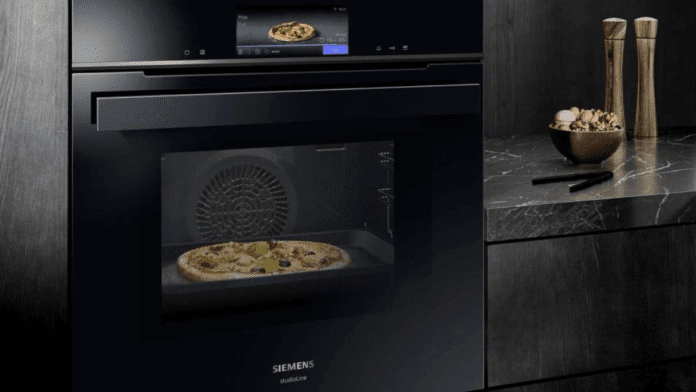
BSH Home Appliances, a subsidiary of the globally renowned BSH Hausgeräte GmbH in the home appliance industry, is thrilled to announce the debut of the iQ700 series of built-in ovens under the Siemens brand in the Indian market. This innovative range is a game-changer for Siemens, featuring a pioneering integrated camera that is set to revolutionize the culinary journey for households in India. With a host of advanced capabilities and a stylish design, the iQ700 ovens are poised to establish fresh benchmarks for smart cooking in India, rendering them the perfect selection for both cooking enthusiasts and those new to the art.
These contemporary and high-performing ovens come in the standard 60 x 60 cm size, ensuring they cater to a range of consumer choices. Inside the oven, two energy-efficient LED lights ensure perfect illumination, granting a transparent view of the cooking process, all without the necessity to open the oven door. Additionally, the Home Connect feature empowers users to manage oven programs through Voice Control, their smartphone, tablet, or a touch display using the Home Connect App.
Saif Khan, MD and CEO, BSH Home Appliances India said, “We are truly excited to introduce the Siemens iQ700 ovens in India which pave the way for the future of cooking with an array of industry-first features. For over a century, Siemens has been synonymous with innovation, quality, and precision in the world of home appliances. With the iQ700 range, we are not only continuing this rich tradition but also redefining it for the digital age. With this latest addition, we invite you to embark on a journey that combines the trusted heritage of Siemens appliances with the limitless possibilities of the future. At BSH Home Appliances, we are committed to enhancing your everyday life, and the Siemens iQ700 ovens are a shining example of that commitment. We ensure that with this new range, the kitchen takes care of the cooking and our customers can take care of their friends and family!”
The integration of a camera within the Siemens iQ700 ovens heralds a new era of convenience in Indian kitchens. It empowers users to remotely monitor the cooking process via a smartphone app or other connected devices. This functionality proves exceptionally valuable for overseeing food preparation from different areas of the home or even when away from it. The camera delivers a clear view of the culinary creation, ensuring precise control over browning levels—making it a perfect choice for dishes requiring meticulous timing and browning, such as roasts or baked goods. Additionally, this camera capability holds appeal for food bloggers and professional chefs, as it enables them to craft time-lapse videos of the cooking journey. Furthermore, the camera streamlines the process of remote diagnostics for technical support, thereby reducing the necessity for in-person service calls.
The Home Connect App notifies users when the dish has reached perfection and autonomously shuts off the oven, ensuring a seamlessly delightful cooking experience. These ovens are further equipped with state-of-the-art technologies, including cookControl Pro, bakingSensor Plus, and roastinSensor Plus, elevating the satisfaction of baking and roasting to unprecedented levels.
In the ever-evolving realm of India’s retail beauty industry, Organic Harvest, the leading certified organic beauty brand in the nation, has taken a bold step into the domain of color cosmetics. With the launch of their latest makeup collection, Organic Harvest presents a carefully crafted range of beauty solutions, all proudly showcasing certified organic components. The brand continues to uphold its steadfast dedication to delivering formulations free from toxins and cruelty, ushering in a novel perspective on makeup that places a premium on skin health and environmental welfare. This seamlessly harmonizes with the surging desire for eco-conscious and secure beauty alternatives.
Acknowledging the mounting apprehensions of conscientious consumers regarding the adverse impacts of chemical-laden beauty merchandise, Organic Harvest has introduced a line of cosmetics that are clean, sustainable, and geared towards delivering tangible results, effectively reshaping the traditional beauty paradigm. These offerings are meticulously crafted with a focus on preserving skin health, all while maintaining their performance standards. Backed by an engaging digital video campaign featuring the acclaimed actor and Brand Ambassador Nimrat Kaur, Organic Harvest is at the vanguard of a beauty industry revolution, seamlessly fusing premium natural ingredients with state-of-the-art beauty technology. This milestone represents a significant stride towards a fresh and ethical outlook on makeup.
Sukhleen Aneja, CEO of Good Brands Co said, “The launch of Organic Harvest’s inaugural makeup range signifies our commitment to clean, ethical, and sustainable beauty. We aim to empower individuals to embrace their natural beauty while making conscious choices for our planet. Beauty, in our belief, should be as pure as nature itself, and this makeup range encapsulates that ethos. It’s about looking good while feeling good, and that’s what Organic Harvest represents. We are thrilled to add this exciting range to our portfolio and share it with our customers.”
Rahul Aggarwal, Founder of Organic Harvest added, “We are delighted to introduce Organic Harvest’s first-ever makeup range, expanding our dedication to clean and organic beauty. Our journey has always been about redefining beauty with a conscience, and now our customers can enjoy cosmetics that not only enhance their appearance but also promote skin health. We are excited to introduce this line, and we firmly believe it will revolutionize how people perceive organic beauty.”
Nimrat Kaur, Actor and Brand Ambassador for Organic Harvest said, “Having been associated with Organic Harvest for some time now, the makeup range represents an exciting and positive step toward a more sustainable future in the beauty industry. I’m absolutely delighted to be part of the digital video campaign and witness the launch of their first-ever makeup range, a collection beautifully blended from organic goodness with cutting-edge cosmetics. With Organic Harvest’s products, consumers can not only enhance their beauty but also contribute to a greater good, thereby shaping a future where conscious beauty decisions are the norm.”
Organic Harvest’s latest makeup line is meticulously crafted to elevate and nourish the innate beauty of the skin. This collection comprises six unique product categories, featuring 12 shades of Matte Lipstick, 8 shades of Matte Liquid Lipstick, 3 shades of BB Cream, 3 shades of Matte Compact, as well as Kohl and Liquid Eyeliner. These offerings are thoughtfully designed to cater to the varied preferences of today’s discerning consumers.
INNISFREE India, celebrated for its skincare products inspired by the beauty of nature, commemorated its 10th Anniversary with festive events in Delhi and Mumbai. During these special occasions, the brand unveiled its revitalized image and introduced the highly anticipated INNISFREE Vitamin C Green Tea Enzyme Brightening Serum.
The beloved Korean beauty brand, INNISFREE, has unveiled an enchanting transformation, encapsulated by the tagline “Clean Island, where clean nature and healthy beauty coexist harmoniously.” This fresh concept beautifully embodies what has made INNISFREE a global favorite among beauty enthusiasts, bringing them closer to embracing the pure beauty of nature. The rebranding effort includes a rejuvenated visual identity, an enhanced website, and the long-awaited introduction of exciting new products.
In celebration of this significant milestone, INNISFREE organized a captivating evening at HOME in Delhi. The event included an exclusive masterclass conducted by Ishan Sardesai, a renowned aesthetic surgeon and the founder of The Face Centre. During the session, he imparted invaluable knowledge about the advantages of Vitamin C Serum and how it serves as a comprehensive solution for nurturing and maintaining radiant skin.
The evening was graced by esteemed guests from New Delhi, who enjoyed delectable hors d’oeuvres and beverages courtesy of Samsara Gin and Jimmy’s Cocktail. INNISFREE also introduced its exclusive collaboration with Frozen Fun Gelato, presenting a limited edition Green Tea Matcha flavored gelato. The event included a delightful floral station by Fresh Flowers, where guests could create their own bouquets. To ensure lasting memories of the INNISFREE event, instant photographs were distributed to the attendees.
In Mumbai, the festivities unfolded at The TIRA Beauty Store located in Jio World Drive, BKC. Ayesha Kanga, celebrated for her vibrant persona, graced the event to share her insights into her collaboration with the brand. Eminent personalities from the industry added to the event’s allure. INNISFREE collaborated with The Flower Shop Bloom and Hola Candle for interactive activities, allowing guests to craft their own bouquets and customize their candles.
Mini Sood Banerjee, Assistant Director and Head of Marketing at AmorePacific India mentioned, “INNISFREE has come a long way, with a celebrated 10 years success in India, the brand has truly been loved and supported by you all. We’re very proud to unveil the fresh new identity, with our new launch THE VITAMIN C GREEN TEA BRIGHTENING ENZYME SERUM. We hope to celebrate another decade of INNISFREE with our brand friends and customers.”
India’s culinary landscape is undergoing a remarkable transformation, thanks to the pioneering efforts of Bajo Foods. With a bold mission to positively impact the health of 100 million Indians, Bajo Foods has set a new standard in the realm of nutrition and taste. Their unique approach centers on the creation of scientifically validated, low-carb products that stay true to the authentic flavors and textures of traditional Indian cuisine.
In a mere two years, Bajo Foods has surged to the forefront of the Keto and Ultra Low Carb food sector, establishing itself as the leading brand. Their remarkable journey is evidenced by top ratings and widespread listings on prominent e-commerce platforms, reflecting their ever-upward trajectory. Fuelled by a significant $2 million in funding, the company is set to achieve its goals of a remarkable 3.5-fold growth within 24 months of the funding; with a strategic emphasis on expanding into Offline Retail, forging B2B partnerships, and serving the healthcare sector, including hospitals.
Recently, in an exclusive interview with Snackfax, Bajo Foods’ visionary Founder, Sudarshan Gangrade, offered insights into the company’s extraordinary success story and the journey that has brought them to their current enviable position. Here are the key highlights from that insightful conversation:
SnackFax: What is the core philosophy of ‘Bajo’ as a brand?
Sudarshan Gangrade: The term ‘Baho’ translates to ‘low’ in Spanish, and this concept forms the core philosophy of Bajo Foods. Our mission is to provide Low Carb Food options enhanced with Protein, Fibre and Good Fats. As a brand, we are driven by the ambition to create healthy, delicious food that can help people combat issues like obesity, diabetes, and heart problems.
One of our prominent sub-brands, ‘Lo Foods,’ embodies our vision of promoting weight loss. As the tagline of this brand suggests, through ‘Lo,’ we genuinely offer low-carb delights to our customers.
When it comes to food choices in India, they primarily revolve around five main ingredients: atta, maida, besan, rice flour, and urad dal. We recognize that three out of these five ingredients are exceedingly high in carbohydrates, while the other two contain moderate levels of carbs. Consequently, India faces various carbohydrate-related health issues. This challenge motivated us to develop a product line that eliminates these concerns. We dedicated significant time and effort to select a niche that caters to the preferences of keto enthusiasts, which has propelled us to be recognized as an Amazon top choice amidst the multitude of products available.
Snackfax: Could you elaborate on your approach to handling the 100 million market index?
Sudarshan Gangrade: When dealing with a market as vast as 100 million, my approach is to segment it based on the latest official statistics released by the Indian government approximately three months ago. According to these statistics, out of India’s roughly 1.5 billion population, there are 105 million officially diagnosed diabetics. However, these numbers only represent the confirmed cases, and the actual number of diabetics may range between 130 to 140 million, which I am conservatively considering. This broadens the market scope to approximately 200 million.
Additionally, India has other health concerns, such as obesity, with 12% prevalence in men and 14% in women. There are also records indicating protein deficiency in 70% of the Indian population. Even if we consider the smallest overlapping segments, this collectively forms a market of around 100 million. Taking into account potential overlaps, the market could extend to over 250 million.
SnackFax: In the realm of food, flavor takes center stage, so how does your brand prioritize taste, and what is your perspective on this as the Founder?
Sudarshan Gangrade: As the Founder, I hold a strong emphasis on the taste and texture of food. Coming from Indore, one of India’s prominent culinary hubs, I have a good understanding of what appeals to a pan-Indian audience.
While many others ventured into the market with trendy products like cold-pressed oils, I chose to start with something more rooted: sev. I recognized that India’s unique strength lies in our steadfast habits, be it our tea preferences or our love for namkeen. This is why we take immense pride in our mixtures, and we’ve received exceptional customer ratings on platforms like Amazon, Flipkart. I firmly believe that achieving such acclaim is not possible without focusing on both taste and the health aspect of our food offerings.
Furthermore, Bajo Foods has not only innovated its product line but also its distribution methods. We are one of the few brands in India that operate both Cloud Kitchens and Packaged Foods. With a presence in over 20 kitchens across four major cities, we have become the largest Low Carb Cloud Kitchen Brand in India, with 17 kitchens. Our next milestone is to expand to 35 cloud kitchens within the next 12 months, targeting cities like Mumbai, Pune, Ahmedabad, and Chennai through the franchise model.
A Health Revolution
Bajo Foods is now poised to take their mission to the next level with an innovative line of Health Foods. This endeavor aims to reduce India’s carbohydrate consumption by a substantial 50 percent, addressing the critical issues of obesity, diabetes, and cardiac-related diseases. This marks a significant step in catering to a vast and underserved health segment, which is predicted to experience substantial growth in the coming years.
In their efforts to expand their outreach to potential customers through offline stores, Bajo Foods and their sub-brand Lo! Foods, DiabeSmart and ProteinChef are at the forefront of advancing health, safety, and innovation, contributing to a healthier and fitter India. Their unwavering commitment to health and safety, especially during challenging times, sets a notable benchmark for others to follow. Moreover, their innovative approach to low-carb foods is gradually transforming the Indian food landscape, one bite at a time.
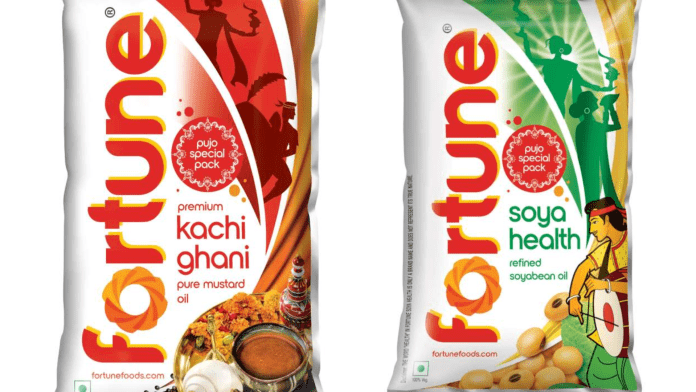
Adani Wilmar Limited (AWL), a leading FMCG company in India, is delighted to unveil exclusive packaging for Durga Puja in West Bengal for its popular oil brands, Fortune Kachi Ghani Mustard Oil and Fortune Soyabean Oil 1-Litre Pouches. By taking this step, the brand proudly takes the distinction of being the first in its category to recognize the cultural importance of the Durga Puja celebrations in the region.
As a brand deeply rooted in its identity as India’s preferred cooking oil, known for its unwavering purity at 100 percent, Fortune Kachi Ghani Mustard Oil and Fortune Soyabean Oil, enriched with Nutrilock action providing five essential nutrients, have consistently gained the trust of households throughout the country. They have become synonymous with home-cooked meals and overall well-being. Nevertheless, through the introduction of special Durga Puja packaging, the brand aims to elevate the festive experience for consumers, celebrating the culinary delights and indulgences that define the Pujo season and festivity. These specially crafted packages capture the festival’s essence, reflecting the spirit of joy and togetherness that defines it, much like the diverse array of culturally significant dishes prepared during this auspicious period.
The brand acknowledges that the essence of Bengal is deeply rooted in its wide range of flavors and traditional dishes that mirror the rich cultural tapestry of the region. Fortune Kachi Ghani Mustard Oil and Fortune Soyabean Oil, enriched with vital nutrients, not only guarantee a harmonious blend of health and taste but also elevate the dining experience by harmonizing with culturally significant delicacies from the area. These include iconic dishes like Beguni, Aloo Bhaja, Luchi Alur Dum, Aloo Posto, and Shukto, among others.
Mukesh Mishra, VP of Sales and Marketing at Adani Wilmar Limited, stated, “Durga Puja holds a special place in the hearts of every Bengali, and the new packaging reflects the essence so closely associated with the festivities. Adani Wilmar encourages consumers to immerse themselves in the spirit of Durga Puja and savor the delightful combination of their products with the essence of ‘Ghar Ka Khana Ghar ka Khana Hota Hai’ (There’s nothing like home-cooked food) during this auspicious period. Each dish, prepared with Fortune Mustard Oil and Fortune Soyabean Oil, will showcase the rich flavors of Bengal, adding a touch of nostalgia to the dining experience filled with delectable food and cherished traditions that flourish within every home.”
Adani Wilmar’s exclusive Fortune Kachi Ghani Mustard Oil and Fortune Soyabean Oil 1-Litre Pouches designed for Durga Puja can be found at retail stores throughout West Bengal. The brand extends a warm invitation to consumers to immerse themselves in the Pujo spirit by indulging in the delightful pairing of their trusted products, thus enhancing the culinary experience during this auspicious festival.
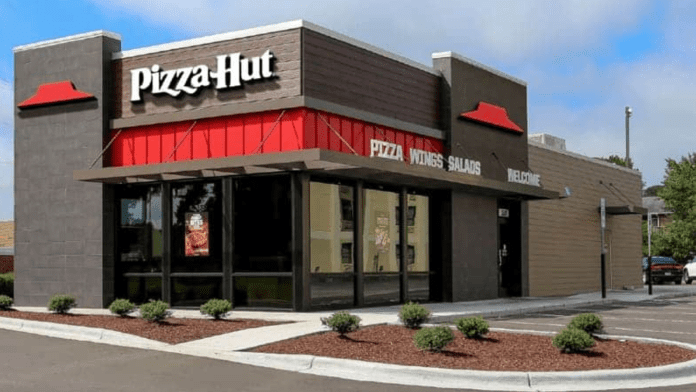
Pizza Hut has expanded its operating hours, now offering service until midnight or even later at numerous branches across the country. As per an official press release, some of their restaurants will remain open until 2 a.m.
“We saw a clear need from our guests to satisfy their cravings for Pizza Hut late at night. So, we decided to meet them where they are by keeping our doors open longer,” Chequan Lewis, COO of Pizza Hut U.S., said in the release. “We’re excited to provide our full menu for delivery or carryout well into the late hours, making it more convenient than ever to enjoy Pizza Hut, no matter the time. It’s all about enhancing the dining experience and ensuring that our guests can savor their favorite flavors whenever they please.”
Pizza Hut runs an extensive network of over 19,000 eateries spanning across 100+ countries.
We use cookies to ensure that we give you the best experience on our website. If you continue to use this site we will assume that you are happy with it.