Domino’s Pizza Enterprises Ltd has announced the official appointment of Kerri Hayman as Chief Operating Officer for Domino’s Australia and New Zealand today, in accordance with the prior announcement made in May 2023.
Hayman’s responsibilities will encompass the management of operations within nearly 900 Franchised and Corporate stores across the two markets, comprising a workforce of over 25,000 team members.
Domino’s appoints Kerri Hayman as “COO”!
Bringing 35 years of practical expertise to the table, Hayman’s most recent tenure involved owning and operating 14 Domino’s stores in South Carolina and Georgia, USA, where she successfully managed them for almost a decade.
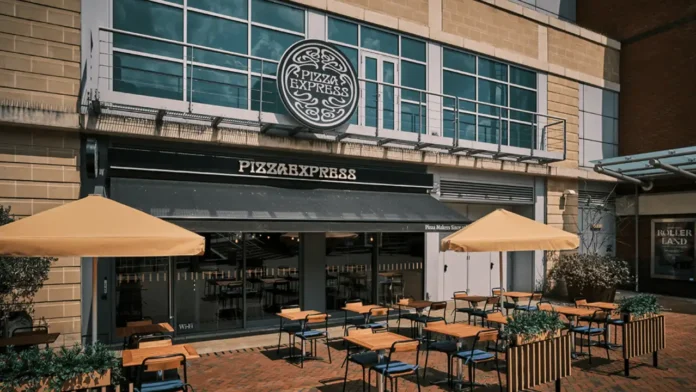
PizzaExpress has initiated its international franchise program in Canada as a key component of the brand’s broader strategy for global expansion, as highlighted by Chris Holmes, the Channel and International Director of PizzaExpress.
“Canada is an extremely attractive market for us, given its strong franchise and restaurant sectors, diverse and growing population and of course its love of great pizza,” Holmes said.
PizzaExpress Business Expansion:
The brand has collaborated with InnoFran, experts in franchise development, to identify potential master franchisees for either the entire country or specific regions, as part of its expansion strategy in Canada.
It has been delighting pizza lovers in the UK since its inception in 1965 within London’s Soho district and has expanded its presence to encompass over 450 establishments across 12 global markets.
Pret A Manger and their US franchisee, Dallas International, have joined forces in a collaborative venture aimed at introducing innovative store formats, including the addition of drive-thru locations within Pret’s US operations.
Within this collaboration, Dallas will assume operational leadership over approximately 50 Pret establishments situated in New York, Pennsylvania, and Washington, D.C. Furthermore, they will enjoy exclusive privileges for establishing new outlets within these regions. Dallas and Pret will collaborate on the creation and implementation of fresh dining concepts, including the incorporation of drive-thru options.
Pret A Manger and Dallas International Deal!
Dallas intends to unveil over ten additional Pret establishments along the East Coast by the year 2026.
“We have huge ambitions for Pret to become a more globally recognised brand that is working in partnership with our franchisees to unlock significant growth in new markets.
This approach has driven significant growth in Europe and Asia and enabled Pret to track ahead of its mid-term global growth target to double the size of the business by 2026. We look forward to replicating these results in the United States, building upon our already successful partnership with Dallas as we jointly pursue our next phase of growth,” Pano Christou, CEO of Pret A Manger said.
The joint endeavor expands upon the established rapport between Pret and Dallas, which encompasses distinct franchise partnership accords enabling Dallas to construct and manage various Pret establishments, spanning both the UK and over 40 locations within southern California.
IPO-bound D2C unicorn Mamaearth encountered a financial downturn in the fiscal year ending on March 31, 2023, mainly due to a one-time loss. This downturn resulted in its parent entity, Honasa Consumer Limited, reporting a net loss of INR 151 Crore for FY23, a stark contrast to the INR 14.4 Crore net profit registered in the preceding fiscal year.
Established in 2016 by the husband-and-wife team of Varun and Ghazal Alagh, Mamaearth had its origins in the sale of baby care items. Over time, it transformed into a comprehensive personal care brand. Presently, the company distributes its products to more than 500 cities across India.
Mamaearth’s Pre-IPO for Goodwill Impairment!
The company manages brands such as The Derma Co., Aqualogica, and Ayuga, and it has taken ownership stakes in BBlunt and Dr. Sheths, broadening its product lineup to bolster its revenue. This expansion is clearly mirrored in its increasing operating revenue.
In FY23, the startup disclosed an operating revenue of INR 1,492.7 Crore, marking a significant surge of 58% from the INR 943.4 Crore in the previous fiscal year. Mamaearth derives its revenue primarily from the sale of its products through both online and offline channels.
Mamaearth products (Representative Image)
Taking into account other sources of income, the overall revenue reached INR 1,515.3 Crore in FY23, marking a 57% rise from the INR 964.3 Crore reported in the preceding fiscal year.
In FY23, Mamaearth disclosed an extraordinary loss of INR 155 Crore, attributable to the impairment of goodwill and other intangible assets. Excluding this loss, the company would have posted a net profit of approximately INR 3.7 Crore for the fiscal year in question.
The direct-to-consumer (D2C) brand recorded a goodwill write-off of INR 136 Crore for Just4Kids Services Private Limited, which is the parent company of Momspresso.
According to Mamaearth’s draft red herring prospectus (DRHP), Momspresso had a net value (assets minus liabilities) of INR 16.2 Crore at the moment of its acquisition in December 2021. Nevertheless, Mamaearth acquired a controlling interest in Momspresso for INR 152.3 Crore and allocated INR 136 Crore for “goodwill generated from the acquisition.”
Mamaearth’s Overall Expenditure!
Similarly, Mamaearth’s overall expenditure experienced a 59% upswing, reaching INR 1,501.6 Crore in FY23, compared to INR 942 Crore in the preceding year, aligning with the growth in its operating revenue.
The D2C brand allocated INR 530 Crore to advertising, marking the highest expenditure in this category. This represented a 35% rise from INR 391.4 Crore in FY22. Advertising expenses constituted 35% of the total expenses.
In FY23, the startup invested INR 502 Crore in the acquisition of raw materials, reflecting a notable increase of 65% compared to the INR 304.7 Crore spent in the prior fiscal year.
In the fiscal year being assessed, Mamaearth disbursed INR 164.8 Crore for employee benefit expenses, showcasing a significant surge of 109% from the INR 78.8 Crore spent in FY22. According to LinkedIn, Mamaearth maintains a workforce of approximately 500 employees.
Mamaearth has secured a total of $111 million in funding across various funding rounds, with notable backers including Peak XV Partners, Sofina, Fireside Ventures, and Stellaris Venture Partners. The startup, previously valued at $1.2 billion, is currently preparing for its IPO, scheduled to commence on October 31, 2023.
The company is striving to generate roughly INR 1,700 Crore by means of a blend of a new share issuance and an offer-for-sale, with the aim of achieving an anticipated valuation of approximately INR 10,500 Crore.
In the skincare D2C space, Mamaearth competes with the likes of Wow Skin, Juicy Chemistry, Good Glamm, and Nykaa.
Remaining ahead of the curve is frequently essential to attaining and maintaining success in the fast-paced worlds of technology and business. Augmented reality, or AR, has become a game-changer for businesses, giving them new and creative ways to interact with clients, improve workflows, and spur expansion. This post goes over the ever-evolving field of augmented reality and go over how using innovative AR tactics might help your company succeed.
Augmented Reality blends the real world with computer-generated content, creating a hybrid experience that enhances our physical surroundings. Unlike Virtual Reality (VR), which immerses users in a completely digital environment, AR overlays digital elements onto the real world. It’s the technology behind popular apps like Pokémon GO and Snapchat’s filters, but its potential reaches far beyond mere entertainment.
Augmented Reality: A Game-Changer for Business
The application of AR in business is nothing short of revolutionary. Here are some ways in which AR is transforming industries:
Enhanced Customer Engagement: AR offers an interactive and immersive experience to customers, whether through virtual try-ons for fashion brands or product demonstrations for e-commerce companies. These experiences deepen customer engagement and boost conversion rates.
Augmented Sales and Marketing: AR can elevate your sales and marketing strategies. Interactive product demos, immersive ads, and augmented brochures can help businesses stand out in a crowded market.
Efficient Employee Training: In industries like manufacturing and healthcare, AR can be a valuable tool for training employees. It allows for hands-on, immersive learning experiences, improving knowledge retention and reducing training time.
Streamlined Operations: AR can assist in operations, offering real-time data overlays for field service workers or helping with remote equipment maintenance. This can result in reduced downtime and cost savings.
Innovative Augmented Reality Strategies for Business Success
Personalized Shopping Experiences: Implement AR to offer personalized and immersive shopping experiences. Whether it’s trying on clothes virtually or visualizing furniture in your living room, AR can enhance the way customers make purchase decisions.
Interactive Product Catalogs: Create interactive catalogs with AR that allow customers to view and interact with your products from the comfort of their homes. IKEA’s AR app, for example, lets users see how furniture would fit into their living spaces.
AR for Employee Training: Develop AR-based training programs for employees. For instance, medical professionals can practice surgeries in a virtual environment, while manufacturing workers can receive real-time guidance during complex assembly processes.
Remote Assistance: Utilize AR for remote support, connecting experts with field workers in real-time. This can reduce the need for on-site visits, saving time and resources.
AR Games and Challenges: Create engaging AR-based games and challenges that incorporate your brand or products. Gamification can increase brand awareness and foster customer loyalty.
Case Study: Pokémon GO
Pokémon GO, developed by Niantic, is a prime example of a successful AR application. The game combined GPS technology with AR to create a global phenomenon that engaged millions of users worldwide. Businesses capitalized on the trend by becoming in-game locations, driving foot traffic and sales.
Measuring Augmented Reality Success
To determine the effectiveness of your Augmented Reality strategies, consider the following metrics:
Engagement Levels: Measure how much time users spend interacting with your AR content.
Conversion Rates: Track how AR experiences impact sales and customer conversions.
Customer Feedback: Listen to user feedback to continuously improve your AR offerings.
Operational Efficiency: Analyze how AR is enhancing your business operations, reducing costs, and improving employee performance.
Augmented Reality is not a distant future; it’s a dynamic tool available now to forward-thinking businesses. By pioneering AR strategies, you can unlock new levels of customer engagement, improve operational efficiency, and set your brand apart in a competitive landscape.
AR’s potential is limitless, and its integration into your business can be the driving force behind your success. So, embrace the immersive innovation of AR and set your business on a path to new horizons of growth and achievement.
There is no denying the power of video in the current digital era. In order to reach and interact with their audience in a more captivating and dynamic manner, businesses are finding that video marketing is an essential tool, whether they are sharing personal experiences or recommending goods and services.
Video marketing has exploded in popularity over the past few years, and for good reason. It’s a versatile and engaging medium that offers numerous benefits for brands:
Higher Engagement: Videos grab the viewer’s attention, keeping them engaged for longer periods. This can lead to increased brand awareness and improved conversion rates.
Improved SEO: Search engines love video content, and websites that incorporate videos tend to rank higher in search results. This boosts your online visibility.
Better Storytelling: Videos allow you to tell a compelling story, creating a deeper emotional connection with your audience.
Mobile Compatibility: With the rise of mobile device usage, videos are accessible to a wider audience, anytime and anywhere.
Social Sharing: Videos are highly shareable on social media platforms, increasing the potential for your content to go viral.
Incorporating Video Marketing into Your Growth Strategy
Understand Your Audience: The first step in integrating video marketing is understanding your target audience. What kind of content will resonate with them? What problems can your videos solve for them?
Set Clear Objectives: Define your goals. Whether it’s to increase brand awareness, drive website traffic, or boost sales, your objectives will guide your video content.
Choose the Right Platforms: Consider where your audience spends their time online. While YouTube is a video giant, platforms like Facebook, Instagram, and TikTok also offer excellent opportunities for video marketing.
Quality Matters: Invest in quality video production. High-quality visuals and clear audio can make a significant difference in how your brand is perceived.
Tell a Story: Craft a compelling narrative that captivates your audience. People love stories, and a well-told story can set your brand apart.
Educational Content: Consider creating “how-to” or tutorial videos that showcase your expertise in your industry. These can establish your brand as a trusted resource.
Live Videos: Live streaming has gained immense popularity. It offers a real-time connection with your audience, making them feel involved and valued.
Living Example: GoPro’s Adventure-Centric Videos
GoPro, the action camera company, is a prime example of a brand that has mastered video marketing. GoPro’s user-generated content approach encourages its customers to share their adventures, showcasing the stunning videos and photos captured with GoPro cameras. This not only creates a community of loyal customers but also inspires others to buy GoPro cameras to capture their own adventures.
In a world dominated by visual content, integrating video marketing into your brand’s growth strategy is not just an option; it’s a necessity. Videos have the power to captivate, educate, and inspire, making them a valuable tool for achieving your business objectives.
As technology continues to advance and consumer preferences evolve, staying ahead of the curve with innovative video marketing strategies is a surefire way to visualize success and steer your brand toward sustainable growth. So, pick up that camera, tell your story, and let your brand shine on the digital stage.
The influence of social media on the linked world of today cannot be emphasized. Social media platforms have emerged as a vital resource for engaging with a wide range of people and broadening your global reach, regardless of the size of your business. Even if social media transcends national boundaries, your plan should take into account the unique cultural and local quirks of the markets you are targeting. This post will discuss the significance of customizing your social media approach for various markets and offer some useful advice on how to do so.
The rise of social media has democratized communication, allowing businesses to engage with people worldwide. It’s easy to think that a one-size-fits-all approach will suffice when it comes to reaching a global audience, but nothing could be further from the truth. Each region, each market, and each community has its unique preferences, values, and communication styles. To be effective, your social media strategy must account for these differences.
Why Localization Matters on Social Media:
Localization is the process of tailoring your content to the cultural and linguistic preferences of a specific market. It’s not just about translating your posts into different languages; it’s about understanding the values and sensitivities of the audience you’re addressing. Here’s why localization is essential:
Cultural Sensitivity: What may be humorous or appealing in one culture could be offensive or irrelevant in another. Localized content shows respect for the values and norms of the market.
Language and Tone: Language is more than just words; it’s about tone, context, and cultural references. Adapting your content ensures that it resonates with the local audience.
Visibility and SEO: Localized content can improve your search engine ranking in different markets by using keywords and phrases that are relevant to the local audience.
Practical Tips for Adapting Your Strategy
Market Research: Start with comprehensive market research to understand the demographics, preferences, and cultural nuances of your target market.
Local Language: Translate your content accurately and contextually. Avoid machine translation, as it can lead to misunderstandings.
Local Influencers: Partner with local influencers who have a strong online presence in your target market. They can help bridge the gap between your brand and the local audience.
Tailor Your Content: Customize your posts, visuals, and hashtags to suit the local audience. Use culturally relevant imagery and references.
Engage with the Community: Actively engage with your local audience by responding to comments and participating in local discussions. Show that you care about their input.
Scheduling Matters: Consider time zone differences when scheduling your posts. Posting at a time when your target audience is most active increases engagement.
Localize Your Advertising: If you’re running paid campaigns, tailor your ads to suit the local market. This includes adjusting targeting criteria, ad copy, and visuals.
Case Study: Global Brands Doing it Right
Several global brands have successfully adapted their social media strategies for different markets. For example, McDonald’s tailors its menu and marketing to the specific tastes and cultural norms of each country it operates in. Similarly, Coca-Cola‘s “Share a Coke” campaign involved printing popular names on their bottles, resonating with consumers on a personal level in various markets.
In a world where a single tweet can reach every corner of the globe, understanding the importance of localizing your social media strategy is paramount. While the internet brings us together, it’s crucial to remember that people remain diverse, and their values and preferences vary greatly. Adapting your social media strategy for different markets is not just a business strategy; it’s a demonstration of cultural respect and a recognition of the rich tapestry that is our global audience. By speaking their language, both literally and figuratively, you can harness the true power of social media to make a global impact with a local touch.
In the world of marketing sales, success is not determined by luck. It’s a science, a well orchestrated set of strategies and activities. To evaluate your sales team’s efficacy and promote continuous development, you’ll need a set of performance measurements known as Key Performance Indicators (KPIs). In this post, we’ll look at sales KPIs and how they may be used to measure the success of your sales staff.
Key Performance Indicators (KPIs) are the compass that guides your sales team toward success. They are quantifiable, data-driven metrics that enable you to measure the performance and efficiency of your sales efforts. By tracking these KPIs, you can make informed decisions, identify areas for improvement, and optimize your sales strategies.
Selecting the Right KPIs:
The choice of KPIs should align with your business goals, industry, and sales strategy. Here are some of the critical KPIs to consider:
Sales Revenue: The most fundamental KPI is revenue. It reflects the overall success of your sales efforts. Tracking revenue can help you understand how your sales team’s performance affects the company’s bottom line.
Sales Growth: Examining the growth rate of your sales revenue over time provides insights into your team’s ability to acquire new customers and upsell to existing ones.
Customer Acquisition Cost (CAC): CAC measures the cost of acquiring a new customer. It’s calculated by dividing your sales and marketing costs by the number of new customers. A lower CAC is often a sign of efficient sales and marketing processes.
Customer Lifetime Value (CLV): CLV estimates the long-term value a customer brings to your business. It’s essential to ensure that your sales efforts focus on acquiring high CLV customers.
Conversion Rate: Conversion rate is the percentage of leads or prospects that turn into paying customers. It indicates the efficiency of your sales process. Monitoring conversion rates at different stages of the sales funnel helps identify bottlenecks.
Sales Pipeline Metrics: Tracking metrics like the number of leads, opportunities, and deals in your sales pipeline gives you a clear picture of your sales team’s performance at various stages.
Average Deal Size: Understanding the average deal size helps in setting revenue expectations and tailoring your sales strategy.
Win Rate: Win rate measures the percentage of opportunities that result in closed deals. A higher win rate indicates a more effective sales team.
Sales Cycle Length: This metric tells you how long it takes for an opportunity to progress from the initial contact to closure. Shortening the sales cycle can lead to increased revenue.
Customer Churn Rate: Churn rate indicates the percentage of customers who stop using your product or service. It’s crucial to monitor this KPI as retaining customers is often more cost-effective than acquiring new ones.
The Impact of Sales KPIs on Sales Team:
Performance Evaluation: KPIs provide a tangible means to evaluate the performance of individual sales team members, helping in the identification of top performers and areas needing improvement.
Data-Driven Decision-Making: KPIs offer real-time insights that can guide strategic decision-making, such as optimizing the sales process or realigning targets.
Motivation and Accountability: Sales teams thrive when they have clear targets and KPIs to track. KPIs motivate and hold team members accountable for their performance.
Continuous Improvement: Regularly monitoring KPIs allows for the identification of trends and patterns, helping to fine-tune sales strategies for better results.
Real-World Application of Sales KPIs
Consider a software company using sales KPIs to drive success:
By analyzing conversion rates at different stages of their sales funnel, they identify that leads generated through content marketing have a higher conversion rate than cold outreach. This insight leads to a shift in their strategy to focus more on content marketing.
By tracking CAC and CLV, they find that the cost of acquiring a customer is often recouped within the first three months, indicating a healthy customer acquisition strategy.
Monitoring churn rates, they identify that customers who receive personalized onboarding have a significantly lower churn rate. This finding leads to the implementation of personalized onboarding for all new customers.
Sales KPIs are the compass that guides your sales team’s journey to success. They provide valuable insights, empower data-driven decision-making, and help optimize sales strategies for sustained growth. By carefully selecting, tracking, and acting upon these KPIs, your sales team can navigate the path to success with precision and purpose.
ALTAIR, the exquisite hotel in Kolkata renowned for its exceptional design elegance, is introducing a rejuvenated visual appeal along with a completely reimagined rendition of Rendezvous, showcasing Progressive Modern Indian Cuisine.
Rendezvous embraces innovation, creativity, and experimentation, all while remaining firmly anchored in the deep-rooted culinary traditions of the nation.
“Rendezvous represents a culinary masterpiece featuring Progressive Modern Indian cuisine. It reflects our dedication to innovation and creativity while paying homage to our deep culinary heritage. With its fusion of tradition and contemporary elements, Rendezvous is the place where timeless charm meets contemporary elegance, promising an enduring and unforgettable dining experience,” shared Nitin Kohli, CEO and whole-time director of AmbujaNeotia Group.
Rendezvous is poised to captivate guests with an extraordinary, incomparable, and continually evolving dining experience, firmly grounded in the innovative domain of Indian cuisine. By exploring novel and avant-garde culinary techniques, Rendezvous breaks free from the conventional perceptions often associated with Indian gastronomy.
From the inviting comfort of the leather chairs to the mesmerizing vistas, this setting cultivates an ambiance that harmoniously connects the realms of tradition and modernity. Rendezvous is the junction where ‘Timeless Charm’ converges with contemporary elegance, ensuring an unforgettable experience for all who step inside. The gleaming wooden floors carry narratives of enduring refinement, while the intricately carved wooden wall panels form a tapestry of artisanal mastery. Rendezvous strives to cocoon its patrons in a warm and reassuring atmosphere, invoking a captivating essence of heritage and artisanal craftsmanship.
Rendezvous seeks to offer a modern take on Indian cuisine by blending traditional recipes and locally sourced ingredients with global influences. The culinary team is committed to providing a dining experience that embodies the farm-to-fork philosophy, leaving a lasting impression on all guests.
Keurig Dr Pepper has revealed its commitment to invest an additional $100 million to further advance the expansion of its coffee roasting and manufacturing facility in South Carolina, USA.
As a result of this investment, Keurig Dr Pepper anticipates the generation of approximately 250 new job opportunities by 2027 at its Spartanburg County facility. This project represents a continuation of the facility’s phased construction, which commenced in 2019. Prior to this, KDP had already invested a cumulative total of $380 million in the facility, leading to the creation of 155 jobs at the site.
Keurig Dr Pepper’s facility in Spartanburg County is dedicated solely to coffee roasting and the packaging of K-Cup pods designed for use in Keurig brewers. KDP proudly states that this facility ranks among the world’s largest manufacturing sites with LEED certification, signifying its commitment to environmentally sustainable practices. LEED, which stands for Leadership in Energy and Environmental Design, represents the most widely adopted global standard for assessing and promoting green building initiatives.
The Coordinating Council for Economic Development in South Carolina has granted Spartanburg County a $1 million Set-Aside grant to support the expenses associated with enhancing building infrastructure.
KDP’s chief supply chain officer, Roger Johnson, said, “Our facility in South Carolina remains an important asset in the ongoing evolution of our next-generation coffee production capabilities. Keurig Dr Pepper is proud to continue to grow in the welcoming and talent-rich community of Moore. We greatly appreciate the support we have received from the State of South Carolina in helping to facilitate our ongoing investment and hiring needs.”
The further development of the facility is expected to be complete in 2027, with jobs opening in manufacturing and distribution operations.
We use cookies to ensure that we give you the best experience on our website. If you continue to use this site we will assume that you are happy with it.