Anko India, the beloved Australian homeware retail brand, is thrilled to declare the start of its highly anticipated festive sale. This exciting event is now in progress on Anko’s official website, granting customers the opportunity to enjoy significant savings of up to 60 percent on a wide variety of homeware items.
Anko India – Sale is Live:
In this festive season, Anko is delighted to showcase a carefully curated assortment of premium gift choices in Glassware, Dinnerware, Candles and Diffusers, Home Decor, and Kitchenware.
Whether you aim to enhance your home’s aesthetics or discover the ideal gift for your dear ones, Anko’s sale encompasses a diverse range of top-notch products. As an extra treat, Anko is extending a coupon code, “Festive20,” which provides shoppers with extra discounts to further enhance the affordability of their purchases.
Anko continues to uphold its dedication to offering high-quality homeware items at affordable prices. With the introduction of this significant festive sale, Anko India aims not only to enhance the living spaces of its valued customers but also to strengthen its presence in the Indian homeware retail sector.
With an unyielding commitment to delivering exceptional value, Anko India strives to further establish itself as a leading contender in the Indian homeware market.
Marico, a prominent domestic FMCG company, demonstrates its ability to add flavor and outperform the PepsiCo-owned brand Quaker oats.
Marico’s approach of infusing a regional essence into oats, by introducing a savory variant to a predominantly sweet global offering, has propelled Saffola to surpass Quaker as the top brand in the category.
Marico’s Flavor Strategy Propels Saffola to Oats Market Summit!
Saffola currently commands a market share by value of 42%, outpacing Quaker, which stands at approximately 34% (as of MAT December 2022), according to data from Kantar, a marketing data and analytics company. A year ago, Quaker held the top position with a value share of around 38%, while Saffola was at approximately 37%. To clarify, a moving annual total (MAT) represents the total value of a variable over the preceding 12 months.
Saffola oats, offered in both plain and masala varieties, have expanded the snacking possibilities within the category, extending beyond the traditional breakfast niche. In contrast, Quaker primarily emphasizes oats as a breakfast option. Historically, oats have been predominantly enjoyed as a morning meal.
Marico
Marico’s MD & CEO Saugata Gupta said, “We are proud to have achieved this milestone and emerge as leaders in the oats category… Indians are uncompromising when it comes to taste. With this basic learning, we set out to Indianise oats by addressing the quintessential Indian taste preferences, while seamlessly integrating the health benefits that it offers.”
A PepsiCo spokesperson said, “Quaker is a strong market leader in the oats breakfast cereals segment in India, driven by our 145 years of nutritional expertise. It is not comparable to selectively club other segments that may have oats as an ingredient for calculating market share.”
The oats category is on the rise, with its urban India presence expanding from 11% in MAT July 2020 to 17% in MAT July 2023, as per Kantar’s household penetration data. This category can be broadly classified into two segments: plain oats (with an 11% penetration) and flavored oats (with 8% penetration). Among these, Saffola oats holds the top position with a 11% penetration rate in MAT July 2023, while Quaker oats lags behind with a 5% penetration.
Marico has additionally incorporated millets into its oats lineup, aligning with its approach to provide healthier product options. Competing within the INR 500-crore oats category, other key players include Kellogg’s (holding a share of less than 10%), followed by Bagrry’s (2.5%), and Horlicks (with a share below a percentage point).
Vita Specialty Foods, a producer of honey and salad dressings, has been purchased by SVB Foods, a fellow American company.
SVB Foods, headquartered in West Virginia, operates as a contract manufacturer specializing in the production of condiments such as salad dressings, marinades, and sauces. Additionally, the company provides packaging materials.
Located in Virginia, Vita Specialty Foods offers a range of food products through licensing agreements and private label arrangements. The company also features its own brands, with one notable example being Vidalia Onion Vinaigrette.
SVB Acquires Virginia’s Vita Specialty Foods!
SVB Foods acquired Vita Specialty Foods from Vita Food Products, a seafood company based in Chicago, in a transaction with an undisclosed value.
Terry Hess, CEO of SVB Foods, said, “We are truly excited about the acquisition of Vita Specialty Foods. This opportunity allows SVB Foods to respond more effectively to market trends and consumer preferences. Our mission is to provide quality products at a fair price and to do the right thing for our customers, our employees, and our communities.”
The acquisition allows for the expansion of their private labeling and licensing initiatives.
Vita Specialty Foods came into existence in 2002 as a subsidiary of Vita Food Products, established to accommodate the acquisitions of Virginia Honey Company and The Halifax Group, which operated under the name Oak Hill Farms.
Following the acquisition, SVB Foods has confirmed that Virginia will maintain its reputation as a “trusted brand of honey and salad dressings,” and Oak Hill Farms will continue to offer a variety of dressings, dips, and marinades.
SVB Foods, which has been offering contract packaging services to Vita Specialty Foods since 2012, operates a 70,000 square-foot food manufacturing facility in West Virginia.
The previous owner of the acquired business, Vita Foods, can trace its roots back to 1898. The company markets its seafood products under the brands Vita, Elf, and Grand Isle.
It underwent an initial public offering (IPO) in 1997 before returning to private ownership in 2009. The company was formerly under the ownership of Dean Foods.
The Indian fashion brand Rare Rabbit unveiled its largest store in Jaipur, Rajasthan, on Wednesday.
The Horizon Tower in the Pink City is now home to the new store. Sharing a video post on LinkedIn, Karsan Bedi, the senior manager of sales and operations at Company, announced, “Welcome to our biggest store in India, Grand Opening on 25th Oct, Horizon Tower Jaipur.”
Rare Rabbit Achievement:
In April, They achieved a significant milestone by inaugurating its 100th store located at Vega City Mall in J. P. Nagar, Bengaluru.
Rare Rabbit sells its products through its e-commerce platform, The House of Rare, in addition to various online marketplaces including Myntra, Flipkart, Ajio, Nykaa, and Tata CLiQ.
The brand was established in 2015 by Manish Poddar, a Bengaluru-based fashion retailer, under The House of Rare, which is a subsidiary of Rahamani Textiles Pvt. Ltd.
Coast & Bloom, established by Mitra Walke, finds its inspiration in the enduring customs of Chaitanya and Nav-Chaitanya, which have flourished in Mumbai since the 1990s.
Mitra’s path, stretching from the coastal towns of Malvan to the bustling streets of Mumbai, is profoundly shaped by the legacy of his parents.
At its core, this heritage is built upon fundamental principles like authenticity, cleanliness, transparency, and a dedication to empowering the local community.
Coast & Bloom has emerged with the aim of sharing a diverse range of coastal delicacies with the world.
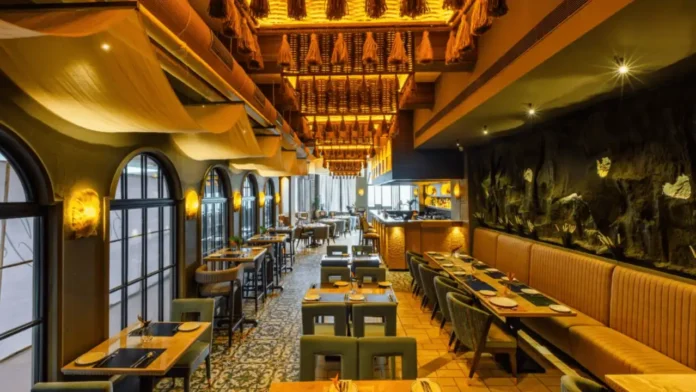
Coast & Bloom provides a venue designed with coastal inspiration by Nishant Umesh Desai, who serves as the Creative Director at Umesh Desai and Associates.
Coast & Bloom Menu:
The menu at Coast & Bloom has been carefully curated by Chef Prasad Parab, in perfect alignment with the restaurant’s vision.
The menu comprises a meticulously designed array of dishes, drawing inspiration from coastal cuisines around the globe, and skillfully crafted to satisfy a broad spectrum of palates.
It includes classic choices to cater to the older generation, inventive creations tailored for those in the middle age group, and sophisticated, contemporary options designed to appeal to the younger generation.
The menu accommodates diverse preferences, encompassing both vegetarian and non-vegetarian choices, with special attention given to pescetarians.
For those who appreciate fish, a variety of options awaits, ranging from imported selections such as Scallops and Norwegian Salmon to local favorites like Rawas, Pomfret, Tiger Prawns, Bombil, and Lobster.
The menu encompasses a wide culinary spectrum, from the Mediterranean allure of Spanakopitas to the robust and fiery flavors of Mapo Tofu, a renowned Sichuan dish known for its unique spiciness and numbing sensations. Complementing the main courses are rice dishes, including the aromatic Nasi Goreng, the Moplah Biryani, and the delectable Kolambi Khichdi.
The Crab Chopper pays homage to the street-style Indo-Chinese treat, featuring wok-tossed crab meat infused with zesty Indo-Chinese sauces.
The chef’s exclusive selections provide the finishing flourish, featuring a variety of delicacies such as Alaskan Scallops, Norwegian Salmon, Live Mud Crabs, and Nobashi Prawns, each impeccably presented with its distinctive signature flair.
The bar menu is inspired by culture, heritage, and culinary traditions, which are blended with contemporary mixology techniques to enhance the overall dining experience.
The bar menu has been thoughtfully assembled to encapsulate the spirit of coastal living. One of its offerings, Nacre, draws inspiration from the Malabar Coastal region and combines a rice-based spirit with Sichuan pepper, creating a delightful harmony with the notes of Raspberry umeshu liqueur.
In homage to India’s rich Ayurvedic heritage, Tapaswani expertly blends Jatamansi liqueur with Gin and Tulsi vermouth, a drink that reveres the country’s cultural foundations.
Inc.5 Shoes, a footwear company, recently secured its first venture capital investment, totaling $10 million (approximately INR 83 crore). This funding round was co-led by Mumbai-based Carpediem Capital and included contributions from Param Capital and P3 Venture Fund.
The omnichannel commerce company plans to utilize the funds raised to enhance its senior leadership team, expand into new verticals, and extend the reach of its retail stores and warehouses.
Inc.5 – Famous Footwear Brand!
Headquartered in Mumbai, the company distributes a diverse range of shoes for all genders across various price points. These products are available through its extensive network, comprising 74 proprietary retail outlets, 200 partner retailers, and online platforms.
Established in 1998, this company is under the ownership of the Virji family, based in Mumbai. The company manages several brands, including Atesbe, which offers luxury men’s footwear, Privo, a mid-priced men’s footwear brand, and Inc.5, a brand specializing in women’s footwear.
Amin Virji, the Managing Director of Inc.5, shared that the company has set its sights on operating 100 locations by March 2024, with a subsequent annual expansion plan of adding 40 to 50 more outlets. Additionally, the company is looking to increase its warehouse capacity by over 25,000 square feet.
Soft drinks major The Coca-Cola Company witnessed remarkable performance in the September quarter, with Chairman and CEO James Quincey announcing double-digit growth in both volume and top-line revenue. Moreover, the company achieved its highest gains in value share over the past three years. During an earnings call, Quincey revealed that the company recorded an impressive 2.6 billion transactions in India in the third quarter of 2023. This success was attributed to the company’s commitment to offering affordable products and expanding its sales network into remote rural regions.
“In India, we delivered double-digit volume and top-line growth, which resulted in the highest value share gains over the past three years. We are winning in the market by generating 2.6 billion transactions at affordable price points and driving availability across rural regions,” he said.
Coca-Cola Growth:
The Indian market played a significant role in driving Coca-Cola’s overall growth within the Asia Pacific region and the emerging markets.
During the June quarter, Coca-Cola’s business in India was affected by untimely rainfall, which coincided with the summer season when demand for carbonated beverages typically reaches its zenith.
India played a pivotal role in propelling global growth within Coca-Cola’s Bottling Investments Group (BIG), an in-house division responsible for managing bottling operations in select countries.
“Unit case volume grew 2 per cent, primarily driven by growth in India and the Philippines, partially offset by the impact of refranchising bottling operations,” it said.
India is the fifth largest market for The Coca-Cola Company.
In the Asia Pacific market, Coca-Cola’s unit case volume was “even” as growth in Trademark Coca-Cola and other beverage categories was offset by a decline in water, the company said.
Coca-Cola news
“Growth in India and the Philippines was offset by declines in China and Indonesia,” it said.
The company gained value share in total non-alcoholic-ready-to-drink (NARTD) beverages in the Asia Pacific market, led by share gains in India, the Philippines, South Korea and Japan, the earnings statement added.
Unit case volume means the number of unit cases of company beverages directly or indirectly sold by the company and its bottling partners to customers.
The Atlanta-headquartered company reported an 8.04 per cent growth in its consolidated net operating revenue to USD 11.95 billion.
“Revenue performance included 9 per cent growth in price/mix and 2 per cent growth in concentrate sales. Concentrate sales were in line with unit case volume,” it said.
Its unit case volume grew 2 per cent during the quarter.
“Developed markets grew 2 per cent, driven by growth in Mexico and Japan. Developing and emerging markets also grew 2 per cent driven by growth in India and the Philippines,” said the earning statement said.
Quincey said the company has delivered an “overall solid quarter”.
“Our leading portfolio of brands, coupled with an aligned and motivated system, positions us to win in the marketplace today, while also laying the groundwork for the long term,” he said.
The company has raised its full-year topline and bottomline forecast in light of its year-to-date performance, Quincey added.
“The company expects to deliver organic revenue (non-GAAP) growth of 10-11 per cent,” it added.
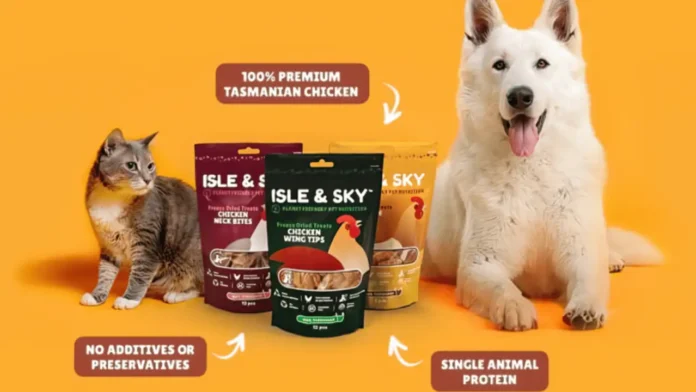
TasFoods has made its debut in the pet-food industry by introducing the Isle & Sky brand in Australia.
TasFoods’ Nichols Poultry business unit has introduced a fresh line of pet treats, featuring three premium chicken options for both cats and dogs: chicken necks, chicken neck bites, and chicken wing tips.
TasFoods, headquartered in Launceston, Tasmania, has joined forces with Petbarn, Australia’s specialty pet-products retailer, to introduce this product line in more than 200 stores across the country.
TasFoods Agreement and Deals:
Additionally, the company has secured a distribution agreement with Eastern Distributors, Australia’s largest pet-products wholesaler, serving a network of over 1,400 independent and corporate pet stores nationwide.
TasFoods’ CEO Scott Hadley said, “We are very proud of our new Isle & Sky planet-friendly pet nutrition. Launching with a range of pet treats including chicken necks, wings and neck bites, the offering is unique insofar that it is 100% Tasmanian, human grade, a 100% waste-neutral product, chlorine-free and vet approved.”
In a statement, the publicly-traded conglomerate noted that its foray into the pet food market is a crucial component of a significant strategic overhaul undertaken over the past 18 months.
Hadley added, “We have leveraged our core capabilities at Nichols Poultry to expand to this adjacent, high-growth category to fuel growth in both Australia and beyond once our model is proven.”
Earlier this year, TasFoods underwent a significant development when Bega Group, an Australian dairy company, acquired its Betta Milk and Meander Valley Dairy brands in a deal valued at A$11 million ($7.1 million).
Although TasFoods’ website still reflects ownership of Pyengan
a Dairy, the acquisition by Bega Group encompassed a royalty-free license that permits the company to utilize the Pyengana Dairy brand for their milk and dairy product offerings within Australia.
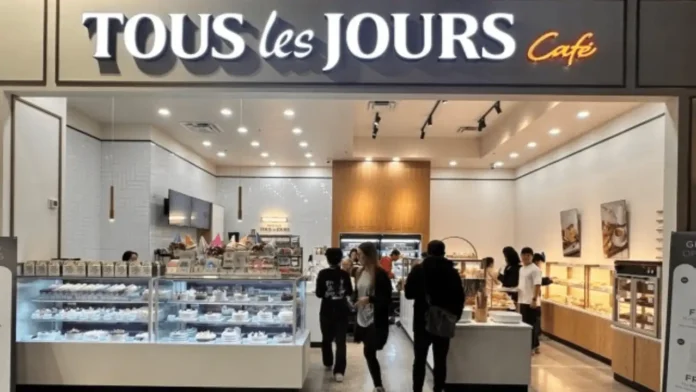
CJ Foodville, the food subsidiary of South Korea’s CJ Group, made a noteworthy announcement on Tuesday as it unveiled the grand opening of its first Tous Les Jours bakery chain store in Calgary, Canada.
Canada marks the seventh country for CJ Foodville’s international expansion efforts. The store finds its home within H-Mart, a renowned supermarket chain known for its specialization in Asian cuisine, right in the heart of Calgary.
CJ Foodville’s Tous Les Jours Expansion:
Tous Les Jours has set its sights on a significant expansion plan, with the goal of opening 120 stores in North America by the end of this year and an impressive 1,000 stores by the year 2030. The brand is gearing up to introduce additional stores in both Toronto and Vancouver to facilitate this ambitious growth.
Back in August, Tous Les Jours marked a momentous occasion as it celebrated its expansion into the United States, its inaugural international market. The festivities included the opening of the 100th store, strategically situated near Manhattan, New York, in Bronxville. Looking ahead, CJ Foodville has laid out plans to establish a bakery plant in Georgia, USA, by the year 2025.
With the establishment of the Georgia plant, the brand will be well-equipped to swiftly and effectively meet the surging demand growth in North America.
Tous Les Jours initiated its global expansion journey in 2004, commencing with the United States. Fast forward to September of this year, the brand’s international footprint has now exceeded 400 stores, encompassing locations in the US, Vietnam, Indonesia, China, and Mongolia.
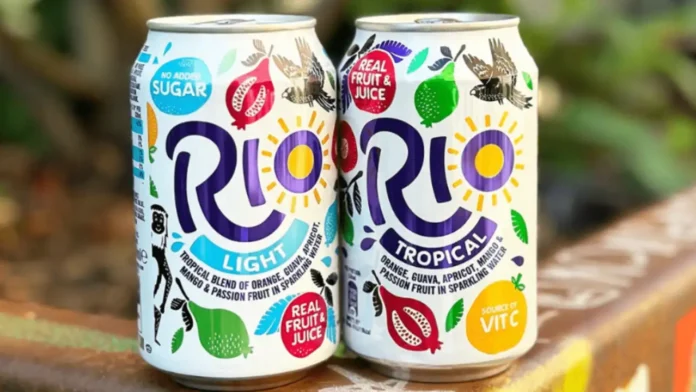
AG Barr has declared its purchase of the Rio soft drinks brand by acquiring Rio Tropical for a total cash payment of £12.3 million.
The UK-headquartered multi-beverage manufacturer will expand its current product lineup by incorporating the Rio tropical soft drink, joining its existing portfolio that features brands such as Irn-Bru, Boost, Funkin, and Rubicon.
AG Barr Deal with Rio Tropical:
Company secured Rio Tropical from the independent brewer and pub company Hall and Woodhouse. The tropical fruit beverage has been exclusively marketed, sold, and distributed by AG Barr’s recently acquired Boost Drinks division since 2021.
In a statement released to announce the acquisition, They revealed that the purchase has been fully financed using its robust net cash reserves.
The company further disclosed that, although the acquisition plays a significant role in its continuous margin improvement initiative, it is not anticipated to have a substantial effect on the group’s earnings for the present fiscal year, concluding on January 28, 2024.
Roger White, CEO of AG Barr, commented, “As brand builders we are delighted to acquire the Rio brand and secure its long-term position in our wider portfolio. This allows us to realise the benefits of full brand ownership and support Rio’s continued growth. This acquisition is a further positive indication of our strategic ambitions.”
We use cookies to ensure that we give you the best experience on our website. If you continue to use this site we will assume that you are happy with it.