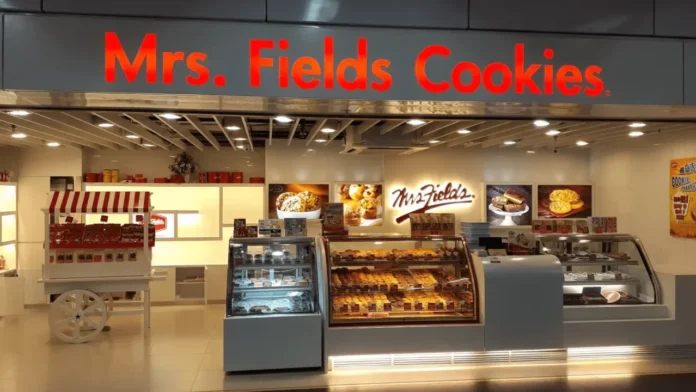
Pearl Street Equity and its associated entities have completed the acquisition of Famous Brands International, a U.S.-based franchising company that owns well-known American brands, including Mrs. Fields and The Country’s Best Yoghurt (TCBY).
The financial terms and any other specifics of this transaction have not been made public by the companies.
Famous Brands International, headquartered in Utah, is the proprietor of over 350 franchised establishments and a diverse portfolio of international brands.
Pearl Street Equity completes acquisition of Famous Brands International!
The company has a global presence, with operations spanning across numerous countries, such as Hong Kong, Canada, the Bahamas, Australia, Taiwan, Morocco, and Panama.
This acquisition follows the appointment of Joe Lewis as the President and Chief Operating Officer (COO) of Famous Brands Franchising.
With close to 25 years of experience, Lewis has a strong background in working with retail, food, and beverage franchisor organizations, including Twist Brands, Smoothie King, and Smalls Sliders.
In his role as the new President and COO, Lewis will spearhead the efforts to advance Famous Brands Franchising’s growth strategy.
Additionally, he will assist the company in pursuing fresh opportunities to broaden its presence, which may involve introducing Mrs. Fields and TCBY into both domestic and international markets.
Lewis said, “We are thrilled about this new chapter for Famous Brands Franchising as a stand-alone company and are confident Pearl Street is the ideal strategic partner for the future.
“This transaction will take our franchisee support to the next level while enabling the investment to grow both the brands globally and bring our delicious products to more customers and families.”
Based in New York, Pearl Street and affiliates have investments primarily in venture capital, real estate, credit strategies and public and private equity.
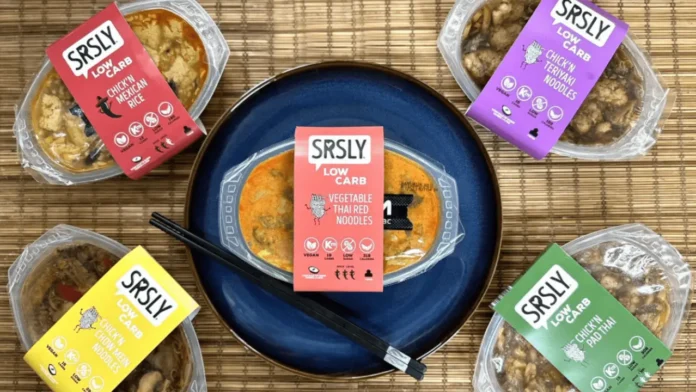
SRSLY Low Carb, a UK-based company, is thrilled to unveil an exciting distribution agreement that will bring its exceptional line of nutritious, delectable, and top-tier food items to numerous prominent supermarket chains in the United States.
SRSLY, headquartered in Hertfordshire, UK, has entered into an exclusive agreement with Gourmet Foods International (GFI), a specialized food distributor based in Decatur, Georgia. GFI serves major supermarket chains across all 50 states in the US.
UK-based SRSLY Low Carb announces major US expansion:
As a result of this collaboration, SRSLY has successfully secured an agreement to provide its low-carb pizza collection to the esteemed Harris Teeter Supermarket group, an established retailer with an 84-year history. Harris Teeter presently operates more than 250 stores across seven South Atlantic states and Washington, D.C., among others.
The partnership with Harris Teeter, a subsidiary of one of the nation’s major retailers, Kroger Co, presents an invaluable opportunity for SRSLY to significantly enhance its brand presence in the US market. Kroger Co, renowned for serving approximately nine million customers daily, achieved sales totaling approximately $148 billion in 2022 through its eponymous chain and a variety of other retail and supermarket entities under its umbrella. Among these, Roundy’s, a subsidiary supermarket chain, is actively engaged in discussions with SRSLY regarding the inclusion of its product line.
In 2019, Andy Welch, a former Ironman triathlete, established SRSLY, driven by his passion for nutritious cuisine. Initially designed for fellow endurance athletes, the appeal of SRSLY’s low-carb, high-protein, and wholesome products quickly broadened to encompass a diverse audience seeking delicious and healthful choices for weight management, diabetes control, and overall well-being.
SRSLY Low Carb (Representative Image)
During its inaugural year of operation, the company achieved £1.6 million in sales, all without any expenditure on advertising. In the second full financial year, revenues surged to £2.2 million, primarily due to a surge in online orders during the COVID-19 lockdown. Thanks to a growing online presence and fresh collaborations with UK and US retailers, SRSLY anticipates revenue to reach £4.8 million in the ongoing fiscal year. This figure is expected to more than double in the subsequent year, 2024/25.
SRSLY’s product lineup, crafted by a dedicated team of nutritionists, bakers, athletes, and food enthusiasts, has garnered the support of the NHS and prominent health-oriented charitable organizations. Additionally, the company is making a strategic investment in a new 7,000 square foot warehouse in Hemel Hempstead, aimed at bolstering its production efficiency.
In pursuit of its worldwide expansion goals, SRSLY is presently initiating a seven-figure equity investment round in collaboration with Ruffena Capital. This initiative encompasses the recent launch of a crowdfunding campaign with a minimum target of £500,000. The raised funds will be directed towards bolstering SRSLY’s growth strategy, with a primary focus on expanding retail opportunities in both the US and the UK.
Welch said, “I’m delighted to announce our significant distribution agreement with Gourmet Foods International (GFI) which marks a major step forward in our global growth ambitions.
Exclusive Distribution:
“GFI has long been a pillar of culinary excellence within the food distribution industry with an illustrious, well-established history and an extensive network covering the entire US. The company’s prestigious clientele consists of leading American retailers and food service organisations including Kroger Co, where we have secured an initial pizza distribution deal.
“This partnership is just the beginning for SRSLY within the US market as I’m confident it will open the doors for our wider product range and help us grow our presence within other major supermarket groups.
“I’m also excited about our crowdfunding campaign which enables anyone to invest in SRSLY and become part of our vision to grow a successful UK business on the back of our diverse, healthy and delicious low carb, high protein food offering.”
On Thursday, the Central government decided to lower the minimum export price for basmati rice from $1,200 per tonne to $950 per tonne due to worries that elevated prices were negatively impacting export figures.
In August, the government increased the minimum export price for basmati rice to $1,200 in an effort to enhance domestic availability, given the surge in food inflation during that period.
Government Reduces Basmati Rice Export Price!
The export curbs on basmati had been extended on October 14 but this had triggered protests from farmers and traders at a time when assembly elections are being held in key states.
The concern was that the high floor price made Indian consignments uncompetitive compared to Pakistan which also exports basmati rice.
Food Minister Piyush Goyal, who held consultation with traders, assured industry representatives last month that the government would review the minimum export price (MEP).
Food Secretary Sanjeev Chopra on October 18 said the government was actively reviewing the MEP.
During April-August, India’s basmati exports had touched close to 2 million valued at INR 2,200 crore which represented a 12 per cent increase in value terms over the same period of the previous year. However, exports had slowed due to the hike in the MEP.
On Thursday, onion prices surged significantly in markets throughout Delhi-NCR.
Last week, the essential vegetable was priced at INR 35 to 40 per kilogram, but prices in Delhi-NCR are now reaching INR 50-80.
Customers in Delhi and Noida attribute the nearly 50 percent sharp increase to the end of the Navratri week.
Onion prices skyrocket in Delhi-NCR:
Shekhar, a resident of Noida, stated, “I bought them for INR 40 per kilogram last week, but today I purchased them for INR 80 per kilogram.”
Madhu Sharma, a resident of Yojana Vihar in east Delhi said that the onions are selling at INR 60 per kg in her area.
Deepak Dogra, a Gagan Vihar resident, stated that he purchased onions from the Reliance store at a rate of INR 56 per kilogram. Nevertheless, he mentioned that local vendors in his area are selling these for nearly INR 80 per kilogram.
Rajeev, who lives in Ghaziabad, mentioned that he purchased onions from the nearby Mother Dairy for INR 65 per kilogram. In Safal stores throughout Delhi, These were available for prices ranging from INR 56 per kilogram, depending on the quality.
The retailers are attributing the rise in price rise in local mandis and increased demand post Navratri.
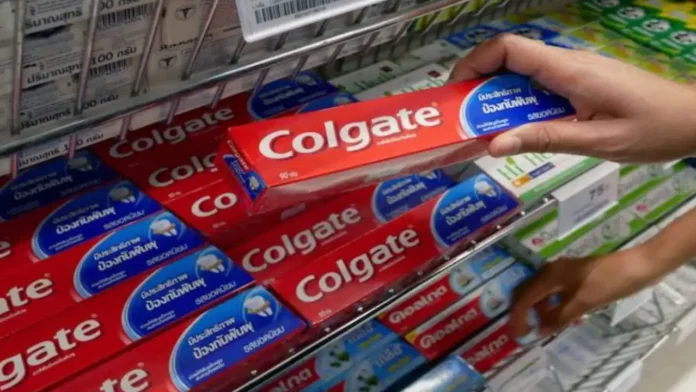
On Thursday, Colgate Palmolive (India) announced a 22% increase in second-quarter profits, driven by growing urban demand for premium toothpaste products and encouraging signs of increased consumption in rural areas.
For the quarter ending on September 30, the company’s net profit surged to 3.40 billion rupees ($40.86 million), a significant increase from 2.78 billion rupees in the same period the previous year.
Boosted by its core oral care category, sales experienced a 6.1% increase, reaching 14.62 billion rupees.
The emergence of premium oral hygiene products has provided individuals with higher incomes access to superior choices. Simultaneously, rigorous marketing campaigns and expanded distribution networks have heightened demand in rural regions.
“In this quarter we have doubled down on the (flagship) Colgate Strong Teeth (toothpaste) relaunch, expanding reach and availability,” Colgate Palmolive (India) CEO Prabha Narasimhan said in a statement.
Just last week, competitor Hindustan Unilever unveiled a profit increase that exceeded expectations, thanks to a surge in sales within its beauty, home, and personal care divisions.
Colgate Palmolive (India), known for its production of handwash and shower gel in addition to other products, announced its inaugural interim dividend of 22 rupees per share for the fiscal year 2023-2024.
On Thursday, the company’s shares dipped by 1.9% in anticipation of its results. However, the stock has exhibited a 32.4% increase this year, outperforming the Nifty index for fast-moving consumer goods, which saw a 15.3% gain.
Homegrown fast-food chain Burger Singh has devised a robust expansion strategy, with ambitions to add over 250 new stores and nearly double its workforce to surpass 2,500 employees by the close of the fiscal year 2025.
According to Burger Singh founder Kabir Jeet Singh, the company intends to secure $10 million in funding next year to support their expansion efforts.
“We are about to appoint one of the leading consulting, accounting firms as our investment banker for our Series B round,” he said.
Burger Singh unveils Ambitious Expansion Plan:
“Even though the company has a runway in terms of funds for the next three years, raising capital takes at least a year… So, if we start the process in 2024 it will take another 8 to 10 months for the funds to flow in,” Singh said.
At present, Burger King maintains a workforce of approximately 1,200 employees and operates 105 establishments nationwide. Additionally, the company has 50 more outlets currently in the construction phase, expected to open during the current fiscal year.
In addition to recruiting staff for its retail locations, the company will also be expanding its workforce at the corporate head office.
“Most of the hiring for corporate roles (tech, marketing, etc) is from the IITs and other colleges,” Singh said.
To date, Burger Singh has successfully garnered a sum of $10 million in investments from various backers, which includes notable individuals such as Ashish Dhawan, the Co-Founder of ChrysCapital, and Rajesh Bothra from RB Investments. The company’s Series A funding round was spearheaded by Negen Capitals, contributing an investment of $3.6 million.
The forthcoming funding round will primarily be allocated for the establishment of company-owned outlets throughout India, with a particular focus on expanding into additional regions in the southern part of the country. Prospective locations in this expansion plan encompass Chennai, Bengaluru, Hyderabad, Coimbatore, Kochi, Visakhapatnam, and Madurai.
Burger Singh is also actively pursuing the expansion of its Burger Singh Express model, which involves establishing compact and nimble 100-square-foot outlets in settings such as malls, metro stations, airports, and hospitals, as outlined by Singh.
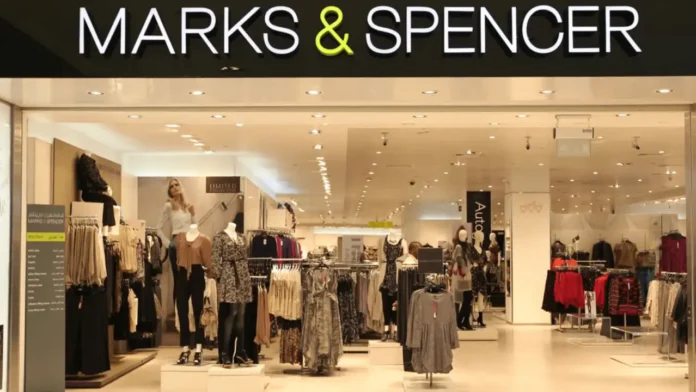
Marks & Spencer India, also known as M&S India, is actively investigating opportunities for growth in Tier-II cities throughout the nation, where it currently has 40% of its stores. Although M&S India already maintains a substantial presence in Tier-I markets, it acknowledges the unexplored potential for expanding further in these areas.
Ritesh Mishra, managing director at M&S India, said, “Tier-II cities are of paramount importance to us, as there is still room for growth in Tier-I markets.”
M&S India explores growth opportunities in Tier-II cities!
M&S India places significant emphasis on fostering growth through online channels, with a quarter of its sales already stemming from e-commerce. Mishra underscored the essential role that physical stores also play in propelling business expansion.
Winter wear stands out as one of the brand’s exceptional categories, displaying an impressive year-on-year growth of 47 percent.
Linen-based products have demonstrated robust growth compared to the prior year, while lingerie, a fundamental aspect of the brand, accounts for one-quarter of its overall sales.
Despite increasing competition in the fashion sector, with foreign brands entering the Indian market, Mishra firmly believes that M&S India’s value proposition remains strong. He asserts that the brand faces no significant headwinds, saying, “We are confident that we have the right brand proposition, product strategy, pricing strategy, and strategic mall locations.”
Marks & Spencer India marked the inauguration of its 100th store in the nation. Each of these stores encompasses an area ranging from 15,000 to 20,000 square feet. Mishra unveiled aspirations for additional growth, with the goal of reaching a cumulative retail space of 1.4 million square feet. He also highlighted the brand’s accomplishment in opening one store per month over the last six months.
Nestle India Ltd. has ceded market share to local competitors due to its consistent price hikes in response to escalating expenses. Nevertheless, the company does not intend to reduce prices in order to regain market share.
“We do have local competition in coffee and noodles, and only where there is acute price competition, we have seen some loss of volume,” Suresh Narayanan, chairman and managing director at Nestle India, said during an investor meet in New Delhi on Wednesday. “But we are trying to respond fast enough, by way of tailoring our price points, to mitigate any losses.”
Nevertheless, Nestle is currently not contemplating a reduction in product prices. Despite a slight easing of inflation in its raw material costs, some crucial inputs like green coffee, cocoa, wheat, and milk still maintain their high price levels. While packaging costs remain stable, there are ongoing uncertainties in the Middle East that could affect oil prices, as noted by Narayanan. He stated that Nestle is prioritizing bridge packs as a strategy to address ongoing inflation since consumers are consistently trading down across various price ranges and product categories.
Nestle India Rivals:
Fellow companies such as ITC Ltd. and Hindustan Unilever Ltd. have similarly acknowledged the heightened competition, with local players staging a resurgence in a deflationary market. For instance, HUL noted a loss of market share in its mass segment, which includes lower-priced products, primarily due to increased competitive pressure.
Nestle India (Representative Image)
Nestle India’s entry-level Maggi noodles are now available in packs of 7, 10, and 14. “We have to be very careful with the price points and make trade-offs between downtrading and premiumisation,” said Narayanan.
Narayanan stated that Nestle India continues to maintain a keen interest in opportunities for inorganic growth.
“So far, we have focused on 100% organic growth. So, I think our quest for M&A continues,” he said. “But the acquisition will need to meet our criteria in terms of the right fit, capability to add value, and valuations. Our eyes and ears are open, and hopefully something will come up in the future.”
The packaged goods manufacturer had been one of the leading contenders in the race to acquire Capital Foods Pvt., the company behind brands such as Ching’s Secret and Smith & Jones. According to sources familiar with the matter who requested anonymity, Nestle India was in competition with companies such as Tata Consumer Products Ltd. and The Kraft Heinz Co.
Between 2018 and 2022, the prominent packaged food company achieved a compounded annual growth rate (CAGR) of approximately 7% in terms of volume and 11% in terms of value.
Narayanan mentioned that Nestle India anticipates experiencing increased volume growth in the forthcoming years.
“In the future, I would like us to grow faster than 7%; it’s not an impossibility,” he said. “But launching products or getting into categories that are deeply dilutive to margins will not really be our focus. The company will target higher growth through infrastructure expansion.”
Nestle India is amplifying its presence in small towns and villages through a strategy it calls “rurban.” This approach involves significantly increasing the number of distribution points, expanding the on-ground sales teams, enhancing in-store visibility, and boosting participation in village fairs, also known as “haats.”
As of the end of September, the producer of Kitkat chocolates reported that its distribution network encompassed 5.2 million outlets, with direct access to approximately 1.6 million of them. By 2024, their goal is to extend their rural distribution network to 1.2 lakh villages, each with a population exceeding 20,000.
“It is only a question of sweating the assets, and we expect to see significant growth in the coming year,” said Narayanan.
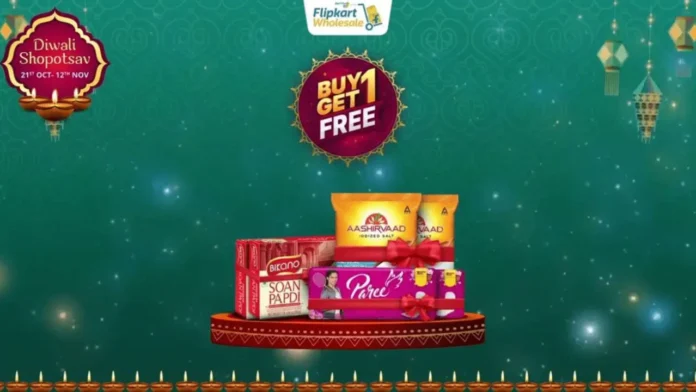
Flipkart Wholesale, the online B2B platform operating under the renowned Flipkart Group in India, is excited to introduce Diwali Shopotsav, an annual sales extravaganza exclusively for its B2B members. This spectacular event is set to take place from October 25 to November 12, 2023, with the catchy theme ‘Bolo Fayde Ki Boli.’ You can enjoy Diwali Shopotsav both in all 26 physical stores and on the Flipkart Wholesale app.
In line with its motto, Diwali Shopotsav is all set to celebrate the season’s most substantial discounts across a wide array of product categories. This year, the spotlight shines on newly introduced sections such as home and kitchen appliances, gift selections, and festive decorations.
Flipkart Wholesale – Diwali Shopotsav!
To heighten the festive ambiance, Daily Flash Deals are on the horizon, granting members the chance to acquire 2kg of sugar and various other items for a mere Re.1! What’s more, Kirana members have an opportunity to win enticing prizes, including a brand-new Mahindra Thar, mobile phones, and gold and silver coins, as part of the Lucky Draw promotion.
Throughout the sale event, members have the opportunity to enjoy a wide range of advantages through appealing promotions like Festive Special Deals, Flash Deals, Pocket-Friendly Deals, Blockbuster Deals, and others, all accessible via Flipkart Wholesale’s online platform.
By harnessing the robust technology and supply chain infrastructure of the Flipkart Group, Flipkart Wholesale is committed to nurturing the expansion of Kiranas (small local grocery stores) and Micro, Small, and Medium Enterprises (MSMEs), thereby contributing to the comprehensive advancement of the entire ecosystem.
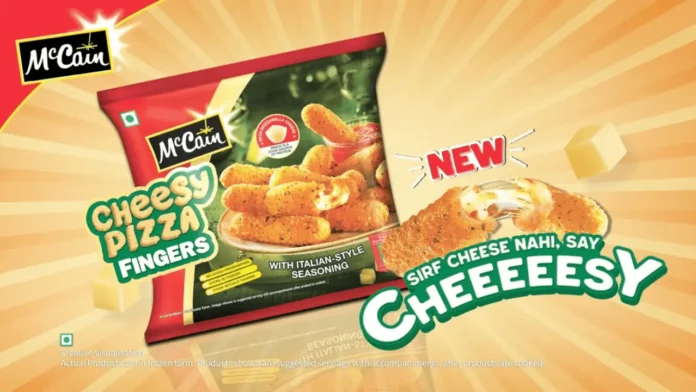
As we approach the forthcoming Diwali season and immerse ourselves in the World Cup excitement, McCain Foods, a well-known frozen food brand, is thrilled to introduce two mouthwatering additions to its lineup: McCain Popcorn Fries and McCain Cheesy Pizza Fingers. These delectable treats are set to offer a unique snacking experience and make excellent companions for social gatherings as India prepares for the festive season.
These fresh offerings are expertly crafted to deliver an unparalleled fusion of flavors and an irresistibly crispy delight with every mouthful, promising a snacking experience beloved by both the young and old in India.
Aditya Krishna, Head of Sales and Marketing at McCain Retail said, “We are delighted to introduce these two exciting new products. McCain has always been dedicated to creating quality and flavor, and with these launches, we aim to make the World Cup and festive season even more memorable for our consumers.
New Popcorn Fries & Cheesy Pizza Fingers by McCain!
These products have been thoughtfully designed to cater to the distinct preferences of our customers. The unique fusion of flavors, unforgettable taste, and the cherished moments these snacks bring are truly transformative. The universal appeal of these products reflects our commitment to bringing families and friends together, fostering shared memories and connections. We believe that our product range will redefine snacking, establishing new standards and becoming a household favorite across the country.”
McCain Cheesy Pizza Fingers bring together the irresistible fusion of two timeless favorites – Mozzarella Cheese and Pizza, taking consumers’ gatherings to a delightfully “cheeeesy” level. This delightful blend of cheese and the mouthwatering essence of pizza ensures that this snack is an instant crowd-pleaser.
McCain (Representative Image)
Whether you’re hosting a get-together or planning a weekend family snack, McCain Cheesy Pizza Fingers are your go-to choice. Embraced by both kids and adults, they serve as the ultimate party companion, effortlessly delivering the joy of pizza and the creaminess of cheese in every bite. They can be prepared in just 3 minutes, allowing you to relish this unique cheesy snack infused with Italian-style herbs from the comfort of your own home.
In contrast, McCain Popcorn Fries stand out with their unique proprietary cut and a batter coating that retains their delightful crispiness for an impressive 45 minutes, undoubtedly leaving consumers’ palates yearning for more. With their broad appeal and popularity among individuals of all ages, these fries make the ideal addition to gatherings focused on screenings or movie nights. They effortlessly bring different generations together, taking the snacking experience to new levels. McCain’s special batter coating guarantees that every bite is a culinary delight, making it nearly impossible to resist the temptation to finish the plate in one satisfying indulgence.
These two fresh offerings are being launched with the help of Digital Video Campaigns (DVCs) that highlight their delectable nature, irresistible charm, and widespread popularity. Furthermore, there are upcoming consumer contests and collaborations with influencers to maintain the excitement surrounding these releases. Additionally, an exceptional Out-of-Home (OOH) campaign featuring Popcorn Fries can be observed at bus shelters in major cities, further amplifying the awareness of these delightful additions to the McCain product lineup.
We use cookies to ensure that we give you the best experience on our website. If you continue to use this site we will assume that you are happy with it.